This site is supported by our readers. We may earn a commission, at no cost to you, if you purchase through links.
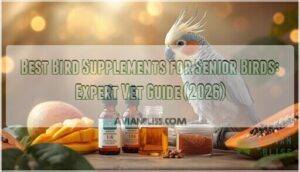
Your twenty-year-old cockatiel doesn’t preen as thoroughly as she used to, and those glossy feathers you’ve always admired look a bit dull around the edges. Senior birds over fifteen face declining nutrient absorption, weaker immune defenses, and shifting metabolic needs—changes that standard diets don’t always address.
A fifteen-year-old Amazon parrot requires fourteen to eighteen percent protein to maintain muscle tone, plus targeted vitamins like D3 to protect bones during molt cycles. The right bird supplements for senior birds bridge those nutritional gaps, but choosing between powders, liquids, and water-soluble formulas means understanding your bird’s specific deficiencies and health profile.
I’ve reviewed five veterinarian-recommended supplements that address everything from feather quality to immune resilience, complete with dosing protocols and signs your bird is actually benefiting.
Table Of Contents
- Key Takeaways
- Essential Nutrients for Senior Birds
- Recognizing Nutritional Deficiencies in Senior Birds
- Top Bird Supplements for Senior Birds
- Safe Supplementation and Monitoring Practices
- Frequently Asked Questions (FAQs)
- What is the 3 3 3 rule for parrots?
- What are the symptoms of vitamin D deficiency in birds?
- What supplements do birds need?
- What are signs of poor parrot nutrition?
- Can senior birds share supplements with younger birds?
- How long until supplements show visible health improvements?
- Do organic supplements work better than synthetic versions?
- Should supplements continue during molting or breeding season?
- What storage methods keep bird vitamins most effective?
- Conclusion
Key Takeaways
- Senior birds over fifteen need fourteen to eighteen percent protein intake plus targeted vitamin D3 and calcium supplementation because age-related metabolic slowdown reduces nutrient absorption by ten to fifteen percent, creating deficiencies that standard pellet diets don’t address.
- Watch for subtle warning signs like dull feathers, crusty nostrils, soft beaks, or tremors—these indicate vitamin deficiencies that require veterinary blood work to diagnose accurately before choosing supplements.
- Choose supplements based on your bird’s specific form preference and bioavailability needs: liquid formulas like Oasis Vita Drops work for water administration, while powders like Nekton S deliver eighteen amino acids alongside thirteen vitamins for comprehensive coverage during molting or stress.
- Track your senior bird’s weight biweekly using the same calibrated scale, schedule veterinary visits every six months for blood panels, and never exceed manufacturer-recommended dosages—a five to ten percent body weight shift signals the need for immediate professional evaluation.
Essential Nutrients for Senior Birds
Your senior bird’s nutritional needs shift as they age, and getting the balance right makes all the difference in their quality of life. While pellets and fresh foods form the foundation, older birds often need specific vitamins, minerals, and antioxidants to stay healthy.
Choosing the right bird vitamins for seniors helps compensate for age-related changes in absorption and metabolism that affect your parrot’s health.
Let’s look at the essential nutrients that support aging avian bodies.
Key Vitamins for Aging Avian Health
Your senior bird’s vitamin needs shift as metabolism slows and cells face oxidative wear.
Vitamin A sustains respiratory mucosa and feather condition, reducing infections in aging parrots. Vitamin D3 partners with calcium to fortify aging bones and support molt cycles. Vitamin E shields cell membranes from free radical damage, preserving tissue integrity.
B vitamins fuel nerve function and steady energy, while vitamin C bolsters immune resilience during environmental stress.
For more details on the importance of a balanced diet for birds, consult expert avian sources.
Protein and Mineral Requirements in Older Birds
Your aging companion needs fourteen to eighteen percent crude protein to preserve muscle tone and support feather renewal. Look for high-quality protein sources rich in methionine and lysine, the amino acids that underpin tissue repair in elderly bird nutrition.
Balance calcium with phosphorus—aim for one to one-and-a-half parts calcium per phosphorus—to guard bones and kidneys. Zinc, copper, and manganese keep plumage vibrant while preventing nutrient deficiencies common in senior bird care.
For more information on essential avian nutrition guidelines, it’s vital to make certain a balanced diet is specially formulated for senior birds.
Antioxidants and Immune System Support
Vitamin E shields your bird’s cells from oxidative stress while ramping up T-cell activity, the frontline defenders against infection. Supplement at 227,000 IU per pound of diet for measurable immune gains. Beta carotene, cranberries, and probiotics fortify this defense network, balancing gut bacteria and neutralizing free radicals that accelerate aging.
- Vitamin E optimizes pathogen defense through enhanced T-cell activation in senior birds
- Beta carotene converts to vitamin A, supporting vision and boosting antibody production
- Probiotics strengthen gut flora, reducing gastrointestinal infections within weeks
Adjusting Calorie Intake for Senior Birds
Once you’ve optimized immune defenses, calorie balance becomes the next priority for weight management and healthy aging. Senior bird nutrition requires 10 to 15 percent fewer calories than adult baselines due to slower metabolism.
Track weekly weight and adjust portions in 5 percent increments, replacing fatty seeds with pellets and fresh produce. This nutrition planning meets the dietary needs of senior parrots while preventing nutritional deficiencies in birds and supporting avian health and wellness through proper aging bird health protocols.
Recognizing Nutritional Deficiencies in Senior Birds
Your senior bird can’t tell you when something’s wrong, so you need to become fluent in reading the subtle signs their body gives you.
Watch for changes in posture or balance, especially around perches—choosing the right perches for elderly birds can prevent falls and make movement easier as they age.
Since your senior bird can’t voice discomfort, you must learn to read the subtle physical signals their body reveals
Nutritional deficiencies don’t announce themselves with dramatic symptoms—they creep in slowly, showing up in feathers, skin, breathing patterns, and energy levels that just seem “off.” Here’s what to watch for and when to seek veterinary guidance.
Signs of Vitamin A, D3, and E Deficiencies
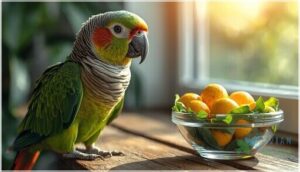
Your bird’s eyes tell a story about vitamin status—watch for squinting in dim light or crusty discharge that signals vitamin A deficit.
D3 insufficiency shows up as soft beaks, fragile bones, and tremors from poor calcium absorption.
Eye health issues and dull feathers often accompany E deficiency. These subtle shifts in avian health matter, especially in senior bird nutrition where absorption naturally declines.
Feather, Skin, and Respiratory Health Indicators
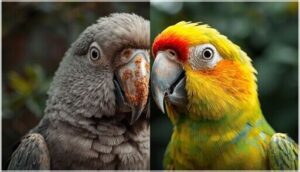
Dull, ragged feathers and flaky skin irritation often point to vitamin A deficiencies that compromise feather health and respiratory issues in older birds.
You’ll notice crusty nostrils, labored breathing, and delayed molting patterns when nutritional deficiencies take hold.
Bird health supplements rich in vitamin A restore beak health and avian health, reversing these visible signs before they escalate into serious respiratory complications.
The Role of Veterinary Checkups and Blood Work

Regular veterinary care catches nutrient absorption issues before visible symptoms emerge. Your vet relies on blood tests, medical history reviews, and health monitoring to identify deficiencies in senior parrots that supplements alone can’t reveal.
Diagnostic tools like chemistry panels guide which bird health supplements your aging birds actually need, ensuring you’re supporting avian health with precision rather than guesswork.
Top Bird Supplements for Senior Birds
Not all bird supplements are created equal, especially when your senior parrot’s changing metabolism and immune system demand precision nutrition.
I’ve spent years evaluating products in clinical settings, watching which formulations actually move the needle on bloodwork and feather quality.
Here are five supplements that consistently deliver measurable results for aging birds without the fluff or fillers.
1. Vitofarma Multi Vitamin for Birds
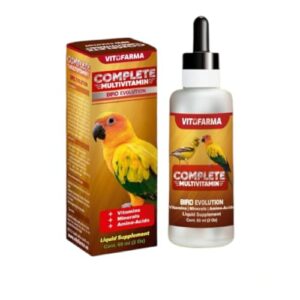
Think of Vitofarma as a daily insurance policy for your senior bird’s nutritional gaps. This high-potency liquid delivers essential vitamins A, D3, E, and a full B-complex alongside minerals and amino acids—all designed to support aging immune systems and restore that glossy plumage you’ve been missing.
You’ll give 30 drops in 8 ounces of water for large birds, or mix it directly into soft foods for easier administration. At $17.99 for a 16.9-ounce bottle, it’s budget-friendly for long-term use.
| Best For | Bird owners with senior pets or young birds who need immune support, shinier feathers, and a nutritional boost to fill dietary gaps. |
|---|---|
| Form | Liquid |
| Vitamin Content | Multiple vitamins |
| Target Species | Pet birds |
| Immune Support | Yes |
| Weight | 2.0 oz |
| Administration Method | Water, food, or beak |
| Additional Features |
|
- Complete formula with vitamins A, D3, E, B-complex, minerals, and amino acids for comprehensive support
- Flexible dosing—add to water, mix with food, or give directly for picky eaters
- Affordable at $17.99 for long-term daily use
- Dosage varies widely by bird size, so you’ll need to measure carefully to avoid over- or under-dosing
- No info on interactions with other supplements or meds, so check with your vet first
- Results depend on your bird’s individual health—it’s not a cure-all for serious conditions
2. Oasis Vita Drops Multivitamin for Birds
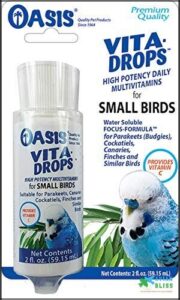
When your senior bird won’t take supplements in food, water-based vitamins become your best ally. Oasis Vita Drops deliver a focused formula of vitamins A, D3, E, B-complex, and extra vitamin C directly through your bird’s drinking water—no wrestling with mixing into seed.
You’ll add drops based on water volume, then change it every 1–3 days to keep potency fresh. Suitable for parakeets, canaries, finches, and cockatiels, this liquid multivitamin promotes immune function, feather brilliance, and calcium metabolism in aging birds.
| Best For | Bird owners with senior or picky eaters who refuse supplements mixed into food and need an easy way to deliver essential vitamins through drinking water. |
|---|---|
| Form | Liquid |
| Vitamin Content | Complete multivitamin |
| Target Species | Small cage birds |
| Immune Support | Extra Vitamin C |
| Weight | 2 oz |
| Administration Method | Water or food |
| Additional Features |
|
- Easy to administer through water—no need to mix into food or hand-feed reluctant birds
- Comprehensive vitamin formula with extra vitamin C supports immune health and feather quality in aging birds
- Works for multiple small bird species including parakeets, canaries, finches, and cockatiels
- Requires frequent water changes (every 1–3 days) to maintain vitamin potency and freshness
- Has an unpleasant odor that some bird owners find off-putting
- Not a replacement for veterinary care when birds show signs of serious illness or infection
3. Lafeber Avi Era Bird Vitamin Powder
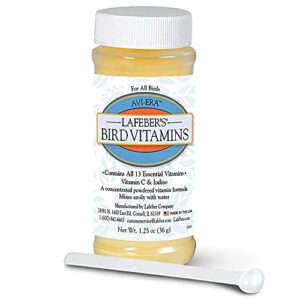
If you’re looking for extensive vitamin coverage in one powder, Lafeber Avi-Era delivers all 13 essential vitamins plus iodine—nutrients seed-based diets often miss.
You’ll dissolve the concentrated powder into water or soft foods using the included scoop, ensuring your senior bird absorbs vitamins A and D for vision and bone strength, B-complex for energy metabolism, and vitamin E to counter oxidative stress.
Formulated by avian specialists in the U.S., this supplement promotes feather quality, immune resilience, and overall wellness in aging birds.
| Best For | Bird owners with seniors on seed diets who need a comprehensive vitamin supplement to fill nutritional gaps and support feather health, energy, and immune function. |
|---|---|
| Form | Powder |
| Vitamin Content | 13 essential vitamins |
| Target Species | All birds |
| Immune Support | Yes |
| Weight | 1.25 oz |
| Administration Method | Water or food |
| Additional Features |
|
- Covers all 13 essential vitamins plus iodine in one formula, making it easier to address multiple deficiencies at once
- Developed by avian vets and nutritionists specifically for birds, so the formulation is trustworthy and species-appropriate
- Mixes into water or food easily, giving you flexibility in how you administer it to picky or resistant birds
- Powder doesn’t always dissolve quickly in water, which can be frustrating if your bird drinks slowly or you’re in a rush
- Loses potency after 6 months of opening, so you’ll need to track dates and potentially waste product if you have just one bird
- Some buyers reported missing dosing scoops or concerns about packaging seals, raising questions about quality control
4. Nekton Multi Vitamin For Birds
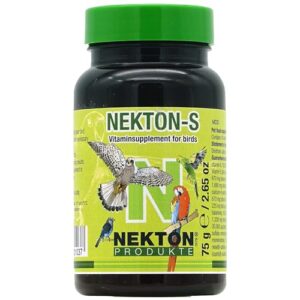
Nekton S takes that broad vitamin approach one step further by pairing 13 vitamins with 18 free-form amino acids and trace minerals like zinc, iron, and manganese—a combination that enhances everything from feather growth to immune defense in senior birds.
You’ll mix one gram per 250 milliliters of water daily, though you can double the dose for five to seven days when your bird is stressed or molting. The unflavored powder dissolves easily without clogging waterers, and the yellow tint in the water confirms it’s working.
| Best For | Bird owners looking for a comprehensive supplement that supports feather health, immune function, and stress management across all life stages. |
|---|---|
| Form | Powder |
| Vitamin Content | 13 vitamins |
| Target Species | All cage birds |
| Immune Support | Yes |
| Weight | 2.65 oz |
| Administration Method | Water or food |
| Additional Features |
|
- Contains 13 vitamins, 18 amino acids, and trace minerals for complete nutritional support
- Unflavored powder dissolves easily in water without clogging feeders
- Flexible dosing allows you to increase the amount during molting or stressful periods
- Turns drinking water yellow, which may concern some bird owners
- Small bottle opening can make scooping powder difficult without tweezers
- Not suitable for birds with specific dietary restrictions or allergies
5. Hari Hagen Parrot Vitamin Supplement
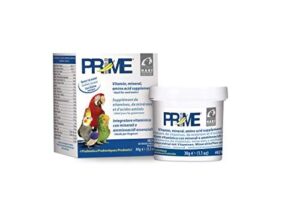
HARI Prime packs 14 vitamins and minerals into 1.1 ounces of banana-free powder designed specifically for seed-eating parrots—a thoughtful combination that tackles gut health alongside nutritional gaps.
You’ll mix the ultra-fine powder into moist foods like greens or fruit rather than sprinkling it over dry seed, where it simply settles to the bottom uneaten. The lysine and methionine amino acids boost protein quality, while digestive enzymes help your senior bird absorb every nutrient as metabolism slows with age.
| Best For | Bird owners with seed-eating parrots who need a comprehensive vitamin boost that also supports digestion and gut health. |
|---|---|
| Form | Powder |
| Vitamin Content | 14 vitamins |
| Target Species | Seed-eating birds |
| Immune Support | Yes |
| Weight | 1.1 oz |
| Administration Method | Water or food |
| Additional Features |
|
- Covers nutritional gaps with 14 vitamins, 9 minerals, and amino acids that improve protein quality
- Digestive enzymes and probiotics work together to help older birds absorb nutrients more efficiently
- Extra vitamin C and E support breeding birds and provide antioxidant protection
- The 1.1 oz container is pretty small and won’t last long with regular use
- Strong smell can be off-putting when you open the container
- Only works well mixed into moist foods—won’t stick to dry seeds, so picky eaters might skip it
Safe Supplementation and Monitoring Practices
Getting the supplement into your bird is only half the battle—you also need to make sure you’re doing it safely and tracking whether it’s actually working.
The wrong form, an inaccurate dose, or missing the early signs of toxicity can turn a helpful supplement into a health risk.
Let’s walk through the practical steps that keep supplementation both effective and safe for your senior bird.
Choosing The Right Supplement Form
You’ll encounter supplements in tablets, liquids, powders, and chewables—each with distinct bioavailability and dosing ease. Chelated minerals in powdered avian vitamin supplements often absorb better than standard forms, while liquid nutritional supplements enable rapid uptake.
Check label clarity for species-specific dosing, third-party testing, and safety features like preservative-free formulas. Form options matter: match your bird’s preferences to boost compliance.
Accurate Dosing and Administration Tips
Once you’ve chosen the right form, the next step is mastering supplement mixing and administration techniques. Precision matters for aging birds—base your dose calculation on current body weight using a scale accurate to 0.1 grams, and record every administration in a log.
Start at the manufacturer’s minimum recommended dosing schedules, adjust by 5 to 10 percent if weekly weight shifts exceed 5 percent, and maintain toxicity prevention by never exceeding label maximums without veterinary guidance.
Monitoring for Effectiveness and Avoiding Toxicity
Vigilantly, track your senior parrot’s response to bird vitamin supplements using a structured health monitoring schedule. Watch for toxicity signs—swollen eyelids, unusual feather loss, or droppings changes—within the first two weeks of supplement dosage adjustments.
| Tracking Focus | Timeline |
|---|---|
| Droppings & behavior | Every 2 weeks |
| Liver/kidney tests | Monthly (first 3 months) |
| Serum mineral levels | Every 6–12 months |
Document all observations to maintain ideal vitamin balance and prevent nutrient tracking errors that compromise avian health and wellness.
Importance of Regular Weight Checks and Vet Visits
Consistently, weigh your senior parrot monthly using the same calibrated scale and perch setup—a 5 to 10 percent body weight shift signals trouble that warrants same-week veterinary evaluation.
Schedule vet visits twice yearly for aging birds, pairing weight monitoring trends with blood panels and body condition scoring to catch early illness detection issues before symptoms appear, safeguarding avian health and wellness through proactive pet bird care and wellness strategies.
Frequently Asked Questions (FAQs)
What is the 3 3 3 rule for parrots?
The 3-3-3 rule for parrot acclimation gives your bird three days to tolerate new surroundings, three weeks to build trust, and three months to feel truly settled—essential stress reduction for any environmental adjustment.
What are the symptoms of vitamin D deficiency in birds?
Deficient D3 disrupts development, triggering bone deformities, beak problems, muscle weakness, and eggshell issues in your bird.
You’ll notice respiratory distress, lameness, soft bones, tremors, and reduced activity—all serious signals demanding immediate veterinary attention.
What supplements do birds need?
Birds need vitamin supplements providing vitamin A, vitamin D3, and vitamin E for immune support and nutrient absorption.
Senior birds also benefit from mineral balance, amino acids, and antioxidant support suited to their aging needs.
What are signs of poor parrot nutrition?
Watch for dull plumage, brittle feathers, cracked beaks, and flaky skin—all telltale malnutrition signs.
Poor nutrient absorption shows up as irregular molting and pale underwing skin, signaling your parrot needs immediate dietary intervention.
Can senior birds share supplements with younger birds?
You wouldn’t give your grandmother the same multivitamin as your toddler, would you?
Senior parrots and younger birds have metabolic differences that make shared vitamin supplements risky—age-specific needs prevent supplement toxicity and support proper joint health.
How long until supplements show visible health improvements?
Most nutritional improvements appear within two to six weeks, though feather quality and bone strength may take four to twelve weeks depending on severity of deficiency and your bird’s individual nutrient uptake rate.
Do organic supplements work better than synthetic versions?
Like choosing between wild berries and lab-grown versions, organic bioavailability often edges out synthetic alternatives—natural absorption improves with food-matrix nutrients, especially for vitamin A and D3 in senior parrots, though supplement purity matters most.
Should supplements continue during molting or breeding season?
Yes, continue supplements during molting and breeding, adjusting dosages upward to meet higher protein, calcium, and vitamin demands.
Seasonal adjustments support feather regrowth, hormonal balance, and immune function in senior parrots.
What storage methods keep bird vitamins most effective?
Your vinyl record collection taught you that heat and light destroy valuable things—vitamins are no different.
Store bird supplements below 25°C in opaque containers with oxygen reduction and moisture barriers to preserve potency and extend shelf life.
Conclusion
A client’s twenty-three-year-old macaw regained preening consistency within six weeks after starting targeted D3 and calcium supplementation—proof that the right intervention reverses decline.
Your senior bird’s feather quality, energy levels, and immune resilience depend on closing nutritional gaps that pellets alone can’t address. Choose bird supplements for senior birds based on blood work results, monitor weight biweekly, and adjust dosages as your avian veterinarian recommends. Small, consistent changes protect the years you have left together.
- https://www.nickersinternational.com/Vite_E_Bird_p/09002.htm
- https://www.petmd.com/dog/nutrition/evr_multi_plusses_of_antioxidants_in_pet_food
- https://www.scielo.br/j/rbca/a/TLdDyFzGyjyQCFXy5kxGWRx/?lang=en
- https://www.monash.edu/science/news-events/news/2018/health-benefits-of-carotenoids-questionable-to-birds,-study-finds
- https://lafeber.com/pet-birds/senior-bird-nutri-berries-pr/