This site is supported by our readers. We may earn a commission, at no cost to you, if you purchase through links.
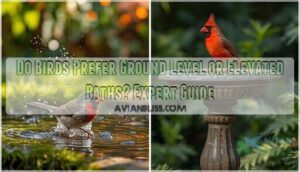
A robin splashing in a ground-level puddle while a cardinal perches warily on a raised basin tells you everything about avian bath politics. These aren’t random choices—they’re hardwired survival strategies shaped by millions of years of evolution.
Robins and thrushes hug the earth where they forage, keeping low profiles near protective cover. Cardinals and jays scan from above, trading ground-level concealment for aerial visibility. Understanding whether birds prefer ground level or elevated baths isn’t about picking a winner—it’s about recognizing that height preferences mirror each species’ feeding habits, predator awareness, and natural comfort zones.
Your backyard can become a sanctuary for both ground-huggers and tree-dwellers once you grasp what draws different birds to different heights.
Table Of Contents
- Key Takeaways
- Bird Bath Heights: Ground Vs. Elevated
- Bird Species and Bath Height Preferences
- Safety and Maintenance Considerations
- Optimizing Bird Baths for Diverse Species
- Top Bird Baths for Every Garden
- Frequently Asked Questions (FAQs)
- What type of bird bath do birds like best?
- Do bird baths need to be elevated?
- What is the 5 7 9 rule for bird feeders?
- What is the best position for a bird bath?
- What water depth do birds prefer most?
- Do bird baths attract unwanted pests or insects?
- How often should I refill my bird bath?
- Can bird baths be used in winter months?
- Do colors affect bird bath usage patterns?
- Conclusion
Key Takeaways
- Birds choose bath heights based on where they naturally feed and feel safe—robins and doves stick to ground level where they forage, while cardinals and jays prefer elevated baths 2-4 feet high that match their canopy-dwelling instincts.
- Offering water at multiple heights boosts backyard bird diversity by roughly 40 percent because you’re creating distinct microhabitats that welcome both ground-foragers and tree-dwellers simultaneously.
- Elevated baths reduce ground predator risks like cats but expose bathing birds to aerial hunters, while ground-level setups need more frequent cleaning due to debris, algae, and soil runoff.
- Smart placement beats height alone—position baths 4-5 feet from shrubs for quick escapes, keep them visible from multiple angles, and add native plants to create safe travel corridors between water and shelter.
Bird Bath Heights: Ground Vs. Elevated
When you’re setting up a bird bath, one of the first questions you’ll face is how high off the ground it should be. The answer isn’t as simple as you might think—different bird species have strong preferences based on where they naturally feed and feel safe.
Before you even think about height, make sure you choose a bird bath with the right depth and features to keep your feathered visitors safe and coming back.
Let’s break down what ground-level and elevated baths actually mean, how birds behave in the wild, and why height matters more than you’d expect.
Defining Ground-level and Elevated Bird Baths
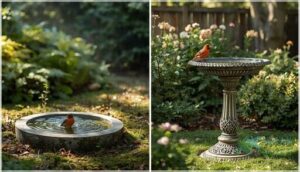
A bird bath’s design starts with understanding height. Ground bird baths sit directly on soil or low platforms, usually zero to a few inches high. Elevated birdbath options—like pedestal bird bath models—rise 2 to 4 feet above ground.
Here’s how they compare:
| Feature | Ground-Level | Elevated |
|---|---|---|
| Height | 0–6 inches | 2–4 feet |
| Basin Design | Wide, shallow (1–2 inches water depth) | Moderate width, textured surface |
| Bath Material | Ceramic, resin, stone, metal | Treated wood, metal, resin |
Garden layout and bird safety shape which style works best for you. For tips on reducing predation risk and attracting more species, see this guide to optimal bird bath elevation.
Natural Bird Bathing Behaviors and Preferences
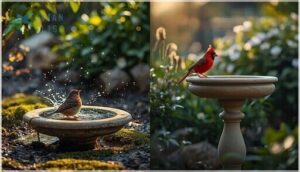
When you watch wild birds at your backyard water source, you’re seeing avian hygiene in action. Most species splash vigorously, dunking their heads and flicking wings to soak feathers. Bathing rituals help with feather maintenance—keeping plumage clean and waterproof. Water temperature around ambient air feels comfortable, so birds bathe year-round.
Bird behavior shifts based on habitat: robins favor ground bird bath setups near damp soil, while cardinals prefer a pedestal bird bath for better visibility. Bird socialization happens during these sessions—you’ll often spot multiple species taking turns. Offering bird friendly water at varied heights facilitates diverse bathing rituals across your backyard visitors.
Maintaining clean and fresh water in bird baths is essential for preventing disease and promoting healthy bathing habits.
How Bath Height Influences Bird Species Visitation
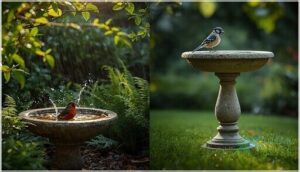
Different species survey your yard with distinct preferences. Ground bird bath designs draw robins and doves—birds that forage low and need quick escapes. Elevated birdbath options attract cardinals and jays, who scan from above. Bath placement at varied heights boosts species diversity dramatically.
| Bath Height | Bird Behavior & Visitors |
|---|---|
| Ground level | Robins, thrushes bathe mornings; prefer shallow water depth near cover |
| 2-3 feet high | Cardinals, jays arrive mid-morning; balance visibility with safety |
| Multiple heights | Finches alternate levels; garden design supporting 10+ species possible |
| Near shrubs | Quick escape routes encourage timid visitors at any pedestal bird bath |
Bird Species and Bath Height Preferences

Different bird species have evolved unique habits in relation to water sources, and height plays a bigger role than you might think.
Some birds feel safest splashing around at ground level, while others won’t touch water unless it’s perched up high where they can spot danger. Let’s look at which species prefer what, so you can attract exactly the birds you’re hoping to see.
Ground-feeding Birds: Robins, Doves, and Thrushes
If you want to see robins, doves, and thrushes in your garden, ground-level bird baths are your best bet. These ground foraging specialists hunt for soil invertebrates and seeds right on the soil surface, so they’re naturally drawn to water at that same height.
A heated bird bath placed directly on the ground stays ice-free through winter while matching the natural feeding habits of these species.
Robins probe for earthworms after rain, doves pick up grass seed preferences, and thrushes flip through leaf litter—all keeping them close to the ground where habitat feels safest.
Canopy and Elevated Birds: Cardinals, Blue Jays, and Finches
Cardinals, Blue Jays, and finches thrive when you offer elevated feeding and elevated birdbath setups 3 to 6 feet high. These canopy dwelling species hop from tree placement to pedestal bird bath, using bird perches to scan for threats.
Northern Cardinals favor 4 to 6 feet—high enough for safety, close enough to shrub cover. Blue Jays choose 5 to 7 feet near open edges. Finch behavior shows flexibility around 4 to 5 feet with stable perches and shallow water.
Birds Adaptable to Both Bath Heights
Song Sparrows and Dark-eyed Juncos show impressive height flexibility, switching between ground-level bird baths and elevated birdbath setups as threats shift. This bird adaptability gives you more species diversity when you create bird-friendly gardening spaces with water at multiple heights.
Their bathing behavior adjusts to:
- Pedestal bird bath visits when cats patrol nearby ground areas
- Ground water preference during calm, safe morning hours
- Bird bath height switching based on flock size and competition
Special Cases: Hummingbirds and Unique Water Sources
Hummingbird hydration breaks all conventional rules. These tiny dynamos ignore pedestal bird bath setups entirely, preferring micro watering from dew collection on leaves and water misting systems instead. Their feather care demands shallow water—just 4 to 6 inches deep—with nearby perches for quick escapes.
Here’s what hummingbirds need for ideal wildlife conservation:
| Water Source | Preferred Height | Safety Features |
|---|---|---|
| Fine mist sprays | 3-6 feet elevated | Quick-dry plumage protection |
| Leaf dew droplets | Ground to canopy | Natural predator cover |
| Shallow basins | Slightly raised | Red-adorned nearby flowers |
| Drippers | 2-4 feet high | Adjacent perching branches |
| Light rain simulation | Variable heights | Continuous light spray access |
Safety and Maintenance Considerations
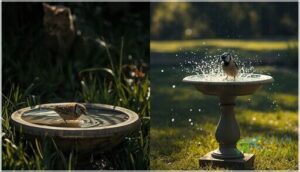
You can’t just set out a bird bath and call it a day—where you place it and how you care for it makes all the difference between a safe watering hole and a predator’s lunch counter.
Birds bathing with wet, heavy wings are sitting ducks (sometimes literally), so understanding the risks at different heights is vital. Let’s break down the safety concerns, cleaning realities, and smart placement strategies that’ll keep your feathered visitors both happy and alive.
Predator Risks at Different Bath Heights
Where you place your bird bath matters more than you might think—it’s a delicate risk assessment every bird makes. Height preferences directly influence bird safety and predator avoidance.
- Ground-level baths attract cats and ambush predators hiding in nearby shrubs
- Elevated or pedestal bird baths reduce ground threats but expose birds to aerial hunters like hawks
- Multi-height setups offer predator deterrence through diversified escape routes
Cleaning and Water Quality at Ground Vs. Elevated Levels
Elevated bird baths stay cleaner longer than ground-level setups because debris removal is simpler—no leaf litter or soil runoff to tackle daily.
Ground-level baths demand frequent water purification and algae control since warm, still water near soil surfaces breeds bacteria fast.
Pedestal bird baths need weekly bath sanitizing with mild soap, while filtration systems aren’t necessary if you refresh water every two to three days.
Placement Tips to Maximize Bird Safety and Comfort
Bird Safety starts with smart Bath Placement that balances visibility and quick escape routes. Position your bath in open yet sheltered spots where birds spot Predators before they strike.
Consider these Predator Deterrents:
- Install baffles on pole-mounted baths at any Height to block climbing threats
- Use rock or gravel bases to deter ground snakes
- Avoid placing Elevated baths under raptor perches
This Garden Layout protects vulnerable bathers.
Optimizing Bird Baths for Diverse Species
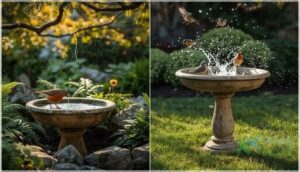
You don’t have to choose between ground-level and elevated baths—offering both creates a backyard that welcomes the widest variety of birds.
Smart placement and a little habitat enhancement can turn your yard into a genuine refuge for ground-feeders, canopy dwellers, and everything in between.
Here’s how to design a multi-height setup that gives every species exactly what they’re looking for.
Benefits of Offering Baths at Multiple Heights
You’ll attract about 40 percent more bird diversity when you offer water at multiple heights. Height variety creates distinct microhabitats—ground level baths welcome foraging species, while elevated or pedestal options invite canopy dwellers.
Offering water at multiple heights boosts bird diversity by 40 percent, creating microhabitats that welcome both ground foragers and canopy dwellers
Birds adapt their routines, choosing different heights for drinking versus bathing. Adding gentle Water Movement at each level amplifies interest, and your Garden Layout gains visual depth while supporting Species Adaptation across seasons.
Ideal Placement in Gardens and Yards
Once you’ve chosen your heights, smart Yard Planning determines success. Your Garden Layout should weave Water Features into a cohesive Bird Habitat through thoughtful Landscape Design.
- Position Ground-Level Bird Baths 4 to 5 feet from shrubs so birds escape quickly if threatened.
- Mount Elevated or Pedestal Bird Baths 3 to 5 feet high on sturdy, anchored stands.
- Keep baths 10 to 15 feet from heavy foot traffic to minimize stress.
- Place near partial canopy with overhead cover to deter aerial predators.
- Make sure baths are visible from multiple approach angles for cautious species.
Enhancing Habitat With Plants and Shelter
Your Garden Design for Birds doesn’t stop at water placement. Native Plant Selection builds Garden Microhabitats by layering shrubs, grasses, and flowering perennials from ground to canopy.
Dense groundcover supplies Sheltered Nesting spots while Bird Friendly Fencing blends with vegetation. Vertical Landscaping and brush piles near baths create travel corridors, foraging zones, and refuge—Bird Friendly Gardening transforms your yard into a sanctuary supporting Wildlife Conservation Efforts and natural Bird Behavior and Habitat.
Top Bird Baths for Every Garden
Now that you understand how height affects bird preferences, let’s look at some excellent bird bath options that’ll bring more species to your yard.
Each of these baths offers something different—whether you need a ground-level design, an elevated perch, or something in between. Here are five trusted choices that real birders recommend.
1. Byer Of Maine Hanging Bird Bath
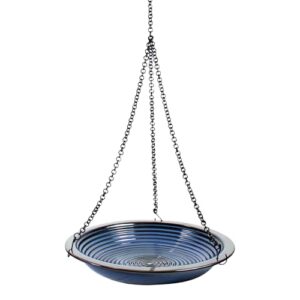
Finches and wrens love this porcelain gem! The Byer of Maine Hanging Bird Bath features a 14-inch cobalt blue bowl with a shallow 2-inch depth—perfect for smaller species.
You’ll hang it using the included 34-inch adjustable chain, positioning it at heights that attract canopy-dwelling birds while keeping cats at bay. The glossy glaze finish makes cleaning easy, and you can add a floating fountain for moving water that really draws attention.
Just remember to bring it indoors during freezing weather to protect the porcelain.
| Best For | Bird enthusiasts with smaller garden visitors like finches and wrens who want an attractive, easy-to-clean bath that can hang at adjustable heights. |
|---|---|
| Material | Porcelain |
| Dimensions | 14″L x 14″W x 34″H |
| Weight | Not specified |
| Color | Cobalt blue |
| Weather Resistance | Frost sensitive |
| Installation Type | Hanging with chain |
| Additional Features |
|
- Shallow 2-inch depth is perfect for smaller birds and safer than deeper baths
- Glossy porcelain finish makes cleaning quick and simple
- Adjustable 34-inch chain lets you position it at the ideal height for different bird species
- Porcelain can crack in freezing temperatures, so you’ll need to bring it inside during winter
- Some customers reported birds took a while to discover and use the bath
- Not built for harsh weather conditions like high winds or ice storms
2. Harbor Gardens Ceramic Bird Bath
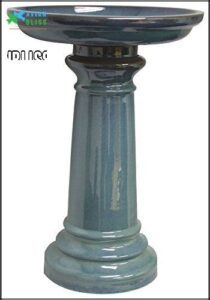
Cardinals and Blue Jays will flock to this sturdy ceramic showpiece! The Harbor Gardens Ceramic Bird Bath stands 24 inches tall—right in the sweet spot for attracting medium-sized songbirds while reducing ground predator risk.
You’ll appreciate the 15-inch glazed basin with its shallow 2-inch depth, giving multiple birds room to splash simultaneously. The cobalt blue glaze creates stunning contrast against garden greenery, helping birds spot the water from perches.
Just detach the basin for easy cleaning, and store it indoors during hard freezes to prevent cracks.
| Best For | Gardeners who want to attract medium-sized songbirds like cardinals and blue jays while adding a decorative focal point to their outdoor space. |
|---|---|
| Material | Ceramic |
| Dimensions | 17″L x 17″W x 24″H |
| Weight | 25 pounds |
| Color | Light blue |
| Weather Resistance | Frost sensitive |
| Installation Type | Ground pedestal |
| Additional Features |
|
- Durable ceramic construction with an attractive cobalt blue glaze that helps birds spot the water
- Perfect 24-inch height reduces ground predator risk while the 15-inch basin allows multiple birds to bathe at once
- Easy to maintain with a detachable basin and simple locking mechanism for quick assembly
- Deep water depth may not work well for smaller bird species
- Requires regular cleaning and must be stored indoors during freezing weather to prevent cracking
- Basin may detach from the pedestal under certain conditions, requiring occasional checks
3. Evergreen Blue Sea Glass Bird Bath
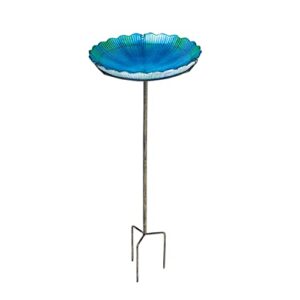
You’ll love watching robins and thrushes splash in this hand-blown glass wonder! The Evergreen Blue Sea Glass Bird Bath features unique sea glass hues that shift beautifully in sunlight, creating glints that naturally draw birds to water.
At 26.75 inches high with its metal stake, it’s perfectly positioned for both ground-foragers and perching species. The colorful glass bowl stays weather-resistant year-round, though you should avoid harsh direct sun to prevent overheating. Regular rinsing keeps the surface clean without scrubbing away that gorgeous shimmer.
| Best For | Gardeners who want to attract colorful songbirds like robins and thrushes while adding a sparkling decorative accent to small outdoor spaces. |
|---|---|
| Material | Glass/Metal |
| Dimensions | 11″L x 11″W x 26.75″H |
| Weight | Not specified |
| Color | Colorful glass |
| Weather Resistance | Powder-coated metal |
| Installation Type | Metal stake |
| Additional Features |
|
- Hand-blown sea glass design creates beautiful light effects that naturally draw birds to the water
- Tool-free setup with a sturdy metal stake that reaches a bird-friendly 26.75″ height
- Versatile enough to use as an outdoor bird bath or indoor decorative bowl
- Glass colors may fade over time when exposed to full sun
- Metal components can rust or break in rocky soil or harsh weather
- Glass bowl size may be smaller than some buyers expect
4. Gray Bunny Deck Bird Bath Bowl
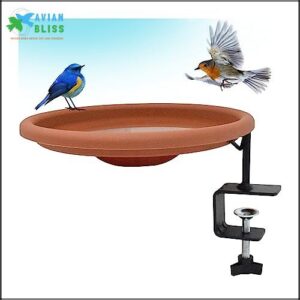
This deck-mounted wonder sits 3 to 4 feet high when clamped to your railing—ideal for attracting finches and chickadees! The Gray Bunny Deck Bird Bath Bowl installs without tools using an adjustable clamp that fits decks up to 2 inches thick.
Its polypropylene bowl detaches quickly for cleaning, though you’ll want to rinse it weekly to prevent algae buildup. The rust-resistant steel clamp stays sturdy through seasons, while the shallow basin gives smaller songbirds easy access from nearby perches.
| Best For | Bird lovers who want an easy-to-install bath for their deck or balcony that attracts smaller songbirds without requiring any tools. |
|---|---|
| Material | Polypropylene/Steel |
| Dimensions | 15.7″ x 11.8″ x 3″ |
| Weight | 1.17 pounds |
| Color | Not specified |
| Weather Resistance | Rust resistant steel |
| Installation Type | Deck clamp mount |
| Additional Features |
|
- Installs in seconds with an adjustable clamp—no drilling or tools needed
- Bowl pops off the steel ring for quick cleaning and refilling
- Rust-resistant construction holds up well through different weather conditions
- The polypropylene bowl can degrade or crack after prolonged sun exposure
- Clamp might not fit thicker or oddly shaped deck railings
- Some users report the base developing surface rust or parts breaking over time
5. Wildlife World Small Bird Bath
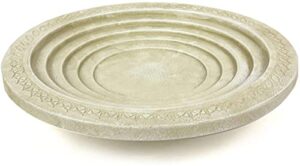
Want a bath that sits low but stays stable? The Wildlife World Small Bird Bath raises its shallow, frost-resistant ceramic bowl just a few inches off the ground on a compact pedestal. At roughly 12 inches across, it attracts ground foragers like sparrows while keeping water accessible for quick escapes.
You’ll appreciate the smooth glaze—algae wipes away in seconds. Place it near shrubs so nervous bathers can dash for cover, and refill daily to prevent mosquito larvae from taking over.
| Best For | Gardeners who want to attract ground-feeding birds and small wildlife with a low-profile, easy-to-clean bath that can handle freezing temperatures. |
|---|---|
| Material | Bamboo/Recycled Plastic |
| Dimensions | 11.81″ x 11.81″ x 1.97″ |
| Weight | Not specified |
| Color | Green/Gray |
| Weather Resistance | Frost-proof |
| Installation Type | Ground pedestal |
| Additional Features |
|
- Frost-proof Polyboo material survives winter without cracking
- Shallow basin and low height make it safe and accessible for smaller birds and pollinators
- Simple design wipes clean quickly, preventing algae buildup
- Paint finish may chip or peel with extended outdoor exposure
- Lightweight construction can tip over if larger birds land on the edge
- Some buyers feel the price is high compared to similar-sized alternatives
Frequently Asked Questions (FAQs)
What type of bird bath do birds like best?
Birds prefer shallow depths of 1 to 3 inches, textured surfaces for secure footing, and gentle water movement.
Offering multiple heights—both ground-level and elevated—attracts the widest variety of species to your yard.
Do bird baths need to be elevated?
A backyard cardinal lands on your 3-foot pedestal bath while robins splash at ground level—no, elevation isn’t required.
Offering both heights attracts more species and reduces predator risk for vulnerable bathers.
What is the 5 7 9 rule for bird feeders?
The 5-7-9 rule isn’t a standard guideline for bird feeders.
You might be thinking of spacing recommendations, but there’s no widely recognized ornithological rule by that name.
Can you clarify what you’ve heard?
What is the best position for a bird bath?
Position your bath 10 feet from windows to prevent bird strikes and near partial shade to keep water cool.
Place it with unobstructed 360-degree visibility so birds can spot predators early while bathing.
What water depth do birds prefer most?
Most species thrive in shallow water—1 to 2 inches deep. That depth lets small birds drink safely without submerging, while larger songbirds can splash and preen comfortably without feeling vulnerable.
Do bird baths attract unwanted pests or insects?
Standing water is a pest magnet—mosquitoes, algae, and gnats thrive in stagnant basins.
Change water daily, scrub weekly, and raise your bath to reduce ground-dwelling insects while keeping birds safe.
How often should I refill my bird bath?
You’ll need to refill your bird bath every 1 to 3 days, depending on temperature and sun exposure. Hot summer weather demands daily refills, while cooler months allow 3 to 7 days between refreshes.
Can bird baths be used in winter months?
You can absolutely use bird baths in winter. Heated or de-iced models keep water liquid during freezing temperatures, offering essential drinking sources when natural water freezes solid—critical for overwintering species‘ survival.
Do colors affect bird bath usage patterns?
Color is almost a secret weapon in your yard! Red and orange accents boost visits from fruit-loving species, while blue tones mimic natural water and calm nervous birds during bathing sessions.
Conclusion
Bath blueprints built on bird behavior beat guesswork every time. When you understand whether birds prefer ground level or elevated baths, you’re not choosing sides—you’re designing diversity.
Ground basins invite robins and doves where they feel safest. Raised platforms pull in cardinals and jays accustomed to scanning from height. Install both, and you’ll witness the full spectrum of avian life transforming your yard into a thriving, multi-story oasis where every species finds exactly what instinct demands.