This site is supported by our readers. We may earn a commission, at no cost to you, if you purchase through links.
Most avian breeders don’t realize their birds are nutritionally compromised until they face soft-shelled eggs, poor hatch rates, or weak chicks—all preventable outcomes. Reproductive success in captive birds hinges on precise micronutrient delivery that wild populations obtain from diverse foraging; calcium alone won’t cut it when you’re asking a hen to synthesize vitellogenin and deposit mineral scaffolds every 24 hours.
Commercial seed mixes and pellets rarely meet the heightened metabolic demands of breeding cycles, where vitamin A depletion can collapse follicular integrity and suboptimal zinc levels cripple carbonic anhydrase function in the shell gland.
Strategic supplementation with avian health supplements for breeding birds—targeted vitamin-mineral-amino acid formulations—bridges these gaps, but dosing precision and nutrient synergy separate thriving clutches from costly failures.
Understanding which compounds drive fertility, how they interact, and when natural diet falls short gives you the biochemical control to optimize hatchability and chick vigor without risking toxicity.
Table Of Contents
- Key Takeaways
- Essential Nutrients for Breeding Bird Health
- How Supplements Boost Breeding Success
- Identifying Nutritional Deficiencies in Breeding Birds
- Choosing The Right Supplement for Breeding Birds
- Top 5 Avian Health Supplements for Breeding Birds
- Safe Supplementation Practices for Breeding Birds
- Vitamins and Minerals That Work Together
- Natural Food Sources Versus Synthetic Supplements
- Consulting Avian Veterinarians for Supplement Guidance
- Recognizing and Addressing Supplement Side Effects
- Frequently Asked Questions (FAQs)
- Conclusion
Key Takeaways
- Reproductive success in captive breeding birds requires precise supplementation of vitamins A, D3, E, and minerals like calcium, zinc, and manganese—deficiencies directly cause soft-shelled eggs, poor hatch rates, embryonic mortality, and compromised chick vigor that standard seed mixes and pellets cannot prevent.
- Strategic supplementation must begin three to six weeks before pairing to build nutrient reserves, with dosing adjusted throughout breeding phases—excessive fat-soluble vitamins (A, D3, E, K) accumulate in liver tissue and cause toxicity, while proper calcium-to-phosphorus ratios and vitamin synergies determine whether eggs develop protective shells and embryos survive.
- Natural whole foods provide bioavailable nutrients but cannot meet the heightened metabolic demands of laying cycles alone—targeted supplements fill critical gaps in seed-heavy diets, support vitamin D3 synthesis in indoor birds lacking UV exposure, and prevent mineral depletion during repeated clutches when dietary intake proves inadequate.
- Avian veterinarians create personalized supplement protocols based on baseline diet analysis, species-specific tolerances, and breeding goals, then monitor through serial blood work, weight tracking, and clutch metrics—early intervention prevents toxicity while adjusting regimens according to reproductive phase, health findings, and hatchability outcomes across multiple breeding cycles.
Essential Nutrients for Breeding Bird Health
Breeding birds demand a precise balance of vitamins, minerals, and other bioavailable nutrients to achieve peak fertility, successful egg production, and viable offspring. Without adequate nutritional support, you’ll see decreased hatchability, poor chick development, and compromised parental health—outcomes that can derail even the most carefully managed breeding programs.
Understanding lack of vitamin D in birds becomes especially critical during breeding season, when calcium metabolism directly determines whether eggs develop strong, protective shells.
Let’s examine the critical nutrients your breeding birds require and how each one functions within their reproductive physiology.
Key Vitamins for Fertility
Your breeding flock’s reproductive health hinges on five fat-soluble and water-soluble vitamins that prevent fertility deficits and maximize egg production through targeted biochemical pathways. Vitamin A maintains ovarian follicle integrity and oviduct epithelial function; vitamin D3 drives calcium bioavailability for shell formation; vitamin E protects gametes from oxidative damage, boosting sperm motility and hatchability; B-complex vitamins fuel energy metabolism during laying cycles; and vitamin C mitigates stress-induced reproductive suppression—each acting as critical fertility boosters when balanced correctly in avian nutrition regimens.
Using can further improve physiological support and reproductive performance in breeding birds.
Crucial Minerals for Egg Production
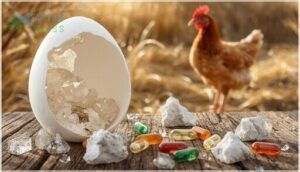
Calcium partners with vitamin D3 to form the mineral scaffold of every eggshell. Laying hens mobilize 2 grams per egg from dietary limestone or skeletal reserves, requiring 3.5 to 4.5 percent calcium in feed to prevent thin shells and production drops.
Phosphorus, magnesium, manganese, and zinc complete the mineral balance: phosphorus at a 10:1 ratio with calcium facilitates shell crystallization, magnesium strengthens breaking resistance, manganese builds the organic matrix, and zinc activates carbonic anhydrase for bicarbonate-calcium binding.
Deficiencies create nutrient gaps that collapse hatchability and skeletal integrity in your avian health program. For additional guidance on providing chickens with, consult trusted nutritional resources.
Amino Acids and Fatty Acids Roles
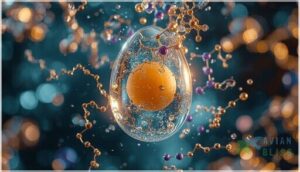
Beyond the mineral framework, amino acids and omega-3 fatty acids drive egg yolk formation and reproductive biochemistry at the cellular level. Methionine, lysine, and threonine provide the protein building blocks for vitellogenin—the yolk precursor—while linoleic acid from your fertility supplements ensures normal hatchability.
Balanced amino acid balance and fatty acid metabolism protect ovarian follicles, fuel embryonic growth, and sustain the avian nutrition science behind consistent reproductive health.
How Supplements Boost Breeding Success
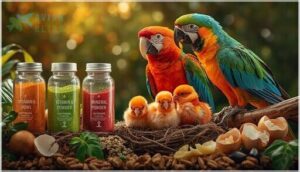
Even the most carefully curated diet won’t always deliver every nutrient your breeding birds need at ideal levels—that’s where targeted supplementation becomes critical. Strategic use of vitamins, minerals, and specialized compounds can mean the difference between weak clutches and thriving offspring; the right supplements don’t just fill gaps, they actively improve reproductive performance at every stage.
Here’s how supplementation directly impacts breeding success in your aviary.
Filling Dietary Gaps in Breeding Birds
You can’t replicate the nutritional intensity of wild breeding seasons with standard seed mixes or pellets alone—nutrient deficits in captive diets directly impair eggshell formation, mineral balance, and reproductive output.
Dietary flushing with calcium supplementation, strategically increased protein, and fatty acid balance resolves these nutrient gaps during pre-laying and chick-rearing phases, correcting vitamin deficiencies that compromise avian health and breeding performance through targeted supplementation protocols.
Enhancing Fertility and Hatchability
Targeted supplementation protocols augment fertility and hatchability outcomes by delivering bioavailable antioxidants, minerals, and essential fatty acids that base diets fail to provide in breeding parrots and other avian reproductive health scenarios.
- Fertility boosters like vitamin E and selenium protect reproductive cells from oxidative damage, increasing egg fertility by measurable percentages in aging breeders
- Calcium supplements prevent shell defects that cause embryonic mortality—improving hatchability factors through consistent mineral delivery
- Omega-3 and omega-6 ratios in breeding nutrition reduce late-stage embryo loss without compromising bird fertility
- Broad fertility supplements support hormonal balance and organ function, stabilizing clutch success across the breeding season
Supporting Chick Development
Early development hinges on nutrient-dense supplementation strategies that deliver complete proteins, probiotic benefits for gut health, and bioavailable vitamin D3 during the critical first-week window when chick nutrition demands exceed digestive capacity.
Omega-3 fatty acids and B-complex vitamins fuel rapid tissue growth, strengthen embryo development outcomes, and establish immune competence—directly linking breeding-bird supplementation to measurable improvements in avian health, bird fertility, and hatchling survival rates.
Identifying Nutritional Deficiencies in Breeding Birds
Your breeding birds won’t send you an email when they’re running low on vitamin E or calcium—but their bodies will signal distress in ways you can recognize if you know what to look for.
Nutritional deficiencies don’t just compromise egg quality; they cascade through every aspect of reproductive health, from fertility rates to chick survival.
Here’s how to identify what’s missing, understand the reproductive consequences, and use diagnostic tools to pinpoint exactly which nutrients your birds need.
Signs of Vitamin Deficiency
Vitamin deficits manifest first as respiratory issues—nasal discharge, sneezing, and swollen nares in seed-fed birds signal inadequate vitamin A, while tail bobbing at rest indicates labored breathing from thickened airway tissues. You’ll also notice skin problems and feather changes: dull, brittle plumage with abnormal color shifts, dry flaky skin around the vent, and beak abnormalities like overgrowth or scaling.
- Blocked sinuses cause facial swelling and chronic conjunctivitis, especially in breeding parrots with compromised mucosal barriers
- Wheezing and open-mouth breathing develop when mucus plugs obstruct nasal passages in vitamin A–deficient birds
- Rough, scaly footpads with wart-like lumps indicate progressive vitamin-related dermatopathy and secondary infection risk
- Overgrown, misshapen toenails and flaky beaks are classic psittacine signs of prolonged hypovitaminosis A
- Watery droppings combined with increased drinking reflect altered fluid balance from damaged digestive and urinary tract epithelium
Impact on Reproduction and Health
Inadequate nutrition directly compromises reproductive health in breeding birds. Vitamin A deficiency causes poor embryo development, reduced egg production, and infertility in both sexes. Calcium and D3 deficits lead to thin shells, egg binding, and skeletal weakness, while vitamin E shortfalls lower sperm motility and hatchability by over 10 percent. These deficiencies undermine breeding success and overall avian health, despite optimal husbandry efforts. Amino acid deficiencies further exacerbate issues, resulting in weak chick development and poor parental condition.
Without adequate vitamins, minerals, and amino acids, breeding birds suffer poor fertility, weak embryos, fragile shells, and failed clutches—no matter how perfect your husbandry
| Deficiency | Reproductive Impact |
|---|---|
| Vitamin A | Poor embryo growth, reduced egg output, infertility |
| Calcium + D3 | Thin eggshells, egg binding, bone weakness |
| Vitamin E | Lower sperm motility, reduced hatchability (>10%) |
| Amino Acids | Weak chick development, poor parental condition |
Diagnostic Methods for Deficiencies
Your avian veterinarian relies on multiple diagnostic tools to pinpoint nutritional deficiencies before breeding season. Blood testing measures calcium, vitamin D3, and protein levels; radiographs reveal decreased bone density or thin-shelled eggs; ultrasound scans detect shell abnormalities invisible on X-rays.
Tissue analysis confirms vitamin A stores, while fecal examination rules out parasites that mimic deficiency signs. Combined, these methods create a complete picture of your bird’s avian health status.
Choosing The Right Supplement for Breeding Birds
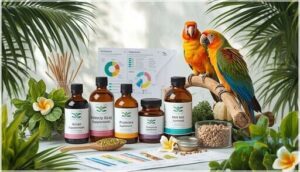
Selecting the right supplement for your breeding birds isn’t about grabbing whatever’s on the shelf—it demands systematic evaluation of nutrient profiles, bioavailability, and manufacturing standards. You’ll need to match supplement formulations to your birds’ species-specific requirements, reproductive stage, and existing dietary intake to avoid both deficiency and toxicity.
Three critical factors determine whether a supplement will boost fertility or waste your investment: nutrient composition, life-stage appropriateness, and verifiable quality standards.
Nutrient Composition and Balance
When you pick a breeding supplement, scrutinize its macro balance first—protein, fat, and carbohydrate ratios dictate whether energy sources support reproduction or strain essential organs. Next, confirm mineral ratios and vitamin interactions that drive fertility: calcium paired with D3 for shells, vitamin E with selenium for antioxidant defense, and amino acid needs that guarantee egg mass without body wasting.
- Macro balance prevents nutrient crowding and organ stress in confined breeding birds
- Mineral ratios like calcium-to-phosphorus avoid interference with absorption and reproductive performance
- Vitamin interactions with fat-soluble A, D, E, K depend on adequate dietary fat
- Amino acid needs fill gaps in plant-based proteins, especially methionine and lysine
- Fatty acid roles boost hormone synthesis and require higher vitamin E to prevent oxidative damage.
Species, Age, and Life Stage Considerations
Once you’ve nailed macro balance, you must filter each supplement through your bird’s species variations, age bracket, and breeding stage. Small finches demand higher protein and egg food during lay compared to hookbills that tolerate fat-rich seeds, while mature breeding hens need fortified blends that would oversupply fat-soluble vitamins to maintenance adults.
Life stage needs shift weekly; what builds chick muscle will stress laying hens.
Assessing Supplement Quality and Purity
Beyond life stage matching, you need manufacturing rigor—look for brands that list ingredient transparency down to vitamin forms, follow manufacturing standards verified by third-party audits like NASC, and conduct contaminant testing for heavy metals and microbes on every batch.
Label accuracy backed by independent labs, plus batch traceability that links each bottle to safety data, separates safe products from marketing noise.
Top 5 Avian Health Supplements for Breeding Birds
You’ve established the nutritional foundation your breeding birds require—now it’s time to translate that knowledge into actionable product selection.
The supplements below represent clinically validated formulations that address the specific metabolic demands of reproduction, from pre-breeding conditioning through chick rearing.
Each product delivers distinct advantages in bioavailability, nutrient synergy, and ease of administration that you’ll need to evaluate against your breeding program’s requirements.
1. Wild Harvest Bird Vitamin Supplement
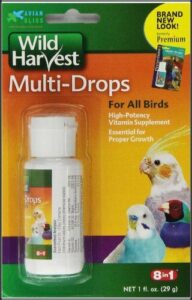
Wild Harvest Multi Drops delivers a clinical-grade vitamin punch, including 36,250 IU vitamin A per fluid ounce, 3,625 IU D3, thiamine, riboflavin, and a full B-complex array.
This water-based concentrate uses polysorbate 80 to emulsify fat-soluble vitamins, ensuring bioavailable dispersion when you add one drop per bird per ounce of drinking water daily.
The formula targets seed-diet deficiencies in breeding pairs. However, you must replace treated water every 24 hours and avoid overdosing this high-potency solution.
| Best For | Bird owners with breeding pairs or birds on seed-heavy diets that need a high-potency vitamin boost to fill nutritional gaps. |
|---|---|
| Form | Drop |
| Target Species | All birds |
| Primary Benefit | Supports proper growth |
| Vitamin Content | High-potency vitamins |
| Life Stage | All stages |
| Administration | Add to water |
| Additional Features |
|
- Packs serious vitamin power with 36,250 IU vitamin A and full B-complex per ounce
- Super easy to use—just one drop per bird per ounce of water daily
- Works for multiple bird types like canaries, parakeets, and cockatiels
- Stains water feeders yellow and can be tough to scrub clean
- High potency means you need to follow directions carefully to avoid overdoing it
- Water needs to be swapped out daily, which adds extra maintenance
2. Oasis Vita Drops Multivitamin for Birds
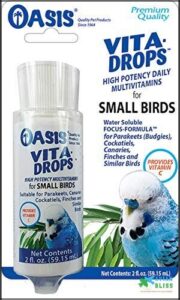
If predictable absorption is the priority, Oasis Vita Drops stands out for its balanced spectrum—delivering 2,960 IU vitamin A, 1,480 IU D3, and significant vitamin E, C, K, and B complex per fluid ounce.
The water-based solution disperses easily in drinking water or on fresh foods, supporting birds with variable consumption habits.
Daily supplementation closes gaps common to caged bird diets, bolstering immune resilience and feather condition for breeding pairs without risking the over-supplementation pitfalls of higher-potency competitors.
| Best For | Bird owners looking for a daily liquid multivitamin that mixes easily into water and covers essential nutrients without overwhelming their parakeets, canaries, finches, or other small cage birds. |
|---|---|
| Form | Liquid |
| Target Species | Small cage birds |
| Primary Benefit | Immune system health |
| Vitamin Content | Complete multivitamin |
| Life Stage | All stages |
| Administration | Add to water |
| Additional Features |
|
- Broad vitamin spectrum (A, D3, E, C, K, B-complex) fills common dietary gaps in seed-based diets
- Water-soluble format makes dosing simple for birds that drink regularly throughout the day
- Made in the USA with ingredients designed to support immune health and vibrant feathering
- Strong, unpleasant smell that some owners find off-putting during daily use
- Unappealing color may raise concerns about product freshness or palatability
- Not a replacement for vet care if your bird shows signs of serious illness or infection
3. Hari Hagen Parrot Vitamin Supplement
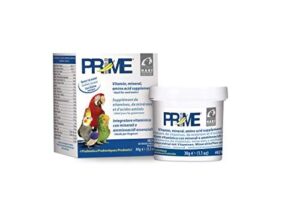
Micro-encapsulated probiotics distinguish Hari Prime from standard multivitamins—the 30 g jar supplies 14 vitamins, 9 minerals, lysine, and methionine in an ultra-fine powder that adheres to moist fruits and greens rather than settling through dry seed hulls.
You’ll dose ½ cc daily for budgies, 1 cc for medium parrots, 1½ cc for macaws, calibrating to deliver 292.6 IU vitamin A and 26.4 IU D3 per serving.
The enzyme and acidifier blend enhances protein assimilation and gut flora, critical when breeding birds metabolize high-energy rations for egg formation and chick provisioning.
| Best For | Parrot owners who want a complete vitamin supplement with probiotics to support breeding, feather quality, and digestive health in seed-eating birds. |
|---|---|
| Form | Powder |
| Target Species | Seed-eating birds |
| Primary Benefit | Breeding support |
| Vitamin Content | 14 vitamins |
| Life Stage | All stages |
| Administration | Add to food/water |
| Additional Features |
|
- Contains probiotics and digestive enzymes that help birds absorb nutrients better, especially important during breeding season
- Ultra-fine powder sticks to fresh fruits and vegetables instead of falling through seed bowls like coarser supplements
- Provides targeted amino acids (lysine and methionine) that improve protein quality in seed-based diets
- Small 1.1 oz jar won’t last long if you have multiple birds or larger parrots
- Strong odor that some owners find unpleasant when mixing into food or water
- Loose powder form can be messy to measure and mix compared to liquid or pellet supplements
4. Vitakraft Egg Food for Birds
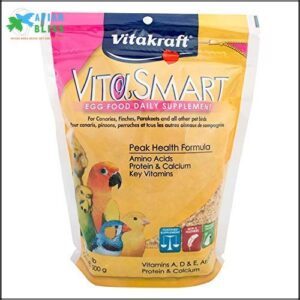
This 1.1-pound formula, anchored by dried whole-egg protein, delivers 17.5% crude protein, 49,940 IU/kg vitamin A, and 4,400 IU/kg D3 at approximately $12.48 per container, making it an economical choice for multi-bird breeding operations.
Sprinkle 2 tablespoons dry over pellets or moisten with juice to form a soft crumble that appeals to finicky hens provisioning chicks. The 0.75% lysine and 0.20% methionine support feather synthesis during molt.
Store refrigerated mash for up to seven days, discarding uneaten portions daily to prevent mycotoxin contamination.
| Best For | Bird owners raising multiple species who need an affordable, protein-rich supplement during breeding, molting, or growth periods. |
|---|---|
| Form | Seeds |
| Target Species | All bird species |
| Primary Benefit | Daily nutrition |
| Vitamin Content | Vitamins A, D, E |
| Life Stage | All Life Stages |
| Administration | Serve alone or mixed |
| Additional Features |
|
- High protein content (17.5%) with real egg, plus vitamins A, D, and E for vitality and feather health
- Versatile serving options—use dry, moistened, or mixed with regular feed to suit picky eaters
- Economical bulk size (1.1 lbs) works well for multi-bird households or breeding operations
- Some buyers report it’s pricey compared to similar products, especially for single-bird owners
- Packaging can arrive damaged during shipping, causing spills or waste
- Refrigerated mash only lasts seven days, requiring careful portion control to avoid spoilage
5. Nekton Multi Vitamin for Birds
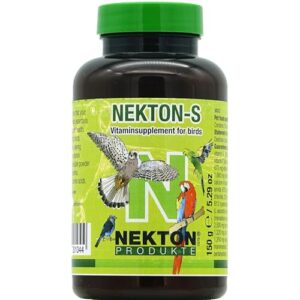
Imported from Germany in a 150-gram powder, Nekton S combines 6,600,000 IU/kg vitamin A, 10,000 IU/kg D3, 18 L-form amino acids, and trace minerals at roughly $19 per unit—a premium daily baseline multivitamin that you’ll mix at 1 g per 250 ml drinking water.
Pair it with NEKTON E two weeks before breeding, then continue Nekton S alone once eggs appear; the stable amino acid profile helps hens recover between clutches.
Store the powder tightly sealed at 15–25°C—never refrigerate—and replace treated water every 24 hours to prevent bacterial overgrowth.
| Best For | Bird owners looking for a comprehensive daily multivitamin to support feather health, reduce stress, and fill nutritional gaps in seed-based diets. |
|---|---|
| Form | Powder |
| Target Species | All caged birds |
| Primary Benefit | Stress reduction |
| Vitamin Content | 13 vitamins |
| Life Stage | All life stages |
| Administration | Mix with water |
| Additional Features |
|
- High-potency formula with 13 vitamins, 18 amino acids, and minerals keeps feathers smooth and supports recovery from stress or illness
- Versatile across all bird life stages and can be paired with Nekton E during breeding season for better clutch outcomes
- German-made quality with stable amino acid profile that stays effective when stored properly
- Requires daily water changes since the mixture only stays fresh for 24 hours, adding to your routine
- Colors drinking water yellow, which may concern some owners or deter picky birds
- Narrow bottle opening makes scooping powder tricky without tweezers or a small spoon
Safe Supplementation Practices for Breeding Birds
You’ve selected high-quality supplements—now the real work begins: administering them correctly without causing harm. Even veterinarian-formulated products become dangerous when dosages exceed physiological thresholds or when multiple supplements create toxic interactions you didn’t anticipate.
Here’s how to implement supplementation protocols that improve fertility rather than compromise it.
Proper Dosage and Administration Methods
Dose calculation hinges on body weight—most breeding supplements prescribe 100 to 300 mg per kg daily, though supplement administration methods vary widely.
Water delivery works well because stressed or breeding birds continue drinking even when feed intake drops; add liquid form vitamins to fresh water daily, ensuring concentrations below 25 °C to maintain intake.
Food mixing requires thoroughly incorporating powder into moist foods that birds will finish completely, preventing uneven dosing frequency and potential overdosing or gaps in nutrition.
Avoiding Over-supplementation and Toxicity
Fat soluble risks—vitamins A, D3, E, and K—accumulate in liver tissue over weeks, making daily excess far more dangerous than water-soluble overdosing.
Mineral overload from stacking calcium powder, fortified pellets, and cuttlebone quietly pushes intake beyond safe thresholds, while supplement interactions between high-iron diets and breeding tonics trigger iron storage disease in species-sensitive parrots.
Always inventory every product before adding another layer of supplementation.
Monitoring Bird Health and Adjustments
Daily observations reveal whether your supplement dosage truly promotes bird breeding, or whether changes demand swift action. Track these four core markers under avian vet guidance to safeguard reproductive health in birds:
- Appetite, droppings, and plumage condition—checked every morning for early warning signs
- Weight tracking on a gram-scale twice weekly to catch subtle losses
- Reproductive metrics including egg fertility, hatch rates, and chick growth
- Vet diagnostics through blood panels before and during breeding to supplement fine-tuning based on real data
Adjust regimens when bird health assessment flags declines.
Vitamins and Minerals That Work Together

Your breeding birds can’t absorb certain nutrients without their chemical partners—calcium fails without vitamin D3, fertility tanks when E and K run low.
Understanding these synergistic relationships transforms random supplementation into targeted reproductive support.
Here’s how specific vitamin-mineral combinations work together to improve breeding success.
Synergistic Effects for Fertility
Nutrient synergy determines whether your breeding birds achieve peak fertility or merely survive the season. Vitamin interactions among E, selenium, and carotenoids create fertility boosters that protect reproductive hormones and improve egg quality far beyond what isolated supplements deliver.
When vitamin E guards sperm motility while selenium-dependent enzymes recycle oxidized E molecules, you’re optimizing reproductive health in birds through strategic vitamin and mineral supplementation—not guesswork—to drive fertility improvement in parrots and boost avian health and wellness through precise bird fertility and nutrition protocols.
Calcium and Vitamin D3 for Egg Shells
Egg shell quality hinges on calcium absorption—and vitamin D3 is the gatekeeper that controls it. Without adequate D3, your laying hens can’t absorb dietary calcium efficiently, even when you’ve provided mineral-rich feeds; the result is soft-shelled or thin-shelled eggs that crack easily.
During the fifteen to twenty hours of shell formation, calcium must flow continuously into the shell gland, supported by D3-induced calbindin proteins that shuttle calcium ions across intestinal walls into circulation for proper avian health and egg production.
Vitamins E and K for Reproductive Success
Vitamin E and vitamin K work as a biochemical tag team—E protects sperm membranes and egg yolk lipids from oxidative damage while K activates clotting factors and bone proteins in your breeding parrots, supporting both fertility boosters and skeletal integrity during demanding laying cycles.
However, excessive vitamin E can interfere with K-dependent coagulation, so balanced avian nutrition and supplements matter: aim for strong antioxidant support without compromising normal hemostasis in your breeding flock.
Natural Food Sources Versus Synthetic Supplements
You face a critical decision in breeding bird nutrition: whether to rely on whole food sources, synthetic supplements, or a strategic combination of both. The bioavailability of nutrients varies markedly between fresh foods and manufactured products—and understanding these differences directly impacts fertility outcomes, hatchability rates, and chick survival.
Let’s examine how natural and supplemental nutrition sources compare, when each approach proves most effective, and how to integrate them for supreme reproductive success.
Whole Food Sources of Key Nutrients
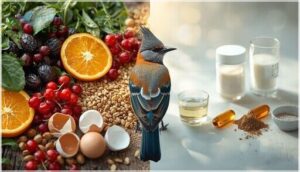
Fresh whole foods deliver bioavailable nutrients your breeding birds metabolize efficiently. Dark leafy greens like kale supply vitamin A, calcium, and folate; carrots and sweet potato offer beta carotene; mango and papaya provide fruit carotenoids that support reproductive health.
Crushed eggshell and oyster shell serve as mineral sources for egg production, while mealworms function as protein boosters, creating nutritional balance across your avian diet without synthetic formulations.
When to Use Supplements Over Diet
When do breeding birds require vitamin supplementation beyond dietary limits alone? You’ll switch to targeted supplements—not simply increase whole foods—whenever breeding cycles intensify demands, health monitoring reveals mineral deficiency, or environmental constraints prevent adequate nutritional balance in the avian diet.
- Breeding females depleting calcium stores despite greens and oyster shell
- Indoor birds lacking ultraviolet exposure for endogenous vitamin D3 synthesis
- Seed-heavy rations missing bioavailable vitamin A and trace minerals
- Repeated soft-shelled eggs or embryo mortality signaling nutrient gaps
- Illness recovery periods demanding concentrated support beyond caloric intake
Integrating Natural and Supplemental Nutrition
You’ll construct a thorough nutrition planning strategy by anchoring your breeding pairs on pelleted formulas—approximately 70 percent complete feed.
Then, layer sprouted seeds, calcium-rich greens, and targeted reproductive health supplements during conditioning windows six to eight weeks before pairing.
This dietary variety preserves nutrient balance, sustains avian gut health through probiotic-rich whole foods, and delivers fertility enhancement in parrots without risking over-fortification or micronutrient toxicity in your flock.
Consulting Avian Veterinarians for Supplement Guidance

Your avian veterinarian acts as your most reliable partner in tackling your breeding birds’ specific physiological demands. No two breeding operations face identical nutritional challenges—flock size, species composition, baseline diet quality, and environmental stressors all influence which supplements you’ll need and at what concentrations.
Here’s how to work effectively with your vet to create, monitor, and adjust a supplementation protocol that maximizes reproductive success while preventing toxicity.
Creating a Personalized Supplement Plan
Your avian veterinarian tailors a customized supplement plan by evaluating your bird’s baseline diet—seed mix, pellets, greens—and identifying gaps in vitamin A, D3, calcium, or essential amino acids that limit reproductive success. Tailored plans align bird nutrition with breeding strategies, adjusting supplement timing around courtship, egg laying, and chick rearing to enhance avian wellness without risking toxicity.
Critical elements in effective reproductive health supplements:
- Baseline diet review quantifies nutrient density and reveals deficiencies in seed-heavy regimens
- Breeding goals dictate whether you need fertility enhancement in parrots or clutch-size support
- Nutrient focus shifts—vitamin E and selenium for hatchability, calcium and D3 for eggshell integrity
- Supplement timing starts 3–4 weeks pre-pairing, then rotates products to prevent nutrient overload
- Integrating specific avian dietary supplements, such as Nekton or Vitakraft egg food, with separate calcium sources prevents dangerous overlap while supporting bird supplements and fertility throughout the breeding cycle
Monitoring Breeding Birds During Supplementation
You’ll track daily feed intake and droppings closely—sudden appetite loss or watery droppings signal intolerance or early toxicity in breeding parrots receiving reproductive health supplements.
Document behavior shifts, feather condition, nest attendance, and clutch parameters weekly; serial blood work measuring calcium, phosphorus, and liver enzymes confirms your nutrition balance maintains bird fertility without triggering supplement safety concerns.
This enables precise flock management and fertility enhancement through disciplined health monitoring and avian nutrition and supplements oversight.
Adjusting Regimens Based on Veterinary Advice
Your avian vet tailors bird health supplements and dose adjustments to each breeding phase, species need, and health finding—what works for a finch won’t suit a macaw, and seed versus pellet diets demand different supplementation strategies.
Follow veterinary recommendations precisely to achieve safe supplement timing and toxicity prevention:
- Lower multivitamin frequency from daily to two or three times weekly when pellets replace seeds, preventing hypervitaminosis A.
- Increase calcium and vitamin D3 four to five times weekly during heavy laying to meet elevated eggshell demand.
- Stop fat‑soluble vitamins immediately if blood work reveals elevated liver enzymes or soft tissue mineralization.
- Start vitamin E and breeder formulas three weeks before pairing, then reduce high‑dose E once the first egg appears.
- Recheck problem birds every few weeks after regimen changes to confirm weight, droppings, and feather growth improve.
This veterinary guidance and health monitoring safeguard breeding success through disciplined avian nutritional support and proactive toxicity prevention.
Recognizing and Addressing Supplement Side Effects
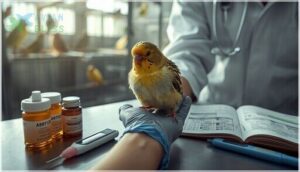
Even carefully administered supplements can trigger adverse reactions in breeding birds—from subtle behavioral changes to life-threatening organ dysfunction. Your ability to recognize early warning signs and intervene quickly often determines whether a supplementation regimen aids fertility or compromises it entirely.
The following sections outline the most critical response protocols you’ll need to safeguard your breeding flock’s health.
Common Adverse Reactions in Breeding Birds
You might notice subtle shifts in behavior before a crisis unfolds—soft droppings from excess zinc or vomiting triggered by hypervitaminosis D signal that supplementation has crossed the line from benefit to toxicity.
Reproductive health deteriorates when nutrient imbalance strains kidneys or liver; poor feather quality, lethargy, and thin-shelled eggs reveal vitamin deficiency or supplement interactions that compromise bird health and hatchability.
| Adverse Reaction | Common Cause |
|---|---|
| Watery droppings, vomiting | Excess minerals, vitamin D3 toxicity |
| Liver damage, kidney strain | Over-supplementation (vitamin A, calcium) |
| Weak eggs, bone fractures | Imbalanced calcium–vitamin D3 ratios |
Early Intervention and Prevention
Catching over‑supplementation early—before kidneys fail or egg‑shells collapse—means integrating Pre Breeding Care protocols that establish baseline health, then launching Health Monitoring logs to track droppings, weight, and shell quality weekly. Nutrition Planning anchored in species‑specific ratios and regular veterinary review prevents Vitamin and Mineral Deficiencies from escalating into reproductive collapse.
- Begin Nutritional Supplements for Birds at conservative doses; increase only after verifying tolerance through fecal and behavior checks.
- Pair Egg Shell Support minerals (calcium, vitamin D3) with quarterly blood panels to confirm bioavailable levels without toxicity.
- Use Fertility Boosters and Reproductive Health Supplements for Breeding Parrots only when diet alone falls short—consult an avian vet first.
- Schedule mid‑season Avian Nutritional Support audits to adjust formulations before subtle imbalances derail hatchability or chick vigor.
Long-term Health Monitoring Strategies
Beyond short‑term fixes, Health Tracking over multiple breeding cycles lets you spot patterns—perhaps one line always shows thinner shells mid‑season, or hatchability drops each winter.
Log weight, clutch data, and lab trends in your Flock Management records; share them during Veterinary Care visits so your avian specialist can perfect Nutrition Planning, adjust nutritional supplements, and strengthen Disease Prevention before chronic issues compromise reproductive health and avian wellness.
Frequently Asked Questions (FAQs)
How long before breeding should supplementation start?
A canary breeder watched her clutches dwindle until she discovered the power of timing: most reproductive health supplements for breeding parrots and songbirds begin three to six weeks before pairing, allowing nutrient reserves to build for peak fertility and hatchability.
Can supplements interfere with prescribed bird medications?
Yes—supplements can absolutely interfere with prescribed medications through altered absorption, metabolism shifts, or additive toxicity. Calcium blocks azithromycin uptake; iron-rich products risk overload; herbal liver supplements change drug clearance rates, demanding strict veterinary guidance before combining therapies.
What water temperature preserves liquid vitamin potency?
Keeping liquid potency intact means protecting fragile vitamin formulations from warmth’s slow erosion. Cool storage between 15°C and 25°C prevents heat sensitivity from degrading water-soluble nutrients, especially vitamin C, B complex, and even stable vitamin A and vitamin D
Do UV lights reduce need for supplements?
UVB lighting allows birds to synthesize vitamin D3 endogenously, which often permits supplement reduction—particularly vitamin D3 and calcium products—while maintaining adequate serum calcium for egg production, bone health, and breeding nutrition success under veterinary guidance.
Should supplements continue after eggs are laid?
Most breeding birds need adjusted—not eliminated—Post Laying Nutrition through the complete Breeding Cycle because Calcium Balance, Vitamin D3, and Reproductive Health Supplements maintain Eggshell Quality and parental reserves during ongoing Egg Production.
Conclusion
Think of targeted supplementation as the ballast that keeps a breeding cycle from capsizing under metabolic stress. Without it, even premium diets can’t stabilize the micronutrient flux reproductive physiology demands.
Strategic use of avian health supplements for breeding birds doesn’t replace veterinary oversight; it sharpens your ability to preempt deficiencies before they derail fertility or hatch rates.
Master nutrient synergy, respect species-specific tolerances, and your clutches will consistently reflect the biochemical precision you’ve engineered.
- https://www.revivalanimal.com/learning-center/important-vitamins-and-minerals-for-pet-birds
- https://pmc.ncbi.nlm.nih.gov/articles/PMC8791772/
- https://jedds.com/collections/breeding-supplements
- https://www.academia.edu/79151985/Impact_of_Vitamin_a_Supplementation_Before_and_During_Early_Egg_Production_on_Laying_Hen_Performance
- https://www.nekton.de/en/warum-ist-eine-ergaenzung-mit-vitamin-e-fuer-voegel-so-wichtig/