This site is supported by our readers. We may earn a commission, at no cost to you, if you purchase through links.
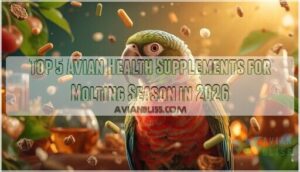
Feather regrowth during molt demands metabolic resources that rival egg production—your bird’s body synthesizes over 25% of its total protein mass in just six to eight weeks, depleting reserves faster than standard diets can replenish them.
Keratin synthesis, follicle stability, and inflammatory control hinge on precise ratios of amino acids, trace minerals, and fatty acids; even minor deficiencies trigger stress bars, incomplete plumage, and prolonged vulnerability.
The challenge isn’t simply adding protein—it’s delivering bioavailable nutrients in forms your bird’s metabolism can rapidly deploy during this high-stakes window.
Selecting avian health supplements for molting season requires understanding which formulations address the specific biochemical bottlenecks that separate smooth, resilient feather replacement from ragged, protracted struggles that compromise your bird’s well-being and vitality.
Table Of Contents
- Key Takeaways
- Essential Nutrients for Birds During Molting
- Choosing The Right Molting Supplements
- Top 5 Avian Health Supplements for Molting Season
- Best Practices for Supporting Birds Through Molting
- Frequently Asked Questions (FAQs)
- What supplements are good for molting chickens?
- What is molting supplement for birds?
- What should I feed my chickens during molting season?
- How long does molting season typically last?
- Can supplements replace a balanced natural diet?
- Are there any supplement overdose risks?
- Do indoor birds molt differently than outdoor birds?
- When should I start giving molting supplements?
- Conclusion
Key Takeaways
- Feather regrowth during molt demands over 25% of a bird’s total protein mass in six to eight weeks, requiring bioavailable amino acids (especially methionine and cystine), trace minerals like zinc and copper, and omega-3 fatty acids in precise ratios to prevent stress bars, incomplete plumage, and prolonged vulnerability.
- Effective molting supplements must deliver 16-22% crude protein with essential amino acid balance, maintain 2:1 calcium-to-phosphorus ratios, and include vitamins A, D3, E, and B-complex alongside trace elements—ingredient transparency and species-specific formulations matter more than simply adding protein to standard diets.
- Top supplements like Kaytee’s 21% protein blend, Vitakraft Egg Food with German formulation, and Missing Link’s 22% protein powder with 3:1 omega ratio provide targeted nutritional support through different delivery methods (powders, egg-based foods, seed blends) to match your bird’s size and feeding preferences.
- Supporting birds through molt requires weekly feather quality monitoring for dull edges or stress bars, environmental control including 40-60% humidity and draft-free placement, and recognizing deficiency signs like crusty nostrils or extended molt periods beyond 12 weeks that signal immediate dietary intervention needs.
Essential Nutrients for Birds During Molting
Your bird’s feathers aren’t just for flight—they’re protein-demanding structures that require strategic nutritional support during molting season, when metabolic demands can surge by 25 percent.
Choosing safe, high-protein foods during molting helps your bird rebuild feathers efficiently without taxing their system.
Feathers are protein-demanding structures requiring strategic nutrition during molting season, when metabolic demands surge by 25 percent
Without adequate vitamins, minerals, and amino acids, you’ll see weak pin feathers, incomplete molts, and plumage that won’t protect your bird through the coming months.
Understanding which nutrients matter most gives you control over your bird’s health when it needs you most.
Key Vitamins and Minerals for Feather Growth

Vitamin A maintains epithelial integrity along feather follicles, ensuring smooth plumage renewal—dark leafy greens supply the carotenoids your bird converts into active vitamin A. Biotin and other B vitamins drive keratin synthesis and reduce breakage; zinc prevents frayed vanes and aids structural feather formation.
Calcium anchors follicle stability, while omega-3 fatty acids temper inflammation and fortify shaft resilience throughout the molt. Providing a is vital to promote peak growth and vibrancy during molting.
Importance of High-Quality Protein Sources
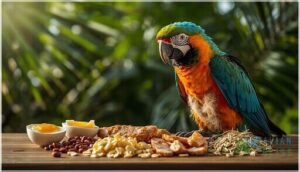
Beyond vitamins and minerals, feather regrowth demands protein—about 85 to 90 percent of each feather by dry weight—so your bird’s molting nutrition hinges on high-protein, digestible sources that balance essential amino acids like lysine and methionine. Protein deficiency weakens feather strength, leaving vanes frayed and dull; conversely, nutrient absorption from high-quality feeds ensures sturdy shafts, efficient protein digestion, and strong amino acid balance without forcing birds to cannibalize muscle reserves.
To learn more about the role of in feather health, explore additional research.
Role of Amino Acids and Fatty Acids
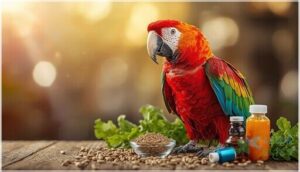
While high-quality protein fuels feather regrowth, amino acid balance determines whether that protein actually becomes strong feather keratin—methionine and cystine form 88 to 90 percent of the shaft structure, while lysine gaps trigger stress lines and incomplete molting nutrition.
Fatty acid supplements also matter:
- Omega-3 fats keep feather barbs supple and zippered
- Omega-6 excess worsens inflammation during molt
- Balanced ratios prevent protein deficiency from undermining follicle health
Impact of Calcium and Trace Elements
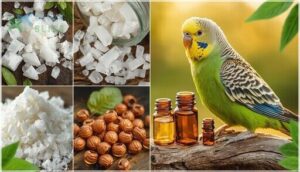
Calcium balance stabilizes the central shaft as keratin forms in each follicle—molting birds need roughly 2:1 calcium-to-phosphorus ratios to mineralize feather structure without triggering kidney damage or gout.
Trace elements like zinc, copper, selenium, and iodine drive enzyme activity, pigment synthesis, and thyroid control of molt timing; mineral deficiency leads to brittle plumage, slow regrowth, and immune collapse when nutrient absorption falters during intense feather production.
Choosing The Right Molting Supplements
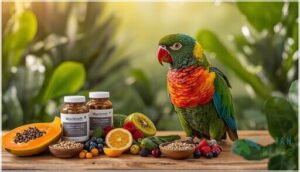
Selecting a molting supplement isn’t about grabbing the first bottle on the shelf—you need to evaluate nutritional profiles, species-specific requirements, ingredient safety, and practical administration methods. The right product delivers targeted nutrients without overwhelming your bird’s system or creating imbalances that compromise feather quality.
Pair your supplement with a balanced base diet that includes species-appropriate portions of pellets, seeds, and fresh foods that support healthy molting.
Consider these four critical factors when choosing a supplement that truly aids your bird through this metabolically demanding process.
Nutritional Content and Balance
Quality molting supplements balance elevated protein requirements—usually 16 to 22 percent crude protein—with essential amino acid balance, particularly methionine and lysine, which drive keratin synthesis and efficient protein utilization.
Effective formulas combine vitamin supplementation, strategic mineral ratios around 2:1 calcium to phosphorus, and controlled fatty acids to support molting and feather growth without crowding out critical nutrients.
Nutrient interactions matter as much as individual components in avian vitamin and mineral supplementation.
Compatibility With Bird Species
You can’t apply the same molting formula across species—budgies, cockatiels, and canaries handle seed-based supplements differently than raptors on meat diets, and Bird Size affects dosing precision for finches versus large parrots.
Match Species Nutrition profiles to Dietary Needs; color-enhancing products suit color-bred birds, while pellet-fed species require less frequent Avian Vitamin and Mineral Supplementation than seed eaters during Molting Stages.
Ingredient Transparency and Safety
You must scrutinize ingredient disclosure on every label—U.S. Label Regulations require manufacturers to list all components in descending order by weight, exposing fillers and ensuring you catch Toxic Substances like excess iron or unsafe mineral forms.
Reputable brands submit to rigorous Supplement Testing for heavy metals, pathogens, and contaminants; Safety Standards demand that avian nutrition products specify dosing, feeding directions, and nutritional balance to protect your bird’s molting cycle and long-term health.
Ease of Administration
Your bird won’t benefit from the perfect molting supplement if it refuses to eat the product—Supplement Forms like powders, liquids, and seed-based blends determine how quickly you integrate nutritional support into daily routines.
- Mixing Methods: Powder supplements blend seamlessly into soft foods or water, giving you Dosing Flexibility when birds resist new textures.
- Feeding Schedules: Daily or split-dose Administration Tips let you match supplementation to your work patterns without skipping critical feather-building nutrients.
- Species compatibility: Size-based formulas prevent under-dosing finches or overwhelming parrots during Bird Molting Season.
Choose formats your bird accepts readily to maintain consistent Nutritional Support for Birds throughout the molt.
Top 5 Avian Health Supplements for Molting Season
You’ll find five supplements here that meet the clinical standards your bird needs during this metabolically demanding phase. Each one is formulated with the protein density, amino acid profiles, and micronutrient ratios that support complete feather synthesis.
I’ve selected these based on ingredient transparency, species-appropriate formulations, and ease of administration. They range from powdered blends you can sprinkle over seed mixes to egg-based foods that deliver bioavailable protein.
These products address the core nutritional gaps that emerge when your bird’s metabolism surges by 25% and keratin production dominates its physiological priorities.
1. Kaytee Bird Molting Supplement
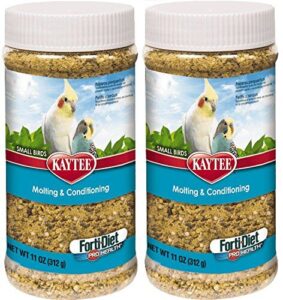
You’ll find solid nutritional backing in Kaytee Molting and Conditioning Supplement, formulated with 21 percent crude protein and 8 percent crude fat to support feather synthesis and metabolic demands during molt.
The blend incorporates dehulled soybean meal, corn gluten meal, and dried whole egg—amino acid sources critical for keratin production—alongside flax seed and soy oil for omega fatty acids that reduce follicular inflammation.
Fortification includes vitamin A for epithelial integrity, B-complex vitamins for metabolic efficiency, and trace minerals such as zinc oxide and calcium iodate; feed this supplement in a separate dish or sprinkled over regular diet for cockatiels, parakeets, canaries, and finches.
| Best For | Bird owners with small species like cockatiels, parakeets, canaries, and finches going through molt or needing help with feather health and color enhancement. |
|---|---|
| Age Range | All Life Stages |
| Primary Use | Molting & Conditioning |
| Item Form | Supplement |
| Bird Size | Small Birds |
| Weight | 11 ounces |
| Nutritional Focus | Color Enhancement |
| Additional Features |
|
- High protein content (21%) with quality amino acid sources like soybean meal and whole egg supports strong feather regrowth during molting
- Fortified with vitamins A and B-complex plus trace minerals like zinc to promote healthy skin, feathers, and overall conditioning
- Easy to use—just sprinkle over regular feed or offer in a separate dish without complicated mixing or preparation
- No clear dosage instructions included, so you’ll need to guess how much to give or contact the manufacturer
- Works only as a supplement, not a complete diet replacement, meaning you still need to maintain a balanced base feed
- Two-pack commitment might be excessive if you’re trying it for the first time or have only one small bird
2. Vitakraft Egg Food for Birds
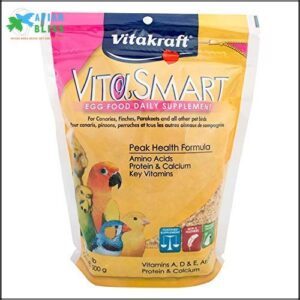
Vitakraft Egg Food for Birds is a German-made formula designed to support feather rebuilding. It contains 17.5 percent crude protein and 6.2 percent crude fat, with key ingredients like dried egg, dehulled soybean meal, and white millet that small species such as canaries and finches readily accept.
The supplement delivers essential vitamins, including 49,940 IU per kilogram of vitamin A for follicle health, 4,400 IU per kilogram of vitamin D3 for calcium metabolism, and 143 IU per kilogram of vitamin E for immune function.
Serve 2 tablespoons dry over the regular diet or moistened into a crumble during the active molt.
| Best For | Bird owners looking for a protein-rich supplement to support their pets during molting, breeding, or nesting periods. |
|---|---|
| Age Range | All Life Stages |
| Primary Use | Breeding & Molting Support |
| Item Form | Seeds |
| Bird Size | All Species |
| Weight | 1.1 Pound |
| Nutritional Focus | Vitamins A, D, E |
| Additional Features |
|
- Contains real eggs and a solid protein blend (17.5%) that helps with feather rebuilding and overall vitality
- Packed with vitamins A, D3, and E to support immune function, calcium absorption, and follicle health
- Versatile feeding options—can be served dry, moistened, or mixed with regular seed and pellet diets
- Price point of $12.48 for 1.1 pounds is on the higher side compared to other bird supplements
- Packaging issues during shipping have led to spills and product damage for some customers
- Results can vary between birds, so it’s worth checking with your vet before adding it to your bird’s routine
3. Wild Harvest Bird Molting Supplement
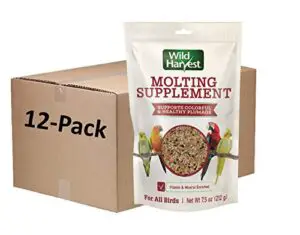
Wild Harvest Bird Molting Supplement uses millet, oat groats, and canary grass seed to deliver 14 percent crude protein alongside vitamin A palmitate for pigmentation, 200 IU per pound of vitamin D3 for calcium uptake, and 12 IU per pound of vitamin E for immune support during feather replacement.
The blend includes trace minerals—manganese sulfate, zinc oxide, copper sulfate—that maintain keratin structure, plus oil-rich seeds such as canola, nyger, and safflower for energy density.
You offer it in a separate cup alongside your bird’s core diet, not as a replacement.
| Best For | Bird owners looking to support their pets through molting with a nutrient-dense supplement that addresses feather health and energy needs. |
|---|---|
| Age Range | All Life Stages |
| Primary Use | Molting Support |
| Item Form | Seeds |
| Bird Size | All Sizes |
| Weight | 7.5 Ounces |
| Nutritional Focus | Vitamin & Mineral Enriched |
| Additional Features |
|
- Vitamin-fortified formula with A, D3, and E specifically targets pigmentation, calcium absorption, and immune function during feather regrowth
- Blend of oil-rich seeds like canola, nyger, and safflower provides concentrated energy when birds need it most
- Trace minerals including manganese, zinc, and copper help maintain strong keratin structure in new feathers
- Packaging can be frustrating to open and doesn’t reseal well, making storage inconvenient
- Some customers receive crushed or damaged product due to shipping issues
- Not a complete diet on its own—requires feeding alongside regular bird food, which means extra monitoring
4. KikiBirds Premium Parrot Food Blend
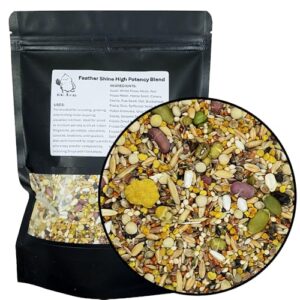
KikiBirds Premium Parrot Food Blend supplies 17.5 percent plant protein through bee pollen, freeze-dried sprouts, and omega-rich seeds—crucibles for keratin synthesis—while omitting corn, soy, sunflower seeds, peanuts, and artificial additives that dilute nutrient density or increase aflatoxin risk.
You feed it daily, not as a short-term booster, so cockatiels and conures maintain muscle tone and activity levels while they funnel amino acids into new feathers.
The low-fat formulation prevents weight gain during indoor molt, when reduced flight lowers caloric expenditure; fresh, hand-crafted batches guarantee palatability for birds shifting to premium diets.
| Best For | Parrot owners looking for a high-protein, clean-ingredient seed blend to support molting, breeding, and overall health without fillers or artificial additives. |
|---|---|
| Age Range | All Life Stages |
| Primary Use | Molting & Breeding |
| Item Form | Seed |
| Bird Size | Parrots |
| Weight | Not specified |
| Nutritional Focus | Omega Rich, 17.5% Protein |
| Additional Features |
|
- 17.5% plant protein from bee pollen and freeze-dried sprouts helps with feather growth and muscle maintenance
- Omega-rich formula without corn, soy, sunflower seeds, or peanuts reduces aflatoxin risk
- Low-fat recipe prevents weight gain during indoor molt when birds are less active
- $21.99 price point may feel steep for the amount you get
- Larger seed size might not work well for smaller birds like budgies
- Some picky eaters may need time to adjust to the mix
5. Missing Link Avian Supplement Powder
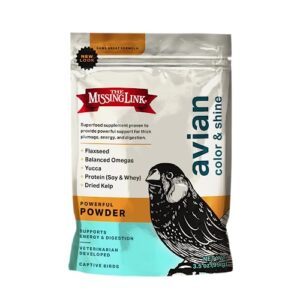
Missing Link Avian Supplement Powder delivers 22 percent protein, 26 percent fat, and a three-to-one omega-3 to omega-6 ratio from ground flaxseed, soy isolate, whey concentrate, and freeze-dried beef liver. This formula fuels follicle activity and enhances feather sheen during heavy molts, when metabolic demand spikes by 25 percent.
You sprinkle one-eighth to one-half teaspoon daily over pellets or fruit, adjusting for bird size, ensuring canaries through macaws absorb B vitamins, kelp trace minerals, and yucca digestive support. This eliminates the storage hassle of refrigerated liquids.
| Best For | Bird owners looking for a convenient powder supplement that supports feather health and energy during molting seasons without the hassle of refrigeration. |
|---|---|
| Age Range | All Life Stages |
| Primary Use | Plumage & Overall Health |
| Item Form | Powder |
| Bird Size | All Birds |
| Weight | 0.03 Pounds |
| Nutritional Focus | Omega Fatty Acids |
| Additional Features |
|
- High protein and omega-3 content supports feather growth and shine during demanding molt periods
- Easy dosing system works for all bird sizes from canaries to macaws with simple sprinkle application
- Shelf-stable powder format eliminates refrigeration needs and simplifies daily feeding routine
- Ziplock bag design often fails to seal properly due to powder buildup around the closure
- Higher price point compared to basic bird supplements may strain budgets for multi-bird households
- Some birds refuse to eat it when sprinkled on food, leading to potential waste
Best Practices for Supporting Birds Through Molting
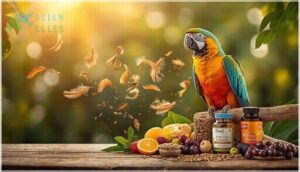
Supporting your bird through molting requires more than supplements—you need a thorough approach that tackles nutrition, environment, and early warning signs.
The metabolic demands of feather regeneration increase your bird’s vulnerability to stress, infection, and deficiency-related complications during this critical window.
Monitor these four key areas to guarantee your bird completes the molt with strong, vibrant plumage and peak health.
Monitoring Feather Quality and Growth
Examine feathers weekly during molt—healthy plumage appears smooth and well-aligned, while dull or frayed edges signal protein deficiency or inadequate amino acids essential for keratin synthesis.
Track molting patterns by noting when old feathers drop and pin feathers emerge; incomplete feather regrowth or persistent feather defects like stress bars indicate issues with feather growth that require dietary adjustments to support proper feather inspection and growth tracking.
Managing Stress and Environmental Factors
During molting season, stress reduction demands rigorous environmental control. Position your bird’s cage away from drafts, loud appliances, and high-traffic zones to minimize noise management challenges that trigger defensive behaviors.
Maintain humidity levels between 40 and 60 percent through gentle misting or humidifiers, because dry air intensifies feather shaft irritation. Proper cage placement in a stable, quiet corner promotes bird health and wellness while enabling efficient feather regrowth and maintenance throughout this metabolically demanding period.
Creating an Optimal Molting Diet
You’ll anchor your bird’s molt success on three pillars—protein sources that deliver 16 to 22 percent total dietary protein through pellets, cooked quinoa, and boiled eggs; dietary variety spanning dark leafy greens, sweet potato, and measured portions of nuts for nutrient balance; and molting strategies that prioritize feather regrowth by limiting low-nutrient fillers while ensuring constant access to protein and amino acids for birds throughout this demanding feather growth phase.
Recognizing and Addressing Deficiencies
Watch for crusty nostrils, sneezing, and dull plumage—vitamin deficits compromise feather regrowth during molting and signal nutrient imbalance requiring immediate intervention.
Protein shortages extend molt beyond 111 days while disrupting keratin synthesis; amino acids become critical as lysine gaps create curved, abnormal feathers.
Molting delays with feather disorders warrant calcium and zinc-rich bird supplements to restore metabolic function and prevent further deterioration.
Frequently Asked Questions (FAQs)
What supplements are good for molting chickens?
When autumn’s crisp air triggers molting, your chickens need feather-fixer feeds with 18–20% protein—brewers yeast, methionine, lysine—paired with water-soluble tonics delivering vitamins A, D3, E, B-complex, zinc, and manganese for vigorous feather regrowth and immune resilience.
What is molting supplement for birds?
A molting supplement provides concentrated protein, essential amino acids like methionine and cysteine, vitamins A and D, plus trace minerals—nutrients that support keratin synthesis and healthy feather regrowth when your bird’s standard diet falls short.
What should I feed my chickens during molting season?
During feather regrowth, switch your flock to a complete feed containing 18 to 20 percent protein. Game bird formulations or “feather fixer” rations accelerate regrowth while maintaining nutrient balance, supporting rapid keratin synthesis without disrupting calcium ratios.
How long does molting season typically last?
Most companion birds complete their molting process in four to twelve weeks, though seasonal timing varies by species.
Songbirds often finish within three to six weeks, while larger parrots may extend through the full twelve-week window.
Can supplements replace a balanced natural diet?
No supplement can single-handedly replace a varied, nutrient-dense diet. Birds need pellets, greens, and quality proteins to thrive during molting, while supplements simply fill targeted gaps and support feather regrowth alongside natural nutrition.
Are there any supplement overdose risks?
Yes—fat-soluble vitamin toxicity, mineral overload, and protein excess all threaten birds when owners layer multiple products.
Calcium deficit may paradoxically worsen alongside overuse, so supplement safety demands careful avian nutrition planning and veterinary oversight.
Do indoor birds molt differently than outdoor birds?
Absolutely—indoor environments blur seasonal cues through artificial lighting and stable temperatures, triggering irregular molting patterns and prolonged feather regrowth cycles; outdoor birds synchronize hormone effects and light exposure with natural seasonal changes for predictable molts.
When should I start giving molting supplements?
Timing matters—you’ll want to begin molting supplements two to four weeks before feather drop starts, ideally when seasonal cues shift; this molting preparation ensures protein for molting birds and nutritional support for birds during peak feather growth.
Conclusion
Think of molting as your bird rebuilding its armor from the inside out—each feather a reflection of the raw materials you’ve supplied.
Strategic use of avian health supplements for molting season transforms this vulnerable window into a demonstration of metabolic efficiency, where bioavailable nutrients meet cellular demand without compromise.
Monitor feather quality weekly, adjust formulations as growth patterns reveal deficiencies, and recognize that successful molt support isn’t supplementation alone—it’s precision nutrition timed to your bird’s biochemical rhythms.
- https://run-chicken.com/feather-recovery-made-easier-with-supplements-for-chickens/
- https://birdpalproducts.com/products/multivet-molting-aid
- https://www.thepioneerchicks.com/natural-supplements-for-molting/
- https://pmc.ncbi.nlm.nih.gov/articles/PMC9367603/
- https://shopcheekybeaks.com/blogs/bird-parenting-tips/caring-for-your-bird-during-molting-season-diet-and-cage-preparation-tips