This site is supported by our readers. We may earn a commission, at no cost to you, if you purchase through links.
A kingfisher moves faster than most people expect—clocking speeds up to 25 mph as it dives. Blink at the wrong moment and your shot is gone, replaced by a blue-and-orange blur that no amount of post-processing can save.
That single frustration has driven more birders toward better gear than any camera review ever written. Choosing a bird watching camera isn’t about buying the most expensive body on the shelf—it’s about matching the right specs to how and where you actually shoot.
The nine picks ahead cover everything from extreme superzoom bridges to weather-sealed mirrorless systems, with the real-world details that matter most in the field.
Table Of Contents
- Key Takeaways
- Key Features to Look for in Bird Watching Cameras
- Camera Types for Bird Watching
- Essential Camera Specifications Explained
- Top 9 Cameras and Gear for Bird Watching
- Tips for Choosing The Best Camera for You
- Frequently Asked Questions (FAQs)
- How to choose a camera for bird photography?
- What is the best birding camera for beginners?
- What magnification is recommended for bird watching?
- How do lighting conditions affect bird photography?
- Which accessories improve bird photography results most?
- How can I find birds to photograph?
- What camera settings work best for beginners?
- How do I photograph birds in low light?
- Conclusion
Key Takeaways
- Fast autofocus with animal eye detection is the single most critical feature for bird photography, because birds won’t wait for your camera to catch up.
- Superzoom bridges like the Nikon P1000 give you serious reach in one lightweight package, while mirrorless systems like the Canon R5 offer superior speed and image quality if you’re willing to invest in lenses.
- Your lens ecosystem matters more than your camera body — lenses typically consume 60–70% of your total gear budget, so choose a mount system you can grow into.
- Matching your camera to how you actually shoot — hiking remote trails versus waiting at a pond — will get you sharper results than chasing the most expensive specs on the shelf.
Key Features to Look for in Bird Watching Cameras
Not every camera cuts it in the field — birds move fast, light changes fast, and the weather doesn’t care about your gear.
Setting up bird camera stations that actually attract subjects takes the guesswork out of waiting and puts more birds in front of your lens.
Before you look at specific models, it helps to know which features actually matter for bird photography. Here are the four you’ll want to evaluate first.
Advanced Autofocus and Animal Eye Detection
Bird watching cameras have come a long way — today’s best bodies use AI-powered animal eye detection to lock onto a bird’s eye almost instantly, even against cluttered backgrounds.
Pair that with continuous autofocus speed, reliable animal detection across the frame, and burst shooting up to 30 fps, and your telephoto lens delivers sharp, accurate results every time.
Recent advances include dedicated bird eye AF systems that substantially improve autofocus accuracy for bird photographers.
Long-Range Optical Zoom
Once your autofocus is dialed in, reach becomes your next priority. A long optical zoom — especially on a superzoom like the Nikon COOLPIX P950 — can transform distant specks into detailed subjects without spooking them.
The following are key considerations for bird photography:
- 400mm focal length equals roughly 8x magnification
- 600mm delivers 12x reach
- 150–600mm zoom range suits any situation
- Telephoto lenses keep respectful distance from shy birds
- Image stabilization keeps long telephoto lens shots sharp
To understand how sensor size and focal length impact bird photography, check out this guide to lens magnification factors: https://birda.org/best-focal-length-for-bird-photography/.
Fast Burst Shooting and Shutter Speed
Reach gets you close — but speed is what locks the shot. Fast burst shooting, usually 10 to 20 frames per second, gives you multiple frames per wingbeat so motion freeze actually happens.
Pair that with fast shutter speeds around 1/2000 to 1/4000 second for small fast-moving subjects, and your camera settings in continuous shooting mode become a genuine action photography advantage.
Weatherproof and Durable Design
Speed wins the shot — but weather ends the session. Durable camera equipment built for outdoor photography gear demands more than just a rainproof sticker.
Look for:
- Weather Sealing rated IP53 or better on camera bodies
- Rugged frames in magnesium alloy for knock resistance
- Lens protection with sealed mount gaskets
- Climate resistance down to 14°F on DSLR and mirrorless rigs
Durability tests separate field cameras from shelf cameras.
Camera Types for Bird Watching
Not all cameras are built the same, and that matters a lot when you’re chasing warblers through dense brush or scanning a marsh at dawn.
The type of camera you choose shapes everything — how fast you can react, how far you can reach, and how much gear you’re hauling. Here are five camera types worth knowing before you commit to anything.
Superzoom Cameras
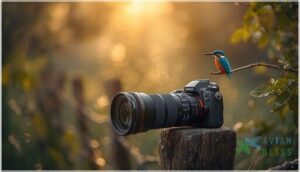
If you want serious reach without a bag full of lenses, a superzoom camera is your best friend in the field. Models like the Nikon COOLPIX P950 offer extreme optical zoom and built-in image stabilization, keeping your shots sharp at full telephoto.
| Feature | Benefit for Bird Watching |
|---|---|
| Optical Zoom Range | Frames distant birds clearly |
| Image Stabilization | Reduces blur at long focal lengths |
| Autofocus Speed | Locks onto fast-moving subjects |
| Camera Handling | Familiar DSLR-style grip for comfort |
DSLR Cameras
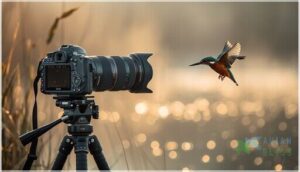
DSLRs remain a serious tool for bird photography, and for good reason. The optical viewfinder gives you a real-time, lag-free view that’s hard to beat when tracking birds in flight.
Pair that with a deep catalog of telephoto lenses, weather-sealed camera durability, and proven autofocus systems hitting 10 frames per second, and you’ve got a capable, reliable kit built for the field.
Mirrorless Cameras
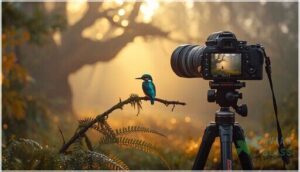
Mirrorless cameras have quietly become the go-to choice for serious bird photography. With fast autofocus and bird eye detection on bodies like the Canon R5 or Nikon Z8 — tracking at 20-30 fps — your camera selection for bird photography just got sharper.
Silent shooting won’t spook wary species, camera ergonomics keep you comfortable in the field, and lens adapters expand your options further.
Point-and-Shoot Cameras
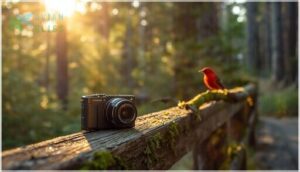
Point-and-shoot cameras earn their place in any birder’s bag through sheer camera portability and simplicity. Their fixed lens design keeps things compact, while superzoom models like the Nikon Coolpix P1000 deliver 125x optical zoom — serious reach in a lightweight body.
Sensor size is the trade-off; smaller sensors limit low-light performance. But autofocus and image quality are solid for casual, everyday birding.
Action Cameras for Casual Use
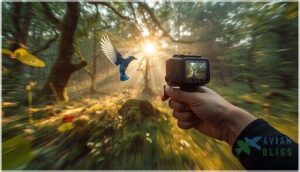
Action cameras won’t win any awards for optical zoom or autofocus precision, but they’re surprisingly capable for casual shooting on the trail. Their compact designs and weather resistance make them easy to grab and go.
- Wide angles (140–155°) keep fast birds in frame without precise tracking
- Stabilized video at up to 5.3K smooths handheld footage effortlessly
- Simple controls suit relaxed bird photography walks over technical action photography
For camera selection focused on memories over portfolio shots, they deliver.
Essential Camera Specifications Explained
Once you’ve settled on a camera type, the real decision-making starts with the specs.
Numbers like sensor size, autofocus speed, and lens compatibility separate a frustrating field experience from a great one.
Here’s what each specification actually means for your bird watching.
Sensor Size and Resolution
Sensor size shapes everything about your image quality in the field. A full-frame sensor at 36×24mm performs low light performance far better than an APS-C sensor, especially at dawn or dusk.
Higher megapixels help with cropping tiny subjects, but pixel density matters too — small sensors with packed pixels show more noise. Crop factor also gives APS-C shooters extra reach without swapping lenses.
Autofocus Speed and Tracking
Sensor resolution gets you the detail — but autofocus performance is what actually captures the shot. When a bird flushes from a branch, you’ve got fractions of a second. Continuous AF Modes, like Canon’s AI Servo or Sony’s AF-C, predict movement so your bird-in-flight (BIF) shots stay sharp.
Tracking autofocus with smart Area Patterns accommodates erratic flight paths surprisingly well.
- Use subject tracking with Bird Eye AF to lock onto a bird’s eye automatically
- Switch to shifting or group Area Patterns when birds cross busy backgrounds
- Enable Tracking Customization to tune how aggressively focus shifts between subjects
- Low Light Focus performance drops fast — phase-detect systems handle dawn and dusk better
- Match your burst rate to your autofocus speed for consistent keepers
Lens Compatibility and Versatility
Your camera’s lens compatibility shapes everything — it determines what you can shoot today and what you can grow into tomorrow.
A mirrorless camera like Sony’s E-mount system gives you access to native telephoto lenses plus DSLR camera glass via mount adapters. Third-party lens options from Tamron and Sigma expand your telephoto range affordably. A rich system ecosystem means smarter long-term lens selection.
Connectivity and Sharing Options
Once your lens system is sorted, how you get those shots off the camera matters just as much. Built-in Wi-Fi Connectivity and Bluetooth Pairing make sharing seamless — no memory cards to juggle.
- Live Streaming feeds send real-time bird visits to your phone
- Mobile Apps push motion-alert notifications instantly
- Cloud Storage backs up clips remotely via FTP
- WiFi enables stable 2.4GHz connections through walls
- Bluetooth facilitates quick initial pairing during setup
Size, Weight, and Portability
Beyond connectivity, portability shapes how long you’ll actually stay out shooting. Mirrorless bodies often clock in around 500–750 g, giving you real handhold comfort when paired with telephoto glass.
But lens weight matters just as much as body ergonomics — a 1.5 kg zoom shifts camera balance fast. Smart backpack systems keep everything close to your spine, making travel portability genuinely manageable all day.
Top 9 Cameras and Gear for Bird Watching
Finding the right camera for bird watching doesn’t have to feel overwhelming.
The nine picks below cover a range of budgets, skill levels, and shooting styles — so there’s something here for everyone from weekend hobbyists to serious field photographers. Let’s get into what’s worth your attention.
1. Nikon Coolpix Superzoom Digital Camera
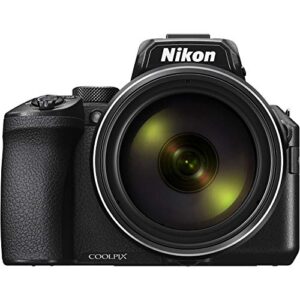
If you want to reach birds you’d never get close to on foot, the Nikon Coolpix P1000 puts serious distance in your hands. Its 125x optical zoom hits the equivalent of 3000mm, and Fine Zoom stretches that even further.
You get 4K UHD video, built-in Dual Detect VR stabilization, and a Bird mode that simplifies setup in the field. RAW support means you can pull back detail in tough lighting, and SnapBridge keeps your shots transferring wirelessly without fuss.
| Best For | Nature lovers, birders, and anyone who wants to shoot distant subjects without lugging around heavy gear. |
|---|---|
| Resolution | 16.0 MP |
| Screen Size | 3.2 inches |
| Color | Black |
| Video Format | 4K UHD |
| Image Stabilization | Dual Detect Optical VR |
| Wi-Fi | No |
| Additional Features |
|
- That 83x optical zoom (up to 2000mm) gets you remarkably close to birds, wildlife, and the moon without moving an inch.
- 4K UHD video and Dual Detect VR stabilization mean your footage stays sharp even at crazy zoom levels.
- Built-in Bird and Moon modes take the guesswork out of setup, so you can focus on the shot.
- The small aperture at high zoom makes low-light shooting a real struggle.
- Autofocus can be slow and unreliable, which is frustrating when your subject won’t wait.
- Macro and close-up shots aren’t a strong suit, so it’s not the best all-rounder for every situation.
2. Canon Powershot Digital Camera
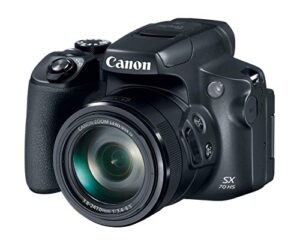
The Canon PowerShot SX70 HS is a reliable companion when you need reach without hauling heavy gear. Its 65x optical zoom covers 21mm to 1365mm, and ZoomPlus doubles that to an effective 130x.
The 20.3MP CMOS sensor and DIGIC 8 processor handle detail well in decent light. Burst shooting at 10 fps gives you real odds of freezing a wingbeat, and the vari-angle LCD lets you shoot from angles that’d otherwise be impossible.
| Best For | Travelers, wildlife enthusiasts, and bird photographers who want serious zoom range without the bulk of a DSLR kit. |
|---|---|
| Resolution | 20.3 MP |
| Screen Size | 3 inches |
| Color | Black |
| Video Format | 4K |
| Image Stabilization | N/A |
| Wi-Fi | Yes |
| Additional Features |
|
- That 65x optical zoom (up to 1365mm) gets you close to subjects most cameras can’t touch—great for birds, sports, or anything far away.
- The 20.3MP sensor and DIGIC 8 processor turn out solid, detailed shots in good lighting conditions.
- Burst shooting at 10 fps and a vari-angle LCD make it much easier to catch fast-moving subjects from tricky angles.
- Image quality takes a hit in low light, so it’s not the best choice for night shooting without dialing in your settings carefully.
- At high zoom levels, camera shake becomes a real issue—you’ll want a steady hand or a tripod.
- Battery life can be limiting, especially on longer shoots or travel days where you’re firing off a lot of frames.
3. Sony Cyber Shot RX10 Camera
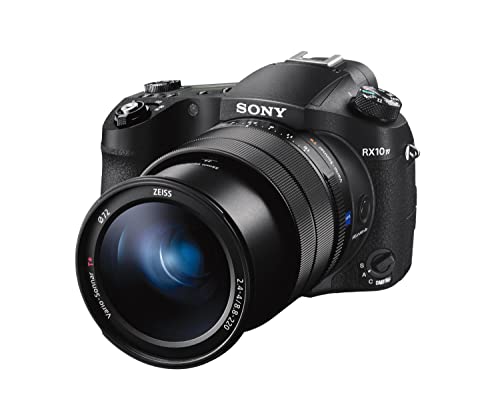
The Sony Cyber-Shot RX10 IV is a serious tool for birders who want one camera that does it all. That 24–600mm Zeiss lens alone covers most situations you’ll encounter in the field.
Pair that with 0.03-second autofocus and 24 fps burst shooting — up to 249 frames — and you’re rarely going to miss a takeoff or dive. At around 1095 grams, it won’t wear you out on long hikes, and its moisture-resistant build keeps it going when the weather turns.
| Best For | Birders, wildlife photographers, and travelers who want one versatile camera that handles everything from wide landscapes to distant subjects without swapping lenses. |
|---|---|
| Resolution | 20.1 MP |
| Screen Size | 7.5 inches |
| Color | Black |
| Video Format | 4K |
| Image Stabilization | N/A |
| Wi-Fi | No |
| Additional Features |
|
- That 24–600mm Zeiss lens covers an insane range — wildlife, travel, events, all with one camera
- 0.03-second autofocus and 24 fps burst shooting means you’re not missing the moment
- Lightweight enough for long days in the field and built to handle rough weather
- Low-light performance lags behind a DSLR, so indoor or night shooting can be frustrating
- The menu system is deep and takes some time to figure out
- Battery life is limited, so bringing a spare is basically a requirement
4. Panasonic Lumix Digital Camera
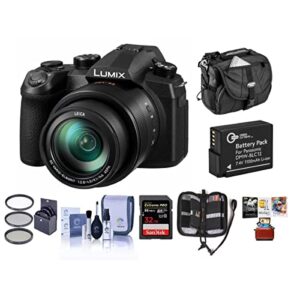
The Panasonic Lumix FZ300 is a reliable all-rounder that’s worth serious consideration. Its 25–600mm lens holds a constant f/2.8 aperture throughout the zoom range, which means your shutter speed stays fast whether you’re at 25mm or fully extended.
That matters when birds won’t sit still. The 1-inch MOS sensor copes with low-light conditions well, and the weather-sealed body holds up during unpredictable outdoor sessions. If you want reach without swapping lenses, this camera delivers.
| Best For | Nature photographers and travelers who want a long zoom range and 4K video capability without the hassle of swapping lenses. |
|---|---|
| Resolution | 20.1 MP |
| Screen Size | 3 inches |
| Color | N/A |
| Video Format | 4K MP4 |
| Image Stabilization | N/A |
| Wi-Fi | No |
| Additional Features |
|
- The 25–400mm lens with a wide f/2.8–4 aperture gives you solid reach and good low-light performance in one package.
- 4K video and 4K PHOTO mode make it a versatile pick whether you’re shooting stills or footage.
- Intuitive controls and lens barrel operation mean you’re not digging through menus to get the shot.
- Face and eye recognition can be hit or miss, which is frustrating when you need reliable subject tracking.
- Wifi and Bluetooth connectivity has known issues, so wireless workflows aren’t always smooth.
- The included camera bag and screen protector feel like afterthoughts — don’t count on them for real protection.
5. Olympus Om 1 Mark Ii Camera
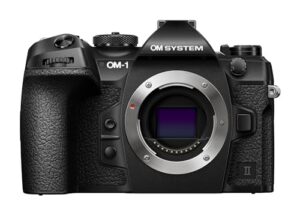
The OM System OM-1 Mark II is built for photographers who refuse to miss the shot. Its 1,053-point all-cross-type phase detection AF covers 100% of the frame, and the dedicated AI bird detection locks onto subjects even through branches.
You get up to 120 frames per second in Pro Capture mode, buffering frames before you press the shutter. Add 8.5 stops of in-body stabilization and a weather-sealed body, and this camera tackles whatever the field throws at you.
| Best For | Outdoor and wildlife photographers who need fast, reliable autofocus and a rugged, weather-sealed camera they can take anywhere. |
|---|---|
| Resolution | 20 MP |
| Screen Size | 3 inches |
| Color | Black |
| Video Format | MP4/MOV |
| Image Stabilization | N/A |
| Wi-Fi | No |
| Additional Features |
|
- Insanely fast autofocus with 1,053 all-cross-type points covering the full frame — great for birds, wildlife, and anything that moves
- Packed with computational photography tools like Handheld High Res Shot, Live ND, and Focus Stacking right out of the box
- Compact and lightweight for a weather-sealed camera, making it a solid travel and hiking companion
- Only supports one battery, so you’ll want to pack spares for longer shoots
- Feature-rich but has a learning curve — expect to spend some time digging through menus
- Autofocus can occasionally lose lock for no clear reason, which is frustrating when you’re chasing fast-moving subjects
6. Bird Photography Guide Book
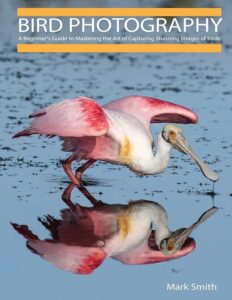
Good gear only gets you so far — knowing how to use it’s what separates snapshots from standout images. Mark Smith’s bird photography guide is a practical 66-page companion written for beginners, covering camera settings, field approach, and birding etiquette in plain, conversational language.
At $19.99, it won’t break your budget. You’ll find color diagrams explaining exposure concepts, plus real tips on locating and approaching birds without spooking them. It’s the kind of book you’ll actually bring into the field.
| Best For | Beginners who want to get serious about bird photography without wading through dense, technical guides. |
|---|---|
| Resolution | N/A |
| Screen Size | N/A |
| Color | N/A |
| Video Format | N/A |
| Image Stabilization | N/A |
| Wi-Fi | No |
| Additional Features |
|
- Written in plain, friendly language that actually makes sense if you’re just starting out
- Works with any camera — no need to drop big money on gear before picking this up
- Color diagrams make tricky concepts like exposure way easier to understand
- At 66 pages, it’s a quick read — experienced photographers will likely want something meatier
- Doesn’t go deep on technical details, so it may leave advanced users wanting more
- Some readers might prefer a more comprehensive, step-by-step reference they can return to over time
7. Tamron All In One Zoom Lens
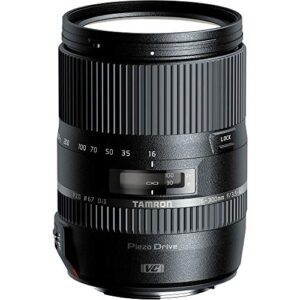
Once you’ve got the lens knowledge, you need a lens that keeps up with you. The Tamron 16-300mm covers everything from wide landscape shots to distant perched hawks — all in one package.
That 300mm reach equivalent, equivalent to 450mm on full-frame, pulls far-off birds into your frame without swapping glass. The VXD autofocus motor is fast and whisper-quiet, so you won’t spook anything.
At 19 oz., it’s light enough for long hikes, and the moisture-resistant build stands up to unpredictable field conditions without complaint.
| Best For | Travelers and outdoor enthusiasts who want one versatile lens that handles everything from wide landscapes to distant wildlife without carrying a bag full of glass. |
|---|---|
| Resolution | N/A |
| Screen Size | N/A |
| Color | N/A |
| Video Format | N/A |
| Image Stabilization | Vibration Compensation |
| Wi-Fi | No |
| Additional Features |
|
- Insane zoom range — 16-300mm means you’re covered from wide-angle landscapes all the way to distant birds or wildlife without swapping lenses.
- Quiet Piezo Drive autofocus keeps things fast and discreet, so you’re not scaring off your subject or fumbling in the moment.
- At 19 oz., it’s light enough to forget it’s on your camera during a long day of hiking or travel.
- Sharpness can be hit or miss, especially toward the edges of the frame or at certain focal lengths.
- Autofocus sometimes needs a nudge — don’t be surprised if you have to switch to manual in tricky lighting.
- Zoom creep is real when you point the camera down, and the zoom lock only kicks in when the lens is fully retracted.
8. Panasonic Lumix Zoom Camera
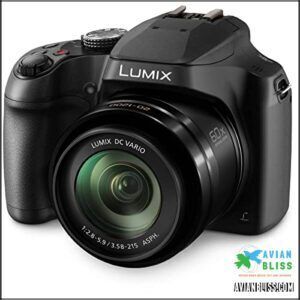
If the Tamron gets you close, the Lumix FZ80 takes you even further — all the way to 1200mm equivalent without touching a lens bag. That 60x optical zoom is genuinely hard to beat for the price.
You also get 4K Photo Burst at 30 frames per second, so you can freeze wingbeats and pick the sharpest frame after the fact. At 18.1 megapixels with built-in optical stabilization, it performs handheld shooting at long reach better than you’d expect.
| Best For | Travelers and wildlife enthusiasts who want serious zoom range without lugging around a bag full of lenses. |
|---|---|
| Resolution | 18.1 MP |
| Screen Size | 3 inches |
| Color | N/A |
| Video Format | 4K QFHD |
| Image Stabilization | Power O.I.S. |
| Wi-Fi | Yes |
| Additional Features |
|
- That 60x optical zoom (up to 1200mm) is genuinely impressive — you can shoot birds, wildlife, or distant subjects without breaking a sweat.
- 4K video recording plus Wi-Fi means you can capture and share great footage without any extra gear.
- Lightweight and easy to handle, so it won’t wear you out on a long day of shooting.
- Low light performance can be hit or miss — you’ll want a tripod or some patience with manual settings in dim conditions.
- The small sensor limits your creative control, especially if you care about background blur and depth of field.
- The menu system has a bit of a learning curve, and some users find it less intuitive than it should be.
9. Canon Digital SLR Camera
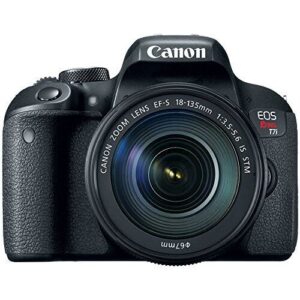
Where zoom and burst modes shine, sometimes raw optical quality and control win the day. The Canon Digital SLR brings 24.2 megapixels on an APS-C sensor, which means real detail in every feather you capture.
Its 45-point all-cross-type AF and Dual Pixel CMOS system lock onto birds quickly, while 60fps continuous shooting gives you plenty of frames to work with. Built-in Wi-Fi and Bluetooth keep sharing simple. If you’re serious about upgrading lenses down the road, this body grows with you.
| Best For | Photographers who want to grow their skills and lens collection over time, from beginners to enthusiasts serious about image quality. |
|---|---|
| Resolution | 24.2 MP |
| Screen Size | 3 inches |
| Color | Black |
| Video Format | 1080p MP4 |
| Image Stabilization | N/A |
| Wi-Fi | Yes |
| Additional Features |
|
- 24.2MP APS-C sensor with 45-point AF and Dual Pixel CMOS means sharp, detailed shots even of fast-moving subjects
- 60fps burst shooting gives you a serious edge when timing matters
- Built-in Wi-Fi, NFC, and Bluetooth make sharing and remote shooting easy
- No 4K video, which is a real drawback if high-res footage is important to you
- The plastic build feels less premium than the price might suggest
- Steeper learning curve than point-and-shoot alternatives, which can frustrate true beginners
Tips for Choosing The Best Camera for You
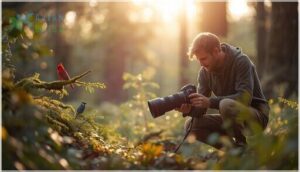
Picking the right camera comes down to more than specs — it’s about finding what actually works for how you shoot.
A few key factors can help you narrow down the options without second-guessing every choice.
Here’s what to think about before you buy.
Matching Camera Features to Birding Needs
Think about how you actually bird watch — do you hike remote trails or set up near a pond? Your birding style should drive every camera decision.
Fast autofocus and bird tracking matter most for flight shots, while optical zoom and image stabilization win for distant perches. Matching these camera features — focal length, image sensors, image quality — to your specific needs means fewer missed shots and better bird photography overall.
Budgeting for Camera and Accessories
Budget planning starts with knowing where your money actually goes. Lenses usually eat 60–70% of your gear investment, so don’t blow the entire budget on a camera body.
A solid cost analysis puts accessories — batteries, memory cards, a monopod — at roughly $200–$400. Buying used can trim $300–$600 off new prices, making smart expense management the difference between a capable kit and an empty wallet.
Considering Comfort for Field Use
Comfort isn’t a luxury — it’s what keeps you in the field longer. Ergonomic design and smart weight distribution matter more than most people expect.
A camera with proper ergonomics paired with quality camera straps and field accessories reduces fatigue substantially. Add weather sealing, reliable autofocus, solid optical zoom, and the right outdoor apparel, and you’re set for full-day shoots without burning out.
Planning for Future Lens Upgrades
Your camera body is just the starting point — the lens ecosystem you commit to shapes every upgrade ahead.
Mount systems like Sony E, Canon RF, and Nikon Z lock you into specific lens selection and teleconverter options, so check lens compatibility before buying.
Starting with a 400mm telephoto lens and progressing toward 600mm focal length glass keeps upgrade paths practical and affordable.
Ethical and Responsible Bird Photography
Great gear means nothing if your presence harms the birds you’re chasing. Ethical bird photography and wildlife conservation go hand in hand — your camera etiquette in the field defines your reputation as much as your shots.
Your camera etiquette in the field defines your reputation as much as your shots
- Stay at least 25 yards from nesting sites to practice responsible shooting.
- Skip audio playback during breeding season — it burns birds’ energy reserves.
- Strip GPS data before posting images of sensitive species online.
Nature preservation starts with you.
Frequently Asked Questions (FAQs)
How to choose a camera for bird photography?
Ironically, the “best” bird photography camera is the one you’ll actually carry.
Match autofocus speed, optical zoom, and your shooting style to local bird behavior for sharper, more satisfying wildlife photography results.
What is the best birding camera for beginners?
For beginner bird photography, the Canon EOS R10 stands out — sophisticated autofocus, 23fps burst shooting, and a beginner-friendly price make it a smart first step into serious birding without overwhelming you.
What magnification is recommended for bird watching?
For most bird watching, 8x to 10x magnification hits the sweet spot.
That means telephoto lens focal lengths of 400–600mm, giving you solid bird visibility, reliable lens reach, and manageable camera stabilization in the field.
How do lighting conditions affect bird photography?
Think of light as your silent co-photographer. Golden Hour wraps plumage in warm, dimensional glow, while harsh midday sun flattens detail.
Soft Lighting from overcast skies balances exposure beautifully, making every feather pop with natural clarity.
Which accessories improve bird photography results most?
The right camera accessories can transform your results in the field.
Tripod systems, lens cleaning kits, camera straps, weather protection covers, and smart storage solutions are the bird photography tips that matter most.
How can I find birds to photograph?
Start with eBird’s Hotspots map to find nearby Photography Locations where Local Species are regularly reported.
Target edge Habitat Types at sunrise, when Bird Behavior peaks, giving your Birding Camera the best Outdoor Photography opportunities.
What camera settings work best for beginners?
Set your camera to Aperture Priority with Auto ISO capped at ISO 6400, use continuous autofocus, and aim for at least 1/1000 second shutter speed — solid camera settings that cover most beginner bird photography situations.
How do I photograph birds in low light?
Open your aperture to f/4–f/6, push ISO to 3200 or higher, and lock shutter speed at 1/500s minimum. Animal-eye autofocus and in-body stabilization make low-light wildlife photography dramatically sharper.
Conclusion
The wrong camera turns a rare sighting into a blurry memory; the right one turns it into a frame-worthy shot you’ll keep forever.
Knowing how to choose a bird watching camera means weighing autofocus speed, zoom reach, and field durability against how you actually shoot—not just what looks impressive on paper. Pick the body that fits your birding style, invest in glass that grows with you, and the birds will do the rest.
- https://promediagear.com/blogs/guides/best-cameras-for-bird-photography-in-2024-top-5-picks-for-every-budget
- https://www.campkinscameras.com/guides/best-canon-camera-for-bird-photography/
- https://wildeyemagazine.com/the-best-cameras-for-wildlife-photography-in-2024/
- https://www.nickdalephotography.com/blog/how-i-photograph-birds
- https://explorewithalec.com/cameras-for-wildlife-photography/