This site is supported by our readers. We may earn a commission, at no cost to you, if you purchase through links.
Every fall, roughly 4 billion birds cross North America alone, orienting by stars, magnetic fields, and memory passed down through generations. Then they hit Chicago. Or Houston. Or any other sprawling metro that sits squarely on a major flyway, and the odds tilt sharply against them.
Glass towers mirror open sky, artificial light scrambles their internal compass, and roads carve migration corridors into isolated fragments. The migration obstacles in city environments aren’t incidental—they’re structural, multiplying across every layer of urban life. Understanding what birds actually face when they enter your city is the first step toward changing it.
Table Of Contents
- Key Takeaways
- Common Migration Barriers in Cities
- Habitat Loss and Fragmentation
- Pollution Challenges for Migrating Birds
- Predation and Collision Risks
- Strategies to Support Urban Bird Migration
- Frequently Asked Questions (FAQs)
- What are the challenges faced in urban areas due to migration?
- What challenges did migrating people find in the city?
- What are the challenges faced during migration?
- What problem is the migration to cities creating?
- How does urban heat affect migrating bird behavior?
- Do migrating birds adapt routes across generations?
- Which bird species struggle most with urban migration?
- How does urban weather monitoring help track migration?
- Conclusion
Key Takeaways
- Glass buildings, artificial light, and traffic collectively kill hundreds of millions of birds each year, making cities some of the deadliest terrain on any migration route.
- Light pollution is more than a nuisance—it hijacks birds’ internal compasses, pulling them off course and into exhaustion-inducing holding patterns above glowing city skies.
- Habitat fragmentation doesn’t just reduce green space; it breaks the refueling network birds depend on, forcing them to burn precious energy reserves crossing concrete gaps between disconnected parks.
- Cities can flip from obstacle to lifeline with targeted fixes like patterned glass, shielded streetlights, native plantings, and community-led monitoring programs that time interventions to actual migration windows.
Common Migration Barriers in Cities
Cities aren’t exactly built with birds in mind, and that’s putting it mildly. Every year, millions of migrating birds run into a set of very human-made problems that make the journey harder than it should be.
Window collisions alone kill up to a billion birds each year — a staggering toll explored in this guide to understanding avian migration challenges and behavior.
Here’s a look at the main barriers standing in their way.
High-Rise Buildings and Glass Structures
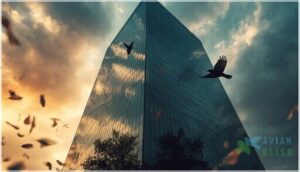
Glass facades are one of the most deceptive hazards in urban landscapes. Birds read reflections as open sky or real trees — then fly straight into the barrier.
Tall towers with alcove-shaped or L-shaped glass facade geometry create the worst traps. Fortunately, bird friendly design and targeted glass surface treatments offer real collision reduction, proving that smarter urban planning and management can align infrastructure development with environmental sustainability.
Urban planners can mitigate these risks by implementing effective bird-friendly glass patterns in building design.
Artificial Lighting and Light Pollution
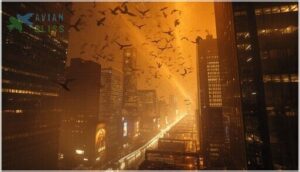
Beyond physical barriers, artificial light hazards reshape how birds experience your city’s night sky entirely. Urban skyglow pulls migrants off course — birds misread glowing clouds as navigation cues, circling aimlessly until exhaustion sets in. Light pollution effects ripple across entire flyways, disrupting migration patterns that evolved over millennia.
Urban skyglow hijacks ancient instincts, turning glowing skies into false navigation cues that exhaust migrating birds
- Bird disorientation worsens on foggy nights when lit clouds heighten artificial brightness
- Urban landscapes with intense lighting concentrate thousands of migrants into collision-prone zones
- Simple infrastructure development changes, like shielded fixtures, can cut fatalities dramatically
Birds are especially vulnerable to, which can attract and disorient them during critical migration periods.
Urban Noise Disturbance

Light pollution throws birds off course at night — but noise pollution hits them just as hard during the day. Urban soundscapes drown out the bird communication that keeps migrating flocks coordinated. Jackhammers, sirens, and HVAC hum reshape the sonic habitat of every city park.
| Noise Source | Decibel Level | Impact on Birds |
|---|---|---|
| Jackhammers | 100+ dB | Disrupts orientation calls |
| Emergency sirens | 110 dB | Masks flock signals |
| HVAC systems | 60–75 dB | Elevates baseline stress |
| Construction sites | 85–100 dB | Fragments rest periods |
| Urban crowd noise | 75–90 dB | Reduces foraging focus |
Acoustic ecology research confirms that urbanization compresses communication range, forcing birds closer together just to hear each other — a costly trade-off when energy reserves are already thin.
This energy drain shows up clearly in how calls evolve over time, as explored in this bird sound identification and acoustic behavior guide.
Traffic and Roadways
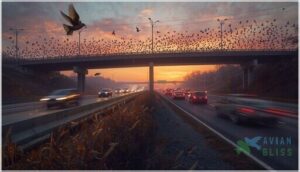
Roads are just as disorienting as the noise above them. Traffic impact on birds is staggering — an estimated 96 million collisions happen yearly in the U.S. alone. Road barriers fragment migration corridors, cutting birds off from roadside habitats that might otherwise offer rest.
Mitigation strategies like native plantings and reduced mowing along verges can help, but urbanization keeps raising the stakes.
Habitat Loss and Fragmentation
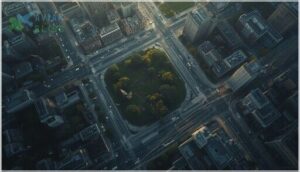
As cities keep expanding, birds lose more than just trees—they lose the entire web of habitats that make migration possible in the first place. The concrete sprawl doesn’t just replace green space; it breaks it into scattered fragments that birds struggle to navigate.
Here’s a closer look at how habitat loss and fragmentation show up in three distinct ways.
Reduction of Green Spaces
Urban sprawl quietly erodes the green corridors birds depend on to survive long migrations. Green Space Fragmentation and Habitat Destruction aren’t abstract policy concerns — they’re measurable losses with real consequences for ecosystem disruption. Urban tree loss compounds the problem further, as birds lose both shelter and food sources.
- Larger parks support more unique migratory species
- Fragmented patches increase travel distance between safe rest stops
- Shrub and canopy loss reduces foraging opportunities
- Park conservation directly aids environmental sustainability goals
Limited Nesting and Resting Sites
Finding a safe place to rest in a city isn’t easy — even for birds. Routine Urban Development strips away the dead limbs and older trees that cavity-nesting species depend on. What’s left? Crowded Building Ledges and bare rooftops offering almost nothing.
| Challenge | Solution |
|---|---|
| Lost tree cavities | Nest Box Design programs |
| Barren rooftops | Green Roof Initiatives |
| Sealed building gaps | Urban Tree Canopy restoration |
Disruption of Migration Corridors
Think of a flyway as a highway birds have used for thousands of years — now picture a sprawling city cutting straight through it. Flyway Fragmentation breaks these ancient routes into disconnected pieces, forcing birds into Migration Bottlenecks where risks pile up fast. Urban Canopy loss only makes it worse, stripping away the refueling stops that hold the whole corridor together.
- Avian Navigation fails when urban transformation replaces forests and wetlands with concrete
- Migration patterns and trends show birds rerouting around cities, burning critical energy reserves
- Corridor Conservation and climate change pressures together threaten what little remains of safe passage
Environmental impact compounds daily. Without serious investment in connecting green corridors, migration itself is at stake.
Pollution Challenges for Migrating Birds
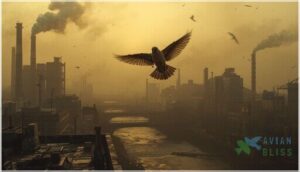
Cities don’t just complicate migration with noise and glass — they’re also quietly toxic for birds passing through.
Pollution hits migrating birds from multiple angles, and the effects can be serious. Here’s a closer look at the main pollution challenges they face along the way.
Air and Water Pollution
City air isn’t just uncomfortable for birds — it’s genuinely dangerous. Toxic air exposure from vehicle exhaust and industrial emissions causes respiratory distress and weakens immune systems mid-journey.
Water contamination in urban ecosystems compounds these migration hazards, as polluted rivers and runoff-filled wetlands strip away reliable food sources.
The environmental impact is cumulative, turning once-safe stopovers into gauntlets that exhaust birds before they even reach their destination.
Pesticide and Chemical Exposure
Pesticides don’t just target pests — they quietly disrupt entire migration journeys. Toxic seed coatings, chemical runoff, and pesticide accumulation compound urban pollution into a serious environmental impact for birds passing through.
- Neonicotinoid effects from treated corn or wheat seeds can kill a songbird outright
- PFAS chemicals accumulate in urban wetlands, entering birds through contaminated water and prey
- Insecticide runoff decimates aquatic insects, reducing critical fuel for long flights
Environmental sustainability and sustainable development depend on recognizing these risks.
Urban Waste and Litter Hazards
Urban litter is one of the quieter crises in bird migration. Plastic pollution fills stomachs without offering nutrition, while sharp fragments cause internal injuries that don’t show until it’s too late. Bird entanglement in discarded fishing line or netting can ground a migrating bird permanently.
Microplastic effects compound this — raptors examined in city habitats showed particles in every single digestive tract tested.
Litter management and waste reduction aren’t just civic ideals; they’re essential to environmental sustainability and urban resilience and adaptability.
Predation and Collision Risks
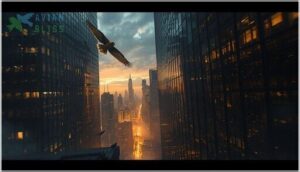
City life throws a lot at migrating birds beyond just disorientation and toxic air. Some of the most immediate dangers come down to what’s hunting them and what they’re flying into.
Here’s a closer look at the key physical risks birds face as they pass through urban environments.
Increased Predators in Urban Areas
Predation is one of the quieter dangers birds face during migration stopovers. Feral cats, urban raptors like peregrine falcons and Cooper’s hawks, and corvids all thrive in city environments shaped by urban development and transformation.
Bird predation spikes where feeders and parks concentrate exhausted migrants — basically creating hunting hotspots for city hunters and wild predators that have learned exactly where to wait.
Window and Building Collisions
Just as predators learn urban rhythms, glass hazards pose a unique threat—birds mistake reflections or see-through corridors for safe passage, colliding fatally with windows or high-rises.
On the collision mortality scale, these accidents tie directly to migration timing, nighttime lures, and the omnipresence of residential risks in modern urban development, shaping both environmental impact and future urban planning.
Power Lines and Communication Towers
Glass isn’t the only silent hazard. Power lines and communication towers add serious collision rates to the list—killing an estimated 31 million birds annually in the U.S. alone. Electrocution risks rise sharply for large birds near older poles.
Fortunately, power line markers, tower lighting upgrades, and bird-friendly designs are reshaping infrastructure development and management toward environmental sustainability and conservation.
Strategies to Support Urban Bird Migration
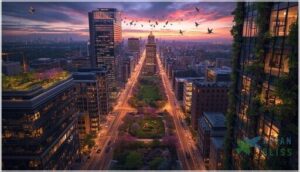
Cities don’t have to be dead ends for migrating birds — they can actually become part of the route. A few smart, practical strategies are already making a real difference in urban areas around the world. Here’s what’s working.
Bird-Friendly Urban Design
Smart sustainable architecture is one of the most direct tools urban planning has for reducing bird casualties. When cities integrate eco-friendly designs — like fritted glass with dot patterns spaced 5 cm apart horizontally — buildings stop acting like invisible walls.
- Use patterned glazing to signal solid barriers
- Add green infrastructure like bird-supportive rooftop plantings
- Apply warm amber LEDs to cut disorienting light spill
Creating Safe Stopover Habitats
Think of the city as a layered landscape — and birds are just trying to find their footing in it. Native Plantings, Urban Wetlands, and Green Corridors aren’t buzzwords; they’re the building blocks of genuine Habitat Restoration. Bird Friendly Design embedded into Urban Planning can transform overlooked corners into lifesaving rest stops along shifting Migration Patterns.
| Habitat Feature | Function | Urban Planning Benefit |
|---|---|---|
| Native fruiting shrubs | Rebuild fat reserves quickly | Aids Sustainable Urban Development |
| Shallow water basins | Hydration and bathing | Enhances Environmental Sustainability |
| Leaf litter zones | Insect protein source | Promotes Urban Migration resilience |
Community Engagement and Awareness Programs
Change rarely happens in a vacuum — and that’s exactly why Community Engagement matters so much for Urban Migration challenges. Through Citizen Science programs, volunteers walk dawn routes logging bird collisions via apps like ArcGIS Field Maps.
Public Outreach campaigns, Education Events like World Migratory Bird Day, and Community Partnerships with Audubon chapters build Sustainable Cities.
Volunteer Programs, Social Inclusion, and Migrant Integration naturally reinforce bird-friendly values.
Frequently Asked Questions (FAQs)
What are the challenges faced in urban areas due to migration?
Cities aren’t built for birds.
Urban migration reshapes skylines and social fabric alike, straining infrastructure, fragmenting habitats, and disrupting migration patterns — challenges that touch economic strains, environmental impact, and social integration all at once.
What challenges did migrating people find in the city?
Migrants arriving in cities often face housing insecurity, intense job competition, and social isolation. Cultural barriers and economic struggles compound daily life, making urban transformation feel less like opportunity and more like survival.
What are the challenges faced during migration?
Like birds steering through a storm, migration rarely follows a straight path. Climate change, human conflict, food scarcity, natural disasters, and ecosystem degradation all push people — and wildlife — toward uncertain destinations, reshaping lives along the way.
What problem is the migration to cities creating?
Migration-driven urbanization puts serious pressure on cities. Urban overcrowding strains infrastructure, accelerates environmental degradation, and fuels social tensions.
Both longtime residents and newcomers are left competing for shrinking resources, affordable housing, and essential services.
How does urban heat affect migrating bird behavior?
Urban heat turns cities into double-edged swords — thermal refuges that ease bird thermoregulation but quietly disrupt migration timing, forcing birds to expend extra energy traversing urban microclimates shaped by unchecked urbanization and climate change.
Do migrating birds adapt routes across generations?
Yes — and the evidence is striking. Through genetic migration and route evolution, birds like Eurasian Blackcaps have shifted flyways across generations, with adaptive migration now steering growing populations toward Britain rather than Africa.
Which bird species struggle most with urban migration?
Virtually every bird that dares cross a city skyline pays a price. Warblers, thrushes, sparrows, and aerial insectivores face the steepest toll — seabird disorientation and sparrow collisions alone account for millions of casualties annually.
How does urban weather monitoring help track migration?
Radar Technology and Weather Forecasting together give cities a live picture of Migration Patterns overhead. Platforms like BirdCast pull data from over 140 U.S. radars, helping Urban Planning and Bird Conservation teams time Lights Out actions precisely.
Conclusion
Cities are flyways with memory problems—they don’t yet know how to make room for what passes through them. Every tower, streetlight, and fragmented park adds another layer to the migration obstacles in city environments that billions of birds navigate each fall.
But urban design isn’t fixed; it adapts to pressure, data, and informed communities. When you understand what birds actually face, you’re already holding part of the solution.
- https://www.migrationpolicy.org/article/housing-crisis-immigrants-integration
- https://pmc.ncbi.nlm.nih.gov/articles/PMC11929249/
- https://cccnewyork.org/press-and-media/new-data-illustrates-housing-affordability-crisis-facing-immigrants-non-citizens-in-new-york-city/
- https://www.who.int/news-room/fact-sheets/detail/refugee-and-migrant-health
- https://academic.oup.com/migration/article/doi/10.1093/migration/mnaf063/8374019