This site is supported by our readers. We may earn a commission, at no cost to you, if you purchase through links.

Aging birds don’t stop craving play—they just need a different kind of comfort. The favorite swing a parrot once claimed may become a challenge, while a simple wooden block or soft rope offers hours of gentle, satisfying activity.
As feet grow achy and grip softens, bird toys for elderly birds should nurture curiosity, not strain tender joints. Safe shapes, cozy perches, and soothing textures offer more than entertainment—they help senior companions stay sharp, comfortable, and truly at home.
The difference lies in thoughtful choices that respect your bird’s changing needs and guarantee every day feels safe, stimulating, and deeply reassuring.
Table Of Contents
- Essential Features of Bird Toys for Elderly Birds
- How to Choose Safe and Comfortable Perches
- Mobility and Support Solutions for Senior Birds
- Top 8 Bird Toys and Perches for Elderly Birds
- Tips for Enhancing Senior Bird Well-being
- Frequently Asked Questions (FAQs)
- What is an interactive bird for the elderly?
- What is a walker squawker?
- What can I give my bird to play with?
- How can I help my elderly bird accept new toys?
- What signs show my senior bird enjoys a toy?
- Are there toys suitable for visually impaired birds?
- Can diet influence safe play with toys?
- How often should I introduce a new toy?
- Conclusion
Essential Features of Bird Toys for Elderly Birds
As your bird gets older, the toys and perches you choose matter more than ever.
If you’re curious about the best perch dimensions for comfort and safety, check out these tips in the bird watching guide for seniors.
A few key features make all the difference between something that helps and something that causes harm. Here’s what to look for before you buy.
Importance of Ergonomic Design for Senior Birds
Aging changes everything for a bird. Joints stiffen, grip weakens, and even a familiar perch can become a source of pain.
As birds age, stiffening joints and weaker grip can turn even a favorite perch into a source of discomfort
Ergonomic perches with wider, flatter surfaces spread weight evenly across your bird’s feet, reducing pressure points that lead to bumblefoot or arthritis flare-ups. For elderly birds, this kind of thoughtful perch design isn’t a luxury — it’s essential for lasting bird comfort and foot health.
Experts also recommend giving your pet access to a variety of natural perches for better overall foot health and well-being.
Safety Considerations and Non-toxic Materials
Perch design matters, but so does what that perch is made of. Toxic Material Risks are real — zinc hardware, treated wood, and chemical finishes can quietly damage bird health over time. Safe Hardware Options and Chemical Free Finishes protect your bird every day.
Look for:
- Stainless steel connectors and fasteners
- Natural, untreated woods like pine or manzanita
- Non Toxic Coatings using water-based, food-safe colorants
Bird Friendly Materials aren’t just a label — they’re a commitment to Avian Health and Safety. For more guidance on what makes a toy safe, be sure to review trusted avian resources.
Adapting Toy Complexity for Declining Mobility
Once your bird’s environment is chemical-free, it’s time to think about how toys actually work for aging birds. Toy Simplification matters more than most owners realize.
Senior Bird Needs shift as Mobility Challenges grow — stiff toes struggle with thin chains, and weaker jaws can’t handle dense wood. Swapping complex puzzles for single-step Comfort Toys keeps Gentle Interactions alive without frustrating your bird.
Mental Stimulation and Sensory Enrichment
Even as physical activity slows, your bird’s mind still needs daily challenges. Sensory Play like soft bells or bird-safe videos offers Auditory Enrichment and Visual Stimulation without demanding much effort.
Short sessions with Cognitive Toys — think sliding drawers or simple foraging cups — support bird wellness and bird behavior by keeping memory sharp. Gentle Activities like these are the heart of good avian care.
How to Choose Safe and Comfortable Perches
The right perch can make a real difference for an aging bird’s comfort and joint health. Before you start shopping, there are a few key things worth knowing about materials, textures, and sizing.
Here’s what to look for when choosing perches that truly support your senior bird.
Benefits of Natural Wood and Chemical-free Finishes
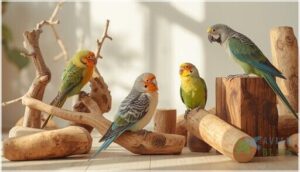
Natural wood is one of the best things you can offer your senior bird. It’s chemical free, safe to chew, and kind to aging feet. Here’s why it matters for bird health:
- Untreated wood won’t release fumes that irritate sensitive lungs.
- Natural textures encourage healthy grip and joint movement.
- Safe materials prevent toxin ingestion during preening.
- Hardwoods gently condition beaks through normal chewing.
Platform and Cushioned Perch Options
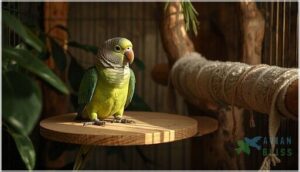
A flat platform perch can genuinely change your senior bird’s daily comfort. Platform designs let aging feet spread open instead of gripping constantly, which eases arthritis pain markedly.
For cushioning options, fleece-wrapped perches with vet wrap offer gentle senior support without sacrificing nonslip design. These bird perches combine safety and bird comfort through smart perch materials, giving your companion a reliable, soft place to rest.
Preventing Foot Problems With Proper Perch Textures
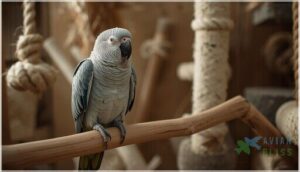
Texture matters more than most owners realize, especially for arthritic feet. Sandpaper and rough concrete perches scrape delicate skin raw, increasing bumblefoot risk fast.
For more tips on selecting bird perches that help protect senior feet and boost overall wellness, see this helpful guide on ideal bird feeders and perches for older adults.
Non-abrasive materials like soft rope and natural wood give senior birds comfort without damaging tissue. Gentle textures offer just enough grip for a nonslip design, while rotating perch surface options distributes pressure, protecting foot health tips your vet would approve.
Selecting Appropriate Perch Sizes for Aging Birds
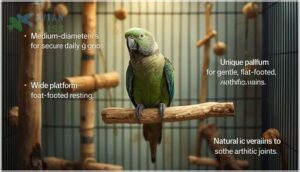
Getting perch size right is one of the kindest things you can do for your aging bird’s foot health. A good fit lets the toes wrap about two-thirds around the perch — secure without straining arthritic joints.
For senior support, offer a mix:
- Medium-diameter natural wood perches for daily grip
- A wide platform perch for flat-footed resting
- One variable-diameter perch for comfort throughout the day
Smart cage design with proper bird ergonomics keeps elderly birds safer and more comfortable.
Mobility and Support Solutions for Senior Birds
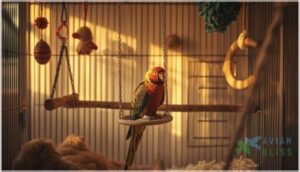
As your bird gets older, moving around the cage can become a real challenge. The right accessories make that daily movement safer and a lot less stressful on aging joints.
Here are four practical solutions worth adding to your senior bird’s space.
Ladders, Ramps, and Supportive Accessories
Think of your cage layout as a gentle staircase, not a climbing wall. Low incline ramps angled between 15 and 30 degrees give elderly birds safe, joint-friendly access to food and favorite spots.
Wide-rung ladder safety matters too — flat rungs reduce painful curling.
Staggered platforms and fall prevention padding on the cage floor complete these accessibility features, keeping senior birds comfortable and secure.
Toys That Promote Gentle Movement
Movement doesn’t have to mean effort. Slow swings with wide, flat perches let elderly birds sway gently, mimicking a light branch in the breeze. Flexible perches shaped into soft curves encourage low-impact climbing.
Soft foraging toys made from vine or cardboard foster gentle exercise through natural beak and foot activity. Each small movement aids bird health, comfort, and safety without strain.
Maintaining Activity Without Straining Joints
Small, consistent activity beats long bursts of effort for elderly birds with arthritic feet. Spacing perches just far enough apart for a gentle stretch, not a leap, aids senior mobility without stressing sore joints. Low-impact toy placement near favorite resting spots encourages light reaching and turning.
These small habits, done daily, build safe gentle exercise into your bird’s natural behavior without straining tender joints.
Reducing Fall Risks Inside The Cage
Falls are one of the quietest dangers in elderly bird care. A startled senior bird can drop from a high perch in a second, and the landing matters. Thoughtful cage safety starts with smart perch placement.
- Lower bird perches to the middle zone for injury reduction
- Add staggered platforms for soft landings between levels
- Pad the floor with folded towels for fall prevention
- Keep ramps and ladders close to minimize open gaps
Top 8 Bird Toys and Perches for Elderly Birds
Finding the right perch or toy for your aging bird doesn’t have to feel overwhelming. Each option below was chosen with senior birds in mind — safe materials, gentle textures, and designs that support tired joints.
Here are eight worth considering.
1. Natural Wood Bird Perch Playground
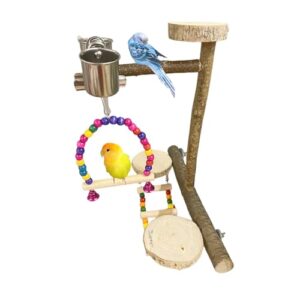
This little playground is built from solid ash or beech wood with natural bark, giving your senior bird varied surfaces to grip throughout the day. The uneven textures and different branch diameters help shift pressure away from tired joints, which matters a lot for older birds prone to bumblefoot or arthritis.
At 12 inches tall with 3-inch platforms, it fits easily inside or outside the cage. The included swing and hanging bridge add gentle movement without demanding too much from aging feet.
| Best For | Small to medium birds like parakeets, cockatiels, and conures who need a natural, engaging perch to stay active and entertained. |
|---|---|
| Material | Wood, Metal |
| Suitable Birds | Small/Medium |
| Easy Install | Yes |
| Exercise Benefit | Yes |
| Chew/Beak Use | Yes |
| Color/Finish | Natural Wood |
| Additional Features |
|
- Real ash or beech wood with natural bark gives birds varied textures to grip, which is great for foot health
- No tools needed to set it up — it’s quick and simple to get going
- Works inside or outside the cage, so it’s flexible depending on your setup
- Natural wood means the look won’t be perfectly uniform — some pieces may have quirks like angled cuts
- The platforms can feel a bit bulky and may not add much fun on their own
- Not a good fit for larger birds, so it’s a pretty limited audience
2. Niteangel Wooden Bird Perch Platform
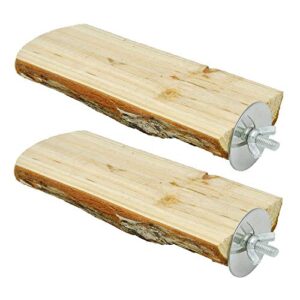
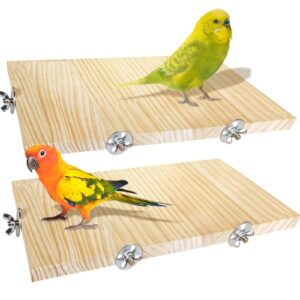
Sometimes a simple flat surface is exactly what an aging bird needs. The Niteangel Wooden Bird Perch Platform gives your bird a 7-inch ledge to stand, rest, and sleep on — no gripping required.
That flat surface spreads weight evenly across the whole foot, easing pressure on sore joints. It’s made from soft fir wood, which is gentle underfoot and safe to chew.
Position it near food or water, and you’ve created an easy resting stop for tired little feet.
| Best For | Aging or disabled birds — especially budgies, cockatiels, and parakeets — who need a gentle, flat surface to rest their feet without gripping. |
|---|---|
| Material | Wood |
| Suitable Birds | Small/Medium |
| Easy Install | Yes |
| Exercise Benefit | Yes |
| Chew/Beak Use | Yes |
| Color/Finish | Natural Wood |
| Additional Features |
|
- Flat surface spreads weight evenly, helping prevent bumblefoot and easing pressure on sore joints
- Soft fir wood is safe to chew, which helps keep beaks naturally conditioned
- Easy to install with a built-in bolt and wing nut — no extra hardware needed
- May shift or roll when a bird steps on it, which can feel unstable
- The bark can come loose right away, and the screw may strip over time
- Runs smaller than expected, so it might not work well for birds on the larger end of the intended size range
3. Wooden Parrot Perch Paw Grinding Stick
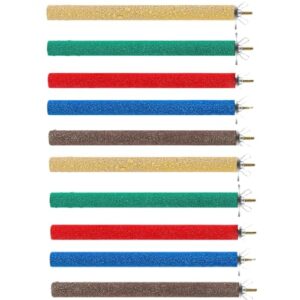
Overgrown nails can make every perch feel unstable for an older bird. This wooden paw grinding stick helps solve that quietly, just through daily use.
The rough, quartz-sand surface gently wears nails down as your bird walks, so trimming visits become less frequent and less stressful.
It’s made from natural, untreated wood — safe for birds who like to nibble. At 0.6 inches in diameter, it fits parakeets, budgies, and cockatiels well.
Use it alongside softer perches to protect sensitive feet.
| Best For | Bird owners with parakeets, budgies, cockatiels, or similar small-to-mid-sized birds who want a low-effort way to keep nails in check. |
|---|---|
| Material | Wood |
| Suitable Birds | Small/Medium |
| Easy Install | Yes |
| Exercise Benefit | Yes |
| Chew/Beak Use | Yes |
| Color/Finish | Mixed/Colorful |
| Additional Features |
|
- Naturally files nails down just from daily perching — no stressful trim sessions
- Made from natural wood, so it’s safe for birds that like to chew
- Easy to install and adds a pop of color to the cage
- The rough surface may be too harsh for birds with sensitive feet
- Strong-beaked birds can chew through it pretty fast
- Might be too large for very small bird breeds
4. Arfubye Large Bird Perch Stand
Some older birds just need a safe spot outside the cage to breathe, stretch, and reconnect with you. The Arfubye Large Bird Perch Stand gives them exactly that.
It adjusts from 16 to 62 inches tall, so you can set it low if your bird’s balance isn’t what it used to be. The natural pepper wood perch has a gentle texture that cushions tired feet without irritation.
It’s stable, portable, and simple — no cluttered toys, just a calm place to land.
| Best For | Small to medium birds like budgies, parrots, canaries, chinchillas, and guinea pigs who need a fun, functional spot inside their cage to play, exercise, and stay entertained. |
|---|---|
| Material | Wood, Metal |
| Suitable Birds | Small/Medium |
| Easy Install | Yes |
| Exercise Benefit | Yes |
| Chew/Beak Use | Yes |
| Color/Finish | Wood |
| Additional Features |
|
- Made from real wood and sturdy metal, so it feels solid and holds up well over time.
- Multi-functional — your bird can play, chew, and exercise all in one spot, which is great for keeping them active and less stressed.
- Easy to install and clean, which makes day-to-day upkeep pretty painless.
- It’s corner-mounted, so placement is limited — not ideal if your cage layout doesn’t have a good corner spot.
- The wood surface will likely get chewed up over time, so it may need replacing eventually.
- Might have a mild wood smell right out of the box, which could take a little time to air out.
5. Natural Wood Bird Perches Set
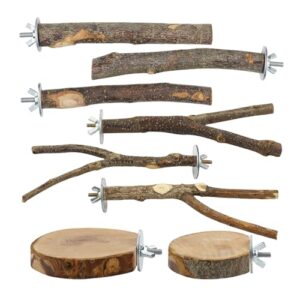
Variety matters more than you might think for an aging bird. This 8-piece natural wood set gives you wooden stands, forked branches, hanging platforms, and a hammock swing — all in one package.
Different diameters mean your bird’s feet naturally shift position throughout the day, easing pressure on sore joints. The bark-covered surfaces provide a gentle, secure grip without harsh abrasion.
It’s lightweight at 12 ounces and fits parakeets, budgies, and similar small birds comfortably.
| Best For | Small bird owners — especially those with aging parakeets or budgies — who want to give their pet more variety and comfort throughout the day. |
|---|---|
| Material | Wood |
| Suitable Birds | Small/Medium |
| Easy Install | Yes |
| Exercise Benefit | Yes |
| Chew/Beak Use | Yes |
| Color/Finish | Brown |
| Additional Features |
|
- Eight pieces in one set means you get a good mix of perches, platforms, and a hammock swing without hunting down extras separately.
- Different diameters help your bird naturally shift foot position, which is a real plus for older birds with joint soreness.
- Natural wood is safe, easy to clean, and gives birds a comfortable grip without being rough on their feet.
- Too small for larger birds like Amazon parrots or cockatoos, so it’s pretty limited in who it works for.
- Wood dimensions can vary a bit since it’s a natural material, so what you get may not match exactly what you see.
- Durability could be a concern for more aggressive chewers, even among smaller bird species.
6. Natural Wooden Bird Perch Set
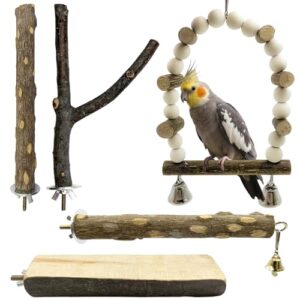
Simple materials can make a real difference for aging feet. The Sienle Natural Wooden Bird Perch Set is made from apple wood, prickly ash, and grapevine — all untreated and paint-free. That matters for elderly birds who nibble more than they chew.
Wing nuts make installation easy, and the Y-shaped, straight, and swing options let your bird shift spots throughout the day. At just 10.2 ounces, it’s light enough for smaller birds like budgies and cockatiels to navigate comfortably.
| Best For | Bird owners with small to medium-sized birds like parakeets, budgies, lovebirds, or cockatiels who want a natural, stimulating perch setup. |
|---|---|
| Material | Wood |
| Suitable Birds | Small/Medium |
| Easy Install | Yes |
| Exercise Benefit | Yes |
| Chew/Beak Use | Yes |
| Color/Finish | Brown |
| Additional Features |
|
- Made from real, untreated wood — no paint or chemicals, so it’s safe even for birds that love to chew
- Comes with multiple perch styles (Y-shaped, straight, and swing) so birds can move around and stay entertained
- Wing nuts make setup quick and easy, no tools needed
- Expect some wood chips in the package — bark sheds during shipping, which can be a little messy
- Hardware can be hit or miss, with some users running into loose threads or bolt sizing issues
- The textured surfaces are great for grip but harder to keep clean compared to smooth perches
7. Natural Wooden Bird Perch Stand
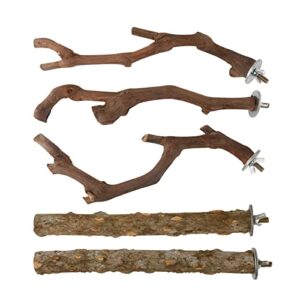
Grape wood is one of the gentler woods you can offer an aging bird. The HOSUKKO Natural Wooden Bird Perch Stand gives you five pieces — three perches and two stands — all cut from untreated grape wood.
The naturally uneven surface encourages real gripping, which helps keep foot muscles active without strain. It’s anti-slip, easy to install with metal washers and screws, and fits small to medium birds like cockatiels and conures.
Just boil the pieces first to guarantee they’re clean before use.
| Best For | Bird owners with small to medium-sized birds like parakeets, cockatiels, or conures who want a more natural perch setup. |
|---|---|
| Material | Grape Wood |
| Suitable Birds | Small/Medium |
| Easy Install | Yes |
| Exercise Benefit | Yes |
| Chew/Beak Use | Yes |
| Color/Finish | Brown |
| Additional Features |
|
- Five-piece set gives you plenty of options for arranging the cage
- Uneven grape wood surface keeps feet active and helps with grip
- Easy to install — just screws and metal washers, no tools needed
- Natural wood means size and weight can vary piece to piece
- May be too big for smaller cages
- Needs boiling before use, which adds a step before your bird can enjoy it
8. Jusney Flexible Bird Rope Perch
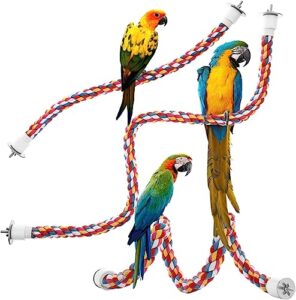
Sometimes a bird needs a perch that bends to fit their world, not the other way around. The Jusney Flexible Bird Rope Perch does exactly that.
Its steel wire core holds any shape you give it — a gentle curve, a low arc, a gradual slope — so your senior bird can move between levels without big jumps. The soft cotton surface cushions aging feet and adds grip.
Just inspect it weekly, since fraying threads can tangle toes or cause crop problems if swallowed.
| Best For | Bird owners with conures, African greys, macaws, or other medium-to-large parrots who want a perch that can be shaped to fit their cage setup and keep their bird active and comfortable. |
|---|---|
| Material | Cotton, Metal |
| Suitable Birds | Small/Medium/Large |
| Easy Install | Yes |
| Exercise Benefit | Yes |
| Chew/Beak Use | No |
| Color/Finish | Multi-colored |
| Additional Features |
|
- The flexible steel core lets you bend and shape it however you need, so it works around your cage instead of fighting it.
- Soft cotton rope is easy on birds’ feet, especially for older birds or those prone to foot soreness.
- Fits a wide range of bird species and cage sizes, so it’s a versatile pick if you have multiple birds.
- Some buyers have reported receiving damaged or incomplete products, which is frustrating when you’re setting up a new perch.
- Durability can be hit or miss — a few users noticed fraying sooner than expected, which is worth watching closely.
- May not work well with cages that have wider bar spacing, so it’s worth checking your cage dimensions before buying.
Tips for Enhancing Senior Bird Well-being
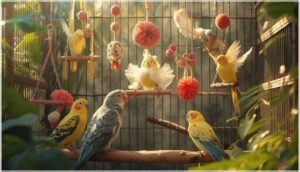
Small changes in your senior bird’s daily routine can make a real difference in how they feel and function. Knowing where to focus your attention helps you get the most out of every adjustment you make.
Here are four practical tips to help your aging bird stay comfortable, engaged, and well cared for.
Rotating Toys for Ongoing Interest
Even small changes matter to an aging bird’s mind. A simple toy rotation schedule — swapping one group every one to two weeks — keeps elderly bird enrichment fresh without overwhelming your senior parrot. Cognitive support toys like easy foraging puzzles work best when rotated alongside familiar pieces for comfort and safety.
| Rotation Timing | Gentle Play Options | Senior Parrot Stimulation |
|---|---|---|
| Every 7 days | Soft rope toys | Bell or crinkle toys |
| Every 14 days | Simple foraging puzzle | Foot toys near perch |
| Monthly | One genuinely new toy | High-contrast color toy |
| As needed | Familiar comfort item | Easy treat ball |
| Ongoing | Shreddable paper toy | Platform-level bird toys |
Watch your bird’s behavior — pacing or long stillness signals it’s time to rotate sooner.
Cleaning and Maintaining Toys for Hygiene
Toy rotation keeps your bird curious, but a solid cleaning routine keeps them safe. Elderly birds have weaker immune systems, so hygiene standards matter more than ever.
- Spot-clean soiled toys daily.
- Scrub perches weekly with mild soap.
- Disinfect monthly using diluted white vinegar.
- Discard cracked, rusty, or moldy items immediately.
Dry everything completely before returning toys to the cage — damp surfaces breed bacteria fast.
Monitoring Bird Behavior for Comfort and Engagement
After cleaning routines, pay close attention to bird behavior and Bird Body Language to spot signs of Senior Bird Comfort. Notice gentle beak grinding, relaxed perching, and steady social interactions — these show emotional wellbeing.
Behavioral changes like less play or new resting patterns may signal pain or frustration. Tracking engagement helps you fine-tune enrichment for your elderly bird’s welfare and health.
Creating a Supportive and Accessible Cage Environment
Noticing your bird’s comfort levels leads directly into making smart changes in your cage layout. A well-planned bird cage design relies on safe perch materials, wide platforms, and easy-access feeders all at a single level for accessibility.
Accessible bird cages help prevent injuries, while thoughtful safety features like ramps and padded floors boost senior comfort and support lasting bird welfare.
Frequently Asked Questions (FAQs)
What is an interactive bird for the elderly?
Picture a Robotic Companion perched nearby—a lifelike bird that chirps, reacts to gentle touch, and brings comfort without daily pet chores.
In Elderly Care, these Interactive Pets offer friendly company, brighten routines, and support memory through easy, joyful interaction.
What is a walker squawker?
A Walker Squawker is a lifelike animatronic bird designed as an Elderly Companion for seniors using walkers.
This engaging Animatronic Pet sings, chirps, and reacts to movement, offering comfort, bird-like behavior, and Dementia Support as a gentle companion.
What can I give my bird to play with?
Like a gentle breeze lifting a feather, offering your bird safe, soft shreddable toys, untreated wood chews, or rope perches creates playful enrichment and gentle activities.
These are true comfort toys that support senior birdcare, bird health, and safety.
How can I help my elderly bird accept new toys?
Begin with a Gradual Introduction—place the new toy several feet from the cage and invite gentle curiosity. Move it closer over days, watching Bird Behavior.
Senior Enrichment means comfort and safety matter most during every Gentle Shift.
What signs show my senior bird enjoys a toy?
Watching your senior bird enjoy a toy is a bit like seeing a child light up in a playground—look for playful behavior, curiosity, vocal happiness, gentle chewing, and relaxed posture, all positive signals of bird engagement and enrichment.
Are there toys suitable for visually impaired birds?
Yes, toys designed for visually impaired birds focus on sensory stimulation—Tactile Toys with different textures, Auditory Enrichment like bells, Simple Foraging setups, and Stable Surfaces.
These options support safe movement and comfort in avian care.
Can diet influence safe play with toys?
If you imagine an elderly bird living on nothing but seeds, it’s like expecting a marathon runner to survive on cupcakes.
Safe playtime and comfort depend on nutrient balance, calorie control, and dietary supplements to support energy levels and safety.
How often should I introduce a new toy?
For Toy Rotation in elderly birds, introduce a new toy every 10 to 14 days. This pace facilitates gentle Novelty Introduction and Bird Enrichment, aligning Play Frequency with your bird’s comfort, safety, and evolving needs.
Conclusion
If only we pampered ourselves like our aging parrots, perhaps orthopedic perches would be standard in every office. But your companion deserves no less, especially when bird toys for elderly birds can transform aches into opportunities for mental play and gentle motion.
Listen for those contented chirps as proof that small comforts matter. With every safe perch or cozy block, you’re not just entertaining—you’re building a haven where an old friend’s curiosity never has to age.
- https://flamingopetclinic.com/entertaining-your-parrot/
- https://www.northernparrots.com/blog/why-do-parrots-need-foraging-toys/
- https://www.kaytee.com/learn-care/pet-birds/diy-parrot-toys
- https://www.arizonaparrots.com/blog/top-10-parrot-toys-to-keep-your-bird-engaged-and-happy
- https://caitec.com/collections/bird-toys-foraging