This site is supported by our readers. We may earn a commission, at no cost to you, if you purchase through links.
Most bird photographers lose their best shots before they ever press record—not because of gear, but because of where they put it. A camera 3 feet too close flushes the bird. Angle it wrong and a cluttered background swallows the subject whole.
Ideal camera placement for bird watching comes down to distance, height, and light working together—get one wrong and the others can’t save you. The right position keeps birds calm, fills the frame naturally, and turns ordinary backyard feeders into a front-row seat to behavior most people never see.
Table Of Contents
Key Takeaways
- Keep your camera 6–10 feet from feeders and match the height to your target species—chickadees at 5–6 feet, woodpeckers at 6–10, hummingbirds at 3–6.
- Position the sun 30–45 degrees behind your camera axis so you’re working with light, not fighting it.
- Eye-level angles reveal feather detail and bird behavior; overhead angles show flock dynamics and crown markings—pick based on what story you’re telling.
- Ethical placement matters: conceal indicator LEDs, approach indirectly, and keep feeders 10–12 feet from dense shrubs to protect birds from predators.
What is The Ideal Camera Placement for Bird Watching?
Getting your camera in the right spot changes everything—bad placement means missed shots, spooked birds, or footage too dark to use.
Nailing the details—like height, angle, and distance from the feeder—is exactly what separates good footage from great, and choosing the right bird camera for your backyard setup makes that process a whole lot easier.
A few key factors determine whether your setup works or wastes your time. Here’s what actually matters when choosing where to mount your camera.
Key Factors Affecting Placement
Four things drive every solid camera placement decision:
- Distance — Stay 6 to 10 feet from feeders so birds don’t flush.
- Height — Match camera level to your target species’ natural perch.
- Light direction — Face toward front or side light to preserve feather detail.
- Habitat considerations — Let natural perches and bird behavior guide your camera angles and lens selection. For more on the impact of lighting and shooting angles, see expert nature photography advice.
Common Mistakes to Avoid
Even with solid camera placement tips locked in, small missteps can wreck your footage. Mounting too close cuts off wings — stay at least 12 inches back.
Background clutter makes birds disappear into the noise. A bad camera angle flattens natural behavior.
And ignoring bird disturbance signs keeps your feeder placement working against you. Lens calibration and a clean setup fix most of this fast.
Paying special attention to common composition techniques can dramatically improve the quality of your bird watching footage.
Benefits of Proper Camera Positioning
Get camera placement right, and everything else follows. Your image quality jumps when the bird fills the frame—no heavy cropping, no guessing. Bird behavior stays natural because you’re not crowding them.
Smart camera angles reveal approach routes, feeding patterns, even flock dynamics. Good lighting effects sharpen feather detail without a filter. Footage clarity, bird watching satisfaction, wildlife photography results—proper camera placement tips deliver all three.
How Distance and Height Impact Bird Footage
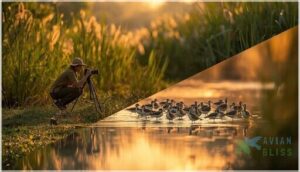
Distance and height aren’t just technical details—they’re what separates blurry, awkward footage from shots that actually show bird behavior.
Getting those details right is easier when you have a solid guide to ideal bird camera placement spots in your yard to work from.
Get either one wrong and you’ll spend more time repositioning than watching.
Here’s what you need to know about both.
Recommended Distance From Feeders and Shrubs
Distance is everything in feeder camera placement. Set your camera 12 to 18 inches from feeding ports for tight, frame-filling shots. Pull back to 4 to 6 feet for natural approach behavior. Keep shrubs at least 2 feet from the lens to cut false motion triggers.
- Stay within 3 feet of windows—or beyond 10—for bird safety
- 6 to 8 feet captures staging behavior near shrubs
- Avoid digital zoom; move the camera closer instead
- Match distance to your lens’s minimum focus range
Species-Specific Height Guidelines
Height isn’t one-size-fits-all—bird height variations demand species specific mounting decisions. Chickadees and cardinals work well at 5 to 6 feet. Woodpeckers need suet placed 6 to 10 feet up. Hummingbirds hover naturally between 3 and 6 feet.
Sparrows feed near the ground, so camera placement around 3 to 5 feet with a slight downward tilt covers their zone. Match your feeder placement strategies to the species you’re targeting.
Bird-Eye Level Vs. Overhead Angles
Two angles, two completely different stories. Bird-eye level camera placement pulls viewers into the bird’s world—you see bill shape, eye rings, and face patterns clearly. Overhead angles show flock spacing and habitat context instead.
- Eye level preserves feather color and field marks
- Overhead reveals wing bars and crown stripes
- Frame composition shifts dramatically between both
- Bird perspectives feel intimate at eye level
- Overhead camera settings require shadow management
Lighting and Environmental Considerations
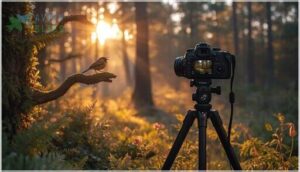
Light can make or break your bird footage before you even press record. Getting your camera placement right means working with the environment, not against it.
Here’s what to keep in mind regarding lighting and protecting your gear outdoors.
Positioning to Avoid Sun Glare
Sun glare is the quiet killer of bird footage. Keep the sun 30–45 degrees behind your camera axis—never in front. Smart camera placement during outdoor camera installation makes the difference.
| Glare Problem | Fix |
|---|---|
| Sun in frame | Reposition 30–45° off-axis |
| Lens flare | Add a deep petal lens hood |
| Reflective surfaces | Shoot away from water or metal |
Shade optimization and sun angle management work together. A lens hood usage habit alone saves countless shots.
Using Natural Light for Best Results
Golden hour isn’t just pretty—it’s your sharpest tool in wildlife photography. Position the sun 30–60 degrees above the horizon, behind and slightly to one side of your camera placement setup, for warm frontal light with zero washed-out frames.
- Use soft lighting from overcast skies for birds with extreme plumage contrast
- Apply backlight techniques to rim-light wing and tail feathers naturally
- Adjust catchlight control by shooting at bird-eye level for lifelike eyes
Diffused shadows on cloudy days keep your camera settings stable across longer sessions—a genuine gift for bird watching consistency.
Weatherproofing and Shelter for Cameras
Rain doesn’t care about your perfect camera setup. That’s why weatherproofing isn’t optional—it’s foundational.
Use IP65-rated or higher housings with tight weather seals around every cable entry. Route cables with clips or conduit for clean cable management and less seal strain.
Position outdoor cameras under eaves or pitched shelters for moisture control and thermal protection. Solid camera installation and maintenance keeps footage coming, storm after storm.
Safety and Ethical Placement Practices
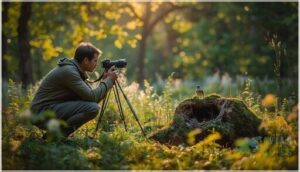
Getting great footage means nothing if your setup stresses out the birds or puts them at risk.
Placement isn’t just about camera angles—it’s about responsibility.
Here’s what you need to think through before you lock in your camera position.
Minimizing Disturbance to Birds
Birds won’t stick around if your setup makes them nervous. Discreet placement and camera concealment are the backbone of good bird watching techniques — because bird stress kills the footage before you even press record.
Keep these principles in mind for minimal disruption:
- Mount cameras on existing posts or trees — no clearing vegetation.
- Shield indicator LEDs to eliminate constant light near nest sites.
- Approach on indirect paths; stop if you hear alarm calls.
- Use solar or long-life batteries to cut maintenance visits.
Noise reduction and habitat preservation aren’t optional — they’re how you earn the birds’ trust.
Protecting Birds From Predators
Keeping feeders 10–12 feet from dense shrubs is your first line of bird protection. Predator monitoring starts with smart camera concealment — aim one camera along fence lines where cats and raccoons travel.
Mount feeders 5–6 feet high with baffles below. Rotate camera locations every few days so predators don’t pattern your setup. That’s practical bird conservation working quietly in the background.
Preventing Window Collisions and Other Hazards
Predators aren’t the only threat. Window collisions kill hundreds of millions of birds annually — a serious wildlife safety problem hiding in plain sight.
Window collisions silently kill hundreds of millions of birds each year, making your own home a hidden hazard
- Place feeders within 3 feet of glass or treat windows with exterior decals spaced 2 inches apart for reflection management.
- Use netting barriers — mesh under 0.5 inches — mounted a few inches from high-risk panes.
- Block through-house sightlines for hazard mitigation.
- Turn off exterior lights during migration season.
Step-by-Step Guide to Setting Up Your Bird Watching Camera
Getting your camera set up right is where the real work begins. There are a few key steps that’ll make the difference between blurry, useless footage and shots you’ll actually want to watch.
Here’s what you need to tackle, in order.
Choosing The Right Camera Type
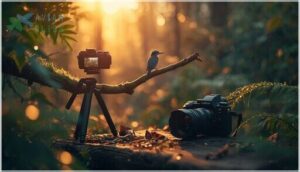
Your bird camera choice sets the foundation for everything else. Mirrorless options lead the pack—fast electronic shutters hitting 20–40 fps and eye-tracking autofocus make a real difference.
DSLR models still hold up, especially on a budget, with solid lens quality and weather sealing. Watch your camera sensors and optical zoom specs closely. Bigger sensors handle low light better, which matters at dawn.
Installation and Adjustment Tips
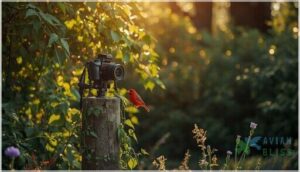
Once your camera is chosen, the real work begins with outdoor camera installation. Mount it 6–10 feet from feeders on a sturdy post or tree, tilting the lens 5–15 degrees downward. Good bird camera setup means testing before locking anything in.
- Set camera angles at bird-eye level, around 4–7 feet high
- Use live view to confirm framing and wildlife settings before tightening mounts
- Run lens calibration to eliminate edge distortion on wide-angle setups
Maintenance and Footage Optimization
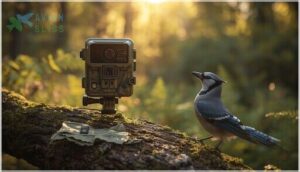
Three habits keep your bird camera setup sharp long-term. Clean the lens with a microfiber cloth weekly—never paper towels. Format your SD card each season and avoid filling it past 90%. Shoot at 30fps for standard footage, 60fps when you want to catch wingbeats. Review clips weekly to fine-tune camera placement and dial in camera settings and optimization.
| Maintenance Task | Recommended Frequency |
|---|---|
| Lens calibration check | Monthly |
| Footage review | Weekly |
| Storage management | Each season |
| Camera tuning (fps, exposure) | Per session |
| Outdoor camera installation check | After storms |
Frequently Asked Questions (FAQs)
How high should a trail camera be off the ground?
For most backyard setups, mount your trail camera 4–6 feet off the ground.
That height aligns with feeder placement, keeps bird visibility strong, and puts motion detection right in the feeding zone.
How do I attract rare bird species to cameras?
Rare species are skittish—treat your setup like a secret spot they stumble onto, not a stage.
Combine bird feeder placement, water feature design, and camera concealment to pull uncommon birds naturally into frame.
How do I secure cameras against theft or vandalism?
Mount outdoor cameras 8–10 feet high using steel cable locks for secure mounting.
Choose earth-tone housings for camera concealment, add surveillance signs as theft deterrents, and enable cellular backup—solid vandalism prevention for your wildlife camera setup.
Conclusion
Most photographers obsess over megapixels while standing in the wrong spot—because clearly, a $3,000 lens fixes poor judgment. It doesn’t.
What’s the ideal camera placement for bird watching? It’s the unglamorous combination of distance, height, and light that no gear review ever covers.
Get those three variables right, and your camera disappears into the environment. The birds forget it’s there. That’s when ordinary footage stops being ordinary.
- https://browningtrailcameras.com/blogs/behind-the-lens/a-beginner-s-guide-to-backyard-birdwatching-with-browning-trail-cameras
- https://www.perkypet.com/articles/how-high-should-i-hang-my-bird-feeder
- https://www.lumarysmart.com/blogs/news-and-blogs/choose-best-location-bird-feeder-tips
- https://www.kevinpepperphotography.com/blog/backyard-bird-photography-tips
- https://www.birdwatchingdaily.com/beginners/birding-faq/how-to-set-up-a-bird-feeder-camera/