This site is supported by our readers. We may earn a commission, at no cost to you, if you purchase through links.

A bird spending 10 or more hours a day in a cage that’s too small, poorly lit, or awkwardly arranged isn’t just uncomfortable—it’s quietly stressed. Birds hide discomfort well, which means many owners don’t realize something’s wrong until behavioral problems surface.
The good news is that most of what makes a cage genuinely comfortable comes down to a handful of specific, manageable factors: space, placement, perch design, and environmental consistency. Getting these right doesn’t require a complete overhaul, just a clearer understanding of what your bird actually needs to feel safe and at ease.
Table Of Contents
Key Takeaways
- Choose a cage that’s wide enough for your bird to fully stretch its wings, with safe bar spacing and sturdy materials.
- Place the cage in a draft-free, well-lit spot away from fumes and noise, with natural light and full-spectrum bulbs for healthy routines.
- Arrange natural wood perches at different heights, keep food and water bowls clean and out of droppings’ way, and rotate toys often for mental stimulation.
- Keep the cage clean with daily spot checks and weekly deep cleaning, monitor temperature and humidity, and use covers at night for restful sleep.
Choose The Best Cage Size and Shape
The cage you choose sets the tone for everything else in your bird’s life.
Getting the proportions right matters more than you’d think, so it helps to start with the right cage size for your specific bird before you buy anything.
Size, shape, and bar spacing all play a bigger role in comfort than most people realize.
Here’s what to look for before you buy.
Recommended Dimensions for Comfort
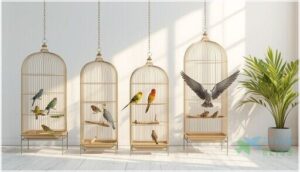
Getting cage size right is the foundation of a good bird cage setup. These Cage Width Guidelines give you a clear starting point:
- Budgies (single): 18 × 18 × 24 inches minimum
- Budgies (pair): 30 × 18 × 18 inches
- Cockatiels: 20 × 30 × 30 inches
- Finches: 30 × 18 × 18 inches
- African greys: 36 × 24 × 48 inches
Wing Stretch Room matters most — cage width should always be at least twice your bird’s full wingspan.
Ideal Bar Spacing by Bird Size
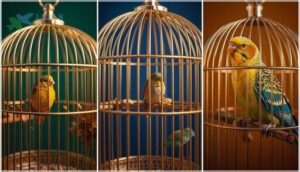
Bar spacing is just as important as cage size for bird safety. Small birds like finches and canaries need spacing between 0.25 and 0.5 inches to prevent escape or head entrapment. Budgies do well at 0.38 to 0.5 inches. Cockatiels need 0.5 to 0.63 inches, while large parrots require 0.75 to 1 inch.
Wire gauge and bar thickness matter too — thicker bars resist bending from strong chewers.
Benefits of Horizontal Versus Vertical Cages
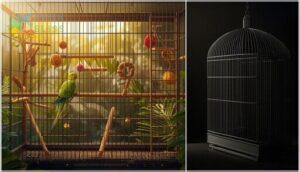
Once you’ve sorted bar spacing, cage orientation becomes your next big decision.
A horizontal cage design gives your bird far more climbing options than a tall, narrow setup. Birds naturally stay high, which means lower vertical space often goes unused.
Wide cages support natural flight patterns, let active climbers grip horizontal bars like a jungle gym, and keep bird mobility varied and healthy throughout the day.
Select The Right Cage Location
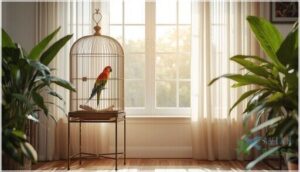
Once you’ve got the right cage, where you put it matters just as much as what’s inside it. The wrong spot can stress your bird out, even if everything else is perfect.
Here are three key things to think about when choosing the best location.
Location, ventilation, and daily foot traffic all play a role—and if bar spacing is on your radar too, this bird cage bar spacing guide covers exactly what to look for.
Avoiding Drafts and Fumes
Your bird’s lungs are far more sensitive than yours, making Draft Free Placement and Fume Reduction Tips essential to safe bird cage design.
Keep the cage away from kitchen fumes, HVAC vents, and scented products — all serious threats to bird health.
Solid Ventilation Strategies, like using a HEPA purifier and Indoor Air Monitoring tools, support consistent Air Quality Control without creating harmful airflow.
Providing Natural Light Without Overheating
Natural light does wonders for your bird’s mood and internal clock, but Sunlight Management matters just as much as exposure.
For the best Window Placement, position the cage near an east-facing window and keep it 3 to 6 feet back to allow Thermal Regulation without heat buildup.
Add full-spectrum lighting for UV Lighting benefits, and use curtains for Shade Creation during peak afternoon hours.
Integrating The Cage Into Family Spaces
Where you place the cage shapes determines how comfortable and confident your bird feels each day. A family room placement puts your bird at the center of household life, supporting bird socialization without overwhelming it.
Keep the cage outside main traffic patterns, in a corner with one solid wall behind it. Good noise reduction and thoughtful shared spaces make the whole bird cage setup feel safe and natural.
Optimize Perch and Accessory Placement

What’s inside the cage itself matters just as much as the cage.
The way you arrange perches, bowls, and accessories shapes how safe and comfortable your bird feels every day.
Here are the key placements to get right.
Natural Wood Perches and Foot Health
Your pet bird’s feet work hard every single day, and the perch choice makes all the difference. Natural wood perches offer real foot health benefits because their uneven texture shifts pressure points, which helps with preventing bumblefoot before it starts.
Natural wood perches shift pressure points daily, quietly preventing bumblefoot before it starts
Safe hardwoods like manzanita also let nails wear down naturally. For wood perch maintenance, scrub them weekly and replace any that are cracked or heavily chewed.
Perch Height and Spacing Guidelines
Where you place each perch shapes how safe and active your bird stays throughout the day. A solid bird cage setup includes at least three vertical levels — low, mid, and high — so your bird moves naturally instead of sitting frozen in one spot. Good perch placement also means leaving open flight lanes for short hops and flutters.
- Keep the highest perch a few inches below the cage ceiling to protect tail feathers
- Stagger perches so droppings from above don’t fall on lower resting spots
- Space perches far enough apart that your bird must hop, not just lean, between them
- Maintain clear horizontal spacing to give small birds actual flight lanes inside the cage
Safe Placement of Food and Water Bowls
Bowl placement might seem like a small detail, but it quietly shapes your bird’s daily comfort and health. Position food and water bowls at perch level, never directly below a perch where droppings can contaminate them.
Keep water bowls out of direct sunlight to slow bacteria growth. Separate your food station dishes — one for pellets, one for fresh foods — so moisture doesn’t spoil dry feed.
Maintain Proper Temperature and Lighting

Your bird feels temperature and light shifts more deeply than you might expect.
Getting these two things right can make a real difference in how calm, healthy, and rested your bird stays each day.
Here’s what to focus on.
Stable Temperature and Humidity Levels
Your bird’s comfort starts with the air quality around the cage. Most birds thrive between 65 and 80°F, but sudden temperature swings stress them even within that range.
For solid avian care and air quality, keep indoor humidity between 40 and 60 percent. A simple thermometer-hygrometer near perch height gives you real-time climate zone data so small problems don’t become big ones.
Regulating Daylight Exposure
Light cycle management matters just as much as temperature. Most birds do best with about 12 hours of light and 12 hours of dark — a day-night balance that mirrors natural tropical rhythms.
Natural sunlight promotes mood and vitamin D, but typical window glass blocks UVB rays. For bird cage setup, a full-spectrum UVB lighting bulb mounted about 18 inches above perches fills that gap beautifully.
Using Cage Covers for Restful Sleep
A good cage cover does more than block light — it signals bedtime and promotes healthy bird sleep patterns. Most pet birds need 10 to 12 hours of darkness, and a breathable cotton cover helps your bird cage deliver that consistently.
For noise reduction, a thicker weave muffles household sounds too. Just follow basic cover safety tips: keep one side slightly open for airflow, and tuck loose edges so curious beaks stay safe.
Enhance Enrichment and Mental Stimulation

A bird that’s bored is a bird that’s stressed, and stress shows up in ways you really don’t want to see.
Keeping your bird mentally active isn’t complicated, but it does take a little intention. Here are a few practical ways to make that happen.
Rotating Toys and Foraging Activities
Switching things up with toy rotation keeps your bird curious and mentally sharp. Consistent bird enrichment through toy variety and foraging techniques fosters healthy bird behavior every day.
Use this activity planning guide:
- Rotate toys every 1–2 weeks
- Always keep one familiar comfort toy inside
- Offer shredding, noise, and foraging toys together
- Hide treats in paper cups for simple foraging
- Adjust rotation frequency if cage-pacing starts
Creating Exercise and Play Zones
Toy rotation sharpens your bird’s mind, but physical activity keeps the whole body healthy. A dedicated Play Stand Design outside the bird cage gives your bird a clear zone for movement and Bird Socialization during daily out-of-cage time.
| Zone Element | Purpose | Placement Tip |
|---|---|---|
| Climbing Routes | Build wing and leg strength | Vary heights with ladders and ropes |
| Safe Landings | Prevent injury on descent | Use non-slip mats below perches |
| Exercise Scheduling | Reduce cage restlessness | Aim for 2–4 hours daily |
Position perches, bird toys, and environmental enrichment tools across multiple levels so cage design fosters natural movement every session.
Encouraging Natural Behaviors
Birds thrive when their environment mirrors the wild. Supporting natural bird behavior through targeted environmental enrichment keeps your companion mentally sharp and physically healthy.
- Use Foraging Techniques like hidden pellets in paper cups to stimulate search instincts
- Offer shreddable toys for Beak Health and natural chewing outlets
- Mist-spray for Feather Care and preening support
- Vary perches for birds to build foot strength through Exercise Routines
- Prioritize Social Interactions with daily, predictable conversation
Ensure Cleanliness and Hygiene
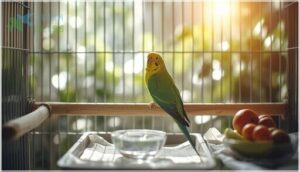
A clean cage isn’t just about appearances — it’s one of the most direct ways you protect your bird’s health every single day.
Dirt, old food, and bacteria build up faster than most people expect, and birds are surprisingly sensitive to their environment.
Here’s what a solid hygiene routine actually looks like.
Daily Spot-cleaning Routines
Daily cage maintenance doesn’t have to feel overwhelming. Start with Cage Liner Management — peel off the top layer of paper each morning so droppings never pile up.
Daily Dish Care means washing bowls with hot soapy water and refilling fresh water whenever it looks cloudy. For Droppings Cleanup, wipe bars with a damp cloth before waste hardens.
Use Bird Safe Cleaners only, and don’t forget Surrounding Area Maintenance — sweep fallen seeds from the floor daily.
Weekly Deep Cleaning Steps
Once a week, take your bird cage fully apart — tray, grates, perches, and bowls — for thorough Waste Removal and Surface Sanitizing. Scrub bars and joints with hot soapy water, then apply a bird-safe disinfectant for 10–15 minutes before rinsing well.
Toy Cleaning matters too, so wash or machine-wash accessories completely. Cage Disassembly and Disinfectant Safety together make cage maintenance genuinely protective for your bird.
Monitoring for Health Issues
Your bird can’t tell you when something feels off — so regular health checks fill that gap. Watching for shifts in Bird Behavior, Feather Condition, and Dropping Analysis helps you catch trouble early.
- Notice fluffed posture or unusual quiet as early warning signs
- Check droppings daily for color, consistency, and frequency changes
- Inspect Beak Inspection areas for dried food or discharge
- Track weight weekly to spot silent health decline fast
Frequently Asked Questions (FAQs)
How to make a bird cage comfortable?
Making a bird cage comfortable comes down to matching cage design and layout to your bird’s natural needs — the right perches, full-spectrum lighting, and thoughtful cage accessories all shape bird wellness and behavior.
What cage materials are safest for birds?
Stainless steel bird cages are the safest choice. They resist rust, avoid metal toxicity, and tolerate bird-safe cleaning products well.
Pair them with safe woods and non toxic coatings for lasting cage durability.
How often should perches be replaced?
Natural wood and rope perches usually need replacing every three to six months, while hard plastic ones can last years.
Watch your bird’s behavior and do regular safety checks — worn or frayed perches should go immediately.
Can birds share a cage with other species?
Species compatibility matters more than most bird owners expect.
Cage sharing between different species carries real risks, from bullying to injury, so interspecies harmony in mixed flocks is rare and should never be assumed.
How do I reduce my birds stress levels?
Calm, consistent care cuts stress at its foundation. Watch for stress signals like screaming or feather plucking, then apply relaxation techniques — routine, noise reduction, and gentle bird socialization — to support your bird’s overall avian health and wellness.
What sounds or noise levels upset birds most?
Loud, sudden sounds — traffic, construction, and urban noise pollution — cause real avian distress. Acoustic disruption interferes with communication and spikes stress hormones, directly affecting bird behavior and psychology, sonic impact, and overall bird welfare.
Conclusion
Think of your bird’s cage the way you’d think of your own home comfort—every detail either adds to your comfort or quietly chips away at it.
Knowing how to make a bird cage more comfortable means looking at space, light, temperature, and enrichment not as separate checkboxes, but as one connected system. When each piece works together, your bird doesn’t just survive in that space.
It settles in, relaxes, and genuinely thrives.
- https://winchestervetclinic.com/2025/04/15/best-bird-cage-setup-for-small-birds/
- https://avianenrichment.com/staging/learn/physical-needs/environment/perch-placement-guidelines
- https://rvetclinic.com/choosing-spot-birdcage/
- https://www.phoenixlanding.org/perches.html
- https://www.quillandroost.com/products/universal-bird-cage-cover-dark-colored-drape-for-animal-crate-waterproof-washable-night-cover-for-cages-distraction-and-light-eliminator-for-mink-totoro-parakeets-parrot-black