This site is supported by our readers. We may earn a commission, at no cost to you, if you purchase through links.

Some birds treat a new toy like a mystery box—sniff it, prod it, claim it within minutes.
Others back into the corner of their cage and refuse to move until the strange object disappears.
If your bird falls into that second camp, you’re not dealing with a difficult bird.
You’re living with a cautious one, and there’s a real difference.
Shyness in birds often reflects deep sensitivity to change, not stubbornness.
The good news: shy birds can and do learn to love new toys—they just need a gentler path to get there.
Table Of Contents
Key Takeaways
- Shy birds aren’t being difficult — they’re wired as prey animals, and a new toy can flood their bodies with fear hormones within seconds, so slow and steady isn’t optional, it’s biology.
- Matching a toy to your bird’s personality type (explorer, shredder, or kinesthetic) makes a bigger difference than any introduction trick, because the right toy feels familiar before it’s even touched.
- Starting the toy outside the cage — about six feet away — and moving it just a few inches closer each week let your bird decide when it’s ready, which builds real confidence instead of forced tolerance.
- Small wins like a glance or a single step toward the toy deserve immediate praise, because consistent positive reinforcement is what turns a scared bird into a curious one over time.
Why Shy Birds Fear New Toys
Not every bird warms up to a new toy right away, and that’s completely normal.
Some birds adapt slowly to change, much like how different bird species handle migration at their own pace when facing new environmental pressures.
A lot depends on your bird’s personality, what their body language is telling you, and how their brain reacts to sudden changes. Here’s what’s usually going on when a shy bird wants nothing to do with that shiny new toy.
How Bird Personality Affects Toy Acceptance
Not every bird greets a new toy with excitement. Your bird’s personality shapes how quickly it accepts something unfamiliar.
Three key personality types respond differently:
- Explorer birds tackle Explorer puzzles and climb toward new objects boldly.
- Shredder birds warm up through Shredder toys matching their chewing instincts.
- Kinesthete birds need Kinesthete motion — swings, bells, and tossable toys.
Personality matching builds confidence and curiosity naturally. The strategy of introducing toys outside cage can reduce stress for shy birds.
Common Signs of Stress or Fear in Birds
Knowing your bird’s personality helps a lot, but you also need to spot when stress is already showing.
| Sign | What You’ll See | What It Means |
|---|---|---|
| Feather bar patterns | Thin lines across feathers | Stress during growth |
| Vocal silence | Sudden quiet, no chirping | Fear or depression |
| Crouching posture | Body low, feathers flat | Immediate fear response |
| Eye pinning | Pupils flashing rapidly | High anxiety or threat |
| Reduced appetite | Eating much less than usual | Chronic stress present |
Watch these signals closely. They’re your bird’s way of asking for a slower pace.
early stress detection can help prevent health issues.
Why Sudden Changes Overwhelm Nervous Birds
Your bird’s stress signals matter, but understanding why they appear helps even more. Birds are prey animals by nature.
A new toy can trigger predator mimicry fears, causing a hormonal surge that spikes heart rate within seconds. That’s avian psychology at work.
A simple new toy can flood a bird’s body with fear hormones, spiking its heart rate within seconds
Routine disruption, even minor cage changes, activates neophobic traits and risks physiological overload.
Gradual introduction is the gentlest path to reducing bird stress.
Spreading the process over seven to ten days helps birds adjust without feeling overwhelmed, making the whole experience far less stressful for them.
Choose The Right Toy for Your Shy Bird
Not every toy will work for a shy bird, and that’s okay.
The right choice depends on your bird’s size, personality, and what feels safe to them.
Here’s what to look for before you buy.
Matching Toy Size to Your Bird’s Species
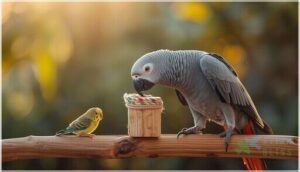
Size matters more than you’d think. A toy too big can frighten your shy bird, while one toy too small becomes a safety risk.
Species size charts take the guesswork out of toy introduction techniques.
Budgies need extra small toys under 3 inches, while African Greys need 10 to 12 inches.
Matching foot span safety and beak strength guidelines to your bird’s species makes reducing bird stress much easier from the start.
Best Materials for Anxious or Timid Birds

Material choice can make or break your shy bird’s first impression of a new toy.
Soft wood like balsa or sola crumbles gently under a timid beak.
Natural fiber ropes, paper-based shreds, and vegetable-tanned leather all feel familiar and safe.
Safe acrylic plastics work well too.
These natural materials reduce stress and support healthy bird behavior from the start.
Toys That Mimic Natural Behaviors and Environments

Think about what your bird does in the wild — foraging, shredding bark, swinging on vines, and preening. The best avian enrichment activities mirror exactly that.
Foraging Puzzles satisfy natural curiosity. Shredding Bark toys replicate wild tearing.
Swinging Vines and Natural Branch Perches support movement and balance.
Preening Fiber toys ease social grooming needs. These natural materials make stress‑free bird toy rotation feel instinctive, not forced.
What to Avoid When Buying Bird Toys

Some toys do more harm than good. Skip anything with zinc-coated hardware or sharp metal parts — zinc poisoning is a real risk, even from bells and clips.
Long nylon rope can trap toes or cause strangulation. Loud rattling toys add stress fast. Avoid small detachable pieces that break off easily.
Stick with materials your bird already enjoys for a stress-free start.
Introduce New Toys Outside The Cage First

Starting outside the cage is one of the easiest ways to take the pressure off a shy bird. It gives them space to look, think, and decide on their own terms.
Here are a few simple ways to make that first introduction work in your bird’s favor.
Placing Toys Near The Cage to Build Familiarity
Start about 6 feet away — that’s your bird’s safe zone. Place the new toy on a stable stand within its visual line of sight but outside the cage.
Choose a spot opposite the roost side so it doesn’t crowd familiar objects near the sleep perch. This desensitization technique builds bird confidence gently, using perch proximity and height variation to encourage calm, stress‑free curiosity.
Using a Play Gym for Low-Pressure Exploration
A play gym gives your shy bird a whole new world to explore — on their own terms.
Quiet Gym Placement matters more than you’d think. Set it in a low-traffic room, at cage eye level, away from windows and ceiling fans.
- Keep initial sessions to 5–10 minutes for stress‑free introduction of new toys to birds
- Schedule during mid-morning, your bird’s calmest window
- Use treat-linked perches with millet or nuts to build positive associations
- Choose gentle material choices like java wood, cotton rope, or manzanita
- Follow safety monitoring practices — check perches daily and block nearby cords
Short session timing and patience are everything for building bird confidence through bird socialization and training.
How to Gradually Move Toys Closer Over Time
Move the toy just 6 to 12 inches closer each week — only when bird stays calm. Watch for held wings, pacing, or neck craning as stress cues. If those appear, back up.
Your Distance Increment Schedule and Observation Timing are your guide. Gradual Position Shifts, paired with positive reinforcement and patience, make introducing new toys to birds stress‑free and rewarding.
Use Positive Reinforcement to Build Toy Confidence
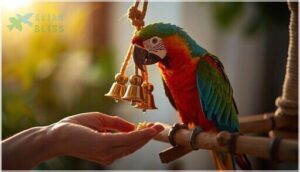
Once your bird can see the toy without panic, it’s time to build a real connection with it. The secret isn’t force — it’s trust, and treats make that process a whole lot easier.
Here are four simple ways to use positive reinforcement and help your bird warm up to new toys.
Pairing New Toys With Favorite Treats
Pairing a favorite treat with a new toy is one of the simplest bird training techniques you can use. Start with gradual treat distance — place millet or pine nuts about 12 inches away at first. Move treats closer daily as your bird relaxes.
Tuck seeds into toy crevices for multi‑texture treat integration. Reward cue consistency matters, so keep sessions short, stress‑free, and predictable.
How to Reward Calm and Curious Behavior
Once your bird glances at the toy without backing away, that’s your moment. verbal praise in a soft, happy tone right away — within two seconds. Immediate rewards build the clearest associations.
Physical scritches work well if your bird enjoys touch. For session consistency, keep clicker timing sharp and sessions under 15 minutes. Calm curiosity, rewarded consistently, grows into real confidence.
Demonstrating Play to Spark Your Bird’s Interest
Your bird learns a lot by watching you. Start a toy demonstration about 6 feet away, using Visual Cues like gentle finger movements near toy parts. Make soft clicking or cooing sounds for Sound Enrichment — it signals fun.
Try these Interactive Modeling tips:
- Pretend to nibble toy edges like a beak
- Shake bells with enthusiastic sounds
- Spin or swing the toy slowly in view
- Repeat short 2-minute sessions daily
Consistent Play Timing builds curiosity fast.
Keeping Training Sessions Short and Stress-Free
Short sessions matter more than you’d think. Once your bird shows curiosity from your demonstrations, keep that momentum going with smart Session Timing and a Quiet Environment.
| Bird Size | Session Length | Daily Sessions |
|---|---|---|
| Small (budgie) | 5–10 minutes | 2–3 times |
| Medium (conure) | 10–15 minutes | 2–3 times |
| Large (macaw) | 15–20 minutes | 2 times |
| Timid birds | 5-minute bursts | 3 times |
| All types | Under 15 min total | Split up |
Watch for Observation Cues like fluffed feathers or leaning away — those signal stop time. Treat Scheduling paired with Gradual Duration keeps toy introduction stress‑free and positive reinforcement consistent.
Monitor Your Bird’s Progress and Adjust Accordingly
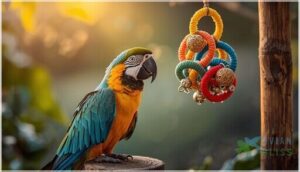
Every bird moves at its own pace, and that’s completely okay. How your bird reacts tells you more than any guide ever could.
what to watch for as you adjust your approach along the way.
When to Remove a Toy and Try Again Later
Sometimes a toy just isn’t working — and that’s okay. Knowing when to step back is part of reducing stress in birds.
Remove the toy right away if you notice:
- Screaming or trembling near the toy
- Clinging to cage sides, away from it
- Lunging or feather‑puffing defensively
- No interaction after one full week
- Persistent avoidance lasting three or more days
Safe extraction during calm evening hours keeps stress‑free conditions intact. After removal, watch for relaxed preening and normal vocalizing — signs of post‑removal recovery. Retry interval matters: wait several weeks, then reintroduce with positive reinforcement outside the cage first.
Rotating Toys to Prevent Boredom Without Overwhelm
Rotating toys keeps life interesting for your bird — without turning their world upside down.
Weekly Rotation Schedule gives structure. Use the Gradual Shift Method: swap one toy out, slide others into familiar spots, and introduce one new item. This bird enrichment approach keeps change gentle for any shy or nervous bird.
| Toy Type | Rotation Frequency | Notes |
|---|---|---|
| Shredding toys | Every 7–10 days | Great for stress relief |
| Foraging puzzles | Weekly | Mimics natural scavenging |
| Bells and clackers | Every 4 weeks | Suits cockatiels, conures |
| Chewable wood | Every 2–3 weeks | Best for larger species |
| Swings | Monthly | Encourages active movement |
Limited New Items prevent overwhelm. Storage Organization Tips — labeled bins, tracked rotation dates — make stress‑free swaps easy. Toy Type Variety ensures balanced bird enrichment through positive reinforcement of natural behaviors.
Celebrating Small Wins to Reinforce Confidence
Every tiny step your bird takes deserves recognition.
A glance at the toy? That’s your cue for Glance Praise — a soft, cheerful word right away.
Proximity rewards closeness, while First Touch Rewards seal the deal with something special like pomegranate seeds.
Play Attempt Cheers build real boldness over time.
Progress Tracking keeps you both moving forward, stress‑free.
Frequently Asked Questions (FAQs)
How to introduce toys to birds?
Start with safety checks and bird toy selection based on size and species. Use positive reinforcement training, sensory cues, and social modeling to ease the process.
Environmental enrichment and observation timing make new toy introductions stress-free.
Can two birds help each other accept new toys?
Two birds can absolutely help each other.
Through social modeling and peer demonstration, a confident bird’s calm curiosity sparks mutual curiosity in a shy companion, making paired exploration a natural form of confidence transfer.
How often should shy birds get new toys?
Most shy birds do best with new toys every 3 to 4 weeks. Slower rotation frequency keeps stress low and gives your bird time to feel safe before the next change.
Do certain colors frighten timid birds more?
Yes, color matters more than you’d think.
Red aversion and orange anxiety are real — timid birds link bold hues to danger.
White avoidance and reflective glare add stress too.
Earth tone soothing toys feel safer.
Should lighting affect where new toys are placed?
spotlight on a stage, lighting shapes what feels safe.
Place toys in Warm Light Zones with Overhead Light Positioning and Shadow Minimization to support stress‑free exploration and bird welfare and wellbeing.
Conclusion
Even the most intrepid naturalists of old knew that trust is earned, never demanded. Learning how to introduce new toys to shy birds is really about learning to read your bird—its pauses, its posture, its cautious glances.
Every small step forward is a real win. Stay patient, stay consistent, and let curiosity lead the way.
Your bird isn’t broken. It’s just waiting for proof that the world is safe enough to explore.