This site is supported by our readers. We may earn a commission, at no cost to you, if you purchase through links.

A bird that can’t move freely is a bird that can’t thrive.
Most indoor bird rooms get the basics right—the right cage, the right food, the right toys—but perch setup is where things quietly go wrong. The wrong diameter strains foot tendons over time. The wrong material hides toxins behind a natural-looking surface. Even the wrong placement can turn a bird room into a stressful obstacle course instead of an enriching one.
Choosing the right bird perches for indoor bird rooms comes down to knowing what actually matters: safe materials, correct sizing, and smart positioning. The options reviewed here make that decision a lot easier.
Table Of Contents
- Key Takeaways
- Top 10 Bird Perches Reviewed
- 1. Apple Wood T Perch Suction Cup
- 2. Fejapa Natural Wood Bird Perch
- 3. Hereex Window Suction Bird Perch Toy
- 4. LIMIO Natural Wood Bird Playground
- 5. BRSLAIF Natural Wood Bird Perch Playground
- 6. Arfubye Height Adjustable Bird Perch
- 7. LIMIO Natural Wood Bird Perch
- 8. Natural Wood Bird Perches with Toys
- 9. Adjustable Pepper Wood Bird Perch
- 10. Penn Plax Large Natural Wood Bird Perch
- Safe Materials for Indoor Perches
- Perch Size by Bird Species
- Best Placement in Bird Rooms
- Perch Cleaning and Maintenance Tips
- Frequently Asked Questions (FAQs)
- Conclusion
Key Takeaways
- untreated natural woods like apple, pepper, or manzanita are the safest choices, while painted, sealed, or pressure‑treated wood can seriously harm your bird.
- Match the perch diameter to your bird’s size so their toes wrap about two‑thirds around the surface, and mix a few different widths to keep foot muscles healthy and prevent strain.
- Where you place perches is just as important as which ones you pick — keep them away from food and water bowls, vary the heights, and rotate locations every one to two weeks to fight boredom.
- Clean perches daily by wiping off droppings, do a deep disinfection weekly with bird‑safe products like diluted F10 SC or hydrogen peroxide, and replace any piece that shows deep cracks, heavy fraying, or corroded hardware.
Top 10 Bird Perches Reviewed
Finding the right perch for your bird’s indoor room doesn’t have to be overwhelming. These ten options cover a range of materials, sizes, and mounting styles to suit different birds and spaces.
If you’re unsure where to start, this guide to choosing the best bird cage perch material breaks down what actually matters for your specific bird.
Here’s what made the cut.
1. Apple Wood T Perch Suction Cup
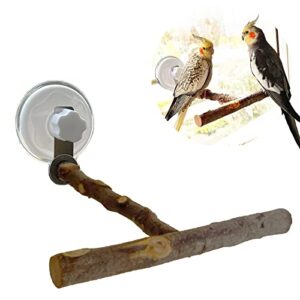
If you’re looking for a perch that works almost anywhere indoors, the Apple Wood T Perch Suction Cup is worth a close look. It’s made from natural apple wood — chew‑friendly and safe — and sticks to glass, mirrors, or smooth tiles with a vacuum‑grip suction cup.
Small to medium birds like budgies, cockatiels, and lovebirds feel right at home on it.
Just keep the surface clean for a strong hold, and soak the cup in warm water if the grip starts to fade.
| Best For | Small to medium bird owners — budgies, cockatiels, lovebirds, or parrots — who want a versatile perch they can stick on a window, mirror, or tile without any drilling. |
|---|---|
| Material | Apple wood |
| Bird Size | Small to medium |
| Mounting Type | Suction cup |
| Includes Accessories | No |
| Ease of Cleaning | Easy, repositionable |
| Portability | High |
| Additional Features |
|
- Natural apple wood is safe to chew and gives birds a comfortable, textured grip
- Sticks to glass, mirrors, and smooth tiles — easy to move and reposition whenever you need
- Works inside cages too, so it pulls double duty as a freestanding perch
- Suction strength can fade after a few months and may need a warm water soak to revive it
- Wood can rot or break down if it’s exposed to moisture or outdoor humidity for too long
- Quality control seems a bit hit or miss — a handful of buyers got a perch that wouldn’t grip at all right out of the box
2. Fejapa Natural Wood Bird Perch
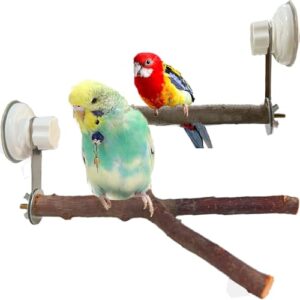
Another solid pick is the Fejapa Natural Wood Bird Perch. Crafted from untreated hardwood with no synthetic coatings or dyes, it’s genuinely safe for birds that love to chew — and most of them do.
The Y-shaped design gives smaller birds like budgies, cockatiels, and lovebirds a natural, stable place to land.
At $11.99, it’s an easy addition to any bird room. Just check it weekly for splinters and clean it with warm water to keep it in good shape.
| Best For | Small to medium birds like budgies, cockatiels, and lovebirds whose owners want a natural, affordable perch they can stick almost anywhere. |
|---|---|
| Material | Natural wood |
| Bird Size | Small to medium |
| Mounting Type | Suction cup |
| Includes Accessories | No |
| Ease of Cleaning | Easy, cup refresh |
| Portability | High |
| Additional Features |
|
- Natural wood is safe to chew and free of synthetic coatings — no worrying about what your bird is gnawing on
- Sticks to glass, tile, mirrors, and more in under 2 minutes, no tools needed
- At $11.99, it’s a low-commitment way to add enrichment to your bird’s space
- The suction cup can lose its grip over time, especially outdoors or in changing temperatures — worth checking regularly
- Not built for larger parrots; the load capacity isn’t listed, so bigger birds are a real risk
- The mounting screw can scratch glass if you’re not careful — a small washer goes a long way here
3. Hereex Window Suction Bird Perch Toy
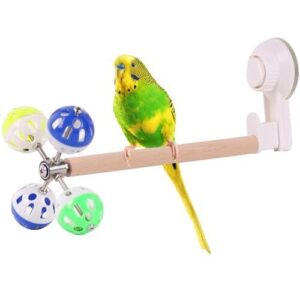
If your bird loves window time, the Hereex Window Suction Bird Perch Toy takes things up a notch. It mounts directly to glass using a suction cup with a tightening screw — no tools, no fuss.
The 9.75-inch natural wood perch is sized right for budgies, cockatiels, and conures.
What makes it stand out is the removable spinning toy with balls and bells.
At $13.99, it’s a smart pick for birds that need both a resting spot and something to keep their minds busy.
| Best For | Bird owners with parakeets, budgies, cockatiels, or conures who want to give their pet a window view plus a little something to play with. |
|---|---|
| Material | Natural wood + plastic |
| Bird Size | Small to medium |
| Mounting Type | Suction cup |
| Includes Accessories | Rotating bell toy |
| Ease of Cleaning | Easy, repositionable |
| Portability | High |
| Additional Features |
|
- Mounts to any clean glass or mirror in seconds — no tools needed, just wet the surface and twist the screw
- The spinning toy with balls and bells gives curious birds a way to stay mentally active while perched
- Easy to reposition or move to a different room, so your bird gets a fresh view whenever you want
- Some units have shipped with missing hardware, meaning you might need to track down a replacement nut or bolt
- Won’t stick to textured or rough surfaces — smooth glass only, and prep work matters
- Timid birds may ignore the spinner entirely, so the toy feature isn’t a guaranteed hit
4. LIMIO Natural Wood Bird Playground
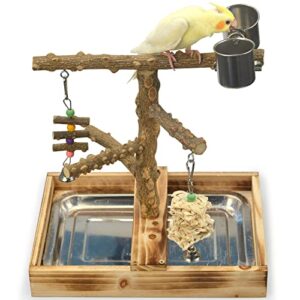
If your bird needs more than just a perch, the LIMIO Natural Wood Bird Playground gives them a whole space to explore. It’s built with untreated natural wood, so there are no toxic fumes or surprise coatings to worry about.
Perch diameters range from 0.5 to 1.25 inches, making it a solid fit for finches through cockatiels.
Swings, ladders, and varied textures keep curious birds busy for hours — and the modular design means you can add pieces as your flock grows.
| Best For | Small to medium bird owners — parakeets, cockatiels, budgies, conures, and lovebirds — who want a portable play space that keeps their bird active and entertained. |
|---|---|
| Material | Natural wood + stainless steel |
| Bird Size | Small to medium |
| Mounting Type | Freestanding tabletop |
| Includes Accessories | Bell, corn husk, 2 cups |
| Ease of Cleaning | Removable tray |
| Portability | Medium |
| Additional Features |
|
- Removable metal tray makes cleanup genuinely easy — just pull it out, wipe it down, done.
- Stainless steel clip-on cups hold food and water securely without tipping or sliding around.
- Portable and easy to disassemble, so you can move it room to room or take it on the road.
- The wood can be on the softer side, so heavy chewers may work through it faster than you’d like.
- Several buyers reported screws that loosen over time, which can make the whole thing wobbly with active birds.
- Perch sizing might be a bit much for the tiniest birds, making long stretches of perching uncomfortable for them.
5. BRSLAIF Natural Wood Bird Perch Playground
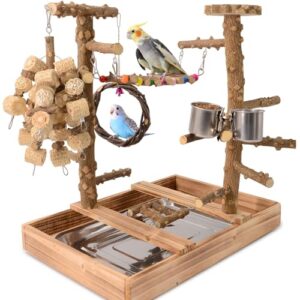
The Natural Wood Bird Perch Playground packs a lot into one compact station. At 17.72 × 12.36 inches, it fits easily on a tabletop or cage top without crowding your space.
Real wood branches, a ladder, swing, and hanging chew toys keep small to medium birds — budgies, cockatiels, conures — mentally sharp and physically active. Two stainless-steel feeding cups and a removable drip tray make daily cleanup quick.
If you’re mounting the cage outdoors or on a balcony, these balcony bird feeding tips and setup ideas can help you choose suction cups strong enough to support even the feistiest conures.
At $49.99, it’s priced higher than basic options, but the multi-function design earns it.
| Best For | Small to medium bird owners — budgies, cockatiels, lovebirds, conures — who want a single station that covers perching, feeding, and play. |
|---|---|
| Material | Natural wood + stainless steel |
| Bird Size | Small to medium |
| Mounting Type | Freestanding tabletop |
| Includes Accessories | Ladder, swing, 2 cups, toys |
| Ease of Cleaning | Removable tray, dishwasher cups |
| Portability | Medium |
| Additional Features |
|
- Real wood branches give birds natural grip variety, which is genuinely good for their feet and beaks
- The removable tray and dishwasher-safe steel cups make cleanup fast and painless
- Compact enough to move room to room, but stable on any flat surface
- At $49.99 it’s a noticeable step up from basic perches, so the value only lands if your bird actually uses all the features
- The bark can chip if you overtighten the screws during assembly — you have to go slow
- Feeding cups may sit too deep for very small birds to reach comfortably
6. Arfubye Height Adjustable Bird Perch
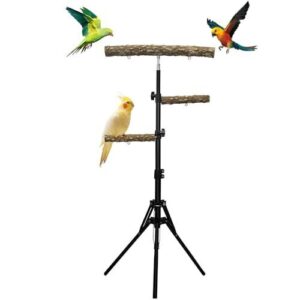
Need a perch that grows with your setup? The Arfubye Height Adjustable Bird Perch stretches from 16 to 63 inches, so you can place it at floor level for hands-on training or raise it for independent play.
Three natural pepper wood poles give your bird solid grip and a safe surface for claw and beak maintenance.
At just 2.64 lb, it folds down easily for travel.
For $27.99, it’s a flexible, practical pick for small to medium birds.
| Best For | Bird owners with small to medium birds who want a versatile, portable perch for training, play, and everyday use. |
|---|---|
| Material | Pepper wood + metal |
| Bird Size | Small to medium |
| Mounting Type | Freestanding floor stand |
| Includes Accessories | Toy hooks |
| Ease of Cleaning | Wipe down |
| Portability | High |
| Additional Features |
|
- Adjusts from 16 to 63 inches, so it works on the floor for hands-on time or up high for independent play
- Natural pepper wood poles help your bird keep claws and beak in shape without any extra effort
- Lightweight and foldable at 2.64 lb, easy to move room to room or take on the go
- No listed weight limit, so it’s a gamble for larger or heavier birds
- Wood can wear down with moisture, so it’s not ideal for long-term outdoor use
- Only comes in black, so no options if you want something that matches your space
7. LIMIO Natural Wood Bird Perch
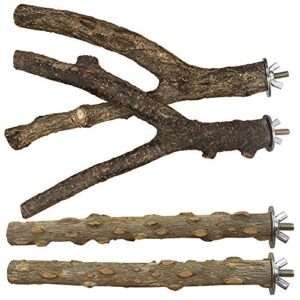
The LIMIO Natural Wood Bird Perch keeps things refreshingly simple. It’s made from untreated pepper wood — no paints, no sealants, no mystery chemicals near your bird’s beak.
The pack comes with four perches total: two branch-style and two smooth wood sticks, which is great because mixing textures helps keep your bird’s feet healthy and exercised.
Installation is tool-free thanks to the built-in bolt and wing nut. Best suited for budgies, parakeets, conures, and lovebirds.
Priced affordably, so stocking a full cage is easy.
| Best For | Small bird owners — budgies, parakeets, conures, and lovebirds — who want a natural, chemical-free perch that’s easy to install and supports healthy feet. |
|---|---|
| Material | Pepper wood |
| Bird Size | Small to medium |
| Mounting Type | Cage bar bolt |
| Includes Accessories | No |
| Ease of Cleaning | Periodic inspection needed |
| Portability | Low |
| Additional Features |
|
- Untreated pepper wood means no paints or chemicals near your bird
- Two branch-style and two smooth perches in one pack — good variety for foot health
- Tool-free installation with a built-in bolt and wing nut, so setup takes seconds
- May be too large for very small cages or tiny bird species
- Not built for big parrots or heavier birds that could put strain on the mount
- Untreated wood needs regular checks for splinters or wear, especially in humid spaces
8. Natural Wood Bird Perches with Toys
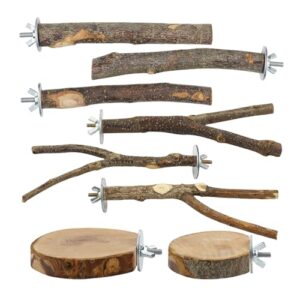
Eight pieces for under $13 — that’s genuinely hard to beat.
The Rliguanrui Natural Wood Bird Perches with Toys (model Birds-C01) packs a full kit: assorted round perches ranging from 2.4 to 3.5 inches, fork toys, a hanging multi-branch platform, and a hammock swing.
Your bird gets spots to perch, chew, climb and rest — all in one set.
It mounts with washers and wing nuts for a secure fit.
Best suited for parakeets, budgies, and conures.
| Best For | Small bird owners — parakeets, budgies, and conures — who want to give their pet more ways to move, play, and rest without spending a lot. |
|---|---|
| Material | Natural wood |
| Bird Size | Small to medium |
| Mounting Type | Cage bar wing nut |
| Includes Accessories | Hammock, fork toys |
| Ease of Cleaning | Easy to clean |
| Portability | Low |
| Additional Features |
|
- Eight pieces for $12.99 is solid value — you get perches, toys, a platform, and a hammock all in one kit.
- Natural wood with varied shapes and diameters is genuinely good for foot health and keeps birds mentally engaged.
- Easy to install and clean, so day-to-day upkeep doesn’t become a hassle.
- Not a great fit for larger birds like macaws or cockatoos — the perch sizes just aren’t there.
- Natural wood means dimensions can vary, and a few pieces might feel smaller than the listing suggests.
- There’s at least one report of a perch arriving broken, and returns weren’t an easy option in that case.
9. Adjustable Pepper Wood Bird Perch
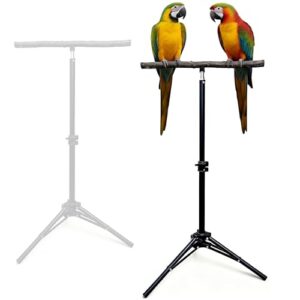
Flexibility matters when your bird’s mood changes by the hour.
The HIITYFF Adjustable Bird Perch adjusts from 15 to 31 inches without any tools, so you can match the height to training sessions, feeding time, or just a relaxed afternoon hang.
The pepper wood perch has natural ridges that help your bird grip confidently and wear down those claws naturally.
At $17.99 and under a pound, it moves easily from tabletop to patio without fuss.
| Best For | Bird owners with small to medium-sized birds like cockatiels, budgies, or African Greys who want a lightweight, portable perch for training, feeding, or outdoor bonding time. |
|---|---|
| Material | Pepper wood + metal |
| Bird Size | Small to medium |
| Mounting Type | Freestanding tripod |
| Includes Accessories | No |
| Ease of Cleaning | Easy, portable |
| Portability | High |
| Additional Features |
|
- Adjusts from 15 to 31 inches with no tools — easy to set up and dial in for any situation
- Natural pepper wood gives birds a solid grip and helps keep claws worn down naturally
- Super lightweight at under a pound, so it moves from room to patio without any hassle
- No listed weight rating, so it’s hard to know if it’s safe for heavier birds
- The wooden perch will wear down over time and may eventually need to be swapped out
- Not weatherproof — leaving it outside in the rain or humidity could cause rust or deterioration over time
10. Penn Plax Large Natural Wood Bird Perch
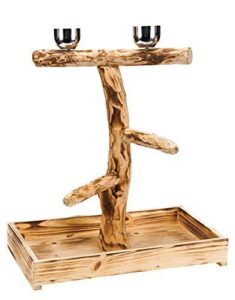
Think of the Large Natural Wood Bird Perch as a little tree your bird actually lives on. The main perch runs 17.75 inches wide with a 1.5-inch diameter — solid footing for cockatoos, African greys, and macaws.
Two removable stainless-steel bowls handle feeding and drinking in one spot. The drop tray catches seed mess before it hits the floor.
At 4.6 pounds, you can move it between rooms without any trouble.
| Best For | Medium-to-large parrots like cockatoos, African greys, and macaws that need varied perching surfaces for foot health and exercise. |
|---|---|
| Material | Natural wood + stainless steel |
| Bird Size | Medium to large |
| Mounting Type | Freestanding base |
| Includes Accessories | 2 stainless cups, drop tray |
| Ease of Cleaning | Removable tray and cups |
| Portability | Medium |
| Additional Features |
|
- Varied branch diameters naturally wear down nails and keep foot muscles strong
- Stainless-steel bowls pop off easy for cleaning, and the drop tray keeps seed mess contained
- Light enough to move between rooms or cages without any hassle
- Natural wood soaks up droppings, so you’ll want a liner in the tray
- The 1.5-inch main perch is too thick for small birds to grip comfortably
- A few buyers have reported minor quality issues like burnt spots on the wood or sharp staples in the tray
Safe Materials for Indoor Perches
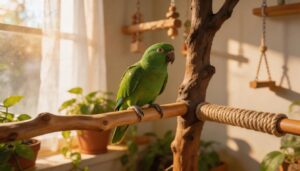
What your bird stands on matters more than most people realize. The wrong material can cause everything from foot injuries to serious toxicity issues.
The wrong perch material can lead to foot injuries or serious toxicity in your bird
Here’s what to look for when choosing safe perches for your indoor bird room.
Untreated Natural Wood for Chewing and Grip
Untreated natural wood is one of the best things you can give your bird. Here’s why it works so well:
- Texture Benefits — natural grain grip keeps feet steady without synthetic coatings
- Chewing Stimulation — splinter‑free wood encourages healthy beak wear daily
- Foot Muscle Development — natural branch perches build strength through varied surfaces
- Wood Aging Effects — non‑toxic wood for birds stays stable indoors, supporting consistent bird foot health
It’s important to avoid raw pine shavings because they release volatile oils that can harm birds.
Safe Hardwood Choices for Indoor Bird Rooms
Not all natural wood is equal. Applewood durability makes it a top pick — it’s dense enough to handle serious chewing.
Maple grain smoothness keeps feet snag-free, while birch lightness works well for smaller rooms.
Manzanita strength and dragonwood resilience both outlast softer woods easily.
When choosing safe perch materials for bird health, stick to nontoxic wood for birds with no sealants.
BPA-free Plastic and Easy-clean Options
Wood isn’t your only safe option. BPA-free plastic perches made with food-safe plastics and non-toxic additives are genuinely bird-safe and easy to install.
Many feature a siloxane finish or hydrophobic coatings that repel droppings and moisture, making stain-resistant materials a smart pick for busy bird rooms.
A quick wipe takes care of most messes — cleaning maintenance has never been simpler.
Rope Perch Benefits and Fray Risks
Rope perches feel soft underfoot — that cushioning toe pressure relief is real, especially compared to hard dowels. They also support grip muscle tone by making birds work those tiny foot muscles naturally.
Watch for fray, though:
- Inspect weekly; replace if fraying exceeds two inches
- Moisture pathogen risk rises fast in damp fibers
- Choose reinforced core design at attachment points
- Use natural wood and rope materials for avian chewing satisfaction
- Keep Bird Rope Swing Toy options away from water bowls
Avoiding Painted, Sealed, and Treated Wood
Painted, sealed, or pressure-treated wood might look polished, but it’s a real health risk for birds. VOC-free materials and non-toxic finishes aren’t optional — they’re essential.
Paints chip and get ingested, sealants trap mold, and treated lumber leaches copper-based chemicals when chewed.
Always choose raw wood selection from certified wood sources. Safe perch materials for bird health start with honest, untreated natural wood — nothing more, nothing less.
Stainless-steel Hardware and Non-toxic Finishes
Even small hardware choices matter a lot for your bird’s safety. Stainless steel hardware for cages offers genuine Corrosion Resistance against droppings and humidity, while Food-Grade Coatings and Certified Finish Standards keep chewing sessions risk‑free.
- Smooth Joint Design prevents feather and toe snags
- Long-Term Durability means fewer replacements and less stress
- BPA-free plastic and non‑toxic perch material resist bacterial buildup
- Material safety considerations for bird accessories include checking safety standards for pet accessories before buying
Perch Size by Bird Species
Getting the perch size right is one of the easiest things you can do to keep your bird comfortable and healthy. A perch too thick or too thin puts real strain on their feet over time.
Here’s what works best for each type of bird.
Perch Diameters for Finches and Canaries
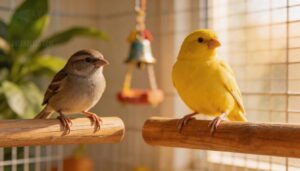
Finches and canaries have tiny feet, so getting the perch diameter right really matters. Aim for three‑eighth‑inch on the low end and seven‑eighth‑inch on the thicker side — that range allows a healthy foot wrap ratio of about two‑thirds around the perch.
Mixing both sizes encourages foot muscle development and follows smart perch gap guidelines for small to medium birds.
Best Sizes for Budgies, Lovebirds, and Parakeets
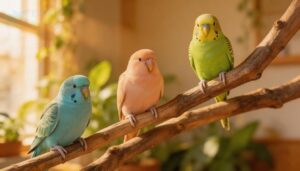
These three species look similar, but feet tell different stories. Budgie perch diameter sits in the 6–8 mm range, while lovebird width guidelines call for 9–12 mm. The parakeet size spectrum overlaps both, generally 8–12 mm.
- Budgies grip best around 7 mm
- Lovebirds prefer a full 12 mm wrap
- Parakeets benefit from 8–9 mm variety perches
- Mixed species sizing means offering multiple diameters together
- Foot health metrics improve with textured, untreated wood
Diameter Ranges for Conures and Cockatiels
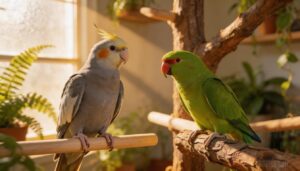
Conures and cockatiels have different feet, so don’t use the same perch for both. Cockatiels do best with 0.5 to 0.9 inch diameters, while conures need 0.75 to 1.25 inches for solid foot pad comfort and pressure point reduction.
For juvenile foot development, start smaller and make a gradual diameter increase upward.
Mixed diameter enrichment across your setup follows species-specific perch size guidelines perfectly.
Sturdier Widths for Medium Parrots and Macaws
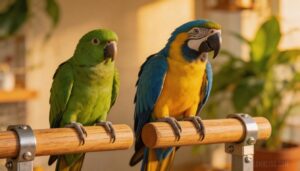
Medium parrots need perch diameters of at least 1 to 1.25 inches, while Macaw Width Guidelines suggest 1.25 to 1.5 inches for a stable, slip-free grip. These size- and species-specific perch recommendations matter for foot health benefits — wider surfaces reduce joint strain.
Look for reinforced edge profiles and load-bearing design with metal connectors to maintain perch stability during vigorous movement.
Proper Toe Wrap for Comfort and Balance
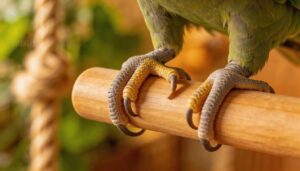
Size matters, but so does how your bird’s toes actually wrap around a perch.
Proper toe grip support means about two-thirds of the toe curve around the surface — enough contact for pressure distribution without straining the joints.
Breathable materials and adjustable fit help maintain perch ergonomics across long resting sessions, supporting proper claw alignment, healthy toe flexion mechanics, and overall avian foot health.
Why Mixed Diameters Help Prevent Foot Strain
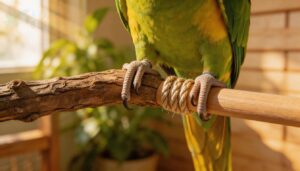
Think of it like cross-training for your bird’s feet. One perch diameter alone puts the same pressure on the same spots every single time.
A mix changes that completely:
- Pressure Distribution — varied widths spread load across different toe pads
- Toe Muscle Activation — each diameter triggers different toe flexion mechanics
- Foot Joint Stability — alternating grips reduce repetitive strain on toe joints
- Load Balancing — broader perches support weight-bearing zones without overloading
That variety is the foundation of long-term avian foot health and prevents foot disorders with perch variety.
Best Placement in Bird Rooms

Where you put a perch matters just as much as which perch you pick. The right placement keeps your bird active, comfortable, and mentally engaged throughout the day.
Here’s what to know before you start mounting anything.
Window-mounted Perches for Natural Light
A window-mounted perch is one of the simplest ways to give your bird real sunlight exposure benefits every day. Natural light helps regulate sleep cycles and promotes Vitamin D production — especially important for parrots.
Choose a window suction cup bird perch toy made from UV-resistant materials to handle daily sun without warping. Position it where your bird gets warm, indirect light rather than harsh noon glare.
Wall and Glass Placement for Secure Suction
Once your perch is window-mounted, surface prep makes all the difference. Wipe glass with isopropyl alcohol, dry it fully, then press each suction cup for five seconds.
Good suction cup selection matters too — choose wide, soft-rimmed cups rated for your bird’s weight.
Keep cups away from edges, recheck seals weekly, and re-seat them after big temperature or humidity shifts.
Low, Mid, and High Perches for Movement
Your bird craves altitude variety — low perches around 12–20 mm diameter keep small finches close to food, mid perches support climbing and foot muscle engagement, and high perches satisfy that instinct for safe vantage points.
This perch height variation creates natural vertical flight paths, encouraging energy expenditure balance and altitude variation training that doubles as behavioral enrichment and essential bird exercise equipment.
Safe Spacing for Hopping, Climbing, and Landing
Spacing matters more than most people realize. Keep horizontal gaps between 8 and 12 inches to reduce toe scraping, and maintain vertical level spacing of 6 to 8 inches so birds move comfortably between heights.
Landing zone buffers of at least 12 inches prevent mid‑flight collisions.
Younger birds benefit from tighter gaps — around 2 inches less — while agile species need slightly wider clearance for smooth, confident movement.
Keeping Perches Away From Food and Water
Dropping prevention starts with smart buffer zone design. Keep perches at least 8–12 inches from bowls, using feeding zone zoning — no perch should sit directly above food or water. Suction cup positioning on side walls helps a lot here.
- Mount perches 8–12 inches from bowls
- Use visual barriers like narrow shelves
- Never align perches above feeding stations
- Create separate rest and feeding zones
- Rotate placements weekly to break habits
Placement Tips for Reducing Stress and Boredom
A bored bird is a stressed bird — it’s that simple.
Spread perches across Vertical Flight Paths at varied heights to keep things interesting.
Use Color Contrast Perches and Rotating Perch Angles every few days for mental stimulation.
Add Quiet Corner Placement for retreat, and create Territorial Separation Zones between birds.
Smart environmental enrichment and preventing stress and anxiety with proper perch placement go hand in hand.
Perch Cleaning and Maintenance Tips
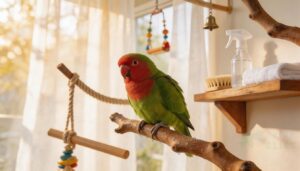
Keeping perches clean isn’t complicated, but it does make a real difference in your bird’s health. A little routine care goes a long way toward preventing bacteria buildup, worn-out materials, and grumpy birds stuck on a slippery, grimy perch.
Here’s what you need to know to keep every perch in your bird room in good shape.
Daily Droppings Removal and Weekly Deep Cleaning
solid cleaning schedule is your first line of defense. wipe perches daily to clear droppings, using sanitation mats underneath to catch messes fast.
Weekly, pull everything out for a deep scrub.
glove color-coding keeps dirty work separate from clean work.
Track droppings patterns for odor management and early health clues — small changes in consistency often signal something worth watching.
Bird-safe Disinfecting for Wood and Plastic
Once droppings are cleared, it’s time to actually disinfect — and your product choice matters enormously here.
- F10 SC at 1:250 dilution or 3% hydrogen peroxide for wood and plastic perches
- Let surfaces stay visibly wet for the full Disinfectant Contact Time — usually 5–10 minutes
- Wood Porosity Management means scrubbing chew marks and grain before applying any solution
- For Plastic Surface Sanitization, follow with a full Residue Rinse Protocol — birds chew everything
- Chemical Vapor Safety requires skipping phenolic cleaners and aerosols; choose unscented, bird-safe options only
BPA-free plastic perches are easier to sanitize than wood because they’re nonporous. Natural wood absorbs liquid, so heavily worn pieces often need replacing rather than repeated disinfecting.
Restoring Suction Cup Grip With Hot Water
Once perches are disinfected and dry, check those suction cups. Over time, heat and cold make them stiff and weak.
Hot Water Reactivation fixes that fast — soak cups at 60–70°C for one to two minutes. This hot water reconditioning suction cups method restores pliancy.
Dry the rim, then use the Reattachment Pressure Method: press firmly from center outward, holding 20–30 seconds for a solid seal.
Checking for Splinters, Cracks, and Loose Parts
With the suction cup back in place, run your fingers along each perch. Surface Splinter Detection is simple — sharp snags mean trouble.
Watch for Crack Propagation Monitoring cues: dark fissures or light crevices running with the grain. Check Moisture Swelling Signs, like dull spots or dust in cracks.
Confirm Hardware Flush Verification — no protruding screws. Loose Part Identification catches what eyes miss. Deep cracks fail fast.
Replacing Worn Rope, Wood, or Attachments
Once you spot a crack or frayed edge, act fast. Stick to a Rope Replacement Schedule every 6 to 12 months, or sooner if your bird’s a heavy chewer.
For Wood Post Inspection, swap any softened or deeply cracked natural wood with untreated maple or oak.
Always run Hardware Corrosion Checks and replace corroded screws with stainless steel — material safety depends on it.
Rotating Perch Locations for Enrichment
Moving perches weekly isn’t just upkeep — it’s enrichment. A simple Weekly Perch Rotation keeps your bird curious and engaged.
Try Vertical Horizontal Swaps to work different muscle groups, and time moves around morning light for smart Light Exposure Timing.
Always run a quick Safety Inspection Checklist after each move.
Track your bird’s response — those Behavior Monitoring Metrics tell you what’s working.
Frequently Asked Questions (FAQs)
How do parrots express anger?
Feathers puffed, pupils pinning, tail flaring wide — angry parrots rarely stay quiet. You’ll also hear hissing, beak clicking, or growling.
Catching these signals early makes bird stress reduction and behavior management so much easier.
How often should perch locations be rotated for enrichment?
Rotate perch locations every one to two weeks. If your bird seems bored or restless, switch things up sooner. Fresh placements spark curiosity and keep both body and mind engaged.
Conclusion
Perfectly placed perches promote peaceful coexistence between you and your feathered friend. By choosing safe, suitable bird perches for indoor bird rooms, you’re setting the stage for a happy, healthy bird.
well-stocked bird room isn’t just about aesthetics; it’s about creating a sanctuary that helps your bird’s well-being. With the right perches, you can foster a lifelong bond, filled with joy and wonder, and give your bird the freedom to thrive.