This site is supported by our readers. We may earn a commission, at no cost to you, if you purchase through links.
 You’ll find two true blue birds in Illinois that’ll catch your eye during different seasons.
The Eastern Bluebird is your year-round companion – about robin-sized with brilliant blue wings and a rusty-orange breast that’s hard to miss at backyard feeders.
These beauties love open grasslands and will gladly nest in your birdhouse if you’ve got one.
Then there’s the Mountain Bluebird, a rare treat that occasionally drifts through during spring and fall migration.
This western wanderer sports an all-over sky-blue plumage that’s absolutely stunning.
While you’re more likely to spot an Eastern Bluebird, keep your binoculars ready – Illinois hosts several other blue-tinged species that might surprise you.
Table Of Contents
- Key Takeaways
- Eastern Bluebird: Appearance and Habitat
- Eastern Bluebird: Diet and Nesting Habits
- Eastern Bluebird: Distribution and Migration Patterns
- Mountain Bluebird: Appearance and Habitat
- Mountain Bluebird: Diet and Nesting Habits
- Mountain Bluebird: Distribution and Presence in Illinois
- Other Blue-Colored Birds in Illinois: Red-Breasted Nuthatch
- Other Blue-Colored Birds in Illinois: Northern Parula
- Other Blue-Colored Birds in Illinois: Little Blue Heron
- Other Blue-Colored Birds in Illinois: Cliff Swallow
- Frequently Asked Questions (FAQs)
- What are the blue-colored birds in Illinois?
- Where do Bluebirds live?
- Are bluebirds common in Illinois?
- How to attract bluebirds in Illinois?
- What birds live in Illinois?
- What color is a Blue Bird?
- What birds in Illinois are blue?
- What does it mean when bluebirds hang around your house?
- Are Eastern Bluebirds rare to see?
- How do blue jays behave around other birds?
- Conclusion
Key Takeaways
- You’ll find Eastern Bluebirds year-round in Illinois – they’re your most reliable blue bird species, thriving in open fields, golf courses, and rural areas with their brilliant blue wings and rusty-orange breasts.
- Mountain Bluebirds are rare migrants – you’ll only spot these stunning sky-blue birds occasionally during spring and fall migration, making them a special treat for Illinois birders.
- Install nest boxes to attract Eastern Bluebirds – they’re cavity nesters that readily use properly placed birdhouses in open areas, and you can supplement their diet with mealworms and sunflower hearts.
- Several other blue-tinged species visit Illinois – including Blue Jays, Indigo Buntings, Little Blue Herons, and various warblers that add diversity to your blue bird watching opportunities throughout different seasons.
Eastern Bluebird: Appearance and Habitat
You’ll recognize the Eastern Bluebird by its striking male coloration—brilliant blue upperparts contrasting with rusty-orange breast and white belly.
Female appearance is more subdued, showing grayish-blue wings with warm brown chest. Juvenile plumage displays spotted breasts with emerging blue feathers.
These Illinois bird species thrive in preferred habitats like open fields, orchards, and farmlands with scattered trees.
Blue bird habitat requirements include nesting sites such as old woodpecker holes or nest boxes, making them common Illinois wildlife in rural areas.
The Eastern Bluebird’s survival depends on suitable eastern bluebird habitat conditions, which is crucial for their survival in rural areas with scattered trees.
Eastern Bluebird: Diet and Nesting Habits
During summer months, you’ll notice Eastern Bluebirds actively hunting insects across Illinois’s open fields and grasslands.
Watch Eastern Bluebirds dart from perches, snatching beetles and grasshoppers with summer precision.
These blue birds in Illinois have fascinating feeding and breeding habits that make them perfect backyard guests.
Insect Foraging dominates their summer diet – they catch beetles, crickets, caterpillars, and grasshoppers from perches.
Winter brings a shift toward berries and fruits when insects become scarce.
Breeding Habits center around cavity nesting from March through August.
Females build cup-shaped nests using grasses and pine needles, then lay 3-7 pale blue eggs.
You can support local populations by installing proper Nest Box setups in open areas.
Here’s what makes their diet special:
- Mealworm Feed works great for attracting them to your yard during breeding season
- Berry Diet becomes essential in fall and winter – they love elderberries and sumac
- Blue bird diet changes seasonally, with 68% insects in summer dropping to just 32% in winter
- Illinois bird species like Eastern Bluebirds need both insects and fruits year-round
Their blue bird nesting success depends on proper cavity access and predator protection.
Understanding nesting habits is vital for creating an ideal environment for these birds.
Eastern Bluebird: Distribution and Migration Patterns

Across the Illinois Bluebird Range, Eastern Bluebirds follow predictable migration patterns that showcase nature’s remarkable timing.
These blue birds in Illinois demonstrate fascinating population shifts throughout the year, with northern populations migrating south while southern Illinois residents often stay put.
Migration triggers include dropping temperatures and decreasing insect availability, typically occurring between September and November.
You’ll notice fewer Eastern Bluebirds during harsh winters as they seek warmer winter habitats in the southeastern United States.
Climate impact plays a vital role in Illinois bird migration timing. Mild winters may convince some birds to remain year-round, while severe weather prompts complete evacuation.
Spring return migration happens March through May, when warming temperatures signal abundant food sources.
Bird migration patterns vary by location within the state. Northern Illinois sees more dramatic population shifts, while central and southern regions maintain mixed resident and migratory populations.
This flexibility helps Eastern Bluebirds adapt to changing conditions, making them reliable indicators of seasonal change across Illinois’s diverse landscapes. The Eastern Bluebirds’ ability to thrive is influenced by their eastern bluebird range and habitat preferences.
Mountain Bluebird: Appearance and Habitat

Mountain Bluebird males showcase stunning sky-blue plumage that’ll catch your eye from a mile away, while females display more subdued grayish-blue tones with hints of blue on their wings and tail.
The Mountain Bluebird’s brilliant azure plumage creates nature’s most breathtaking display across western skies.
These Western Bluebird relatives prefer wide-open spaces that remind you of the great frontier. You’ll spot these blue birds in Illinois mainly during migration, though they’re not regular residents like their Eastern cousins.
Mountain Bluebirds seek out specific Mountain Habitats and nesting sites that include:
- Open grasslands with scattered trees for perching and hunting
- Prairie edges near farmland where insects are abundant
- Golf courses and cemeteries that mimic their preferred open terrain.
Their Feather Patterns help distinguish them from other Illinois bird species – males lack the rusty breast of Eastern Bluebirds. These cavity nesters search for old woodpecker holes, nest boxes, or natural tree hollows in their Breeding Grounds.
While Mountain Bluebird sightings remain uncommon in bird habitats in Illinois, conservation efforts restoring prairie lands might encourage more visits from these sky-colored wanderers. Understanding their habitat preservation strategies is essential for supporting their population.
Mountain Bluebird: Diet and Nesting Habits

You’ll find Mountain Bluebirds surprisingly versatile in terms of feeding habits and nesting patterns.
These Western Bluebird relatives maintain an insect diet that includes grasshoppers, beetles, spiders, and caterpillars during breeding season.
Unlike blue birds in Illinois that rely heavily on bird seeds from feeders, Mountain Bluebirds prefer hunting insects from elevated perches.
Their breeding patterns center around cavity nesting, often utilizing abandoned woodpecker holes or nesting boxes placed between 4,000-10,600 feet elevation.
Males establish territories early, performing aerial displays to attract mates.
Bird nesting habits include laying 3-7 pale blue eggs in tree cavities lined with grass and feathers.
These Illinois bird species occasionally wander eastward during winter, though they’re primarily western residents.
Mountain Bluebirds exhibit unique foraging behavior, hovering over open areas before diving for prey.
Their feeding habits shift seasonally, incorporating more berries and fruits when insects become scarce.
This adaptability makes them successful high-altitude specialists.
The females are responsible for constructing the nest building process which typically takes about a week to complete.
Mountain Bluebird: Distribution and Presence in Illinois

The Mountain Bluebird’s Illinois Range tells a story of rare wandering rather than regular residence. These stunning azure gems primarily call western North America home, from Alaska down through the Rocky Mountains to Mexico.
While eastern bluebird populations thrive across Illinois, Mountain Bluebirds remain elusive visitors, appearing sporadically during migration seasons or harsh winter weather patterns. Illinois birding enthusiasts shouldn’t expect regular sightings, but western counties occasionally reward patient observers.
These blue birds follow western migration patterns, making Illinois an unlikely stop on their seasonal journeys. Most documented appearances coincide with unusual weather events pushing birds eastward from their typical routes.
Here’s what makes Mountain Bluebird sightings special in Illinois:
- Rare visitor status – Fewer than 10 verified sightings reported annually statewide
- Western county preference – Most Illinois Range records come from counties bordering Iowa and Missouri
- Migration timing – Spring and fall offer best chances for Bird Conservation groups tracking State Distribution
- Weather-dependent appearances – Cold fronts and storm systems can push birds into Bluebird Habitat outside normal ranges
Understanding these Migration Patterns helps Illinois birds watchers appreciate when lightning might strike twice. The Mountain Bluebird’s habitat preservation relies on effective habitat management strategies.
Other Blue-Colored Birds in Illinois: Red-Breasted Nuthatch
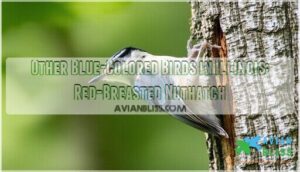
You’ll spot a Red Breasted Nuthatch clinging upside-down to tree bark, defying gravity with remarkable ease. This compact Illinois birds species measures just 4-5 inches long, sporting distinctive blue-gray wings and back with rusty underparts.
Their short, pointed bill works perfectly for extracting insects from bark crevices. While Nuthatch Habitat typically includes coniferous forests up north, these acrobatic performers occasionally visit Illinois during Bird Migration periods, especially winter months when food runs scarce.
You’ll find them in deciduous woodlands and urban parks, always searching for their next meal. The RedBreasted Nuthatch’s upside-down foraging technique sets them apart from other Blue birds in Illinois.
Unlike the BlueGray Gnatcatcher or BlackThroated Blue Warbler, nuthatches use their strong feet to navigate tree trunks headfirst. Their Feather Colors create a striking contrast—that blue-gray back against rusty breast makes identification straightforward.
Watch for their jerky, animated movements as they probe bark for hidden treasures. The species’ ability to cache food is a key example of food storage strategies that help them survive harsh winters.
Other Blue-Colored Birds in Illinois: Northern Parula
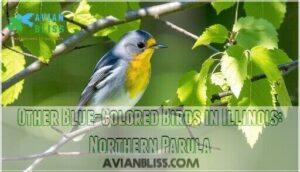
The Northern Parula brings a splash of blue-gray beauty to Illinois forests during migration seasons, making it a prized sighting for birders across the Prairie State.
This tiny warbler packs serious visual punch with its distinctive coloring and energetic behavior.
You’ll recognize males by their striking features:
- Blue-gray upperparts that shimmer in dappled sunlight
- Bright yellow throat and breast with rusty chest bands
- White wing bars that flash during their acrobatic feeding displays
Northern Parula habitat centers around wooded areas near water sources, where they hunt insects in the canopy.
Their high-pitched, buzzy trill often gives away their presence before you spot them.
These active little birds rarely sit still, constantly flitting through branches as they forage.
During Illinois birding expeditions, listen for their distinctive song echoing through oak and maple forests.
Bird conservation efforts help protect their migration corridors through the state.
While BlueGray Gnatcatchers share similar habitats, Parulas display more vibrant yellow coloring.
Blue bird sightings of Northern Parulas peak during spring and fall migrations, making timing essential for Illinois bird guide enthusiasts seeking these colorful warblers among Illinois’s diverse bird species.
Understanding local common birds in illinois is essential for identifying species like the Northern Parula.
Other Blue-Colored Birds in Illinois: Little Blue Heron

Among the many blue bird species that call Illinois home, the Little Blue Heron might catch you off guard.
Adults sport maroon feathers on the neck with blue-gray feathers on the back, wings and belly, creating a sophisticated color palette that’s distinctly different from other Illinois birds.
They’ve yellow eyes, greenish legs, and a bill that’s pale blue at the base, black at the tip. You’ll spot these wading birds most often where there are shallow wetlands to feed in, particularly along the Mississippi and Illinois rivers in the southern one-half of the state.
Their patient hunting style involves standing motionless in shallow water, waiting for the perfect moment to strike at frogs, crayfish, and small fish. Here’s where things get interesting – juveniles are entirely white, except for vague dusky tips to the outer primaries.
These young birds look completely different from their slate-blue parents, often confusing birdwatchers who don’t expect such dramatic color changes. This remarkable transformation happens gradually as they mature into their adult blue plumage. These herons belong to the heron family, Ardeidae.
Other Blue-Colored Birds in Illinois: Cliff Swallow

While cliff swallows circle overhead, you’re witnessing Illinois’s most social blue bird species at work.
These 5- to 6-inch acrobats sport steel blue upperparts and buffy underparts, hunting insects with remarkable precision over water.
Their square tails and distinctive forked flight pattern make Cliff Swallow ID straightforward.
These remarkable birds showcase fascinating Social Structure through their colony living:
- Nesting Behavior: They craft gourd-shaped mud nests on vertical surfaces like bridges and barns, often building hundreds together
- Habitat Preference: Originally cliff-dwellers, they’ve adapted to human structures near water sources for ideal foraging
- Migration Timing: They arrive from Central America between April and October, timing their breeding perfectly with insect abundance
- Conservation Status: Stable populations benefit from bridge construction and barn preservation efforts
Cliff swallows represent Illinois birds’ adaptability to changing landscapes.
Their aerial insect-hunting skills and communal lifestyle make them fascinating subjects for bird identification enthusiasts.
These Blue birds in Illinois demonstrate how bird species can thrive alongside human development.
Their coloration, like other blue birds, is due to feather structure bending light.
Frequently Asked Questions (FAQs)
What are the blue-colored birds in Illinois?
Picture a bright blue flash darting through your backyard feeder – that’s likely a Blue Jay.
You’ll find six main blue birds in Illinois: Blue Jays, Indigo Buntings, Eastern Bluebirds, Barn Swallows, and occasionally Blue Grosbeaks and Black-throated Blue Warblers visiting during migration seasons.
Where do Bluebirds live?
You’ll find Eastern Bluebirds in open rural areas like pastures, orchards, and fence rows. They avoid crowded cities but love golf courses and cemeteries with scattered trees.
Are bluebirds common in Illinois?
Notably, you’ll spot Eastern Bluebirds year-round in Illinois, especially southern regions.
They’re classified as "Low Concern" – quite common in open rural areas, golf courses, and cemeteries, though they avoid dense urban centers like Chicago.
How to attract bluebirds in Illinois?
Install nest boxes in open areas like pastures or fence rows.
Offer live mealworms during summer, and provide sunflower hearts in winter.
You’ll need scattered perches and avoid dense urban settings.
What birds live in Illinois?
Illinois hosts diverse bird species year-round and seasonally.
You’ll spot cardinals, robins, blue jays, chickadees, woodpeckers, hawks, owls, crows, sparrows, finches, and warblers.
Migratory species include indigo buntings, barn swallows, and various waterfowl.
What color is a Blue Bird?
Picture spotting an Eastern Bluebird perched on your fence post—you’ll see brilliant blue upperparts contrasting with a warm orange-red breast.
Blue birds aren’t just "blue"—they display stunning color combinations that’ll make you grab your binoculars for a closer look at the brilliant blue upperparts.
What birds in Illinois are blue?
You’ll spot several blue birds across Illinois.
Blue Jays are common year-round with their bright blue crests. Indigo Buntings arrive in summer, males showing brilliant all-blue plumage.
Eastern Bluebirds display powder-blue backs with orange breasts.
What does it mean when bluebirds hang around your house?
Coincidentally, when bluebirds consistently visit your home, you’re witnessing their search for ideal nesting habitat.
They’re drawn to your property’s open spaces, scattered trees, and potential nest sites—indicating you’ve created excellent bluebird-friendly conditions.
Are Eastern Bluebirds rare to see?
Eastern Bluebirds aren’t particularly rare, but you’ll need to know where to look. They prefer open fields, golf courses, and rural areas over dense urban spaces like downtown Chicago.
How do blue jays behave around other birds?
Blue jays act aggressively around other birds, bullying smaller species at feeders and stealing eggs from nests.
They’ll mob predators together but dominate most backyard birds with their bold, pushy behavior.
Conclusion
Nearly 40% of Illinois birdwatchers report spotting Eastern Bluebirds at backyard feeders, making them your best bet for enjoying blue birds in Illinois year-round.
While Mountain Bluebirds remain elusive migrants, don’t overlook the other blue-tinged species that call Illinois home.
Each offers unique identification challenges and rewarding observations, so keep your field guide handy, maintain those nest boxes, and remember that patience pays off in birding.
You’ll soon develop an eye for distinguishing these beautiful blue visitors from common backyard regulars.
- https://bluebirdlandlord.com/bluebirds-in-illinois-the-ultimate-resource/
- https://dnr.illinois.gov/content/dam/soi/en/web/dnr/education/cdindex/easternbluebird.pdf
- https://valparaiso.wbu.com/bluebird-fun-facts
- https://www.reconnectwithnature.org/news-events/the-buzz/bluebirds-saved-from-extinction/
- https://springfieldil.wbu.com/bluebirds