This site is supported by our readers. We may earn a commission, at no cost to you, if you purchase through links.
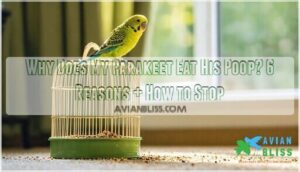 If you’re wondering why does my parakeet eat his poop, you’re not alone in this puzzling behavior.
Your feathered friend might be seeking missing nutrients from a poor diet, feeling bored without enough mental stimulation, or experiencing stress from environmental changes.
Sometimes it’s simply because their cage needs cleaning, or they’re dealing with underlying health issues.
While occasional poop-eating isn’t necessarily alarming, frequent consumption could signal digestive problems or nutritional gaps that need attention.
The good news is that this habit is manageable with the right approach, proper diet adjustments, and understanding what’s really driving your parakeet’s unusual dining choices.
Table Of Contents
- Key Takeaways
- Reasons for Parakeets Eating Poop
- Is It Normal for Parakeets to Eat Their Poop?
- Managing Parakeet Pooping in Water
- Preventing Parakeet Pooping in Food Dish
- Consequences of Parakeets Eating Poop
- Health Risks of Parakeet Poop for Humans
- Training Strategies to Stop Parakeets From Eating Poop
- Frequently Asked Questions (FAQs)
- What happens if parakeets eat their poop?
- Is it normal for birds to eat poop?
- Why did my parrot eat his poop?
- What does unhealthy parakeet poop look like?
- How can I determine if my parakeet’s poop is healthy?
- Can other birds in the same household learn to eat their poop from a parakeet?
- Can young parakeets eat adult bird poop?
- How long does coprophagy behavior typically last?
- Do female parakeets eat poop more often?
- Should I separate parakeets that eat poop?
- Conclusion
Key Takeaways
- Your parakeet’s diet is likely missing key nutrients – Switch from seed-only diets to high-quality pellets with fresh vegetables, as nutritional deficiencies drive most poop-eating behavior
- Boredom leads to unwanted habits – Provide rotating toys, foraging opportunities, and daily interaction to keep your bird mentally stimulated and prevent destructive behaviors
- Clean cages prevent the problem – Daily cleaning removes droppings before your parakeet can access them, while dirty environments encourage this unsanitary habit
- Persistent poop-eating signals health issues – If the behavior continues despite diet improvements and enrichment, consult an avian vet to rule out parasites, infections, or digestive problems
Reasons for Parakeets Eating Poop
Watching your parakeet eat his own droppings can be alarming, but this behavior isn’t uncommon among pet birds.
Understanding the reasons behind coprophagy can help you address the issue and guarantee your feathered friend stays healthy and happy.
Nutritional Deficiencies
Poor nutrition drives parakeet coprophagy as birds seek missing nutrients.
Seed-only diets lack essential vitamins and minerals, creating deficiencies that trigger poop-eating behavior.
Vitamin deficiencies and mineral imbalances prompt your bird to recycle nutrients through coprophagy.
Pellet importance can’t be overstated—they provide complete nutrition that reduces this behavior substantially.
This behavior could be linked to avian coprophagy, where birds consume feces to extract additional nutrients, highlighting the need for complete nutrition and understanding of avian behavior.
Boredom and Lack of Stimulation
When your parakeet’s life lacks excitement, he might turn to poop-eating for entertainment. Boredom drives abnormal parakeet behavior, making environmental enrichment essential for preventing this habit.
Here are five ways to combat boredom:
- Toy Rotation – Switch toys weekly to maintain novelty and interest
- Foraging Opportunities – Hide treats in paper cups or tissue for natural hunting behavior
- Interactive Games – Teach simple tricks or play peek-a-boo through cage bars
- Social Interaction – Spend quality time talking, singing, or training your bird daily
- Enrichment Activities – Provide safe branches, mirrors, or puzzle feeders for mental stimulation
A stimulated parakeet focuses energy on positive behaviors rather than seeking entertainment through questionable snacking choices. Regular toy rotation can provide powerful cognitive stimulation, reducing stress and encouraging natural play.
Stress
Feeling overwhelmed can trigger abnormal parakeet behavior, including eating poop.
Environmental changes, loud noises, sudden movements, hostile cagemates, and molting stress all contribute to bird stress.
When your feathered friend feels anxious, they might seek comfort through familiar activities—even undesirable ones.
Recognizing bird stress signs like excessive preening, aggression, or unusual eating habits helps you create a calmer environment and reduce this concerning behavior, which can be a result of the parakeet’s attempt to cope with anxious feelings.
Dirty Cage
Cage sanitation matters more than you think. When feces accumulation builds up, your parakeet eating poop becomes their misguided attempt at "cleaning."
Here’s what happens in dirty environments:
- Bacterial growth turns their home into a health hazard
- Contaminated cage material makes everything they touch unsafe
- Poor cleaning frequency creates a cycle of unhealthy habits
Regular bird cage maintenance prevents this behavior completely.
Health Issues
When your parakeet’s cage stays clean but they’re still eating poop, underlying health problems might be the culprit.
Digestive problems, parasitic infections, or bacterial transmission can drive this behavior as your bird seeks missing nutrients.
Watch for these warning signs:
- Digestive issues: Changes in appetite, weight loss, or abnormal droppings alongside coprophagy
- Underlying illnesses: Lethargy, poor feather quality, or frequent sickness combined with poop-eating
Veterinary consultation becomes essential when parakeet health concerns arise.
A healthy parakeet has a typical pooping frequency of every 10 to 30 minutes.
Your parakeet vet can diagnose parakeet digestive issues and rule out serious parakeet illness through proper examination.
Is It Normal for Parakeets to Eat Their Poop?
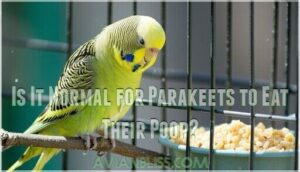
While it’s not typical behavior, you shouldn’t panic if you catch your parakeet eating his poop occasionally.
Most healthy parakeets show little interest in their droppings, but nutritional deficiencies or environmental stress can trigger this behavior as they attempt to reclaim undigested nutrients, which is a result of their attempt to reclaim undigested nutrients.
General Disinterest in Poop Consumption
While most parakeets naturally avoid eating their own poop, some situations can trigger this behavior.
Your bird’s normal disinterest in coprophagy reflects healthy parakeet behavior and proper dietary habits.
Here’s why this disinterest is typical:
- Instinctive avoidance – Parakeets evolved to avoid feces, maintaining cage environment cleanliness and reducing disease risk
- Adequate nutrition – Well-fed birds don’t need behavioral enrichment through waste consumption, showing normal parakeet health
- Natural hygiene – Bird behavior includes spending significant time preening, demonstrating their preference for cleanliness over coprophagy
A potential cause could be nutrient deficiency, which owners should address.
Nutritional Factors
Three key nutritional factors can drive your parakeet to eat poop, and understanding them helps you address this behavior effectively.
Seed-only diets create nutritional imbalances that leave birds desperately seeking missing nutrients, while mineral deficiencies force them to recycle what they can from their droppings.
- Vitamin absorption issues: Poor gut health from inadequate nutrition means your bird isn’t absorbing essential vitamins properly, triggering coprophagy as a survival mechanism
- Dietary adjustments needed: Balanced nutrition with pellets, fresh fruits, and vegetables prevents the nutritional deficiencies that cause this behavior
When parakeet nutrition lacks variety, your feathered friend becomes resourceful—sometimes in ways that make you cringe.
Nutrient absorption problems signal your bird’s body is working overtime to extract every possible benefit from available food sources.
Prevention Through Balanced Diet and Observation
You can’t just feed your parakeet seeds and hope for the best.
A balanced diet with pellets, fresh fruits, and vegetables prevents nutritional deficiencies that drive poop-eating behavior.
Regular observation helps you spot dietary adjustments needed before problems develop.
Enrich environment with toys while maintaining cleanliness importance through daily cage cleaning.
Schedule vet checkups to monitor parakeet nutrition and overall health, catching issues early.
Managing Parakeet Pooping in Water
When your parakeet uses their water dish as a bathroom, it’s usually about convenience rather than preference.
You’ll need to address this habit quickly since contaminated water can harbor dangerous bacteria and make your bird sick.
Providing a Designated Bathtub
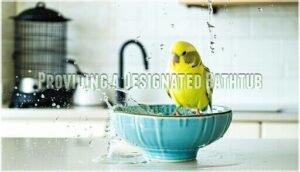
Setting up a designated bathtub helps manage your parakeet’s bathroom habits while they splash around.
Choose a shallow dish that’s roughly twice your bird’s width – this gives them room to move without drowning risks.
Water depth should barely cover their feet, about half an inch deep.
Place the bath away from food dishes but within easy reach of their favorite perch.
Room temperature water works best, and offering baths 2-3 times weekly satisfies most parakeets’ bathing frequency needs.
Consider adding a small bird bath to their environment for enhanced hygiene.
This simple solution addresses common parakeet owner questions about coprophagy and abnormal behaviors, providing a practical approach to managing your parakeet’s health and well-being, including their bathroom habits.
Strategic Perch Placement
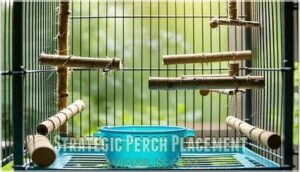
Smart placement of perches can make all the difference in keeping your parakeet’s water dish clean and fresh. You’ll want to think strategically about where these little landing spots go in your bird’s home.
Key placement strategies:
- Distance matters – Position perches at least 6 inches away from water dishes to prevent direct contamination from droppings
- Height variation – Use different Perch Height levels throughout the cage to give your bird choices while reducing splash zones
Consider Perch Material and Perch Variety when setting up your bird’s space. Natural wood perches at varying heights work best for parakeet care. Accessibility remains essential – your feathered friend needs easy access to water without creating parakeet problems.
Smart Cage Size planning helps too. Larger spaces allow better perch positioning, reducing parakeet behavior problems. Many parakeet owner questions involve dirty cage issues, but proper perch placement prevents most water contamination before it starts.
Regular Cleaning to Prevent Bacterial Growth
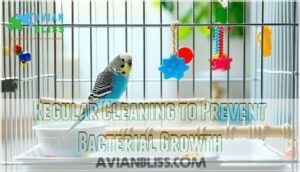
Keeping your bird’s water clean isn’t just good parakeet care—it’s your first line of defense against harmful bacteria types.
Daily cage cleaning prevents bacterial buildup, while proper disinfecting techniques using bird-safe products maintain ideal bird cage hygiene. To maintain a healthy environment, consider using a quality cage cleaner.
| Cleaning Task | Frequency |
|---|---|
| Water dish refresh | Daily |
| Cage sanitation | Weekly |
| Deep disinfecting | Monthly |
| Spot cleaning droppings | As needed |
| Perch sanitizing | Bi-weekly |
Your cleaning frequency directly impacts your bird’s health, making cage sanitation a non-negotiable part of parakeet problems prevention and overall bird cage cleanliness.
Preventing Parakeet Pooping in Food Dish
Nobody wants to find their parakeet treating their food dish like a toilet, especially when they’re also snacking on the mess they’ve made.
You can prevent this unsanitary habit by strategically placing perches away from food bowls and maintaining a spotless cage environment.
Adjusting Perch Placement
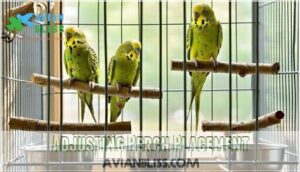
Proper perch placement can substantially reduce your parakeet’s tendency to poop in their food dish. Think of it as strategic city planning for your bird’s cage.
- Perch height: Position perches at varying levels, with food dishes placed below but not directly underneath any perch
- Perch spacing: Maintain adequate distance between perches and feeding areas to prevent accidental droppings
- Perch accessibility: Make certain your parakeet can easily reach food without having to perch directly above it
- Perch variety: Use different perch materials and diameters to encourage movement throughout the cage
Strategic positioning keeps your parakeet comfortable while protecting their food from contamination, reducing the need for frequent cage cleaning. Consider providing varied perch materials like natural wood to promote foot health.
Maintaining a Clean Environment
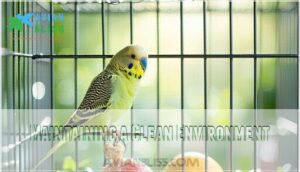
A clean bird cage environment goes hand-in-hand with proper perch placement.
Daily cage sanitation prevents your parakeet from encountering contaminated food through waste disposal and regular cleaning frequency.
Use safe cleaners and disinfecting methods to maintain best bird cage conditions without harsh chemicals.
Weekly deep cleaning of your bird cage maintenance routine eliminates buildup that attracts poop-eating behavior.
To guarantee cleanliness, consider purchasing effective cage cleaning.
A dirty cage creates unhygienic bird cage environment conditions that encourage this unwanted habit, emphasizing the need for a clean bird cage environment.
Consequences of Parakeets Eating Poop
While occasional poop-eating might seem harmless, it can lead to some unpleasant consequences for your feathered friend.
Your parakeet could develop an upset stomach, diarrhea, or even pick up parasites and harmful bacteria from contaminated droppings.
Upset Stomach and Diarrhea
When your parakeet eats poop, it can trigger gastrointestinal issues that disrupt their digestive balance.
Poop-eating disrupts your bird’s gut balance, leading to stomach upset and loose droppings.
This behavior often leads to upset stomach and diarrhea, creating a cycle where Causes of Diarrhea stem from the very act meant to recycle nutrients.
Diarrhea Symptoms you’ll notice include:
- Watery, loose droppings with abnormal feces appearance
- Lethargy and decreased appetite signaling health concerns
Preventative Measures focus on balanced nutrition, while Probiotics Benefit gut health when Treatment Options become necessary for persistent diseases.
Risks of Parasitic Infection or Bacterial Transmission
Beyond upset stomach issues, coprophagy creates serious health risks through parasite transmission and bacterial infections.
Fecal contamination harbors disease vectors like Giardia, coccidia, Salmonella, and E. coli.
When your bird eating feces occurs repeatedly, these pathogens can cause bird parasite infestation or bird bacterial infection.
Hygiene concerns multiply as contaminated droppings become breeding grounds for harmful microorganisms, potentially weakening your parakeet’s immune system over time, leading to serious health risks.
Veterinary Consultation for Concerns
When to consult a veterinarian becomes vital if your parakeet’s poop-eating habit persists despite dietary improvements.
Professional advice from an avian vet guarantees proper diagnosis and treatment.
- Vet expertise helps identify underlying health issues through diagnostic testing
- Treatment options may include medication, dietary changes, or behavioral modifications
- Follow-up care guarantees your bird’s recovery and prevents recurring problems
Health Risks of Parakeet Poop for Humans
While parakeet poop eating might seem harmless, it can pose health risks to you and your family if the droppings are contaminated with bacteria or parasites.
You’ll want to maintain proper hygiene when cleaning cages and handling your bird, especially washing your hands thoroughly afterward to prevent potential transmission of diseases.
Potential for Human Illness From Infected Poop
While you’re dealing with your parakeet’s coprophagy, there’s another aspect to keep in mind—zoonotic diseases that can jump from birds to humans.
Your feathered friend’s droppings aren’t just a behavioral concern; they’re potential carriers of serious health risks. Bacterial transmission through contaminated feces can expose you to infections like salmonella and E. coli, while parasite risks include giardia.
Bird health risks extend beyond your pet’s well-being to yours. Safe handling becomes critical when your parakeet engages in poop eating, as this behavior increases contamination potential. Human hygiene practices matter more than ever when health concerns multiply.
One such concern is psittacosis symptoms, which can arise from exposure to infected birds.
| Disease Type | Common Pathogens | Transmission Method |
|---|---|---|
| Bacterial | Salmonella, E. coli | Direct contact, contaminated surfaces |
| Parasitic | Giardia, Cryptosporidium | Ingestion of contaminated material |
| Fungal | Histoplasma, Cryptococcus | Inhalation of dried fecal dust |
| Viral | Psittacosis (Chlamydia) | Airborne particles, direct contact |
Importance of Hygiene and Preventive Measures
Protecting yourself from potential health risks requires smart hygiene practices when handling parakeet waste.
While coprophagy is normal behavior, maintaining cage sanitation protects both you and your bird from harmful bacteria.
Here’s your hygiene game plan:
- Wash hands thoroughly after cage cleaning or handling your parakeet
- Use gloves during routine cleaning to minimize direct contact with droppings
- Clean cages daily to prevent bacterial buildup and reduce coprophagy opportunities
- Provide environmental enrichment and balanced parakeet diet to discourage excessive poop eating.
Preventative healthcare starts with these simple habits that keep everyone healthy.
Training Strategies to Stop Parakeets From Eating Poop
Breaking this poop-eating habit requires consistent action and patience on your part.
You’ll need to address the root causes while actively redirecting your parakeet’s behavior through proper diet, environmental changes, and gentle training techniques.
Focusing on a Balanced Diet to Reduce Appeal
Now that you understand the health implications, let’s tackle the dietary foundation that can stop this behavior.
A balanced parakeet diet dramatically reduces coprophagy by eliminating nutritional deficiencies that drive this habit.
| Diet Component | Recommended Amount | Key Benefits |
|---|---|---|
| Pellets | 60-70% of diet | Complete nutrition, prevents deficiencies |
| Fresh Vegetables | 20-25% of diet | Fiber sources, essential vitamins |
| Seeds/Treats | 5-10% only | Limited portions prevent imbalances |
| Mineral Blocks | Always available | Calcium, mineral supplementation |
Pellet importance can’t be overstated—they’re nutritionally complete unlike seed-only diets.
Fresh foods provide fiber sources and vitamins that seeds lack.
Seed limitations prevent the nutritional gaps that trigger coprophagy.
When your parakeet’s diet meets all needs, poop loses its appeal.
Firmly Discouraging The Behavior
Consistency works wonders when discouraging coprophagy in your parakeet.
Install a cage grate to block feces access while maintaining routine cleaning schedules.
Provide foraging toys and environmental enrichment to redirect natural behaviors.
When you catch the behavior, use gentle verbal corrections without startling your bird, these modifications help reduce stress while establishing healthier habits through positive reinforcement and environmental management, which can lead to better outcomes with gentle verbal corrections.
Seeking Professional Advice if Necessary
When persistent coprophagy signs continue despite your best efforts, professional intervention benefits become clear.
An avian vet visit can diagnose underlying health issues, while a behavioral specialist needed for complex cases provides targeted solutions for your parakeet’s bird health concerns.
- Comprehensive health screening – Avian veterinary care includes fecal analysis and blood work to identify nutritional deficiencies or infections
- Customized treatment plans – Professionals develop specific strategies addressing your bird’s unique coprophagy triggers and environmental needs
- Ongoing monitoring support – Expert guidance guarantees behavioral modifications stick, preventing relapse into unhealthy eating patterns
Frequently Asked Questions (FAQs)
What happens if parakeets eat their poop?
When your feathered friend munches on their droppings, they’re recycling nutrients their fast digestive system missed the first time around.
It’s typically harmless unless it becomes excessive, which might signal nutritional deficiencies or health issues.
Is it normal for birds to eat poop?
Yes, coprophagy is normal behavior for many bird species, including parakeets. They’re recycling undigested nutrients from their fast digestive systems, which helps maximize nutrition absorption and maintain gut health.
Why did my parrot eat his poop?
Your parrot’s poop-eating isn’t exactly gourmet dining.
It’s likely seeking missing nutrients from a poor diet, feeling bored, or stressed.
Improve their nutrition, add stimulating toys, and keep the cage clean.
What does unhealthy parakeet poop look like?
Unhealthy parakeet droppings show watery consistency, unusual colors like bright green, yellow, or red, contain undigested seeds, have a foul smell, or appear excessively large or small compared to normal.
How can I determine if my parakeet’s poop is healthy?
Absolutely everything about your bird’s bathroom habits matters more than you think.
Check your parakeet’s droppings daily for consistent color, texture, and frequency.
Healthy poop appears firm with distinct white, green, and brown sections, which is a key indicator of your bird’s overall health, particularly its bathroom habits.
Can other birds in the same household learn to eat their poop from a parakeet?
Birds living together can indeed pick up coprophagy from each other through social learning and mimicry, especially if they’re naturally curious or stressed by environmental changes.
Can young parakeets eat adult bird poop?
Young parakeets can eat adult bird poop, potentially picking up beneficial gut bacteria.
However, this behavior brings health risks from parasites, diseases, and harmful bacteria that adult birds may carry in their droppings.
How long does coprophagy behavior typically last?
Coprophagy duration varies widely among parakeets. It might last days, weeks, or become ongoing without intervention. Address underlying causes like diet, stress, or boredom to help resolve it faster.
Do female parakeets eat poop more often?
There’s no evidence that female parakeets eat poop more frequently than males.
Coprophagy occurs equally across genders, typically driven by nutritional needs, boredom, stress, or digestive efficiency rather than sex-specific behaviors, and is also influenced by digestive efficiency.
Should I separate parakeets that eat poop?
You don’t need to separate parakeets that eat poop unless it’s excessive or causing health issues.
This behavior is normal for recycling nutrients.
Monitor their overall health and maintain clean cages instead.
Conclusion
Understanding why does my parakeet eat his poop doesn’t have to leave you feeling helpless.
You’ve learned that nutritional deficiencies, boredom, stress, dirty cages, and health issues can trigger this behavior.
By providing a balanced diet, maintaining cleanliness, offering mental stimulation, and monitoring your bird’s health, you can effectively address this issue.
Remember, occasional poop-eating isn’t always concerning, but persistent habits warrant veterinary attention to guarantee your feathered companion stays healthy and happy.
- https://academic.oup.com/beheco/article/28/6/1504/4210926
- https://sora.unm.edu/sites/default/files/journals/jfo/v056n02/p0165-p0174.pdf
- https://doi.org/10.1079/WPS19730014
- https://www.merckvetmanual.com/bird-owners/disorders-and-diseases-of-birds/nutritional-disorders-of-pet-birds
- https://ornithology.com/avian-coprophagy/