This site is supported by our readers. We may earn a commission, at no cost to you, if you purchase through links.

Most parakeet owners don’t realize their bird could live twice as long with just a few care adjustments—the difference between 5 years and 15 often comes down to daily habits you can master in a week.
These small, vibrant companions thrive on consistency: fresh water twice daily, measured portions that prevent waste, and a cage environment that reduces stress instead of creating it.
When you understand what actually impacts their health—from choosing compatible cage mates to recognizing early signs of respiratory trouble—you transform from a casual bird owner into someone whose parakeet builds trust, maintains dazzling plumage, and greets each morning with energetic chatter that signals genuine well-being.
Table Of Contents
- Key Takeaways
- Parakeet Lifespan and Roommates
- Handling Considerations and Recommended Home
- Parakeet Habitat and Diet
- Parakeet Daily Care and Enrichment
- Parakeet Veterinary Care and Common Illnesses
- Creating a Safe Environment for Parakeets
- Frequently Asked Questions (FAQs)
- How to take care of parakeets for beginners?
- What not to do with parakeets?
- What do parakeets like in their cage?
- Can parakeets be potty trained?
- How often should I change the bedding in my parakeet’s cage?
- Are there any specific fruits or vegetables that are toxic to parakeets?
- Is it necessary to trim a parakeet’s feathers?
- Can parakeets learn to talk and mimic sounds?
- How do I teach my parakeet to talk?
- Can parakeets live with other bird species?
- Conclusion
Key Takeaways
- Parakeets can live 10 to 15 years in captivity—sometimes past 20—when you provide balanced diets, spacious horizontal cages, and annual veterinary checkups that catch illness early.
- Daily routines matter more than perfection: replace water twice, measure food portions to track appetite changes, and offer at least one hour of supervised flight time to prevent obesity and behavioral problems.
- Toxic threats hide in plain sight—nonstick cookware fumes, avocado, and aromatic wood shavings can kill your parakeet within hours, making bird-proofing and material choices critical to survival.
- Same-species companions reduce stress and encourage natural flock behavior, but colony setups demand careful planning with duplicate feeding stations, ample space (6+ feet for four birds), and vigilant health monitoring to spot individual issues.
Parakeet Lifespan and Roommates
Understanding how long your parakeet will live—and whether they’ll thrive alone or need feathered friends—shapes every care decision you make.
For first-time owners, understanding parakeet companionship needs and lifespan expectations helps you create the right environment from day one.
These social birds can live 7 to 15 years in captivity with proper nutrition, housing, and companionship. Let’s look at what influences their lifespan and which roommates work best for keeping your budgie happy and healthy.
Lifespan
When you bring a parakeet into your life, you’re signing up for a companion who can share 7 to 15 years with you—sometimes even longer. Wild budgerigars barely make it past 4 to 6 years, but your indoor bird has a real shot at reaching 10 to 15 with proper parakeet care and maintenance. A few outstanding individuals have sailed past 20 years, proving that excellent parakeet health and wellness truly pays off. Learning about the can help you optimize your bird’s healthy years.
With proper care, your indoor parakeet can live 10 to 15 years—some even reach 20
Your parakeet’s longevity depends on several key aging factors:
- Diet quality—balanced pellets, measured seed, and daily vegetables support avian health far better than seed-only diets that damage the liver
- Environmental impact—spacious cages, safe temperatures, and clean air reduce stress and illness
- Health monitoring—annual vet checkups catch infections and tumors early, adding years to their life
- Genetics role—some birds simply inherit stronger constitutions than others
Commitment to parakeet health means understanding these factors and acting on them every single day.
Suitable Roommates for Parakeets
After you’ve understood your parakeet’s lifespan, the next question often bubbles up: who makes a good companion? Parakeets are wired for social interaction—they’re flock birds at heart. Same species pairings work best: two males usually coexist peacefully, especially if introduced young and given ample space. Females bond closely, too, though they can be territorial when cramped. A male–female duo generally gets along beautifully but may breed if you provide enclosed nesting spots.
Bird compatibility extends beyond budgies. Cockatiels often share large cages or aviaries with parakeets since both are small, social parrots with similar energy levels. Zebra finches can cohabit in spacious flight cages, though they won’t offer true companion-style bonding—they’re visual company, not avian friends who preen each other. To make a harmonious multi-bird environment, it’s vital to research recommended species compatibility and supervise initial encounters.
Avoid canaries and larger parrots entirely—size and temperament mismatches lead to injury or worse. Proper parakeet socialization and interaction means gradual introductions, close monitoring for chasing or feather-pulling, and enough cubic inches per bird. Compatible companions reduce stress, encourage natural bird behavior, and enrich your parakeet’s daily life immeasurably.
Handling Considerations and Recommended Home
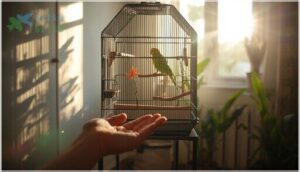
Building trust with your parakeet starts with gentle handling—but the physical space you create matters just as much. Your bird’s home environment shapes everything from stress levels to long-term health outcomes.
Let’s break down what your parakeet needs to feel safe, stay active, and thrive in your care.
Handling Considerations for Parakeets
Handling a parakeet successfully starts long before your hand enters the cage—it begins with reading your bird’s body language and moving at a pace that builds Trust rather than fear. During those first 3 to 7 days, sit near the enclosure and talk softly, letting your parakeet connect your voice with Safety. Once it seems relaxed, begin Step Up Training by placing a finger just above its feet and offering a simple “up” cue paired with millet. This Gentle Handling approach teaches your bird that perching on you brings rewards, not stress.
Watch for Parakeet Behavior signals: flattened feathers or backing away means pause and regroup. Biting often stems from fatigue or fear—never push through it. For effective Parakeet Socialization and Interaction:
- Keep sessions short (5–10 minutes) and frequent throughout the day
- Let children handle birds while seated and supervised to prevent drops
- Reserve Wing Clipping and restraint for veterinary tasks only
Patience during Parakeet Training builds Fearless Interaction and lasting Social Bonding—your care shapes a confident, happy companion.
Creating a Suitable Home Environment for Parakeets
Once trust is established through gentle handling, your parakeet’s physical space becomes the next priority. Cage Placement matters more than many owners realize—choose a quiet yet social room like the living room, positioning the enclosure at chest or head height with one side against a wall. This setup helps your bird feel secure instead of exposed.
Air Quality demands vigilance: never use aerosols, scented candles, or nonstick cookware near your parakeet, as their sensitive lungs can’t tolerate fumes that seem harmless to us. Keep Noise Levels moderate, ensuring steady household sounds without chaos. For Lighting Options, angle the Parakeet cage near—not directly in—natural light, and maintain gentle Ventilation Systems above cage height to refresh air without drafts.
This thoughtful Cage Setup and Design creates safe, Spacious Housing where daily Cage Cleaning and comfort combine seamlessly.
Parakeet Habitat and Diet
Your parakeet’s cage and diet form the foundation of their daily health—get these right, and everything else falls into place. A proper setup includes enough space to move, safe materials that won’t harm your bird, and food that fuels their energy without packing on excess weight.
Let’s walk through the essentials, starting with the enclosure itself.
Ideal Enclosure for Parakeets

Your parakeet’s cage is more than a container—it’s a habitat that shapes daily well-being. Spacious housing matters: a single bird needs at least 18 x 18 x 18 inches, while pairs thrive in 30 x 18 x 18-inch setups. Bar spacing safety requires 3/8 to 1/2 inch gaps to prevent escapes or injury. Place the parakeet cage at eye level in a busy room with bright, indirect light and good ventilation systems—never near kitchens or drafty windows.
- Wide rectangular designs beat tall narrow ones because parakeets fly horizontally, making cage setup and design vital for natural movement and confidence.
Suitable Bedding Options
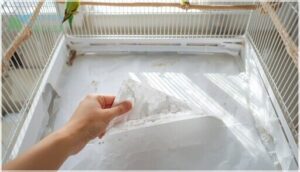
Choosing safe bedding materials protects your parakeet’s respiratory health and simplifies cage cleaning. Plain paper liners—newsprint, butcher paper, or unscented paper towels—let you spot droppings instantly and change trays daily without hassle. Here’s how bedding options compare for hygiene tips and litter safety:
| Bedding Type | Safety & Practicality |
|---|---|
| Paper Liners | Best choice—inexpensive, safe, shows droppings clearly |
| Aspen Shavings | Acceptable if low-dust and kept dry; harder to monitor waste |
| Corn Cob/Walnut | Avoid—mold risk, hides droppings, impaction danger |
| Cedar/Pine | Never use—aromatic oils irritate parakeet lungs |
Flat paper aids bird care and maintenance by encouraging frequent changes—daily for small cages, every other day for spacious housing. Skip sandpaper liners; they cause painful foot sores and offer zero nail-trimming benefit. Layer several sheets in your parakeet cage so you can peel off the top soiled layer in seconds, leaving fresh paper underneath. This simple parakeet housing strategy keeps your bird healthy while reducing bacteria, mold, and odor between deep cleans.
Feeding Dishes for Parakeets

Safe, well-placed bowls make every meal healthier for your feathered friend. Dish Material Safety starts with stainless steel—it won’t rust, won’t harbor bacteria, and tolerates daily scrubbing with hot water. Skip galvanized or coated metals; zinc can leach into seed and water, poisoning your parakeet over time. Bowl Placement Tips matter just as much: mount Feeding Dishes at perch height, never below roosting spots where droppings contaminate Parakeet Food.
Feeder Types range from clip-on cups to seed hoppers—shallow, wide bowls let birds see their Parakeet Diet at a glance, while separate dishes for pellets, greens, and water prevent soggy messes. Cleaning Methods are non-negotiable: wash daily, dry thoroughly, and toss any cracked dish. This simple routine protects Bird Nutrition and keeps your Balanced Diet plan on track.
- Replace chipped or scratched bowls immediately—damaged surfaces trap germs and expose toxic metals that endanger your parakeet’s health.
Balanced Diet for Parakeets

Your bird thrives when Pellet Nutrition covers 60 to 80 percent of its Balanced Diet—quality formulated food delivers the Avian Nutrition birds need without excess fat. Add Fresh Fruits like apple slices and leafy greens for variety, keeping seed to 10 to 30 percent as Seed Alternatives take center stage. Support Mineral Balance with cuttlebone, and reserve Vitamin Supplements for veterinary advice, ensuring every bite fuels Parakeet care and nutrition from beak to tail.
- Wash all produce thoroughly to remove pesticides before serving.
- Introduce new foods one at a time to monitor your parakeet’s response.
Parakeet Daily Care and Enrichment
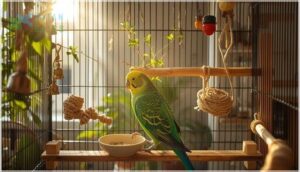
Daily care keeps your parakeet healthy and happy, and thriving—think of it as the foundation for everything else you do.
Consistency matters more than flawlessness; a steady routine helps your bird feel secure and builds trust between you. Here’s what you need to focus on every single day to give your parakeet the best life possible.
Daily Feeding Routine
Your parakeet thrives on predictable rhythms—think of feeding time as the heartbeat of daily care routines. A consistent feeding schedule keeps your bird healthy, alert, and ready to bond with you.
Here’s your practical daily plan for proper nutrition:
- Refresh water twice daily—water quality matters more than most owners realize; contamination happens fast.
- Measure about 2 teaspoons of food per budgie (food portioning prevents waste and tracks appetite changes).
- Offer fresh vegetables in the morning—remove after 2-3 hours to maintain nutrient balance and meal variety.
- Monitor your parakeet diet closely—leftover amounts reveal important health clues.
Grooming Tips for Parakeets
Your bird’s grooming routine protects them from painful injuries and illness—yet many owners overlook basics. Bathing Techniques like gentle misting or shallow dishes 2–4 times weekly support Feather Care and Parakeet health.
Monitor Nail Maintenance every 4–8 weeks; overgrown claws snag and destabilize perching. Natural perches plus cuttlebone aid Beak Health and prevent overgrowth.
Proper Parakeet Grooming and Hygiene keeps your companion comfortable, confident, and thriving daily.
Importance of Exercise for Parakeets
While grooming keeps feathers immaculate, Physical Activity delivers far deeper Flight Benefits for your parakeet’s overall health. Daily Wing Stretching and flight sessions—at least one hour outside the cage—prevent obesity, strengthen muscle tone, and provide essential Mental Stimulation that curbs screaming and feather plucking. An effective Exercise Routine transforms Parakeet behavior, turning restless energy into confident exploration.
Consider these essentials for optimal Parakeet enrichment and stimulation:
- Supervised flight time in bird-proofed rooms
- Climbing toys like ladders and ropes inside the cage
- Rotating foraging puzzles weekly for fresh challenges
Active movement equals happier, healthier Parakeet care.
Cleaning and Disinfecting The Parakeet’s Enclosure
After all that flying around, Cage Sanitation keeps your Parakeet health strong and odors at bay. Daily Cleaning—swapping liners and scrubbing food dishes each morning—stops bacteria before it builds up between deeper sessions.
Once a week, move your bird to a safe holding spot, then tackle Enclosure Maintenance with warm, soapy water on every bar and tray. Rinse thoroughly, dry completely, and only then return your parakeet to fresh Parakeet supplies.
Disinfectant Safety and Toy Hygiene matter just as much—always choose bird-safe formulas.
Providing Enrichment for Parakeets
Clean cages set the stage, but Parakeet Enrichment and Stimulation keeps your bird truly thriving. Swap Enrichment Devices weekly—hang foraging techniques like paper-stuffed cups or millet-hiding toys—so your parakeet stays sharp.
Add Auditory Stimulation through gentle nature soundtracks and Visual Enrichment near a window for moving clouds. Daily Social Bonding sessions of 10 to 15 minutes, paired with clicker-based Bird Behavior and Training, turn ordinary moments into playful, trust-building wins.
Parakeet Veterinary Care and Common Illnesses

Your parakeet’s health depends on more than good food and a clean cage—it requires regular veterinary attention and your ability to spot trouble early.
Even healthy-looking birds can hide illness until it’s serious, so knowing what’s normal makes all the difference. Here’s what you need to watch for, when to call the vet, and which health problems show up most often in parakeets.
Annual Veterinary Care for Parakeets
Even healthy parakeets deserve annual checkups with an avian veterinarian—these wellness exams catch hidden problems before they escalate. Your vet performs a thorough physical exam, listens to your bird’s heart and lungs, weighs them in grams, and often recommends bloodwork and fecal testing for early disease prevention.
You’ll also receive expert nutrition advice, emergency planning guidance, and a health screening baseline that makes future changes easier to spot. It’s preventive care that protects your feathered companion for years.
- Schedule yearly wellness exams to detect illness early
- Request diagnostic testing like bloodwork and fecal checks
- Discuss diet and housing for long-term health success
Signs of a Healthy Parakeet
Recognizing parakeet health starts with watching for the telltale signals your bird sends every day. Bright eyes without cloudiness or discharge, smooth feather condition with no bald patches or constant fluffing, and firm beak health free of cracks all point to wellness. You’ll also want to check dropping analysis—well-formed droppings with a dark green center and white cap—and respiratory check markers like quiet breathing with no tail bobbing.
These bird health and wellness indicators form the foundation of parakeet care and help you spot avian health changes before they become emergencies.
| Body Part | Healthy Sign | What to Watch |
|---|---|---|
| Eyes | Clear, bright, alert | No discharge or swelling |
| Feathers | Smooth, colorful, flat | No fluffing or bare spots |
| Beak & Cere | Firm, even-colored | No cracks or scaliness |
| Droppings | Formed with white cap | Consistent green-brown color |
| Breathing | Quiet, beak closed | No wheezing or tail bobbing |
Understanding parakeet behavior and psychology means recognizing that healthy birds move with purpose, preen regularly, and chirp with familiar patterns throughout the day.
When to Seek Veterinary Care for Parakeets
When should you rush your parakeet to an avian vet? Emergency signs like open-mouth breathing, tail bobbing, or sudden collapse demand same-day veterinary care—these birds can’t hide severe illness well. Injury response and toxicity treatment matter most within the first 24 hours. Health monitoring and ongoing bird health and wellness checks protect your feathered friend.
- Respiratory distress: raspy sounds, labored breathing, or tail pumping with each breath
- Trauma or bleeding: visible fractures, cat bites, or wounds that won’t clot
- Neurological changes: seizures, head tilting, falling from perches repeatedly
- Digestive emergencies: blood in droppings, vomiting, or refusal to eat for 12+ hours
- Reproductive crisis: egg binding in females with straining or swollen abdomen
Common Health Issues in Parakeets
Parakeet health and wellness depends on catching problems early—Respiratory Issues, Parasite Control, Nutrient Deficiencies, Feather Disorders, and Viral Infections top the list. Respiratory problems like sneezing, wheezing, or tail bobbing during each breath often signal bacterial disease or psittacosis.
Veterinary Care becomes critical when you notice these warning signs:
- Scaly face or leg mites causing crusty growths and beak deformity
- Feather Plucking from stress, parasites, or underlying organ disease
- Iodine-deficient goiter pressing on the trachea, creating noisy breathing
- Polyomavirus in chicks causing swollen abdomen and sudden death
- Weight loss from roundworms stealing nutrients in the intestines
Creating a Safe Environment for Parakeets
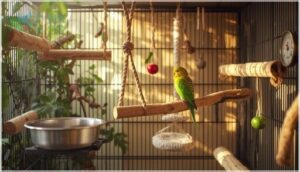
Your parakeet’s environment isn’t just about picking a pretty cage—it’s about creating a safe space where your bird can thrive physically and mentally.
From the right dimensions and perch materials to temperature control and social dynamics, every detail affects your parakeet’s daily comfort and long-term health.
Let’s walk through the essential elements that transform a basic enclosure into a safe home.
Choosing The Right Cage Size for Parakeets
Your parakeet deserves space to spread those wings—think of a cramped cage like a permanent closet. For one bird, start with cage dimensions of at least 18×18×18 inches, though 30 inches long beats tall-and-narrow every time.
Bar spacing stays under ½ inch for safety, while horizontal movement and greater cage volume fuel natural flight behavior and keep your feathered friend truly thriving.
Proper Perches for Parakeets
Your parakeet’s feet deserve the perfect grip—natural wood perches between 0.25 and 0.5 inches in diameter let those toes wrap comfortably without cramping. Mix perch materials like manzanita branches and rope for foot health, avoiding sandpaper-coated options that scrape delicate skin.
Smart perch placement in your parakeet cage means different heights for climbing, away from food bowls to prevent contamination. Rotate these essential parakeet supplies weekly for cage furniture variety and bird safety.
Selecting Suitable Toys for Parakeets
Think of toys as your parakeet’s daily mental gym—without them, boredom and feather plucking often follow. Parakeet toys support parakeet behavior and psychology while keeping pet bird care engaging and safe.
Follow these toy safety guidelines for smart parakeet care:
- Natural toy materials work best: Choose untreated pine, birch, or cotton rope; avoid zinc-coated metals and nylon that cause toxicity or entanglement.
- Foraging toy benefits shine: Hide treats in cups or boxes to mimic wild feeding habits.
- Chew toy options matter: Offer seagrass mats and soft wood for healthy beak conditioning.
- Toy rotation strategies prevent boredom: Swap 3-5 bird toys weekly, introducing one new item at a time.
Benefits and Considerations of a Colony Setting for Parakeets
When your birds share living quarters with compatible companions, you open up a world of social interaction that mirrors wild flock behavior. Colony dynamics offer parakeet behavior and psychology benefits—your birds preen together for hours, copy confident cage mates through social learning, and maintain natural wake-sleep rhythms.
That said, aviary design and group enrichment planning require thoughtful preparation. Here’s what successful flock behavior management looks like:
- Space scales up fast: Four parakeets need at least 6 feet of horizontal flight room, not just a taller cage.
- Multiple resource zones reduce conflict: Install duplicate food stations and varied perch heights across the enclosure.
- Avian behavior and socialization changes: Colony birds bond strongly to each other, making hand-taming harder than with pairs.
- Health tracking gets trickier: You’ll need daily check-ins to spot which individual is eating less or showing subtle breathing changes.
Temperature Sensitivity in Parakeets
Your bird’s thermal comfort shapes every aspect of parakeet care and avian health—small bodies lose heat fast, making climate control non-negotiable. Parakeets thrive between 70–75°F, but cold intolerance kicks in below 60°F, risking hypothermia within 12–24 hours. Heat stress above 82°F triggers open-mouth breathing and drooping wings.
Here’s how ventilation needs and bird health intersect:
| Temperature Range | Parakeet Behavior | Action Required |
|---|---|---|
| 65–80°F | Active, bright-eyed, normal feather position | Maintain steady room temp; monitor for drafts |
| Below 60°F | Puffed feathers, shivering, lethargy | Relocate cage; add gentle heat source immediately |
| Above 82°F | Wings spread, rapid breathing, restlessness | Increase airflow; offer cool water; provide shade |
| Rapid fluctuation (10°F+ shift) | Stress signals, weakened immunity | Avoid placement near exterior doors or HVAC vents |
Draft-free doesn’t mean airless—gentle circulation keeps pet bird care safe while direct blasts from windows chill your parakeet fast.
Frequently Asked Questions (FAQs)
How to take care of parakeets for beginners?
Getting started means choosing the right parakeet cage, offering a balanced bird diet and nutrition, and gently taming budgies through daily interaction—these first steps build trust and meet your new bird’s basic needs.
What not to do with parakeets?
Never expose your parakeet to nonstick cookware fumes, chocolate, avocado, or cigarette smoke—these airborne toxins and toxic foods cause fatal poisoning.
Avoid grabbing the chest, unsafe handling that stops breathing, and skip sandpaper perches that damage feet.
What do parakeets like in their cage?
Your parakeet thrives when the cage includes varied perches, rotating toys for mental stimulation, and properly placed food dishes.
A spacious layout with horizontal bars, natural wood perches, and foraging opportunities keeps them engaged and healthy.
Can parakeets be potty trained?
You can teach your parakeet to poop on cue in a designated spot, but expect frequent accidents—parakeets lack sphincter control and eliminate every 10–20 minutes, making true potty training nearly impossible.
How often should I change the bedding in my parakeet’s cage?
You’ll want to replace cage liners daily or every 2-3 days—ammonia from droppings builds up fast and can irritate your parakeet’s airways, while clean bedding helps you spot health changes early.
Are there any specific fruits or vegetables that are toxic to parakeets?
One tiny nibble of avocado can crash your parakeet’s respiratory system—persin attacks the heart and lungs fast.
Apple seeds, cherry pits, onions, garlic, and raw beans also threaten your bird’s life.
Is it necessary to trim a parakeet’s feathers?
Wing clipping reduces escape risk but isn’t essential for most parakeets.
Proper bird-proofing—covered mirrors, closed doors, safe perches—and recall training let your bird enjoy natural flight while staying secure indoors.
Can parakeets learn to talk and mimic sounds?
Yes—budgerigars are outstanding vocal learners. Males usually develop larger vocabularies than females, mastering dozens to hundreds of words through daily 10–15 minute training sessions that reinforce speech patterns and sound imitation.
How do I teach my parakeet to talk?
Patience beats pressure every time. Vocal training starts with short 5–10 minute sessions, repeating simple words like “hello” clearly.
Reward attempts with treats, use crisp consonants, and practice daily—speech patterns develop slowly over weeks.
Can parakeets live with other bird species?
Your parakeet can share space with compatible species—cockatiels, zebra finches, or small doves—but only in roomy aviaries.
Success requires gradual introduction, careful aviary design, and constant monitoring for aggression or stress.
Conclusion
Here’s the truth behind those fifteen-year lifespans: parakeets don’t thrive by accident—they flourish when you implement structured, daily routines grounded in proven avian health principles.
Every element of how to care for parakeets, from measured portions to cage placement, compounds into either vitality or decline. You now hold evidence-based strategies that transform guesswork into confidence.
Your parakeet’s energetic morning chatter becomes the metric that confirms you’re delivering preventive care that genuinely extends life.
- https://www.petmd.com/bird/parakeet-care-sheet
- http://rehabbersden.org/rehabbers/FeedingParakeetsInCaptivity.html
- https://www.pendervet.com/blog/caring-for-your-pet-parakeet
- https://www.zumalka.com/blogs/blog-pet-health/vet-insights-common-parakeet-health-problems
- https://www.petsmart.com/learning-center/bird-care/parakeet-care-guide/A0014.html