This site is supported by our readers. We may earn a commission, at no cost to you, if you purchase through links.
Most bird owners don’t realize that a healthy-looking parrot or finch can quietly develop micronutrient deficiencies, even on a fortified seed diet. When children are involved in daily care, the stakes get higher—small measurement errors and well-meaning double-dosing can tip fat-soluble vitamins like A and D3 into toxic territory fast. That gap between "helping" and "harming" is surprisingly narrow with avian vitamin supplements.
The good news: with the right products and a few adult-supervised routines, kids can play a meaningful role in keeping their bird healthy, from tracking daily weight to mixing powdered vitamins into soft food.
Table Of Contents
- Key Takeaways
- Safe Supplementing With Children
- Match Supplements to Bird Needs
- Key Nutrients for Pet Birds
- Top 7 Avian Vitamin Supplements
- 1. Vitofarma Multi Vitamin Bird Supplement
- 2. Oasis Vita Drops Small Bird Multivitamin
- 3. Lafeber Avi Era Powdered Bird Vitamin
- 4. Nekton-S Multi-Vitamin Supplement for Birds
- 5. Hagen Prime Parrot Vitamin Mineral Supplement
- 6. Wild Harvest Healthy Benefits Molting Supplement, 7.5 Oz., for All Birds
- 7. Avian Color and Shine Superfood Supplement
- How Children Can Give Vitamins
- Frequently Asked Questions (FAQs)
- Conclusion
Key Takeaways
- Fat-soluble vitamins like A, D3, E, and K can quietly build to toxic levels when supplements are stacked on top of already-fortified pellets, so always check every label before adding anything new to your bird’s routine.
- Kids can meaningfully participate in bird care — measuring powder into soft food, counting liquid drops, and logging daily weights — but an adult needs to own every supplement decision from start to finish.
- Nutritional needs shift with life stage, so hatchlings require vet-guided dosing, molting birds need extra protein and amino acids like methionine, and senior breeders depend on precise vitamins A, D3, and calcium for reproductive health.
- Visible improvements from supplementation typically take 4 to 8 weeks to appear, and feather changes can take up to 3 months, so consistency and patience matter far more than chasing quick results.
Safe Supplementing With Children

Getting kids involved in bird care is rewarding, but supplements aren’t something to wing. A few clear ground rules go a long way toward keeping both your child and your bird safe. Here’s what every parent should know before handing over the vitamin bottle.
Before choosing a product, it helps to brush up on which vitamins pet birds actually need so you’re not guessing at the store.
Adult Supervision Rules
When kids are involved in avian dietary requirements, one adult needs to own every vitamin decision from start to finish. That means checking the label, measuring the dose, and confirming the bird actually eats it — no handoffs mid-session unless you’re deliberately transferring responsibility.
Keep vitamin containers out of reach between feedings, maintain a consistent feeding schedule, and log every dose so nothing gets doubled.
Age-appropriate Feeding Tasks
Not every feeding task suits every age. Younger children do well with sorting prepared portions and setting out bowls, while school-age kids can take on more active roles like placing food in the cage.
Whatever the task, an adult verifies each step before it’s done — especially anything touching vitamin supplements or small cage birds.
Measuring Doses Correctly
Once feeding tasks are handled, measuring supplements is where accuracy really counts. Always use an oral syringe or dosing cup — never a kitchen spoon, which can vary widely in volume.
Liquid doses are labeled in milliliters, so 0.5 mL means exactly that. Read the marking directly, confirm it matches the label, and have an adult verify before administering.
Avoiding Over-supplementation
Getting the dose right is only half the battle — supplement stacking is where things quietly go wrong. If your bird’s pellets are already fortified and you add a multivitamin on top, fat-soluble vitamins like A, D, E, and K can accumulate to toxic levels.
Getting the dose right matters, but supplement stacking is where fat-soluble vitamins silently reach toxic levels
Always check label dosing carefully, keep a written list of every product used, and never add "extra" booster doses. Such accumulation can lead to potential toxicity risks if not carefully monitored.
Teaching Gentle Bird Care
Teaching a child to handle a bird well starts long before supplements or vet visits ever come up.
- Keep sessions calm and brief to reduce stress for the bird.
- Never squeeze the keel — it restricts breathing.
- Use a towel wrap with a distractor so the bird bites fabric, not fingers.
- Reward calm behavior with millet or gentle head scratches.
Match Supplements to Bird Needs
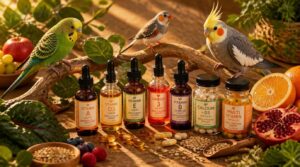
Not every supplement works for every bird, and that’s not a flaw in the product — it’s just biology. Your bird’s age, size, and life stage all shape what nutrients it actually needs. Here’s how to match the right supplement to where your bird is right now.
Species and Size Differences
Not all birds need the same dose — a budgie and an African Grey are practically different nutritional universes. Bird size and species directly shape how much of any vitamin is appropriate.
Small cage birds like finches can be over-supplemented by even a tiny measurement error, while larger parrots process nutrients through faster metabolisms and higher daily food intake.
Hatchlings and Young Birds
Hatchlings are in a league of their own regarding nutritional supplementation. They can’t thermoregulate reliably, depend entirely on parent brooding for warmth, and receive nutrition through regurgitated food — not bowls or droppers.
Their bodies are developing too fast for improvised dosing. Any supplementation at this life stage must be guided by an avian veterinarian, not a general label.
Adult Maintenance Support
Once a bird reaches adulthood, routine vitamin scheduling becomes your maintenance backbone. A daily multivitamin supplement, matched to your bird’s species and diet staples, fills the micronutrient gaps that even a balanced diet can leave behind.
If you notice your bird dropping feathers more than usual, that could signal a nutritional gap worth addressing—understanding common bird feather loss causes can help you catch deficiencies before they snowball into bigger health issues.
If your bird eats fortified pellets, confirm with an avian veterinarian before adding anything extra — duplicating nutrients can cause more harm than skipping them.
Molting Feather Support
Molting puts real demands on your bird’s body — feathers are built from keratin, and that means a steady protein supply molt is non-negotiable. Sulfur amino acids like methionine support strong regrowth, while vitamin A follicles stay healthier when diet includes carotenoid-rich foods.
A targeted molting supplement blend and regular misting feather comfort routines ease the process considerably.
Breeding and Senior Birds
Senior breeding birds need more than just extra food — they need precise nutritional support. Older breeders produce more variable eggs and show reduced hatch success, so consistent avian nutrition becomes essential. Key priorities include:
- Vitamins A, D3, and E for reproductive health
- Calcium for egg integrity
- Amino acids for feather and muscle maintenance
- Correct dosing to avoid fat-soluble toxicity
Key Nutrients for Pet Birds
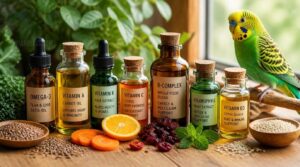
Your bird’s health really does come down to what’s inside their food. Each nutrient plays a specific role—from keeping feathers strong to supporting a healthy immune system. Here are the key vitamins and nutrients your pet bird needs most.
Vitamin a for Immunity
One nutrient quietly runs security detail for your bird’s entire body — vitamin A. It maintains immune barrier function by keeping epithelial cells intact, which serves as your bird’s first physical defense against pathogens.
Mucosal defense depends on vitamin A too. The mucus lining respiratory and digestive passages traps harmful invaders before they cause infections. That’s why vitamin A deficiency often shows up as nasal plaques or swollen eyes — the barrier has already failed.
It also drives T cell development, helping immune cells mature so they recognize and respond to threats correctly. And through inflammation regulation, vitamin A prevents immune responses from overshooting and damaging healthy tissue.
| Function | Role of Vitamin A | Deficiency Sign |
|---|---|---|
| Immune Barrier | Maintains epithelial integrity | Nasal plaques, infections |
| T Cell Support | Guides immune cell maturation | Poor pathogen response |
| Mucosal Defense | Protects mucus-lined surfaces | Respiratory vulnerability |
For reliable immune support, consistent vitamin A through quality avian nutrition or a bird supplement is non-negotiable.
Vitamin D3 and Calcium
Vitamin A keeps the immune system standing guard — but it can’t do that job alone. Strong bones and feathers also need vitamin D3 and calcium working in tandem.
Vitamin D3 promotes calcium absorption from the gut. Without it, calcium passes through unused. That shortage leads to metabolic bone disease, beak deformities, and poor egg quality.
B Vitamins for Energy
Bones need D3 and calcium — but energy is a whole different story. That’s where B-complex metabolism comes in.
B vitamins power ATP synthesis support across multiple pathways: B1 converts carbohydrates into fuel, B2 and B3 drive electron transport, and B12 keeps nerve signals firing cleanly. Without them, your bird moves slower, eats less, and looks duller.
- B1 thiamine enhances muscle coordination
- B2 riboflavin fuels cellular energy reactions
- B3 niacin builds NAD for energy production
- B6 pyridoxine aids neurotransmitter signaling
- B12 cobalamin maintains healthy nerve function
Since B vitamins are water-soluble, excess amounts pass out safely — but consistent daily intake still matters for steady avian nutrition support.
Vitamin E Antioxidant Support
While B vitamins handle energy production, vitamin E works differently — it protects the cells doing that work. As a fat-soluble antioxidant, it concentrates in cell membranes and interrupts lipid peroxidation before it damages phospholipids. The alpha-tocopherol form is most active, and it can even be regenerated by other antioxidants.
Don’t over-supplement, though — excess fat-soluble vitamins accumulate in tissue.
Amino Acids for Feathers
Feathers are made almost entirely of beta-keratin structure — a tough, stable protein reinforced by cysteine disulfide bonds that keep each fiber rigid.
During molt, feather protein synthesis accelerates, increasing amino acid demand considerably. Chicken feathers contain key players: serine at 16%, glutamine at 7.62%, and aspartic acid at 6%. Your bird’s amino acid profiles directly determine plumage quality.
Top 7 Avian Vitamin Supplements
Now that you know what nutrients matter, it’s time to match those needs to a real product you can trust. These seven supplements cover a range of bird sizes, life stages, and delivery methods—so there’s likely a good fit for your bird no matter where you’re starting.
Take a look at each one and see what works best for your setup.
1. Vitofarma Multi Vitamin Bird Supplement
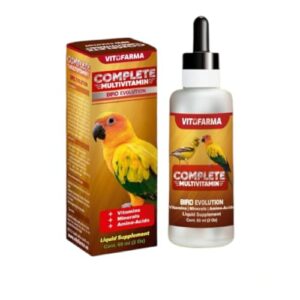
If you’re looking for an easy daily supplement that works across bird sizes, Vitofarma Multi Vitamin Bird Supplement is worth a close look. Its liquid formula delivers vitamins A, D, E, and B complex alongside calcium, phosphorus, zinc, and selenium — covering most nutritional gaps in captive diets.
You simply add it to drinking water or soft food. It benefits hatchlings, molting adults, and breeding birds equally well, making it a flexible choice for mixed-bird households.
| Best For | Bird owners who want a simple, all-in-one daily supplement that works for both small and large birds at every life stage. |
|---|---|
| Form | Liquid |
| Weight | 2.89 oz |
| Feather Support | Shiny, full plumage |
| Administration | Water or direct beak |
| Immune Support | Yes |
| Target Birds | All sizes |
| Additional Features |
|
- Liquid formula makes it easy to mix into water or soft food — no fuss
- Covers a solid range of nutrients, from vitamins A, D, E, and B complex to minerals like zinc and selenium
- Works for hatchlings, molting adults, and breeding birds, so it fits a mixed-bird household well
- Color can vary batch to batch, which might throw you off if you’re not expecting it
- Picky birds may refuse it straight from the beak, so you’ll need to sneak it into their water instead
- Results aren’t always easy to spot right away, so it takes some patience to know if it’s working
2. Oasis Vita Drops Small Bird Multivitamin
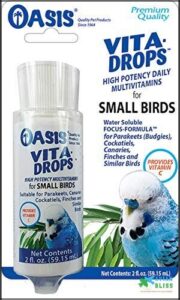
Small birds like parakeets, finches, and cockatiels do well with OASIS Vita Drops, a liquid multivitamin in a 2 fl oz bottle. It includes vitamins A, D3, E, K, C, and key B vitamins like thiamine and riboflavin.
You simply add 1 drop per ounce of drinking water daily. Because it contains fat-soluble vitamins, stick to the measured dose — more isn’t better here.
| Best For | Small bird owners looking for an easy, no-fuss way to give their parakeets, finches, or cockatiels a daily vitamin boost. |
|---|---|
| Form | Liquid drops |
| Weight | 3.47 oz |
| Feather Support | Full feathering, natural sheen |
| Administration | Water or moist food |
| Immune Support | Vitamin C enhanced |
| Target Birds | Small species only |
| Additional Features |
|
- Liquid formula makes dosing simple — just drop it in their water or mix it into soft food
- Covers a solid range of vitamins including A, D3, E, K, C, and key B vitamins to support feathering, color, and energy
- Meets National Research Council standards, so you know it’s not just a random blend
- The small bottle goes fast if you’re supplementing more than one or two birds
- Fat-soluble vitamins mean you can’t just eyeball the dose — sticking to the ratio matters
- Water bottles need to stay clean, or you risk contamination mixing with the drops
3. Lafeber Avi Era Powdered Bird Vitamin
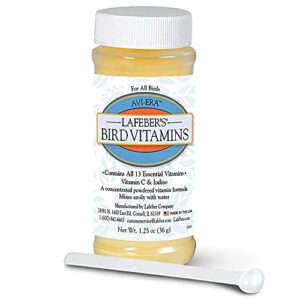
Lafeber’s Avi-Era is a powdered vitamin blend that covers 13 essential vitamins, vitamin C, and iodine — a solid pick for birds eating mostly seeds. It’s formulated by avian veterinarians, contains no artificial colors or flavors, and specifically covers vitamin A and D3 gaps that seed-only diets commonly miss.
You just mix the measured powder into moist food or drinking water daily. The included measuring spoon makes accurate dosing straightforward, even for young bird keepers learning the routine.
| Best For | Bird owners whose pets eat mostly seed-based diets and need a simple daily vitamin boost to fill nutritional gaps. |
|---|---|
| Form | Powder |
| Weight | 1.28 oz |
| Feather Support | Enhanced quality, brightness |
| Administration | Drinking water |
| Immune Support | Yes |
| Target Birds | All species |
| Additional Features |
|
- Covers 13 essential vitamins plus vitamin C and iodine — tackles the A and D3 deficiencies that seed diets almost always cause
- Vet-formulated with no artificial colors or flavors, so you know exactly what you’re giving your bird
- Easy to use — just mix the powder into water or moist food daily, and the measuring spoon keeps dosing simple
- Some birds are picky and may resist the taste, which can make consistent use tricky
- Results take time — don’t expect to see feather or energy improvements overnight
- The dosing scoop is occasionally missing from the packaging, which is a frustrating quality control issue
4. Nekton-S Multi-Vitamin Supplement for Birds
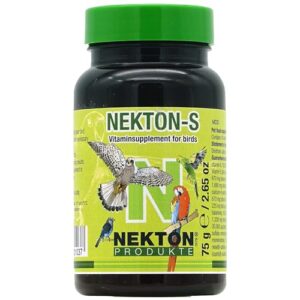
Nekton-S is a German-made powder that packs 13 vitamins, 18 free-form amino acids, plus minerals and trace elements into one daily formula. It’s designed for all cage bird species and provides everything from routine maintenance to molting and stress recovery.
It dissolves easily in drinking water or mixes into soft food at just 1g per 250ml of water — precise enough for kids to measure confidently. Don’t exceed 5% of your bird’s daily ration.
| Best For | Bird owners of all experience levels — from backyard hobbyists to professional zoos — who want a reliable daily supplement to keep their cage birds healthy and well-nourished. |
|---|---|
| Form | Powder |
| Weight | 2.65 oz |
| Feather Support | Improved feathering |
| Administration | Water or soft food |
| Immune Support | Yes |
| Target Birds | All cage birds |
| Additional Features |
|
- Covers a lot of ground in one scoop — 13 vitamins, 18 amino acids, minerals, and trace elements all in a single daily formula
- Flexible dosing makes it easy to use, whether you mix it into drinking water or soft food
- Made in Germany with precise measurements, so you know exactly what your bird is getting
- The 75g size runs out quickly if you’re supplementing multiple birds daily
- Strict storage requirements (no fridge, keep between 15–25°C) mean you need to be thoughtful about where you keep it
- Can’t just eyeball the dose — exceeding 5% of the daily ration is a real limit, so you’ll need a small scale or measuring tool
5. Hagen Prime Parrot Vitamin Mineral Supplement
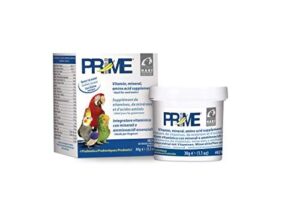
Hagen Hari Prime is a full-spectrum powder supplement built specifically for parrots eating seed, vegetable, and fruit-based diets. It delivers 14 vitamins and 9 minerals, plus lysine and methionine amino acids to improve protein quality — something most basic bird vitamins skip entirely.
The ultra-fine powder penetrates soft food easily and won’t cake over time, so kids can sprinkle it on fruits or vegetables without fuss. It also includes probiotics and digestive enzymes to support gut health alongside core nutrition.
| Best For | Parrot and seed-eating bird owners who want a well-rounded daily supplement that goes beyond basic vitamins to support digestion, protein quality, and feather health. |
|---|---|
| Form | Powder |
| Weight | 1.1 oz |
| Feather Support | Color, length, appearance |
| Administration | Food or water |
| Immune Support | Vitamin C and E antioxidants |
| Target Birds | Seed-eating birds |
| Additional Features |
|
- Covers 14 vitamins and 9 minerals plus amino acids — more complete than most bird supplements on the market
- Probiotics and digestive enzymes are a nice bonus that many competing products just don’t include
- Ultra-fine powder mixes easily into fruits, veggies, or water without clumping
- The container is small, so you may go through it faster than expected
- The scent can be pretty strong — some birds (and owners) aren’t fans
- You have to be consistent about mixing it in every day, since there’s no other easy way to administer it
6. Wild Harvest Healthy Benefits Molting Supplement, 7.5 Oz., for All Birds
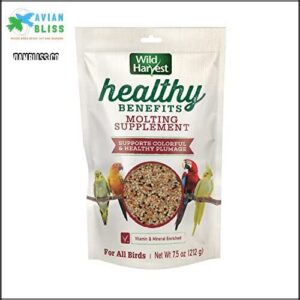
If your bird is heading into a molt, the Wild Harvest Molting Supplement gives you a simple, seed-based way to support feather regrowth. The 7.5 oz bag blends millet, oat groats, and canary grass seed, enriched with vitamins A, D3, riboflavin, and key minerals like magnesium and zinc.
It’s not a complete diet replacement, but as a supplemental feeding snack, it’s easy to portion and works well for small to medium birds like parakeets.
| Best For | Small to medium bird owners — especially parakeet and pigeon keepers — looking for an easy way to support their bird through molting season. |
|---|---|
| Form | Seed mix |
| Weight | 7.5 oz |
| Feather Support | Colorful, shiny plumage |
| Administration | Direct feeding |
| Immune Support | Yes |
| Target Birds | Small to medium birds |
| Additional Features |
|
- Solid seed blend of millet, oat groats, and canary grass seed, enriched with vitamins and minerals that actually target feather health
- Easy to portion out as a snack on top of a regular diet — no fuss, no guesswork
- Helps with the rough stuff during molts: pin feathers, patchiness, and dull plumage
- Not a standalone diet, so you’ll still need a complete bird food alongside it
- The zip-lock seal can be a pain — it tends to misalign, which makes resealing annoying
- Large bird species are mostly out of luck here, as it’s really sized for smaller birds
7. Avian Color and Shine Superfood Supplement
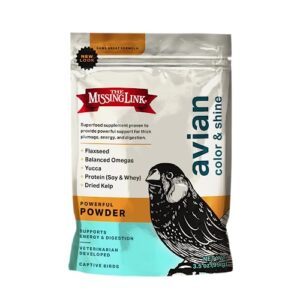
If your bird’s feathers look dull despite a solid diet, Avian Color and Shine is worth a closer look. Its fresh-ground flaxseed base delivers omega fatty acids that directly support feather moisture and luster. Kelp and yucca add trace minerals and digestive comfort, while seven probiotics help your bird absorb nutrients more efficiently.
Sprinkle the powder onto soft, moist food daily. Just don’t exceed the recommended serving — nutrient imbalance is a real risk with any concentrated superfood blend.
| Best For | Bird owners who want to boost feather color, growth, and overall vitality in captive birds through a natural, superfood-based supplement. |
|---|---|
| Form | Powder |
| Weight | 3.52 oz |
| Feather Support | Thick growth, vibrant color |
| Administration | Sprinkle on food |
| Immune Support | Yes |
| Target Birds | Captive birds |
| Additional Features |
|
- Fresh-ground flaxseed plus kelp and yucca deliver omega fatty acids and trace minerals that directly support vibrant plumage and healthy feather growth.
- Seven probiotics paired with chicory root prebiotic help birds absorb nutrients more efficiently and keep digestion on track.
- Easy to use — just sprinkle the powder over soft food or seed mixes, no special prep needed.
- Powder form makes it tricky to ensure your bird actually eats the full dose, especially with picky eaters or dry seed mixes.
- Pricier than many other bird supplements on the market, which can add up over time.
- Always worth a chat with an avian vet before adding any new supplement to your bird’s routine.
How Children Can Give Vitamins
Giving your bird vitamins doesn’t have to be complicated, even for kids. With the right technique, children can take on this task confidently and safely. Here are five simple ways to make it part of your daily bird care routine.
Powder on Moist Food
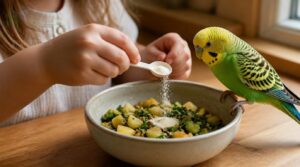
Mixing a powdered multivitamin into moist food is one of the easiest tasks a child can learn. Keep the food only lightly moist — too much moisture causes clumping, which means uneven doses. Stir thoroughly, serve immediately, and only prepare what your bird will eat right away.
Measuring accuracy matters most: always follow the label, never guess.
Liquid Drops in Water
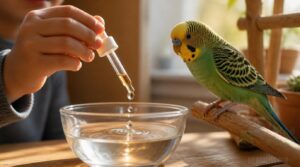
Liquid drops work a little differently than powder. When you add a liquid multivitamin to water, surface tension and droplet formation actually slow how evenly the supplement disperses — so gentle stirring right after adding drops is non-negotiable.
Key habits for avian caretakers using liquid drops:
- Count drops carefully — never estimate
- Stir the water gently but thoroughly after adding drops
- Use a clean dropper to avoid contamination
Products like OASIS Vita Drops for Small Birds make measuring straightforward, delivering vitamins and minerals in pre-measured liquid form.
Fresh Water Every 12 Hours
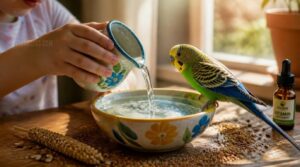
Fresh water isn’t just a courtesy — it’s part of your bird’s daily nutrition routine. Liquid vitamins in water, like those from OASIS or VITOFARMA MultiVitamin For Birds, lose potency quickly, so replacing water every 12 hours keeps both hydration and supplement effectiveness intact. Stagnant water also collects droppings, feather dander, and seed dust, turning a clean bowl into a bacterial breeding ground fast.
A simple morning-and-evening swap builds consistent water bowl hygiene and makes it easy for kids to spot when their bird is drinking less than usual — an early sign that something’s off with immune health or daily balanced nutrition.
Track Weight and Feathers
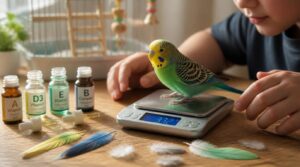
Keeping a daily weighing routine tells you far more than a visual check ever could. Use a digital gram scale — kitchen scales lack the precision needed for small birds.
Weigh your bird at the same time each day, before feeding, and watch for trends. A slow downward drift, paired with dull plumage, often signals a nutrition impact worth addressing.
Ask an Avian Veterinarian
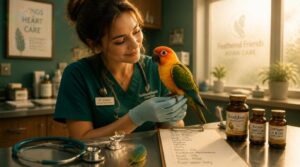
When something seems off with your bird, don’t wait for it to get worse. Contact an avian veterinarian right away if you notice open-mouth breathing, fluffed posture, or sudden appetite changes.
Bring supplement labels, your feeding notes, and recent weight logs. Your vet can assess the full nutrition picture and confirm whether your current supplement plan is working.
Frequently Asked Questions (FAQs)
Can pet birds overdose on natural food vitamins?
Too much of a good thing can still hurt. Yes, natural food vitamins can cause toxicity. Fat-soluble vitamins like vitamin A accumulate in the body, and even wholesome foods can push levels into harmful ranges.
How do seasonal changes affect bird supplement needs?
Birds don’t have the same needs year-round. Seasonal diet shifts change what nutrients they require, from spring protein increase for breeding to winter vitamin D support when sunlight drops.
What signs indicate a supplement brand is low quality?
Watch for hidden fillers, vague labeling, and missing third-party verification like NASC seals or GMP standards. Suspicious claims and poor traceability signal low quality fast.
Are organic or synthetic bird vitamins more effective?
Neither label wins by default. Nutrient bioavailability depends on the vitamin’s chemical form, not the "organic" or "synthetic" tag. What matters is whether your bird’s body can actually absorb and use it.
How long before supplements show visible health improvements?
Most visible health improvements from nutritional supplementation take 4 to 8 weeks minimum. Feather quality and molting changes often need longer — sometimes 3 months — because nutrient absorption must build steadily before outward signs appear.
Conclusion
Like Florence Nightingale’s insistence on clean water before modern medicine, the most powerful protection you can give your bird starts with small, consistent habits.
The right avian vitamin supplements for children raising pet birds build more than immunity—they build the daily discipline of measurement, observation, and care. A bird clearly thriving under your child’s watchful care, with bright feathers and a stable weight, is living proof that daily precision and patience always outperform guesswork.
- https://www.merckvetmanual.com/exotic-and-laboratory-animals/pet-birds/nutritional-diseases-of-pet-birds
- https://azeah.com/birds/vitamin-deficiency-parrots
- https://theaviaryparrotfood.com/blogs/parrot-diet-and-nutrition/symptoms-of-vitamin-a-deficiency-in-parrots
- https://birdsupplies.com/blogs/news/birds-and-uv-light-time-to-boost-vitamin-d-levels
- https://www.veterinaryirelandjournal.com/large-animal/132-an-introduction-to-ultraviolet-and-vitamin-d3-deficiency