This site is supported by our readers. We may earn a commission, at no cost to you, if you purchase through links.
A parrot’s skeleton is roughly 10% calcium by weight—yet most captive birds never get close to what they need. That gap shows up gradually: fragile feathers, poor muscle coordination, weak eggshells in breeding hens, and in African Greys specifically, a condition called hypocalcemia that can trigger seizures.
Minerals aren’t background noise in your bird’s diet; they run nearly every critical process, from oxygen transport in the blood to thyroid regulation to keratin production in growing feathers. Knowing what minerals do parrots need to thrive means understanding how each one works, where it comes from, and what happens when the balance tips.
Table Of Contents
Key Takeaways
- Calcium is the cornerstone mineral for parrots, but it only works when paired with the right calcium-to-phosphorus ratio (1.5:1 to 2:1), enough vitamin D3, and magnesium — without all three, even a calcium-rich diet falls short.
- African Grey parrots face a uniquely high calcium risk because they excrete more through their kidneys and can’t compensate easily, making seed-heavy diets a direct path to seizures and bone loss.
- Trace minerals like zinc, iodine, iron, and manganese each handle a specific job — feather structure, thyroid function, oxygen transport, and enzyme activity — so deficiency in any one of them shows up fast and visibly.
- Quality pellets (50–75% of the daily diet) are the most reliable way to keep mineral intake consistent, but rotating dark leafy greens, limiting seeds to 5–10%, and working with an avian vet on any supplements rounds out a safe, balanced approach.
Calcium Supports Bones and Eggshells
Calcium does more for your parrot than just keeping bones strong — it drives muscle function, blood clotting, and eggshell formation all at once. Without the right amount, you’ll start seeing problems that range from brittle feathers to seizures, depending on the species. Here’s what you need to know about calcium and how to get it right.
If your bird is showing any of these warning signs, it’s worth reading up on low blood calcium in parrots and other birds before the situation gets serious.
Bone Strength and Posture
Keeping your parrot’s skeleton strong starts with calcium — and it’s about more than just bones. Calcium drives bone density, proper postural alignment, and the muscle contractions that hold your bird upright on a perch.
5 ways calcium promotes your parrot’s skeletal health:
- Weight-bearing bone strength — daily climbing and perching reinforce skeletal density
- Muscle support — calcium triggers the contractions that stabilize joints
- Spinal loading balance — upright posture spreads force evenly across vertebrae
- Metabolic bone disease prevention — adequate calcium stops painful skeletal deterioration
- Calcium deficiency control — maintaining the calcium-phosphorus ratio between 1.5:1 and 2:1 protects long-term bone integrity
Egg-laying Calcium Demands
When a hen starts laying, calcium demand shifts into overdrive. Medullary bone dynamics kick in, converting structural bone into a fast-cycling calcium reservoir that fuels eggshell formation daily. Each shell is mostly calcium carbonate, so your bird needs roughly 4–5 grams of calcium per day to maintain eggshell quality factors without depleting her skeleton. A deficiency can lead to soft-shelled egg issues or even egg binding.
| Calcium Factor | Key Detail |
|---|---|
| Daily calcium intake | 4–5 grams needed per egg |
| Medullary bone role | Rapid calcium mobilization reservoir |
| Eggshell composition | Primarily calcium carbonate |
| Calcium timing strategies | Split feeding matches daily demand |
| Calcium reserve management | Dietary replenishment prevents bone loss |
Calcium timing strategies matter more than most owners realize. Split feeding — spreading calcium sources across the day — better synchronizes nutrient supply with the shell gland’s cycle, directly improving shell strength. Without daily calcium intake support through pellets, leafy greens, and supplements like oyster shell, the calcium-phosphorus imbalance risk grows quickly, weakening both shells and bones over time.
African Grey Calcium Risks
African Grey parrots face a calcium challenge that most other species don’t. Their calcium metabolism is uniquely fragile — they excrete more calcium through the kidneys and struggle to pull it back from bone when dietary intake drops. A seed diet makes this worse fast. Here’s what that looks like in practice:
- Hypocalcemia seizures can strike suddenly, leaving your bird unable to stand or fly.
- Vitamin D deficiency — common in indoor birds with no UVB exposure — prevents whatever calcium you do provide from being properly absorbed.
- A calcium-phosphorus imbalance from seed-heavy feeding compounds kidney calcium loss, pushing deficiency into emergency territory.
If your African Grey starts trembling or collapses, that’s a potential emergency calcium treatment situation requiring immediate veterinary care.
Vitamin D3 Absorption Support
Calcium alone can’t do much if vitamin D3 isn’t doing its job first. Vitamin D3 is fat-soluble, meaning it absorbs best when dietary fat is present — so pairing it with a normal, balanced meal makes a real difference. Without adequate D3, even a calcium-rich diet won’t fully support bone density or eggshell formation.
| Factor | Why It Matters |
|---|---|
| Fat in the meal | Improves D3 absorption in the small intestine |
| Meal timing | Consistent feeding promotes steadier D3 utilization |
| Magnesium cofactor | Required for D3 activation and calcium uptake |
| UV light exposure | Facilitates natural D3 synthesis through skin and feathers |
Magnesium’s role is easy to overlook — but without it, D3 can’t activate properly, leaving calcium mobilization incomplete. Similarly, very low-fat diets or irregular feeding schedules reduce how consistently D3 reaches the absorption site. If your bird receives Orlistat or has a known malabsorption condition, nutrient absorption is likely compromised, and your vet should reassess supplementation.
For a deeper look at how these nutrients work together, avian vitamin and mineral absorption requirements can help you spot gaps before they become health problems.
Safe Calcium Food Sources
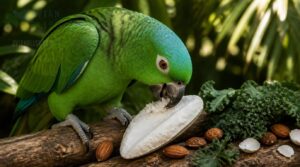
Good calcium sources for parrots include dark leafy greens like kale, bok choy, and collard greens — easy to rotate daily. Calcium-set tofu and fortified plant milks offer plant-based options, while canned fish with bones adds calcium alongside protein.
A cuttlebone mounted in the cage gives birds direct, self-regulated access whenever they need it.
Parrots Need Calcium, Phosphorus, Magnesium, Iodine, Zinc, Iron, and Manganese
Calcium gets a lot of attention, but it’s only one piece of a much bigger puzzle. Your parrot’s body depends on a whole team of minerals working together — each with its own role to play. Here’s what that core lineup actually looks like.
Core Mineral Checklist
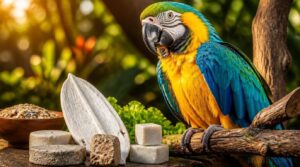
Think of minerals as the structural crew working behind the scenes in your parrot’s body — each one with a specific job that can’t easily be outsourced.
Here are four minerals no parrot diet should skip:
- Calcium daily intake helps bones, muscle contraction, and eggshell formation
- Calcium-phosphorus ratio should stay between 1.5:1 and 2:1
- Iodine deficiency leads to thyroid enlargement and breathing difficulty
- Zinc regulates healthy feather keratin production
Trace Minerals Explained
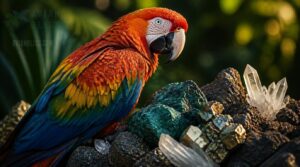
Trace minerals are needed in only tiny amounts, but don’t let that fool you — their impact is anything but small.
They play mineral cofactor roles in enzyme systems, meaning they enable the chemical reactions your parrot’s body depends on for metabolism, tissue repair, and hormone regulation. Without them, those reactions simply stall.
Species-specific Mineral Needs

Not every parrot has the same mineral needs — species size and life stage shape those requirements more than most owners realize. Large parrots need 15–20% more protein and higher overall mineral intake than smaller birds. African Greys require 50% more calcium than Amazons, making them especially vulnerable when diets lean heavily on seeds.
Breeding females and growing chicks need increased calcium and protein to support eggshell formation and rapid bone development.
Balanced Pellet Nutrition
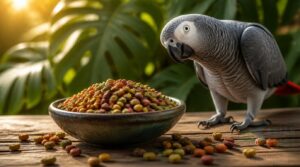
Pellets take the guesswork out of mineral feeding. A quality commercial pellet is formulated so its calcium-phosphorus ratio aligns with what parrots actually need — unlike seed mixes that shift unpredictably. Manufacturing consistency and premix integration guarantee each pellet delivers reliable mineral levels, and proper shelf stability protects that content over time.
Aim for pellets to make up 50–75% of your bird’s balanced diet daily.
When Supplements May Help
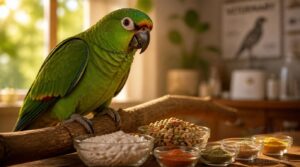
Even a well-planned diet can fall short sometimes. Vet-guided supplementation becomes worth considering when your parrot has low UVB exposure, eats selectively, or shows signs pointing to nutrient deficiencies in calcium or zinc.
- Poor feather quality
- Weak or brittle bones
- Low energy or appetite
- Confirmed deficiency from testing
Individualized dosing matters — never supplement blindly without professional guidance.
Phosphorus and Magnesium Balance Calcium
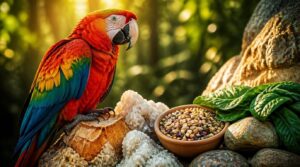
Calcium doesn’t work alone — phosphorus and magnesium are just as important in keeping your parrot’s bones strong and their body functioning well. Getting the balance right matters more than most owners realize, and a few common diet choices can quietly throw things off. Here’s what you need to know about each piece of that puzzle.
Ideal Calcium-phosphorus Ratio
Getting the calcium-phosphorus ratio right is one of the most practical things you can do for your parrot’s long-term health. The ideal dietary Ca:P balance sits between 1.5:1 and 2:1, meaning calcium should always lead.
When phosphorus runs too high relative to calcium, bone mineral density suffers because the body struggles to deposit calcium efficiently into skeletal tissue.
Seed-heavy Diet Problems
Seed-based diets create a quiet but compounding problem. Selective seed eating means your parrot likely picks out favorites — often fatty seeds like sunflower — leaving the rest untouched. That real-world intake drifts far from what the bag’s label suggests.
Meanwhile, phytate mineral binding quietly blocks absorption of zinc, iron, and magnesium in the gut, and declining appetite for greens erodes the mineral variety your bird actually needs.
Sunflower Seed Imbalance
Sunflower seeds are one of the most misleading treats in a parrot’s bowl. Your bird loves them, but sunflower seeds carry an 8:1 phosphorus-to-calcium ratio — a dangerous imbalance that quietly undermines bone health over time.
Sunflower seeds carry an 8:1 phosphorus-to-calcium ratio, quietly undermining your parrot’s bone health
High omega-6 fat content and cadmium accumulation risks compound the problem, while their calorie density crowds out the balanced nutrition your parrot actually needs.
Magnesium and Absorption
Magnesium is the quiet gatekeeper of calcium absorption. Without enough of it, even a well-balanced diet can fall short.
Your parrot’s gut absorbs magnesium through TRPM6 and TRPM7 transport proteins and a passive paracellular route, but phytates, oxalates, and excess competing minerals can all block uptake.
Spreading magnesium-rich foods across the day promotes better bioavailability than a single large dose.
Preventing Brittle Bones
Keeping your parrot’s bones strong comes down to consistency. When the calcium-phosphorus ratio drifts out of balance over time, metabolic bone disease quietly takes hold — bones thin, fracture risk climbs, and recovery is slow.
| Prevention Strategy | Why It Matters |
|---|---|
| Balanced calcium intake | Promotes daily bone mineralization |
| Adequate vitamin D | Facilitates calcium absorption |
| Correct mineral ratios | Prevents calcium-phosphorus imbalance |
| Limit seed-heavy diets | Reduces skeletal stress |
| Bone health monitoring | Catches deficiencies early |
Trace Minerals Keep Parrots Thriving

Calcium gets a lot of attention, but trace minerals are quietly doing just as much work behind the scenes. Iodine, zinc, iron, and manganese each play a specific role in keeping your parrot healthy, and deficiencies in any one of them can cause real problems fast. Here’s what each of these minerals actually does.
Iodine for Thyroid Health
Iodine quietly runs the show regarding your parrot’s metabolism. The thyroid gland depends on it to produce the hormones T3 and T4, which regulate energy and organ function.
Without enough, thyroid enlargement can develop, causing breathing difficulty and voice changes. A quality balanced pelleted diet is usually sufficient — but check with your avian veterinarian if you suspect deficiency.
Zinc for Feather Growth
Zinc is the mineral behind every healthy, glossy feather your parrot grows. It regulates keratin production — the structural protein feathers are built from. Without enough, you’ll notice rough, sparse plumage, frayed feather shafts, or delayed molting.
Fortified pellets usually supply adequate zinc, but if feather quality declines, ask your avian vet before adding supplements, since excess zinc disrupts mineral balance.
Iron for Healthy Blood
Iron does quiet but critical work inside your parrot — it’s the mineral that keeps blood carrying oxygen to every muscle and organ. Hemoglobin production depends on iron directly, so a deficiency leads to reduced oxygen delivery, fatigue, and dull coloring.
That said, iron storage disease is a serious risk for lories, mynahs, and toucans, where excess iron accumulates in the liver.
Manganese in Pelleted Diets
Manganese is easy to overlook, but pelleted diet nutrition depends on it more than most parrot owners realize. Quality pellets deliver 60–75 ppm of manganese, supporting skeletal development, enzyme activity, and carbohydrate metabolism.
- Manganese pellet dosage stays consistent across each pellet unit
- Manganese iron interaction can reduce absorption when iron levels shift
- Chelated or sulfate manganese source forms improve mineral distribution
Avoiding Mineral Excesses
More isn’t always better when considering minerals. Supplement dose control matters because stacking pellets with extra mineral powders can quietly push your parrot into toxic territory. Watch your water source too — water mineral impact is real, especially for smaller birds.
Keep a feeding log and let your vet guide any changes.
Feeding Minerals Safely Every Day

Knowing which minerals your parrot needs is only half the equation — the other half is actually getting them into the bowl every day without guessing. A few consistent habits make that surprisingly straightforward. Here’s what a mineral-smart daily feeding routine looks like in practice.
Pellets as Mineral Foundation
Think of quality commercial pellets as your parrot’s daily nutritional anchor. They’re formulated to deliver calcium, vitamin D, and trace minerals in balanced, predictable amounts every single day — no guesswork required.
Here’s why pellets work as your mineral foundation:
- They maintain a safe calcium-phosphorus ratio, preventing the bone-weakening imbalances that seed-heavy diets cause.
- Vitamin D is built in, so calcium actually gets absorbed rather than passing through unused.
- Trace minerals like zinc, iodine, and manganese are precisely dosed — no dangerous shortfalls or accidental overdoses.
- Pellet feeding safety means you’re not stacking supplements unnecessarily on top of a diet already covering the basics.
Pellets should make up 50–75% of your parrot’s diet — that’s the sweet spot where mineral intake stays consistent and reliable.
Leafy Greens and Vegetables
Pellets cover your mineral foundation, but fresh vegetables fill the gaps pellets can’t fully address.
Dark leafy greens like kale, bok choy, and collard greens deliver vitamin K, dietary fiber, and hydration that keep digestion moving smoothly. One practical note: rotate your greens regularly, since spinach is high in oxalates, which bind calcium and reduce absorption — exactly the opposite of what you want.
Limit Seeds and Nuts
Seeds and nuts might feel like a kind treat, but they’re best kept as a small side — not the main event. Keep seeds and nuts to 5–10% of your parrot’s daily diet.
They’re calorie-dense, low in calcium, and high in fat, which can quietly crowd out the balanced nutrition your bird actually needs.
Toxic Foods to Avoid
Some foods can quietly work against everything you’re carefully building with a balanced diet. Avocado contains persin, a compound that damages heart and respiratory tissue — avoid it entirely, including the skin and pit. Apple seeds release cyanide when chewed, so always core your apples first. And keep chocolate, onions, garlic, and alcohol far from your bird’s reach.
- Chocolate’s methylxanthines can dangerously accelerate heart rate
- Onions and garlic damage red blood cells, leading to anemia
- Alcohol and uncooked yeast dough can cause serious neurological harm
Vet-guided Supplementation
Even a well-rounded diet sometimes leaves gaps, and that’s where vet-guided supplementation earns its place. Your avian veterinarian won’t guess — they’ll review diet history, run lab testing if needed, and check label verification to confirm actual nutrient levels.
Targeted dosage adjustments prevent dangerous mineral overlap, because stacking calcium or trace minerals unintentionally can cause as much harm as deficiency.
Frequently Asked Questions (FAQs)
What minerals do parrots need?
Parrots need calcium, phosphorus, and magnesium as core minerals, alongside trace elements like iodine, zinc, iron, and manganese. Together, these micronutrients support bones, feathers, nerves, and overall health.
Can mineral deficiencies affect a parrots behavior?
Yes, mineral deficiencies can directly affect a parrot’s behavior. Calcium deficiency, for instance, may trigger tremors or seizures, while low iron reduces energy. Even subtle imbalances often show up as lethargy or withdrawn social behavior first.
How does molting change a parrots mineral needs?
Molt quietly drains your parrot’s blood calcium levels, just when the body needs it most. Feather regrowth minerals rise in demand, making molt diet adjustments and steady calcium, phosphorus, and vitamin D support essential for healthy feathers.
Do water sources impact a parrots mineral intake?
Absolutely — water source matters. Hard water adds dissolved calcium and magnesium beyond what food provides, quietly shifting your parrot’s daily mineral intake without any diet change.
Can stress deplete minerals in pet parrots?
Chronic stress raises corticosteroid levels, which can interfere with how your parrot absorbs and uses calcium. Over time, that shift quietly worsens mineral balance — especially on seed-heavy diets already low in calcium.
How do cooked foods affect mineral absorption in parrots?
Cooking is like turning a lock — it opens nutrients that would otherwise stay trapped. Heat increases bioavailability by breaking down plant tissues, while oxalate binding calcium and phytate reduction benefits shift how much your parrot actually absorbs.
Conclusion
Like a finely tuned instrument, your parrot’s body depends on minerals working in careful concert—calcium anchoring bones, zinc shaping feathers, iodine steadying the thyroid. Knowing what minerals parrots need to thrive isn’t just useful knowledge; it’s the difference between a bird that survives and one that genuinely flourishes.
Build meals around quality pellets, rotate in fresh vegetables, and let your avian vet guide any supplementation. Small, consistent choices protect a long, vibrant life.