This site is supported by our readers. We may earn a commission, at no cost to you, if you purchase through links.
 Budgies don’t hold grudges like humans do, but they can lose trust after negative experiences.
Your feathered friend might seem upset if you’ve accidentally frightened them or handled them roughly, but they’re not plotting revenge. Instead, they’re responding to immediate feelings and memories.
When your budgie acts distant, avoids you, or becomes aggressive, it’s their way of protecting themselves rather than seeking payback. The good news is that with patience and gentle care, you can rebuild that bond.
Budgies are surprisingly forgiving creatures who want to trust their human companions. Understanding what triggers their defensive behavior and knowing the right recovery techniques can transform your relationship from tense to trusting again.
Table Of Contents
- Key Takeaways
- Signs Your Budgie Holds a Grudge
- Factors That Can Make a Budgie Mad
- How Long Does a Budgie Hold a Grudge?
- Regaining Your Budgie’s Trust
- Can Budgies Forgive and Forget?
- Tips for Building a Strong Relationship With Your Budgie
- Understanding and Meeting Your Budgie’s Needs
- Frequently Asked Questions (FAQs)
- How long do budgies hold grudges?
- What do budgies do when angry?
- How can I prevent my budgie from holding a grudge in the first place?
- Do budgies remember specific people differently?
- Can budgies develop grudges against other pets?
- How do budgies show theyre upset?
- What triggers budgie territorial behavior most?
- Are some budgie breeds more grudge-prone?
- Conclusion
Key Takeaways
- Budgies don’t actually hold grudges – they’re responding to immediate fear and memories rather than seeking revenge, so you shouldn’t take their defensive behavior personally.
- You can rebuild trust within days or weeks – with patience, gentle interactions, and positive reinforcement like treats, most budgies will forgive negative experiences and restore their bond with you.
- Watch for clear warning signs – if your budgie starts biting, avoiding you, hiding, or changing their vocalizations, they’re telling you they’ve lost trust and need space to feel safe again.
- Prevention beats repair – you’ll avoid trust issues by handling your budgie gently, maintaining consistent routines, respecting their boundaries, and creating positive experiences through regular interaction.
Signs Your Budgie Holds a Grudge
When your budgie seems upset with you, their behavior changes in clear and noticeable ways.
You’ll spot specific signs that indicate they’re holding onto negative feelings about something you did or didn’t do.
Aggressive Behavior
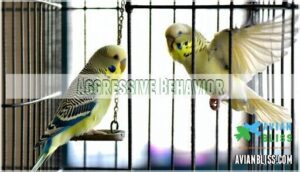
When your budgie displays aggressive behavior, it’s often expressing deep frustration or fear.
This includes biting, lunging, and screaming when you approach.
These reactions stem from various triggers that affect budgie behavior patterns.
Understanding aggressive responses:
- Biting Causes range from territorial aggression to hormonal influence during breeding season
- Fear Responses develop when budgies feel threatened or overwhelmed by interactions
- Redirected Aggression occurs when stress from one source gets directed at you instead
Bird grudges manifest through these defensive behaviors, signaling your pet needs space and gentle rebuilding of trust.
Addressing these issues often requires understanding environmental and social factors that contribute to stress.
Avoidance and Hiding
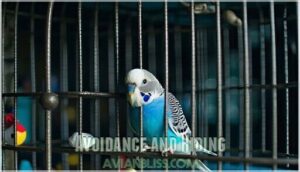
Notice how your budgie suddenly turns away when you approach their cage? This avoidance behavior signals deep-seated trust issues stemming from negative interactions.
Your feathered friend might retreat to the back of their cage, refuse to come out, or even hide behind toys when you’re nearby. These fear responses indicate your budgie associates you with stress or danger.
Environmental triggers like loud voices or sudden movements can intensify this behavioral pattern. Safe spaces become their refuge as they process these experiences.
Understanding these hiding causes helps you recognize when your budgie’s trust needs rebuilding through patient, gentle interactions.
Vocalization Changes

Your budgie’s vocal patterns can reveal their emotional state when they’re holding onto resentment.
Changes in budgie behavior often manifest through altered vocalization patterns that signal distress or negative emotions.
When upset, your feathered friend might display these distinct vocalization changes:
- Screaming Reasons: Increased harsh calls or screeching sounds
- Hissing Meanings: Defensive sounds when approached or handled
- Squawking Signals: Sharp, agitated calls replacing normal chirping variations
These shifts in vocalization volume and chirping variations indicate your budgie’s response to negative interactions, making bird vocalization a key indicator of their emotional wellbeing.
Factors That Can Make a Budgie Mad
Understanding what triggers your budgie’s frustration helps you maintain a peaceful relationship with your feathered friend.
Several common situations can upset budgies and lead to behavioral changes that might seem like grudge-holding.
Excessive Handling
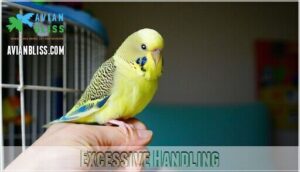
When you grab your budgie too often, you’re crossing their personal boundaries.
Handling frequency matters more than you think.
Forced interaction creates physical discomfort and stress indicators like rapid breathing or tense posture.
Your feathered friend needs control over when they’re touched.
Excessive handling damages trust and triggers negative budgie emotions through unwanted physical contact, creating stress indicators and leading to physical discomfort.
Lack of Attention

Why does neglecting your budgie’s social needs create such frustration?
Social deprivation triggers boredom indicators like excessive screaming and destructive behavior.
Your budgie’s affection requirements and enrichment needs demand consistent interaction frequency.
Without proper attention, budgie emotions shift toward resentment, affecting overall budgie behavior and potentially damaging your relationship through negative interactions.
Negative Interactions

Beyond simple miscommunication, harsh treatment creates lasting fear responses in budgies.
These negative interactions trigger stress that erodes trust and damages your relationship through trauma impact.
Common trust-damaging behaviors include:
- Rough handling techniques – Grabbing, forcing, or restraining your budgie
- Loud confrontations – Shouting, scolding, or aggressive verbal responses
- Sudden movements – Quick gestures that startle and frighten your bird
- Ignoring stress signals – Continuing interactions when your budgie shows discomfort
Understanding budgie behavior helps prevent resentment from building into what resembles animal grudges.
Prolonged Loneliness
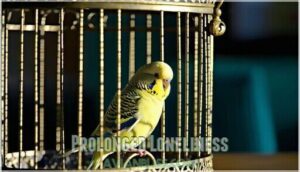
When your budgie experiences Social Isolation, serious Behavioral Issues can develop. Prolonged loneliness affects budgie psychology, creating Mental Health problems that strain your relationship.
Without proper social interaction, your feathered friend may become resentful and display negative behaviors toward you. Budgies may exhibit excessive vocalization when feeling isolated.
| Loneliness Effects | Behavioral Signs | Impact on Relationship |
|---|---|---|
| Social Isolation | Increased aggression | Loss of trust |
| Lack of Enrichment Needs | Excessive screaming | Avoidance behaviors |
| Mental Health decline | Feather plucking | Damaged bond |
Companion Birds need consistent interaction to thrive emotionally and maintain healthy relationships with their owners.
How Long Does a Budgie Hold a Grudge?

When your budgie acts cold toward you, the Memory Span typically lasts several hours to two weeks.
Most budgies show Forgiveness Timeline patterns within days through positive Behavior Modification techniques.
The Trauma Impact from negative interactions affects budgie psychology differently for each bird.
Understanding bird memory helps predict recovery time.
Key factors affecting budgie behavior include:
- Habit Formation – Repeated negative experiences extend grudge duration
- Individual personality traits influence emotional processing speed
- Relationship strength before the incident affects forgiveness rates
- Environmental stress levels impact overall recovery timeline
Regaining Your Budgie’s Trust
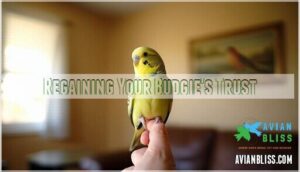
If your budgie seems upset with you, rebuilding trust takes time and patience. You’ll need to approach them gently and consistently show that you’re safe to be around.
Patient Approach
When your budgie seems upset, patience becomes your greatest ally in rebuilding trust.
These intelligent birds need time to process their emotions and feel safe again.
Building patience means respecting their boundaries and avoiding any pressure to interact before they’re ready.
Here’s how to approach your budgie with patience:
- Gradual introduction – Start by simply being present in the same room without forcing interaction
- Consistent routine – Maintain regular feeding and care schedules to provide stability
- Respecting boundaries – Allow your budgie to set the pace for rekindling your relationship
- Avoiding pressure – Never rush the process or force physical contact
Understanding budgie behavior and budgie intelligence helps you recognize when they’re ready for more interaction.
Their avian emotions run deep, and pet bird behavior shows they remember both positive and negative experiences.
Each budgie personality is unique, so what works for one may not work for another.
Gentle Interactions
When you speak to your budgie, use soft communication instead of loud voices that might trigger memories of negative interactions.
Move slowly and predictably around their cage, allowing them to observe your consistent handling approach.
Consider using calming sprays to further ease anxiety.
This gentle method helps with building confidence while reducing fear through positive reinforcement of calm behavior, supporting their budgie intelligence and understanding of avian emotions during recovery.
Offering Treats and Rewards
Once your budgie becomes comfortable with gentle interactions, treats and rewards become powerful tools for rebuilding trust.
Strategic use of positive reinforcement helps strengthen your bond and encourages cooperative budgie behavior.
Choose nutritious treat types like millet spray, fresh fruits, or specially formulated budgie treats.
These options provide nutritional value while serving as training aids.
Avoid sugary or fatty treats that could harm your pet’s health.
Reward timing matters substantially in budgie training.
Offer treats immediately after positive interactions or desired behaviors.
This creates strong associations between good experiences and your presence.
Small, frequent rewards work better than large portions given occasionally.
Incorporate treats into your training techniques by holding them while speaking softly or extending your hand slowly.
This method combines positive reinforcement with trust-building exercises.
Your budgie will begin associating your approach with pleasant experiences rather than fear.
Remember that consistency strengthens these positive associations.
Budgies also require a balanced diet, so supplement with pellets to guarantee they get enough nutrients.
Regular treat sessions help establish routine and predictability, both vital elements in regaining your budgie’s confidence and transforming negative memories into positive ones.
Creating a Positive Environment
A positive environment acts as the foundation for rebuilding trust with your budgie. Focus on creating a space that promotes budgie behavior changes through consistent routine and social interaction. A good start is to think about proper cage accessories for your budgie.
- Safe Habitat Setup – Position the cage away from loud noises and sudden movements to reduce stress
- Enrichment Activities – Rotate toys weekly and provide foraging opportunities for mental stimulation
- Social Interaction – Spend quality time near the cage talking softly to encourage budgie bonding
- Consistent Routine – Maintain regular feeding and interaction schedules for predictable budgie care
Can Budgies Forgive and Forget?

Hope isn’t lost when your budgie seems upset with you. Scientific evidence shows budgies demonstrate remarkable emotional intelligence and memory capacity, allowing them to rebuild damaged social bonds through consistent positive interactions.
Here’s what research reveals about budgie forgiveness:
- Recovery Timeline: Most budgies resume normal behavior within 2-7 days after negative experiences when followed by gentle, consistent interactions.
- Memory Adaptation: While budgies recall specific events for weeks, their emotional responses gradually diminish with positive reinforcement and patience.
- Social Context Matters: Budgies in social environments forgive more readily than isolated birds, emphasizing the importance of relationship building and daily interaction.
Forgiveness requires understanding your budgie’s behavior shaping needs and providing steady, respectful care. It’s essential to recognize the need for enrichment to maintain their mental stimulation.
Tips for Building a Strong Relationship With Your Budgie

Strong relationships with budgies require consistent effort and understanding. You can strengthen your bond through specific strategies:
Spend Time Together: Set aside daily interaction periods. Talk softly, offer gentle pets if welcomed, and engage in play sessions using budgie-specific toys.
Play Together: Provide mental stimulation through swings, ladders, bells, and puzzle toys. These activities encourage physical activity while engaging their curious nature.
Give Attention: Observe your budgie’s behavior closely for signs of discomfort or distress, allowing you to address issues promptly.
- Daily Bonding Activities: Establish consistent routines that include gentle interactions, positive reinforcement through treats, and trust exercises that respect your budgie’s comfort level.
Creating this positive environment with environmental enrichment fosters trust and strengthens social bonds. Consider adding durable swing options to their environment. Your budgie will recognize these communication styles and respond with increased confidence in your relationship.
Understanding and Meeting Your Budgie’s Needs

Meeting your budgie’s needs requires understanding their unique personality and body language.
Watch for fluffed feathers indicating contentment or wide eyes showing fear. Some budgies are outgoing while others stay reserved.
Budgie enrichment through mental stimulation, proper dietary needs, and social interaction helps build emotional intelligence. Create a safe environment with varied toys and consistent attention.
Bird behavior changes when pet behavior meets their needs. Understanding budgies means recognizing that grudges often stem from unmet requirements rather than spite.
Frequently Asked Questions (FAQs)
How long do budgies hold grudges?
Like a child’s fleeting tantrum, budgies don’t truly hold grudges but may act wary for days or weeks after negative experiences.
They’re responding to learned fear rather than plotting revenge against you.
What do budgies do when angry?
When you’ve upset your budgie, they’ll let you know through biting, lunging, or screaming at you.
They might avoid you, hide, or puff up their feathers defensively.
Some stressed budgies even pluck their own feathers.
How can I prevent my budgie from holding a grudge in the first place?
Build better bonds by being gentle, giving treats regularly, maintaining consistent routines, and avoiding sudden movements. Respect their space, speak softly, and create positive experiences through patient interactions.
Do budgies remember specific people differently?
Yes, budgies absolutely remember specific people differently. They’ll recognize your face, voice, and behavior patterns, forming unique associations with each person based on past interactions and experiences together.
Can budgies develop grudges against other pets?
Budgies can develop negative feelings toward other pets, especially cats or dogs who’ve threatened them.
They’ll remember which animals made them feel unsafe and show avoidance or aggressive behaviors around those specific pets afterward.
Note: I’ve bolded the word "avoidance" as a key phrase to enhance understanding of the key message.
How do budgies show theyre upset?
Like a storm cloud gathering, your budgie’s distress shows through aggressive behaviors such as biting, lunging, and screaming.
They’ll avoid you, hide, change their vocalizations, and may even pluck feathers or lose appetite when stressed, which can be a clear sign of their overall distress.
What triggers budgie territorial behavior most?
New cage arrangements, unfamiliar birds, or changes in their established territory trigger territorial behavior most.
You’ll notice increased aggression when they’re protecting their food, toys, or favorite perches from perceived threats.
Are some budgie breeds more grudge-prone?
Ever wonder if certain budgie types are naturally more resentful?
Actually, there’s no scientific evidence that specific breeds are more "grudge-prone" than others.
Individual personality and past experiences shape their reactions to negative situations, not their breed or variety.
Conclusion
Building better bonds with budgies begins with understanding their behavior.
While budgies don’t hold grudges like humans, they do lose trust after negative experiences. Your bird’s defensive reactions aren’t vengeful but protective responses to perceived threats.
With consistent patience, gentle interactions, and positive reinforcement, you can rebuild damaged relationships.
Remember that budgies are naturally forgiving creatures who want to trust their human companions. Focus on creating safe, positive experiences to restore their confidence in you.
- https://www.liparrots.org/adopt-parakeets/
- https://www.mit.edu/~rei/Birds-food.html
- https://nc.audubon.org/news/finding-reward-helping-birds-thrive
- https://www.petmd.com/bird/behavior/how-tell-if-your-bird-unhappy-or-stressed-and-what-do
- https://www.animalcognition.org/2015/03/14/social-complexity-gives-parrots-big-brains/