This site is supported by our readers. We may earn a commission, at no cost to you, if you purchase through links.
 When you notice your parakeet clicking its beak, you’re witnessing one of their most fascinating communication tools.
This behavior typically signals contentment and relaxation – think of it as your bird’s way of saying "all’s well in my world." You’ll often hear this gentle clicking when they’re settling down for sleep or feeling particularly comfortable in their environment.
However, excessive clicking can indicate stress, boredom, or even health issues that need attention. The key lies in understanding the context and frequency of this behavior.
The subtle differences between happy clicks and distress signals reveal fascinating insights about your feathered friend’s emotional state.
Table Of Contents
- Key Takeaways
- Is Clicking a Normal Behavior for Parakeets?
- The Meaning Behind Parakeet Beak Clicking
- Should I Be Concerned About My Parakeet’s Beak Clicking?
- How to Respond to Your Parakeet’s Beak Clicking
- Understanding Other Noises Your Parakeet Might Make
- Why is My Budgie Clicking Its Beak?
- Decoding Parakeet Beak Clicking
- Frequently Asked Questions (FAQs)
- Why does my parakeet make a clicking noise?
- Can parakeets click their beaks?
- Why do parakeets grind their beak?
- Why does my parakeet have a scaly beak?
- Why do budgies click their beaks?
- Why is my parakeet’s beak overgrown?
- Why does my parakeet click his beak?
- Why does my bird keep tapping his beak?
- Why does my budgie make a clicking sound?
- Why does my bird make clicking sounds?
- Conclusion
Key Takeaways
- You’ll notice your parakeet’s beak clicking is usually a sign of contentment and happiness – it’s their way of saying they’re comfortable and relaxed in their environment.
- Context matters when interpreting clicking sounds – gentle, occasional clicks during calm moments indicate well-being, while excessive or rapid clicking paired with other symptoms may signal stress or health issues.
- You can respond to your parakeet’s clicking by mimicking their patterns with soft tongue clicks, which creates a dialogue that strengthens your bond and acknowledges their communication.
- You should monitor for red flags like clicking accompanied by wheezing, labored breathing, or nasal discharge, as these combinations require immediate veterinary attention and may indicate respiratory infections or beak problems.
Is Clicking a Normal Behavior for Parakeets?
If you hear gentle beak clicking from your parakeet, don’t worry—it’s a normal part of parakeet behavior.
This clicking mechanism is one way your bird communicates comfort and contentment. Parakeet beak clicking often means your feathered friend feels safe and relaxed.
Your parakeet’s gentle beak clicking is their way of saying "I’m happy and comfortable here.
It’s a key part of bird communication, much like a cat’s purr or a dog’s wagging tail. These beak clicking sounds are a natural habit, not a sign of trouble.
Understanding this beak clicking meaning helps you read your parakeet’s mood and strengthens your connection through normal habits and parakeet communication.
The Meaning Behind Parakeet Beak Clicking
You might notice your parakeet clicking its beak as a way to communicate its feelings or needs.
Understanding this behavior can help you respond appropriately and guarantee your bird’s well-being.
Emotional State

Through parakeet beak clicking, you’re witnessing your bird’s emotional state in real-time.
This behavior serves as one of the most reliable happiness indicators and contentment signs in bird communication.
When your parakeet clicks softly while perched calmly, it’s displaying relaxation behaviors that signal comfort in their environment.
Key Emotional Signals from Beak Clicking:
- Contentment – Gentle clicking during quiet moments indicates your parakeet feels safe and satisfied
- Excitement – Rapid clicking when you approach often shows anticipation and joy at your presence
- Relaxation – Slow, rhythmic clicking while preening suggests your bird is completely at ease
Social Behavior

In the domain of bird communication, your parakeet’s beak clicking serves as a sophisticated social tool.
This behavior strengthens social bonding between flock members and establishes their place within group dynamics.
During social interactions, parakeets use beak language to signal contentment, initiate play, or seek attention from you or other birds.
The clicking often accompanies mutual preening sessions, demonstrating trust and friendship.
Understanding your parakeet’s social behavior through these subtle communication cues helps you recognize when they’re feeling secure and connected to their environment and companions.
This understanding is key to fostering a healthy and happy relationship with your parakeet.
Health Concerns
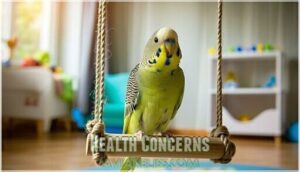
While beak clicking is usually normal behavior, you should watch for concerning signs.
Respiratory issues like wheezing or labored breathing alongside clicking need immediate veterinary care.
Beak problems from infections or malocclusion can cause repetitive clicking sounds, and medical signs include nasal discharge, difficulty eating, or persistent clicking.
These health risks affect your parakeet’s well-being and require professional attention.
Should I Be Concerned About My Parakeet’s Beak Clicking?

Most parakeet owners shouldn’t worry about beak clicking. This behavior is completely normal and indicates your bird feels comfortable and secure. Unlike concerning symptoms, beak clicking typically signals contentment rather than distress.
However, monitor clicking patterns closely. Normal beak clicking occurs sporadically during relaxed moments, social interactions, or when your parakeet feels happy. The sound should be soft and occasional, not persistent or accompanied by other symptoms.
Watch for red flags that suggest parakeet health issues. Excessive clicking paired with wheezing, labored breathing, or nasal discharge warrants immediate veterinary attention. These combinations may indicate respiratory infections or beak health problems requiring professional care.
Environmental bird stressors can also influence parakeet behavior. Sudden changes in clicking patterns might reflect stress, boredom, or anxiety. Understanding these beak clicking causes helps you distinguish between normal parakeet noise making and potential concerns requiring intervention. Regular beak care checks are essential to identify any underlying issues that may be contributing to the clicking behavior.
How to Respond to Your Parakeet’s Beak Clicking
Successfully communicating with your parakeet through beak clicking strengthens your bond and acknowledges their emotional state. When you hear those distinctive clicking sounds, you’re receiving valuable behavioral cues that deserve a thoughtful response.
Your parakeet’s gentle beak clicks are their way of saying "I’m happy and comfortable with you.
Beak Clicking Responses work best when you mirror their communication style. Click your tongue softly against your mouth’s roof to show you understand their parakeet behavior. This simple parakeet interaction creates a dialogue that many birds find comforting and engaging.
Effective response strategies include:
- Mirror their clicking patterns – Listen to their rhythm and intensity, then respond with similar clicking patterns to establish meaningful communication
- Observe their body language – Watch for relaxed postures or excited movements that help you interpret whether they’re seeking attention or expressing contentment
- Provide consistent owner guidance – Respond calmly each time they click, creating predictable interactions that reduce stress and build trust
Understanding these parakeet sound meanings helps you decode what your bird needs. Whether they’re greeting you, expressing happiness, or seeking interaction, your response validates their communication efforts and encourages healthy social behavior. Mastering the beak clicking guide is essential to improve your relationship with your parakeet.
Understanding Other Noises Your Parakeet Might Make
While beak clicking gets most of the attention, your parakeet’s vocal repertoire includes many other sounds that reveal their emotions and needs.
Each sound serves a specific purpose in their communication, from the cheerful morning whistles to the gentle evening chatter before sleep.
Whistling
Your parakeet’s whistling reveals fascinating insights into their emotional world and social needs. This melodic behavior serves multiple communication functions that strengthen bonds with both humans and other birds.
Male parakeets typically whistle more complex tunes, especially during courtship displays or attention-seeking moments. Your bird’s whistling frequency increases with regular human interaction and exposure to music, demonstrating their remarkable vocal learning abilities.
- Whistling Types: Simple single notes to elaborate melodies mimicking household sounds
- Sound Imitation: Copying environmental noises, music, and human voices with surprising accuracy
- Vocal Learning: Developing new whistles through consistent repetition and positive reinforcement
- Frequency Analysis: Regular whistling indicates contentment while sudden decreases may signal health concerns
Providing parakeets with whistling toys can help stimulate their vocal learning abilities and encourage more complex whistling behaviors.
Chirping
Beyond whistling, chirping represents your parakeet’s most common vocal expression. This sharp, rhythmic sound serves multiple purposes in your bird’s daily communication repertoire.
Your parakeet’s chirping patterns reveal specific messages:
- Morning contact calls – soft chirps maintaining flock connection
- Excitement bursts – rapid syllable structure when discovering new toys
- Attention-seeking sequences – repeated frequency analysis until you respond
- Contentment melodies – gentle bird songs during relaxation
Chirping functions as vocal learning, where your parakeet practices different chirp patterns throughout the day. Unlike beak clicking, which requires physical contact, chirping allows long-distance communication.
Monitor your bird’s body language alongside these vocalizations for accurate bird sounds interpretation. Understanding parakeet vocal behavior patterns is essential to recognize their emotional state and needs.
Chattering
The constant chatter from your parakeet represents one of their most fascinating communication styles.
This rapid-fire vocal learning demonstrates how these birds develop their social chatter through mimicking sounds from their environment.
Here’s what parakeet chattering typically means:
- Practice sessions – Your bird is rehearsing new beak sounds and refining their bird talk repertoire
- Social bonding – Chattering strengthens connections with you and other birds in the household
- Contentment expression – Happy parakeets often chatter when they feel secure and comfortable
Understanding these bird vocalizations helps you respond appropriately to your pet’s needs. By studying bird communication methods, you can better comprehend the nuances of your parakeet’s behavior and social interactions.
Singing
Your parakeet’s singing represents one of their most complex bird vocalizations.
These harmonic sounds showcase their vocal training abilities and natural bird music instincts. You’ll notice distinct melody types and song patterns that reveal your bird’s emotional state.
Singing differs from beak clicking as it’s purely vocal expression. Some parakeets develop elaborate musical repertoires, while others prefer simple tunes that bring them joy.
Chiding
Chiding represents your parakeet’s version of bird discipline through sharp, scolding sounds.
This beak noise serves as a clicking warning when your bird feels annoyed or wants to establish boundaries.
Social scolding often targets other birds invading personal space, while gentle chastisement may target humans during unwanted handling.
Understanding these beak clicking habits helps with parakeet behavior modification and addressing bird behavior problems effectively.
Why is My Budgie Clicking Its Beak?

Your budgie’s beak clicking reveals important insights about their emotional state and needs. This behavior serves multiple purposes in parakeet communication.
Beak Clicking Reasons include:
- Contentment – Relaxed clicking during rest or preening
- Attention-seeking – Requesting interaction or play time
- Mild agitation – Expressing territorial boundaries or discomfort
- Social bonding – Communicating with flock members or humans
- Excitement – Anticipating treats or favorite activities
The clicking mechanism involves your budgie popping their upper beak against the lower beak. Context matters most when interpreting this parakeet behavior. Observe your bird’s body language, posture, and surrounding circumstances.
Relaxed clicking paired with fluffed feathers indicates comfort, while rapid clicking with defensive posturing suggests stress. Understanding these beak health signs helps you respond appropriately to your budgie’s communication attempts. By recognizing beak rubbing behaviors, you can better understand your parakeet’s emotional and social needs.
Decoding Parakeet Beak Clicking
Understanding your parakeet’s beak clicking requires careful observation of patterns and context. Each click carries meaning, and decoding these bird sounds helps you respond appropriately to your pet’s needs.
Clicking communication varies substantially between individual parakeets. Some birds click rapidly when excited, while others produce slow, deliberate sounds during relaxation. Species variation affects these patterns too – budgerigars typically click differently than cockatiels or lovebirds.
Watch for accompanying behaviors when your parakeet clicks. Head bobbing, wing flapping, or preening often accompany contentment clicks. Aggressive posturing might signal territorial clicking instead.
Environmental factors influence beak clicking frequency. New toys, cage changes, or unfamiliar visitors can trigger exploratory clicks. Stress-related clicking sounds sharper and more frequent than relaxed communication. Birds also use non-vocal communication techniques like feather displays.
Monitor for health concerns if clicking becomes excessive or changes suddenly. Respiratory infections sometimes cause abnormal clicking patterns. The emotional significance of normal beak clicking includes happiness, curiosity, and social bonding.
Effective parakeet behavior modification involves recognizing these clicking patterns. Understanding bird behavior helps you create better environments for your feathered friend’s wellbeing.
Frequently Asked Questions (FAQs)
Why does my parakeet make a clicking noise?
Your parakeet clicks its beak to communicate contentment, excitement, or happiness. This normal behavior serves as a greeting, attention-seeking gesture, or expression of comfort in their environment.
Can parakeets click their beaks?
Yes, parakeets naturally click their beaks as normal behavior.
You’ll hear this clicking when they’re content, greeting you, or communicating with other birds.
It’s their way of expressing happiness and comfort in their environment.
Why do parakeets grind their beak?
Your parakeet grinds its beak as a natural comfort behavior, similar to purring in cats.
This rhythmic grinding typically occurs when they’re relaxed, content, or settling down to rest, indicating overall well-being.
Why does my parakeet have a scaly beak?
Rough, flaky scales on your parakeet’s beak typically indicate natural molting, nutritional deficiencies, or dry conditions.
You’ll need to check humidity levels, provide proper vitamins, and consult an avian vet if scaling persists.
Why do budgies click their beaks?
Your budgie clicks its beak to communicate contentment, excitement, or happiness. It’s also used as a friendly greeting, attention-seeking behavior, or social bonding tool with you and other birds.
Why is my parakeet’s beak overgrown?
Sarah’s beloved parakeet suddenly couldn’t eat properly after its beak grew too long.
Your bird’s overgrown beak typically results from insufficient wearing down through natural chewing, poor diet, or underlying health issues requiring veterinary attention.
Why does my parakeet click his beak?
Your parakeet’s beak clicking typically signals happiness, contentment, or excitement.
It’s his way of communicating comfort with you and his environment.
This normal behavior often occurs during greetings, social interactions, or when he’s feeling relaxed and satisfied.
Why does my bird keep tapping his beak?
Like a drummer keeping rhythm, your bird’s beak tapping serves as communication.
He’s likely expressing happiness, seeking attention, or greeting you.
This normal behavior shows contentment and social connection in his environment, indicating a sense of happiness.
Why does my budgie make a clicking sound?
Your budgie clicks its beak to show happiness, contentment, and relaxation.
It’s their way of greeting you, expressing comfort, or seeking attention—completely normal behavior that indicates a healthy, satisfied bird.
Why does my bird make clicking sounds?
Your bird’s clicking sounds typically indicate contentment, happiness, or social communication. It’s a normal behavior used for greeting, seeking attention, or expressing comfort in their environment.
Conclusion
Like a pet owner deciphering their companion’s secret language, understanding why your parakeet is clicking its beak reveals vital insights into their well-being.
This behavior serves as a window into your bird’s emotional state, from contentment to stress signals.
You’ve learned to distinguish between normal clicking and warning signs that require attention.
By observing context, frequency, and accompanying behaviors, you can respond appropriately to your parakeet’s needs.
Remember that consistent clicking patterns help you maintain your bird’s health and happiness effectively.
- http://www.mickaboo.org/resources/reading-bird-body-language
- https://lafeber.com/pet-birds/four-parrot-behaviors-that-might-baffle-new-owners/
- https://articles.hepper.com/parakeet-sounds-meanings/
- https://pangovet.com/pet-behavior/birds/parakeet-sounds/
- https://windycityparrot.com/chirp-and-chatter-understanding-the-language-of-budgies/