This site is supported by our readers. We may earn a commission, at no cost to you, if you purchase through links.

Your parakeet’s boredom isn’t just frustrating—it can lead to feather plucking, excessive screaming, and even depression. These intelligent birds need constant mental and physical challenges to thrive, and the right toys make all the difference between a happy, engaged companion and a stressed, destructive one.
Parakeets naturally spend hours each day foraging, climbing, and exploring in the wild, so replicating these activities in captivity isn’t optional. The toys parakeets enjoy most tap into their instinctive behaviors: swinging from branch to branch, shredding wood with their powerful beaks, and solving puzzles to find hidden treats.
Choosing safe, engaging options means understanding what actually captures their attention and keeps their active minds occupied throughout the day.
Table Of Contents
- Key Takeaways
- What Kind of Toys Do Parakeets Like?
- How Do Toys Benefit Parakeets?
- How to Choose Safe Toys for Parakeets
- Tips for Introducing and Rotating Toys
- DIY and Budget-Friendly Parakeet Toys
- Frequently Asked Questions (FAQs)
- What is a parakeet’s favorite toy?
- What do parakeets like to play with?
- Do parakeets need toys?
- How do I entertain my parakeet?
- How do I keep my parakeet entertained?
- How often should parakeet toys be replaced?
- Can parakeets share toys with other birds?
- What sounds do parakeets prefer in toys?
- Are homemade toys safe for parakeets?
- Which toy colors attract parakeets most?
- Conclusion
Key Takeaways
- Parakeets need toys that replicate natural behaviors like foraging, climbing, and shredding—without this daily mental and physical stimulation, they can develop destructive habits like feather plucking, excessive screaming, and depression.
- The five essential toy categories are swinging toys (ropes and bells for balance), climbing structures (ladders with 2-3 cm spacing), chewing materials (natural wood and cuttlebone for beak maintenance), foraging puzzles (treat dispensers that challenge problem-solving), and sensory items (mirrors and crinkle toys for exploration).
- Safety requires checking for non-toxic materials like untreated wood and natural rope, avoiding small detachable parts that create choking hazards, inspecting daily for sharp edges or frayed threads, and using secure stainless steel quick links instead of pry-open clips.
- Rotating one or two toys every seven to fourteen days prevents boredom and maintains curiosity, while observing which items your bird returns to repeatedly reveals individual preferences that should guide future toy selections.
What Kind of Toys Do Parakeets Like?
Your parakeet isn’t just looking for something to pass the time—they need toys that let them swing, climb, shred, and explore like they would in the wild. The right mix keeps their mind sharp and their body active, turning their cage into a space where they can actually thrive.
Here are the main types of toys that parakeets go for, each one tapping into a different natural instinct.
Parakeets love foraging toys that mimic their natural hunting behavior, while conures thrive on nutrient-rich treats that support their active lifestyle.
Swinging Toys (Swings, Ropes, Bells)
Swinging toys turn your parakeet’s cage into a miniature playground where balance meets fun. These interactive toys usually measure 4 to 6 inches wide, letting your bird perch comfortably while rocking gently.
Many parakeet owners also keep an eye out for backyard birds of Rhode Island to inspire enrichment ideas from how wild birds interact with their environment.
- Natural rope materials like sisal and jute are gentler on delicate feet than synthetic fibers
- Noise-making toys with stainless steel bells spark curiosity and encourage playful pecking
- Toy rotation every week or two keeps things fresh and mentally engaging
- Regular swinging builds leg strength and coordination through low-impact exercise benefits
Bird owners should pay attention to bird behavior management tips to make the most out of toy rotation and engagement.
Climbing Toys (Ladders, Perches, Ropes)
Beyond those gentle swings, climbing toys open up an entire vertical world in your bird’s cage. Ladders with rungs spaced 2 to 3 centimeters apart let tiny feet grip each step securely, while rope textures made from sisal or hemp add cushioned climbing routes. Mix at least three perch materials—natural wood, rope, and platforms—to prevent pressure sores and keep those delicate toes healthy.
Many pet owners prioritize to guarantee their parakeets enjoy healthy, non-toxic climbing experiences.
Owners should also watch for signs of respiratory distress, such as cockatiel breathing heavy, which may indicate stress or poor air quality in their environment.
| Climbing Toy Type | Key Benefit |
|---|---|
| Natural branch perches | Prevent bumblefoot through varied grip locations |
| Rope ladders | Gentle on joints while building leg strength |
| Platform perches | Reduce foot strain from constant gripping |
| Angled ladders | Encourage safe step climbing between levels |
Chewing Toys (Natural Wood, Cuttlebones, Mineral Blocks)
While your parakeet scales and swings through its cage, that busy beak needs work too. Chewing toys like balsa, pine, or birch blocks tackle beak trimming naturally without vet visits, and cuttlebone benefits include extra calcium for strong bones.
Rotate a mineral block alongside softer wood toy safety options—maple for power chewers, sola for gentle nibblers—so foraging toys and natural parakeet toys keep those jaws satisfied and sharp.
Exploring and Foraging Toys (Puzzle Toys, Treat Dispensers)
Once chewing and climbing are covered, your parakeet craves mental challenges that tap into wild foraging techniques. Puzzle toy benefits show up fast—parakeets peck at clear acrylic lids, tug treat dispensers, and dig through crinkle paper to earn every bite.
Interactive play through food exploration keeps boredom at bay:
- Hidden seed compartments under sliding doors
- Hanging baskets stuffed with leafy greens
- Cardboard rolls packed with pellets and paper
- Flat puzzle boards holding scattered millet
Rotate foraging toys weekly so interactive parakeet toy selection stays fresh, and always confirm bird toy safety by skipping glue or sharp edges.
Sensory Toys (Mirrors, Crinkle Toys, Bells)
Sensory stimulation turns a calm cage into an active playground. Mirrors attract parakeets to explore self-awareness, crinkle textures spark investigation through sound, and bell dynamics reward each peck with gentle ringing. Check mirror safety by choosing shatter-resistant acrylic, inspect crinkle layers for tears, and confirm bells attach securely.
Interactive toys and noise-making toys fuel mental stimulation—just rotate them weekly for fresh parakeet toy selection that keeps boredom in check.
| Toy Type | Key Benefit | Safety Check |
|---|---|---|
| Mirrors | Social interaction, visual novelty | Shatter-resistant acrylic, secure mounting |
| Crinkle Toys | Sound exploration, active engagement | No small detachable parts, check for tears |
| Bells | Audible feedback, play reward | Smooth edges, tight attachment |
| Combination | Multiple sensory inputs | Regular inspection for wear |
| Rotating Set | Prevents habituation | Replace after excessive use |
How Do Toys Benefit Parakeets?

Toys aren’t just fun extras for your parakeet—they’re essential tools that support your bird’s physical health, mental sharpness, and emotional balance.
Toys aren’t extras—they’re essential tools that keep your parakeet physically healthy, mentally sharp, and emotionally balanced
Without enough stimulation and activity, parakeets can quickly become bored, stressed, or even develop behavioral problems that affect their quality of life. Let’s look at the key ways toys make a real difference in keeping your parakeet happy and healthy.
Rotating toys every few days not only keeps your parakeet curious and engaged, but also helps prevent stress-related issues like reduced appetite and lethargy.
Mental Stimulation and Preventing Boredom
Think of your parakeet’s mind as a daily workout muscle that needs exercise. Without interactive toys and cognitive challenges, your bird can slip into quiet, repetitive boredom that leads to feather plucking or endless screaming.
Environmental enrichment through novelty stimulation and behavioral engagement keeps your parakeet curious and content. Here’s how toys for mental stimulation support avian enrichment strategies and healthy parakeet behavior and psychology:
- Treat-dispensing puzzles make your bird tear, pull, and problem-solve instead of just eating from a bowl.
- Foraging toys mimic wild searching patterns and can hold your parakeet’s focus for hours.
- Rotating different textures, colors, and sounds weekly prevents your bird from tuning out familiar items.
- Social interactions through shared play with cage mates or daily human contact replace natural flock time.
- Mirrors, bells, and moving toys offer sensory variety that sparks investigation and reduces monotony.
Physical Exercise and Activity
Watching your bird launch from perch to perch shows how toys for physical exercise foster movement your parakeet craves. Hanging toys and climbing toys turn any cage into a mini gym where daily aerobic activities prevent weight gain and keep joints mobile.
| Activity Type | Toys That Help | Health Benefit |
|---|---|---|
| Flight patterns | Swings, ropes | Wing strengthening and pectoral muscle tone |
| Climbing techniques | Ladders, vertical ropes | Leg strength, balance, grip endurance |
| Exercise routines | Interactive toys, play gyms | Cardio, weight control, joint flexibility.” |
Out-of-cage time combined with parakeet toys gives your bird real distance to practice takeoffs and landings, building coordination that prevents obesity and cage-bound habits.
Supporting Natural Instincts and Behaviors
Wild parakeets spend hours hunting seeds and shredding bark, and foraging toys let yours do the same indoors.
Natural parakeet toys like palm leaf shredders, treat dispensers, and wood blocks tap into nesting instincts and social learning through environmental enrichment.
Interactive toys turn your cage into a space for natural exploration, keeping avian enrichment strategies focused on parakeet behavior and stimulation instead of boredom.
Reducing Stress and Anxiety
A nervous parakeet that can shred paper or ring a bell turns anxious energy into productive play instead of feather plucking. Parakeet toys create calming environments and reduce stress signs by offering cognitive stimulation and mental outlets.
For emotional wellbeing, try these avian enrichment strategies:
- Swings and soft ropes let birds burn restless energy safely.
- Foraging toys shift focus from anxiety triggers to problem-solving.
- Gentle chimes provide comforting, predictable sounds that ease bird behavior.
How to Choose Safe Toys for Parakeets
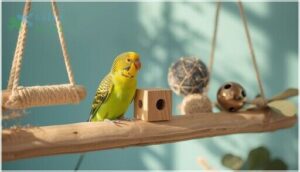
Not all toys are created equal, and choosing the wrong one could put your parakeet at risk. You’ll want to look for materials that won’t harm your bird if chewed or swallowed, along with construction that won’t trap tiny feet or beaks.
Here are the key safety features to check before bringing any toy home.
Non-Toxic Materials (Wood, Rope, Leather)
Your parakeet deserves toxic-free materials that won’t harm them during hours of nibbling and play. Safe toys use natural fibers like untreated cotton, hemp, or sisal rope that won’t trap delicate toes.
Wood safety matters too—choose apple or birch, or manzanita over cedar or cherry, which contain harmful oils. Vegetable-tanned leather options offer chewable texture without chrome or chemical finishes.
Avoiding Small Parts and Choking Hazards
Beyond choosing non-toxic materials, you need to check for choking risks that can trap or harm your budgie. Parakeet toys labeled for small birds keep bells, beads, and rings larger than your bird’s throat, preventing accidental swallowing.
Avoid split-ring fasteners and spring clips—opt for secure fasteners like screw-shut quick links instead. Daily toy safety checks catch breakage before small, dangerous pieces appear.
Checking for Sharp Edges or Loose Threads
Even the best non-toxic materials can turn dangerous once wear sets in. Daily inspections catch new splinters, cracks, and frayed rope before they cut beaks or trap toes.
Run your finger along edges—if it snags or feels rough, your parakeet’s delicate feet and tongue are at risk. Trim loose threads immediately, and replace any toy showing repeated damage in the same spot.
Safe Attachment Methods for Toys
Once you’ve trimmed those loose threads, the next step is choosing the right hardware to keep toys in place.
Secure quick links made from stainless steel or nickel-plated metal are your safest bet—they twist closed and won’t budge when your parakeet climbs. Skip J-hook clips and key rings; clever birds pry them open, risking trapped beaks or toes.
Tips for Introducing and Rotating Toys
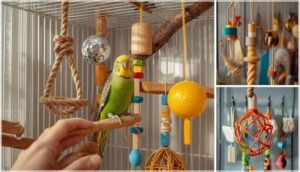
Even the best toy collection won’t work if your parakeet ignores it or gets bored after a day.
Introducing new items gradually and switching them out regularly keeps your bird curious and engaged. Here’s how to make the most of your parakeet’s toy collection while keeping playtime fresh and exciting.
Rotating Toys for Ongoing Engagement
Your parakeet’s cage shouldn’t feel like Groundhog Day every single week. Swapping out one or two parakeet toys every seven to fourteen days keeps your bird curious without overwhelming them with constant change.
Try cycling climbing toys, foraging toys, and interactive toys so different instincts stay sharp. Meanwhile, regular toy safety checks during each rotation catch frayed rope or sharp edges before trouble starts.
Observing Parakeet Preferences
Watch where your bird spends most of its time during the day, and you’ll gain real insight into parakeet behavior and play patterns. A parakeet that returns to the same bell or shredder several times shows clear bird preferences.
While one that ignores foraging toys might crave avian enrichment through climbing or social interaction instead. Track which parakeet toys spark action—then fill the cage with more of what works.
Using Treats and Foraging to Encourage Play
Often, the fastest way to spark play stimulation is through foraging techniques that turn snack time into a search mission. Treat dispensers and food puzzles encourage birds to work for millet or small seeds, blending toy rotation with avian enrichment.
Parakeet foraging toys that pair foraging and shredding—like paper parcels or palm leaf folders—transform simple parakeet toys into rewarding adventures your bird won’t want to skip.
DIY and Budget-Friendly Parakeet Toys
You don’t need to spend a fortune to keep your parakeet entertained and mentally sharp. With a few safe household items and a bit of creativity, you can make engaging toys that your bird will love just as much as store-bought options.
Here are some budget-friendly ideas that put your parakeet’s safety and enjoyment first.
Homemade Toys From Safe Household Materials
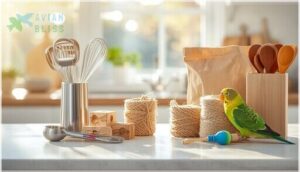
Your kitchen drawers hold a treasure trove of safe materials for DIY parakeet toys. Stainless steel measuring spoons and whisks make excellent clanking toys, while untreated pine blocks from wooden utensils can be drilled and strung as chew toys.
Natural fiber twine—cotton, hemp, or sisal—works perfectly for hanging toys, and plain paper lunch bags offer safe shredding fun. Material safety starts with bird-friendly household hacks.
Creative Use of Paper, Cardboard, and Fabric
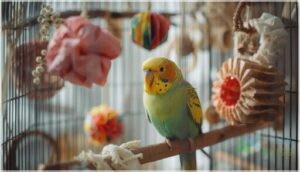
Your parakeet’s cage can transform into a playground with simple paper crafts and cardboard designs. Crumple plain paper around millet to create shredding games, or fold coffee filters into foraging pockets.
Corrugated cardboard cut into rings makes excellent chew toys. When adding fabric toys, stick with short strips of undyed cotton—textile safety matters because long threads can tangle tiny feet.
Customizing Toys for Individual Parakeet Needs
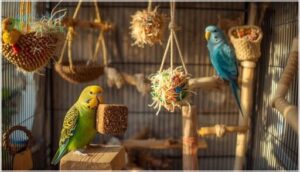
Every parakeet personality responds differently to cage enrichment for parakeets, so customizing bird toy selection makes all the difference.
If your bird struggles with mobility, mount toys lower with platform perches for beak safety. Match heavy chewers with dense wood and light nibblers with soft balsa.
Track bird preferences through toy rotation, then adjust tailored placement based on parakeet behavior and stimulation needs you observe daily.
Consulting Pet Store Staff for Recommendations

When you’re standing in the bird aisle feeling overwhelmed, knowledgeable staff can become your best ally in parakeet toys and bird toy selection.
Ask employees to recommend options based on your bird’s age and activity level, then listen for these pet store tips that signal real staff expertise:
- Which brands consistently use safe materials like untreated wood and vegetable-based dyes
- How to balance toy budgeting with durable items and affordable shreddables
- Warning signs like open chains or frayed rope that threaten bird behavior and parakeet care and health
Their guidance on pet bird care and pet care transforms confusing choices into confident decisions.
Frequently Asked Questions (FAQs)
What is a parakeet’s favorite toy?
Most birds gravitate toward wooden swings that sway gently, mimicking natural tree branches.
Chewable wood blocks and rope perches also rank high because they satisfy climbing instincts and keep beaks naturally trim.
What do parakeets like to play with?
Your feathered friends thrive on variety—swinging from ropes, scaling ladders, shredding soft wood, and solving treat puzzles.
These bird toys turn beak exercises and wing stimulation into feathered fun while keeping parakeet playtime safe.
Do parakeets need toys?
Without a doubt, parakeets need toys—they’re not just nice extras, but essential tools for parakeet enrichment, mental health, and physical wellness in any cage environment where natural behaviors must be supported daily.
How do I entertain my parakeet?
You can entertain your parakeet through Toy Rotation, Interactive Toys, Enrichment Activities, and Parakeet Socialization.
Adjust your Cage Setup with Climbing Toys and NoiseMaking Toys while observing Bird Behavior to discover what brings your bird the most joy.
How do I keep my parakeet entertained?
You don’t need fancy equipment to spark joy in your parakeet’s day. Rotate climbing toys, interactive puzzles, and noise-making bells weekly, pair playtime activities with treats, and watch enrichment transform bird behavior naturally.
How often should parakeet toys be replaced?
Check parakeet toys at least monthly for wear, replacing frayed rope, splintered wood, or cracked plastic immediately.
Rotate toys every two to four weeks to maintain cage enrichment, while shreddable toys may need replacing within days.
Can parakeets share toys with other birds?
Parakeets can share toys with other small parrots when they get along, but toy hygiene matters. Diseases spread easily through shared items, so disinfect regularly and watch for resource guarding or cage dynamics issues.
What sounds do parakeets prefer in toys?
Most budgies gravitate toward gentle bell sounds and soft chime toys that respond to their movements. Predictable noise at comfortable volume levels keeps them engaged, while offering sound variety helps you discover each bird’s individual taste in interactive toys.
Are homemade toys safe for parakeets?
Many avian vets report that over 60% of homemade parakeet toys are safe when crafted from bird-friendly materials like untreated wood, plain paper, and natural rope—avoiding toxic metals, sharp edges, and long threads that pose choking hazards.
Which toy colors attract parakeets most?
Bright primary colors like red, yellow, and blue tend to catch your parakeet’s attention quickly, while natural green and yellow shades feel familiar and safe, creating visual stimulation through strong color contrast.
Conclusion
When your parakeet starts acting out, it’s not defiance—it’s a cry for enrichment. Understanding what kind of toys parakeets like to play with transforms cage life from confinement into an adventure worth waking up for.
Rotate options weekly, watch their reactions closely, and don’t hesitate to experiment with homemade alternatives. Your bird’s bright eyes and cheerful chatter will tell you everything you need to know about whether you’ve nailed it.
- https://www.omlet.us/guide/parakeets/toys_for_parakeets/best_toys/
- https://www.northernparrots.com/blog/budgie-toy-guide/
- https://www.pethealthandnutritioncenter.com/blogs/natural-pet-health-education/bird-toy-safe-and-unsafe-material
- https://queenslanderaviaries.com/blogs/news/top-10-budgie-toys-of-2025
- https://bonkabirdtoys.com/collections/small-bird-toys