This site is supported by our readers. We may earn a commission, at no cost to you, if you purchase through links.
When Alex, a renowned cognitive scientist, first tested an African grey parrot named Griffin, she expected basic mimicry—what she discovered was a bird that could understand concepts like bigger and smaller, same and different, and even zero. African grey parrots don’t just repeat sounds; they comprehend language at the level of a young child, making them one of the most intellectually complex companions you can bring into your home.
These slate-grey birds with crimson tails aren’t your typical pet—they’re sensitive, emotionally intelligent creatures that can live 50 to 60 years and demand the kind of commitment you’d give a family member. But their remarkable cognitive abilities come with equally remarkable needs, from specialized diets to hours of daily interaction.
Table Of Contents
- Key Takeaways
- African Grey Parrot Species Overview
- Physical and Behavioral Traits
- Essential Care Requirements
- Common Health Concerns
- Conservation and Responsible Ownership
- Frequently Asked Questions (FAQs)
- How much does a African grey parrot cost?
- Is an African grey parrot a good pet?
- Are African Grey parrots legal in the US?
- Can African gray parrots talk?
- Are African grey parrots good pets?
- What are the cons of African grey parrots?
- What is the lifespan of an African grey parrot?
- How do African Greys interact with other pets?
- What is the cost of owning an African Grey?
- Can African Greys be left alone during vacations?
- Conclusion
Key Takeaways
- African grey parrots comprehend language at the level of a young child and can understand abstract concepts like zero, same versus different, and relative size—making them one of the most cognitively complex companion animals you can own.
- These birds demand a 40 to 60 year commitment with daily interaction requirements of 2 to 4 hours, specialized diets heavy in fresh produce, and mental enrichment through foraging puzzles and flight time to prevent stress-related behaviors like feather plucking.
- Wild populations face endangered status due to habitat destruction and illegal trade, so responsible ownership requires verifying legal acquisition through CITES documentation and supporting conservation efforts that protect remaining forest populations.
- Health monitoring focuses on early detection of respiratory issues, nutritional deficiencies (especially calcium and vitamin A), and behavioral changes, with routine veterinary exams every 6 to 12 months essential for maintaining their exceptional intelligence and longevity.
African Grey Parrot Species Overview
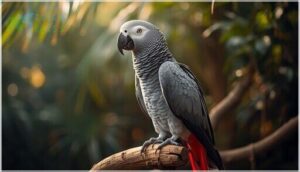
If you’re thinking about bringing an African grey parrot into your life, you’ll want to know exactly what you’re signing up for. These birds aren’t just pretty faces—they’re complex creatures with specific needs and exceptional abilities that set them apart from other parrots.
Their intelligence rivals that of a young child, which is why understanding the unique traits of exotic bird species helps you prepare for the commitment ahead.
Let’s start with the basics: what makes an African grey an African grey, from its scientific roots to the years you’ll spend together.
One behavioral challenge that can emerge over those years is feather plucking in African Greys, often linked to stress or environmental factors.
Scientific Classification
The African Grey Parrot’s taxonomic hierarchy places this outstanding species, Psittacus erithacus, within the true parrot family Psittacidae under order Psittaciformes. This binomial nomenclature, established by Carl Linnaeus in 1758, identifies two distinct species within the Psittacus genus: the Congo and Timneh parrots, reclassified through phylogenetic analysis and genetic studies.
These intelligent birds are also susceptible to various health challenges, including common beak infections that can affect their overall well-being and require careful monitoring.
Key characteristics of genus Psittacus include:
- Outstanding cognitive abilities that rival primate intelligence in problem-solving tasks
- Mainly grey plumage with striking crimson or maroon tail feathers unique among parrots
- Native distribution across West and Central African equatorial forests, nowhere else on Earth
African greys also require significant social interaction and a.
Origin and Natural Habitat
Understanding taxonomic classification helps you appreciate where these exceptional parrots call home. Your African grey parrot species originates from central and western Africa’s lowland rainforest zones, spanning Ghana, Côte d’Ivoire, and Angola. These African ecosystems provide dense canopy cover and fruiting trees essential for survival.
Unfortunately, habitat destruction and wildlife migration pressures have made them endangered species, raising urgent wildlife conservation concerns across African gray parrot habitat regions. For more details on their, explore this extensive resource.
Lifespan and Size
When you bring one of these exceptional parrots home, you’re making a decades-long commitment. Growth patterns show your African grey parrot species reaches full size—around 13 inches and 400 to 600 grams—within their first 18 months. But here’s what matters most for bird care: lifespan factors like nutrition, enrichment, and weight management directly influence aging process outcomes. With proper parrot care and maintenance plus solid avian health and nutrition, your companion can thrive for 40 to 60 years, sometimes pushing past 70.
- Hatchlings grow rapidly, gaining weight weekly until weaning completes between 3 and 6 months of age.
- Size variance between individuals remains minimal, though males occasionally weigh slightly more than females.
- Obesity shortens lifespan markedly, so monitor portion sizes and encourage daily flight exercise outside the cage.
- Captive birds outlive wild counterparts by decades when you provide consistent veterinary care and mental stimulation.
- Early-life socialization and proper diet set the foundation for long-term health and behavioral stability throughout their aging process.
Recognized Subspecies
Two major lineages split this Psittacus erithacus population across Africa. The Congo African gray—your classic silver-bodied bird with that crimson tail—thrives in central and western rainforests, while the smaller Timneh subspecies inhabits drier western coastal zones. Geographic isolation drove genetic variation and morphological traits that now define subspecies classification and taxonomic status.
Both subspecies require careful nutritional management, as deficiencies in calcium and vitamin A—common parrot vitamin deficiency causes—can lead to serious health complications over time.
| Subspecies | Key Distinguishing Features |
|---|---|
| Congo (P. e. erithacus) | Lighter gray plumage, bright red tail, larger body size |
| Timneh (P. timneh) | Darker charcoal feathers, maroon tail, compact build |
| Geographic Range | Congo: Central Africa; Timneh: West Africa coastal forests |
| Conservation Notes | Both face endangered status from habitat loss and trade pressures |
Physical and Behavioral Traits
African grey parrots stand out in the avian world for more than just their striking appearance. Their complex behaviors and cognitive abilities rival those of young children, making them one of the most fascinating companion birds you can own.
Let’s explore the physical features and personality traits that make these birds so extraordinary.
Plumage and Markings
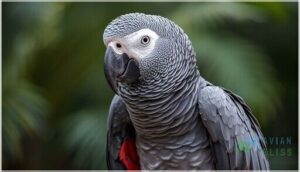
When you look at an African Grey Parrot, you’ll notice its striking feather coloration creates a visual masterpiece against any backdrop. The grey parrot’s plumage texture feels smooth and sleek, with these key parrot markings defining its appearance:
- Slate gray body with lighter facial markings and white eye rings
- Distinctive beak shape in charcoal black
- Crimson tail feathers creating bold contrast with wing patterns
Intelligence and Cognition

Your African Grey’s cognitive flexibility rivals that of a young child. These birds excel at problem solving through trial and error, building memory recall of past interactions and safe perches.
Social learning allows them to observe and imitate behaviors, while their brain development facilitates multi-step planning.
This impressive avian intelligence allows them to update routines when environments change, demonstrating complex animal cognition rarely seen in non-mammalian species.
Vocal Abilities and Mimicry

Your Grey’s vocal range spans bass to soprano tones, mimicking human speech with striking phoneme reproduction. These masters of imitation techniques can memorize hundreds of phrases, adjusting pitch syllable by syllable to match your inflections.
Their mimicry skills emerge through social listening and daily practice, with speech patterns refined over years. This parrot intelligence reflects deep connections between vocal learning and bird behavior.
Social Behavior

In the wild, your African Grey Parrot thrives within a flock’s intricate social structure, where dominance hierarchy and social bonding shape daily interactions. Parrot behavior and intelligence shine through coordinated communication styles—vocal exchanges guide foraging, while mutual preening strengthens pair bonds.
- Flock dynamics: Older birds lead group movements, teaching younger members food preferences through observation
- Empathy studies: These parrots console distressed companions and adjust behavior based on others’ attention
- Bird social structure: Dominance shifts with alliances, yet reconciliation follows most conflicts
Essential Care Requirements

Caring for an African grey parrot isn’t something you can wing—these intelligent birds need specific conditions to thrive in captivity. Getting the basics right from day one makes all the difference between a healthy, engaged companion and a stressed, unhealthy bird.
Caring for an African grey parrot demands precision from day one—these intelligent birds need specific conditions to thrive, not guesswork
Here’s what you need to know about setting up their space, feeding them properly, and meeting their emotional and physical needs.
Cage Size and Setup
Your African grey parrot needs a cage that’s at least 2 feet wide by 2 feet deep and 3 feet tall—think twice their wingspan for comfortable movement. Bar spacing should measure 1/2 to 5/8 inch to prevent injuries.
Use stainless steel enclosure materials for durability, and position natural wood perches at varying heights. Strategic toy placement keeps flight paths clear while promoting healthy activity.
Diet and Nutrition
Nutrient balance starts with feeding your African grey 60 to 70 percent fresh produce—dark leafy greens, carrots, and berries—paired with high-quality pellets as the foundation of their avian diet. This frugivorous diet mimics natural foraging patterns while providing essential vitamins and minerals.
Supplement with cooked legumes, unsalted nuts, and occasional egg protein. Meal planning ensures food variety, and dietary supplements like calcium support long-term parrot nutrition when recommended by your avian veterinarian.
Social Interaction Needs
Your parrot thrives on 2 to 4 hours of daily interaction spread across multiple sessions, strengthening social bonding and relationship building essential to parrot behavior and intelligence.
Watch for behavioral cues like head bobbing or soft rumbles that signal comfort during interactive play. This flocking behavior mirrors their bird social structure in the wild, where emotional support and consistent human contact prevent feather plucking and reduce stress-related behaviors.
Mental and Physical Enrichment
Beyond conversation and handling, your African grey needs foraging techniques like puzzle feeders and shreddable toys that challenge their avian intelligence and cognition. Rotate toys every one to two weeks to prevent boredom, and provide 2 to 3 hours of supervised flight time for exercise routines that build muscle strength.
Sensory stimulation through climbing structures and cognitive training sessions using clicker methods support both parrot behavior and intelligence while maintaining healthy bird behavior and psychology.
Common Health Concerns
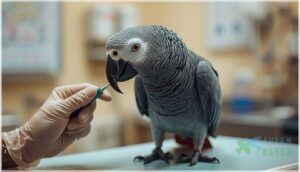
Even the healthiest African grey can face medical challenges, and catching problems early makes all the difference. Your bird won’t always tell you something’s wrong in obvious ways, so you’ll need to know what warning signs to watch for.
Let’s walk through the health issues you’re most likely to encounter, how to prevent them, and when it’s time to call your vet.
Signs of Illness
Your African Grey Parrot’s health signals often whisper before they shout. Watch for dropping changes in color or consistency, which reveal digestive troubles. Respiratory issues appear as tail bobbing or labored breathing, while feather plucking suggests stress or illness. Beak problems, reduced appetite, and lethargy demand immediate attention. These behavioral signs aren’t quirks—they’re your bird’s way of asking for help.
Preventive Health Measures
Catching problems early beats treating crises later. Preventive health measures protect your bird’s intelligence and longevity through consistent avian care:
- Routine wellness checks with an avian veterinarian detect metabolic issues and abnormal droppings before they escalate.
- Weight monitoring guides nutrition planning and prevents obesity.
- Vaccine schedules customized to exposure risk shield against polyomavirus.
- Disease prevention starts with daily cage sanitation and fresh water.
These wellness monitoring habits preserve your companion’s exceptional parrot behavior and intelligence for decades.
Common Diseases in African Greys
Your grey companion faces several serious threats you’ll want to recognize early. Viral infections like polyomavirus strike young birds hardest, while fungal diseases such as aspergillosis attack respiratory systems weakened by stress. Bacterial threats including chlamydia demand immediate treatment, and parasite control prevents chronic weight loss from giardia.
Nutritional disorders—especially calcium deficiency and fatty liver disease—undermine even the brightest parrot’s health through improper diet.
Veterinary Care Guidelines
Your parrot deserves professional avian medicine from a veterinarian experienced in bird health. Schedule veterinary exams every 6 to 12 months to catch problems early, discuss pain management protocols, and review your bird’s nutrition and behavior patterns.
While bird vaccines aren’t universally standard, your vet will recommend region-specific protection.
Keep emergency care contacts accessible, practice biosecurity when introducing new birds, and prioritize animal welfare through proactive parrot care rather than reactive crisis management.
Conservation and Responsible Ownership

Owning an African grey parrot isn’t just about providing a good home—it’s about understanding your role in protecting a species that’s fighting for survival in the wild. These intelligent birds face serious threats from habitat loss and illegal trade, which is why conservation efforts and responsible ownership go hand in hand.
Let’s look at what you need to know about their endangered status, legal considerations, and the real commitment involved in giving one of these extraordinary parrots a lifelong home.
Endangered Status and Threats
You’re witnessing a species in freefall. The IUCN Red List now classifies African grey parrots as endangered, victims of relentless habitat loss and deforestation across central Africa.
Wildlife trade and poaching effects have devastated wild populations, with illegal trafficking stripping forests of these intelligent birds.
Species decline accelerates as nesting sites vanish and fragmented groups struggle to survive—a crisis demanding urgent wildlife conservation efforts.
Conservation Initiatives
Conservation efforts are fighting back with habitat restoration projects that replant native fruiting trees and establish wildlife corridors connecting fragmented forests. Protected area networks safeguard 15 percent of critical wetland roosting sites, while anti-poaching patrols operate around the clock with drone surveillance.
Community-based programs train local residents in wildlife protection and species preservation, creating sustainable alternatives that reduce pressure on wild African grey parrot populations.
Legal and Ethical Considerations
You can’t legally own an African grey parrot without complying with CITES regulations and animal welfare laws that govern trade, ownership rights, and biosecurity measures for endangered species protection. Ethical sourcing demands verification that your bird wasn’t smuggled from wild populations, while wildlife conservation obligations require proper permits, health certificates, and transparent documentation proving lawful acquisition and humane housing standards.
Long-Term Commitment as Pets
You’re signing up for a relationship that might outlast your career—these birds live 40 to 60 years, sometimes longer. Your financial commitment includes pet insurance, quality diet, and veterinary care that adds up over decades.
Longevity planning means arranging retirement care if you can’t provide it yourself.
Owner responsibilities extend to understanding parrot temperament, daily enrichment needs, and maintaining animal welfare standards that respect their complex social and cognitive requirements throughout their entire lifespan.
Frequently Asked Questions (FAQs)
How much does a African grey parrot cost?
Purchasing parrots presents pricing puzzles for prospective pet bird ownership enthusiasts. Congo African grey parrots usually cost $1,000 to $4,000, while Timneh varieties start around $1,700, with breeder fees varying by lineage and talking ability.
Is an African grey parrot a good pet?
They’re outstanding companions for dedicated Pet Owners, but African Grey Parrot ownership demands decades of commitment, significant African Grey Cost, daily Parrot Training Tips application, consistent Bird Socialization, and careful Parrot Care and Diet—not beginner-friendly Pet Birds.
Are African Grey parrots legal in the US?
Owning one of these intelligent birds isn’t forbidden across the country, though you’ll need to navigate US Bird Laws, CITES Regulations, and State Licensing requirements that govern the Exotic Pet Trade responsibly.
Can African gray parrots talk?
Yes, African grey parrots can talk extensively. Through vocal learning and contextual understanding, they acquire large vocabularies, pair words with meanings, and use speech patterns to communicate needs—demonstrating remarkable bird intelligence and language skills.
Are African grey parrots good pets?
They make outstanding pet birds for dedicated owners, but the pet trade demands you understand their intense social needs, noise level management challenges, and decades-long commitment before bringing one home.
What are the cons of African grey parrots?
African Grey Parrot ownership brings Noise Pollution, High Maintenance demands, and significant Emotional Demands. These birds require daily interaction, creating Social Challenges and a Financial Burden, raising Animal Welfare and Ethics concerns within the Exotic Pet Trade.
What is the lifespan of an African grey parrot?
These exceptional bird species are nature’s marathoners, with captive longevity reaching 40 to 60 years when you provide proper care.
Wild lifespan usually spans 23 to 40 years due to environmental pressures and health influences affecting aging factors.
How do African Greys interact with other pets?
With patient introductions and supervision, these intelligent birds can coexist peacefully alongside dogs and cats in multispecies homes, though you’ll need to establish separate feeding zones and provide elevated retreat perches for safety.
What is the cost of owning an African Grey?
Owning something priceless costs money every month. You’ll invest $800 to $4,000 upfront, then budget $100 to $200 monthly for food, toys, and vet visits—plus emergency savings for unexpected health needs.
Can African Greys be left alone during vacations?
You can leave your African Grey for short vacations with proper preparation. Arrange a trusted pet sitter who’ll provide daily interaction, maintain feeding routines, and offer enrichment through toys and supervised out-of-cage time.
Conclusion
Your African grey parrot will outlive most dogs, outlast several careers, and witness decades of your life unfold. That’s not a warning—it’s the truth of sharing your world with a mind that rivals a five-year-old’s and a heart that bonds like family.
If you’re ready to meet their complex needs with the same dedication they’ll show you, this relationship won’t just fill your home with chatter—it’ll reshape what companionship means.