This site is supported by our readers. We may earn a commission, at no cost to you, if you purchase through links.
 Your parakeet’s beak grows continuously throughout its life, and an overgrown beak typically signals underlying health issues.
The most common causes include chronic liver disease from high-fat diets, scaly face mites that interfere with normal wear, and congenital malformations from trauma.
Poor nutrition can also disrupt the natural trimming process that occurs when birds eat and climb. You’ll notice difficulty eating, misaligned beaks, or twisted growth patterns.
While some wear happens naturally through daily activities, overgrowth requires veterinary attention for proper trimming and treatment of root causes. Understanding the specific triggers behind your bird’s condition reveals key steps for both immediate relief and long-term beak health management.
Table Of Contents
- Key Takeaways
- Causes
- Symptoms
- Treatment
- Prevention
- Evolution
- Frequently Asked Questions (FAQs)
- Why do parakeets have long beaks?
- Why is my parakeet’s beak overgrown?
- Why does my bird’s beak look so long?
- How long does it take for a parakeet’s beak to grow?
- Why does my parrot have a long beak?
- How to care for a parakeet?
- Why is my parakeet’s beak too long?
- How to help a bird with an overgrown beak?
- What does an unhealthy beak look like?
- Can an overgrown beak in parakeets be caused by trauma or injury?
- Conclusion
Key Takeaways
- You’ll need veterinary care for safe beak trimming – Don’t attempt home trimming as it can cause permanent damage; professional vets use specialized tools like Dremel drills to safely address overgrowth
- Poor nutrition is the biggest culprit – Seed-only diets lacking vitamin A and calcium cause weak, overgrown beaks; provide balanced pellets, fresh vegetables, and cuttlebone for natural wear
- Watch for eating difficulties and misalignment – Overgrown beaks make it hard to crack seeds or grip food properly, leading to dropped food and potential malnutrition if untreated
- Prevention beats treatment every time – Offer hard foods, wooden toys, and cuttlebone to encourage natural beak wear, plus maintain regular vet checkups to catch issues early
Causes
Understanding why your parakeet’s beak has become unusually long requires examining several potential causes. Most beak overgrowth stems from nutritional deficiencies, infections, or lack of natural wear from normal activities.
Nutritional Problem
Poor nutrition is your parakeet’s most common enemy regarding beak health.
A poor diet is your bird’s biggest threat to healthy beak growth.
A seed-only diet creates serious vitamin deficiency, especially lacking vitamin A and calcium needs.
This dietary imbalance leads to malnutrition risk, causing abnormal beak growth.
Without proper parakeet nutrition, the beak becomes weak and overgrown, creating ongoing parakeet beak problems that affect your bird’s overall wellbeing.
Providing a balanced parakeet food supply is essential to prevent these parakeet beak problems and ensure your bird’s overall wellbeing.
– Mites or Virus
Certain mite infestations and viral infections can cause significant beak deformity in your parakeet.
Scaly face mites burrow under the skin around the beak, creating thick, crusty growths that make the beak appear elongated.
Avian pox virus causes lesions and scabs that interfere with normal beak development, leading to overgrowth and misalignment that affects your bird’s ability to eat properly, resulting in significant viral infections.
– Tumor
When beyond genetics, a tumor might be the culprit behind your parakeet’s beak abnormality.
Abnormal cells can develop in beak tissues, causing cancer growth that leads to beak deformity and overgrowth.
These parakeet beak health issues often stem from genetic mutations or environmental toxins.
Common signs include:
- Visible lumps or masses near the beak area
- Difficulty eating or grasping objects properly
- Behavioral changes like lethargy or reduced vocalization
Tumor removal through surgical intervention offers the best treatment outcome.
Early detection substantially improves your bird’s prognosis, making regular veterinary check-ups essential for maintaining healthy parakeet beak health.
Understanding avian cancer types is vital for identifying the underlying cause of beak abnormalities in parakeets.
Symptoms
You’ll notice several clear signs when your parakeet’s beak becomes overgrown.
The most obvious symptoms include difficulty eating, a misaligned beak that doesn’t close properly, and a twisted or curved beak shape that interferes with normal daily activities.
The symptoms can be quite distinct, and noticing them early on can help prevent further complications.
Difficulty Eating

When your parakeet’s beak becomes overgrown, you’ll notice immediate feeding issues that directly impact their food intake.
An overgrown beak turns mealtime into a daily struggle for your feathered friend.
The altered beak shape makes it difficult to crack seeds or grasp pellets properly, disrupting normal eating habits. This struggle with feeding issues can quickly lead to nutrient deficiency if left untreated.
You might observe your bird dropping food frequently or avoiding harder items altogether, indicating the need for professional parakeet beak trimming to restore proper parakeet beak health.
Regular beak care involves understanding proper beak trimming tools to prevent such issues.
– Misaligned Beak

When your parakeet’s beak doesn’t line up properly, you’re looking at a beak alignment issue that can seriously impact their daily life.
A crooked beak often stems from injuries during development or genetic factors affecting normal growth patterns.
This beak abnormality makes it tough for your bird to crack seeds or grip food effectively.
Proper parakeet beak care becomes essential when dealing with malformation issues.
Some cases require beak correction through professional intervention, while others need ongoing parakeet beak trimming to maintain functionality and prevent further complications.
Understanding beak health issues is vital for providing the best care for your parakeet’s specific needs.
– Twisted Beak

A twisted beak represents a severe beak malformation where the upper and lower mandibles don’t align properly, creating a corkscrew-like appearance.
This beak deformity makes eating nearly impossible as your parakeet can’t crack seeds or grip food effectively.
Beak distortion of this magnitude typically results from genetic factors, severe trauma, or chronic infections affecting beak growth patterns during development.
Treatment
When you notice your parakeet’s beak growing too long, prompt veterinary intervention becomes your bird’s lifeline.
A qualified avian vet will conduct thorough examinations including blood work, X-rays, and oral swabs to identify underlying causes.
Professional beak trimming using a Dremel drill offers the safest approach, though emery boards work for minor cases. Your vet’s expertise guarantees proper technique without damaging blood vessels or nerves.
Treatment options include:
- Antiparasitic medications for mite infestations
- Antibiotics for bacterial infections
- Surgical intervention for tumor removal
- Pain management during severe conditions
- Nutritional supplements for deficiencies
- Regular monitoring for chronic issues
- Environmental modifications for supportive care
Understanding feather loss causes is vital for providing thorough care to your parakeet.
Never attempt home trimming without professional guidance, as improper parakeet beak trimming can cause permanent damage and pain.
Prevention
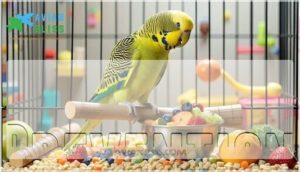
Maintaining beak health requires proactive care rather than reactive treatment.
Offer your parakeet a balanced diet including pellets, fresh vegetables, and fruits to provide essential nutrients for proper beak growth.
Supplement with cuttlebone care to naturally wear down the beak while supplying calcium. Regular grooming through wooden toys and hard food items promotes natural beak maintenance.
Monitor beak trimming frequency needs. A parakeet’s diet should include high-quality parakeet food pellets to guarantee superior nutrition.
Evolution

Evolution reveals why parakeets developed their distinctive beaks through millions of years of natural selection.
Your parakeet’s beak represents countless generations of genetic factors and species development that shaped modern bird anatomy.
Beak adaptation occurred through specific evolutionary processes that transformed ancient bird ancestors.
Natural selection favored individuals whose beak growth patterns matched their feeding needs, creating the parakeet beak evolution we see today.
Genetic factors controlled by developmental pathways determined parakeet beak shape across different species.
Understanding this evolutionary journey helps explain your bird’s unique features:
- Genetic Pathways: Two key genetic systems (FGF8 and WNT) control beak development and determine final beak shape in all parakeet species.
- Finger Replacement: Birds evolved beaks because their fingers became wing bones, requiring a new "finger" on their face for manipulation.
- Gradual Changes: Parakeet beak evolution occurred through intermediate shape modifications over millions of years, not sudden transformations.
- Adaptive Radiation: Different parakeet species developed varying beak lengths to access specific food sources in their environments.
This evolutionary foundation directly impacts your parakeet’s beak health and growth patterns today.
Frequently Asked Questions (FAQs)
Why do parakeets have long beaks?
Like a perfectly balanced tool, parakeets’ beaks grow continuously throughout their lives.
Your bird’s beak appears long due to insufficient natural wear from chewing activities, potential nutritional deficiencies, or underlying health issues requiring veterinary evaluation.
Why is my parakeet’s beak overgrown?
Your parakeet’s beak is overgrown due to insufficient natural wear from lack of proper chewing materials, poor nutrition, underlying infections, or genetic factors affecting normal growth patterns.
Why does my bird’s beak look so long?
Your bird’s beak might be naturally long for its species, but overgrowth often stems from lack of natural wear, poor nutrition, infections, or underlying health issues requiring veterinary attention.
How long does it take for a parakeet’s beak to grow?
A parakeet’s beak grows continuously throughout its life, similar to human fingernails.
Healthy beaks typically grow about 1-3 millimeters per month, but growth rates vary based on diet, genetics, and overall health conditions.
Why does my parrot have a long beak?
Think of your parrot’s beak as a constantly growing fingernail that needs regular maintenance.
Long beaks typically result from insufficient natural wear, nutritional deficiencies, infections, or underlying health conditions requiring veterinary evaluation.
How to care for a parakeet?
Feed quality pellets daily, provide fresh fruits and vegetables, clean water, safe perches, toys for mental stimulation, and maintain clean cage conditions. Schedule regular veterinary checkups for peak health.
Why is my parakeet’s beak too long?
Your parakeet’s beak might be overgrown due to lack of natural wear from proper chewing materials, poor nutrition, infections, or genetic factors.
Provide cuttlebones and hard foods to encourage natural grinding.
How to help a bird with an overgrown beak?
Don’t put all your eggs in one basket—seek professional veterinary care immediately.
An avian vet can safely trim the overgrown beak using specialized tools like a Dremel drill while addressing underlying causes such as nutritional deficiencies or infections.
What does an unhealthy beak look like?
You’ll spot an unhealthy beak by its abnormal length, crooked shape, or split appearance. Look for color changes, rough texture, bleeding, or misalignment that makes eating difficult.
Can an overgrown beak in parakeets be caused by trauma or injury?
Yes, trauma or injury can definitely cause overgrown beaks in parakeets.
Damage to the beak’s base, where growth cells are located, can lead to abnormal regrowth and elongation.
Injury disrupts normal beak development, causing distortion.
Conclusion
Studies show that 80% of beak overgrowth cases stem from preventable causes, highlighting the importance of proactive care.
Once you understand why your parakeet’s beak is so long, you can take targeted action to address both immediate symptoms and underlying health issues.
Regular veterinary checkups, proper nutrition, and environmental enrichment that encourages natural beak wear will keep your bird healthy.
Remember, "why is my parakeet’s beak so long answered" isn’t just about solving today’s problem—it’s about ensuring your feathered friend’s long-term wellbeing through consistent, informed care that promotes natural beak wear.