This site is supported by our readers. We may earn a commission, at no cost to you, if you purchase through links.
 Yes, parakeets are loud birds with distinct vocalizations that serve specific purposes.
You’ll hear nine main sounds: cheerful chirping for contentment, excited chattering during social interactions, melodic singing when happy, sharp squawking for attention or distress, protective hissing when threatened, soft grinding while relaxed, contact calls to locate flockmates, alarm calls for danger, and territorial screeching.
They’re noisiest at dawn and dusk, mirroring their natural wild behavior.
Understanding these sounds helps you decode whether your feathered friend is content, scared, or simply trying to chat with you about their day, and it involves recognizing distinct vocalizations, hearing nine main sounds, and interpreting sharp squawking, which all contribute to a better understanding of their behavior and needs.
Table Of Contents
- Key Takeaways
- Understanding Parakeet Vocalizations
- Factors That Influence Parakeet Noise Levels
- Reasons Behind Squawking Behavior
- Reasons Behind Hissing Behavior
- Reasons Behind Singing Behavior
- Reasons Behind Chattering Behavior
- Reasons Behind Loud Chirping
- Signs of Unhappy Tweets and Their Causes
- Beak Grinding and Its Meaning
- Tips for Encouraging Quiet Behavior in Parakeets
- Frequently Asked Questions (FAQs)
- Are parakeets noisy?
- Why do parakeets make loud noise?
- What does it mean if a parakeet makes an amusing sound?
- Is it normal for parakeets to make popping noises?
- Are parakeets quiet at night?
- What factors affect parakeet noise levels?
- What does it mean when parakeets chirp really loud?
- How many sounds can a parakeet make?
- How loud are parakeets?
- Can parakeets learn specific words or phrases?
- Conclusion
Key Takeaways
- You’ll hear 9 distinct sounds from your parakeet – cheerful chirping, excited chattering, melodic singing, sharp squawking, protective hissing, soft grinding, contact calls, alarm calls, and territorial screeching that each communicate different needs and emotions.
- They’re loudest during dawn and dusk hours – this mirrors their natural wild behavior, so you can expect peak noise levels during these times as part of their normal daily rhythm.
- Squawking signals urgent needs – when your parakeet squawks sharply, they’re communicating fear, hunger, injury, or attention-seeking behavior that requires your immediate response.
- You can reduce excessive noise through training – create calm environments, use positive reinforcement for quiet behavior, address basic needs promptly, and provide adequate social interaction to minimize attention-seeking vocalizations.
Understanding Parakeet Vocalizations
You’ll hear a variety of sounds from your parakeet throughout the day, each carrying a specific message about their needs and emotions.
Understanding these vocalizations helps you respond appropriately to keep your feathered friend happy and healthy.
Squawking
When your parakeet squawks, they’re communicating urgent needs or emotions through distinct squawk patterns.
Your parakeet’s squawks are urgent messages demanding immediate attention and action.
These loud calls typically signal fear responses, hunger, injury, or mating behaviors – understanding these vocalization types helps decode your bird’s message.
Parakeet noise levels spike during distress, making noise reduction strategies essential.
Address the root cause promptly: check for food, water, or safety concerns.
Parakeet screaming reasons often involve environmental stressors or attention-seeking behaviors.
Consistent bird communication through gentle interaction reduces excessive squawking while strengthening your bond, promoting a sense of safety.
Hissing
Sharp hissing sounds signal your parakeet’s discomfort and need for personal space.
This threat response serves as a clear bird warning when they feel crowded or stressed. Understanding these discomfort signs helps you manage parakeet noise levels effectively.
Common triggers for hissing include:
- Overcrowding – Multiple birds competing for limited cage space
- Unwanted handling – Being approached when they prefer solitude
- Territorial disputes – Protecting food, toys, or favorite perches
This parakeet vocalization type operates at moderate parakeet decibel levels, making it distinct from other parakeet sound frequencies.
Singing
When you hear your parakeet singing, you’re witnessing pure contentment in action.
These melodic sounds indicate genuine happiness and well-being in your feathered companion.
Happy chirps and bird harmonies showcase their emotional state, while song patterns reveal individual personality traits.
Vocal training can enhance these natural melodic sounds, creating beautiful parakeet singing sounds that demonstrate healthy parakeet vocalization types.
Understanding parakeet sound frequency helps you recognize when their parakeet noise levels indicate joy versus distress, making parakeet chirping meaning clearer for better bird care.
Chattering
During mating season, you’ll hear distinctive chattering behavior as your parakeet engages in rapid vocal learning and bird communication.
These vocalization patterns serve as mating calls, helping establish social interactions within their flock.
Male parakeets typically chatter more frequently to attract females, creating complex parakeet vocalization types that demonstrate their fitness.
Understanding these chattering sounds helps address parakeet noise complaints while recognizing the natural parakeet chirping meaning behind this essential communication method.
Chirping
Most bird owners quickly learn that chirping serves as your parakeet’s primary communication tool.
These melodic sounds express joy, hunger, loneliness, or attention-seeking behavior. Chirp patterns vary throughout the day, with morning sessions being particularly active.
Understanding chirp frequency helps you decode your bird’s needs and reduce parakeet noise complaints.
Vocal learning enables parakeets to develop unique bird songs and parakeet vocalization types. Recognizing these chirping meanings strengthens your bond while supporting effective noise reduction strategies for harmonious cohabitation, and promotes harmonious cohabitation.
Factors That Influence Parakeet Noise Levels
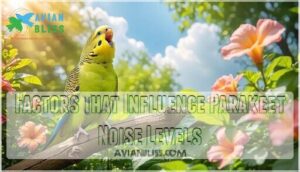
You’ll notice your parakeet’s noise levels change throughout the day based on several key factors.
Their natural rhythms, social interactions, and surroundings all play important roles in determining when and how loudly they vocalize.
They are influenced by their social interactions and surroundings, which can cause variations in their noise levels.
Time of Day
Three distinct daily cycles shape your parakeet’s noise patterns throughout each day.
Morning vocalizations peak at dawn when these diurnal birds naturally greet daylight with enthusiastic chirping and calling.
Early morning noise can start surprisingly early, mimicking a rooster’s schedule as they announce the new day.
Midday brings quieter periods when they rest and preen, while evening calm gradually settles in as dusk approaches.
Your feathered friend’s internal clock drives these predictable noise levels, with the most vocal periods occurring during their active daylight hours.
Understanding effective noise reduction methods can help minimize disruptions caused by your parakeet’s vocal nature.
Roosting Behavior
When daylight fades, roosting patterns dramatically shift your parakeet’s vocal communication. Flock behavior intensifies as evening approaches, with social interactions peaking during communal roosting.
You’ll notice bird noise levels fluctuate based on group dynamics and environmental factors. However, evening calm typically follows initial chatter as your feathered friends settle in.
Understanding these roosting behaviors helps with parakeet noise reduction strategies. Quiet parakeet breeds may still participate in this natural cycle, though their vocalizations remain gentler than more boisterous varieties during these twilight gatherings.
This behavior is influenced by complex bird social structures that shape their interactions and communication.
Environmental Stimuli
Environmental factors substantially influence your parakeet’s noise levels through various stimuli that trigger vocal responses.
Noise pollution from urban environments, sudden weather changes, and artificial lighting effects can startle these sensitive birds into loud squawking or chirping.
Thunder, fireworks, vacuum cleaners, and other environmental noise sources create stress that amplifies their natural vocalizations.
Even subtle environmental conditions like temperature shifts or unfamiliar natural sounds can prompt increased chatter as your bird responds to perceived threats or changes in their surroundings, which can be triggered by noise pollution, sudden weather changes, or artificial lighting effects.
Reasons Behind Squawking Behavior
When your parakeet squawks loudly, it’s usually trying to tell you something important about its current state or needs.
This sharp, attention-grabbing sound serves as your bird’s primary way to communicate fear, hunger, pain, or its desire to connect with you or other birds nearby, which can be a sign of its need for connection.
Fear

When parakeets encounter something frightening, they’ll emit loud squawks as their primary stress signal.
Fear responses can stem from sudden movements, unfamiliar objects, or perceived threats in their environment.
These anxiety triggers cause panic behaviors that manifest as sharp, repetitive calls.
You’ll notice distress through these parakeet loud calls, which differ from normal chatter.
Understanding these phobia signs helps you identify what’s causing your bird’s upset and implement parakeet noise solutions to create a calmer, safer space.
Hunger

Empty food bowls trigger parakeet loud calls as hunger cues signal their immediate needs.
You’ll notice these feeding time alerts become more frequent when nutrient deficiency develops.
Food deprivation creates starvation signs that manifest as excessive noise and bird noise patterns.
Addressing hunger promptly with proper nutrition eliminates these parakeet noise solutions while maintaining your bird’s health and reducing unnecessary vocalizations.
And Injury

Physical trauma triggers immediate vocal responses from your feathered friend.
When parakeets experience pain from injuries like broken bones, cuts, or internal damage, they’ll produce sharp distress calls that sound distinctly different from normal chatter.
These emergency care signals help you identify when your bird needs immediate veterinary attention.
Listen for intense, repetitive squawking combined with unusual body language indicating serious bird health issues, which require immediate action.
Communication With Birds

Social parakeets naturally squawk to communicate with their feathered friends, using these vocalizations as bird language for flock coordination.
Your parakeet’s squawking often represents normal social interaction and vocal learning, especially when they hear other birds nearby.
Understanding these avian cues helps you recognize when squawking signals healthy communication versus distress in your pet.
Recognizing stress and anxiety factors is essential in addressing unwanted squawking behaviors.
Addressing Unwanted Noise

Managing parakeet noise requires consistent training and environmental modifications. Create calm environments by reducing sudden sounds and providing adequate space.
Bird training using positive reinforcement teaches quiet techniques effectively. Sound management includes covering cages partially and establishing routines.
Address unwanted noise by identifying triggers like hunger or boredom. Parakeet soundproofing tips include strategic cage placement away from high-traffic areas for maximum noise reduction.
Reasons Behind Hissing Behavior
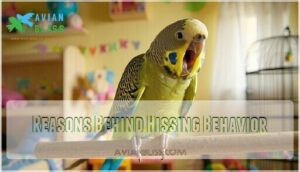
When your parakeet hisses, it’s sending a clear warning signal that something isn’t right in its environment.
This defensive vocalization typically means your bird feels threatened, needs more personal space, or is communicating discomfort to you or other birds nearby, which can be a clear sign that it needs more space.
Warning Signs of Discomfort
Hissing serves as your parakeet’s primary warning system when they feel threatened or uncomfortable.
These sharp, defensive sounds indicate your bird needs immediate space and shouldn’t be approached.
Common discomfort signs include cage overcrowding, sudden movements, or unfamiliar environments.
Recognizing these stress indicators helps you address anxiety cues before they escalate into more severe distress behaviors, which can be triggered by defensive sounds.
Need for Personal Space
When parakeets feel crowded or overwhelmed, they’ll hiss to establish Social Boundaries and communicate their Space Requirements.
This Territorial Behavior signals they need Personal Comfort and Quiet Zones to feel secure.
Recognizing these parakeet stress sounds helps you respect their personal space, reducing noise levels and promoting parakeet happy noises through better parakeet vocal communication understanding.
Communicating With Other Birds
When you observe your parakeet hissing at other birds, you’re witnessing their natural flock behavior in action.
This vocal communication serves as a boundary-setting mechanism within social interactions, preventing conflicts before they escalate.
Bird calls like hissing help establish pecking order and maintain harmony.
Your parakeet’s communication styles include these warning vocalizations to signal "back off" to cage mates, demonstrating their sophisticated vocal learning abilities and parakeet talking sounds that keep the peace, showcasing their ability to use warning vocalizations.
Reasons Behind Singing Behavior
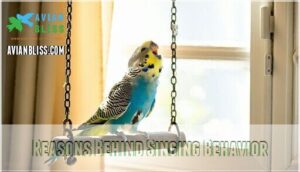
You’ll find your parakeet singing when they’re genuinely happy and feeling secure in their environment.
This melodic behavior serves as both a natural expression of contentment and a way to communicate their positive emotional state to you and other birds nearby, which is a key aspect of their environment.
Vocalization as Communication
When you hear your parakeet singing, you’re witnessing sophisticated vocal learning in action.
These birds use sound patterns and communication styles to express themselves through complex vocalizations.
Bird speech serves multiple purposes in their communication system:
- Social signals help establish flock hierarchy and relationships
- Parakeet talking sounds mimic environmental noises for bonding
- Bird sounds and meanings vary based on emotional states
- Vocalization psychology reveals their cognitive processing abilities
Reasons for Singing
When your parakeet breaks into song, you’re witnessing pure Joyful Sounds in action.
These melodic expressions signal contentment and well-being, as singing represents your bird’s happiest moments.
| Song Pattern | Meaning | When It Occurs |
|---|---|---|
| Happy Chirps | General contentment | Throughout the day |
| Melodic warbles | Breeding behavior | Mating season |
| Soft whistling | Relaxed state | Evening hours |
| Complex sequences | Vocal Learning | Social interaction |
| Repetitive notes | Territory marking | Morning periods |
Parakeets use vocalizations for communication, and chirping melodies indicate your feathered friend feels safe and secure in their environment.
Reasons Behind Chattering Behavior

When you hear your parakeet chattering rapidly, it’s usually because they’re in the mood for romance.
This vocal behavior peaks during mating season when males use chattering sequences to attract females and show off their social skills.
Chattering During Mating
When males enter mating season, their chattering becomes a romantic symphony designed to win over potential mates.
This soft, rapid vocalization serves as courtship behavior, accompanied by head bobbing and feather displays.
Males use these vocal displays during breeding seasons to demonstrate their fitness and attract females.
The chattering creates essential social interactions that strengthen pair bonds and coordinate mating activities between partners.
Understanding the role of mating behavior patterns is vital in recognizing the nuances of parakeet communication during courtship.
Squawking and Fear
While chattering shows contentment during mating season, squawking reveals a different story entirely.
Fear responses trigger loud squawking when your parakeet feels threatened or overwhelmed. Understanding these fear signals helps you create a calmer environment and implement effective noise reduction strategies.
Common squawk triggers include:
- Sudden movements or loud environmental sounds
- Unfamiliar objects or people approaching their territory
- Being handled when they’re not comfortable with touch
Bird anxiety manifests through these sharp vocalizations, signaling your pet needs reassurance and space to feel secure again, which can be achieved by recognizing squawk triggers and addressing the underlying causes of loud squawking.
Reasons Behind Loud Chirping
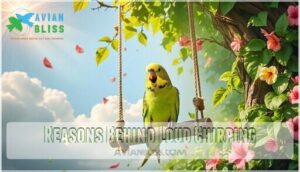
When you hear your parakeet chirping loudly, it’s often trying to tell you something important about its needs or feelings.
These vocal birds use loud chirps to express joy, signal hunger, call for attention, or communicate loneliness to their flock.
Causes of Loud Chirping
Your feathered friend’s loud chirping often signals joy, hunger, loneliness, or attention-seeking behavior.
These vocalizations indicate your parakeet’s emotional state and basic needs.
Noise levels spike when parakeets feel excited, isolated, or stressed.
Bird stress from environmental changes creates distinct chirp patterns that differ from happy sounds.
Noise triggers include new surroundings, loud sounds, or lack of vocal stimulation from interaction.
Dealing With Excessive Noise
When excessive noise becomes overwhelming, targeted interventions restore harmony to your home environment.
Effective noise reduction requires consistent training and environmental modifications to address underlying causes of heightened vocalizations. Understanding the factors that influence nocturnal bird chirping can also provide valuable insights into managing parakeet noise.
- Create calm environments by reducing external stimuli and maintaining consistent routines
- Implement quiet training using positive reinforcement when birds exhibit appropriate sound management
- Enhance bird socialization through regular interaction to prevent attention-seeking behaviors
- Apply parakeet soundproofing tips like strategic cage placement away from high-traffic areas
Encouraging Quiet Behavio
Since positive reinforcement works like magic for training, reward your parakeet’s quiet behavior with treats and praise.
Create calm environments by reducing loud noises and providing mental stimulation through toys.
Establish parakeet quiet time routines using consistent social cues like saying "quiet."
This bird socialization approach encourages quieter behavior through patient, consistent quiet training and effective noise reduction strategies.
Using a noise reduction system can also help minimize disturbance.
Signs of Unhappy Tweets and Their Causes

You can identify unhappy parakeets through specific distress signals that indicate discomfort or unmet needs.
These vocalizations include sharp chirrups showing agitation, excessive squawking from fear or pain, and screaming that signals serious distress requiring immediate attention, such as sharp chirrups.
Unhappy Tweets and Causes
Your parakeet’s unhappy tweets serve as clear Fear Signals that something’s wrong in their world.
These sharp, repetitive vocalizations indicate Bird Stress from various Noise Triggers like sudden movements, unfamiliar sounds, or environmental changes.
When you hear these distress calls, your bird’s Emotional Needs aren’t being met, requiring immediate attention to restore their comfort and security.
Signs of Distress
Recognizing distress signals helps you respond quickly to your bird’s needs.
Watch for sharp, repetitive screaming that signals fear or panic behavior when something startles them.
Stress indicators include frantic wing flapping, heavy breathing, or cowering in corners.
These alarm noises mean your parakeet feels threatened and needs immediate comfort to restore their sense of safety and security.
Addressing Bird’s Needs
When your parakeet’s vocalizations signal distress, prompt action makes all the difference.
Check their water and food first—hunger drives excessive noise levels. Verify proper cage cleaning and social interaction daily.
Environmental enrichment through toys reduces boredom-related communication. Meeting these basic bird needs transforms noisy complaints into contented chirps, creating the peaceful home you deserve.
Beak Grinding and Its Meaning

Not all parakeet sounds signal distress or excitement.
Beak grinding represents one of the most positive vocalizations you’ll hear from your feathered friend.
This gentle, rhythmic sound occurs when parakeets rub their upper and lower beaks together, creating a soft crunching noise that’s quite different from their other communication methods.
You’ll typically notice beak grinding during your parakeet’s quietest moments—right before sleep, after a satisfying meal, or when they’re feeling particularly relaxed.
This calm behavior serves as one of the clearest contentment signs in parakeet happiness.
Think of it as your bird’s version of a cat’s purr.
The grinding also helps maintain beak health by removing food debris.
However, watch for changes in frequency or intensity, as excessive grinding might indicate discomfort requiring veterinary attention.
Tips for Encouraging Quiet Behavior in Parakeets
Creating a calmer household for your feathered friends doesn’t require magic—just smart strategies and consistent effort.
By implementing proper training techniques and environmental modifications, you can substantially reduce excessive vocalizations while maintaining your parakeets’ natural communication needs.
Cage Size Matters: Provide spacious housing with multiple perches at different heights. This reduces territorial disputes and stress-related noise levels.
Quiet Training: Use positive reinforcement to reward calm behavior. When your parakeets remain quiet, offer treats and gentle praise immediately.
Calm Environment: Maintain consistent daily routines and avoid sudden loud noises that trigger alarm calls. Cover the cage at night to encourage natural sleep patterns.
Noise Reduction: Address basic needs promptly—hunger, thirst, or boredom often cause attention-seeking vocalizations. Regular interaction and playtime prevent loneliness-induced squawking.
Bird Socialization: Guarantee adequate social interaction through training sessions and supervised out-of-cage time. Mental stimulation through toys and puzzles keeps minds occupied, reducing excessive noise. Providing parakeets with calming toy options can also help minimize stress and noise.
Consistency and patience yield the best results for encouraging quiet behavior in your parakeets.
Frequently Asked Questions (FAQs)
Are parakeets noisy?
Don’t cry over spilled milk.
You’ll find parakeets are moderately noisy birds.
They’re most vocal during daylight hours, especially mornings, producing various sounds from cheerful chirping to attention-seeking squawks, but they’re generally quiet at night.
Why do parakeets make loud noise?
Your parakeet’s loud vocalizations stem from natural communication needs – they’re expressing emotions like fear, excitement, hunger, or loneliness.
Social birds by nature, they’ll squawk to attract attention, signal distress, or interact with their flock (including you), which fulfills their need for communication.
What does it mean if a parakeet makes an amusing sound?
When you hear amusing sounds from your parakeet, it’s likely expressing contentment, curiosity, or playfulness.
These charming vocalizations often include chattering, soft chirping, or mimicry that signals your bird’s happy, relaxed state.
Is it normal for parakeets to make popping noises?
One parakeet owner noticed their bird making soft popping sounds while preening—completely normal behavior.
You’ll often hear these quiet pops when your parakeet grooms, stretches, or repositions itself comfortably in its cage.
Are parakeets quiet at night?
Yes, parakeets are generally quiet at night since they’re diurnal birds. They’ll only make noise if startled or frightened by sudden movements or lights in darkness.
What factors affect parakeet noise levels?
Several factors influence your parakeet’s noise levels throughout the day.
Time of day matters most—they’re loudest during morning and early afternoon.
Breeding season, social interactions, environmental stimuli, and individual personality also affect vocalization patterns substantially, and are key to understanding your parakeet’s noise levels.
What does it mean when parakeets chirp really loud?
Your parakeet’s loud chirping typically signals joy, hunger, loneliness, or attention-seeking behavior.
They’re naturally social creatures who communicate through various vocalizations.
Consider their environment and recent interactions to understand what’s driving their vocal excitement.
How many sounds can a parakeet make?
Like a feathered orchestra conductor, your parakeet’s vocal repertoire spans approximately 11-15 distinct sounds.
You’ll hear chirping, squawking, hissing, singing, chattering, screaming, beak grinding, warbling, whistling, growling, and various combination sounds that express their emotions and needs, including vocal repertoire.
How loud are parakeets?
You’ll find parakeets moderately loud, reaching 65+ decibels when screaming. They’re most vocal during morning hours and when excited, but generally quieter than larger parrots, making manageable companion birds.
Can parakeets learn specific words or phrases?
Yes, parakeets can learn specific words and phrases.
These feathered mimics possess cognitive abilities comparable to a 7-month-old baby, allowing them to imitate human speech, environmental sounds, and other birds’ vocalizations effectively.
They can imitate human speech and other sounds, making them interesting companions.
Conclusion
Like a town crier announcing the morning news, you’ve learned that parakeets are naturally vocal creatures.
Understanding these nine distinct sounds helps you respond appropriately to your bird’s needs.
Whether they’re chattering happily or squawking for attention, recognizing these vocalizations strengthens your bond with your feathered companion.
Remember, asking "are parakeets loud" and understanding the "9 noises explained" leads to better care and a more harmonious relationship with your pet, building a stronger connection through naturally vocal interactions.