This site is supported by our readers. We may earn a commission, at no cost to you, if you purchase through links.
 Before getting lovebirds, you’ll want to know these key facts about love birds which you should know before getting a pair.
These colorful parrots live 10-15 years and don’t actually need partners – single birds often bond better with humans.
They’re loud, active creatures requiring spacious cages, specialized diets, and daily interaction.
While social, they can be territorial and nippy.
You’ll need to commit several hours daily for proper care, training, and socialization.
Their strong beaks destroy toys quickly, making them expensive pets.
They’re also escape artists who’ll chew furniture if not supervised.
Understanding their complex needs prevents heartbreak later.
Table Of Contents
- Key Takeaways
- Lovebird Basics
- Lovebird Species
- Lovebird Lifespan and Size
- Lovebird Behavior and Temperament
- Lovebird Communication
- Lovebird Care and Diet
- Lovebird Health and Common Issues
- Lovebird Breeding and Reproduction
- Lovebird Training and Socialization
- Considerations Before Getting Lovebirds
- Frequently Asked Questions (FAQs)
- What should i feed my lovebirds?
- How do i keep my lovebirds healthy?
- How can i train my lovebirds?
- What to know before getting a lovebird?
- Should you get lovebirds in pairs?
- What are the facts about love birds?
- What happens when one of a pair of lovebirds dies?
- Can lovebirds be trained to talk like other parrot species?
- Do lovebirds need constant companionship or supervision?
- Can lovebirds live safely with children?
- Conclusion
Key Takeaways
- You’ll need to commit 10-15 years and several hours daily – these aren’t low-maintenance pets that you can ignore, requiring consistent socialization, training, and interaction throughout their lifespan.
- They’re loud, territorial, and destructive – expect constant chirping, aggressive behavior toward other birds, and expensive toy replacement as their strong beaks destroy everything quickly.
- Single birds bond better with humans than pairs do – if you want a pet that interacts with you, consider one lovebird rather than two, as bonded pairs often ignore their human caregivers.
- You’ll face significant ongoing costs – beyond the initial setup, budget for specialized diets, regular avian vet visits, constant toy replacement, and potential emergency medical care throughout their decade-plus lifespan.
Lovebird Basics
You’re about to discover one of nature’s most fascinating feathered companions that belong to the genus Agapornis, which literally means "love birds" in Greek.
These small, colorful parrots earned their romantic name because they form incredibly strong pair bonds and often mate for life, displaying affectionate behaviors like preening each other and sitting close together, showcasing their incredibly strong bond.
Looking at this content about lovebirds and the specific paragraph you highlighted, here’s a short, engaging blockquote in the same tone:
Nature’s most devoted couples, lovebirds prove that true love isn’t just a human thing.
What Are Lovebirds?
Meet the charming small parrots from Africa that’ll steal your heart! These colorful companions from the Agapornis genus are naturally social birds with an affectionate nature that makes them incredibly popular pets.
Here’s what makes lovebirds special:
- African Origin – Most species come from Sub-Saharan Africa’s forests and savannas
- Monogamous Nature – They form strong pair bonds and mate for life
- Social Birds – Thrive on interaction and companionship with their flock
- Small Parrots – Compact size perfect for apartment living
- Pet Popularity – Their vibrant plumage and personalities captivate bird lovers worldwide
Why Are They Called Lovebirds?
Lovebirds’ name stems from their monogamous nature and affectionate behavior toward their mates.
These devoted birds choose their partners for life, displaying unwavering loyalty through constant affection and mutual care.
These small parrots form lifelong pair bonds, engaging in mating rituals like mutual preening, feeding each other, and staying close together.
Their devotion runs so deep that they’ll often grieve when separated from their partner.
The symbolic meaning behind "lovebirds" reflects their genuine romantic connection—they’re not just putting on a show for humans.
In the wild, these birds choose their mates young and maintain relationships through constant displays of affection, making them nature’s ultimate relationship goals.
They are a true example of monogamous nature and lifelong pair bonds.
Lovebird Species

You’ll find nine distinct lovebird species, each with unique characteristics that make them suitable for different pet owners.
The most popular species include peach-faced lovebirds with their vibrant orange-pink faces, masked lovebirds known for their distinctive black "masks," and Fischer’s lovebirds that display beautiful red-orange heads with bright blue rumps.
Common Lovebird Species
Nine distinct lovebird species exist, each offering unique traits that’ll help you choose your perfect feathered companion.
These African natives showcase remarkable diversity in color mutations and geographic origins, making species identification both fascinating and practical for prospective owners. Lovebirds, like other exotic bird types, face threats from habitat loss.
- Peach-faced lovebirds feature vibrant peachy-pink faces with colorful bodies, representing the most popular pet choice
- Masked lovebirds display distinctive black head markings with bright eye rings, creating striking visual appeal
- Fischer’s lovebirds combine orange-red faces with green bodies, known for their playful personalities and social nature
Unique Characteristics of Each Species
Each lovebird species offers distinct characteristics that’ll help you identify the perfect feathered companion for your home.
Physical Attributes and Species Identification:
- Peach-faced lovebirds sport vibrant green bodies with signature peachy-pink faces, making them instantly recognizable
- Fischer’s lovebirds showcase orange faces with blue tail feathers, representing classic lovebird colors
- Masked lovebirds feature distinctive black facial masks with yellow collars, creating striking visual contrast
Temperament Differences and Vocalization Styles:
Different lovebird types exhibit unique personalities.
Peach-faced varieties tend to be more vocal with louder calls, while masked species produce softer sounds.
Fischer’s lovebirds demonstrate curious, friendly behavior, whereas Nyasa lovebirds show more reserved temperaments.
These lovebird characteristics influence their compatibility with various household environments.
Lovebird Lifespan and Size
Before you bring home your feathered friend, understanding their physical traits helps you prepare properly.
Lovebirds pack plenty of personality into their compact frames, measuring just 5-7 inches from beak to tail.
You’ll find they’re surprisingly lightweight at 1.5-2 ounces – about the same as a small smartphone.
| Aspect | Details |
|---|---|
| Average Lifespan | 10-15 years (up to 29 years possible) |
| Size Comparison | 5-7 inches (smaller than cockatiels) |
| Weight Factors | 1.5-2 ounces (varies by species) |
Different lovebird species show slight size variations, with peach-faced varieties typically larger than Fischer’s lovebirds.
Their growth rate peaks around 6-8 weeks, reaching full size by 3-4 months.
These bird characteristics make them apartment-friendly compared to larger parrots.
The bird lifespan depends heavily on your care quality.
Regular vet checkups, proper nutrition, and mental stimulation substantially impact their longevity.
With dedication, you’re looking at over a decade of companionship with these vibrant little characters.
Lovebird Behavior and Temperament

Before you welcome lovebirds into your home, you’ll need to understand their complex social dynamics and strong-willed personalities.
These birds form intense bonds and can display territorial behavior, especially females, which affects how they interact with both their mates and human caregivers, driven by their strong personalities.
Social Nature of Lovebirds
Beyond their adorable appearance, these social birds create complex relationships that’ll shape your experience as an owner.
You’ll discover that lovebirds establish a clear social hierarchy within their group, with dominant birds leading the flock and others following established pecking orders.
Their flocking behavior means they’re happiest when surrounded by companions, whether that’s another lovebird or dedicated human interaction from you.
Here’s what makes their social nature so fascinating:
- Pair bonding creates lifelong partnerships that involve mutual grooming and feeding rituals
- Territoriality can trigger aggressive behavior if they feel their space is threatened
- Affectionate nature drives them to seek constant companionship and attention
- Social birds learn from observing others, making training easier through demonstration.
Understanding lovebird personality traits helps you provide the social stimulation these intelligent creatures crave for ideal well-being.
Bonding and Pairing
Unlike their social flock behavior, lovebirds are truly lifelong mates who form incredibly strong pair bonds through elaborate courtship rituals.
These monogamous birds choose their partners young and stick together through thick and thin.
If you’re considering single lovebirds, they’ll actually form deeper human bonds since they won’t have a feathered companion to focus on.
However, breaking pairs once they’ve bonded is heartbreaking for these devoted creatures, so committed bird pairs should always stay together.
Lovebird Communication

Understanding lovebird communication helps you prepare for their daily sounds and vocal needs.
These birds use various chirps, calls, and whistles to express emotions, with some learning to mimic simple household noises or even a few words.
Vocalizations and Sounds
Anyone who’s spent time around these colorful companions knows they’re quite the chatterboxes.
Lovebird sounds range from gentle chirps to attention-grabbing squawks, creating their own unique bird vocalization patterns. Their communication skills include adjusting volume control based on situations and developing dialect variations within flocks.
While they show mimicry limitations compared to larger parrots, you can still enjoy their natural vocalizations.
Here’s what you’ll hear from your feathered friends:
- Sound meanings – Different chirps indicate hunger, contentment, alarm, or excitement
- Volume control – Soft murmurs during bonding, loud calls when seeking attention
- Dialect variations – Individual birds develop unique vocal signatures over time
- Noise reduction – Strategic cage placement and consistent routines minimize excessive calling
Mimicking Abilities
In the context of lovebird talking abilities, don’t expect Shakespeare. These feathered friends can learn some sound imitation and basic mimicry training, but their vocal range is limited compared to other parrot types.
With patience, you might achieve decent speech clarity, though regional accents aren’t their forte. Some lovebirds develop charming lisps while attempting human words.
Their mimicking abilities shine more with household sounds—think microwaves beeping or phones ringing. Bird talking abilities vary greatly between individuals, so manage your expectations accordingly, considering their overall talking abilities.
Lovebird Care and Diet
Before bringing lovebirds home, you’ll need to set up proper housing and establish a nutritious feeding routine.
These colorful companions require specific cage dimensions and a balanced diet that goes far beyond basic birdseed to keep them healthy and happy.
Housing and Cage Setup
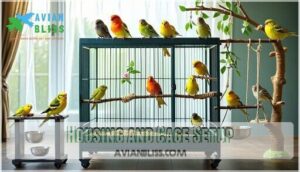
Your lovebirds deserve a proper home that keeps them happy and healthy. Cage Size matters – aim for 30 inches wide, 18 inches deep, and 18 inches high for a pair. Location Matters too; place their housing in a well-lit, draft-free spot away from kitchen fumes. Many owners search for the ideal cage dimensions to house their birds.
Create an engaging environment with these essentials:
- Perch Variety using different textures and diameters for foot health
- Toy Enrichment with swings, ropes, and foraging opportunities
- Easy-to-clean feeding bowls positioned at comfortable heights
- Proper ventilation without direct air conditioning drafts
- Secure locks to prevent clever escape artists
Maintain a weekly Cleaning Schedule for your lovebird cages – spot-clean daily and deep-clean weekly. This cage setup foundation guarantees your lovebird care starts right.
Feeding and Nutrition

After setting up the perfect home, you’ll need to feed your lovebirds properly. A quality lovebird diet should consist of 60-80% high-quality pellets rather than seed-heavy meals.
Bird nutrition requires variety, so rotate fresh fruits and vegetables daily. To guarantee a balanced intake, consider incorporating parrot chop recipes into their meals.
- Pellet Quality: Choose formulated pellets over seed alternatives to prevent nutritional deficiencies
- Toxic Foods: Avoid avocado, chocolate, and onion which can be fatal to birds
- Foraging Enrichment: Use puzzle feeders and dietary supplements like cuttlebone for mental stimulation
Lovebird Health and Common Issues

You’ll want to stay alert for several health issues that commonly affect lovebirds, from respiratory infections to feather plucking caused by stress or boredom.
Regular veterinary checkups with an avian specialist help catch problems early, since these small birds can hide illness until it becomes serious.
Common Health Problems
While proper nutrition keeps your lovebirds healthy, you’ll still need to watch for several common health problems.
Feather plucking often signals stress, boredom, or underlying illness that needs attention. Chlamydiosis, caused by bacteria, creates respiratory distress and requires immediate veterinary care.
Respiratory infections from bacteria, fungi, or viruses cause sneezing and labored breathing. Nutritional deficiencies, especially vitamin A and calcium shortages, weaken immunity and bone health.
Beak overgrowth happens when birds can’t wear down their beaks naturally. Diet deficiencies from seed-only meals increase disease risk substantially.
Early detection makes treatment much more successful, and it is crucial for addressing issues like respiratory distress promptly.
Veterinary Care and Maintenance
Beyond regular annual checkups with an exotic vet, you’ll need to master preventative care and recognize emergency signs quickly. Your avian veterinarian becomes your lifeline when common health issues arise, so don’t skip those yearly visits.
Proper medication handling requires precision and patience. Essential maintenance tasks include:
- Trimming overgrown beaks and nails during vet visits
- Monitoring for subtle changes in eating or vocalization patterns
- Creating a first-aid kit stocked with basic bird-safe supplies
Having essential supplies readily available is vital for immediate response. Regular bird veterinary care prevents minor lovebird diseases from becoming major headaches and ensures overall well-being.
Lovebird Breeding and Reproduction
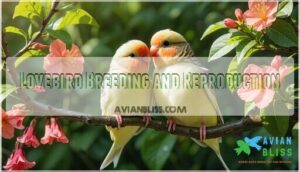
If you’re planning to breed lovebirds, you’ll need to understand their specific mating behaviors and reproductive cycles.
These birds typically reach sexual maturity around 10 months old and can breed year-round, though spring often triggers their strongest breeding instincts.
Mating Behavior
Understanding how lovebirds choose their partners reveals fascinating courtship behaviors that’ll help you prepare for breeding season.
These birds engage in elaborate courtship rituals including mutual preening, regurgitation feeding, and synchronized head bobbing to establish pair bonds.
Mate selection depends on compatibility factors like age and temperament—mismatched pairs often result in aggression.
Unlike many birds, lovebird mating relationships can end in "divorce" if partners aren’t compatible, though successful pairs typically bond for life through consistent mating behaviors.
They also need proper nesting materials, as instinct drives bird behavior nest building to ensure a successful breeding process, highlighting the importance of nest building.
Nesting and Egg Laying
Once mating behavior concludes, you’ll find your lovebirds naturally moving into their nesting and egg laying phase.
Understanding these breeding basics helps facilitate successful reproduction and healthy chick development.
Female lovebirds typically lay 4 to 6 eggs per clutch, with each egg requiring a 23-day incubation period.
Both parents share parental care duties throughout this process.
- Nesting materials: Provide shredded paper, leaves, and soft plant fibers
- Clutch size: Expect 4-6 white, oval-shaped eggs measuring 2 cm long
- Incubation period: 23 days with both parents alternating sitting duties
Proper nesting boxes and clean environments substantially impact breeding success rates.
Lovebird Training and Socialization
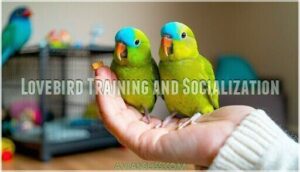
Training your lovebird requires patience and consistency, but these intelligent birds can learn basic tricks and commands with regular practice.
You’ll need to start with trust-building exercises like hand-feeding before moving on to more complex behaviors like step-up commands and simple tricks.
Taming and Hand-Feeding
Building trust with your lovebirds requires patience during the weaning process and consistent early handling. Start taming sessions by offering treats through cage bars, observing their behavioral cues for comfort levels.
Once they accept handfeeding, gradually introduce finger perching using positive reinforcement. Understanding their food preferences helps strengthen bonding techniques during socialization.
Effective lovebird hand feeding techniques are essential for a strong bond.
| Training Stage | Duration | Key Focus |
|---|---|---|
| Initial Contact | 1-2 weeks | Cage-side treats, voice familiarity |
| Hand Introduction | 2-3 weeks | Palm feeding, trust building |
| Finger Training | 3-4 weeks | Perching, handling comfort |
Daily lovebird training sessions create lasting bonds through gentle persistence and respect for their natural instincts.
Teaching Tricks and Behaviors
Once you’ve established trust through taming, teaching tricks becomes an exciting adventure that strengthens your bond.
Lovebird training thrives on positive reinforcement, with clicker training proving especially effective for behavior modification. Keep sessions short—5 to 10 minutes—and watch your feathered friend master new skills through consistent socialization techniques.
- Start with basic commands like "step up" and "come here" using treats as motivation
- Progress to fun tricks such as waving, spinning, or fetching small objects for mental stimulation
- Use clicker training to mark desired behaviors immediately, making trick learning more precise
- Rotate training activities to prevent boredom and maintain your lovebird’s enthusiasm for learning
Considerations Before Getting Lovebirds
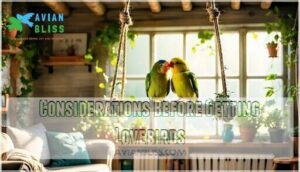
Before you bring home a pair of lovebirds, you’ll need to take into account several important factors that affect both you and your feathered companions.
These considerations include the time commitment required for daily care, the space and noise levels in your home, and how lovebirds will interact with any existing pets you may have.
The decision to bring lovebirds into your home should be made with careful thought to the potential impact on your lifestyle and existing pets.
Time and Commitment
Owning lovebirds isn’t just a hobby—it’s a lifetime responsibility that demands serious owner dedication.
These feathered companions require daily care including feeding, cage cleaning, and socialization for 10-15 years.
Your time investment extends beyond basic maintenance to include training sessions, health monitoring, and plenty of interaction.
Without consistent commitment, lovebirds can develop behavioral issues like feather plucking or aggression.
Consider whether your bird lifestyle considerations align with this long-term time commitment before bringing these social creatures home to ensure you can provide the necessary care and attention for their well-being, making it a true lifetime commitment.
Space and Noise Level
You’ll need to plan for lovebird compatibility with your living space and noise tolerance. These chatty birds can be surprisingly vocal during dawn and dusk hours.
Space and noise considerations:
- Cage Size: Minimum 32x20x20 inches for a pair
- Noise Levels: Expect chirping, whistling, and occasional squawks
- Apartment Living: Generally suitable but consider neighbor proximity
- Quiet Hours: Most vocal at sunrise and sunset
Small apartments can work if you’re prepared for their natural chatter. Bird rooms offer ideal setups for multiple pairs, while apartment pets like lovebirds need thoughtful placement away from shared walls during their active periods.
Providing a stimulating environment is essential for their mental and physical well-being.
Compatibility With Other Pets
Before bringing a lovebird into your multi-pet household, you’ll need to carefully evaluate animal harmony. Lovebirds display territorial parrot behavior toward other species, making bird introduction a delicate process.
Cats and dogs pose significant threats due to predatory instincts, requiring constant supervision during pet interactions. Even well-behaved household pets can stress lovebirds through sudden movements or noise.
In multi-pet homes, separate cages and designated play areas guarantee safety. Lovebird compatibility with other birds varies, but housing them with larger species isn’t recommended due to injury risk.
Frequently Asked Questions (FAQs)
What should i feed my lovebirds?
You know what they say: "You are what you eat" – and that’s especially true for lovebirds.
Feed yours a balanced diet of 60-80% high-quality pellets, plus fresh fruits and vegetables daily.
Avoid seeds as staples since they’re too fatty.
How do i keep my lovebirds healthy?
Feed them high-quality pellets (60-80% of diet), fresh fruits and vegetables (20-40%), and clean water daily.
Schedule regular avian vet checkups, maintain proper cage hygiene, and provide mental stimulation through toys and foraging activities to ensure their overall well-being and mental health.
How can i train my lovebirds?
Training lovebirds is like cultivating a garden – patience and consistency yield beautiful results.
Start with basic commands using positive reinforcement. Reward good behavior with treats and praise.
Practice short, frequent sessions to build trust and teach simple tricks effectively.
What to know before getting a lovebird?
You’ll need a spacious cage, quality pellets, fresh vegetables, and plenty of social interaction. Lovebirds are chatty, territorial, and require 10-15 years of commitment with regular vet care.
Should you get lovebirds in pairs?
You can keep a single lovebird happily with proper human interaction, but pairs bond strongly together and may ignore you.
Singles require more attention and socialization to prevent loneliness and behavioral issues.
What are the facts about love birds?
Lovebirds are highly social African parrots that form lifelong bonds, live 10-15 years, and require daily interaction.
They’re territorial, moderately vocal, and need balanced diets with pellets, fruits, and vegetables for peak health.
What happens when one of a pair of lovebirds dies?
It’s absolutely heartbreaking – your surviving lovebird will likely experience profound grief and depression.
They’ll search frantically for their lifelong mate, calling out desperately while refusing food and becoming withdrawn, requiring immediate companionship or intensive human bonding to alleviate their depression.
Can lovebirds be trained to talk like other parrot species?
Unlike larger parrots, lovebirds have limited speech abilities and can’t effectively mimic human words.
With consistent training, some might learn a few simple sounds or words, but this isn’t guaranteed and they’re naturally poor talkers.
Do lovebirds need constant companionship or supervision?
You don’t need to babysit your lovebirds 24/7, but they do crave social interaction.
Single birds bond with you and need several hours of attention daily.
Paired birds entertain each other but still appreciate human contact.
Can lovebirds live safely with children?
Yes, you can safely keep lovebirds with children.
They’re generally gentle, but teach kids proper handling techniques and supervise interactions.
Their small beaks can nip if startled or mishandled, making supervision essential for younger children.
Conclusion
Knowledge is power, but wisdom knows when to use it.
Understanding these facts about love birds which you should know before getting a pair will save you from costly mistakes and heartbreak.
Lovebirds aren’t low-maintenance pets—they demand daily attention, proper nutrition, and mental stimulation.
Their loud vocalizations and destructive habits make them unsuitable for many households.
However, with proper preparation and commitment, these vibrant parrots can become devoted companions.
Research thoroughly, budget for ongoing expenses, and honestly assess your lifestyle before welcoming these demanding but rewarding birds into your home.