This site is supported by our readers. We may earn a commission, at no cost to you, if you purchase through links.
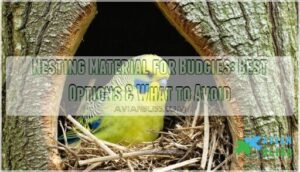 Your budgies need safe, comfortable nesting material for budgies that mimics their natural tree-hollow environment.
The best options include untreated wood shavings, wood pellets, and shredded paper—all excellent for absorbing moisture and providing insulation.
You can also use dried grass, dead leaves, and small twigs to create that authentic "home sweet home" feeling.
Avoid anything toxic like cedar shavings, treated materials, or food items that’ll spoil and attract unwanted guests.
The key is keeping things clean, dry, and chemical-free so your feathered friends can focus on what they do best—being amazing parents.
There’s more to creating the perfect nesting setup than just throwing materials in a box.
Table Of Contents
- Key Takeaways
- What Do Budgies Like in Their Nesting Box?
- What is The Best Material for Budgie Nesting?
- Will Budgies Lay Eggs Without a Nesting Box?
- When Should I Put a Nesting Box for Budgies?
- How Do I Add Flooring Materials to The Budgies Nesting Box?
- What Should I Avoid Putting in a Nesting Box?
- Frequently Asked Questions (FAQs)
- What nesting material do budgies like?
- What bedding is best for budgies?
- What can be used for bird nesting material?
- Why do budgies reject nesting material?
- What are some good nesting materials for budgies?
- How do I ensure chick development with nesting material?
- What should I consider when timing the introduction of nesting material?
- What materials should I avoid putting in a nesting box?
- How often should budgie nesting boxes be cleaned?
- What temperature should budgie nesting boxes maintain?
- Conclusion
Key Takeaways
- Choose safe, natural materials – Use untreated wood shavings, dried grass, shredded paper, or small twigs that mimic your budgies’ natural tree-hollow environment while avoiding toxic cedar shavings or treated materials.
- Maintain proper cleanliness and dryness – Replace bedding weekly to prevent mold and bacteria growth, and ensure materials stay dry to protect eggs and support healthy chick development.
- Create the right environment – Position nesting boxes in dark, warm areas away from drafts, and provide enough space (12×8×8 inches minimum) for comfortable movement during breeding.
- Time introduction carefully – Wait until your budgies are mature adults (around two years old) and introduce nesting boxes during the natural breeding season when you observe courtship behaviors.
What Do Budgies Like in Their Nesting Box?
Creating a comfortable nesting environment for your budgies requires understanding their natural preferences and instincts.
You’ll want to focus on providing the right combination of space, materials, and conditions that mimic what they’d seek in the wild.
Enough Space
When you’re setting up budgie nesting, think bigger than you might expect. Your feathered friends need adequate cage size to accommodate their wing span and activity levels during breeding season.
Here’s what proper spacing looks like:
- Standard budgies: 12×8×8 inches minimum for comfortable movement
- English budgies: 14×10×10 inches to handle their larger frames
- Multiple budgies: Extra room prevents territorial disputes during nesting
- Chick growth: Space for babies to develop without overcrowding parents
Safe nesting starts with room to breathe. Bird nesting material works best when there’s space to arrange it naturally, letting your budgies create their perfect bird nesting setup.
Comfortable Lining Material
Your budgie nesting comfort starts with the right lining materials.
Natural nesting fibers like dried grass and wood shavings offer superior absorbency levels compared to synthetic options, creating soft nesting material that mimics wild conditions.
Natural vs. synthetic materials show clear differences in material longevity and chick comfort.
Safe bird bedding should provide adequate softness comparison while maintaining breathability.
Wood shavings excel in budgie nesting applications due to their natural properties and durability.
Always prioritize materials that enhance your birds’ instinctive nesting behaviors, using natural properties to guide your choices.
A Dark Environment
Natural darkness creates a safe haven for budgie nesting, mimicking their wild tree cavity homes.
You’ll want to limit light exposure through small entrance holes, as excessive brightness can trigger stress responses and disrupt natural nesting behavior.
This privacy supports healthy chick development while reducing anxiety.
Dark environments encourage instinctive brooding patterns, helping your budgies feel secure during this vulnerable time.
Cleanliness
Consistently maintaining a clean environment ranks among your most critical responsibilities as a budgie breeder.
Mold prevention starts with proper ventilation and moisture control in the nesting box. Bacteria control requires regular sanitization methods using diluted white vinegar solutions before each breeding cycle.
Waste removal should happen weekly to prevent contamination. Replace regularly any soiled bedding materials to maintain hygiene importance.
Fresh food bowls must stay outside the nesting area to avoid attracting pests. To further prevent disease, consider daily cage cleaning.
Cleanliness directly impacts your chicks’ survival rates and overall health, making it a crucial aspect of budgie breeding.
Warm and Humid Environment
Temperature and humidity work hand-in-hand to create the perfect nursery environment.
You’ll want to position the nesting box away from drafts and air vents that can cause temperature fluctuations.
Proper humidity control prevents mold and bacteria growth while supporting healthy chick development.
Monitor moisture levels regularly—too dry causes egg problems, while excess humidity breeds harmful microorganisms.
Good air circulation maintains temperature stability without creating drafts.
Think of it as creating a cozy cocoon that protects against environmental extremes, ensuring a stable environment for growth and development with proper humidity control.
What is The Best Material for Budgie Nesting?
You’ll want to choose materials that mimic what budgies naturally encounter in tree cavities while keeping your feathered friends safe and comfortable.
The best options balance softness, absorbency, and safety to create an ideal environment for egg-laying and chick-rearing.
Wood Shavings and Wood Pellets
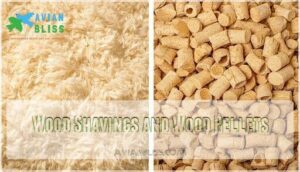
Wood shavings and wood pellets offer excellent shavings absorbency for budgie nesting, keeping eggs dry and preventing splayed legs.
Wood shavings create the perfect absorbent foundation that keeps your budgie eggs safe and dry.
Only use untreated aspen or pine varieties—aromatic woods like cedar contain toxic oils. Pellet safety depends on dust-free, chemical-free options.
Wood types matter: avoid treated materials that release harmful fumes. Dust concerns are real, so choose low-dust products.
Cost comparison shows shavings are typically cheaper than pellets. Both provide birdsafe nesting when properly selected. Some breeders replace shavings after eggs hatch.
Dried Grass, Dead Leaves, and Twigs

Moving beyond wood options, you’ll find that dried grass, dead leaves, and twigs create the most authentic Wild Nest Composition for your budgies.
These materials perfectly mirror what they’d encounter in nature, promoting Environmental Enrichment and natural behaviors.
Verify all nesting material comes from pesticide-free sources during Material Sourcing. Properly dried materials prevent Material Decomposition and mold growth.
The varied textures encourage instinctive nest-building while maintaining Chick Safety. Your budgies will appreciate this home-like environment that supports their breeding instincts.
Avoid using materials like yarn, which can cause bird entanglement issues.
Shredded Paper
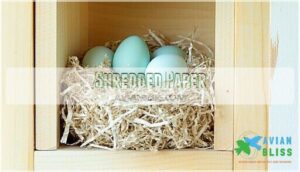
Shredded paper serves as another practical nesting material for budgies.
This budget-friendly option offers excellent paper absorbency while maintaining proper paper hygiene standards.
When selecting shredded paper for budgie nesting, consider these key factors:
- Paper safety: Choose unbleached, ink-free paper to avoid toxic chemicals
- Paper texture: Soft, fine strips work better than coarse shredded types
- Replacement frequency: Change shredded paper bedding weekly to prevent bacterial growth.
Your budgies will appreciate how this nesting material cushions their eggs while absorbing moisture effectively.
Will Budgies Lay Eggs Without a Nesting Box?
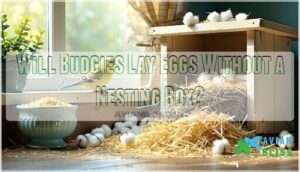
Why do budgies sometimes lay eggs in the strangest places? While budgies can lay eggs without a nesting box, this Box Necessity Debate isn’t black and white. Your feathered friends might deposit eggs on cage floors, food dishes, or even your shoulder during cuddle time!
| Nesting Scenario | Egg Laying Success | Chick Survival Rates |
|---|---|---|
| With proper nesting box | 85-95% | 70-80% |
| Cage floor only | 40-60% | 20-30% |
| Alternative nesting spots | 30-50% | 15-25% |
| No designated area | 20-40% | 5-15% |
| Stress conditions | 10-30% | 0-10% |
These Egg Laying Factors dramatically impact success. Without proper budgie nesting setups, eggs often crack, roll away, or fail to maintain proper temperature. Your budgie’s nesting behavior kicks into overdrive when breeding conditions are right, but Alternative Nesting rarely works well.
Artificial light exposure can also stimulate egg laying. The Clutch Size Impact becomes evident too – stressed budgies typically lay fewer eggs. While nesting material isn’t absolutely essential, providing a proper box transforms your budgie eggs from a risky gamble into a successful breeding experience.
When Should I Put a Nesting Box for Budgies?
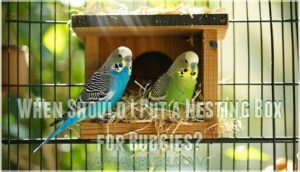
Timing your budgie nesting box introduction requires careful consideration of your bird’s maturity and natural cycles. Adult budgies typically reach breeding age around two years old, when they’re physically and emotionally prepared for reproduction responsibilities.
Key timing considerations include:
- Breeding season alignment – Introduce boxes during spring/summer when budgies naturally breed
- Rest periods – Allow six months between breeding cycles for female recovery
- Environmental control – Make certain proper daylight, warmth, and nutrition are provided before placement
- Mating behavior observation – Watch for courtship displays indicating readiness
Proper timing prevents stress on young birds while supporting successful chick protection and healthy breeding outcomes. Budgies, like other birds, benefit from a nesting box that provides optimal height and orientation.
How Do I Add Flooring Materials to The Budgies Nesting Box?
Setting up flooring materials correctly can make or break your budgie’s nesting experience. Start with layering materials strategically to create the perfect foundation for your feathered friends.
Here’s how to properly arrange your budgie nesting box flooring:
- Create a concave shape using wood shavings or shredded paper to prevent eggs from rolling around
- Add a mineral supplement block nearby for essential calcium during breeding season
- Use gradual introduction of materials, starting with firmer bases before adding softer layers
- Arrange materials loosely so your budgies can rearrange them according to their preferences
Remember, material arrangement matters more than quantity. A suitable budgie nesting box is vital for successful breeding.
Your budgies will likely kick out excess nesting material anyway, so don’t overdo it. Focus on creating a comfortable, safe environment with proper flooring materials that support natural nesting behaviors. The key is providing options while letting your budgies customize their nesting box to their liking.
What Should I Avoid Putting in a Nesting Box?
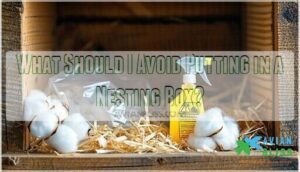
While some materials can create a cozy nesting environment, certain items can seriously harm your budgie or her eggs.
You’ll want to avoid anything toxic, wet, or chemically treated that could endanger your bird’s health during this vulnerable time, as it can be very harmful.
Toxic Materials
Many toxic materials pose serious health risks to your budgie, turning their safe haven into a dangerous trap.
Your budgie’s nesting box can quickly become a death trap with the wrong materials.
Synthetic fibers like dryer lint contain concentrated chemicals from detergents, creating respiratory issues and choking hazards.
Treated materials with pesticides or chemical preservatives can cause poisoning through ingestion or inhalation.
| Material Type | Primary Danger | Health Risk |
|---|---|---|
| Cedar/Pine Shavings | Aromatic oils | Respiratory distress |
| Dryer Lint | Chemical residues | Poisoning, choking |
| Synthetic Fibers | Entanglement/toxins | Injury, chemical poisoning |
| Treated Wood | Preservatives | Allergenic reactions |
Chemicals in newspapers, plastic strips, and household items create entanglement risks and toxic exposure.
Even seemingly harmless materials like treated pet fur transfer toxins from flea treatments directly into your bird’s environment, potentially causing fatal poisoning.
Foodstuffs and Water
Never place foodstuffs or water inside your budgie’s nesting box. These create dangerous conditions that can harm both parents and chicks.
Spilled water leads to wet nesting conditions, while food contamination attracts unwanted visitors.
Here’s what happens when you add these items:
- Bacterial growth thrives in moist environments with food particles
- Pest infestations occur when insects discover food sources
- Toxic materials develop as foodstuffs rot and decompose.
Keep nesting material dry and clean to prevent these health hazards. Avoid feeding them foods with persin, which can be deadly.
Treated Materials
Chemical exposure poses serious risks when treated materials enter your budgie’s nesting box.
Pressure-treated wood contains toxic compounds like arsenic that can leach into the environment, while pesticide exposure from treated shavings threatens delicate respiratory systems.
Chemical fumes from toxic coatings or scented wood may trigger allergenic risks, causing your budgie to reject the nesting site entirely.
These chemical-treated materials can poison chicks through direct contact or inhalation, making toxic materials a dangerous gamble for breeding success.
Frequently Asked Questions (FAQs)
What nesting material do budgies like?
Your budgies prefer dry grass, wood shavings, and soft feathers for nesting comfort. They’ll often kick out materials you provide, naturally favoring bare wooden surfaces with concave shapes.
What bedding is best for budgies?
Super-soft wood shavings will absolutely transform your budgie’s comfort! You’ll want dust-free, unscented pine or aspen shavings that create a cozy, absorbent layer. Avoid cedar shavings—they’re toxic to birds.
What can be used for bird nesting material?
Safe bird nesting materials include dry grass, wood shavings, shredded paper, feathers, and moss.
You’ll want to avoid toxic items like treated wood, synthetic fibers, or anything with chemicals that could harm your feathered friends.
Why do budgies reject nesting material?
Most budgies naturally reject nesting material because they’re instinctively programmed to prefer bare wooden surfaces.
You’ll find they’ll kick out even carefully placed materials, favoring the hard floor that prevents chick deformities.
What are some good nesting materials for budgies?
You’ll want dry grass, wood shavings, shredded paper, or soft moss for your budgie’s nest. These materials provide comfort and warmth while staying safe and absorbent for eggs.
How do I ensure chick development with nesting material?
Like a master craftsman selecting the finest materials for a foundation, you’ll nurture healthy chick development by using soft, absorbent nesting materials.
These materials prevent spraddle legs and maintain proper warmth throughout incubation, which is crucial for the development of the chicks.
What should I consider when timing the introduction of nesting material?
Introduce nesting material after you’ve confirmed your budgies are mature adults, typically two years old, and only during breeding season when they’re showing mating behaviors and courtship rituals.
What materials should I avoid putting in a nesting box?
Want to keep your budgie’s nest safe?
Avoid toxic materials like cellophane, tinsel, treated wood shavings, synthetic fibers, dryer lint, string, yarn, scented materials.
Avoid anything wet that encourages mold or bacteria growth.
How often should budgie nesting boxes be cleaned?
Clean budgie nesting boxes before breeding using diluted white vinegar solutions. During breeding season, change bedding frequently if using shavings or paper to prevent mold and bacteria buildup.
What temperature should budgie nesting boxes maintain?
Finding the perfect temperature for your budgie’s nesting box is like hitting the sweet spot on a thermostat.
You’ll want to maintain a cozy 65-75°F (18-24°C) range, ensuring warmth without overheating your feathered friends during their precious breeding time.
Conclusion
Studies show that budgies can live up to 15 years when properly cared for, making the right nesting material for budgies essential for their long-term health and breeding success.
Choosing appropriate nesting materials directly impacts your birds’ comfort, egg viability, and chick survival rates.
Remember to stick with natural, untreated options like wood shavings, dried grass, and shredded paper while avoiding toxic cedar or treated materials.
Clean, dry nesting material for budgies creates the perfect foundation for healthy, happy breeding pairs and thriving baby birds.
- https://forums.budgiebreeders.asn.au/topic/29550-what-to-put-in-the-breeding-box/
- https://www.youtube.com/watch?v=yAzDZb1A-FM
- https://lafeber.com/pet-birds/questions/nesting-material/
- https://www.omlet.us/guide/parakeets/nesting_and_breeding/
- https://forums.avianavenue.com/index.php?threads%2Fnesting-material.196388%2F