This site is supported by our readers. We may earn a commission, at no cost to you, if you purchase through links.
 If you’re wondering, can parakeets see in the dark, the short answer is no—they really can’t.
Parakeets have sharp eyesight during the day, but once the sun goes down, their vision drops off fast.
They don’t have special night vision like owls, so in the dark, your budgie is as clueless as you’d be in a pitch-black room.
That’s why sudden darkness can startle them, and why a gentle night light or covering the cage helps them feel safe.
Curious about how your parakeet’s wild instincts shape their nighttime habits? There’s more to uncover about their unique routines.
Table Of Contents
- Key Takeaways
- Parakeet Eyesight
- How Does Parakeet Eyesight Work?
- Can Parakeets See in The Dark?
- Are Parakeets Okay in The Dark?
- Do Parakeets Like The Dark?
- Should I Cover My Parakeet at Night?
- Can My Parakeet Sleep in The Dark?
- How to Help Budgies Get Used to The Dark
- What to Do if Your Budgie is Scared of The Dark
- Frequently Asked Questions (FAQs)
- Is it okay to leave parakeets in the dark?
- Can my parakeet see in the dark?
- Is it good to cover parakeets at night?
- How do parakeets see in the dark?
- Are parakeets okay in the dark?
- Do parakeets like the dark?
- Should I cover my parakeet at night?
- Can my parakeet sleep in the dark?
- Do parakeets see colors at night?
- How does darkness affect parakeet feeding habits?
- Conclusion
Key Takeaways
- Your parakeet can’t truly see in the dark, but its eyes handle low light better than yours.
- Covering the cage or using a gentle night light helps your bird feel safe and sleep better.
- Parakeets rely on daylight for their routines, so keep feeding and activity during bright hours.
- A quiet, draft-free, and predictable bedtime environment supports healthy sleep for your budgie.
Parakeet Eyesight
Regarding parakeet eyesight, you’re looking at some impressive vision skills.
These birds see a world bursting with color, thanks to their high cone density and advanced color perception.
Their eyes can even pick up ultraviolet vision, letting them spot things you’d miss.
Parakeets see ultraviolet colors, revealing a hidden world of details invisible to our human eyes.
The Pecten Oculi, a special feature in their eyes, keeps their vision clear and sharp.
Parakeets have a unique eye structure, with wide-set eyes for spotting predators and nearly 360-degree views.
Their rod density helps with light sensitivity, making their vision adaptable in different lighting.
Their vision is so acute that they’ve rapid movement detection, which helps them track prey and navigate.
Still, issues like conjunctivitis or cataracts can affect them, so keep an eye out for changes.
Healthy eyes mean happy, alert parakeets every day.
How Does Parakeet Eyesight Work?
If you’ve ever wondered how parakeet eyesight works, you’re not alone.
Parakeet eyes are built for action, with features that set them apart from ours.
Their large pupils let in more light, while the Pecten Oculi—a unique structure full of blood vessels—keeps vision sharp and clear.
Parakeets have both rods and cones packed into their retinas.
Rods help with low-light vision, and cones allow for vibrant color perception, including ultraviolet vision that humans can’t see.
The tapetum lucidum, a reflective layer in their eyes, boosts their ability to see in dim conditions.
Birds achieve this through superior color perception compared to humans.
Here’s what makes parakeet bird vision so special:
- Four color cones for excellent parakeet color vision
- Pecten Oculi for sharper focus
- Tapetum Lucidum for better night sensitivity
- High rod cell density for low-light vision
- Ability to see UV light for extra detail
Can Parakeets See in The Dark?
You might wonder if your parakeet can see in the dark after learning how their eyesight works.
Parakeets do have some impressive night vision capabilities, but they’re not built like true nocturnal birds. Thanks to adaptations like the Pecten Oculi and Tapetum Lucidum, they’ve better light perception than humans.
Their eyes also have a decent rod density, which helps them spot shapes and movement in low light. But don’t expect your budgie to soar around at midnight—parakeet night vision isn’t as sharp as an owl’s.
They rely on light sensitivity and even use ultraviolet vision during the day, but complete darkness isn’t their friend. In short, birds see in dark better than us, but your parakeet still prefers the daylight.
Parakeets are diurnal, meaning they depend on daytime activity for survival.
Are Parakeets Okay in The Dark?

You might wonder if your parakeet is comfortable when the lights go out, especially since their night vision is better than ours but not perfect.
Parakeets handle the dark better than we do, but a little comfort goes a long way for peaceful nights.
Most parakeets adapt well to darkness, but some may need a little extra comfort to feel safe at night.
Parakeet Night Vision
You’ll notice your parakeet doesn’t bump into things at night—that’s because parakeet night vision is impressive, even if it’s not as sharp as an owl’s.
Thanks to the Pecten Oculi and unique parakeet eye structure, they’re built for low-light adaptation.
Their parakeet vision capabilities help with foraging behavior and predator avoidance, especially at dusk.
Here’s what makes them special:
- Ultraviolet Vision for detecting hidden food
- Pecten Oculi keeps vision clear in dim light
- Sharp motion detection at night
- Wide field of view for safety
- Adaptations for thriving as a parakeet at night
Adaptation to Dark Conditions
If you’re wondering whether your parakeet is okay in the dark, rest easy.
Thanks to parakeet adaptations like the Pecten Oculi and Tapetum Lucidum, your budgie’s eyes handle low light conditions with ease.
Their high rod density boosts parakeet night vision, while cone density supports sharp color perception—even under dim lights.
Parakeet vision capabilities go beyond just seeing; they spot food, flock mates, and even fluorescent feathers.
Their flock behavior helps them feel safe at night.
Parakeet light sensitivity means darkness isn’t a problem—they’re built to thrive after sunset.
Do Parakeets Like The Dark?

You might wonder if your parakeet actually enjoys being in the dark, especially since their wild instincts and need for safety play a big role in how they react at night.
While parakeets can see better than humans in low light, they don’t always feel comfortable in complete darkness and often prefer to perch up high where they feel secure.
Instinctive Behaviors From The Wild
In the wild, parakeets rely on instinctive behaviors like Flocking Behavior and quick Predator Avoidance.
Their parakeet vision capabilities help with Habitat Navigation and Foraging Strategies, even in low light.
These adaptations support nocturnal behavior, letting them spot threats and find food, and also involve Social cues and Mate Selection, making these birds experts at surviving in their natural habitat.
Preference for Height
Even in your living room, parakeets feel safest when their cage is higher up. This taps into their Natural Instincts—perching high means better Perch Security and a clear view, just like in the wild.
Elevated Comfort helps them avoid predators, even if the only threat is a curious cat or a noisy vacuum. Smart Cage Placement supports healthy parakeet sleeping habits and deeper parakeet sleep.
To enhance their sense of security, consider that nest box placement should mimic natural conditions. So, when you’re thinking about bird cage placement, remember: a little height goes a long way for bird security and peace of mind.
Should I Cover My Parakeet at Night?

A simple parakeet cage cover can make bedtime smoother for both you and your bird.
Covering Pros include blocking out distracting lights and creating a cozy space, which helps with your parakeet’s sleep schedule and comfort.
On the flip side, Covering Cons are poor airflow or making your parakeet afraid of the dark if they’re not used to it.
Alternative Solutions include placing the cage in a quiet, dim corner, and watching your parakeet sleeping habits to adjust for their light sensitivity and ideal sleep cycle, which can help create a better environment for a peaceful sleep schedule.
Can My Parakeet Sleep in The Dark?

A good sleep environment is essential for your parakeet’s health. Your bird can sleep in the dark, and actually, darkness supports a natural sleep cycle. Parakeets need up to 12 hours of restful sleep each night, just like people need a full night to recharge.
Darkness adaptation helps your budgie settle down and stay calm. If you’re worried about nighttime comfort, remember that a quiet, dark room usually works best. Parakeets do fine in the dark as long as you:
- Keep the cage in a draft-free spot
- Use a cage cover to reduce sudden light or noise
- Avoid moving things around before bedtime
- Make sure the room isn’t too cold
With these simple steps, your parakeet will enjoy deep, healthy sleep. If your parakeet is bird sleeping more, consult with your avian vet.
How to Help Budgies Get Used to The Dark
Helping your budgie adjust to the dark takes a bit of patience and some simple changes to their routine.
You’ll want to make their environment calm and predictable so they feel safe when the lights go out.
Creating a Bedtime Routine

Once you know your parakeet can sleep in the dark, set up a consistent schedule to help them settle.
Pre-sleep rituals like dimming the lights, lowering noise, and prepping the cage environment signal bedtime.
Reducing stimuli with a dim lamp or soft sounds brings nighttime comfort.
This routine supports a healthy parakeet sleep cycle and helps your budgie adjust to darkness with ease.
Covering The Cage

After you set a bedtime routine, covering the cage can help your parakeet feel safe and signal it’s time for sleep.
A cage cover blocks out light, encourages restful parakeet sleep, and reduces sudden noises.
Choose a breathable material for airflow impact, wash it often, and watch for any behavioral changes.
Many owners find it useful to purchase cage covers online for convenience.
Cage covering benefits include calmer parakeet behavior and better sleep.
Gradually Turning Off Lights

Think of bedtime like easing into a warm bath—don’t just jump in.
Gradually dim the lights each night, letting your parakeet’s vision adjust without a jolt.
This Bedtime Light Phasing reduces light stress and avoids light shock, helping your bird’s light sensitivity settle.
Calming light reduction supports restful sleep and lets your budgie handle low light conditions with less fuss, promoting a more peaceful environment through gradual adjustments and calming light reduction.
Using a Night Light
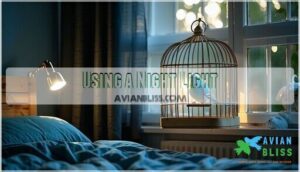
When the sun dips and your parakeet’s world goes dark, a dim night light can work wonders.
Night light benefits include easing their light sensitivity and helping them find their perch. Choose a warm color spectrum and place the night light out of direct sight.
Many owners find a suitable parakeet night light can improve their bird’s sleep.
Timer night lights are handy, letting you support healthy sleep without disrupting parakeet vision.
Providing Reassurance
A calm approach helps your parakeet handle nighttime fears and adjust to the dark.
Try these simple steps for reassurance:
- Speak softly to ease their mind before bird sleep.
- Stay nearby for a few minutes after dim lighting.
- Offer a gentle treat for comfort.
Guarantee quiet sleep with proper cage placement, and keep a warm environment to support healthy parakeet vision and sleep.
Consider using a parakeet cage cover to provide additional darkness and security.
What to Do if Your Budgie is Scared of The Dark

If your budgie gets jumpy when the lights go out, you’re not alone. Many parakeets need a little extra help feeling secure at bedtime. After building a bedtime routine, try adjusting your bird’s environment with these handy tips.
Night light options can help—choose a soft, dim light that won’t disrupt sleep patterns but offers comfort. Try moving the cage to a higher spot; birds feel safer above ground level.
To guarantee your budgie’s well-being, consider the importance of rotating toys regularly to prevent boredom. Add soothing sounds, like gentle music, to mask sudden noises.
Gradual darkness works best—dim the lights slowly before full lights out. Always offer bedtime reassurance with calm words. Covering the bird cage halfway can provide bird security without total darkness.
Here’s a quick guide:
| Tip | Benefit |
|---|---|
| Night light options | Reduces fear |
| Cage placement tips | Promotes bird security |
| Soothing sounds | Calms parakeet sleep |
Frequently Asked Questions (FAQs)
Is it okay to leave parakeets in the dark?
Darkness can feel like a cozy blanket or a hidden maze for parakeets.
It’s perfectly fine to leave them in the dark overnight—just make sure their space is quiet, draft-free, and safe from sudden noises.
Can my parakeet see in the dark?
Your parakeet can see better in low light than you can, thanks to special eye structures.
Still, it can’t see in pitch black. If your room’s as dark as a cave, your bird’s guessing too.
Is it good to cover parakeets at night?
Better safe than sorry—covering your parakeet at night gives them a cozy, quiet space to rest.
It blocks drafts and light, helps them sleep, and keeps them from getting startled by shadows or sudden noises.
How do parakeets see in the dark?
You’ll find these birds use special eye parts like the pecten oculi and a reflective layer to catch more light at night.
This lets them spot food or move around, even when it’s dim, using their special eye parts.
Are parakeets okay in the dark?
When the lights go out, your feathered friend isn’t left completely in the lurch.
They handle low light just fine, but they sleep best in a quiet, cozy spot—think warm, draft-free, and undisturbed.
Do parakeets like the dark?
You’ll notice your feathered friend prefers a dim, quiet space at night, not pitch-black darkness.
Too much darkness can spook them, so a little night light or soft glow helps them settle in and feel safe.
Should I cover my parakeet at night?
Parakeets need up to 12 hours of sleep nightly, just like you need a good night’s rest.
Covering their cage helps block drafts and noise, creating a cozy, safe space—think of it as tucking them in.
Can my parakeet sleep in the dark?
Your parakeet can sleep just fine in the dark, and actually needs it for healthy rest.
Like you, they need quiet and darkness to recharge.
Too much light at night can throw off their natural sleep rhythm.
Do parakeets see colors at night?
Like moonlight painting shadows, your bird’s world at night is mostly shades of gray.
While their eyes are built for low-light, color fades with darkness.
You won’t find them admiring rainbows after bedtime.
How does darkness affect parakeet feeding habits?
When darkness falls, your bird relies on its sharp vision to forage, but feeding slows down since food is harder to spot.
You’ll want to offer meals during daylight—nighttime’s more for resting than snacking.
Conclusion
Like a parakeet trying to use a flip phone, your budgie just can’t see in the dark.
Now you know the answer to “can parakeets see in the dark”—they really can’t. Their eyes are built for daylight, not nighttime.
If your budgie seems uneasy after sunset, try a gentle night light or cover their cage.
You’ll help them feel safe and secure, making bedtime smoother for both of you. Your little friend will thank you in chirps!
- https://articles.hepper.com/can-parakeets-see-in-the-dark/
- https://www.parrotforums.com/threads/can-parrots-see-in-the-dark.96779/
- https://www.woofpurnayvet.com.au/blog/2022/2/28/can-my-pet-see-in-the-dark
- https://www.birdwatchingdaily.com/beginners/birding-faq/can-birds-see-at-night/
- https://en.wikipedia.org/wiki/Bird_vision