This site is supported by our readers. We may earn a commission, at no cost to you, if you purchase through links.
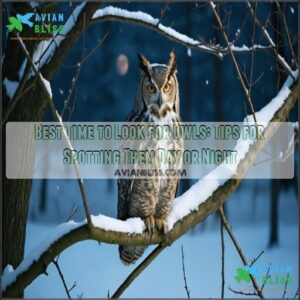 The best time to look for owls is during the early evening or pre-dawn hours when they’re most active, hunting silently in twilight or darkness.
Many species, like Great Horned or Barn Owls, use low light to their advantage, spotting prey with incredible night vision.
Weather matters too—calm, clear nights are ideal, as owls rely on perching and listening.
Keep an ear out for their distinctive calls; it’s like nature’s way of giving you a hint!
Timing can vary by season and region, so knowing local owl habits can boost your chances, and with patience, ready your flashlight—surprises await!
Table Of Contents
- Key Takeaways
- Best Time for Owl Spotting
- Nocturnal Owl Behavior
- Optimal Time for Owl Watching
- Environmental Factors Affecting Owl Sightings
- Tips for Successful Owl Watching
- Frequently Asked Questions (FAQs)
- What are the best times to find owls?
- Can you find owls at night?
- When is the best time to hunt owls?
- When is the best time to spot short-eared owls?
- When do owls come out of their hiding places?
- Are owls active during the day?
- What Kind of Clothes Should I Wear When Going Owling?
- Can I Bring My Dog With Me When I Go Owling?
- How Close Can I Get to an Owl Before It Flies Away?
- What Should I Do if I Find a Baby Owl on the Ground?
- Conclusion
Key Takeaways
- Look for owls during dusk or pre-dawn hours when they’re most active and easier to spot.
- Pick calm, clear nights with mild weather; avoid windy or stormy conditions that keep them hidden.
- Stay quiet and patient while watching, and use minimal light to avoid scaring them off.
- Learn local owl species’ habits and locations, like forest edges or open fields, to increase your chances.
Best Time for Owl Spotting
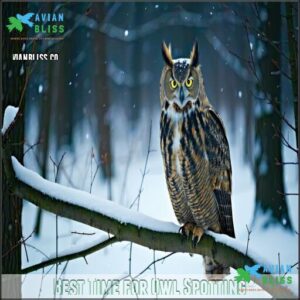
Owls are most active during crepuscular hours, meaning dawn and dusk are your best bets for spotting them in action.
Pair these times with calm weather and a bit of patience, and you’ll likely catch sight of their mesmerizing flights.
Peak Activity Hours
In terms of the best time for owl spotting, understanding owl activity patterns is key.
Owls thrive during crepuscular hours, offering prime opportunities for nocturnal birding.
- Crepuscular Hunting at Dusk: Your top chance, as owls wake up and begin evening hunts.
- Midnight Behavior: Fully active, owls hunt under the stars or defend territories.
- Pre-Dawn Movements: Catch their last flurry of activity before retreating.
Stick to their rhythms for unforgettable nocturnal encounters!
Moon Phase Influence
Lunar illumination plays a big part in owl behavior. While a full moon might sound ideal for nocturnal birding, it often works against you—prey stays hidden, reducing hunting success.
During a new moon, darker skies amplify an owl’s remarkable night vision, making moonlit hunting more effective. Understanding lunar cycles and the moon phase influence on prey visibility helps you predict owl activity.
Many other bird species also rely on the moon and stars for celestial navigation. Pair this knowledge with crepuscular hours, and you’ll boost your chances of spotting owls mid-hunt under the stars.
Weather Conditions for Owl Watching
Weather shapes your owl-spotting success, so it’s worth knowing what works best.
Certain weather conditions can help you hit the jackpot during your nighttime strolls.
- Cloud cover: Partially cloudy skies offer perfect lighting for spotting silhouettes.
- Wind and owls: Strong winds drive owls into hiding, while gentle breezes are ideal.
- Temperature impact: Mild weather keeps owls active and on the hunt.
- Fog effects: Thick fog limits visibility and softens those signature hoots.
- Humidity levels: High humidity quiets prey, reducing owl hunting activity.
Check the forecast before heading out.
Pair ideal weather with a keen ear and patience to catch these nocturnal hunters in action!
Seasonal Variations in Owl Behavior
Understanding owl activity throughout the seasons can truly boost your spotting success. Owls adapt their behavior based on breeding, food, and habitat changes, making certain times of year better for sightings.
In late winter and early spring, the breeding season kicks off. This is when you’ll hear their haunting calls, with their territorial hoots echoing at dusk and dawn—it’s almost like a woodland symphony.
Summer, on the other hand, means nesting. Owls hunker down, hiding away with their offspring. Spotting them then? It’s a test of patience.
By autumn, shifting prey patterns spark migrations. Some owls venture south for food, bringing new faces to regional habitats.
- Winter Vocalizations: Owls’ territorial calls peak in cold months.
- Summer Nesting: Find secluded spots for their quiet retreats.
- Migration Patterns: Autumn showcases exciting seasonal visitors.
Regional Differences in Owl Activity
Owls aren’t one-size-fits-all in terms of their activity. Regional differences in owl behavior tie closely to habitat variation, prey availability, and climate influence.
In northern areas, species like the Great Gray Owl thrive in cooler forests, becoming more vocal in autumn. Southern owls, on the other hand, enjoy warm nights and stay active year-round.
Migration plays a big role, too—northern owls often head south in winter, following food sources. Meanwhile, temperate regions see stable owl activity, as species there stick to regular hunting schedules.
To spot specific owl species, study local owl habitats, from wooded areas to open landscapes. Awareness of seasonal habits and human impact boosts your chances—and supports conservation efforts!
Nocturnal Owl Behavior
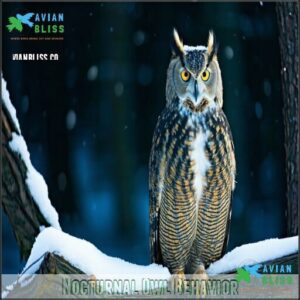
When the sun sets, owls come alive, showing off their powerful senses and expert hunting skills under the cover of darkness.
By understanding their unique nocturnal habits, you’ll increase your chances of spotting these mysterious hunters in action.
Hunting Patterns at Night
The night is an owl’s stage, where its hunting techniques are nothing short of mesmerizing.
These masters of nocturnal hunting rely on finely-tuned sensory adaptations to dominate. With unmatched night vision, razor-sharp hearing, and a knack for silent flight, they thrive in the darkness.
Owls use prey detection skills to locate subtle sounds—like leaves rustling—often catching prey completely off guard. During moonlight hunting, lunar influence boosts their precision, though darker nights challenge them to rely more on hearing.
- Silent Wings: Special feathers eliminate turbulence, letting owls glide undetected.
- Nocturnal Rhythm: Most species hunt intently during twilight and midnight.
- Adaptable Hunters: Owls adjust to fit conditions, ensuring their survival even in tricky environments.
Roosting Habits of Owls
Spending the day hidden in plain sight is a skill owls masterfully perfect. Their roosting habits prioritize safety and survival, showcasing their intuitive choices and adaptability. You’ll often find these clever birds in dense tree canopies, tree cavities, or abandoned nests, blending into their surroundings almost effortlessly.
Owls choose roosts to match their needs:
- Camouflage Roosting: Staying invisible to predators like hawks or raccoons.
- Strategic Spots: They perch where visibility allows quick spotting of threats or movement.
- Roosting Seasons: Preferences may shift due to weather or breeding cycles.
Keep an eye out in forests, parks, or even barns. But remember, spotting their hidden forms requires patience, respect for their space, and an appreciation for their survival instincts.
Communication and Social Behavior
When observing owls at night, you’re tuning into a symphony of owl vocalizations, each serving a purpose like territorial defense or inviting a mate through fascinating owl mating rituals.
Younger owls even practice mimicry, creating unique family “languages.” Social dynamics often highlight family interactions, with some species cooperating in small groups.
Birds also use agonistic behavior displays to communicate threats.
| Behavior | Purpose | Example |
|---|---|---|
| Hooting | Mating and territorial | Great Horned Owl |
| Screeches | Warnings | Barn Owl |
| Group Calls | Social coordination | Burrowing Owl |
Listening carefully helps you appreciate their owl communication skills, deepening your understanding of owl behavior.
Adaptations for Nocturnal Life
Stepping into the domain of nocturnal birds, you’ll quickly see why owls are the masters of the night.
Their adaptations for nocturnal life are nothing short of remarkable.
With acute vision, they spot even the smallest movements in near-total darkness, giving them an edge over most nocturnal wildlife.
Combined with enhanced hearing, they can locate prey through leaves, snow, or complete silence—imagine hearing a mouse creeping under a blanket of winter frost!
What seals the deal is their silent flight, perfected by specialized feathers that muffle sound as they glide.
Their camouflage plumage helps them melt into tree bark, making it seem like they vanish during the day.
- Acute Vision: Detect prey in the dark.
- Enhanced Hearing: Pinpoint sounds effortlessly.
- Silent Flight: Approach prey undetected.
- Camouflage Plumage: Blend into surroundings.
Optimal Time for Owl Watching
The best time to spot owls is during their peak activity at dusk and just before dawn, when they’re hunting or moving between roosts.
Timing your outing to align with these crepuscular hours increases your chances of catching them in action, especially during their peak activity.
Early Evening Owl Activity

As the sun dips below the horizon, Dusk Hunting steals the show, making early evening the best time to look for owls.
Their Crepuscular Behavior kicks in, with owls gliding silently through fading light, tracking prey. You might hear Owl Vocalizations—soft hoots or territorial calls—hinting at nearby owl activity. Tree lines are prime spots to watch for subtle movements, often just a twitchy head or a sudden swoop.
Owls typically spend their days in sheltered spots, relying on camouflage for protection.
For a successful outing:
- What to pack:
- Binoculars for spotting their graceful flights.
- A flashlight with dim settings for safety.
- Comfortable seating for the wait.
- Quiet, non-reflective clothing to blend in.
Patience is key; expect moments of awe during these twilight hours.
Pre-Dawn Owl Sightings
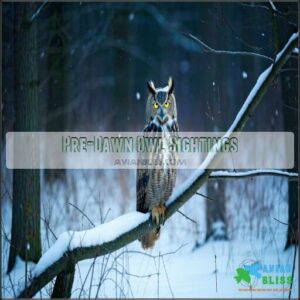
Predawn owl sightings offer a front-row seat to nature’s shift from darkness to daylight.
It’s the best time to look for owls as they complete their last hunt.
You’ll often hear pre-dawn vocalizations, echoing through quiet woods or open fields.
Limited visibility adds to the thrill, with their silent flight and glowing eyes cutting through the dim light.
Many owls return to their roosts at sunrise, making this their busiest time.
Stay still and listen; identifying owls by sound is easier than spotting them.
If you’re patient, you’ll glimpse their elegant, nocturnal owl behavior before they vanish with the morning rays, showcasing their ability to thrive in the dim light.
Best Time for Specific Owl Species

If you’re targeting specific owl species, knowing their schedules is your best ally.
Barn Owls favor early evenings, gliding low as they hunt. Snowy Owls, meanwhile, skip bedtime entirely, showcasing their daylight charisma during winter. Screech Owls thrive during migration season, filling the night with their eerie, melodic calls.
- Barn Owls spiraling silently over moonlit fields, seeking prey.
- Snowy Owls perched regally on wintery landscapes, blending into frosty backdrops.
- Screech Owls singing haunting tunes under starlit nights, claiming territory.
These patterns highlight how owl activity shifts with seasons and habits—learn them, and you’re golden.
Avoiding Disturbances to Owls

When watching owls, a respectful approach guarantees the safety of these incredible birds.
Stay at a nesting distance to avoid stressing them, and stick to trails to protect their habitat. Keep noise minimal—owls rely on silence for hunting, so a silent approach helps you observe without causing alarm.
Avoid light pollution by ditching flashlights or using red-filtered light sparingly.
Practicing owl watching etiquette, like preserving habitats and keeping a proper owl distance, guarantees wildlife respect.
Ethical photography is key too—don’t disrupt their routines for a perfect shot. Remember, observing owls without intruding means you’re embracing habitat preservation while allowing these nocturnal wonders to thrive undisturbed, which is a form of wildlife respect.
Environmental Factors Affecting Owl Sightings

If you want to spot owls, understanding how their surroundings influence their behavior is a must.
Factors like moonlight, weather conditions, and even human activity can all change when and where owls appear.
Moon Phase and Prey Activity
Owls thrive on lunar cycles, adapting their behaviors to moon phase and prey activity. Bright moonlit nights improve prey visibility, increasing hunting success.
But some prey hide during full moons, so owls must adjust. Moonless nights heighten their stealth advantage, creating thrilling owl activity.
- Full moons encourage nocturnal owl behavior and prey movements.
- New moons showcase owl hunting skills.
- Lunar rhythms influence owl adaptation.
- Moon phases shape their activity.
Weather Conditions for Owl Hunting
Not all weather’s a friend to owls. Calm nights, with light winds and cloud cover, create ideal conditions for their silent hunts.
Heavy rain? Forget it—owls struggle since wet feathers hinder flight. Cooler temperatures boost activity, while strong storms keep them grounded. After rain clears, though, they’re back in action, taking advantage of easier pickings.
Here’s a handy guide to owl-friendly weather:
| Weather Condition | Owl Response |
|---|---|
| Light Wind | Excellent for hunting |
| Heavy Rain | Poor activity, grounded |
| Cool Temperatures | High hunting activity |
| Partly Cloudy Skies | Perfect nocturnal lighting |
| Strong Storm | Restricted movement |
Keep patience—it’s worth it, especially when waiting for the right conditions, like cool temperatures and partly cloudy skies, which are perfect for high hunting activity.
Habitat Selection for Owl Watching
Spotting owls starts with knowing their favorite hangouts. Their habitats are as diverse as they’re fascinating.
When choosing owl watching locations, focus on areas rich in prey abundance and ideal roosting locations.
- Forest Edges: Barred Owls often perch high, blending into tree canopies.
- Riparian Zones: Look for Great Horned Owls near streams and rivers.
- Wooded Suburbs: Eastern Screech-Owls favor quiet, tree-filled neighborhoods.
- Open Fields: Short-eared Owls thrive here, typically hunting near dusk.
Finding owl habitats takes patience and observation. Explore quietly, respect their space, and the reward is unforgettable sightings.
Impact of Human Activity on Owls
Human activity, like habitat destruction and light pollution, takes a toll on owl habitats.
Excessive noise pollution can drown out prey sounds, while vehicle collisions threaten many species.
Pesticide use harms their food sources, disrupting ecosystems.
Climate change alters owl patterns, impacting survival.
To limit the impact of human activity, focus on conservation strategies: reduce outdoor lighting, protect natural spaces, and avoid loud areas near nesting sites.
Supporting these serene hunters helps preserve a balanced ecosystem.
Tips for Successful Owl Watching
To make your owl-watching experience successful, focus on preparation and timing.
Equip yourself with the right tools, understand owl habitats, and respect their space to increase your chances of a memorable sighting.
This will help you have a better experience.
Choosing The Right Equipment

Good owl watching gear can make all the difference for your outing.
Here’s a quick checklist:
- Binocular specifications: Look for wide lenses with 8x magnification for detailed views.
- Spotting scopes: Great for long-range sightings, especially in dense forests.
- Camera settings: Use manual modes for low-light shots, adjusting ISO and shutter speed carefully.
- Audio recorders: Perfect for capturing calls.
- Stealth clothing: Wear dark, noise-free outfits to blend in.
A sturdy backpack helps carry equipment.
Finding Owl Habitats and Roosts

Finding owl habitats and roosts is part science, part treasure hunt.
Look for owl habitat locations like tree canopies, forest edges, or abandoned barns. Search for droppings, feathers, or regurgitated pellets—solid Habitat Clues that owls are nearby. Don’t forget Nesting Sites; they often favor wooded trails or quiet spots.
Many resources discuss finding ideal owl dwellings.
- Roost Identification: Scan evergreen trees for lumps or whitewash on trunks.
- Territory Mapping: Observe wooded areas or open fields near dense cover.
- Regional Habitats: Research local species’ preferences to locate ideal spots.
Patience and Persistence in Owl Watching

To truly enjoy owl watching, you’ve got to embrace patience and a bit of trial and error.
Quiet observation is your best tool—stand still, scan tree canopies, and listen closely for hoots or rustling.
Repeated visits increase your chances, teaching you about owl behavior over time.
Remember, finding owls in the wild takes long-term dedication and willingness to accept failure—it’s part of the adventure.
Learn their habits, like twilight hunting and roosting spots, and you’ll feel more connected to their rhythms.
Using specialized viewing equipment can enhance visibility.
The best time to look for owls isn’t rushed.
Persistence transforms a quiet night into a magical encounter under the stars.
Respecting Owls and Their Environment

Respecting an owl’s space guarantees they thrive. Keep your distance and minimize disturbance to observe their natural owl behavior without stress.
- Use dim lighting to avoid disrupting nocturnal owl habitats.
- Stick to trails for responsible tourism and habitat preservation.
- Practice ethical photography, keeping respectful space while capturing shots.
- Stay quiet to support owl conservation by preventing unnecessary alarm.
Frequently Asked Questions (FAQs)
What are the best times to find owls?
When dusk falls, nature whispers secrets—twilight’s soft glow marks an owl’s busy hour.
You’ll spot them best at dawn or dusk, their predictable routines offering magical moments for patient watchers under moonlit or cloudy skies, with the soft glow of twilight being particularly enchanting.
Can you find owls at night?
You can absolutely find owls at night.
They’re most active from dusk to dawn, hunting or defending territories.
Head out quietly, listen for calls, and use minimal light to spot their shadowy, graceful movements.
When is the best time to hunt owls?
The best time to hunt for owls is during dusk or dawn when they’re most active.
Pairing these crepuscular hours with moderate weather, gentle breezes, and minimal disruption boosts your chances of spotting them.
When is the best time to spot short-eared owls?
Imagine strolling through a field at sunset—short-eared owls thrive at dusk, actively hunting mice and small prey.
Cloudy days boost chances during daylight, but sunset remains their magic hour for graceful, enchanting appearances.
When do owls come out of their hiding places?
Owls leave their hiding spots mainly at twilight, the perfect middle ground between light and dark.
They’re crepuscular, so you’ll see them waking up at dusk or wrapping up their nocturnal routines near dawn.
Are owls active during the day?
About 10% of owl species are diurnal, meaning they hunt during the day.
Short-eared owls and burrowing owls are prime examples.
They’re more active at dawn, dusk, or on cloudy days when prey is easier to spot.
What Kind of Clothes Should I Wear When Going Owling?
Wear dark, quiet clothes like muted greens, browns, or blacks to blend with the surroundings.
Avoid reflective fabrics or noisy materials.
Comfortable, weather-appropriate layers and sturdy shoes help you stay focused and stealthy.
Can I Bring My Dog With Me When I Go Owling?
Bringing your dog to owling might ruffle a few feathers.
Their scent and noise can spook owls, disrupting their natural behavior.
If you must, make certain your pup’s calm, quiet, and leashed at all times.
How Close Can I Get to an Owl Before It Flies Away?
You can get surprisingly close if you’re quiet—often around 50-100 feet.
Move slowly, avoid eye contact, and stay calm.
Sudden movements or loud sounds will spook them faster than you can say "hoot!
What Should I Do if I Find a Baby Owl on the Ground?
If you spot a baby owl on the ground, don’t panic—check if it’s unhurt.
Often, they’re just fledging.
Leave it be unless injured, then contact a licensed wildlife rehabilitator for help.
Conclusion
Did you know some owl species can turn their heads up to 270 degrees?
For the best time to look for owls, focus on early evening or pre-dawn hours when they’re most active.
Pay attention to calm weather and clear skies, and learn local owl habits for better success.
Bring a flashlight, tune your ears to their calls, and be patient. Owls are secretive creatures, but with the right timing and approach, you’ll increase your chances of spotting them.