This site is supported by our readers. We may earn a commission, at no cost to you, if you purchase through links.
Virginia backyards host over 200 bird species across the year—a number that surprises most people who think of local wildlife as predictable. A Northern Cardinal visits the feeder at dawn. By noon, a Yellow-rumped Warbler passes through on its way south. Come dusk, a Carolina Chickadee stakes out the same branch it’s claimed all winter.
Each one follows rules you can learn. Size, bill shape, song, habit—these details tell you exactly who showed up and why. Once you know what to look for, you’ll start recognizing the backyard birds of Virginia not as background noise, but as reliable neighbors with patterns worth tracking.
Table Of Contents
- Key Takeaways
- Common Backyard Birds in Virginia
- Seasonal Virginia Backyard Birds
- How to Identify Virginia Birds
- Attracting Birds to Virginia Yards
- Backyard Habitats and Nesting Needs
- Frequently Asked Questions (FAQs)
- What are the most common backyard birds in Virginia?
- Where can you see birds in Virginia?
- Do you see birds at feeders or backyards in Virginia?
- Which bird feeder attracts the most birds in Virginia?
- Where can I See Birds in Virginia?
- How can I identify a bird in my yard?
- What bird is Virginia known for?
- Is it good to have birds in your backyard?
- What is the rarest bird in Virginia?
- What are the most common birds in Virginia?
- Conclusion
Key Takeaways
- Virginia’s backyard hosts over 200 bird species year-round, with five regulars—Northern Cardinal, Carolina Chickadee, Tufted Titmouse, Blue Jay, and American Goldfinch—showing up season after season like clockwork.
- Learning just four clues—size, bill shape, color, and song—lets you identify almost any bird that lands in your yard with confidence.
- Black oil sunflower seeds, suet, and a shallow bird bath are the three most effective things you can set up to draw more birds in, especially through winter cold snaps.
- Native plants covering at least 70% of your yard do more than feeders alone—they fuel the insect life that birds need to raise their young successfully.
Common Backyard Birds in Virginia
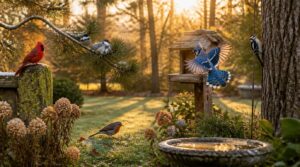
Virginia’s backyard is never really empty — something’s always moving through it. A handful of birds show up so reliably, season after season, that they start to feel like neighbors. Here are the five you’re most likely to spot first.
If you want to put names to the faces, this guide to common birds in Virginia backyards makes identification surprisingly easy.
Northern Cardinal
Few backyard birds in Virginia command attention like the Northern Cardinal. Males wear bright scarlet plumage with a bold crest. Females are brownish gray with red highlights. Both carry a thick, cone-shaped bill built for cracking seeds. At 8–9 inches long, they’re easy to spot.
Males sing a clear "cheer cheer cheer" to defend territory and attract mates. Their vibrant color is derived from consuming dietary carotenoids.
Carolina Chickadee
While the Cardinal grabs the spotlight, the Carolina Chickadee quietly steals hearts. This tiny bird — just 4.7 inches long — wears a crisp black cap and bib with soft gray wings and a white belly. It visits feeders year-round and ranks in 45% of winter checklists across Virginia.
Its "chick-a-dee-dee" call signals everything from food to danger.
Tufted Titmouse
Meet the Tufted Titmouse — a gray-crested charmer that’s hard to miss once you know it. Its rust-colored flanks, black forehead patch, and bold crest make bird identification straightforward, even for beginners.
- It caches seeds in bark crevices for cold days
- Its peter-peter-peter whistle carries through bare winter trees
- It visits bird feeders without hesitation
Suburban habitat adaptation makes this species a reliable backyard birds in Virginia staple.
Blue Jay
If the Tufted Titmouse is the quiet neighbor, the Blue Jay is the loud one — and honestly, you’ll respect it once you understand it. Bold, smart, and striking, this is one Virginia backyard feeder bird that demands attention.
Its bright blue plumage isn’t even pigment — it’s structural light scattering, which makes it glow differently depending on the angle.
American Goldfinch
Few backyard birds in Virginia flip the calendar quite like the American Goldfinch. Most songbirds wrap up breeding by June, but this small finch waits — nesting in July when thistle and sunflower crops peak.
- Bright Yellow Plumage marks summer males instantly
- Females stay olive-dull year-round
- Nyjer seed is their feeder favorite
- Winter flock dynamics bring dozens at once
- Nest cup construction uses plant fibers and spider silk
Seasonal Virginia Backyard Birds
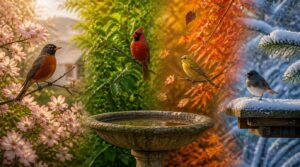
Virginia’s birdscape shifts with every season, and that’s what makes it so worth paying attention to. Some birds claim your yard year-round, while others pass through just long enough to remind you spring or winter is here. Here’s a look at who’s showing up and when.
For a closer look at timing and species, this guide to small birds in Virginia by season breaks down exactly who’s likely visiting your yard each month.
Spring Migrants
Every April, Virginia’s woodlands and yards come alive as spring migrants pass through. Rose-breasted Grosbeaks and Baltimore Orioles arrive in late April, fueling up on insects. Gray Catbirds often appear by late March.
Woodland edges and water features are prime stopover habitat. Weather matters too — cold snaps can delay arrivals by up to two weeks.
Summer Breeding Birds
Once spring territories are claimed, Virginia’s summer breeding birds shift into full nesting mode. Indigo Buntings and Common Grackles settle into shrubby edges and open yards. Males defend territory with loud, persistent singing from exposed perches.
Nest building follows quickly, using grasses, twigs, and spider silk. Parents make 6–10 feeding trips hourly, delivering caterpillars to nestlings. Fledging usually takes 10–14 days.
Fall Migration Visitors
Fall migration sweeps through Virginia from August through November, turning backyards into busy pit stops. Warblers, thrushes, and sparrows move through in waves, peaking in September and October.
- Yellow-rumped Warblers flash white patches and arrive reliably each October.
- White-throated Sparrows scratch leaf litter for seeds at feeders.
- Dark-eyed Juncos signal cooling temps with their slate-gray appearance.
Winter Backyard Birds
Winter resident birds need extra fuel to survive. They can consume up to 30% more calories during cold snaps, so keep feeders stocked with suet and sunflower seeds.
| Bird | Winter Behavior |
|---|---|
| Dark-eyed Junco | Ground feeds on fallen seeds |
| White-throated Sparrow | Scratches near feeders |
| Hermit Thrush | Roosts in dense shrubs |
| Yellow-rumped Warbler | Flashes white patches |
| Carolina Chickadee | Cavity roosts overnight |
Keep winter water sources unfrozen with a heated bird bath.
Year-Round Residents
Some birds don’t pack their bags when the seasons change. Virginia backyard feeder birds like the Northern Cardinal, Carolina Chickadee, Tufted Titmouse, Blue Jay, and American Goldfinch are true year-round residents.
They defend territories, form mixed flock dynamics, and rely on your feeders through every freeze. Plant native shrubs and keep sunflower seeds stocked — they’ll reward you all year.
How to Identify Virginia Birds
Learning to identify birds is mostly about knowing what to look for. Virginia’s backyard species each carry a handful of reliable clues — size, color, bill shape, sound, and behavior — that make recognition click fast. Here are five things to focus on.
Size and Shape
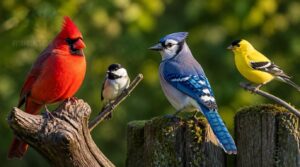
Size tells you a lot before a bird even moves. The Northern Cardinal runs 8.7–9.5 inches with a stout, rounded build. The Carolina Chickadee is compact at 4.7–5.5 inches. Notice the Blue Jay’s broad, squared silhouette — about 9–11 inches. Goldfinches look slender despite similar sizing.
Match body proportions, tail length, and beak shape to confirm your ID.
Plumage Colors
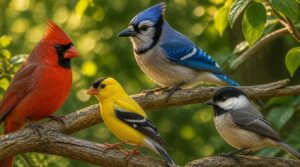
Once you’ve nailed size and shape, color becomes your next best clue. Virginia’s backyard birds wear their identity on their feathers.
- Northern Cardinal males flash bold scarlet red — females wear warm brown with olive hints
- Yellow Goldfinch males show bright lemon yellow with black wing patches in breeding season
- Blue Jay’s iridescent crest shifts tone with light, thanks to structural coloration — not pigment alone
- Melanin pigments create the chickadee’s black cap and gray back
- Seasonal molt can dull or intensify colors depending on time of year
Bill Types
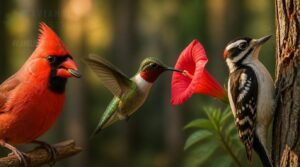
Color gets you close, but the bill seals the deal. A bird’s bill shape tells you exactly what it eats. Seed-crackers like Cardinals have thick, cone-shaped bills. Woodpeckers carry long, chisel-like bills for drilling bark. Hummingbirds use slender, needle-thin bills to reach nectar deep inside flowers.
| Bird | Bill Type | Primary Use |
|---|---|---|
| Northern Cardinal | Thick, conical | Cracking seeds |
| Ruby-throated Hummingbird | Long, slender | Sipping nectar |
| Downy Woodpecker | Sharp, chisel-like | Drilling wood |
Songs and Calls
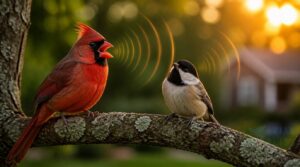
Once you’ve nailed the bill shape, tune your ears in. A bird’s song is like a fingerprint — no two species sound exactly alike.
Male birds increase song complexity during breeding season, layering trills, whistles, and buzzes to impress nearby females. Carolina Chickadees use their signature "chick-a-dee" call, while Cardinals deliver clear, looping whistles lasting several seconds.
Backyard Behaviors
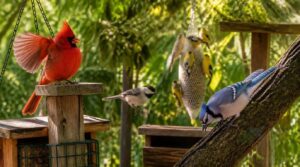
Watch a bird long enough, and its behavior tells you exactly who it is.
Male cardinals aggressively defend preferred feeders, chasing rivals away with posturing and short bursts of song. Blue Jays cache seeds in bark crevices for later. Chickadees hop quickly between stations, sampling several feeders in one visit. Goldfinches feed in loose, relaxed flocks — rarely rushing, rarely alone.
Attracting Birds to Virginia Yards
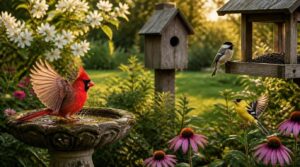
Getting birds to visit your yard comes down to a few simple things they actually need. Virginia’s backyard species each have their own preferences, so knowing what works for which bird makes all the difference. Here’s what you can set up to bring in more of them.
Best Bird Feeders
The right feeder makes all the difference. Platform feeders work best for Cardinals, Jays, and Sparrows, while tube feeders attract Goldfinches.
Choose squirrel-proof models with weight-activated closures to protect your birdseed. Pick feeders with removable trays for easy cleaning and clear bodies to monitor seed levels at a glance.
Hang feeders 5 to 6 feet high in shaded spots to slow spoilage.
Black Oil Sunflower Seeds
Black oil sunflower seeds are the single best birdseed you can stock. Their thin shells and rich oil make them easy for almost every native bird to eat.
Here’s why backyard birds in Virginia love them:
- 16% protein, 49–52% oil fuels birds through cold snaps
- Cardinals, chickadees, titmice, jays, and finches all flock to them
- High calorie density cuts down how often you refill feeders
- Easy to grow yourself — seeds are ready roughly 90 days after planting
- Store in a cool, dry place to keep them fresh season to season
Suet and Nectar
Suet and nectar do two very different jobs at your feeders — and both are worth doing right.
Suet is high-energy fat that fuels woodpeckers, chickadees, and nuthatches year-round. In winter, winter suet feeding becomes critical during cold snaps when natural food disappears. Use no melt suet in summer to prevent messy dripping.
For your ruby-throated hummingbird visitors, mix a simple sugar water recipe: one part sugar to four parts water. Skip the red dye — it’s unnecessary.
| Feeder Type | Best For |
|---|---|
| Wire cage suet feeder | Woodpeckers, nuthatches |
| Nectar feeder | Hummingbirds, orioles |
| No-melt suet block | Warm-season bird feeding |
Bird Baths
A bird bath can be just as magnetic as your best feeder. Place it 10 feet from feeders, near shrubs for quick cover.
Keep water no deeper than two inches so small birds like Carolina Chickadees and goldfinches can stand safely. Refresh water every one to two days. Moving water attracts the most visitors.
Native Plants
Native plants are the backbone of a bird-friendly Virginia yard. Species like Cardinal Flower and Trumpet Honeysuckle feed Ruby-throated Hummingbirds directly. They also support the insects that songbirds need to raise chicks.
Aim for 70% native plant coverage to keep caterpillars plentiful. Purple coneflower and black-eyed Susan bloom across seasons, giving birds food and pollinators a home year-round.
Backyard Habitats and Nesting Needs
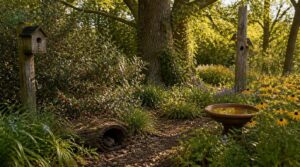
Feeding stations bring birds to your yard, but nesting habitat keeps them there. Virginia birds are particular about where they raise their young, and the right setup makes a real difference. Here are five habitat features worth adding to your backyard.
Native Shrubs
A few well-chosen shrubs can transform your yard into a true bird magnet. Native shrubs like viburnum, elderberry, and highbush blueberry supply berries, shelter, and insects that Virginia birds depend on year-round.
Prune after flowering to keep growth dense. Mix evergreen and deciduous species for year-round cover and food, and you’ll keep thrushes, warblers, and chickadees coming back every season.
Brush Piles
Shrubs give birds food and cover, but a brush pile takes it further.
Stack logs at the base, then layer smaller branches on top. Leave gaps for airflow and access. Place piles in sheltered corners near water.
Sparrows, wrens, and chickadees use them for winter warmth, insect foraging, and nesting cover year-round.
Dead Trees
A brush pile shelters birds at ground level, but a standing dead tree works the canopy above.
Virginia woodpeckers, chickadees, and bluebirds depend on snags for cavity nesting sites. Keep the bottom 15–20 feet standing if possible. The decaying wood feeds insects, which feeds birds.
Don’t cut every dead tree. Sometimes the best habitat is the one you leave alone.
The best wildlife habitat you can create is sometimes the tree you choose not to cut down
Birdhouses
A snag gives birds a natural cavity. A birdhouse gives you control over who moves in.
Choose untreated cedar or pine — both hold up to Virginia’s humid summers and resist rot without chemical risk to nestlings. Mount boxes 5 to 12 feet high, sized to your target species. Bluebirds need a 1.5-inch entrance hole; chickadees do fine with 1.0 inch.
Safe Nesting Spaces
Getting the details right separates a safe nesting space from a dangerous one. Mount boxes 6 to 12 feet high with drainage holes and ventilation slits to regulate heat. Use a predator guard design with metal collars to block raccoons and snakes. Surround boxes with native camouflage plants and avoid synthetic nesting materials — natural fibers keep nestlings safe during breeding season.
- Slope the roof to shed rain
- Rough interior walls help fledglings climb out
- Size entrance holes to your target species
- Inspect and clean boxes between seasons
Frequently Asked Questions (FAQs)
What are the most common backyard birds in Virginia?
Some birds stick around all year. Others only visit for a season. Virginia’s most common year-round backyard birds are the Northern Cardinal, Carolina Chickadee, Tufted Titmouse, Blue Jay, and American Goldfinch.
Where can you see birds in Virginia?
Virginia puts bird species everywhere you look. Backyards, state parks, coastal wetlands, mountain ridges, urban parks, and historic sites all hold something worth watching. Step outside — the birds are already there.
Do you see birds at feeders or backyards in Virginia?
Yes, Virginia backyards attract dozens of species year-round. Cardinals, chickadees, and goldfinches visit bird feeders regularly. Native plants boost visits even more. Your yard can become a reliable birdwatching hotspot in any season.
Which bird feeder attracts the most birds in Virginia?
Tube feeders with small ports attract the most birds consistently. They draw chickadees, finches, and goldfinches daily. Fill them with black oil sunflower seed for the best results.
Where can I See Birds in Virginia?
Virginia has superb birdwatching spots. Try Huntley Meadows Park, Great Falls Park, Dyke Marsh Wildlife, Chincoteague Refuge, or Shenandoah National Park — each offers unique bird habitats and diverse bird species in Virginia.
How can I identify a bird in my yard?
Start with size and shape. Is it robin-sized or smaller? Check the bill type next — thick for seeds, thin for insects. Then note the colors and listen closely to its call.
What bird is Virginia known for?
The Northern Cardinal has been Virginia’s official state bird since 1950. Males sport bright red plumage and sing clear whistles like cheer-cheer-cheer. You’ll spot them year-round in yards, gardens, and woodlands across the state.
Is it good to have birds in your backyard?
Having birds in your backyard is genuinely good. They eat insects, disperse seeds, and support a balanced ecosystem — all while giving you something beautiful to watch right outside your window.
What is the rarest bird in Virginia?
The Red-cockaded Woodpecker holds that title. It depends on old-growth pine forests over 80 years old — habitat that’s shrinking fast. Sightings in Virginia are rare and need careful verification.
What are the most common birds in Virginia?
Virginia’s most common backyard birds include the Northern Cardinal, Carolina Chickadee, Tufted Titmouse, Blue Jay, and American Goldfinch. You’ll spot these year-round residents at feeders across the state in every season.
Conclusion
The moment you hang your first feeder and a Cardinal lands within the hour, that’s not a coincidence—it’s the backyard birds of Virginia already reading your yard. They follow food, water, and shelter with quiet, unwavering precision.
Learn their patterns. Plant what they need. Put up a nesting box or two.
Do that consistently through every season, and your yard stops being just background noise. It becomes a place worth returning to, again and again.