This site is supported by our readers. We may earn a commission, at no cost to you, if you purchase through links.
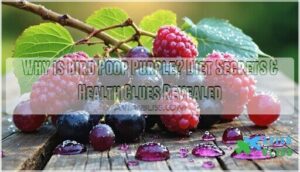 Purple bird poop happens when birds eat berries packed with anthocyanins – natural pigments found in elderberries, mulberries, blackberries, and grapes.
These colorful compounds pass straight through their digestive system without breaking down, creating those vibrant purple droppings you’ll spot on your deck.
It’s basically nature’s way of showing you what’s on the seasonal menu.
While berry-stained droppings are perfectly normal, especially during spring and summer fruiting seasons, consistently purple poop without berry season could signal something more serious.
Understanding what different colors mean can help you decode whether your feathered visitors are just enjoying a berry feast or might need attention.
Table Of Contents
- Key Takeaways
- Why is Bird Poop Purple?
- Understanding Bird Poop Coloration
- Dietary Influences on Bird Poop
- Health Indicators in Bird Poop
- Why Bird Poop Turns Purple
- Common Misconceptions About Bird Poop Color
- Cleaning Purple Bird Poop
- The Digestive System of Birds
- Frequently Asked Questions (FAQs)
- Why is bird poop purple?
- Why are bird droppings purple?
- Why does my bird poop change color?
- What color is a bird’s poop?
- How do you know if a bird Poops Brown?
- Does bird feather cleaning prevent purple poop?
- Why is a bird’s poop purple?
- How to clean purple bird poop?
- What animal leaves purple poop?
- What has purple droppings?
- Conclusion
Key Takeaways
- You’ll see purple bird poop when birds eat anthocyanin-rich berries – blueberries, elderberries, blackberries, and mulberries contain natural pigments that pass through their digestive system unchanged, creating vibrant purple droppings.
- Purple droppings are normal during berry season but watch for warning signs – if you notice persistent purple poop lasting over 48 hours without a dietary explanation, combined with lethargy or appetite loss, it’s time to consult an avian vet.
- You can clean purple bird poop effectively with quick action – use warm water and mild detergent on fresh droppings, avoiding harsh chemicals, since the natural acids in bird waste can damage surfaces if left untreated.
- Your bird’s digestive system processes pigments differently than mammals – birds have specialized organs like the gizzard and shortened intestines that allow colorful compounds to pass through quickly, preserving pigment intensity in their droppings.
Why is Bird Poop Purple?
If you’ve ever spotted purple bird poop and wondered what’s going on, you’re not alone!
This colorful phenomenon typically happens when birds consume berries rich in anthocyanins—natural pigments found in blueberries, elderberries, and blackberries.
These pigments pass through their digestive system unchanged, creating those vibrant purple droppings that catch your eye.
Nature’s paintbrush at work: berry pigments survive digestion to create purple masterpieces.
Drastic color changes, however, can also indicate underlying health issues.
Understanding Bird Poop Coloration
You’ll discover that bird poop color isn’t random but follows predictable patterns based on what birds eat and how their bodies process food.
The pigments in berries, fruits, and other foods pass through a bird’s digestive system and emerge as colorful droppings that can range from brown and green to striking purple.
Role of Pigments
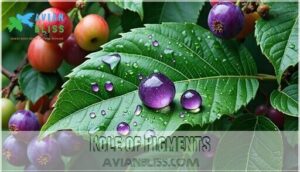
Pigments are nature’s paintbrush for purple bird poop.
Anthocyanin absorption from berries and carotenoid influence from colorful foods create vibrant droppings. These pigment sources travel through birds’ digestive systems unchanged, while artificial dyes in commercial feeds can also tint excreta.
Understanding these bird food pigments reveals fascinating health implications about avian nutrition.
Color changes, however, may point to underlying bacterial infections.
Impact of Diet
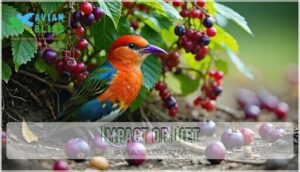
Diet directly shapes your bird’s droppings color through pigment absorption.
Berry consumption introduces anthocyanins, creating purple bird droppings when these bird food pigments pass through unchanged.
Here’s how different foods affect coloration:
- Artificial dyes in commercial bird foods alter droppings temporarily
- Seed influence produces brown hues from natural tannins
- Dietary changes show within days as new pigments replace old ones
Bird diet effects vary seasonally when wild berries become available.
Dietary Influences on Bird Poop
What you feed birds directly determines their poop color, with purple droppings almost always stemming from anthocyanin-rich foods like berries, cherries, and grapes.
You’ll notice these colorful changes most often during berry season when birds feast on blackberries, elderberries, and blueberries that contain natural pigments passing straight through their digestive systems, which is influenced by the consumption of foods with natural pigments.
Common Foods
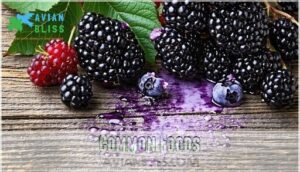
Berry consumption dramatically transforms bird droppings into vibrant purple hues.
When birds feast on anthocyanin-rich berries like elderberries, blackberries, and mulberries, these fruit pigments pass through their digestive systems unchanged.
Artificial dyes in commercial bird treats can also create unusual colors.
Meanwhile, seed influence typically produces brown droppings, while insect diets generate darker shades.
Understanding these diet connections helps you decode what’s behind those surprising purple bird droppings.
Seasonal Variations
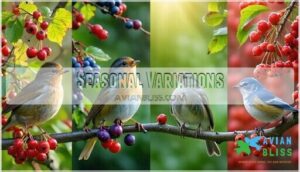
Nature’s calendar dictates when purple bird droppings appear in your yard.
Berry availability peaks during late summer and fall, flooding birds’ diets with anthocyanins from blackberries, elderberries, and mulberries.
Migration patterns bring new species with different feeding habits, while breeding season increases nutritional demands.
Weather impact affects fruit ripening schedules, and habitat changes alter food sources.
These seasonal changes in bird diet create predictable purple poop patterns that savvy birdwatchers anticipate.
Health Indicators in Bird Poop
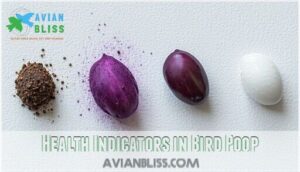
While purple bird poop often signals your feathered friend’s berry-filled diet, it can also reveal important health information that shouldn’t be ignored.
You’ll want to watch for persistent purple droppings without dietary cause, changes in consistency or odor, and accompanying symptoms like lethargy or appetite loss, as these may indicate liver problems, gastrointestinal bleeding, or nutrient absorption issues requiring veterinary attention.
Signs of Illness
Three critical illness signs appear in purple bird droppings. Poop consistency changes from normal to watery or bloody texture signal digestive problems.
Unusual odor beyond typical waste smell indicates infection. Watch for appetite changes, lethargy signs, and weight loss accompanying purple droppings—these bird health indicators help identify avian excrement abnormalities that require immediate attention for proper identifying bird diseases.
Sick birds might also exhibit noticeable feather changes, indicating potential health issues.
When to Consult a Vet
While purple bird droppings might look alarming, knowing when to seek veterinary advice can save your feathered friend’s life.
Watch for these warning signs:
- Persistent purple droppings lasting over 48 hours without dietary explanation
- Behavioral changes including lethargy, reduced activity, or unusual posture
- Appetite loss or refusing favorite foods for more than a day
- Dropping consistency changes – watery, bloody, or containing foreign objects
Trust your instincts about your bird’s health indicators. You may need to find an avian health professional for proper diagnosis.
Why Bird Poop Turns Purple
Your bird’s purple poop isn’t cause for panic – it’s simply nature’s way of showcasing their recent dining choices.
When birds feast on anthocyanin-rich fruits like elderberries, blueberries, or blackberries, these natural pigments pass through their digestive system unchanged, creating distinctively colored droppings that can range from deep purple to vibrant violet.
Specific Foods
When you spot purple bird droppings, specific foods are usually the culprits.
Berry consumption from blueberries, elderberries, and blackberries creates this colorful effect through anthocyanins – powerful fruit pigments that survive digestion.
Wild grapes, mulberries, and pokeweed also produce vibrant hues.
Artificial dyes in commercial bird treats can create similar results.
Unlike toxic foods, these berry sources are healthy choices that simply tint droppings temporarily.
The color change is due to how pigments remain intact during avian digestion.
Natural Pigments
Understanding pigment absorption starts with anthocyanins from berries passing through your bird’s digestive system largely intact.
These anthocyanin sources like blueberries and elderberries contain water-soluble compounds that survive digestion, creating color intensity variations in purple bird droppings.
The excretion process efficiently transports these pigments through the cloaca, while carotenoid influence adds complexity to final bird poop color.
Birds eliminate waste through the cloaca, combining both urine and feces in one go.
Common Misconceptions About Bird Poop Color
You’ve probably heard some wild theories about purple bird poop, from stress-induced color changes to mysterious diseases.
Most of these common beliefs are completely wrong, and the real science behind purple droppings is much simpler than you might think.
Myths Vs. Facts
Many people panic when they spot purple bird droppings, thinking it signals serious health concerns. However, the dietary truth reveals that anthocyanins from berries are usually responsible for this color origin.
Species variance affects how pigments process, but pigment myths persist despite scientific evidence showing diet primarily determines bird poop color. Birds consuming anthocyanin rich diets often exhibit this phenomenon.
Common misconceptions include:
- Purple droppings always indicate internal bleeding or poisoning
- All color changes require immediate veterinary attention
- Artificial food dyes never cause purple coloration in bird waste
Scientific Explanations
Science reveals that purple bird droppings aren’t mysterious—they’re perfectly explainable through pigment chemistry and avian digestion. When birds consume anthocyanin-rich berries, these pigments survive the excretion process largely intact, coloring the fecal portion while leaving white urate composition unchanged. Metabolic pathways don’t break down these sturdy compounds.
Proper digestion relies on effective enzyme products for birds.
Here’s what bird poop analysis actually shows:
- Anthocyanin pigments from berries pass through unchanged during digestion
- Bird diet directly influences bird poop color through unprocessed plant compounds
- Purple bird droppings indicate recent berry consumption, not illness
- Normal urate composition remains white regardless of dietary pigments
Cleaning Purple Bird Poop
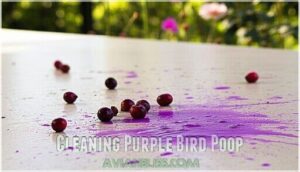
When you discover purple bird droppings on your patio furniture or car, don’t panic—this colorful mess is completely manageable with the right approach.
Act quickly since fresh droppings clean up much easier than dried ones, and the natural acids in bird waste can damage surfaces if left untreated, making it essential to address the issue with fresh droppings as a priority to prevent damage from natural acids.
Effective Methods
When purple bird poop strikes, act quickly before anthocyanin pigments set permanent bird poop stains.
Mix warm water with mild detergent, then gently blot—don’t rub.
For stubborn stains, apply specialized enzyme cleaners designed for organic matter.
These cleaning methods work best on fresh droppings from berries consumption.
Preventive Measures
Prevention starts with diet adjustments and choosing dye-free avian food to avoid artificial colorants.
Create a clean environment by covering surfaces with washable liners and maintaining regular checkups for your bird’s wellbeing.
Practice safe foraging by identifying which berries cause purple droppings, and focus on toxin avoidance through proper bird care.
Understanding these natural factors helps you stay ahead of messy surprises.
The Digestive System of Birds
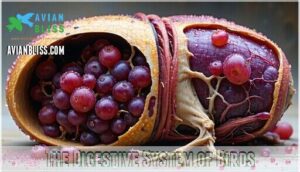
Understanding a bird’s digestive system helps explain why their droppings can turn purple and other unusual colors.
Unlike mammals, birds have specialized organs like the gizzard that grind food, breaking down pigment-rich berries and fruits that directly influence the color of their waste.
Unique Adaptations
You’ve tackled cleaning purple bird poop, but understanding why birds produce such colorful waste requires examining their remarkable Dietary Specializations.
Birds evolved unique Avian Guts that maximize Digestive Efficiency through specialized compartments. Unlike mammals, they lack teeth and possess streamlined intestines that rapidly process anthocyanin from Berry Consumption.
This efficient Pigment Metabolism means colorful compounds from berries pass through quickly, creating vibrant bird poop color variations.
- Crop storage allows birds to consume large quantities of berries quickly
- Shortened digestive transit time preserves pigment intensity in droppings
- Specialized enzymes break down tough berry skins while maintaining anthocyanin structure
- Rapid processing prevents complete pigment breakdown, resulting in purple bird poop
Role of The Gizzard
Acting like a muscular powerhouse, your bird’s gizzard transforms tough seeds into digestible particles through intense grinding mechanism and rhythmic muscular contractions.
This specialized organ uses swallowed grit as "teeth" to crush food, dramatically improving digestion efficiency. The gizzard’s particle size reduction guarantees maximal nutrient absorption throughout the avian digestive system, making bird digestion remarkably effective.
Its location between the esophagus and small intestine facilitates efficient digestive tract flow, which is crucial for the overall health of the bird, highlighting the importance of the gizzard in avian digestive system.
Frequently Asked Questions (FAQs)
Why is bird poop purple?
You’ll notice bird droppings turn purple when birds consume anthocyanin-rich berries like blueberries, blackberries, or elderberries. These natural pigments pass through their digestive system unchanged, creating distinctly colored droppings.
Why are bird droppings purple?
You’ll notice purple bird droppings when birds eat berries like blueberries, blackberries, or elderberries.
These fruits contain anthocyanins—natural pigments that pass through their digestive system unchanged, tinting their poop purple.
Why does my bird poop change color?
Your bird’s poop changes color mainly because of what it eats.
Berries, fruits, and colorful foods contain pigments like anthocyanins that pass through your bird’s digestive system unchanged, creating purple, red, or blue droppings that reflect their recent meals.
What color is a bird’s poop?
Normal bird poop typically appears white and brown or green.
You’ll see white urates from kidneys, plus colored fecal matter reflecting their diet.
Seeds produce brown droppings, while fruits create green ones, and this variation can be used to understand the diet of the birds.
How do you know if a bird Poops Brown?
Like reading tea leaves, you’ll spot brown droppings when birds eat seeds, grains, or nuts regularly.
The tannins and natural pigments in these foods create that familiar earthy color you’d expect from their diet.
Does bird feather cleaning prevent purple poop?
No, feather cleaning doesn’t prevent purple poop.
Purple droppings result from eating anthocyanin-rich berries like blueberries or elderberries.
The pigments pass through your bird’s digestive system unchanged, regardless of grooming habits.
Why is a bird’s poop purple?
Picture vibrant berries staining your bird’s beak as it feasts. You’ll notice purple poop when your feathered friend consumes anthocyanin-rich foods like blueberries, blackberries, or elderberries, which pass through unchanged.
How to clean purple bird poop?
Clean purple bird poop with mild soap and warm water immediately.
Avoid harsh chemicals that can damage surfaces.
For stubborn stains, use a soft brush or cloth.
Rinse thoroughly and dry the area completely to prevent residue.
What animal leaves purple poop?
Birds are the primary culprits behind purple poop, especially when they’ve been feasting on anthocyanin-rich berries like elderberries, blackberries, or blueberries.
You’ll spot this colorful evidence after their fruit-filled dining adventures!
What has purple droppings?
You’ll typically find purple droppings from birds that’ve been feasting on berries like elderberries, blackberries, or blueberries. The anthocyanin pigments in these fruits pass straight through their digestive system unchanged.
Conclusion
Picture a detective analyzing evidence at a crime scene – that’s exactly what you’re doing when you examine bird droppings in your yard.
Understanding why bird poop is purple reveals fascinating insights into avian behavior and health.
Those vibrant purple droppings aren’t cause for alarm; they’re simply nature’s colorful reminder that berry season has arrived.
By observing these natural indicators, you’ll become better equipped to distinguish between normal dietary changes and potential health concerns in your backyard visitors.
- https://www.thayerbirding.com/why-is-bird-poop-purple/
- https://www.reddit.com/r/Wellthatsucks/comments/wz1j1d/some_bird_pooped_purple_poop_all_over_my_white_car/
- https://mickaboo.org/newsletter/jan11/poop.html
- https://www.avianexoticlab.com/avian-urinalysis/
- https://www.bulbapp.com/u/bird-poop-identification-chart-monitoring-your-bird%E2%80%99s-droppings