This site is supported by our readers. We may earn a commission, at no cost to you, if you purchase through links.
 Your green cheek conure bite isn’t random aggression—it’s communication. These intelligent birds bite when they’re scared, overwhelmed, or haven’t learned proper boundaries.
Hormonal changes during puberty can trigger more frequent nipping, while inadequate socialization often creates fearful, defensive birds. Sometimes they’re simply seeking attention or testing limits, much like a toddler pushing boundaries.
The good news? Most biting is preventable through consistent training, respecting their body language, and providing proper mental stimulation. Understanding why your feathered friend chomps down is the first step toward building trust and creating a bite-free relationship that benefits both of you.
Table Of Contents
- Key Takeaways
- Understanding Green Cheek Conure Biting Behavior
- Preventing and Discouraging Biting
- Managing Aggressive Bites
- Proper Diet and Environmental Enrichment
- Addressing Hormonal Changes and Puberty
- Consistency and Patience in Training
- Frequently Asked Questions (FAQs)
- Do conure bites hurt?
- What is toxic to green cheek conures?
- What to do if your conure bites you?
- Why is my conure suddenly attacking me?
- Why does my conure bite me when I pet him?
- Do green cheek conure bites occur?
- Can a green cheek conure bite a parrot?
- Are green cheek conures aggressive?
- Do pineapple green cheek conures bite?
- Do green cheek conures Nip?
- Conclusion
Key Takeaways
- **Your conure isn’t aggressive—they’re communicating through bites when scared, overwhelmed, or testing boundaries, so understanding their body language prevents most incidents before they happen.
- **Consistent positive reinforcement training with treats and praise works better than punishment, while providing chew toys and foraging opportunities redirects their natural biting instincts into appropriate activities.
- **Hormonal changes during puberty (6-18 months) can trigger increased biting, so you’ll need extra patience and should limit handling during these temporary but challenging phases.
- **Respect their boundaries by moving slowly, avoiding rough handling, and reading warning signs like pinned pupils or fluffed feathers—forced interactions destroy trust and increase defensive biting.
Understanding Green Cheek Conure Biting Behavior
Your green cheek conure’s biting behavior stems from natural communication patterns, defensive instincts, or attempts to express their needs and emotions.
Understanding your conure’s bite triggers reveals their emotional state, not aggressive behavior.
Understanding these motivations helps you address the root causes rather than simply reacting to the behavior itself, which is crucial for effectively managing your conure’s behavior.
Reasons for Biting
Understanding your conure’s bite triggers helps prevent painful encounters.
Your bird bites for four main reasons:
- Communication Method – expressing discomfort or boundaries
- Defense Mechanism – responding to fear, stress, or feeling threatened
- Territoriality – protecting their space or favorite person
- Frustration Bites – stemming from boredom biting or unmet needs
These bird bite triggers reveal your conure’s emotional state, not conure aggressive behavior.
Hormonal Changes During Puberty
When your green cheek conure hits adolescence, hormonal changes spark aggressive tendencies.
Puberty aggression often manifests through increased biting behavior, territorial displays, and feather plucking episodes. You’ll notice behavioral changes like excessive screaming and nesting behavior attempts.
During maturity phases, reduced handling helps minimize hormonal triggers while your bird navigates this challenging developmental stage.
Hormonal Change Trigger Bird Behavior
Lack of Proper Training and Socialization
Poor training creates biting problems in your conure. Without early socialization and consistent training, your bird hasn’t learned proper bite inhibition or handling techniques.
This leads to behavioral enrichment issues and communication problems.
Proper training prevents conure biting reasons like:
- Early socialization – exposing young birds to various people and situations
- Consistent training sessions using positive reinforcement methods
- Handling techniques that teach gentle interaction boundaries
- Behavioral enrichment through structured learning and mental stimulation.
Regular conure biting training helps stop conure biting before it becomes habitual.
Focus on conure socialization early to prevent future conure behavior issues.
Feeling Threatened or Scared
Fear-based biting occurs when your conure perceives threats in its environment.
Your conure’s bite isn’t aggression—it’s their way of saying "I’m scared, back off please.
Sudden movements, loud noises, or unfamiliar objects can trigger defensive responses. Your bird’s body language reveals its emotional state through fluffed feathers, pinned eyes, or crouched postures.
Recognizing signs of stressed birds can help prevent unwanted biting.
| Environmental Triggers | Body Language Signs | Prevention Strategy |
|---|---|---|
| Sudden hand movements | Pinned eyes, fluffed feathers | Move slowly, predictably |
| Loud unexpected sounds | Crouched posture, backing away | Create quiet, calm spaces |
| New people or objects | Head lowering, beak positioning | Gradual introductions work |
Providing escape routes and safe spaces helps reduce conure behavior issues.
When your bird can retreat to familiar perches, fear-based biting decreases substantially.
Seeking Attention or Interaction
Attention-seeking behavior in conures often involves dramatic vocalization cues, mimicking behavior, and playful nipping to engage their favorite humans.
These intelligent birds use bird communication strategies like wing display and preening requests to signal their social needs, turning bird interaction into their primary focus.
- Playful nipping – Your conure may gently bite during play sessions to initiate interaction
- Vocalization cues – Loud calls and mimicking behavior signal their desire for attention
- Wing display – Dramatic wing spreading and preening requests indicate social engagement needs
Preventing and Discouraging Biting
Once you understand why your green cheek conure bites, you can take specific steps to prevent and discourage this behavior effectively.
The key lies in creating a positive environment that addresses your bird’s natural instincts while building trust through consistent, gentle interactions.
Providing Appropriate Chew Toys and Foraging Opportunities
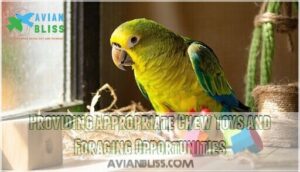
Beyond simple chew toys, create enriching foraging opportunities that satisfy your conure’s natural materials preference and chewing instincts.
Toy rotation prevents boredom while adjusting foraging difficulty keeps them engaged.
Many owners find success with various available options to keep their birds happy.
DIY toys from safe wood blocks redirect destructive chewing into positive bird enrichment, supporting effective conure biting prevention through meaningful conure training methods and conure biting solutions.
Positive Reinforcement Training Using Treats

The key to successful positive reinforcement training lies in perfect reward timing—offer treats immediately when your conure chooses not to bite.
Consistent reinforcement using varied treat types helps with shaping behavior through target training.
Many owners find success with specialized training treats.
These conure training methods make bird training effective, creating lasting behavioral changes through strategic rewards.
Stick Training for Safer Interaction
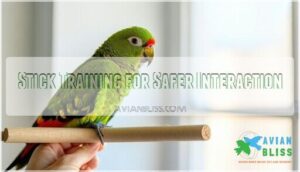
Through stick training, you’ll create safer interactions by teaching your conure the step-up command using a wooden perch instead of your fingers.
This target stick training method reduces direct contact while building bird cooperation and positive association with handling.
A training perch alternative can also aid in this process.
Your bird learns to step onto the stick willingly, creating trust through positive reinforcement and making conure handling tips more effective for avoiding bites.
Respecting The Bird’s Boundaries and Body Language
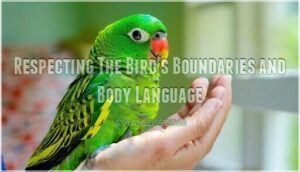
Understanding your green cheek conure’s body language prevents many biting incidents before they occur.
These intelligent birds communicate through subtle cues that reveal their comfort level and emotional state.
Key signs to watch for:
- Pinned pupils and raised feathers – Your bird feels agitated or overstimulated and needs space immediately
- Leaning away or backing up – Clear signals your conure wants distance and isn’t ready for interaction
- Fluffed body posture with lowered head – Indicates stress or fear, requiring a calm environment
- Relaxed posture with normal breathing – Shows your bird feels safe and comfortable with your presence
Reading these signals helps you respect personal space while building trust through positive interactions.
Avoiding Rough Handling or Grabbing The Bird
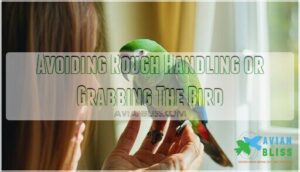
Rough handling triggers fear responses and defensive biting in green cheek conures.
Your gentle approach builds trust gradually, while sudden grabbing destroys months of progress.
Never chase or forcefully restrain your bird, as this creates unsafe spaces that increase bite frequency.
Instead, move slowly and read your conure’s body language signals, using patient bird handling techniques that prioritize fear reduction and conure bite prevention through respectful interaction, allowing your bird to step up voluntarily.
Managing Aggressive Bites
Aggressive bird bites require immediate calming techniques—stay composed and slowly withdraw your hand.
Place your conure on a neutral location like a chair, then ignore them completely for several minutes.
This bite first-aid approach helps redirect aggression by removing the reward of attention.
Addressing these issues can prevent parrots from being surrendered to sanctuaries.
For persistent conure biting problems, consider professional help for effective long-term solutions in bird behavior modification.
Proper Diet and Environmental Enrichment
Your conure’s behavior improves dramatically with proper Diet Variety and environmental enrichment.
Feed high-quality pellets (50-70% of intake), fresh vegetables, and limited fruits while reducing seeds that trigger hyperactivity.
Cage Size matters—spacious enclosures with Natural Perches prevent territorial frustration.
Rotate Foraging Toys weekly to provide mental stimulation and combat boredom.
Enrichment Rotation keeps minds engaged, while puzzle feeders offer physical stimulation.
This thorough approach transforms your feathered friend from a nippy companion into a well-adjusted pet.
Addressing Hormonal Changes and Puberty

When your green cheek conure hits puberty around 6-18 months old, hormonal surges can turn your sweet bird into a moody teenager who bites first and asks questions later.
Understanding these natural changes helps you adjust your approach during this challenging but temporary phase, allowing you to better handle the situation with your sweet bird.
Providing a Consistent Routine and Environment
Beyond maintaining proper diet and environmental enrichment, establishing a consistent routine creates the foundation for managing hormonal behaviors.
Your bird’s internal clock thrives on predictability, making daily schedules your best ally against stress-induced biting.
- Predictable Schedule: Feed, interact, and provide sleep cycles at identical times daily—this regularity reduces anxiety-driven aggression during hormonal peaks.
- Stable Environment: Keep cage placement, perch arrangements, and surrounding furniture unchanged, as environmental shifts can trigger territorial biting responses.
- Consistent Interactions: Maintain the same approach to handling, training sessions, and positive reinforcement techniques throughout hormonal fluctuations for ideal bird behavior management.
Introducing novelty seeking behaviors through toy rotation can further reduce stress.
Limiting Excessive Handling and Interaction During Hormonal Changes
When hormonal changes hit your green cheek conure, step back and give them breathing room. Reduced stimulation becomes your best friend during these turbulent weeks.
Hormonal biting often stems from overstimulation, so redirect affection toward verbal praise instead of physical contact.
Encourage independent playtime in their cage, allowing natural behaviors to emerge. Cage rest periods help them self-regulate while you observe their biting behavior from a safe distance, preventing aggression escalation.
Consistency and Patience in Training
Training your green cheek conure requires unwavering consistency and plenty of patience, as behavioral changes don’t happen overnight.
You’ll need to stick with your chosen training methods for several months, celebrating small wins along the way while your feathered friend learns to trust and respond to your guidance.
Consistently Using The Chosen Training Method for Several Months
Training consistency forms the cornerstone of successful conure biting treatment, requiring unwavering commitment to your chosen approach.
Long-term success demands maintaining identical responses and consistent commands for several months, allowing behavioral solidification through repetition.
Bird training thrives on predictability—your conure’s brain needs time for habit formation.
Patience required here isn’t just helpful, it’s essential.
Without steady application, positive reinforcement loses effectiveness, and biting behavior resurfaces.
Employing techniques like target training can further improve communication and learning.
Providing Positive Reinforcement and Praise for Desired Behaviors
Your consistency in positive reinforcement creates a foundation for successful bird training through rewarding desirables and encouraging understanding.
When your Green Cheek Conure displays appropriate behavior, immediately offer treats and praise to strengthen the connection between action and reward.
Effective positive reinforcement strategies include:
- Short sessions of 5-10 minutes to maintain focus and prevent overstimulation
- Consistent commands paired with the same rewards each time
- Immediate treats when your bird chooses gentle interaction over biting
- Verbal praise using an upbeat, encouraging tone
- Solidifying behaviors through daily repetition and patience
This approach builds trust while teaching your conure that calm behavior brings positive outcomes.
Frequently Asked Questions (FAQs)
Do conure bites hurt?
Yes, conure bites hurt and feel like sharp pinches or needle pricks.
You’ll experience varying pain levels depending on your tolerance, the bird’s size, and bite context, though injuries are typically minor.
What is toxic to green cheek conures?
By telegram standards, avocados, fruit seeds, chocolate, caffeine, alcohol, salty, sugary, and fatty treats are toxic to your bird and can cause illness or death.
Avocado and onions are potentially toxic, while garlic, salt, sugar, cheese, peanuts, mushrooms, and rhubarb pose serious risks to your feathered friend’s health.
Conures also require balanced bird nutrition to avoid health issues and need to steer clear of toxic foods like avocado and onions, as well as serious risks from substances such as garlic and sugar.
What to do if your conure bites you?
Stay calm, don’t react dramatically.
Clean any wound with soap and water.
Identify what triggered the bite—fear, territory, hormones.
Use positive reinforcement training and respect your bird’s body language going forward.
Why is my conure suddenly attacking me?
Birds that bite unexpectedly often do so due to hormonal changes, stress, fear, or territorial instincts.
Check for environmental changes, illness signs, or overstimulation that might trigger defensive behavior in your feathered friend.
Why does my conure bite me when I pet him?
Your conure likely bites during petting because he’s overstimulated, feels threatened, or you’re touching sensitive areas like his back or wings.
Respect his boundaries and pet only his head and neck area gently.
Do green cheek conure bites occur?
Persistent pecking problems plague pet owners, but yes, green cheek conures do bite regularly.
You’ll experience sharp, piercing sensations from their beaks, though severity depends on your bird’s temperament, socialization level, and the specific interaction context that triggers their defensive or exploratory behavior.
The severity of the bite also depends on the context that triggers their behavior.
Can a green cheek conure bite a parrot?
Yes, green cheek conures can bite other parrots during territorial disputes, competition for resources, or social conflicts.
You’ll see this happen when birds feel threatened, establish dominance, or protect their space from perceived intruders, which can lead to aggressive behavior.
Are green cheek conures aggressive?
Like Dr. Jekyll and Mr. Hyde, these feathered companions aren’t inherently aggressive but can display territorial behaviors when stressed, hormonal, or inadequately socialized, requiring patient understanding and proper training.
Do pineapple green cheek conures bite?
Pineapple green cheek conures can bite, just like all conure varieties. They’ll nip when scared, territorial, bored, or exploring their world through their beaks—it’s natural bird behavior.
Do green cheek conures Nip?
Around 70% of green cheek conure owners report nipping behavior in their birds.
You’ll notice nips differ from bites – they’re gentler exploratory pinches used for communication, testing boundaries, or investigating new things rather than aggressive attacks, which can be considered as exploratory behavior.
Conclusion
Transforming a green cheek conure bite problem isn’t rocket science, but it requires unwavering dedication and understanding.
You’ll see dramatic improvements when you consistently apply positive reinforcement training, respect your bird’s boundaries, and provide proper environmental enrichment.
Remember that addressing hormonal changes during puberty requires extra patience, while maintaining a structured routine helps prevent future behavioral issues.
With persistent effort and compassionate guidance, your green cheek conure bite incidents will become rare occurrences, strengthening your bond immeasurably.
- https://theparrotclub.co.uk/community/index.php?threads%2Fgreen-cheeked-conure-biting.39837%2F
- https://www.parrotforums.com/threads/green-cheek-biting-constantly.80667/
- https://www.youtube.com/watch?v=btHLM_NINp4
- https://windycityparrot.com/why-is-my-green-cheek-conure-biting-me-all-of-a-sudden/
- https://forums.avianavenue.com/index.php?threads%2Fhow-bad-is-a-conure-bite.180008%2F