This site is supported by our readers. We may earn a commission, at no cost to you, if you purchase through links.
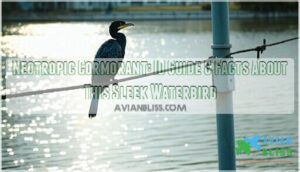 You’ll recognize the neotropic cormorant by its slim, all-black body and long tail—think of it as the “stretch limo” of waterbirds.
This species thrives from Texas to Argentina, often fishing in quiet ponds or perched on wires like a feathered tightrope walker. Unlike its larger cousin, the Double-crested Cormorant, it’s smaller and sports a yellowish throat pouch.
You’ll often spot them in groups, chasing fish or drying their wings in the sun. Adaptable and clever, the neotropic cormorant makes itself at home in both city ponds and remote lakes.
Curious about their quirky habits or unique ID tips?
Table Of Contents
- Key Takeaways
- What is a Neotropic Cormorant?
- Where Do Neotropic Cormorants Live?
- How to Identify a Neotropic Cormorant
- Neotropic Cormorant Vs Double-crested Cormorant
- What Do Neotropic Cormorants Eat?
- Neotropic Cormorant Behavior
- Neotropic Cormorant Conservation
- Frequently Asked Questions (FAQs)
- What is a Neotropic Cormorant?
- Can neotropic cormorants fly?
- What is the difference between Double-crested Cormorants and neotropic cormorants?
- How big are neotropic cormorants?
- What is a neotropic cormorant?
- What is the difference between a neotropic cormorant and a Double-crested Cormorant?
- What do neotropic cormorants eat?
- What is the difference between a cormorant and a great cormorant?
- What is a Neotropic cormorant?
- Where do Neotropic cormorants live?
- Conclusion
Key Takeaways
- You’ll easily identify these birds by their smaller size and longer tail compared to Double-crested Cormorants, plus their distinctive snaky neck and dull yellowish throat pouch that sets them apart from other waterbirds.
- You can find them thriving in diverse habitats from coastal bays to inland freshwater lakes, city ponds, and man-made reservoirs throughout the American tropics, with populations expanding northward into new territories.
- You’ll watch them use unique hunting techniques as they paddle along the water’s surface before diving underwater to catch small fish, tadpoles, and aquatic insects in calm, sheltered waters.
- You’re witnessing a conservation success story – after crashing in the 1950s-60s due to pesticides, their populations have recovered dramatically and continue expanding into new areas like New Mexico since the 1970s.
What is a Neotropic Cormorant?
When you spot a sleek, dark waterbird gliding across a lake’s surface, you might be watching a Neotropic Cormorant. These remarkable neotropic birds inhabit waterways from the southern United States through South America, showcasing incredible feather adaptation that makes them diving champions.
Measuring 22-26 inches with distinctive snaky necks, these cormorant habitat specialists thrive in both coastal and freshwater environments. Their nearly all-black plumage conceals specialized waterproofing that reduces buoyancy—nature’s clever diving suit. Unlike their Double-crested relatives, they’re built smaller but pack serious underwater prowess.
Bird migration patterns vary among populations, with some staying year-round while others follow seasonal routes. Their conservation status reflects a success story: after declining in the 1950s-60s due to pesticides, populations rebounded thanks to improved water quality and bird conservation efforts.
Climate change and habitat loss remain ongoing challenges, yet these adaptable birds continue expanding northward. Their cormorant behavior demonstrates remarkable resilience in our changing world. The unique characteristics of these birds, including their ability to thrive in various coastal environments, make them a fascinating subject for study and observation.
Where Do Neotropic Cormorants Live?

Throughout their geographic range from the southern United States to South America, Neotropic cormorants have mastered the art of aquatic living.
You’ll discover these adaptable birds thriving in diverse neotropic ecosystem locations where water meets opportunity.
Their neotropic cormorant habitat preferences include:
- Coastal ecosystems – protected bays, estuaries, and tidal waters where saltwater provides abundant fishing
- Freshwater wetlands – lakes, ponds, rivers, and reservoirs offering sheltered hunting grounds
- Man-made water bodies – fish farms and artificial reservoirs that expand available bird habitats
- Tropical regions – throughout Latin America and the Caribbean where year-round warmth supports thriving populations
Migration patterns vary substantially across their range.
Some populations remain year-round residents, while others follow seasonal movements.
Cormorant nesting sites have expanded northward, with birds now breeding in New Mexico since the 1970s.
Despite facing habitat loss and climate-related challenges, these aquatic birds demonstrate remarkable resilience.
Their ability to exploit various water environments – from coastal margins to inland reservoirs – has helped populations recover from mid-20th century declines in Texas and Louisiana.
How to Identify a Neotropic Cormorant
Spotting a Neotropic Cormorant requires looking for a sleek, nearly all-black waterbird with distinctive features that set it apart from its relatives.
You’ll notice its characteristic snaky neck, smaller size compared to other cormorants, and remarkably longer tail that gives it a unique silhouette on the water.
Nearly All-black Waterbird
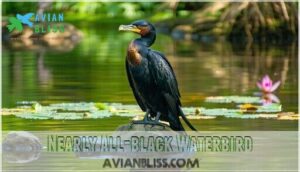
How do you recognize this sleek neotropic cormorant among other water bird species? Its nearly all-black plumage creates a striking silhouette against aquatic environments.
The black plumage displays a glossy bronze sheen on wings, while webbed feet enable efficient swimming.
This aquatic birds species thrives in neotropic ecosystem waters despite challenges from habitat loss and climate change.
Their dark feather adaptation helps regulate body temperature during bird migration and reduces water pollution visibility impacts.
Snaky Neck
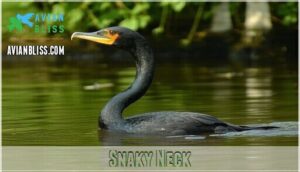
Anyone can identify a Neotropic Cormorant by its distinctive snaky neck that curves elegantly as it swims or perches.
This flexible neck structure enables precise diving techniques and lightning-fast strikes when hunting.
The leucocarbo’s elongated neck complements its black plumage and dull yellowish throat pouch, creating perfect cormorant anatomy for underwater feeding habits.
The Neotropic Cormorant’s unique physical characteristics are examples of birds with s shaped necks that have evolved for efficient hunting and survival.
Smaller and Longer-tailed Than Other Cormorants

Compared to other cormorants, the neotropic cormorant displays a noticeably smaller body size and distinctly long tail.
This combination of physical traits creates a more streamlined silhouette that’s essential for bird identification.
The extended tail length and compact build distinguish it from bulkier relatives, making relative size your most reliable field mark when spotting these agile waterbirds.
Similar to Double-crested Cormorant

At first glance, you might mistake a Neotropic Cormorant for its Double-crested relative.
These dark waterbirds share remarkably similar profiles when perched or swimming. However, experienced birders know the subtle differences that separate these species during cormorant comparison sessions.
Key distinguishing features include:
- Bird size – Neotropic Cormorants measure 22-26 inches versus Double-crested’s larger 28-35 inch frame
- Feather color – Bronze sheen on wings contrasts with Double-crested’s more uniform black plumage
- Beak shape – Slimmer, more pointed bill compared to Double-crested’s thicker structure
The Olivaceous Cormorant’s diving style also differs slightly from its cousin’s technique.
Neotropic Cormorant Vs Double-crested Cormorant
You’ll often spot Neotropic Cormorants alongside their larger cousin, the Double-crested Cormorant, making identification tricky at first glance.
The key differences lie in size and subtle features that become clear once you know what to look for, which can help in distinguishing between these two species, with identification being the ultimate goal.
Neotropic Cormorant is Smaller and Has a Longer Tail
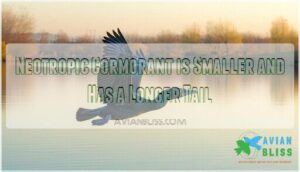
The neotropic cormorant’s smaller frame and elongated tail make it stand out from its bulkier cousin.
Body size differences are striking—you’ll spot the neotropic cormorant measuring just 25 inches compared to the double-crested’s hefty 32-inch frame.
Wing span and tail length create a more balanced silhouette in flight, while feather color remains similarly dark.
This bird species showcases distinct cormorant characteristics through its streamlined proportions.
The neotropic cormorant’s identification can be aided by understanding its cormorant comparison details.
| Feature | Neotropic Cormorant | Double-crested Cormorant |
|---|---|---|
| Body Length | 25 inches (64 cm) | 32 inches (81 cm) |
| Wing Span | 35-39 inches | 45-48 inches |
| Tail Shape | Long, wedge-shaped | Short, squared |
| Weight | 2.6 lbs | 4.6 lbs |
| Bill Length | Shorter, sleeker | Longer, heavier |
The neotropic cormorant and double-crested cormorant have distinct physical characteristics, including body length and wing span, which are essential for accurate identification.
Neotropic Cormorant Has a Duller, Yellowish Throat Pouch
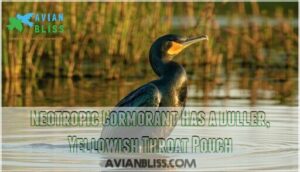
Beyond size differences, the throat pouch reveals another key distinction.
The neotropic cormorant displays a dull yellowish throat patch that’s noticeably less vibrant than its Double-crested relative’s bright orange pouch.
During breeding season, you’ll spot a distinctive white "V" border around the Neotropic’s throat area—a feature absent in Double-crested birds.
| Feature | Neotropic Cormorant | Double-crested Cormorant |
|---|---|---|
| Throat Color | Dull yellow-orange | Bright orange-yellow |
| Shape | Pointed at rear | Rounded |
| Breeding Border | White "V" present | No white border |
This throat pouch difference becomes your best friend during bird identification sessions.
The contrasting feather coloration and throat patch characteristics make distinguishing these water-adapted species straightforward, especially when both appear on your bird species list during cormorant nesting season or bird migration periods.
What Do Neotropic Cormorants Eat?
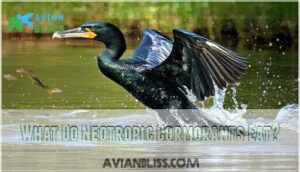
If you’re curious about what fuels these sleek diving birds, you’ll find that Neotropic Cormorants have quite the appetite for aquatic life.
These skilled underwater hunters primarily target small fish ranging from two to five inches long, but they don’t stop there, which showcases their appetite.
Small Fish
Neotropic Cormorants are fish-focused hunters, targeting prey measuring just 2-5 inches long. Over 90% of their neotropic cormorant diet consists of small fish like mosquitofish, sailfin molly, and sunfish.
These skilled divers adapt their cormorant diet based on local fish populations and habitat impact. The birds’ ability to thrive in various environments is linked to their breeding habits and adaptability.
- Fish size preference keeps hunting efficient – smaller prey means quicker swallowing and less energy spent
- Foraging depths stay shallow at 5-15 seconds per dive, perfect for catching bite-sized meals
- Diet adaptations shift with seasons – inland birds favor freshwater species under 4 inches
- Bird diet flexibility helps them thrive in ponds, lakes, and protected coastal areas
- Aquatic insects supplement fish intake, especially during breeding season when protein needs peak
Tadpoles, Frogs
Venturing beyond their fish-focused menu, these adaptable waterbirds readily snatch tadpoles and adult frogs from shallow freshwater wetlands.
During amphibian population booms, tadpole predation increases substantially as cormorants capitalize on abundant prey.
Their aquatic feeding strategy perfectly suits wetland ecology, where frogs and their young thrive in protected waters that cormorants prefer for hunting.
Aquatic Insects
When amphibians aren’t available, these adaptable birds turn to aquatic insects for sustenance.
Neotropic cormorants skillfully capture various invertebrates during their underwater hunting expeditions:
- Water beetles – Common prey in shallow freshwater environments
- Dragonfly larvae – Abundant in pond and lake systems
- Aquatic larvae – Various insect species in different developmental stages
- Freshwater crustaceans – Small shrimp and similar invertebrates
- Macroinvertebrates – Diverse aquatic wildlife supporting waterfowl species
This insect migration into their diet showcases remarkable bird feeding behavior adaptability across dragonfly habitats.
Other Prey in Tropical Habitats
In tropical waters, these cormorants diversify their aquatic world menu beyond small fish and tadpoles.
Crustacean prey like shrimp becomes a staple, while mollusk diet additions provide calcium-rich nutrition.
Their reptile hunting skills extend to aquatic snakes and lizards.
This dietary flexibility showcases their underwater prowess across diverse fish varieties and invertebrates, making them successful predators throughout tropical ecosystems.
The Neotropic Cormorant’s adaptability is a key factor in thriving within tropical bird ecosystems.
Neotropic Cormorant Behavior

When you watch Neotropic Cormorants, you’ll notice they’re surprisingly social birds that often mix with Double-crested Cormorants in feeding flocks.
Unlike many water birds that plunge from above, these skilled swimmers prefer to paddle along the surface and duck underwater to catch their prey in calm, sheltered waters.
Often Flocks With Double-crested Cormorants
In mixed-species groups, Neotropic Cormorants demonstrate remarkable flocking behavior alongside Double-crested Cormorants.
These social interactions create dynamic colony dynamics where birds share prime feeding locations and enhance predator detection through collective vigilance.
- Mixed flocks provide safety in numbers when foraging in open waters
- Foraging strategies improve as birds learn from different species’ hunting techniques
- Shared roosting sites accommodate both species during migration patterns
- Water birds benefit from increased awareness of food-rich areas through group intelligence
Dives Mostly as It Paddles Along The Water’s Surface
Unlike most waterbirds that plunge dramatically from above, you’ll spot neotropic cormorants using a more methodical approach.
These skilled hunters paddle along the water surface before diving down to pursue prey. Their diving techniques involve propelling themselves underwater with webbed feet, spending nearly 20 seconds submerged on average.
This swimming pattern showcases their underwater prowess perfectly. The neotropic cormorant’s diving behavior relies on proper diving gear equipment to study their habits effectively, utilizing webbed feet and a unique diving technique.
Fishes in Sheltered Water
When seeking prey, neotropic cormorants gravitate toward sheltered waters where their underwater prowess truly shines.
These adaptable hunters prefer protected bays, quiet inlets, and calm reservoirs over choppy open waters. The favorable water quality and abundant aquatic life in these havens create perfect fishing conditions.
Their specialized fishing techniques work best in stillness, allowing them to spot small fish and aquatic insects more easily beneath the surface.
Understanding waterbird identification techniques is essential for recognizing species like the neotropic cormorant in their natural habitats.
Can Occur Far Inland
You’ll discover Neotropic Cormorants thriving hundreds of miles from coastal areas in freshwater ecosystems.
These adaptable waterbirds have mastered inland habitats, establishing breeding colonies far from their traditional marine homes:
- River ecosystems provide abundant small fish prey
- Wetland conservation creates protected nesting sites
- Bird migration patterns shift with climate changes
Their freshwater adaptation demonstrates remarkable flexibility, with inland populations now breeding successfully across Texas, New Mexico, and beyond.
Neotropic Cormorant Conservation
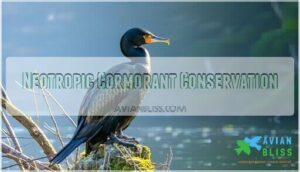
You’ll find that Neotropic Cormorants have experienced quite a conservation journey in North America.
Their Texas population crashed during the 1950s and 1960s due to pesticide use, but they’ve made a remarkable comeback since then, expanding their range northward into new territories like New Mexico.
Texas Population Declined in 1950s and 1960s
During the 1950s and 1960s, Texas witnessed a dramatic crash in Neotropic Cormorant populations.
Pesticide effects devastated these waterbirds, creating one of conservation’s most concerning chapters.
This population decline prompted urgent bird conservation efforts across the state.
| Decade | Population Status | Primary Threat |
|---|---|---|
| 1950s | Sharp Decline | Pesticide Use |
| 1960s | Continued Drop | Coastal Development |
| 1970s+ | Recovery Begins | Conservation Efforts |
| Present | Stable/Growing | Habitat Protection |
The table summarizes the population decline and recovery of Neotropic Cormorant populations over the decades, highlighting the impact of conservation efforts.
Increased Again in Texas and Louisiana
Following the 1960s decline, Neotropic Cormorant populations rebounded dramatically across Texas and Louisiana.
Nature’s comeback story in action – from near extinction to thriving populations across expanding territories.
This remarkable recovery story demonstrates nature’s resilience when conservation efforts align with species’ needs:
- Population Trends shifted from decline to steady growth since the 1970s
- Habitat Expansion into inland reservoirs complemented traditional coastal sites
- Conservation Efforts improved water quality and reduced pesticide exposure
- Regional Growth established new breeding colonies throughout both states
The recovery is also attributed to successful bird conservation efforts that helped protect habitats and reduce threats.
First Found Nesting in New Mexico in The 1970s
Neotropic Cormorants made their mark in New Mexico during the 1970s, establishing their first nesting patterns after decades of range shift.
This New Mexico expansion represents remarkable habitat adaptation, as these resilient waterbirds colonized inland reservoirs and wetlands.
The First Neotropic Cormorant nests marked a pivotal moment in conservation efforts, demonstrating how cormorant populations can recover and spread when conditions improve, showcasing their ability to thrive in new environments with resilient waterbirds.
Frequently Asked Questions (FAQs)
What is a Neotropic Cormorant?

Like a sleek underwater arrow cutting through liquid glass, you’ll spot this medium-sized waterbird diving for fish in warm American waters.
The Neotropic Cormorant’s distinctive snaky neck and bronze-black plumage make it unmistakable among wetland hunters.
Can neotropic cormorants fly?
Yes, you’ll see these skilled swimmers take to the air regularly.
They’re strong fliers with broad wings, though they prefer diving underwater for fish rather than aerial hunting like some other water birds.
What is the difference between Double-crested Cormorants and neotropic cormorants?
You’ll spot the difference easily: Neotropic Cormorants are smaller with longer tails, while Double-crested Cormorants are bulkier with shorter tails and distinctive crests during breeding season.
How big are neotropic cormorants?
Measuring 22-26 inches long with a 35-39 inch wingspan, you’ll find these sleek birds are remarkably smaller than their double-crested cousins.
Their streamlined bodies and longer tails make them perfectly built for underwater fishing adventures.
What is a neotropic cormorant?
You’ll recognize this sleek, black waterbird by its snake-like neck and bronze wing sheen.
It’s smaller than other cormorants, with webbed feet for diving underwater to catch fish in tropical waters.
What is the difference between a neotropic cormorant and a Double-crested Cormorant?
You’ll notice the Neotropic Cormorant is smaller with a longer tail than the Double-crested Cormorant.
The Neotropic also has a distinctive snaky neck and yellowish throat pouch versus the Double-crested’s orange facial skin.
What do neotropic cormorants eat?
You’ll find these aquatic hunters diving for small fish measuring 2-5 inches, plus tadpoles, frogs, and aquatic insects. They’re adaptable feeders who’ll snatch crustaceans and mollusks too.
What is the difference between a cormorant and a great cormorant?
The absolutely mind-blowing difference you’ll discover is that "Great Cormorants are larger and thicker overall with bigger heads" while sporting "white neck patch" versus other cormorants’ orange throat pouches.
What is a Neotropic cormorant?
You’ll spot this sleek, black water bird with a bronze wing sheen and distinctive snaky neck throughout American tropics.
They’re smaller than other cormorants, dive for fish underwater, and increasingly nest inland across expanding ranges.
Where do Neotropic cormorants live?
You’ll encounter these adaptable water birds throughout the American tropics, from southern Texas to South America.
They’ve expanded their range northward, now nesting in freshwater lakes, rivers, coastal areas, and man-made reservoirs across multiple U.S. states, which showcases their ability to thrive in various freshwater environments.
Conclusion
Surprisingly, this adaptable waterbird appears wherever freshwater meets opportunity—from urban retention ponds to remote wilderness lakes.
The neotropic cormorant’s remarkable range expansion northward demonstrates nature’s resilience and adaptability.
Whether you’re scanning Texas coastal marshes or checking city park ponds, you’ll likely encounter these sleek fishing specialists.
Their recovery from population declines shows conservation success, while their social feeding flocks provide excellent viewing opportunities for birders seeking reliable waterbird encounters.
- https://animaldiversity.org/accounts/Phalacrocorax_brasilianus/
- http://avianconservationpartners-nm.org/wp-content/uploads/2017/01/Neotropic-Cormorant.pdf
- https://bioone.org/journals/waterbirds/volume-32/issue-3/063.032.0310/Diet-of-the-Neotropic-Cormorant-Phalacrocorax-olivaceus-at-West-Chubut/10.1675/063.032.0310.pdf
- https://rgvctmn.org/blog/neotropic-cormorant/
- http://www.marineornithology.org/PDF/30_1/30_1_5.pdf