This site is supported by our readers. We may earn a commission, at no cost to you, if you purchase through links.

A broken blood feather cockatiel emergency can turn from a routine wing flutter to a crisis in seconds. Blood feathers—the newly developing feathers with an active blood supply running through their shafts—are fragile by design, and when one snaps, the open blood vessel creates bleeding that won’t stop on its own.
Your bird might seem fine one moment, then suddenly you notice bright red droplets on the perch or blood-soaked plumage near the wing. Unlike a minor scrape, a broken blood feather demands immediate action because the continuous blood flow can quickly weaken even a healthy cockatiel.
Knowing how to respond calmly and effectively can mean the difference between a manageable situation and a veterinary emergency.
Table Of Contents
- Key Takeaways
- What is a Broken Blood Feather in Cockatiels?
- Causes and Risks of Broken Blood Feathers
- How to Identify and Assess The Injury
- Emergency First Aid for Broken Blood Feathers
- Recovery, Prevention, and Ongoing Care
- Frequently Asked Questions (FAQs)
- Will a broken blood feather heal on its own?
- How to tell if a blood feather is broken?
- How do you remove a blood feather from a cockatiel?
- Do blood feathers need to be removed?
- What to do if a cockatiel breaks a blood feather?
- Should I remove a blood feather?
- Will a broken blood feather heal itself?
- Can a bird survive a blood feather?
- How to remove a broken blood feather?
- Why is my broken blood feather not bleeding?
- Conclusion
Key Takeaways
- Blood feathers contain an active blood supply that makes breaks dangerous—unlike mature feathers, they won’t stop bleeding on their own and require immediate pressure with gauze and styptic powder to prevent life-threatening blood loss in your cockatiel’s small body.
- You’ll recognize a broken blood feather by bright red blood on the shaft or perch, pulsating bleeding that worsens with movement, and behavioral changes like reluctance to fly—if bleeding doesn’t stop after five minutes of pressure, you need emergency veterinary care.
- Safe removal requires grasping the broken shaft firmly at the base with hemostats and pulling in one quick motion along the growth direction, then applying styptic powder immediately to seal the follicle and prevent infection.
- Prevention starts with protein-rich pellets (25-28%), full-spectrum lighting, 50-60% humidity, and cage setups without sharp edges—gentle handling during molts and regular monitoring protect vulnerable new feathers as they develop.
What is a Broken Blood Feather in Cockatiels?
Understanding what a blood feather is and why it’s vulnerable can help you respond quickly if your cockatiel gets injured. These actively growing feathers have a living blood supply running through them, which makes breaks more serious than damage to fully mature feathers.
If you notice bleeding from a broken blood feather, knowing how to treat a bird’s bleeding wing can prevent dangerous blood loss while you contact your vet.
Let’s look at what defines a blood feather, why they’re at risk, and how to recognize when one is broken.
Definition and Anatomy of Blood Feathers
A blood feather is a developing new feather that’s still growing and contains an active blood supply within the feather shaft. These pin feathers emerge from feather follicles in your cockatiel’s skin, wrapped in a protective keratin coating as they push through.
Understanding this feather anatomy helps you recognize why broken blood feathers require immediate attention—that blood supply can lead to serious bleeding if the shaft cracks. The arrangement of feathers across the body, known as specific feather tracts, plays a key role in understanding molting and blood feather development.
Why Blood Feathers Are Vulnerable
These developing feathers sit in a precarious position during the molting process. The blood supply running through each shaft makes any trauma or injury a serious concern, since even a small bump can rupture the feather and trigger bleeding. Here’s why blood feathers face higher risk:
- The keratin formation around the shaft creates a narrow exposure point that breaks easily
- Wing and tail feathers bend constantly during movement, stressing fragile new growth
- Poor nutrition weakens feather follicles and compromises structural integrity
- Cage toys and perches with rough edges frequently snag developing plumage
- Stress disrupts normal feather growth, producing thinner, more breakable shafts
Your cockatiel’s active lifestyle means blood feathers encounter daily hazards that fully mature feathers handle without issue.
In an emergency, pet owners should keep a bird first aid kit on hand since even minor blood feather breaks may require urgent care.
Signs a Blood Feather is Broken
Recognizing a broken blood feather early can prevent dangerous blood loss. Watch for these telltale indicators that signal trauma requiring emergency response:
| Visual Signs | Behavioral Changes | Physical Symptoms |
|---|---|---|
| Blood on feathers or cage | Sudden squawking when touched | Swollen follicle base |
| Bent or cracked shaft | Reluctance to fly | Loose, wobbly feather |
| Red staining on bedding | Tucked wing position | Visible bleeding from shaft |
| Darkened shaft segment | Limited movement | Bruised surrounding tissue |
Your cockatiel’s injury assessment starts with spotting these feather damage markers immediately.
Understanding what causes feather loss in cockatiels helps you distinguish between normal molting and signs of underlying health problems.
Causes and Risks of Broken Blood Feathers

Blood feathers break more easily than mature feathers because they’re still developing and have an active blood supply running through the shaft. Understanding what causes these breaks helps you protect your cockatiel and respond quickly if an injury happens.
Let’s look at the main causes of breakage, the bleeding risks involved, and how infection and stress can complicate recovery.
Common Causes of Feather Breakage
Most feather trauma in your cockatiel happens during everyday activities—preening that gets a bit too vigorous, cage toys with rough edges, or accidental tugs during handling.
Nutrient deficiency weakens feather structure, making broken blood feathers more likely even with gentle contact.
Environmental stress from drafts or low humidity can dry out developing blood feathers, turning routine physical injury into a real concern that demands your attention.
Dangers of Severe Bleeding
The speed of blood loss in a broken blood feather injury can turn a minor trauma into a life-threatening emergency within minutes if you don’t act quickly. Your cockatiel’s small body size means even moderate bleeding control failures can lead to shock prevention challenges.
A broken blood feather can cause life-threatening blood loss in minutes due to your cockatiel’s small body size
Watch for these critical warning signs of avian hemorrhage:
- Bright red blood spurting with each heartbeat from the broken blood feathers
- Pale or white cere and foot pads indicating dangerous blood loss
- Rapid breathing or weakness suggesting the bird is struggling to compensate
- Blood pooling in the cage bottom—more than a few drops demands emergency response
- Lethargy or inability to perch, showing the injury has progressed beyond the initial trauma
Immediate bleeding control makes the difference between recovery and crisis.
Risk of Infection and Stress
Beyond the immediate threat of blood loss, infection control becomes your next urgent priority. An open wound on a blood feather creates a pathway for bacteria to invade your cockatiel’s bloodstream, especially when stress management falters.
Environmental germs like Staphylococcus can colonize the injury within 24 to 72 hours, compounding trauma and threatening avian health unless you maintain vigilant wound care and support your bird’s immune system.
How to Identify and Assess The Injury
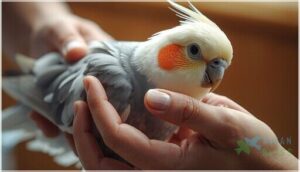
When you notice blood on your cockatiel or in the cage, your first priority is figuring out exactly what’s happening and how serious it is. Most broken blood feathers are straightforward to identify, but you’ll need to know what to look for and when the situation calls for immediate veterinary attention.
Let’s walk through how to recognize the injury, rule out other problems, and decide on the right course of action.
Recognizing Symptoms and Bleeding
When you spot bright red blood trickling from a feather shaft or pooling on your cockatiel’s perch, you’re likely dealing with a broken blood feather. Look for pulsating bleeding that worsens with wing flapping, blood-soaked feathers near the injury, and behavioral changes like frantic preening or reluctant perching.
These bleeding signs demand immediate wound assessment and emergency care to prevent dangerous blood loss.
Differentiating Blood Feather Injuries From Other Issues
Not every feather problem requires emergency intervention—knowing the difference protects your cockatiel from unnecessary stress. A broken blood feather shows active bleeding or fresh clots at the shaft base, while mature feather breaks rarely bleed at all.
- Fresh bleeding or clotting signals a broken blood feather needing immediate injury assessment
- Sudden vocalization when touched indicates pain from blood feather damage versus routine feather wear
- Localized swelling with discharge suggests infection from avian wound complications, not simple molt
When to Seek Veterinary Help
Heavy bleeding that won’t stop within five minutes demands emergency care—your cockatiel’s life may depend on quick veterinary treatment. Use the following table to recognize signs that require a vet visit and when bleeding control at home isn’t sufficient:
| Warning Sign | What It Means | Action Needed |
|---|---|---|
| Continuous bleeding after pressure | Blood vessel damage | Immediate avian vet visit |
| Swelling with discharge | Feather infection developing | Veterinary care within 24 hours |
| Weakness or collapse | Dangerous blood loss | Emergency bird injury treatment now |
| Recurrent breakage | Underlying health issue | Schedule avian first aid consultation |
Professional veterinary treatment ensures proper healing and prevents life-threatening complications.
Emergency First Aid for Broken Blood Feathers
When you spot a broken blood feather, quick action makes all the difference between a minor scare and a serious emergency. Knowing how to safely handle your cockatiel and what supplies to keep on hand will help you respond with confidence instead of panic.
Let’s walk through the essential first aid steps you need to stop the bleeding and keep your bird safe.
Safely Restraining Your Cockatiel
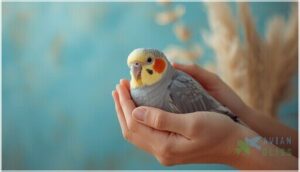
When a broken blood feather strikes, safe restraint is your first priority.
Gentle handling starts with a calm environment—speak softly and move slowly to reduce stress. Use safe grip methods by supporting the bird’s body with one hand while securing the back of the neck with your thumb and forefinger. Never squeeze the chest, as this restricts breathing and worsens panic.
Supplies Needed for First Aid

Once you’ve secured your bird, having the right emergency supplies within arm’s reach makes all the difference.
Your first aid kit should include these essentials:
- Sterile gauze pads (4×4 inches) to apply gentle pressure and absorb blood without sticking to delicate feathers.
- Hemostatic tweezers or needle-nose pliers for quick, clean feather removal if bleeding won’t stop.
- Styptic powder or cornstarch to encourage clotting and seal the wound site immediately.
Keep these medical tools together in one accessible spot—you won’t have time to hunt during an emergency.
Steps to Stop The Bleeding
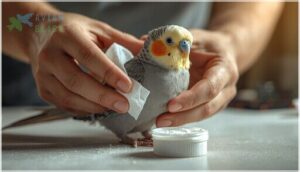
Bleeding control starts the moment you notice the broken blood feather. Grab your sterile gauze and apply firm, steady pressure directly on the feather shaft for at least five minutes. Don’t lift the cloth to peek or you’ll disrupt blood clotting.
If bleeding continues, sprinkle styptic powder on the wound and maintain pressure until the emergency response stabilizes your bird.
Proper Feather Removal Technique
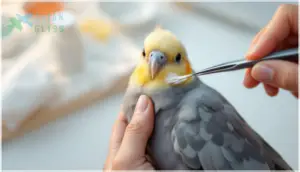
If pressure alone won’t stop the bleeding, feather removal becomes necessary. Use sterile tweezers to grasp the broken blood feather shaft firmly at its base, then pull quickly in the direction of growth. This feather extraction prevents continued blood vessel damage.
Apply styptic powder immediately to the wound, then clean gently with a pet-safe antiseptic. Contact your avian vet to confirm proper shaft removal and monitor feather regrowth.
Recovery, Prevention, and Ongoing Care
Once you’ve stopped the bleeding and stabilized your cockatiel, the real work begins with monitoring their recovery and making sure it doesn’t happen again. The good news is that most birds bounce back quickly when you know what to watch for and how to create a safer environment.
Let’s walk through the essential steps for helping your cockatiel heal completely and protecting those delicate new feathers as they grow in.
Post-Treatment Monitoring and Healing
Once the crisis passes, your cockatiel needs careful observation to verify healing progress stays on track.
Check their demeanor and temperature daily for the first week—lethargy or warmth can signal infection signs. Track weight every 2–3 days to catch dehydration early, and inspect the wound site for redness or discharge.
Feather regrowth should begin within days, confirming your bird health interventions worked.
Preventing Future Blood Feather Injuries
Most broken blood feather incidents stem from preventable risks you can address with consistent feather health tips and environmental controls. Gentle handling during molts reduces trauma, while safe perching—free of sharp edges—protects vulnerable blood feathers.
Regular cockatiel feather care, combined with nutrient balance and stress reduction, strengthens bird health and minimizes future injuries.
Diet and Environmental Tips for Feather Health
Healthy plumage starts with nutrient balance, and your cockatiel’s diet plays a direct role in feather growth and development. Offer protein sources like high-quality pellets with 25–28 percent protein, ground flaxseed for omega-3s, and vitamin A–rich greens such as kale. Feather supplements approved by your vet further support avian health and wellness, strengthening new shafts and reducing breakage during molts.
Pair strong bird nutrition with environmental enrichment—full-spectrum lighting, regular misting for hydration methods, and humidity around 50–60 percent.
- Protein-rich pellets and cooked eggs fuel keratin production for resilient feathers.
- Daily mist baths and fresh water keep follicles hydrated and preening efficient.
- Full-spectrum lighting mimics natural daylight, promoting vitamin D synthesis and steady molt cycles.
When to Schedule Follow-Up Vet Visits
Generally, you should schedule a follow-up visit within seven to fourteen days after treating a broken blood feather, allowing your avian veterinarian to assess healing progress and rule out infection.
Post-treatment care includes monitoring your cockatiel for signs of recurring bleeding, lethargy, or swelling—red flags that warrant earlier vet visit scheduling. Recovery planning may require additional rechecks if complications arise during injury monitoring.
Frequently Asked Questions (FAQs)
Will a broken blood feather heal on its own?
A broken blood feather won’t repair itself because the damaged shaft can’t regenerate.
The bleeding usually stops with clotting, but you’ll often need to remove the injured feather so a healthy replacement can grow.
How to tell if a blood feather is broken?
Like spotting a crack in a delicate vase, feather inspection reveals bleeding signs—fresh blood on the shaft, visible breaks, or active dripping.
Injury assessment of blood feathers in your cockatiel demands immediate emergency response to prevent dangerous blood loss.
How do you remove a blood feather from a cockatiel?
Grasp the broken blood feather firmly at its base using hemostats or tweezers, then pull smoothly in one quick motion to remove the entire shaft from the follicle, stopping bleeding with gauze and styptic powder.
Do blood feathers need to be removed?
Not every blood feather needs removal—it’s the broken one that won’t stop bleeding.
Control bleeding with pressure and clotting aids first; only remove if emergency care can’t achieve hemostasis within minutes.
What to do if a cockatiel breaks a blood feather?
If your cockatiel breaks a blood feather, gently restrain the bird and apply steady pressure with clean gauze for several minutes to control bleeding, then seek veterinary care promptly.
Should I remove a blood feather?
Removal becomes necessary when bleeding won’t stop after applying pressure for several minutes.
This avian emergency requires careful feather anatomy knowledge and proper blood clotting technique to prevent further injury or infection.
Will a broken blood feather heal itself?
Unfortunately, no—the damage won’t mend on its own. Blood clotting may temporarily stop the bleeding, but the broken shaft itself can’t repair, and the feather anatomy remains compromised without proper emergency care and often removal.
Can a bird survive a blood feather?
Yes, birds survive broken blood feathers with prompt bleeding control and proper care. Most cockatiels recover fully when first aid stops the blood loss quickly, preventing shock or severe complications that threaten avian health.
How to remove a broken blood feather?
Like pulling a splinter, removing a broken blood feather requires swift action. Grasp the shaft firmly with hemostats near the follicle, then pull straight out in one quick motion to stop bleeding.
Why is my broken blood feather not bleeding?
When a broken blood feather stops bleeding, your cockatiel’s natural blood coagulation and clot formation have likely sealed the vessel.
Wound healing begins as platelets close the injury, though vessel closure doesn’t eliminate rebleeding risk entirely.
Conclusion
Picture your cockatiel preening peacefully, feathers intact and vibrant—that’s the goal after managing a broken blood feather cockatiel emergency. With prompt first aid, careful monitoring, and smart prevention strategies, you’ve transformed a frightening situation into a manageable one.
Keep styptic powder stocked, minimize wing trauma during molts, and stay observant. Your preparedness doesn’t just stop bleeding—it builds the confidence needed to protect your feathered companion through every stage of feather development.
- https://docs.google.com/forms/d/1GAQr3Kn1cURCVHUA82hAga1Wv8DCH0IuqDLRUrOpN7M/viewform?ts=63f4f653&entry.1515682415=https://www.merriam-webster.com/dictionary%2Fbroken
- https://premium.britannica.com/mw-unabridged/?utm_source=mw&utm_medium=inline-def&utm_campaign=evergreen
- https://dictionary.cambridge.org/us/dictionary/english/apart?topic=tearing-and-breaking-into-pieces
- https://www.drexotic.com/common-avian-emergencies/
- https://www.reddit.com/r/cockatiel/comments/q68c22/blood_stained_feather_need_advice/