This site is supported by our readers. We may earn a commission, at no cost to you, if you purchase through links.
You’re sipping your morning coffee when a sharp tap-tap-tap shatters the quiet. A robin slams its beak against your bedroom window, again and again, leaving smudges and your nerves frayed. This isn’t random chaos—it’s driven by deep-seated instincts that make perfect sense once you understand what’s happening behind those beady eyes.
Most birds don’t see a barrier when they look at your glass; they see a territorial rival that needs to be driven away, or they’re chasing reflections of trees and sky that promise food or shelter.
The good news? Once you know why birds peck at windows, you can redirect their behavior without harming them or spending a fortune on repairs.
Table Of Contents
- Key Takeaways
- Why Birds Peck at Windows
- Common Species and Seasonal Patterns
- Effects of Window Pecking on Homes
- Proven Ways to Prevent Window Pecking
- Top 6 Products to Deter Birds From Windows
- Frequently Asked Questions (FAQs)
- What does it mean when a bird pecks at your window?
- How do you stop birds from pecking at your windows?
- Why would a bird keep attacking a window?
- Why do birds peck at window sills?
- Why is my bird pecking at my Window?
- How to stop bird pecking at window surfaces?
- What bird pecks a window?
- Why do finches peck at windows?
- Does pecking a window hurt a bird?
- Why do Crows peck at windows?
- Conclusion
Key Takeaways
- Birds peck at windows primarily because they mistake their reflection for a territorial rival, not to annoy you—this behavior intensifies during the spring breeding season when males defend nesting areas and attract mates.
- You can stop window pecking by reducing reflections with films or soap, installing screens at least three inches from glass, hanging reflective streamers, or moving feeders 10-15 feet away from windows.
- Repeated pecking damages both your property (costing $100-$800 per repair) and the birds themselves through head trauma, beak damage, and stress that suppresses their immune systems and reduces breeding success.
- Robins, sparrows, and woodpeckers are the most frequent offenders, with pecking behavior peaking March through May and dropping significantly during summer, fall, and winter months.
Why Birds Peck at Windows
If you’ve ever watched a bird repeatedly tap at your window, you know how puzzling that behavior can be. Birds don’t peck at glass to annoy you—they’re responding to instincts that have kept them alive for millions of years.
When these collisions do happen, knowing common signs of bird collision injuries can help you act quickly to give an injured bird the best chance of recovery.
Birds peck at windows not to bother you, but as a survival instinct honed over millions of years
Understanding what drives this behavior helps you find the right solution for your home.
Territorial Instincts and Defending Territory
Territory ownership drives many birds to defend their space fiercely. During breeding season, males establish boundaries around nesting sites, feeders, and prime perches through song, calls, and aggressive displays. When a bird sees your window, territorial instincts kick in.
Here’s how defense strategies unfold:
- Males perform wing flicks and alarm calls to warn intruders
- Attack intensity rises when food sources or mates seem threatened
- Testosterone spikes fuel bird aggression and territorial disputes
Animals use a variety of territorial defense mechanisms, such as vocalizations, scent marking, and visual displays to protect their claimed area.
Mistaking Reflections for Rival Birds
While defending territory explains some window pecking, reflection confusion often drives the behavior. Your bird sees its mirror image in the glass and mistakes it for a real rival. This visual trigger prompts aggressive pecking as the bird tries to drive away what it perceives as an intruder.
Bright surfaces heighten the effect, making window reflections especially convincing during peak territorial periods. Scientists continue to study to better understand this instinctive response.
Curiosity and Investigative Behavior
Not all window pecking comes from aggression. Birds also peck out of pure curiosity, using sensory cues to explore their surroundings. Young birds especially practice investigative pecking as they learn about environmental factors through trial and error.
If insects gather near your window frame, you’ll see targeted bird exploration as they probe for potential meals. This avian behavior turns window reflections into fascinating puzzles worth investigating.
Nesting and Mating Behaviors
During breeding season, courtship rituals drive birds to peck at windows to signal their fitness to potential mates. Males perform targeted displays near reflective surfaces, mistaking their image for a rival competing for mate selection. These territorial instincts intensify as pair bonding begins and nest architecture takes shape. You’ll notice this avian territorial defense peaks when breeding cycles overlap with your home’s location.
- A male robin attacks his reflection daily, protecting invisible boundaries for his future family
- Persistent pecking signals the urgent drive to establish territories before rivals claim prime nesting sites
- Each tap against glass represents nature’s ancient push to pass genes to the next offspring
- Your window becomes an accidental stage for life’s most primal performance: securing a mate
Searching for Food Sources Near Windows
Food attraction plays a surprising role in bird behavior near your home. Insects cluster on warm window ledges where sunlight draws larvae and spiders, creating easy meals for hungry birds.
If you’ve placed bird feeders within six feet of windows, you’re inadvertently inviting window pecking as birds forage nearby. Reflections can even mimic food sources, confusing birds into investigative taps.
Wildlife management starts with understanding these insect habitats.
Common Species and Seasonal Patterns
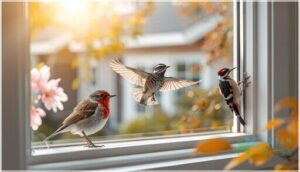
Not all birds peck at windows with the same intensity, and timing matters more than you might think. Robins, sparrows, and woodpeckers top the list of frequent offenders, each driven by their own behavioral quirks.
Understanding which species you’re dealing with—and when they’re most active—helps you choose the right deterrent for your situation.
Birds Most Likely to Peck at Windows (robins, Sparrows, Woodpeckers)
You’ll notice three birds stand out regarding window pecking. Robins lead the pack with their fierce territorial instincts, especially around nests. House sparrows persistently investigate reflections near feeders and sheltered spots. Woodpeckers drum rhythmically on glass, treating it like bark while scouting for insects.
These avian habits create distinct pecking patterns that affect window safety throughout different seasons.
Increased Pecking During Spring Territorial Season
During spring, territorial instincts reach their peak as males defend nesting areas and attract mates. You’ll see the most intense window pecking from March through May when territorial marking and bird communication escalate rapidly. Seasonal behavior drives these aggressive displays:
- Males strike windows repeatedly while establishing boundary lines
- Courtship feeding near reflective surfaces increases pecking incidents
- Dawn activity intensifies as birds respond to window reflections with alarm signals
This territorial season creates the year’s highest pecking activity.
Changes in Behavior During Summer, Autumn, and Winter
After spring’s territorial frenzy fades, seasonal activity shifts dramatically. Summer sees pecking drop as birds focus energy on raising their young.
In autumn, weather patterns trigger restless behavior—you’ll notice brief spikes in bird window strikes as flocks prepare for bird migration.
Winter brings the quietest period, with harsh conditions and scarce food reducing avian aggression to near-zero levels across most regions.
Impact of Migration on Window Pecking
Migration patterns reshape bird behavior in ways most homeowners never expect. When flocks arrive during peak seasons, they cluster near urban areas where window reflections mimic forest edges—triggering pecking episodes that last weeks.
Here’s how bird migration intensifies window pecking:
- Spring arrivals defend new territories by attacking reflective surfaces
- Autumn stopovers concentrate birds near suburban feeders and gardens
- Weather delays trap migrants in urban planning zones with abundant glass
- Night light pollution reroutes flocks toward reflective windows during passage
Understanding avian ecology helps you time prevention efforts with seasonal changes in wildlife conservation patterns.
Effects of Window Pecking on Homes
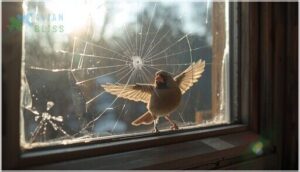
Window pecking might seem like a minor nuisance, but it can create real problems for your home and the birds themselves. From scratched glass to disrupted mornings, the effects add up faster than you’d expect. Here’s what you need to know about the impact this behavior can have on your property and daily life.
Window Damage and Potential Repair Costs
Window damage from persistent pecking can hit your wallet harder than you’d expect. Small chips or cracks in glass usually run $100 to $300 per pane, while frame repair costs range from $175 to $800 depending on material and rot extent. Window seal fixes often reach $150 to $600, and labor fees add another $75 to $200 per hour—making damage assessment vital before problems worsen.
Disruption and Annoyance for Homeowners
Beyond repair bills, the daily hassle of window pecking can seriously test your patience. Here’s how it affects your home life:
- Early morning tapping disrupts sleep and work routines during peak territorial hours.
- Noise pollution from persistent pecking creates ongoing frustration levels throughout the day.
- Constant vigilance increases home maintenance demands as you monitor for window damage.
- Failed bird deterrents lead to repeated attempts at finding effective noise deterrents.
- Window safety concerns grow when pecking patterns intensify near busy living spaces.
Risks to Bird Health and Safety
While you’re dealing with the noise, the birds face real danger. Collision injuries from repeated window strikes can break wings or cause fatal trauma. Here’s what happens:
| Health Risk | Impact on Birds |
|---|---|
| Collision injuries | Broken bones, fatal trauma |
| Stress impacts | Elevated stress hormones |
| Immune suppression | Higher illness rates |
| Feather damage | Impaired flight ability |
| Breeding success | Lower offspring survival |
Chronic stress from window pecking suppresses immune function and reduces breeding success.
Bird conservation starts with better window safety and effective bird deterrents to prevent these bird window collisions.
Impact on Home Insulation and Property Value
Beyond bird safety, window pecking chips and scratches glass, reducing insulation value and energy efficiency. Damaged windows let drafts through, raising your heating bills by 10-20 percent. Poor climate control and visible glass damage can lower property resale appeal.
Installing window film or other window safety measures protects your home improvement investment while maintaining insulation performance.
Proven Ways to Prevent Window Pecking
You don’t have to live with the constant tapping and annoyance of birds attacking your windows. Several proven methods can stop this behavior by removing the reflections that birds mistake for rivals.
Let’s look at the most effective solutions you can try at home.
Reducing Reflections With Films or Soap

You can cut window reflections by up to 70 percent with anti-glare solutions like window films or soap film. For a quick fix, rub a bar of soap directly on the outside surface. Both reflection control methods help birds see the glass instead of a rival.
Film application works well—just clean your glass, then squeegee on a non-reflective coating to dampen sharp images.
Installing Screens or Netting
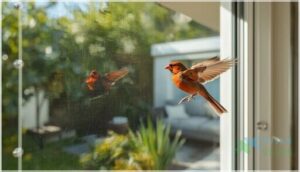
For a physical barrier, install an exterior window screen or bird netting at least three inches from the glass. Frame designs in aluminum or PVC resist corrosion, while fiberglass mesh blocks reflections without obstructing your view.
Secure the screen materials with weather-resistant fasteners, checking yearly for tears. This setup stops bird pecking by removing the mirror effect that triggers territorial attacks.
Hanging Reflective Objects or Streamers
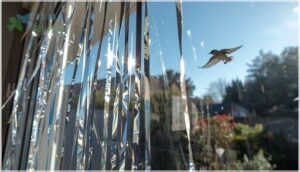
Fluttering ribbons of reflective material send light dancing across your window, creating visual barriers that confuse and deter birds from pecking. Hang streamers a few inches from the glass to disrupt the reflection that triggers territorial attacks.
- Position metallic foil strips at varying heights to scatter light in multiple directions and maintain bird deterrents through wind movement.
- Use weather-resistant Mylar for durability during bright sunny days when reflective objects work best.
- Rotate streamer placement seasonally to prevent birds from growing accustomed to static patterns and maintain window safety.
Using Decoy Predators and Noise Deterrents
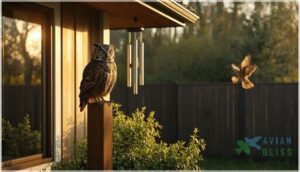
You can place realistic owl or hawk decoys 5 to 10 feet high near problem windows to discourage pecking through predator types that trigger instinctive fear. Move decoy placement every few weeks to prevent bird habituation, ensuring wildlife control remains effective throughout nesting season.
Motion-activated noise deterrents like wind chimes create unpredictable sound patterns that disrupt bird behavior without disturbing you.
Adjusting Nearby Landscaping and Feeders

Feeder placement dramatically shapes bird behavior around your home. Position bird feeders at least 10 to 15 feet from windows to reduce window collisions and territorial pecking at reflections.
Plant bird-friendly plants like low-growing native shrubs in strategic landscaping designs that redirect flight paths away from glass.
These yard modifications create wildlife-friendly homes while keeping birds safe from their own reflections.
Top 6 Products to Deter Birds From Windows
If you’re ready to move beyond DIY fixes, a few well-chosen products can make all the difference. These six options break up reflections, add visual interest, or simply distract birds from treating your windows like rival territory.
Each brings its own approach to solving the problem without complicated installation.
1. Flymax White Paint Marker Pen
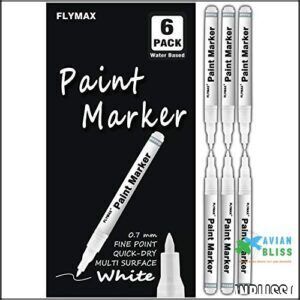
You don’t need expensive solutions when a simple paint marker does the trick. The Flymax White Paint Marker Pen features a 0.7mm tip that lets you draw precise patterns directly on your window glass, breaking up reflections that birds mistake for rivals.
The oil-based ink dries fast and stays opaque on glass, creating visible barriers without blocking your view entirely. Six markers in a pack give you enough coverage to treat multiple windows, and the non-toxic formula means you can work safely around kids and pets.
| Best For | Artists and homeowners who need precise white markings on glass, wood, or other surfaces for crafts, decorating, or practical solutions like deterring birds from windows. |
|---|---|
| Primary Material | Acrylic ink |
| Color Options | White |
| Indoor Use | Yes |
| Decorative Purpose | Art projects |
| Dimensions | 0.7mm tip |
| Weight | Not specified |
| Additional Features |
|
- Extra fine 0.7mm tip gives you precise control for detailed work and patterns
- Works on almost any surface—glass, wood, metal, ceramic, plastic, and more
- Quick-drying, water-based acrylic ink that’s non-toxic and safe around kids and pets
- May struggle on bumpy or textured surfaces
- Requires proper prep (shaking and pumping) to get the ink flowing smoothly
- Might need oven-baking for permanent results on glass or ceramics
2. Tiffany Glass Iris Window Panel
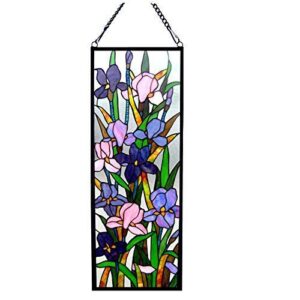
Beauty meets function when you replace clear glass with decorative alternatives. The Tiffany Glass Iris Window Panel measures 11.5 by 31.5 inches and features 265 hand-cut glass pieces assembled with traditional copper foil technique, creating visual barriers that stop birds from seeing reflections.
The panel’s varied textures and colored glass scatter light differently than flat windows, eliminating the mirror effect that triggers territorial attacks. At 8 pounds with included hanging chain, it installs easily in problem windows while adding aesthetic value to your space.
| Best For | Homeowners looking to prevent bird strikes while adding a handcrafted decorative element to their windows. |
|---|---|
| Primary Material | Stained glass |
| Color Options | Multicolor |
| Indoor Use | Yes |
| Decorative Purpose | Window panel |
| Dimensions | 11.5 x 31.5 inches |
| Weight | 8 pounds |
| Additional Features |
|
- 265 hand-cut glass pieces create varied textures that eliminate reflections and stop birds from colliding with windows
- Traditional copper foil technique ensures durable construction that doubles as attractive décor
- Includes hanging chain and weighs only 8 pounds for easy installation in problem areas
- Glass colors appear darker and less vibrant when not backlit by natural light
- Handcrafted nature means dimensions can vary by up to half an inch from listed specifications
- Requires maintenance with a soft cloth to remove excess mineral oil after installation
3. Stained Glass Feather Window Hanging
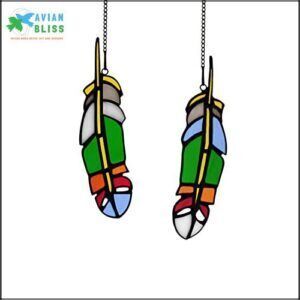
Smaller decorative pieces can work just as well without the weight or cost. The Stained Glass Feather Window Hanging measures 7 by 1.5 inches and uses copper foil technique to join colored glass fragments into a lightweight suncatcher.
When sunlight passes through the feather’s textured surface, it creates shifting patterns that break up reflections birds mistake for rivals.
At under one pound, you can hang multiple pieces using the included metal chain and hooks, covering several problem spots without drilling into window frames.
| Best For | Anyone looking for a lightweight, affordable way to prevent bird strikes while adding decorative charm to their windows. |
|---|---|
| Primary Material | Stained glass |
| Color Options | Various |
| Indoor Use | Yes |
| Decorative Purpose | Window decor |
| Dimensions | 7 x 1.5 inches |
| Weight | Not specified |
| Additional Features |
|
- Lightweight design lets you hang multiple pieces without drilling or damaging window frames
- Textured glass creates shifting light patterns that help deter birds from colliding with windows
- Compact 7×1.5 inch size works well for targeting specific problem areas without overwhelming your view
- Some customers report the material is plastic rather than actual stained glass
- Limited color variety means pieces in a set may look nearly identical
- Short chain length and minimal hardware (sometimes only one chain included) may require additional supplies
4. Glass Crystal Bead Curtain

A full-length curtain made from crystal beads disrupts window reflections over a much larger area. The SKY CANDYBAR model includes five strands totaling 33 feet, with beads in 10mm, 14mm, and 16mm sizes that catch and scatter light in unpredictable directions.
You can hang it from ceiling hooks using the built-in loops, creating a moving barrier that confuses birds scanning for territorial rivals.
At just over two pounds, it won’t stress standard mounting hardware while covering doorways or wide picture windows.
| Best For | Homeowners looking to prevent bird strikes on large windows or glass doors while adding a decorative element that scatters light and reduces reflections. |
|---|---|
| Primary Material | Crystal glass |
| Color Options | Transparent |
| Indoor Use | Yes |
| Decorative Purpose | Window curtain |
| Dimensions | 196.85 x 78.74 inches |
| Weight | 2.16 pounds |
| Additional Features |
|
- Covers a large area with 33 feet of total length across five strands, making it effective for wide windows or doorways
- Multiple bead sizes (10mm, 14mm, 16mm) create varied light patterns that effectively disrupt reflections birds might mistake for open space
- Lightweight design at just over 2 pounds with built-in hanging loops makes installation simple on standard hardware
- Five strands may not provide enough coverage for very wide windows without purchasing multiple sets
- Strings can tangle easily if placed too close together, requiring careful spacing during installation
- Some reviews suggest the beads may be plastic rather than actual crystal or glass, which could affect durability and light refraction quality
5. Miukada Macrame Plant Hanger

The Miukada macrame plant hanger takes a different approach—it breaks up reflections by creating visual depth directly on your window. This handcrafted cotton piece hangs 100 centimeters from its wooden ring and holds pots up to 12 centimeters wide.
When you position it against problem windows, the knotted patterns and natural fibers disrupt the mirror-like surface birds attack. The off-white color won’t overwhelm your décor, and you only need one secure mounting point to install it.
| Best For | People who want to protect windows from bird strikes while adding bohemian style to their indoor or outdoor spaces with hanging plants. |
|---|---|
| Primary Material | Cotton and wood |
| Color Options | Natural |
| Indoor Use | Yes |
| Decorative Purpose | Wall art |
| Dimensions | 11.22 x 8.98 inches |
| Weight | 1.28 pounds |
| Additional Features |
|
- Handcrafted macrame design disrupts window reflections naturally while doubling as attractive boho décor
- Easy installation with just one secure mounting point needed
- Holds small to medium plants (up to 12cm pots) in a space-saving vertical arrangement
- Cotton material may wear out over time, especially in outdoor conditions
- Limited to smaller, lightweight plants due to material constraints
- Knots may loosen and need periodic retightening to keep plants secure
6. Cat Birthday Decorations Banner
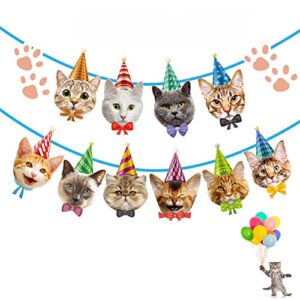
This cat-themed banner isn’t marketed for birds, but it works surprisingly well. The Funnlot cardstock design features multiple bright cat faces that hang at varying heights—and those movements catch wind and create visual chaos birds avoid.
At 8 by 5 inches per section, it’s lighter than the macrame option, so it sways more dramatically. You’ll hang it with the included ribbon across problem windows.
The multicolor pattern disrupts reflections effectively, and you can reuse it when pecking season returns next spring.
| Best For | Cat lovers who want a creative dual-purpose decoration that keeps birds away from windows while adding fun visual interest to their space. |
|---|---|
| Primary Material | Cardstock |
| Color Options | Multicolor |
| Indoor Use | Yes |
| Decorative Purpose | Party banner |
| Dimensions | 8 x 5 inches |
| Weight | 1.76 ounces |
| Additional Features |
|
- Lightweight cardstock design sways easily in the breeze, creating movement that effectively deters birds from pecking at windows
- Bright multicolor cat faces disrupt window reflections at multiple heights, addressing the root cause of bird strikes
- Reusable for multiple seasons, making it a cost-effective solution you can store and bring back when birds become a problem again
- The included ribbon for hanging can be flimsy and may break, requiring replacement with sturdier string
- Cardstock material isn’t weatherproof, so it’s only suitable for indoor window use or covered outdoor areas
- Limited to cat-themed aesthetic, which may not match everyone’s home decor preferences
Frequently Asked Questions (FAQs)
What does it mean when a bird pecks at your window?
When a bird pecks at your window, it’s likely defending its territory against what it sees as a rival reflected in the glass, especially during breeding season.
How do you stop birds from pecking at your windows?
You can stop window pecking by applying exterior films or soap patterns, installing screens, hanging reflective streamers, placing decoy predators nearby, and relocating feeders at least 30 feet away.
Why would a bird keep attacking a window?
Territorial instincts drive this behavior. When a bird sees its reflection, it mistakes the image for a rival and launches repeated attacks to defend what it perceives as its territory.
Why do birds peck at window sills?
Sunlit edges become prime lookout posts. Birds land on window sills to scan for insects hiding in frames, rest in warm spots, and investigate reflections they mistake for rivals or potential mates.
Why is my bird pecking at my Window?
Your bird sees its reflection in the glass and mistakes it for a rival. This triggers territorial instincts, especially during breeding season when birds defend their space more aggressively.
How to stop bird pecking at window surfaces?
You’ll need to break up reflections using window films, soap, or decals. Install screens or netting over the glass. Move feeders away from your house and trim nearby branches.
What bird pecks a window?
Robins, sparrows, and woodpeckers are the most common window peckers.
Robins defend territory aggressively during spring, while sparrows peck near feeders.
Woodpeckers target frames when searching for insects or announcing their presence.
Why do finches peck at windows?
Finches peck at windows because they see their reflection and think it’s a rival bird invading their space.
They’re defending what they believe is their territory, especially during spring breeding season.
Does pecking a window hurt a bird?
Yes, pecking can hurt birds. Window impacts often cause head trauma, concussions, and beak damage. Repeated attempts lead to fatigue and balance problems, especially in smaller songbirds, increasing their vulnerability to predators.
Why do Crows peck at windows?
Crows peck at windows when they see their reflection and mistake it for a rival bird invading their territory. This behavior peaks during spring nesting season when they’re most defensive.
Conclusion
Next spring, when the first robin appears at your window, you’ll know exactly what’s driving that relentless pecking—and how to stop it. Understanding why birds peck at windows transforms frustration into action.
You’ve learned the science behind territorial displays, discovered which species cause the most trouble, and explored six proven solutions that protect both your home and the birds themselves.
Your peaceful mornings are within reach, and the fix is simpler than you think.