This site is supported by our readers. We may earn a commission, at no cost to you, if you purchase through links.
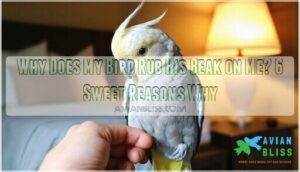 Your bird rubs his beak on you because you’re his chosen family member. This sweet gesture shows deep affection and trust, much like a feathered hug.
Birds also use beak rubbing to clean themselves, using your clothes or skin as a napkin after meals. Sometimes he’s exploring your unique scent and texture through his sensitive beak, or simply saying "Hey, pay attention to me!" when he wants interaction or treats.
It’s his way of bonding and communicating with his favorite human. While this behavior is typically adorable and harmless, understanding the different reasons behind it can strengthen your relationship even more.
Table Of Contents
- Key Takeaways
- Why Does My Bird Rub His Beak on Me?
- Affection and Bonding
- Beak Cleaning and Maintenance
- Gaining Attention
- Sensory Exploration
- Potential Health Issues
- Frequently Asked Questions (FAQs)
- Why does my bird rub its beak on Me?
- Why is my parrot rubbing his beak?
- Why do birds ruck their beaks together?
- Do parrots rub their beaks?
- Why is my parrot rubbing its head against me?
- Why do birds rub their beaks on flowers?
- How do you tell if your bird is bonded to you?
- Why do birds rub themselves on you?
- Why does my bird hit his beak on me?
- Why do birds rub their beak on you?
- Conclusion
Key Takeaways
- Your bird’s beak rubbing shows deep affection and trust – it’s his way of treating you as family and expressing that you’re part of his flock through intimate bonding behaviors.
- This behavior serves practical maintenance purposes – your bird uses you as a natural napkin to clean food debris and excess keratin from his beak after meals.
- Beak rubbing is often attention-seeking behavior – when your bird wants interaction, treats, or head scratches, he’ll gently rub against you as his polite way of saying "pay attention to me."
- Watch for excessive rubbing that might signal health issues – while normal rubbing is harmless, persistent or obsessive beak rubbing could indicate stress, infections, or other medical problems requiring a vet visit.
Why Does My Bird Rub His Beak on Me?
Picture your bird’s beak as a tiny paintbrush, gently stroking across your skin with purpose and meaning.
When your feathered companion rubs his beak on you, he’s communicating through bird affection and bird bonding.
Your bird’s beak rubs are his way of saying "you’re part of my flock.
This bird beak rubbing behavior represents powerful trust signals that strengthen your relationship.
Your bird is basically mimicking flock behaviors, treating you as a cherished member of his social circle.
He’s seeking scritches and engaging in bonding rituals that wild birds share with their closest companions.
This tactile stimulation provides comfort while expressing his growing confidence in you.
Pet bird communication often involves non-verbal cues, and beak rubbing ranks among the most meaningful gestures.
It’s his way of saying, "You’re part of my family."
As your bond deepens, you’ll notice this behavior becoming more frequent, signaling his increasing happiness and attachment to you.
This behavior is similar to how birds will maintain feather health through preening.
Affection and Bonding
When your bird rubs his beak on you, it’s likely showing you some serious bird affection. This gentle touch represents one of the strongest trust signals your feathered friend can offer. You’ve basically become part of their inner circle.
This behavior mirrors social preening that birds do with their closest companions in the wild. Your bird is treating you like a treasured flock member, engaging in bonding rituals that strengthen your emotional connection. It’s their way of saying, "You’re family."
Watch for these sweet moments of pet bird affection:
- Soft beak touches during quiet evening conversations
- Gentle nudges while you’re reading or watching TV
- Tender rubs against your cheek during cuddle time
The frequency often increases as your relationship deepens, signaling growing happiness and attachment. This pet bird bonding behavior becomes part of your daily routine together. When your bird chooses to share these intimate moments, they’re mimicking flock dynamics and showing you belong in their world. It’s pure bird bonding magic. Such actions are similar to allopreening behavior, further solidifying your place in their social structure.
Beak Cleaning and Maintenance
After a satisfying meal, your bird’s beak wiping serves as nature’s napkin. This feaking behavior removes food debris and excess keratin, keeping their beak pristine for ideal function.
Your bird’s beak doubles as the perfect dining utensil and cleaning tool rolled into one.
Keratin removal through perch abrasion naturally shapes the beak, preventing overgrowth that could hinder eating. Birds also benefit from chew toys, which help keep their jaws active and entertained, and promote essential beak sharpening.
| Maintenance Type | Purpose | Frequency |
|---|---|---|
| Beak wiping | Food debris removal | After meals |
| Keratin removal | Shape maintenance | Daily |
| Perch abrasion | Natural filing | Throughout day |
| Ideal shaping | Health prevention | Continuous |
This bird grooming ritual supports bird beak health while providing stress relief through natural pet bird grooming behaviors.
Gaining Attention
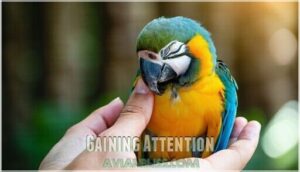
Sometimes your feathered friend rubs his beak on you simply because he’s seeking interaction. Like a cat nudging your hand for pets, your bird uses this gentle gesture as his way of saying, "Pay attention to me!" This bird attention-seeking behavior often signals he wants to engage with you.
When your parrot performs requesting grooming motions against your hand, he’s asking you to scratch his head or neck. It’s his play invitation – a charming way of initiating bonding time together. You’ll notice this bird affection often comes with soft chirps or vocalizations included, creating a complete communication package.
Mimicking behaviors from wild flocks, your bird treats you as part of his social circle. This bird and human bonding strengthens through these gentle interactions. Unlike aggressive biting, which signals fear or discomfort, beak rubbing represents trust and affection.
As your bird’s confidence grows, these attention-seeking moments become more frequent, showing deeper bird affection signs and stronger bonding between you both. Establishing a strong bond requires understanding pigeon trust building techniques to foster a deeper connection.
Sensory Exploration
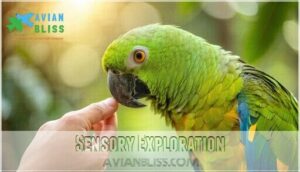
When your bird rubs their beak on you, they’re diving into a world of tactile investigation. Your skin and clothing offer fascinating textures that satisfy their natural curiosity about their environment.
Birds possess incredibly sensitive beaks packed with nerve endings, making every surface a potential discovery. This beak sensitivity transforms simple contact into rich sensory experiences that provide both mental stimulation and comfort.
Here are five ways your bird benefits from this sensory exploration:
- Texture preference development through comparing different surfaces
- Environmental interaction that builds confidence and familiarity
- Tactile stimulation that promotes relaxation and well-being
- Exploration benefits including enhanced problem-solving abilities
- Bird sensory exploration that prevents boredom and supports emotional health.
This pet bird sensory exploration behavior mirrors how they’d investigate their natural habitat. This behavior also allows them to use their tactile senses to gather information about their surroundings. Your feathered friend isn’t just touching you—they’re gathering valuable information about their trusted companion while enjoying the soothing sensation.
Potential Health Issues

While most beak rubbing signals affection, watch for warning signs that suggest bird health issues. Excessive rubbing beyond normal grooming can indicate underlying problems requiring attention.
Feather plucking often gets mistaken for innocent beak behavior, but it’s actually a red flag for stress or vitamin deficiency. Changes in beak appearance – like cracks, discoloration, or unusual growth patterns – might signal infections or metabolic issues.
Birds with respiratory problems frequently rub their beaks more to clear blocked nares, while abnormal movements could point to neurological signs. One should also monitor for symptoms of Psittacine Beak and Feather disease, a common viral illness.
| Warning Sign | Possible Cause |
|---|---|
| Excessive rubbing | Stress, illness, or injury |
| Beak discoloration | Infection or liver disease |
| Difficulty eating | Overgrowth or trauma |
| Behavioral changes | Neurological issues |
Don’t panic over occasional rubbing – it’s usually harmless. However, if you’re noticing persistent changes in your bird’s beak health or behavior, schedule a visit with an avian vet. They’ll rule out serious conditions and provide peace of mind about your feathered friend’s wellbeing.
Frequently Asked Questions (FAQs)
Why does my bird rub its beak on Me?
Your feathered friend’s beak rubbing shows affection and trust, like a gentle hug. It’s also practical maintenance, removing debris and keeping their beak healthy and properly shaped for eating.
Why is my parrot rubbing his beak?
Charlie the African Grey starts each morning by gently rubbing his beak along his owner’s arm, almost like he’s saying "good morning."
Your parrot’s rubbing his beak for affection, cleaning, or attention-seeking—it’s his way of bonding with you, which can also be seen as a form of cleaning.
Why do birds ruck their beaks together?
Birds rub their beaks together as a bonding behavior that shows trust and affection.
It’s similar to social preening in flocks, helping them connect with companions and maintain their relationship through gentle, caring contact, which is a display of affection.
Do parrots rub their beaks?
Yes, parrots regularly rub their beaks on various surfaces including their owners, perches, and objects.
This natural behavior serves multiple purposes: maintaining beak health by removing debris and excess keratin, expressing affection and trust, and seeking attention from their human companions.
Why is my parrot rubbing its head against me?
Your parrot’s head rubbing is like receiving a feathered hug – it’s their way of showing trust and affection.
This behavior strengthens your bond and indicates they feel safe with you, seeking attention or comfort.
Why do birds rub their beaks on flowers?
Your feathered friend explores flowers for nectar, pollen, and insects hiding inside. They’re also investigating interesting textures and scents while foraging naturally, much like they’d do in the wild.
How do you tell if your bird is bonded to you?
Your bird shows bonding through beak rubbing, seeking physical contact, preening you, vocalizing when you’re nearby, following you around, mimicking your sounds, and displaying relaxed body language like fluffed feathers.
Why do birds rub themselves on you?
Like tiny brushstrokes on canvas, your bird’s rubbing creates a masterpiece of connection.
They’re showing affection, maintaining beak health, seeking attention, or exploring textures—it’s their way of bonding and communicating trust with you.
Why does my bird hit his beak on me?
When your bird hits his beak on you, he’s likely showing affection, seeking attention, or maintaining beak health through natural grooming behaviors. It’s his way of bonding with you.
Why do birds rub their beak on you?
When your bird rubs their beak on you, they’re showing affection and trust.
It’s their way of bonding, like social preening.
They’re also maintaining beak health by cleaning debris and keeping it properly shaped for eating.
Conclusion
Contrary to popular belief, your bird’s beak rubbing isn’t random behavior – it’s actually a complex form of communication.
Understanding why does my bird rub his beak on me reveals the depth of your feathered friend’s emotional intelligence.
Whether he’s showing affection, cleaning his beak, seeking attention, exploring textures, or indicating health concerns, each rub carries meaning.
Pay attention to the context and frequency of this behavior, as it strengthens your bond and helps you respond appropriately to his needs, which is a key aspect of communication.
- https://www.parrotforums.com/threads/why-is-my-bird-rubbing-its-beak-on-me.26117/
- https://www.featherbeautiful.com/en-us/blogs/news/parrot-behaviour-and-body-language
- https://www.birdnote.org/podcasts/birdnote-daily/tokens-affection
- https://zupreem.com/signs-your-bird-trusts-you/
- https://www.youtube.com/watch?v=yxu1vBokhxM