This site is supported by our readers. We may earn a commission, at no cost to you, if you purchase through links.
 Your bird’s increased water consumption typically signals environmental changes, dietary shifts, or health concerns.
Hot weather naturally boosts thirst, while seed-heavy diets require extra hydration for digestion.
Stress from cage changes or new pets can also trigger excessive drinking.
However, medical conditions like kidney disease, diabetes, or infections often manifest through polydipsia – the clinical term for abnormal thirst.
You’ll want to monitor whether your feathered friend is also urinating more frequently, showing changes in appetite, or displaying lethargy.
While seasonal adjustments are normal, sudden dramatic increases warrant attention.
The key lies in distinguishing between your bird’s natural adaptation responses and potential red flags that deserve closer investigation.
Table Of Contents
- Key Takeaways
- Why is My Bird Drinking So Much Water?
- Understanding Your Bird’s Thirst
- Factors Contributing to Excessive Thirst
- Addressing Polyuria in Birds
- Monitoring and Managing Water Intake
- Signs of Dehydration in Birds
- Seeking Veterinary Advice
- Frequently Asked Questions (FAQs)
- Why do birds drink a lot of water?
- How does weather affect birds’ water intake?
- What happens if birds don’t drink enough water?
- How do birds get water?
- How do I know if my bird is drinking enough water?
- Can birds drink tap water?
- Why is my bird drinking too much water?
- Why is my bird always thirsty?
- Do sick birds drink water?
- How much water should a bird drink per day?
- Conclusion
Key Takeaways
- Monitor changes carefully – You’ll want to track your bird’s water consumption daily and watch for patterns, as sudden increases beyond normal environmental factors like heat or dietary changes can signal serious health issues like diabetes or kidney disease.
- Look for accompanying symptoms – Don’t just focus on drinking habits; you should also check for increased urination, changes in appetite, lethargy, or behavioral shifts that often accompany excessive thirst in sick birds.
- Consider environmental factors first – Your bird’s increased thirst might be normal if you’ve recently experienced hot weather, changed their diet, or introduced stress-inducing changes to their environment.
- Seek veterinary help when needed – You shouldn’t wait if excessive drinking persists beyond a few days or occurs with other concerning symptoms; early professional intervention prevents minor issues from becoming life-threatening conditions.
Why is My Bird Drinking So Much Water?
Wondering why your feathered friend seems glued to their water dish? Excessive drinking in birds often signals underlying issues that need attention.
Hot weather naturally increases bird hydration needs, while dietary changes or high-salt foods can trigger increased water consumption.
Stress, boredom, or medical conditions like avian diabetes frequently cause this behavior.
Bird water intake patterns reveal vital Avian Health information – monitor for dehydration signs like droopy feathers or lethargy.
Ensuring proper Water Quality and Feather Care starts with understanding your bird’s bird hydration needs and recognizing when professional help’s needed.
Understanding Your Bird’s Thirst
Understanding your bird’s bird hydration needs starts with recognizing normal drinking patterns.
Proper hydration keeps your feathered friend healthy and thriving naturally.
Healthy birds typically take small, frequent sips throughout the day to maintain proper fluid balance.
Their water consumption directly supports metabolism, digestion, and temperature regulation – making water quality essential for avian health.
When you notice changes in your bird’s drinking habits, several thirst triggers might be at play.
Environmental shifts like temperature increases or dietary modifications can temporarily boost bird water intake.
However, excessive drinking that persists beyond a few days often signals underlying health concerns that shouldn’t be ignored.
Normal hydration versus problematic patterns can be tricky to distinguish.
Your bird’s droppings provide valuable clues about their hydration status.
Watery droppings combined with increased drinking frequently indicates bird hydration needs aren’t being met properly, or medical issues require attention.
Monitoring these changes helps you catch potential problems early, ensuring your feathered friend stays healthy and comfortable.
Factors Contributing to Excessive Thirst
Several factors can trigger increased water consumption in your bird, ranging from environmental changes to underlying health conditions.
Understanding these contributors helps you identify when excessive drinking signals a normal response versus a potential medical concern.
Hot Weather and Hydration
Hot weather triggers heat stress in birds, dramatically increasing their hydration needs through evaporative cooling and water loss.
When temperatures rise, your bird’s water intake can double or triple as they combat temperature regulation challenges.
- Panting becomes frequent as primary cooling mechanism
- Water consumption increases 7% per degree Fahrenheit rise
- Respiratory water loss accelerates through exposed surfaces
- Smaller birds face higher dehydration risk during heat waves
- Cool water placement in shaded areas supports better intake
Providing a reliable water source system is essential for birds to stay hydrated and cool.
Dietary Changes and Increased Water Consumption
Changes in your bird’s diet can substantially impact water consumption patterns.
High-salt foods increase electrolyte imbalances, forcing your bird to drink more water for proper kidney function.
Dry seeds and pellets require additional hydration compared to fresh produce with higher water content.
Dietary modifications often trigger excessive drinking as your bird’s digestive health adjusts to new nutrient profiles.
Monitor water intake carefully during food quality transitions, watching for signs of nutrient deficiency that may affect normal consumption patterns.
Understanding avian nutritional needs is vital for maintaining healthy and hydration in birds.
Stress and Drinking Behavior
Bird Anxiety can trigger excessive drinking as a psychological response to Stress Triggers.
Stressed birds often drink excessively as their bodies respond to anxiety and environmental pressures.
When your bird feels overwhelmed by changes, boredom, or fear, these Psychological Factors disrupt normal hydration patterns.
Bird stress manifests through increased water consumption alongside other Behavioral Responses.
Creating Environmental Enrichment through toys, routine, and social interaction helps stabilize stress and hydration levels, reducing this compensatory drinking behavior effectively.
Addressing Polyuria in Birds
When dealing with polyuria in birds, you’re facing a condition that requires immediate attention and careful assessment. Polyuria occurs when your bird produces excessive urine volume while maintaining formed fecal matter, distinguishing it from simple diarrhea. Avian diabetes, kidney disease, and intestinal infections rank among the primary polyuria causes affecting bird health.
Start by examining your bird’s recent dietary changes—high-moisture fruits and vegetables can trigger temporary polyuria. However, persistent excessive thirst lasting beyond one day signals potential underlying disease. Monitor your bird’s water regulation patterns and document any behavioral changes, lethargy, or fluffed feathers.
Urine analysis through veterinary testing becomes essential when polyuria persists. Your avian veterinarian will conduct thorough blood work to diagnose conditions like avian diabetes or kidney dysfunction. Don’t wait—early intervention prevents dehydration and manages underlying causes effectively.
Remove high-water-content foods temporarily while seeking professional diagnosis, as distinguishing between dietary and medical polyuria requires expert evaluation for your bird’s overall health outcomes. Providing birds with avian health supplements can also play a vital role in maintaining their overall well-being and addressing potential health issues.
Monitoring and Managing Water Intake
Through proper monitoring, you’ll catch water intake changes before they become serious health concerns.
Tracking your bird’s daily fluid consumption provides valuable insights into their overall well-being and helps identify potential medical issues early.
Here are four essential steps for effective bird water intake monitoring:
- Maintain detailed Intake Records – Use a measuring cup to track daily water consumption.
- Ensure ideal Water Quality – Clean water bowls and bottles daily with hot, soapy water.
- Implement gradual dietary adjustments – When changing your bird’s diet, introduce new foods slowly over 7-10 days.
- Schedule regular Health Checks – Consult an avian veterinarian if bird water consumption increases substantially or persists beyond normal fluctuations.
Mark measurements on a calendar to spot patterns and unusual spikes in drinking behavior.
Fresh, bacteria-free water prevents additional health complications that could worsen excessive drinking.
Monitor how specific foods affect their water consumption patterns and fluid balance.
Professional evaluation helps determine underlying causes and appropriate treatment plans.
Consistent monitoring paired with quality hydration tips creates a foundation for maintaining your bird’s prime health and catching potential problems early.
Understanding proper hydration methods is vital for preventing dehydration and related health issues in birds.
Signs of Dehydration in Birds
While monitoring your bird’s water intake helps identify problems early, recognizing bird dehydration signs protects your feathered companion from serious health complications.
Sunken eyes and wrinkled skin around the eye area indicate moderate dehydration, while sticky thick saliva and dry mucous membranes signal advancing fluid loss.
Lethargy signs include sitting at the cage bottom, reduced activity, and poor flying ability.
Your bird may show decreased appetite or altered eating patterns alongside these sick bird symptoms.
Physical indicators include reduced skin elasticity – pinched skin takes longer than normal to return to position.
Feather plucking sometimes occurs as stressed, dehydrated birds engage in abnormal behaviors.
Recognizing early dehydration treatments can be vital for recovery.
Bird health issues progress rapidly in small species, potentially becoming life-threatening within hours.
Panting, labored breathing, and dry droppings with minimal urine output require immediate attention.
Contact your avian veterinarian promptly when multiple symptoms appear together, as severe dehydration demands professional fluid therapy for survival.
Seeking Veterinary Advice
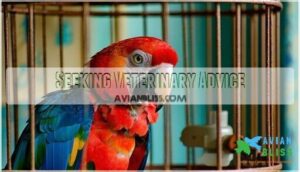
When dehydration signs appear, immediate veterinary advice becomes your bird’s lifeline. Avian veterinarians possess specialized knowledge to differentiate between environmental factors, dietary influences, and serious medical conditions requiring urgent intervention.
Professional bird veterinary care involves thorough diagnostic testing options. Blood panels reveal diabetes mellitus, kidney disease, or liver dysfunction. Fecal analysis detects infections, while imaging studies assess organ structure. Your avian veterinarian will guide you through interpreting test results, explaining what elevated glucose levels or abnormal kidney values mean for your feathered companion.
Successful outcomes depend on treatment plan adherence. Whether medications, dietary modifications, or environmental changes, following prescribed protocols prevents disease progression.
- Document daily water consumption, droppings consistency, and behavioral changes before your bird veterinary consultation.
Follow-up care importance can’t be overstated. Regular monitoring appointments allow veterinarians to adjust treatments based on your bird’s response. Early vet consultation urgency often determines whether minor issues remain manageable or develop into life-threatening conditions. Avian veterinary care specialists understand species-specific needs, ensuring accurate diagnosis and appropriate treatment for your particular bird type.
Frequently Asked Questions (FAQs)
Why do birds drink a lot of water?
Birds typically drink 15-30% of their body weight daily.
Your bird’s excessive drinking could signal diabetes, kidney disease, or dietary changes.
Hot weather also increases water needs.
If this persists beyond environmental factors, consult an avian veterinarian immediately.
How does weather affect birds’ water intake?
Hot weather dramatically increases your bird’s water consumption as they regulate body temperature through evaporative cooling.
Humidity also boosts intake, while cool temperatures reduce drinking needs.
Temperature fluctuations stress their hydration systems.
What happens if birds don’t drink enough water?
When your feathered friend’s well runs dry, dehydration becomes a serious health threat. Without adequate water intake, birds develop concentrated urine, kidney dysfunction, and potentially fatal organ failure within days.
How do birds get water?
Wild birds find water from natural sources like streams, ponds, and puddles.
They’ll also drink from birdbaths, fountains, and even collect dewdrops from leaves during early morning hours when nature provides these invigorating opportunities, including puddles.
How do I know if my bird is drinking enough water?
Suddenly noticing your feathered friend’s water bowl needs constant refilling?
Monitor daily intake by measuring water levels, watching for clear urine in droppings, and ensuring your bird drinks regularly without excessive thirst or dehydration signs.
Can birds drink tap water?
Most tap water is safe for birds, but you’ll want to avoid heavily chlorinated or fluoridated water.
If you’re comfortable drinking your tap water, it’s typically fine for your feathered friend too.
Why is my bird drinking too much water?
Is your feathered companion turning into a water fountain?
Excessive drinking often signals diabetes, kidney disease, or dietary changes.
Hot weather can increase thirst, but sudden increases warrant immediate veterinary attention for proper diagnosis.
Why is my bird always thirsty?
Constant thirst in birds often signals serious health issues like diabetes, kidney disease, or liver problems.
Environmental factors like hot weather can contribute, but persistent excessive drinking warrants immediate veterinary evaluation for issues like kidney disease.
Do sick birds drink water?
An apple a day keeps the doctor away" rings true for birds too.
Sick birds often drink excessively due to diabetes, kidney disease, or infections causing dehydration and electrolyte imbalances requiring immediate veterinary attention, which can be related to kidney disease.
How much water should a bird drink per day?
Most birds drink 5-10% of their body weight daily, but this varies substantially by species, diet, and environment.
Small finches need about 1-2 teaspoons, while larger parrots require 2-4 tablespoons of fresh water daily.
Conclusion
Understanding why your bird’s drinking excessively requires careful observation.
While environmental factors like heat or dietary changes can naturally increase water consumption, persistent excessive drinking may indicate underlying health concerns.
Monitor your feathered companion for accompanying symptoms like increased urination, appetite changes, or behavioral shifts.
Document drinking patterns to help your avian veterinarian determine if your bird’s thirst falls within normal ranges or requires medical intervention.
Early detection guarantees the best health outcomes and is crucial for addressing potential issues promptly, ensuring your bird receives the necessary care for optimal well-being, which can be achieved through persistent observation.
- https://www.chewy.com/education/bird/health-and-wellness/water-and-your-pet-bird
- https://bwdmagazine.com/tips-for-birders/faq/how-do-birds-drink-water/
- https://www.petplace.com/article/birds/general/polyuria-in-birds
- https://en.wikipedia.org/wiki/Polydipsia_in_birds
- https://www.pethealthnetwork.com/cat-health/cat-diseases-conditions-a-z/why-my-cat-drinking-so-much