This site is supported by our readers. We may earn a commission, at no cost to you, if you purchase through links.
You spot a pigeon sitting motionless on the sidewalk as people pass by, and it doesn’t budge. Most pigeons scatter at the slightest movement, so when one refuses to fly away, something’s clearly wrong. This grounded bird might be dealing with an injury, illness, or environmental stressor that’s keeping it from taking flight.
Recognizing the difference between a pigeon that’s temporarily resting and one in genuine distress can mean the difference between life and death for these resilient urban birds. Understanding what causes flightlessness—and knowing how to respond appropriately—gives you the tools to assess whether this pigeon needs your help or professional intervention.
Table Of Contents
- Key Takeaways
- Understanding Pigeon Behavior: Normal Vs. Abnormal
- Common Reasons Why Pigeons Can’t Fly Away
- Signs of Distress in Pigeons
- Assessing a Grounded Pigeon’s Condition
- Proper Care for a Stranded Pigeon
- When and How to Seek Professional Help
- Frequently Asked Questions (FAQs)
- What if a pigeon does not fly away?
- Can pigeons fly?
- Can pigeons fly with a broken wing?
- Are pigeons too weak to fly?
- How do you stop a pigeon from flying?
- Is a nonflying pigeon normal?
- How to help a pigeon that won’t move?
- How long does it take for pigeons to fly away?
- Why would a pigeon not fly away?
- Why pigeon is not going away?
- Conclusion
Key Takeaways
- A pigeon that refuses to fly away despite human approach typically signals injury, illness, nutritional deficiency, or environmental stress—requiring immediate assessment to determine if professional intervention is needed.
- Key distress indicators include ruffled feathers, drooping wings, labored breathing, discharge from eyes or nostrils, and lethargy—with healthy pigeons normally maintaining alert posture and fleeing within 5-15 feet of approach.
- Temporary care involves creating a quiet, ventilated shelter with soft towels, providing shallow water dishes (50ml per kg body weight daily), and offering soaked grains with chopped greens while monitoring weight, droppings, and breathing patterns.
- Contact licensed wildlife rehabilitators or avian veterinarians immediately for serious injuries, neurological symptoms, or prolonged grounding—as recovery timelines typically span four to twelve weeks depending on the severity of the condition.
Understanding Pigeon Behavior: Normal Vs. Abnormal
Understanding pigeon behavior is the first step toward knowing when something’s wrong. Healthy urban pigeons show strong flight patterns—they’re quick to take off when startled, though urban adaptation means they’ll often let you walk within a few meters before moving. You’ll see lively flock dynamics as they gather to forage, communicate through soft cooing, and maintain sleek plumage with alert, bright eyes. These behavioral cues signal all systems are go.
But when a pigeon stays grounded despite your approach, alarm bells should ring. Injured pigeons often display ruffled feathers, drooping wings, or a hunched posture—stark contrasts to normal bird behavior. Labored breathing, dull eyes, or an inability to stand suggest underlying pigeon health issues requiring immediate attention.
Young fledglings might seem grounded while learning to fly, usually with parents nearby. That’s normal pigeon socialization. However, true distress—lethargy, visible wounds, or prolonged solitary behavior—means the bird needs help fast. Recognizing early signs of illness, such as pigeon health issues, is vital for providing proper care and intervention.
Common Reasons Why Pigeons Can’t Fly Away
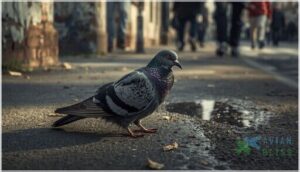
When you spot a pigeon that won’t fly away, something’s clearly wrong—these birds didn’t evolve to stick around when danger approaches. The reasons a pigeon stays grounded usually fall into three main categories: physical trauma, poor nutrition, or something in their environment working against them.
A pigeon that won’t fly away signals something’s wrong—injury, malnutrition, or environmental stress keeps it grounded
Let’s break down each cause so you know what you’re dealing with.
Injury or Illness
Trauma recovery begins the moment a wing snaps or a window strike leaves a pigeon stunned on the pavement. You might see obvious injuries—fractures, drooping wings—but respiratory issues and neurological damage often hide beneath ruffled feathers. Infectious diseases like paramyxovirus or ornithosis can steal a bird’s strength without leaving visible marks. Even subclinical infections may tip a pigeon into flight failure when combined with stress or injury. Pigeons can carry zoonotic disease risks that impact their health and human populations.
Five signs an injured pigeon needs help:
- Labored breathing or discharge from eyes and nostrils
- Balance problems or head tilting
- Inability to stand or wing drooping
- Lethargy paired with reluctance to move
- Trauma from collisions or falls
Contact avian veterinarians or wildlife rehabilitators immediately—pigeon health demands expert pigeon care, and physical therapy may restore flight.
Nutritional Deficiencies
Hidden hunger wears many faces in pigeons, often robbing them of flight before you notice anything’s wrong. Malnutrition effects don’t announce themselves with fanfare—they creep through bones, muscles, and feathers until takeoff becomes impossible.
| Deficiency Type | Impact on Flight |
|---|---|
| Vitamin deficits (A, D, E, B-complex) | Respiratory damage, muscle weakness, poor oxygen delivery |
| Calcium deficiency & mineral imbalance | Skeletal softening, fracture risk, bone deformities |
| Protein insufficiency | Muscle atrophy in wings, reduced strength and endurance |
| Antioxidant shortages (selenium, vitamin E) | Oxidative stress during flight attempts, muscle fatigue |
| Multiple micronutrient gaps | Damaged feathers, compromised immunity, chronic weakness |
Grain-only diets spell trouble for pigeon nutrition—they lack essential amino acids your bird needs for strong pectoral muscles. You’ll see the aftermath in listless behavior and grounded days that stretch into weeks.
Environmental Factors
Beyond meals and minerals, your pigeon’s world shapes whether it takes flight. Urban pollution degrades air quality—studies in North China found haze altered homing behavior, pushing birds to fly faster through poor conditions or avoid flight altogether. Climate change extends breeding seasons, keeping flocks localized.
Microclimates under bridges offer shelter, but habitat destruction and relentless human activity leave grounded pigeons stranded. Wildlife conservation and protection matter here—urban wildlife management directly affects avian health and care.
Signs of Distress in Pigeons
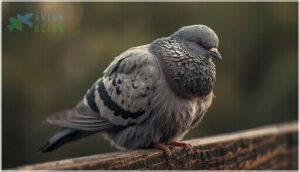
When a pigeon stays put while you approach, your gut’s telling you something’s wrong—and you should listen. Behavioral changes like excessive lethargy, remaining in one spot for hours, or allowing you to pick them up without resistance are major red flags that this pigeon needs help.
Physical symptoms reveal what’s happening inside. Watch for ruffled feathers, wing drooping, or difficulty standing—clear signs of an injured pigeon in distress. Respiratory issues show up as open-mouthed breathing or noticeable tail bobbing with each breath. Neurological signs like circling, twisted neck, or stumbling indicate serious problems requiring immediate intervention.
Visual indicators matter too: discharge from eyes or nostrils, closed or crusty eyes, and abnormal droppings all point to infection or systemic illness. Recognizing these pigeon health and behavior warning signs helps you act quickly when a pigeon not flying truly needs your help.
Assessing a Grounded Pigeon’s Condition
A careful visual exam reveals what’s keeping a grounded pigeon earthbound. Check for pigeon trauma first—drooping wings, awkward posture, or visible bleeding all signal injury assessment priorities. Watch breathing patterns closely; labored chest movements or wheezing indicate compromised flight ability.
Feather condition matters too—disheveled plumage often accompanies illness. Observe alertness level; an injured pigeon that’s unresponsive or allows handling without protest needs immediate help. Eye or nasal discharge points to infection.
Your evaluation determines rehabilitation needs and whether wildlife rehabilitators should step in to restore this pigeon’s health and behavior.
Proper Care for a Stranded Pigeon

Once you’ve confirmed the pigeon needs help, your next step is giving it a temporary refuge where it can rest and recover. The right setup can make all the difference between a bird that rallies and one that struggles.
Here’s how to create a space that aids healing while you figure out what comes next.
Creating a Safe Environment
The right shelter can mean the difference between life and death for a grounded bird. Set up a well-ventilated box lined with soft towels in a quiet indoor spot—this simple aviary design offers vital predator protection and noise reduction. Your injured pigeon needs environmental enrichment without overwhelming stress:
- Place the enclosure away from household pets and heavy foot traffic
- Guarantee spatial planning allows the bird to stand and turn comfortably
- Keep lighting dim to encourage rest during pigeon rescue and rehabilitation
This secure foundation assists wildlife rehabilitation and release success.
Providing Food and Water
Your grounded bird’s recovery hinges on getting Nutrition Basics and Water Quality right from day one. Offer shallow dishes of fresh water—pigeons need about 50 ml per kilogram of body weight daily to stay hydrated.
For Food Safety, provide soaked grains like millet and barley, plus chopped greens, fed twice daily in small portions.
This balanced approach to Dietary Needs bolsters Pigeon Health during Pigeon Care and Rescue, addressing core Avian Care principles that help a Pigeon Not Flying regain strength through proper Hydration Methods rooted in Pigeon Biology.
Monitoring Health and Progress
Track your bird’s trajectory toward freedom by watching key indicators every single day. Weight Tracking reveals recovery patterns—adult pigeons normally sit between 238 and 380 grams, so regular weighing spots trouble early. Health Monitoring through droppings tells you about hydration and organ function, while observing flight attempts shows Progress Assessment milestones.
- Check body weight daily using a gram scale to catch small losses
- Examine droppings for normal consistency, color, and hydration signs
- Monitor breathing rate and core temperature for baseline stability
- Document wing strength and controlled flight attempts weekly
- Record appetite changes and activity levels throughout rehabilitation
Proper Rehabilitation Plans built on these Avian Health and Disease markers guide your Progress Assessment. When your pigeon sustains flight and maneuvers confidently, Flight Readiness emerges—usually four to twelve weeks post-injury under successful Pigeon Care and Rescue protocols grounded in Avian Medicine and Care principles.
When and How to Seek Professional Help

Sometimes a pigeon needs more help than you can provide at home, and knowing when to call in the experts can make all the difference. Whether it’s a serious injury, a lingering illness, or a baby bird that needs specialized care, professional support ensures the pigeon gets what it truly needs to recover.
Here’s how to connect with the right resources and navigate the process with confidence.
Contacting Wildlife Rehabilitators
If you spot a pigeon that won’t fly away, reaching a licensed wildlife rehabilitator is your next move. Every state maintains Wildlife Hotlines and directories, so you’re never far from help. When you call, share details about visible injuries and behavior—this helps rescue protocols run smoothly. Rehab Centers use strict Rehabilitator Licensing and Avian Medicine and Care standards to guide every step, from safe capture to recovery.
| Emergency Contacts | Rescue Protocols |
|---|---|
| Wildlife Hotlines | Safe Transport Tips |
| Rehab Center Lists | Intake Assessment |
Veterinary Care Options
When rehabilitators aren’t nearby, veterinary care becomes your lifeline. Most general veterinarians can provide basic care and arrange laboratory diagnostics, though finding an avian veterinarian trained in avian medicine makes a real difference. Wildlife hospitals increasingly accept pigeons for wildlife treatment, offering structured triage and bird rehabilitation services. Before you arrive, ask three key questions:
- Do they handle pigeon surgery and veterinary diagnostics like X-rays?
- What are the treatment costs for veterinary care for birds?
- Can they guide you if euthanasia becomes the kindest choice?
Legal Considerations for Pigeon Rescue
Before you rescue that grounded pigeon, understand the wildlife laws in your area. In the United States, feral pigeons aren’t protected under federal regulations, but domestic or banded birds might be. That’s where permit requirements come in—many states demand wildlife rehabilitation licenses even for unprotected species. Canada and the UK have their own feral regulations tied to animal welfare standards and conservation efforts.
Your local bylaws matter too. Some cities restrict pigeon feeding or housing due to public health concerns, which affects pigeon rescue and release practices. Protected species status varies widely, so misidentifying a wild pigeon could land you in legal trouble. Licensed rehabilitators navigate these wildlife protection rules daily—they’re your safest resource for staying compliant while prioritizing pigeon conservation and protection.
Frequently Asked Questions (FAQs)
What if a pigeon does not fly away?
When a bird stays put despite your presence, it’s breaking one of nature’s cardinal rules. That refusal to flee often signals injury, illness, or extreme habituation—each demanding different rescue approaches and urgent wildlife rehabilitation.
Can pigeons fly?
Absolutely—pigeons are natural powerhouses in the air. These birds cruise at speeds between 55 and 70 km/h, with wing mechanics generating impressive aerodynamic forces during both upstroke and downstroke for sustained, agile flight.
Can pigeons fly with a broken wing?
No, a pigeon with a broken wing can’t achieve sustained flight. Complete fractures prevent proper lift and wing extension, leaving the bird grounded until the break heals and feathers regrow—usually four to eight weeks under professional care.
Are pigeons too weak to fly?
Looks can deceive—pigeons aren’t naturally weak fliers. Illness, wing injury, malnutrition effects, or pigeon exhaustion can severely compromise flight muscle strength and coordination, leaving otherwise capable birds temporarily or permanently grounded.
How do you stop a pigeon from flying?
You can’t ethically prevent flight without causing harm. Instead, use humane deterrents like netting, remove attractants, or consult avian rehabilitation experts to encourage relocation while respecting natural pigeon behavior and flocking patterns.
Is a nonflying pigeon normal?
In many urban environments, seeing a grounded pigeon is actually normal bird behavior. City-dwelling feral pigeons often tolerate close human approach, resting at ground level while feeding or conserving energy—part of their adapted urban wildlife patterns.
How to help a pigeon that won’t move?
Your first instinct might be to grab the bird immediately, but restraint is actually safer. Gently cover it with a towel to reduce stress, then transfer it into a ventilated box lined with soft cloth.
Contact wildlife rehabilitators right away for urgent pigeon care.
How long does it take for pigeons to fly away?
Healthy urban pigeons initiate flight at around 5 to 15 feet when you approach—usually within seconds.
This flight initiation distance reflects their urban habituation and comfort level around people in city environments.
Why would a pigeon not fly away?
A pigeon that won’t flee usually signals injury, illness, or neurological damage preventing flight.
Urban pigeons habituated to humans show reduced escape distances, but birds allowing hand capture face serious trouble—often starving, dehydrated, or physically compromised.
Why pigeon is not going away?
Your bird may be injured, sick, or exhausted, or it might be remarkably comfortable with humans after years in an urban habitat.
It could also be a young fledgling still mastering flight patterns, or it may simply recognize you as a reliable food source.
Conclusion
The assumption that all pigeons fly away at the first sign of danger doesn’t hold when survival instincts fail. When you encounter a pigeon not flying away, you’re witnessing a vulnerable creature at a crossroads between recovery and decline.
Your willingness to observe, assess, and act—whether through gentle intervention or connecting with professionals—transforms you from a passerby into an advocate. Sometimes the smallest gestures of compassion create the difference between suffering and survival.
- https://blumsteinlab.eeb.ucla.edu/wp-content/uploads/sites/104/2022/06/Morelli_etal_2022_SOTE.pdf
- https://www.elizabethcarlen.com/uploads/9/0/5/2/90521981/1-s2.0-s0003347221002013-main.pdf
- https://pmc.ncbi.nlm.nih.gov/articles/PMC11255252/
- https://zslpublications.onlinelibrary.wiley.com/doi/full/10.1111/jzo.13235
- https://www.sciencedirect.com/science/article/abs/pii/S0003347221002013