This site is supported by our readers. We may earn a commission, at no cost to you, if you purchase through links.
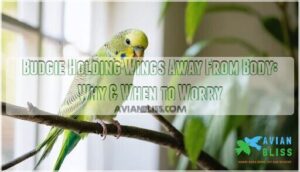 When your budgie’s holding wings away from body, you’re seeing anything from normal cooling behavior to a red flag for health issues.
This wing positioning often happens during temperature regulation – think of it as your bird’s natural air conditioning system.
However, if you notice panting, trembling, or your feathered friend seeming reluctant to perch normally, that’s when alarm bells should ring.
Environmental stress from loud noises can also trigger this response.
The real trick is watching for patterns: occasional wing stretching is totally normal, but persistent wing holding paired with behavioral changes like reduced activity warrants a vet visit.
Sometimes what looks like simple stretching masks underlying infections or injuries that need professional attention.
Table Of Contents
- Key Takeaways
- Potential Health Issues
- Signs of Physical Discomfort
- Behavioral Indications
- Possible Emotional Distress
- Impact of Environmental Factors
- Medical Examination Importance
- Professional Consultation
- Creating a Comfortable Environment
- Providing Adequate Nutrition
- Monitoring and Observing Changes
- Frequently Asked Questions (FAQs)
- Why is my parakeet holding his wings out?
- How to tell if a budgie is stressed?
- Why is my budgie keeping his wings away from his body?
- Why is my bird holding its wings out?
- Why does my budgie keep lifting one wing?
- Why is my budgie raising her wings?
- Can wing-holding be a sign of hormonal changes?
- Does wing position differ between male and female budgies?
- How long can a budgie hold its wings out?
- Are certain budgie breeds more prone to wing-holding?
- Conclusion
Key Takeaways
- You’ll spot normal cooling behavior versus health emergencies – Wings held out for temperature regulation is natural, but if you see panting, trembling, or reluctance to perch, it’s time for an immediate vet visit.
- Watch for behavioral patterns that reveal the bigger picture – Occasional wing stretching is fine, but persistent wing holding combined with changes like reduced activity, altered vocalizations, or excessive preening signals underlying problems.
- Environmental factors often trigger wing positioning – Your budgie’s responding to temperature extremes, noise stress, or poor habitat design, so you can often resolve the behavior by adjusting their surroundings.
- Professional diagnosis beats guessing games every time – Don’t rely on home remedies when wing holding persists, as infections, injuries, nerve damage, or nutritional deficiencies require proper veterinary treatment for successful recovery.
Potential Health Issues
When your budgie’s wings hang away from its body, you’re looking at potential red flags.
Wing paralysis affects flight and balance, often with muscle wasting. Feather picking suggests underlying discomfort, while swollen joints signal infection or inflammation.
Unusual positioning might indicate metabolic disorders or AGY infection.
These budgie health signs and bird illness signs show avian discomfort through body language.
Early detection of these health issues by watching budgie wing position can save your feathered friend’s life.
Signs of Physical Discomfort
When your budgie holds its wings away from its body, it’s often signaling physical discomfort that needs your attention.
This behavior can stem from pain, injury, nerve damage, infections, or nutritional deficiencies that affect your bird’s comfort and mobility.
Pain or Injury

Muscle Strains and Fractured Wings can cause your budgie to hold wings awkwardly—think of it as their way of saying "ouch!"
Joint Discomfort from strained muscles or stiff joints makes normal wing positioning painful.
Your feathered friend might display this budgie wing position after cage accidents or rough landings.
Internal Injuries aren’t always visible, but budgie discomfort shows through body language.
Watch for sudden changes in wing posture, especially if one wing droops differently than the other.
Avian discomfort manifests as reluctance to fly or climb—behaviors that were once effortless become avoided.
Post-Trauma Care starts with your observation skills.
Don’t dismiss subtle signs; pain and injury require immediate attention to prevent complications from worsening your budgie’s condition.
Nerve Damage
When physical injuries aren’t visible, nerve damage might be the culprit behind your budgie’s wing problems. This neurological issue can leave your feathered friend struggling with coordination and causing considerable discomfort.
Symptoms of nerve damage in budgies include:
- Wing paralysis or weakness affecting one or both wings
- Tremors, twitches, or uncoordinated wing movements
Causes range from traumatic cage accidents to viral infections like bornavirus, plus toxic exposure from heavy metals. Your bird might show drooping wing posture, reluctance to fly, or altered behavior patterns.
Diagnosis requires professional medical examination by an avian vet who’ll perform neurological tests, possibly including radiographs or blood screening. Budgies showing symptoms such as head tilting may be experiencing neurological issues similar to those seen in pigeons, and avian vets can diagnose the underlying cause.
Early detection substantially improves prognosis – some birds recover completely with proper treatment including physical therapy and supportive care, while others need long-term management for chronic conditions.
Infection

Beyond nerve damage, bacterial infections, fungal infections, and viral infections can trigger abnormal wing positioning in your feathered friend.
AGY infection and yeast infections are particularly sneaky culprits that mess with your budgie’s comfort level.
You’ll notice swelling, discharge, or labored breathing alongside the wing-holding behavior.
Don’t play detective with antibiotics—antibiotic resistance is real, and you could make things worse.
Budgie wing problems from infection need proper diagnosis.
Your avian vet will identify whether it’s bacterial infections, fungal issues, or something else entirely.
Quick professional intervention turns budgie illness into recovery success stories.
Nutritional Deficiency
Poor nutrition can throw your budgie’s body out of whack, leading to abnormal budgie wing posture. A seed-only diet creates serious dietary imbalance, lacking essential vitamins and minerals for proper avian wellness.
Vitamin deficiency and poor mineral absorption affect muscle function and energy levels. Watch for dull feathers, lethargy, and unusual budgie wing problems alongside the wing-holding behavior.
Malnutrition is a leading cause of early death in pet birds, so addressing it promptly is vital. Your bird’s nutrient deficiencies vary, but quality pellets and fresh vegetables beat an all-seed diet every time for the best budgie health.
Behavioral Indications

When your budgie consistently holds its wings away from its body, watch for accompanying behavioral indications that reveal the bigger picture.
Social Signals might shift dramatically—your bird could become unusually territorial or withdrawn from flock interactions.
Vocalization Changes are particularly telling.
Notice if your chatty companion suddenly goes silent or starts making distressed calls that sound different from their usual chatter.
Aggression Signs might emerge, like lunging at cage mates or favorite toys they once enjoyed.
Preening Excessively often signals stress—think of it as nervous fidgeting in bird form.
Your budgie might obsessively groom the same spots until feathers become damaged.
Wing Display behavior paired with fluffed feathers creates a classic "sick bird" posture.
These budgie stress indicators work together like pieces of a puzzle.
Budgie body language tells a story, and wing positioning is just one chapter.
Trust your instincts—if multiple budgie behavior changes appear simultaneously, it’s time for professional evaluation.
Possible Emotional Distress

Despite your best intentions, emotional turmoil can trigger stress signals in your budgie, causing wing-holding behaviors that might leave you scratching your head.
Social isolation tops the list of anxiety indicators – these chatty birds crave interaction, and loneliness can manifest as defensive wing positioning.
Fear response patterns emerge when your budgie feels threatened.
Past negative experiences with handling can create lasting budgie stress, triggering wing-spreading whenever they sense danger.
Even imagined threats can activate their fear of predators instinct.
Boredom signs often overlap with emotional distress.
Without mental stimulation, your feathered friend might develop separation anxiety when you’re away, leading to unusual postures.
Behavioral indications include withdrawn behavior, excessive silence, or aggressive displays toward toys.
The solution?
Increase positive interactions, provide enrichment activities, and consider a companion bird.
Your budgie’s emotional well-being directly impacts their physical behavior – addressing the root cause often resolves the wing-holding issue naturally.
Impact of Environmental Factors
Your budgie’s environment plays a huge role in how they hold their wings, and sometimes what looks concerning is just them adapting to their surroundings.
Think of it like how you might fan yourself on a hot day or hunch your shoulders when stressed—your feathered friend does something similar with their wings.
Temperature and Wing Position

Temperature extremes trigger your budgie’s cooling mechanisms when ambient temperature rises above their comfort zone.
Wings away from body behavior increases heat dissipation through greater feather exposure to air currents. This thermoregulation strategy helps maintain ideal body temperature, especially during sunbathing benefits when birds absorb warmth while preventing overheating through strategic wing positioning.
Ensuring proper warmth is vital, especially if you need a budgie heat source, to provide an adequate heat source for your budgie, and understand the importance of proper warmth.
Noise-Induced Stress Responses
Auditory stressors create havoc for sensitive budgies. Sudden noises trigger stress behaviors like wing-spreading, increased alertness, and agitation.
Your feathered friend’s noise sensitivity means even household sounds can overwhelm them. Noiseinduced stress disrupts their peace, causing defensive postures and behavioral changes.
Combat this by implementing sound mitigation strategies—relocate their cage from high-traffic areas, use soft furnishings to absorb sound, and establish quiet periods. Calming techniques like gentle music can mask jarring environmental factors while creating a serene budgie environment.
Habitat Design Considerations

Beyond the basic cage setup, creating a thoughtful budgie environment means addressing specific habitat design elements that directly impact your bird’s comfort and wing behavior.
Poor environmental factors often trigger stress-induced wing holding, making thoughtful planning essential.
Consider these key habitat design considerations:
- Cage size should allow full wing extension and short flights
- Perch variety with different diameters prevents foot problems and encourages natural positioning
- Toy enrichment provides mental stimulation and reduces boredom-related behaviors
- Lighting needs include natural daylight cycles and UV exposure for vitamin D synthesis
Air quality matters tremendously—ensure proper ventilation prevents respiratory issues that cause abnormal wing positioning.
Selecting the right cage dimensions is vital for budgie well-being.
Your budgie wing environment should feel spacious, not cramped, with comfortable environmental factors supporting natural behaviors rather than creating stress responses.
Medical Examination Importance

When environmental factors aren’t the culprit, it’s time to ponder a vet consultation.
Professional budgie wing veterinary care isn’t optional—it’s your bird’s lifeline. Early detection through an avian veterinarian can mean the difference between quick recovery and chronic illness.
Here’s why budgie vet visits matter:
- Early detection spots problems before they worsen
- Accurate diagnosis ensures targeted treatment plans
- Wing functionality assessment reveals hidden issues
- Preventative measures suited to your bird’s needs
Don’t play guessing games with budgie wing health. Monitoring your budgie’s droppings, including observing their droppings consistency changes, can also provide valuable insights into their overall health.
Home remedies won’t replace professional expertise in budgie wing illness cases.
Professional Consultation

When medical exams reveal concerning patterns, you’ll need expert advice from an avian veterinarian. These specialists understand budgie wingholding behaviors that general vets might miss.
Schedule a vet appointment if wing positioning persists beyond normal stretching or temperature regulation. Your professional consultation should include diagnostic tests to rule out infections, injuries, or nutritional deficiencies.
The veterinary advice you receive will outline specific treatment options suited to your bird’s needs. Don’t wait—early intervention through a budgie vet visit often prevents minor issues from becoming serious health problems requiring extensive follow-up care.
Creating a Comfortable Environment

While your vet can guide you through treatment options, you’ll want to create a sanctuary that supports your budgie’s recovery. Think of their cage as their personal apartment – it needs to check all the right boxes for comfort and budgie wellbeing.
**Cage Size matters more than you might think.
Your bird needs room to stretch without feeling cramped. Perch Variety gives their feet different grips and prevents pressure sores. Toy Enrichment** keeps their mind busy, reducing budgie wing stress from boredom.
Here’s your environmental checklist:
- Air Quality: Keep the space well-ventilated but draft-free
- Light Exposure: Provide 10-12 hours of natural or full-spectrum lighting daily
- Temperature control: Maintain 65-75°F to prevent overheating wing displays
Pay attention to your bird’s preferences – some love morning sun while others prefer afternoon warmth. Clean water, fresh air, and consistent routines work wonders for budgie wing comfort. When budgie wing discomfort stems from environmental stress, these adjustments often resolve the wing-holding behavior within days.
Providing Adequate Nutrition

Without adequate nutrition, your budgie’s wings might droop like deflated balloons.
A balanced diet featuring quality pellets, seed variety, and fresh foods prevents nutritional deficiency that weakens wing muscles.
Think rainbow meals—dark leafy greens for vitamin A, calcium-rich cuttlebone for strong bones. Vitamin supplements can fill gaps, but whole foods work best.
Proper mineral intake supports nerve function and muscle coordination.
Budgie nutrition isn’t just about survival—it’s about giving your feathered friend the fuel for confident flight and healthy wing positioning.
Many owners find success using specialized budgie pellets to guarantee complete nutrition.
Monitoring and Observing Changes
Now that you’ve addressed your budgie’s nutritional needs, establishing behavioral baselines becomes your next essential step in budgie wing monitoring. Think of yourself as a detective—you’re collecting clues about what’s normal versus concerning for your feathered friend.
Start tracking frequency analysis of wing-holding episodes. Does your budgie spread wings daily at 3 PM, or randomly throughout the week? Subtle variations in timing often reveal important patterns.
Pay attention to contextual awareness—what’s happening when wings extend? Is it after meals, during cage cleaning, or when visitors arrive? Longitudinal tracking helps you spot gradual changes that might otherwise slip past unnoticed.
Keep simple notes about wing positioning, duration, and accompanying behaviors like vocalizations or feather ruffling. This budgie wing observation creates a valuable baseline for your vet if concerns arise. Monitoring your budgie’s droppings can also provide insights into their health, as changes in droppings can indicate underlying issues.
Watch for signs like asymmetrical wing positioning or unusual trembling—these warrant immediate attention. Your vigilant monitoring changes approach transforms you into your budgie’s best health advocate.
Frequently Asked Questions (FAQs)
Why is my parakeet holding his wings out?
Your parakeet’s likely temperature regulating, sunbathing, or stretching after activity. This cooling behavior’s normal when he’s warm, but watch for signs like panting or lethargy that’d suggest overheating needing attention.
How to tell if a budgie is stressed?
Stressed budgies become feather-plucking machines! You’ll notice excessive preening, aggressive behavior toward cage mates, unusual silence or squawking, withdrawal from interaction, and changes in eating patterns alongside fluffed feathers.
Why is my budgie keeping his wings away from his body?
Your budgie’s likely regulating temperature, relaxing after activity, or showing signs of overheating. Check room temperature, make certain proper ventilation, and monitor for other symptoms like panting or lethargy.
Why is my bird holding its wings out?
Wings held away from the body typically indicate temperature regulation – your bird’s cooling down when hot.
It can also signal illness, stress, sunbathing, stretching after flight, or simple relaxation and comfort.
Why does my budgie keep lifting one wing?
Roughly 70% of single-wing lifting cases involve temperature regulation or minor discomfort.
Your budgie’s likely cooling down, stretching after rest, or signaling mild irritation.
Watch for accompanying symptoms like panting, lethargy, or persistent behavior—these warrant veterinary attention.
Why is my budgie raising her wings?
Your feathered friend might be temperature regulating, stretching after rest, or signaling excitement. If she’s panting or seems uncomfortable, she could be overheating and needs cooler surroundings immediately.
Can wing-holding be a sign of hormonal changes?
Like a bird caught between seasons, hormonal shifts can indeed trigger wing-holding behavior.
You’ll notice this especially during breeding season when your budgie’s body produces reproductive hormones, causing comfort-seeking postures and temperature regulation changes.
Does wing position differ between male and female budgies?
Male and female budgies don’t typically show different wing-holding patterns based on gender alone.
Both sexes spread wings for identical reasons like temperature regulation, stretching, and sunbathing, though individual personalities might create slight variations.
How long can a budgie hold its wings out?
Your budgie can hold its wings out for several minutes to hours, depending on the reason. Brief stretching lasts seconds, while temperature regulation or sunbathing continues until they’re comfortable.
Are certain budgie breeds more prone to wing-holding?
No single breed stands out as the "wing-holding champion," but smaller budgies sometimes struggle more with temperature regulation.
Making them slightly more prone to holding wings out for cooling purposes than their larger counterparts, due to this temperature regulation issue.
Conclusion
Understanding your budgie holding wings away from body is like reading a health barometer – it reveals everything from simple comfort needs to serious medical concerns.
While occasional wing positioning for temperature regulation is perfectly normal, persistent wing holding combined with behavioral changes demands immediate veterinary attention.
You’ve learned to distinguish between harmless stretching and warning signs that shouldn’t be ignored, and to trust your instincts, and remember that early intervention often makes the difference between a quick recovery and prolonged health issues.
- https://www.pets4homes.co.uk/pet-advice/common-illnesses-in-budgies.html
- https://www.msdvetmanual.com/bird-owners/disorders-and-diseases-of-birds/nutritional-disorders-of-pet-birds
- https://birdsupplies.com/blogs/news/signs-of-bird-malnutrition-and-how-to-fix-your-bird-s-diet
- https://www.merckvetmanual.com/exotic-and-laboratory-animals/pet-birds/nutritional-diseases-of-pet-birds
- https://vcahospitals.com/know-your-pet/budgies-feeding