This site is supported by our readers. We may earn a commission, at no cost to you, if you purchase through links.

When your Amazon parrot develops an upper respiratory infection or your cockatiel fractures a wing in a startled flight, you’ll face veterinary bills that can easily climb into hundreds or thousands of dollars—expenses that catch most bird owners completely off guard.
Unlike dogs and cats, avian species require specialized veterinary care from practitioners trained in exotic animal medicine, and those services don’t come cheap. Pet insurance for birds exists specifically to bridge this financial gap, reimbursing you for eligible medical expenses after you’ve paid the vet upfront, though coverage options vary considerably depending on the provider and your bird’s species.
Understanding how these policies work, what they actually cover, and which providers offer the most thorough protection for your feathered companion can mean the difference between affording critical treatment and making impossible financial decisions during a medical emergency.
Table Of Contents
- Key Takeaways
- What is Pet Insurance for Birds?
- Key Benefits of Bird Insurance
- What Does Bird Insurance Cover?
- Comparing Top Bird Insurance Providers
- How Much Does Bird Insurance Cost?
- Frequently Asked Questions (FAQs)
- How much does pet insurance cost for birds?
- Does Nationwide pet insurance cover birds?
- Does Lemonade pet insurance cover birds?
- Which pet insurance company offers plans for birds?
- Do you need a pet insurance policy for a parrot?
- Can you afford pet insurance if you can’t afford a bird?
- Is it necessary to insure birds?
- How much does bird insurance cost on average?
- Do you need pet insurance for avian?
- Should I get pet insurance for my bird?
- Conclusion
Key Takeaways
- Bird insurance operates on a reimbursement model, requiring upfront payment to vets, then filing claims for partial or full coverage based on your policy’s limits, deductibles, and waiting periods—with most plans covering accidents, illnesses, and optional wellness care for species ranging from budgies to macaws.
- Nationwide stands as the most established provider with over two decades of exotic pet coverage experience, while Pet Assure offers an alternative discount-plan approach with immediate 25% savings at participating clinics, no waiting periods, and acceptance of all birds regardless of pre-existing conditions.
- Monthly premiums typically range from $10 to $50 depending on your bird’s species, age, and coverage level, with basic plans starting around $15-$25 for smaller species like budgies and cockatiels, while comprehensive plans including wellness coverage can cost $300-$600 annually.
- Coverage generally excludes pre-existing conditions diagnosed before enrollment, experimental treatments, and breeding-related procedures, though policies do reimburse for specialized avian emergencies like fractures, respiratory infections, and diagnostic imaging within annual limits that commonly cap between $5,000 and $15,000.
What is Pet Insurance for Birds?
Pet insurance for birds works much like pet insurance for cats and dogs, protecting you financially when your feathered companion needs unexpected veterinary care. You pay a monthly premium in exchange for reimbursement on eligible medical expenses, which can include everything from emergency injuries to ongoing illnesses that require diagnostic testing and treatment.
Many policies cover specialized treatments like diagnosing and treating scaly leg mites, which require expertise in avian-specific conditions.
Understanding how these policies function, what types of coverage exist, and who qualifies will help you determine whether insuring your bird makes sense for your situation.
How Bird Insurance Works
Bird insurance operates on a reimbursement model, requiring you to enroll your avian companion, pay veterinary fees upfront, then file a claim for partial or full insurance reimbursement based on your policy’s coverage limits and deductibles.
Most exotic pet insurance plans verify your bird’s species, age, and health during enrollment, establishing annual maximums and waiting periods before coverage activates for accidents, illnesses, or wellness care.
Common Coverage Types
Once your policy is active, you’ll encounter three core categories of exotic pet coverage designed to protect your companion’s health and your finances. Accident plans, illness coverage, and wellness options each address distinct medical scenarios, ensuring you can tailor bird health and wellness protection to the risks your species faces.
- Accident plans reimburse you for trauma like broken wings or bite wounds after a deductible
- Illness coverage covers infections, respiratory diseases, and gastrointestinal conditions up to annual limits
- Wellness options offset routine exams, parasite control, and beak evaluations with fixed allowances
- Diagnostic tests including X-rays and bloodwork receive reimbursement when linked to covered accidents and illnesses
- Exotic policies exclude preexisting conditions but may rider chronic or congenital issues
Eligibility and Enrollment Requirements
Before you can activate exotic pet coverage for your bird, you must clear several enrollment hurdles tied to age requirements, species limits, and health disclosure. Most insurers accept birds between 6 and 12 weeks old, exclude rare species from their exotic pet coverage roster, and demand a clean bill of health.
Waiting periods for illness coverage usually follow approval, so plan your pet insurance enrollment strategically to guarantee continuous bird health and wellness protection during the enrollment process.
Key Benefits of Bird Insurance

Bird insurance isn’t just another expense—it’s a safety net that can spare you from difficult financial decisions when your feathered companion needs care.
Keeping your bird healthy starts with making informed choices, from coverage decisions to understanding homemade bird feeding options that support their nutritional needs.
Bird insurance transforms unpredictable veterinary costs into manageable monthly payments, sparing you from impossible financial choices when your companion needs care
Whether you’re managing a budgerigar with respiratory issues or a macaw requiring emergency surgery, the right coverage transforms unpredictable veterinary costs into manageable monthly payments.
Let’s examine the three primary advantages that make bird insurance worth considering for your avian pet.
Financial Protection for Vet Bills
When unexpected avian health emergencies strike, you’re looking at veterinary expenses that can quickly climb into hundreds or thousands of dollars, making pet insurance a critical financial safety net for bird ownership and care.
Most policies reimburse a percentage of your eligible medical expense coverage after you’ve paid the vet bill and filed pet insurance claims, with annual or per-incident limits protecting you against catastrophic emergency funding needs while supporting thorough avian health management.
For those facing financial obstacles, there are also charities offering vet bill assistance to help pet owners manage both emergency and ongoing care costs.
Peace of Mind for Owners
Knowing you’ve secured thorough bird insurance transforms owner anxiety into genuine emotional support, especially when your parrot or finch shows sudden signs of illness. Financial security through pet insurance means you can focus entirely on bird wellness and avian health rather than calculating treatment costs.
- Claims processing usually wraps up within 5 to 14 days
- Policies reimburse up to 80 percent of eligible expenses
- Real-time online portals track your coverage limits instantly
- Customer support operates seven days weekly for stress reduction
Customizable Coverage Options
Most bird insurance policies let you build protection around your specific needs, choosing from policy endorsements that add coverage for aviary theft or escape, selecting custom tiers with different annual maximums, and picking deductible options that fit your budget.
Wellness addons cover routine checkups, while exotic coverage plans offer specialized benefits for parrots and macaws through customized pet health insurance designed for avian species.
Specialized pet insurance is part of a growing landscape of unique and customizable coverage options now available in modern insurance.
What Does Bird Insurance Cover?
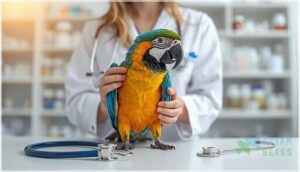
Understanding what your bird insurance policy actually covers is the foundation of making a smart purchasing decision, because not all plans are created equal in terms of protecting your feathered companion.
Most policies will reimburse you for veterinary costs related to unexpected accidents and illnesses, though the specifics can vary substantially between providers. Let’s break down the core coverage areas you’ll encounter, along with the common exclusions that might catch you off guard if you’re not paying attention.
Accidents and Injuries
Traumatic events—falls from perches, collisions during flight, bites from cage mates, or electrical shock from exposed cords—can send your bird to the vet fast, and bird insurance usually covers the resulting fracture treatment, diagnostic imaging, pain management, and emergency response.
You’ll find policies reimburse surgical repair, injury prevention consultations, and accident rehabilitation within your annual limits, protecting you from steep veterinary expenses when swift avian medical treatment becomes non-negotiable.
Illnesses and Medical Conditions
Respiratory issues like aspergillosis, avian diseases such as psittacine beak and feather disease, and neurological disorders triggered by heavy-metal toxicity or metabolic shifts create significant veterinary expenses.
Insurance helps cover diagnostic workups, blood tests, and avian medical treatment when your bird develops chronic conditions, crop infections, egg binding, or feather plucking linked to stress, hormonal imbalance, or beak problems requiring specialized pet health and wellness intervention.
Routine Wellness and Preventive Care
Many policies offer wellness add-ons that cover annual veterinary checks, blood work for early disease detection, fecal screenings for parasites, and beak health evaluations to catch overgrowth or misalignment.
These preventive measures support avian health through nutritional counseling, feather care assessments, and environmental guidance, helping you address bird health issues before they escalate into costly emergencies requiring intensive pet health and wellness interventions.
Coverage Exclusions and Limitations
Even thorough exotic pet insurance includes policy restrictions you need to understand before filing claims. Pre-existing conditions diagnosed before enrollment usually face claim denials, while experimental treatments and breeding-related procedures fall under common exclusion types.
Coverage limits may cap diagnostic imaging or restrict wellness visits to specific frequencies, and certain behavioral issues like feather plucking often require documented medical causes to qualify for insurance coverage for pets.
Comparing Top Bird Insurance Providers
In the context of insuring your bird, you’ll find that options are limited compared to what’s available for cats and dogs, though a few providers have developed specialized programs for avian species.
Nationwide stands out as the most established choice with over two decades of experience in exotic pet coverage, while Pet Assure offers a different approach that works more like a discount plan than traditional insurance. Beyond these primary options, you’ll also want to know about alternative strategies that can help you manage veterinary costs for your feathered companion.
Nationwide Avian & Exotic Pet Insurance
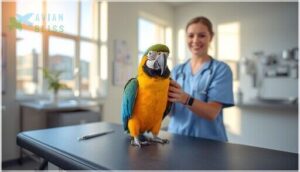
Nationwide stands as the most established name in bird insurance, offering plans that protect your avian companion across accidents, illnesses, and even wellness care.
You’ll find exotic coverage for species ranging from budgies to macaws, with access to any licensed veterinarian and straightforward insurance claims that usually process within days, giving you genuine peace of mind when your feathered friend needs care.
Pet Assure for Birds
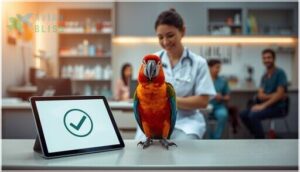
If traditional bird insurance feels like a stretch for your budget, Pet Assure offers a welcoming low-cost option that functions more like a membership than conventional pet insurance. Over 100,000 households rely on this alternative for their birds, enjoying immediate 25% discounts on veterinary networks without waiting periods, claim forms, or pre-existing condition exclusions that often complicate bird ownership.
- No medical history review – your cockatiel with chronic feather plucking qualifies instantly
- Any species accepted – from finches to macaws, all birds receive identical bird health plans
- Immediate activation – walk into participating clinics today and save on pet care tips, exams, and alternative therapies
Other Notable Insurance Alternatives
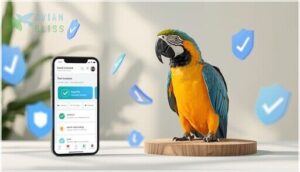
Beyond Pet Assure, you’ll find specialized insurance alternatives worth exploring for your feathered companion. Hartville Pet Insurance delivers custom coverage that extends to exam fees and even acupuncture for parrots, while Exotic Direct bundles theft and loss protection with standard illness coverage—particularly valuable for high-value macaws and cockatoos.
Healthy Paws stands out with unlimited annual benefits and fast claim turnaround, offering strong exotic pet plans without the reimbursement caps that constrain many low-cost pet insurance options.
How Much Does Bird Insurance Cost?

If you’re considering coverage for your feathered companion, you’re probably wondering what you’ll actually pay each month. Bird insurance premiums aren’t one-size-fits-all—they shift based on several important variables that directly affect your out-of-pocket costs.
Let’s break down what influences pricing, what you can expect to pay in 2026, and how to find coverage that won’t strain your budget.
Factors Influencing Premiums
Your bird’s age, species, and health shape your monthly premium costs more than you might expect. Younger parakeets cost less to cover than mature macaws because insurers calculate species risks and documented illness patterns when pricing exotic pet insurance.
Location costs matter too—urban centers with specialized avian vets often push rates higher, while your claim history influences premium calculations and coverage options available.
Typical Price Ranges in 2026
You’ll find basic bird insurance premiums starting around $15 to $25 monthly for smaller companion species like budgies and cockatiels.
While mid-level annual costs usually range from $180 to $350 with moderate deductibles, extensive plans that include wellness coverage often run $300 to $600 yearly.
Annual limits commonly cap between $5,000 and $15,000 depending on your policy’s price comparison across providers.
Tips for Choosing Affordable Coverage
When comparing bird insurance providers, regularly perform a thorough policy comparison alongside cost analysis to identify coverage options that fit your budget without sacrificing essential protection. Here’s how to optimize value:
- Compare at least three plans’ monthly premiums to find the lowest total annual cost, checking whether higher deductibles reduce payments enough to justify the trade-off.
- Ask about insurance discounts for multi-pet households or preventive care bundles that make affordable pet care more accessible.
- Review the claim process carefully, ensuring reimbursement timelines and documentation requirements won’t create financial strain during emergencies.
You’ll achieve cost-effective pet insurance by balancing low-cost pet insurance premiums against realistic coverage limits for your bird’s species-specific needs.
Frequently Asked Questions (FAQs)
How much does pet insurance cost for birds?
Expect wildly different quotes—monthly premiums usually swing from $10 to $50 depending on your bird’s species, age, and coverage level, with extensive plans costing more than basic accident-only policies.
Does Nationwide pet insurance cover birds?
Yes, Nationwide offers avian insurance plans specifically designed for birds and exotic pets, reimbursing up to 90 percent of eligible veterinary expenses for accidents, illnesses, and even some preventive care options.
Does Lemonade pet insurance cover birds?
Lemonade pet insurance primarily caters to dogs and cats, not birds, so avian owners need to explore exotic pet plans from providers like Nationwide or alternatives such as Pet Assure for bird coverage.
Which pet insurance company offers plans for birds?
Nationwide Avian and Exotic Pet Insurance leads the market with bird-specific coverage, while ExoticDirect and Dotsure also provide avian policy options, each offering specialized veterinary coverage and insurance enrollment customized to exotic pet plans.
Do you need a pet insurance policy for a parrot?
Think of parrot ownership as traversing unpredictable skies—Parrot Health Risks like respiratory infections and fractures make a Pet Insurance Plan prudent, though not mandatory, balancing Insurance Costs against potential Bird Emergency expenses and your Pet Financial comfort zone.
Can you afford pet insurance if you can’t afford a bird?
If your budget doesn’t stretch to cover a bird’s basic needs—quality food, appropriate housing, and routine veterinary care—adding pet insurance premiums becomes another financial burden rather than a safety net, making emergency funding and cost-effective alternatives worth exploring first.
Is it necessary to insure birds?
Insurance for exotic pets isn’t required by law, but veterinary costs for birds can quickly exceed several hundred dollars per emergency.
Bird ownership carries financial risks that insurance benefits help offset, protecting pet welfare when illness strikes unexpectedly.
How much does bird insurance cost on average?
You’ll usually pay between $10 and $25 per month for basic coverage, though premium rates climb with larger parrots, higher annual fees, and expanded insurance coverage options that include wellness benefits.
Do you need pet insurance for avian?
It depends on your bird’s health risks, your emergency fund, and your comfort with unexpected vet bills—exotic pet insurance can buffer against costly surprises, but it’s not mandatory for every owner.
Should I get pet insurance for my bird?
If you own a parrot or finch, getting Pet Insurance Options protects you from surprise Veterinary Costs that can hit hard when illness strikes—especially for exotic animals with complex Bird Health Risks.
Conclusion
Like the canary in the coal mine that warned miners of invisible danger, your bird’s health can shift suddenly and dramatically—except modern threats come from infections, injuries, and diseases that demand immediate specialized intervention.
Pet insurance for birds transforms these unpredictable emergencies from financial catastrophes into manageable expenses, allowing you to prioritize your companion’s recovery rather than your bank account. Choose pet insurance before you need it, because avian medicine doesn’t wait for budget planning.