This site is supported by our readers. We may earn a commission, at no cost to you, if you purchase through links.
You hear faint chirping from the bushes, spot a tiny featherless bird on the ground, and your first instinct is to help. But here’s the thing most people don’t realize: picking up that baby bird and offering it food might do more harm than good.
Wildlife rehabilitators see dozens of well-meaning rescues each spring that didn’t need rescuing at all—healthy fledglings separated from watchful parents who were just out of sight. Before you reach for a dropper or start mashing up worms, you need to know whether that bird actually needs your intervention, what age it is, and how to safely provide emergency care if it’s truly abandoned or injured.
The difference between helping and accidentally harming comes down to recognizing a few critical signs and following species-specific feeding protocols.
Table Of Contents
- Key Takeaways
- Identifying The Age of a Baby Bird
- Assessing if a Baby Bird Needs Feeding
- Preparing Emergency Food for Baby Birds
- Creating a Feeding Schedule and Environment
- How to Feed a Baby Bird Safely
- Monitoring Baby Bird Health During Feeding
- Transitioning Baby Birds to Solid Foods
- Frequently Asked Questions (FAQs)
- What can I feed a wild baby bird I found?
- How to take care of an abandoned baby bird?
- What can I feed my baby bird if I don’t have formula?
- Do baby birds need to be fed?
- What to feed a baby bird?
- How often should you feed baby birds?
- How to feed a wild baby bird?
- Should baby bird food be prepared before feeding?
- What are the best practices for feeding baby birds?
- What can I feed a wild baby bird?
- Conclusion
Key Takeaways
- Always identify the bird’s age and species before intervening, since many fledglings found on the ground are still under parental care.
- Feed baby birds only if truly abandoned or injured, using a smooth, warm puree of high-protein pellets or boiled egg mixed with oatmeal and water.
- Avoid giving dairy, bread, raw meat, avocado, or chocolate, as these foods can cause serious harm or death.
- Keep feeding sessions frequent—every 15 to 20 minutes for hatchlings—and monitor crop fullness, temperature, and droppings to track health.
Identifying The Age of a Baby Bird
Before you can help a baby bird, you need to figure out how old it is. The bird’s age determines whether it actually needs rescuing or if its parents are still caring for it nearby.
Once you’ve confirmed the bird needs help, how often you feed a baby bird will vary based on its age and species.
Let’s look at the key differences you’ll notice between nestlings, fledglings, and other developmental stages.
Nestlings Vs. Fledglings

You’ll notice two distinct stages when you find a baby bird. Nestlings stay in the nest and show little or no feather growth—they depend on parents for constant feeding and warmth. Fledglings have left the nest with nearly full plumage and are learning to fly.
Key differences include:
- Feather formation: Nestlings appear bald or downy; fledglings display visible wing and tail feathers
- Mobility: Nestlings can’t move far; fledglings hop, perch, and attempt short flights
- Eye development: Nestlings have closed or barely open eyes; fledglings are alert with open eyes
- Feeding: Nestling care is intense and constant; fledgling development involves gradual independence
- Parental supervision: Nestlings need both parents continuously; fledglings receive guidance from a distance
Understanding baby bird growth helps you decide whether intervention is necessary or if the bird is simply practicing flight under the watchful eyes of parents nearby. For more details about nestlings and fledglings differences, check expert guidance before helping.
Precocial Vs. Altricial Species

Bird species fall into two categories that shape how you’ll care for orphaned baby birds.
Altricial baby birds—like robins and sparrows—hatch blind, naked, and helpless, demanding constant feeding and warmth.
Precocial species—ducks, geese, and quail—emerge with open eyes, downy feathers, and mobility, following parents to forage within hours.
These evolutionary adaptations determine parental investment, nesting strategies, and the bird nutrition each fledgling requires. For a deeper understanding of developmental strategies in birds, researchers highlight how parental care, incubation, and independence at hatching vary widely among species.
Recognizing Signs of Abandonment

Even precocial chicks and altricial nestlings can face parental neglect. Watch for an orphaned baby bird begging repeatedly without adult response—if parents don’t return for several hours, you’re likely seeing abandonment signs.
Environmental factors like predator pressure or human disturbance disrupt nesting behavior. Before caring for abandoned baby birds, contact wildlife rescue and rehabilitation to confirm the fledgling truly needs intervention.
Assessing if a Baby Bird Needs Feeding
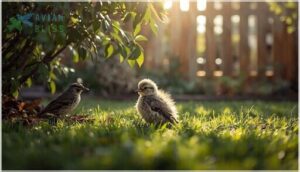
Not every baby bird you find needs your help. Fledglings often hop around on the ground while their parents watch from nearby, and stepping in too soon can do more harm than good.
Before you decide to feed or rescue a bird, you’ll need to know when intervention is truly necessary and when to step back.
When to Intervene or Leave Alone
You’ll find the hardest part of caring for orphaned baby birds is knowing when to step in. If a fledgling sits quietly on the ground and you spot parents nearby, wait 30 minutes before acting.
Intervention timing matters—watch for these abandonment signs:
Birds suddenly avoiding feeders, refusing familiar foods, or abandoning nests may signal nutritional gaps that seasonal bird feeding times can help you correct before breeding or migration begins.
- No parental presence after 1–2 hours of observation
- A nestling more than 100 yards from any visible nest
- Visible dehydration or weakness without adult bird behavior nearby
Contact a wildlife rehab center or bird specialist for wildlife guidance when unsure.
Signs of Injury or Illness
Distress often appears in subtle but urgent clues you can’t ignore. Watch for respiratory issues like wheezing, flared nostrils, or rapid tail bobbing. Eye infections show as crusty discharge or cloudiness, while feather loss and bare patches signal poor nutrition or disease.
Dehydration signs include sunken eyes and cool skin. Digestive problems—bloody droppings or persistent crop fullness—demand immediate veterinary care for proper avian health and animal welfare.
Contacting Wildlife Rehabilitators
Within 24 hours of discovery, call your state fish and wildlife agency or a local helpline to locate a licensed rehab center.
Wildlife rescue teams provide emergency care and bird rehabilitation expertise you can’t replicate at home. Share the bird’s location, age, and injuries to speed animal rescue response.
Wildlife rehabilitation experts follow conservation efforts protocols that protect both you and the bird, ensuring proper rehab services and legal compliance.
Preparing Emergency Food for Baby Birds
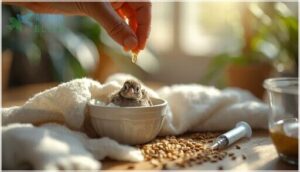
When you’ve got a baby bird in your care and no access to a wildlife rehabilitator right away, you’ll need to prepare emergency food quickly. The right mix can keep the bird alive until professional help arrives, but the wrong ingredients can do more harm than good.
Let’s look at safe homemade options, foods that should never touch a baby bird’s beak, and how to get the consistency just right.
Safe Homemade Food Options
When you’re handfeeding baby birds in an emergency, start with a smooth puree of soaked high-protein pellets or finely mashed hard-boiled egg mixed with plain, cooked oatmeal and warm water.
Keep the consistency like thin baby cereal—around 95 to 105 degrees Fahrenheit. This homemade recipe balances nutrient needs while staying gentle on their delicate digestive systems, supporting proper baby bird nutrition during critical growth phases.
Foods to Avoid
Even the most caring intentions can harm baby birds if you offer the wrong foods. Never give dairy—nestlings lack the enzyme lactase, so milk triggers fatal diarrhea and dehydration.
Never feed baby birds dairy—they lack lactase, causing fatal diarrhea and dehydration
Skip bread, which fills bellies without protein, and avoid raw meat carrying salmonella.
Toxic fruits like avocado cause heart failure, while chocolate and salty snacks devastate fledgling metabolism and kidney function.
Achieving Proper Food Consistency
Think of food texture as the lifeline between nourishment and aspiration—getting it right means the difference between safe feeding and choking hazards.
For nestlings, blend to a uniform applesauce-like puree with no chunks. For fledglings, handle thicker, pudding-style mixtures that coat a spoon without dripping. Watch for smooth swallowing without gurgling—your most reliable feeding cue for viscosity control and swallowing safety.
Creating a Feeding Schedule and Environment

Once you’ve prepared emergency food, your next step is establishing a consistent routine and proper environment for the baby bird.
Timing, temperature, and a calm space all play critical roles in whether your rescued bird survives and thrives. Here’s what you need to know to set up a feeding schedule and safe surroundings.
Feeding Frequency by Age
Baby birds demand around-the-clock care—feeding schedules shift dramatically as they grow. Here’s how to match nutrient needs to each growth stage:
- Hatchlings (0–7 days): Feed every 15 to 20 minutes from sunrise to sunset; crops empty quickly at this stage.
- Nestlings (1–2 weeks): Continue every 15 to 20 minutes; monitor crop fullness before each meal.
- Older nestlings (2–3 weeks): Extend to every 30 to 45 minutes as digestion slows slightly.
- Fledglings (3+ weeks): Offer food every 45 to 60 minutes; they’ll start refusing when full.
- Weaning stage: Reduce handfeeding as the bird picks at solid foods independently.
Age-based feeding schedules guarantee hatchlings receive adequate calories while preventing overfeeding in older birds.
Maintaining Proper Temperature and Humidity
Thermal control and humidity levels directly influence digestion in young birds. Keep ambient temperature at 70 to 75 degrees Fahrenheit, adjusting upward to 90 to 100 degrees for nestlings. Maintain 50 to 60 percent relative humidity with a shallow water dish or humidifier. Environmental monitoring prevents overheating—watch for panting or wing-spreading.
Use this baseline:
| Age Stage | Temperature Range |
|---|---|
| Hatchlings | 95–97°F |
| Nestlings | 90–100°F |
| Fledglings | 70–75°F |
| Weaning stage | 70–75°F |
| Adult prep | Room temp |
Setting Up a Safe, Stress-Free Space
Temperature matters, but so does tranquility. Choose a quiet corner no larger than 3 by 4 feet to minimize visual noise and overstimulation. Soft lighting from a dimmable lamp creates a peaceful ambiance, while a neutral-color rug dampens sound. Keep noise under 40 decibels with white noise or fabric panels, and remove bright toys or loud devices.
- Use a door or screen to separate the space from household activity
- Maintain stable ambient temperature between 68 and 72 degrees Fahrenheit
- Add only 1 to 2 calming items like a plush toy to avoid clutter
- Schedule feeding sessions during quieter household hours
- Provide gentle airflow without drafts to prevent stuffiness
How to Feed a Baby Bird Safely
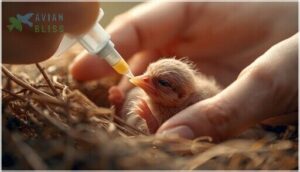
Feeding a baby bird isn’t difficult, but it requires the right tools and technique to keep the bird safe. Using improper methods can lead to choking, aspiration, or injury, so you’ll need to approach each feeding with care and attention.
Here’s how to feed a baby bird safely, step by step.
Choosing Feeding Tools (Syringes, Tweezers)
You’ll need the right feeding tools to protect your baby bird’s delicate mouth and throat. A small syringe, ideally 3 to 5 ml with a blunt tip, lets you control liquid flow without causing injury.
Fine-tipped tweezers work well for solid foods, gripping tiny pellets gently. Always sterilize your tools between feedings—rinse immediately, use mild soap, then boil if heat-safe to prevent bacterial growth.
Proper Feeding Techniques
Once you have your feeding tools ready, position your bird upright at a slight tilt to aid swallowing and prevent aspiration. Offer small bites using gentle, steady pressure on the syringe, pausing between each portion to monitor the swallow.
Check crop fullness by gently feeling the small pouch on the right side of the neck—stop feeding if it’s distended.
Avoiding Choking and Aspiration
Aspiration risks spike when liquid enters the trachea instead of the esophagus, so you’ll want to watch for subtle cues that signal trouble.
To protect your fledgling’s airway safety and prevent choking hazards:
- Keep the bird upright—never flat—while using a syringe for controlled delivery.
- Pause between boluses to confirm a complete swallow.
- Stop immediately if you notice coughing or gagging.
- Never force-feed when the bird resists or turns away.
Monitoring Baby Bird Health During Feeding
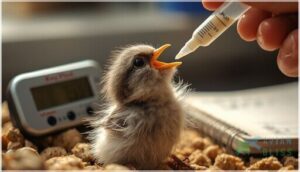
Feeding a baby bird is only half the battle—you also need to watch closely for signs that something’s wrong.
A healthy chick will respond eagerly to food, maintain steady weight gain, and produce regular droppings.
Let’s walk through the three key health indicators you should monitor at every feeding.
Recognizing Signs of Overfeeding or Distress
You’ll know you’ve crossed the line when your baby bird shows distress cues—vomiting after meals, a swollen belly that won’t soften, or constant crying despite being fed. Overfeeding symptoms like lethargy, diarrhea, or delayed crop emptying signal digestive issues and possible nutrient imbalance.
Crop problems and feeding stress aren’t just uncomfortable—they can threaten your fledgling’s survival, so careful observation during feeding is essential for avian health and behavior.
| Warning Sign | What It Means |
|---|---|
| Vomiting or regurgitation | Too much food, stomach overload |
| Persistent bloating | Excess intake, crop distress |
| Loose droppings | Overwhelmed digestive system |
| Lethargy after feeding | Digestion overload, discomfort |
Checking Crop Fullness and Digestion
Gently cradle your baby bird and feel the crop fullness to check after handfeeding. A properly filled crop feels rounded and pliable, signaling recent intake and healthy digestion rates.
An empty, flat crop means it’s time for the next meal. Crop monitoring guides your feeding adjustments, ensuring balanced avian nutrition and ideal crop health throughout care.
Tracking Weight Gain and Droppings
Weight Tracking and Dropping Analysis form your daily health dashboard for baby birds. Weigh your chick weekly on a digital scale at the same time, logging the value to monitor Growth Monitoring trends.
Observe droppings for color, texture, and frequency—normal samples show green to brown with a white cap. Record both metrics in your Health Logging sheet, adjusting Feeding Schedules and bird nutrition and diet when weight stalls or droppings signal dehydration.
Transitioning Baby Birds to Solid Foods
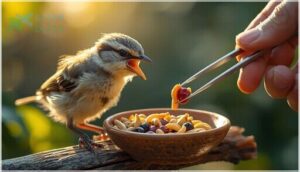
As your baby bird grows stronger and more alert, you’ll notice it starting to show interest in the world beyond formula feedings. This shift to solid foods is a gradual process that requires careful observation and patience.
Watch for these key signs that your feathered friend is ready to take the next step toward independence.
Signs a Bird is Ready to Wean
Your baby bird will show clear behavioral cues when it’s ready for weaning. Watch for active pecking at solid foods, food particles in the crop between handfeeding sessions, and stable weight as bird nutrition shifts.
Feeding independence develops when the fledgling birds tolerate longer intervals between meals, manipulate food with its beak, and maintain normal droppings—all signs of nutritional readiness for less formula.
Introducing Natural Foods and Textures
Start with soft, pureed fruits or steamed vegetables—creamy food texture types that won’t overwhelm a new weaner. Gradually introduce finely chopped natural food sources like mashed berries or ground seeds, ensuring baby bird nutrition stays balanced.
Monitor how your bird copes with each texture introduction before adding dietary variety. Smooth transitions prevent feeding stress and support healthy handfeeding to independence with proper baby birds bird food nutrition.
Encouraging Independent Eating
Once your bird masters soft foods, place small portions within easy reach to trigger natural pecking practice. Position shallow dishes in their foraging zone—this builds eating cues and confidence.
Let them practice twice daily without force, gradually adding variety as handfeeding techniques taper off. Weaning succeeds when baby bird care and nutrition shift from handfeeding formula dependency to independent foraging skills at their own pace.
Frequently Asked Questions (FAQs)
What can I feed a wild baby bird I found?
You can offer commercial insectivore formula, soaked kitten food, or mashed mealworms as emergency food.
Always contact a licensed wildlife rehabilitator first—they’ll guide species-specific nutrition and guarantee the bird’s best chance at survival.
How to take care of an abandoned baby bird?
When you find an orphaned baby bird, first confirm abandonment by watching quietly for an hour.
If parents don’t return, create a warm container and contact a wildlife rehabilitation center immediately for nestling support.
What can I feed my baby bird if I don’t have formula?
You can prepare emergency baby bird nutrition using softened cat or dog food mixed with water, or combine hard-boiled egg with ground oatmeal—both homemade diets provide alternative feedings until HandFeeding Formula becomes available.
Do baby birds need to be fed?
Just like an engine won’t run on fumes, baby birds can’t survive without regular fuel.
Nestlings and young fledglings absolutely need feeding—whether from parents or careful human intervention during emergency care.
What to feed a baby bird?
Your best emergency rations combine finely minced insects, boiled eggs, or softened dog kibble with proper nutrient balance.
Use commercially prepared hand-feeding formula when possible, ensuring food safety and meeting baby bird diet needs.
How often should you feed baby birds?
Feeding frequency depends on the nestling’s age and growth stage.
Newly hatched chicks need 6 to 10 feeds daily, while older birds with emerging feathers require only 3 to 5 feedings to meet their nutrient needs.
How to feed a wild baby bird?
Found a tiny bird on the ground? Use a plastic syringe or tweezers to offer warm, species-appropriate food every 1–2 hours, but contact a bird specialist or wildlife rehabilitator immediately for proper nestling care guidance.
Should baby bird food be prepared before feeding?
Yes, prepare fresh food before each feeding session to prevent bacterial growth and guarantee proper nutrition. Target a temperature of 102°F to 106°F, and discard any leftovers immediately after feeding.
What are the best practices for feeding baby birds?
Use a soft-tipped syringe to deliver warm formula in small pulses, supporting the bird’s body with its head slightly elevated.
Feed every 15-20 minutes during daylight, monitoring crop fullness to prevent aspiration.
What can I feed a wild baby bird?
When you discover a wild baby bird, commercial insectivore formula like Kaytee Exact offers the safest emergency feeding option.
Alternatively, mashed kitten kibble or softened mealworms provide essential animal nutrition for most species.
Conclusion
Feeding fragile, featherless fledglings demands far more than good intentions—it requires knowledge, precision, and a willingness to step back when nature’s already handling the job.
You’ve learned how to feed a baby bird safely, recognize true emergencies, and avoid well-meaning mistakes that endanger vulnerable chicks.
But here’s your real takeaway: the best rescues often mean watching from a distance, trusting parents you can’t see, and knowing exactly when your hands can help versus when they’ll harm.
- https://e-itaca.es/index.php/ingl%C3%A9s/blog-ingl%C3%A9s/2272-feeding-baby-birds
- https://www.birdwatching-bliss.com/baby-bird.html
- https://www.10000birds.com/do-not-feed-baby-birds-milk-or-bread.htm
- https://www.countryliving.com/gardening/outdoors/a69610598/food-never-to-offer-birds/
- https://www.merckvetmanual.com/management-and-nutrition/management-of-the-neonate/care-of-orphaned-native-birds-and-mammals