
This site is supported by our readers. We may earn a commission, at no cost to you, if you purchase through links.
 You’ll recognize a western tanager by the male’s stunning flame-orange head and bright yellow body with black wings during breeding season.
These medium-sized songbirds inhabit coniferous forests across western North America, from British Columbia to Mexico.
Females display more subtle olive-yellow coloring that helps them blend in while nesting.
They’re primarily insectivores during summer, switching to fruits and berries as they migrate to Central America for winter.
Their distinctive calls and vibrant colors make them relatively easy to spot in pine and fir forests.
Understanding their seasonal patterns and preferred food sources can dramatically improve your chances of attracting these spectacular visitors.
Table Of Contents
- Key Takeaways
- Western Tanager Identification
- Western Tanager Diet
- Western Tanager Habitat
- Western Tanager Behavior
- Attracting Western Tanagers
- Frequently Asked Questions (FAQs)
- Is it rare to see a Western Tanager?
- Where are Western Tanagers found?
- What does it mean when you see a Western Tanager?
- Do Western Tanagers eat wasps?
- Is it rare to see a western tanager?
- How do I attract Western Tanagers to my yard?
- What does a female western tanager look like?
- Do Western Tanagers eat nectar?
- How long do Western Tanagers live?
- Do Western Tanagers migrate in groups?
- Conclusion
Key Takeaways
- You’ll spot males by their flame-orange heads and bright yellow bodies – these striking colors make them easy to identify during breeding season in coniferous forests
- Time your observations during spring migration (April-May) – this is when you’ll have the best chances of seeing these birds as they travel through western North America
- Attract them with orange halves, grape jelly, and sugar water – set up feeders during migration periods and plant berry-producing shrubs like elderberry for natural food sources
- Look for them in pine and fir forests at various elevations – they prefer coniferous habitats from sea level to 10,000 feet, where they hunt insects and feed on fruits
Western Tanager Identification
You’ll recognize Western Tanagers by their stocky build and distinctive size – they’re noticeably larger than warblers but smaller than robins, measuring 6.3 to 7.5 inches long.
These stocky songbirds perfectly bridge the gap between delicate warblers and hefty robins in the forest canopy.
The bright yellow body, red head, and black wings of males make them easy to spot, while females show more subdued yellow-green plumage with gray wings and prominent wing bars, featuring a distinctive look.
Physical Characteristics

You’ll recognize Western Tanagers by their stocky build and distinctive bill morphology – a thick, conical beak perfect for their varied diet.
These songbirds showcase striking plumage variation between sexes and seasons.
The adult male’s brilliant color pattern transforms through the molting process, while regional differences create subtle variations.
- Adult male: Bright red head, yellow body, black wings with white bars
- Female: Olive-yellow body with gray wings and muted yellow underparts
- Eye color: Ranges from brown in juveniles to darker hues in adults
Size and Weight
Western Tanagers fall between a sparrow and robin in size, making bird size comparison straightforward.
These stocky songbirds measure 6.3-7.5 inches in length with body mass ranging 0.8-1.3 ounces.
Sexual dimorphism affects size slightly, with males typically larger than females.
| Measurement | Range | Comparison |
|---|---|---|
| Length | 6.3-7.5 inches | Sparrow to robin |
| Weight | 0.8-1.3 ounces | Medium songbird |
| Wingspan | 11.5 inches | Compact flight profile |
| Body type | Stocky build | Heavier than warblers |
| Size variation | Moderate | Length extremes minimal |
Color Patterns
Beyond their impressive size, these tanagers showcase remarkable color patterns that make identification straightforward.
Male Plumage features a brilliant red head contrasting sharply with bright yellow bodies and black wings. Female Plumage appears more subdued with olive-yellow tones and darker wing markings.
Juvenile Colors start muted before developing adult characteristics. Seasonal Changes affect male coloration, with breeding plumage more vibrant than winter appearances.
Regional Variations occur subtly across their range, though core color patterns remain consistent throughout Western Tanager populations.
Sex Differences
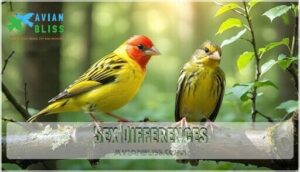
How can you tell males and females apart in the wild?
Male Western Tanager plumage features brilliant red heads and bright yellow bodies, while females sport olive-yellow coloration with muted tones.
Size dimorphism isn’t obvious, but juvenile coloration resembles females until males develop their striking adult plumage.
Eye color and song differences also help distinguish the sexes during breeding season, with the overall appearance being a key factor in identifying Western Tanager.
Western Tanager Diet
You’ll discover that Western Tanagers have a varied diet that changes with the seasons and their energy needs.
These colorful songbirds eat mainly insects during breeding season but switch to fruits and berries when preparing for migration.
Food Sources
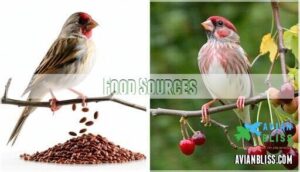
You’ll find Western Tanagers have diverse appetites that change with seasons and opportunities.
Their bird diet includes both animal and plant matter, making them opportunistic feeders who adapt to available resources.
- Insect Variety: Wasps, ants, termites, beetles, grasshoppers, and caterpillars form their primary protein sources
- Fruit Preferences: Hawthorn, cherries, elderberries, mulberries, and serviceberries satisfy their sweet tooth
- Feeder Options: Orange halves, grape jelly, and sugar water attract these colorful visitors during migration.
To further enhance your feeding setup, consider browsing specialized tanager feeders for superior results.
Insect Consumption

Insects dominate this tanager bird’s menu, making up 82% of their diet during breeding season.
You’ll watch them master insectivorous feeding through mid-air catching and larval consumption from branches. Hymenopterans like wasps and ants represent 75% of their insect foraging, while beetles account for 12%.
Their specialized insect types include grasshoppers, caterpillars, and termites for protein-rich nutrition. Notably, these birds are genetically closer to cardinals than other tanagers, with a diet that is 82% insect-based and includes insectivorous feeding.
Fruit and Berry Consumption

When do western tanagers switch from their insectivorous diet to fruits and berries? Seasonal availability drives this dietary shift, with berry consumption peaking during late summer and fall migration when insects become scarce.
- Fruit Preferences – Mulberries, elderberries, and serviceberries top their menu
- Nutritional Value – Fruits provide essential carbohydrates and water for migration energy
- Cultivated Fruits – They’ll visit orchards and gardens for cherries and other cultivated options
- Winter Berries – Diet shifts almost entirely to fruit in Central American wintering grounds
- Feeding Behavior – Up to 40% of their diet outside breeding season consists of berries
Feeding Habits
These adaptable foragers employ diverse feeding techniques throughout the year.
During breeding season, you’ll observe their insectivorous behavior as they glean insects from foliage or hawk prey mid-air.
Their seasonal diet shifts dramatically – spring migration brings fruit consumption, particularly orange halves and berries.
Watch them visit feeders for grape jelly and sugar water, demonstrating their opportunistic foraging nature.
Similarly, providing mealworms can attract them, though insect consumption is preferred for a balanced diet.
Western Tanager Habitat
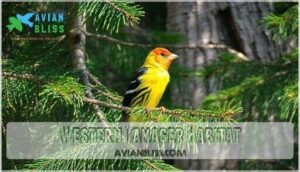
You’ll find Western Tanagers in the coniferous and mixed forests of western North America, from Alaska’s wilderness down to Mexico’s mountains.
These colorful birds prefer high-elevation forests during breeding season but adapt to various habitats during migration, including your backyard if you’re lucky, and are found in western North America.
Breeding Grounds
During breeding season, you’ll discover Western Tanagers in coniferous forests across western mountains and northern regions.
Their range spans from southeastern Alaska to northern Baja California.
These striking birds prefer nesting altitude between sea level and 10,000 feet, selecting territory in mixed woodlands and forest edges.
Forest types include pine, fir, and spruce stands where they construct cup-shaped nests, typically producing clutch sizes of 3-5 eggs.
Wintering Grounds
When Western Tanagers escape winter’s grip, they head south to Mexico and Central America’s warm embrace.
These tropical habitats offer abundant food availability and perfect roosting sites during the harsh northern months. They thrive in these areas, which are examples of tropical bird habitats.
- Primary range: Mexico’s pine-oak forests from November through March
- Food sources: Native fruits like Bursera and Trema supplement winter diet
- Climate impact: Altitude preferences shift from 600-2,600 meters for ideal conditions
These wintering grounds provide essential resources along key migration routes, ensuring survival until spring’s return north.
Migration Patterns
You’ll witness one of nature’s most impressive journeys as western tanagers undertake their epic bird migration.
These seasonal bird patterns cover up to 2,500 miles twice yearly.
Migration timing peaks from late April to May northbound, then August through October southbound.
| Migration Phase | Timing | Distance |
|---|---|---|
| Spring Migration | April-May | Up to 2,500 miles |
| Peak Breeding | June-July | Stationary |
| Fall Migration | August-October | 2,500+ miles |
| Winter Residence | November-March | Central America |
| Route Variation | Year-round | Rockies/Sierra corridors |
Route variation follows major mountain ranges like the Rockies and Sierra Nevada.
Altitude migration takes them from sea level to 10,000 feet.
Stopover habitats include pine-oak woodlands and riparian zones for refueling.
Climate impact increasingly affects western birds’ migration schedules, with earlier arrivals becoming common.
Bird distribution now shows shifting patterns as these remarkable travelers adapt to changing conditions.
Urban Habitats
You’ll spot these colorful western birds adapting remarkably well to city life.
Urban Migration brings tanagers through Park Sanctuaries and green spaces during spring and fall.
Suburban Expansion creates new bird habitat opportunities as developments include trees and gardens.
Birdwatching enthusiasts find success in city parks where Human Impact provides both challenges and shelter.
Consider your backyard birds potential – proper bird feeding stations attract migrating tanagers seeking refuge, and this can be a great example of Urban Migration and the importance of backyard birds.
Western Tanager Behavior
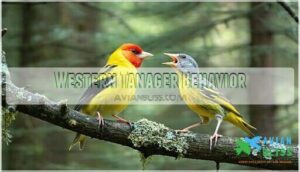
You’ll notice Western Tanagers display fascinating behaviors throughout their breeding season and migration periods. Their social patterns shift dramatically from solitary foraging to complex courtship rituals and cooperative parenting duties.
Mating and Breeding
Romance fills the air when Western Tanagers return to their breeding grounds each spring.
These vibrant songbirds transform spring forests with their brilliant colors and melodious calls.
Males establish territories through song and chase displays before engaging in elaborate courtship rituals to attract females.
Courtship Rituals and Breeding Process:
- Territory Establishment – Males arrive first and claim prime nest sites through aggressive displays and persistent singing
- Courtship Display – Males perform wing-drooping dances while showing off their brilliant red heads and yellow plumage
- Incubation Period – Females lay 3-5 pale blue eggs with brown speckles, incubating them for approximately 13 days
- Parental Care – Both parents share feeding duties once nestlings hatch, bringing insects and small fruits to developing chicks
Nesting Behavior
When selecting their nest site, Western Tanagers prefer horizontal branches in both coniferous and deciduous trees, typically 15-65 feet high.
The female handles nest construction, weaving a shallow cup from twigs, rootlets, and pine needles.
This nesting behavior shows their adaptability across forest types.
Their egg laying habits follow shortly after completion, with incubation beginning once the clutch is complete, demonstrating their unique nesting behavior.
Parenting and Fledging
Both parents share nest duties once thirteen-day incubation period ends. Female handles most brooding while male brings food initially.
Within days, both adults feed nestlings insects and fruit. Western Tanagers are typically monogamous.
Here’s what happens during parenting and fledging:
- Nestling Care – Parents visit frequently with insects, feeding rates highest during first week
- Fledgling Development – Young leave nest after 11-15 days but stay dependent for two more weeks
- Parental Roles – Adults continue feeding and guiding fledglings while they learn foraging skills
- Nest Success – Independence comes about one month post-fledging, though survival rates vary widely
Social Behavior
Western tanagers’ social behavior shifts dramatically with the seasons.
During breeding, males fiercely defend territory through aggressive displays and vocalizations. However, their flocking behavior emerges during migration when they join mixed flocks with other songbirds.
These social hierarchies help them navigate long journeys together.
Their courtship displays involve elaborate wing-spreading and singing performances that strengthen pair bonds within their habitat and range, including elaborate wing-spreading.
Attracting Western Tanagers

You can attract Western Tanagers to your yard by offering fresh and dried fruits like orange halves, cherries, and mulberries during their spring migration.
Set up sugar water feeders and provide grape jelly alongside native berry-producing plants to create an irresistible food source for these colorful visitors.
Food and Water Sources
Looking to entice these colorful visitors? You’ll need strategic placement of their favorite foods and fresh water.
Focus on insect abundance during breeding season and berry availability for migration periods. Their feeding behavior shifts seasonally between insectivorous needs and fruit-eating preferences.
- Orange halves and grape jelly attract migrating tanagers
- Sugar water feeders supplement their natural diet
- Fresh water sources near feeding areas increase visits
- Native berry plants provide seasonal fruit for winter preparation
Consider purchasing tanager-related products to enhance your feeding setup.
Yard Preparation
Create your backyard sanctuary by planting Native Plants like serviceberry and elderberry that produce Western Tanager favorites.
Install Water Features such as shallow birdbaths or dripping fountains near Shelter Options like dense shrubs.
Practice Avoiding Pesticides to protect insects they hunt. Consider sourcing local flora for best results.
These bird habitat improvements support bird conservation while enhancing your birdwatching experience during Seasonal Changes when these colorful visitors arrive for bird identification opportunities.
Migration Patterns and Timing
Time your visits right to catch these stunning birds during their epic journeys.
Peak spring migration hits western North America from late April through May, while fall migration runs August to October.
Use bird range maps to track their movement through major mountain corridors like the Rockies.
Climate impacts increasingly shift timing, so monitor local eBird reports.
Conservation concerns make stopover ecology essential for successful sightings along traditional migration routes.
Tips for Attraction
Success with Western Tanagers requires patience and the right setup.
Offer water sources like shallow fountains or birdbaths.
Plant berry bushes such as elderberry and serviceberry.
Limit pesticides to protect their insect prey.
Provide shelter through native trees and shrubs.
Supply nesting materials like small twigs during breeding season.
Unlike Summer Tanagers, they prefer mountain habitats.
Use Bird Friendly coffee and support shade coffee farms to help their wintering grounds.
Frequently Asked Questions (FAQs)
Is it rare to see a Western Tanager?
A birder spots a bright yellow flash with a red head darting through pine trees during spring migration—that’s likely a Western Tanager.
They’re not particularly rare to see.
Where are Western Tanagers found?
You’ll find Western Tanagers across western North America, from southeastern Alaska to northern Baja California.
They breed in coniferous and mixed forests from Canada’s Northwest Territories down to western Texas, then migrate to Central America and southern Mexico for winter.
What does it mean when you see a Western Tanager?
Spotting a Western Tanager signals you’re witnessing nature’s vibrant artistry.
These colorful migrants represent good fortune, seasonal change, and wilderness connection.
You’re seeing a remarkable bird that travels thousands of miles between tropical winters and mountain breeding grounds, symbolizing a strong wilderness connection.
Do Western Tanagers eat wasps?
Yes, Western Tanagers do eat wasps.
They’re skilled insect hunters that catch wasps along with ants, beetles, and grasshoppers during breeding season.
You’ll see them snatching these insects mid-air or plucking them from leaves and branches.
Is it rare to see a western tanager?
Western tanagers aren’t exactly rare birds, but they’re not backyard regulars either. You’ll need to venture into coniferous forests or catch them during migration to spot these striking yellow beauties.
How do I attract Western Tanagers to my yard?
Offer orange halves, grape jelly, and sugar water at feeders during spring migration. Plant berry-producing shrubs like elderberry and mulberry. Provide water sources and maintain coniferous trees for nesting habitat.
What does a female western tanager look like?
Like a muted watercolor painting, she wears olive-yellow plumage above with brighter yellow below.
Her wings are darker gray-black with two distinct white wing bars.
She’s subtly beautiful compared to her flashy red-headed mate.
Do Western Tanagers eat nectar?
You might spot these birds sipping sugar water at feeders or tasting grape jelly, but nectar isn’t a main dish for them.
Their diet leans toward insects and fruit, especially during breeding and migration.
How long do Western Tanagers live?
You’re asking about lifespan, and that’s one area where these bright-colored birds face some tough realities.
You can expect them to live around eight years on average, though some reach up to 15 years.
Do Western Tanagers migrate in groups?
Yes, you’ll often spot Western Tanagers traveling together during migration.
They form mixed-species flocks with other songbirds, making their journey safer and more efficient as they navigate between breeding and wintering grounds, which is a key aspect of their migration.
Conclusion
Spotting a western tanager feels like discovering a hidden jewel among pine needles.
You’ll attract these vibrant birds by offering fresh water, berries, and maintaining mature trees in your yard.
Time your observations during spring migration when males display their brightest breeding colors.
Understanding their seasonal patterns transforms casual birdwatching into successful encounters.
Whether you’re tracking their distinctive calls or watching their acrobatic insect-hunting displays, the western tanager rewards patient observers with unforgettable wildlife moments throughout western North America’s diverse landscapes, providing a truly unforgettable wildlife experience.