This site is supported by our readers. We may earn a commission, at no cost to you, if you purchase through links.
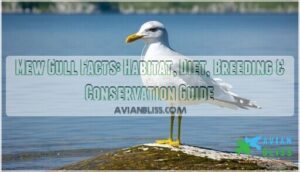 You’ll recognize a mew gull by its yellow-green legs and compact size as it forages along coastlines and inland waters.
These medium-sized seabirds measure about 16 inches long with gray wings, white bodies, and distinctive thin yellow bills.
Unlike their louder gull cousins, mew gulls stay relatively quiet and prefer smaller flocks.
They’re skilled hunters that catch fish by diving into water and also snatch insects from the air or ground.
During breeding season, they nest in colonies on islands or remote shorelines across northern regions.
Their adaptable nature means you’ll spot them in diverse habitats from Arctic tundra to temperate lakes.
Their unique feeding strategies set them apart from other gulls.
Table Of Contents
- Key Takeaways
- Mew Gull Overview
- Mew Gull Habitat
- Mew Gull Diet
- Mew Gull Reproduction
- Mew Gull Conservation
- Frequently Asked Questions (FAQs)
- What is the difference between a mew gull and a common gull?
- What is the name of the mew gull?
- What kind of gull is a mew?
- Why do seagulls mew?
- What is a Mew Gull called now?
- What is the difference between ring billed gull and Mew Gull?
- What was the previous name of Short-Billed Gull?
- Is a seagull a herring gull?
- What are the primary threats to Mew Gulls?
- How can you distinguish juveniles from adults?
- Conclusion
Key Takeaways
- You’ll identify mew gulls by their yellow-green legs and bills – these compact seabirds are smaller than most gulls, with distinctive thin bills and gray wings that set them apart from similar species, like ring-billed gulls.
- You’ll find them adapting to diverse habitats – mew gulls thrive everywhere, from Arctic tundra to temperate lakes, migrating seasonally between northern breeding grounds and milder coastal wintering areas.
- You’ll observe their opportunistic feeding strategies – these smart hunters catch fish by diving, snatch insects from the air, and aren’t shy about scavenging scraps, making them successful across various environments.
- You’ll notice they’re dedicated parents with stable populations – mew gulls work together to raise 2-3 chicks per season and currently maintain healthy numbers, with a "Least Concern" conservation status, despite facing climate change pressures.
Mew Gull Overview
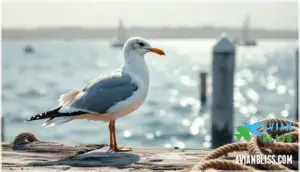
You’ll find the mew gull’s compact size and gentle demeanor make it one of the more approachable seabirds along coastal regions.
This small gull species combines opportunistic feeding habits with remarkable adaptability across diverse habitats.
Mew gulls adapt brilliantly wherever water meets land, mastering every feeding opportunity with remarkable flexibility.
Physical Characteristics
You’ll notice the mew gull stands out among seagull identification challenges with its compact build.
This larus canus measures smaller than most gull species, with distinctive plumage variation between seasons and ages.
- Size differences: 16-18 inches long with a 43-inch wingspan
- Bill morphology: Yellow-green bill that’s thinner than larger gulls
- Plumage variation: White head and underparts with gray wings
- Vocalizations: High-pitched mewing calls that sound cat-like
- Flight patterns: Buoyant flight with steady wingbeats and graceful turns
Behavior and Diet
You’ll discover mew gulls are nature’s ultimate opportunists in terms of social behavior and hunting strategies.
Nature’s ultimate opportunists, mew gulls master every hunting trick from surface dips to shameless scavenging.
These coastal birds master diverse hunting strategies from surface dipping for fish to aerial insect catches.
Their feeding ecology showcases remarkable dietary adaptations, ranging from seafood to berries and even human scraps, which allows for smart foraging success.
This success comes from their flexible approach—they’ll walk shorelines, swim, or steal from other seabirds when opportunities arise.
Some species also show aggressive territorial defense during breeding seasons, demonstrating their ability to adapt and thrive in various environments with diverse hunting strategies and flexible approach.
Mew Gull Habitat
You’ll find Mew Gulls in coastal areas and inland waters across northern regions, from Alaska to northern Europe.
These adaptable birds migrate seasonally, moving from Arctic and subarctic breeding grounds to milder coastal waters during winter months.
Breeding Locations
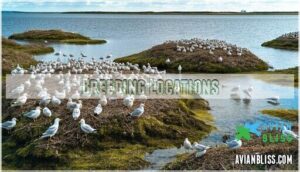
You’ll find Mew Gulls setting up shop wherever there’s water and safe ground.
These coastal birds aren’t picky about their nesting habitats – they’ll claim rocky islands, marshy lakeshores, and even clifftop meadows.
Colony size varies from just a few pairs to bustling communities of hundreds.
Site fidelity runs strong in these sea birds, with many returning to the same successful spots year after year.
Their nesting success depends on finding spots free from predators and habitat threats like human disturbance.
Utilizing a habitat-first approach can greatly narrow down identification.
Their ability to thrive in various environments is a key factor in their nesting success.
Migration Patterns
You’ll track these common gull species as they follow predictable flight paths between breeding grounds and wintering areas.
Migration triggers include daylight changes and food availability, pushing sea birds toward coastal wintering grounds from Alaska to California.
Stopover sites provide essential rest periods during long journeys.
Climate impact affects traditional gull migration timing, with warmer temperatures shifting departure dates.
Gull sightings peak during spring and fall migrations when birds concentrate along shorelines and inland waterways, which is influenced by climate impact.
Mew Gull Diet
You’ll find Mew Gulls aren’t picky eaters – they grab fish, insects, worms, and even scraps from parking lots.
These smart birds change their hunting style based on what’s available, from diving for small fish to walking beaches for marine worms.
Foraging Habits

You’ll watch mew gulls master the art of opportunistic feeding as they patrol shorelines and open waters.
Their prey selection includes small fish, marine worms, and insects caught through surface-dipping and shallow diving. These common gull species adapt their hunting techniques based on seasonal changes, switching from coastal foraging to inland feeding.
Mew gulls don’t practice food storage, relying instead on immediate consumption. Their gull behavior reflects habitat impact, with populations thriving where human activity creates accessible food sources.
This gull diet flexibility makes them successful across diverse environments. Many factors influence their specific dietary needs, including their ability to adapt to different food sources, which is a key aspect of their diet flexibility and overall survival strategy.
Diet Composition
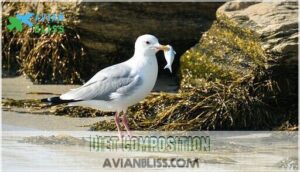
Mew gulls adapt their gull diet based on prey selection and seasonal variation.
Fish like smelt and herring dominate during breeding seasons when food availability peaks. These adaptable birds shift to insects and crustaceans as nutritional needs change throughout the year.
Their diet adaptations include consuming amphibians, small mammals, and even garbage in urban areas. This flexible gull behavior helps them thrive across diverse gull habitat types, making diet composition a key factor in gull identification guides and understanding gull facts.
Mew Gull Reproduction
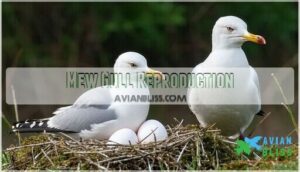
You’ll find that mew gulls are dedicated parents who start breeding around age three or four.
They create simple ground nests in colonies and work together to raise their young through careful incubation and feeding, which shows they are dedicated parents.
Egg Characteristics
After understanding how mew gulls forage and feed, you’ll want to know what their eggs look like.
These birds typically lay 2-3 olive-brown eggs with dark spots in each clutch.
The eggs measure about 2.2 inches long and have tough calcium carbonate shells.
You’ll find the incubation period lasts 24-26 days, during which both parents take turns warming the eggs.
Egg coloration helps camouflage nests from predators in rocky coastal areas.
To assist with identification, consider specialized identification products.
This gull identification guide helps you recognize these distinctive breeding characteristics when studying gull habitat and behavior patterns.
Parental Care
Both parents roll up their sleeves to raise their young with remarkable dedication.
Mew gulls share Parental Roles equally, taking turns with Feeding Strategies that include regurgitating fish and invertebrates directly into chicks’ mouths.
Key aspects of their care include:
- Nest Defense – Parents aggressively chase away intruders with loud gull sounds and dive-bombing tactics
- Chick Development monitoring – Adults carefully track growth milestones over 4-5 weeks
- Fledgling Independence guidance – Parents gradually reduce feeding as young learn to forage alone
This cooperative approach guarantees successful reproduction and supports gull conservation efforts.
Mew gull parents, like bluebirds, demonstrate dedication to nestling development.
Mew Gull Conservation

Understanding Mew Gull conservation helps you recognize their current population status and the factors affecting their survival.
You’ll learn to identify key features that distinguish breeding adults from juveniles and nonbreeding birds while gaining insight into their overall conservation needs.
Breeding Adult Features
During breeding season, you’ll spot adult mew gulls sporting their finest plumage development with bright yellow bills and legs.
Their bill coloration becomes more vibrant as mating rituals intensify. These birds perform elaborate courtship displays while establishing nesting behavior patterns.
Parents fiercely engage in chick defense, using distinctive gull sounds to ward off threats. This dramatic transformation makes gull photography rewarding for capturing their seasonal changes.
Many find mew gull products helpful for capturing their beauty.
Nonbreeding & Juvenile Characteristics
You’ll notice significant changes during nonbreeding seasons when adults lose their crisp breeding markings.
Juvenile Molting occurs gradually, with Immature Plumage showing brownish streaking on wings and back.
Subadult Markings include darker bill tips and leg coloration that aids Age Determination.
Nonbreeding Behavior shifts toward coastal flocking, making gull photography challenging but rewarding for bird watching enthusiasts documenting seasonal frequency patterns in gull images and gull videos, which involves gull videos.
Conservation Status
You’ll find Mew Gulls thriving with stable population trends across their range.
The IUCN lists them as Least Concern thanks to widespread distribution and secure numbers.
While climate change and pollution impacts pose future concerns, current conservation efforts focus on monitoring rather than intervention.
Bird watching enthusiasts can easily spot these adaptable gulls, making them stars in gull images and videos shared across online community platforms. They’re often seen along the Pacific Coast in winter.
Identification Tips
You can identify Mew Gulls by studying their profile carefully. Enter key features into a field app on your phone: slender yellow bill, rounded head, and compact body.
Notice the number of distinguishing marks like solid black wingtips with white mirrors. Plumage Variation differs between ages. Regional Differences exist in size.
Similar Species include Ring-billed Gulls. Hybrid Identification requires expertise. Molting Patterns change seasonally, so name the season when recording observations.
Using a field guide helps to identify bird feathers. This is a crucial step for accurate identification.
Frequently Asked Questions (FAQs)
What is the difference between a mew gull and a common gull?
You’ve entered the gull identification maze.
Mew gulls sport yellow-green legs and bills, while common gulls flaunt yellowish legs with darker bill tips.
Size-wise, you’ll spot mew gulls as noticeably smaller birds.
What is the name of the mew gull?
The scientific name for the mew gull is Larus canus.
You’ll recognize this medium-sized seabird by its yellow-green legs and bill.
It’s also called the common gull in some regions, though it’s actually less common than other gulls.
What kind of gull is a mew?
Picture a sleek seabird with silver wings gliding through coastal skies – that’s your mew gull.
You’re looking at a small to medium-sized gull species that’s perfectly adapted for life near water and shorelines.
Why do seagulls mew?
You hear seagulls make mewing sounds because they’re communicating with their flock. These calls help them coordinate feeding, warn of dangers, establish territory, and locate mates during breeding season.
What is a Mew Gull called now?
Like a feathered chameleon, you’ll find the Mew Gull still bears its original name today.
Scientists haven’t changed its classification recently.
You can spot this medium-sized seabird along coasts and inland waters across northern regions worldwide, a seabird that is easily recognizable.
What is the difference between ring billed gull and Mew Gull?
You’ll spot ring-billed gulls by their black band around yellow bills and larger size, while mew gulls sport unmarked yellow-green bills and compact frames with shorter legs.
What was the previous name of Short-Billed Gull?
Crossing scientific boundaries like a bird changing names, you’ll find the Short-billed Gull was previously called "Mew Gull" until 2021, when it was officially split from the Common Gull of Eurasia and renamed.
The species is known to gather in mixed-species flocks.
Is a seagull a herring gull?
Not all seagulls are herring gulls. You’ll find many gull species like ring-billed, laughing, and Bonaparte’s gulls. Herring gulls are just one common type among dozens of gull species worldwide.
What are the primary threats to Mew Gulls?
Like warriors facing multiple battles, you’ll confront threats including introduced ground predators, human disturbance, habitat loss from drainage and development, plus climate-driven impacts on their food sources.
How can you distinguish juveniles from adults?
You’ll notice juvenile Mew Gulls have brown-streaked plumage, darker bills, and mottled wing patterns, while adults display clean gray-and-white feathers with bright yellow bills and legs.
Conclusion
Observing these remarkable seabirds reveals nature’s perfect design in action.
You’ll find mew gulls thriving across diverse environments, from Arctic breeding grounds to temperate wintering areas.
Their adaptability makes them successful hunters whether diving for fish or catching insects mid-flight.
As climate change affects coastal habitats, monitoring mew gull populations becomes increasingly important.
By understanding their unique behaviors and conservation needs, you’re better equipped to appreciate these graceful birds during your next waterfront adventure.
- https://www.iucnredlist.org
- https://www.audubon.org/field-guide/bird/mew-gull
- https://fieldguide.mt.gov/speciesDetail.aspx?elcode=ABNNM03280
- https://a100.gov.bc.ca/pub/eswp/esr.do;jsessionid=3E7D3121C5224566694C9AD4BE8FD65A?id=14320
- https://westernfieldornithologists.org/docs/2020/Avifaunal_Change/Doster-Shuford/Doster-Shuford-Avifaunal_Change.pdf