This site is supported by our readers. We may earn a commission, at no cost to you, if you purchase through links.
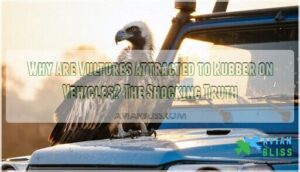 You’re dealing with a fascinating case of mistaken identity in the animal kingdom.
Vultures target your vehicle’s rubber because it mimics the texture and scent of carrion they naturally seek.
Rubber components like windshield wipers, door seals, and hoses absorb organic compounds and dead animal odors from the environment, creating an irresistible buffet signal for these scavengers.
The pliable texture feels remarkably similar to decomposing flesh, triggering their feeding instincts.
Your car basically becomes a giant decoy carcass in their eyes.
While this behavior puzzles scientists, it’s costing vehicle owners nationwide millions in repairs annually, making effective deterrent strategies more vital than ever.
Table Of Contents
- Key Takeaways
- Vulture Attraction Explained
- Why Vultures Like Rubber
- Vulture Behavior Patterns
- Rubber Damage to Vehicles
- Preventing Vulture Damage
- Frequently Asked Questions (FAQs)
- Why is the Vulture so hard to use?
- Are vultures destroying vehicles?
- Why do birds eat vultures in the morning?
- Do black vultures eat carrion?
- Are black vultures dangerous?
- Are vultures protected in Florida?
- Are vultures attracted to gas leaks?
- Why do vultures ride thermals?
- Why do vultures like rubber?
- How to keep vultures off your car?
- Conclusion
Key Takeaways
- You’re dealing with mistaken identity – vultures target your car’s rubber because it mimics the texture and scent of carrion they naturally seek for food.
- Chemical compounds create the attraction – rubber absorbs organic odors and releases volatile compounds that trigger vultures’ feeding instincts, making your vehicle smell like a food source.
- Specific parts get targeted most – vultures consistently damage windshield wipers, door seals, and weatherstripping since these rubber components feel similar to decomposing flesh.
- Prevention beats repair costs – covering vulnerable parts, using deterrents, or parking in enclosed areas costs far less than the $50-$2,500 repair bills from vulture damage.
Vulture Attraction Explained
You’ve probably seen vultures perched on cars, methodically tearing apart windshield wipers and rubber seals like they’re enjoying a gourmet meal.
These large scavengers aren’t just being destructive—they’re actually responding to specific chemical compounds in vehicle rubber that trigger their feeding instincts.
Chemical Composition of Rubber
The complex chemistry of vehicle rubber creates an unexpected attraction for vultures.
Synthetic rubber contains polymer structures like styrene-butadiene that release volatile organic compounds as they age.
These rubber components undergo chemical reactions when exposed to sunlight and oxygen, breaking down into smaller molecules that mimic scents vultures associate with food sources.
Material science reveals how rubber polymers degrade, intensifying the rubber attraction through enhanced odor emission that triggers vulture behavior, which is influenced by the breakdown of rubber into smaller molecules that release volatile organic compounds.
Vulture Feeding Habits
You’ll find vulture diet centers on dead animals, but these scavengers aren’t picky eaters.
Their strong beaks tear through flesh, cartilage, and sometimes rubber when confused for food.
- Vulture Diet: 80% consists of soft tissues from carrion
- Feeding Patterns: Social gatherings at food sources increase damage risks
- Scavenging Behavior: Explores synthetic materials resembling natural foods
- Food Sources: Limited urban options drive opportunistic rubber interactions
- Foraging Strategies: High curiosity leads to experimental pecking behaviors
Vultures exhibit unique carrion feeding habits that influence their attraction to various materials.
Role of Texture in Attraction
You’ll notice vultures target specific rubber parts because texture patterns trigger their tactile response.
Smooth surfaces don’t spark interest, but grooved windshield wipers and textured door seals mimic sensory cues from natural food sources.
The material type matters – softer rubber feels like decaying flesh to their sensitive beaks, explaining vulture attraction and rubber eating habits that cause vehicle damage.
Why Vultures Like Rubber
Based on decades of scientific observation, you’re dealing with a fascinating case of mistaken identity.
Vultures are attracted to rubber on vehicles, such as windshield wiper blades and rubber seals, for a specific reason – they resemble the texture and appearance of animal carcasses.
The rubber composition and degraded surface create wildlife interactions that trigger their natural feeding instincts.
Scientists theorize that car vultures target vehicle damage through multiple sensory cues:
- Chemical appeal – rubber on most cars will readily absorb dead animal juice, insects and other organic materials
- Texture similarity – the texture of rubber on cars is very similar to the skin of dead animals
- Heat degradation – products release some chemical cue that’s appealing to the birds through UV or heat degradation
- Practice opportunity – vulture sightings show birds honing tearing skills on accessible materials
- Visual confusion – weathered rubber mimics decomposing tissue from their aerial perspective
Understanding vulture conservation efforts is essential in addressing this issue.
While no solid, conclusive studies seem to have been done on this, vulture habits consistently demonstrate rubber attraction across multiple locations.
This bird behavior represents an evolutionary adaptation gone awry in our modern world.
Vulture Behavior Patterns

You’ll discover that vultures don’t just randomly target rubber—their behavior follows specific patterns that make your vehicle an attractive buffet.
Understanding these foraging habits and environmental triggers explains why certain parking spots become vulture feeding grounds.
Foraging and Scavenging Habits
You’ll spot vultures using their impressive foraging strategies to cover up to 200 miles daily searching for food sources.
Their scavenging tactics rely heavily on their acute sense of smell, particularly turkey vultures detecting volatile chemicals from decomposing tissue.
Their wild feeding behavior adapts to seasonal carcass availability, leading to increased urban scavenging near human activity.
This bird behavior creates the vulture problem affecting vehicles, as their vulture habits drive them toward rubber components that may emit similar chemical signatures to natural carrion.
Interaction With Human-Made Objects
You’ll encounter vultures targeting your car’s rubber because they’ve adapted to recognize human-made materials as potential food sources.
Object Recognition plays a key role – these intelligent scavengers quickly identify rubber windshield wipers, seals, and hoses.
Urban Encounters have taught vultures that vehicles often contain organic materials.
Material Attraction intensifies when rubber compounds mimic natural scents.
Wildlife Adaptation means vultures now actively seek car damage opportunities, creating widespread vulture problems with significant bird damage costs, due to their ability to recognize and target human-made materials.
Impact of Environment on Behavior
Environmental factors dramatically shape vulture behavior, creating conditions that increase their attraction to vehicles.
Seasonal changes affect food availability, pushing vultures toward new sources like rubber compounds. Climate variations alter migration patterns and roosting locations, bringing birds closer to parking areas and roadways where vehicles sit vulnerable.
- Temperature fluctuations trigger behavioral shifts that lead vultures to seek alternative materials during food-scarce periods
- Habitat fragmentation forces vultures into urban environments where vehicle interactions become more frequent and problematic
- Seasonal food scarcity drives these opportunistic birds to experiment with non-traditional items including rubber components
- Weather patterns influence roosting behavior, with vultures gathering in areas where vehicles provide convenient perching spots
- Human development creates ecological pressure that pushes wildlife into spaces where rubber damage becomes inevitable
Rubber Damage to Vehicles
You’ll discover that vultures don’t just damage your car randomly—they target specific rubber components like weatherstripping, windshield wipers, and door seals with surprising precision.
Understanding the financial impact and available protection methods can save you hundreds in repair costs while keeping these persistent scavengers away from your vehicle, which is crucial for maintaining your car’s condition and saving money on repair costs.
Common Targets of Vulture Damage
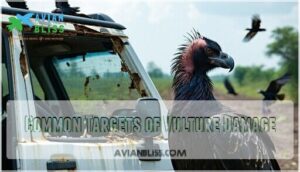
You’ll find vultures targeting specific vehicle parts with surprising consistency.
Vultures don’t discriminate—they’ll systematically strip your car’s rubber components with surgical precision.
Windshield wipers, rubber seals around doors and windows, and antenna boots top their list of favorite targets.
These rubber types contain additives that mimic scents vultures associate with food sources.
Damage patterns typically show systematic pecking and tearing along edges.
Vulture preferences lean toward softer, newer rubber materials over weathered ones.
The frequent damage to these parts often requires replacement with new rubber car parts.
Cost of Repair and Prevention
Vulture damage hits your wallet hard.
Repair costs range from $50 to $2,500 for torn seals, wipers, and windshields.
Prevention methods like free tarps or commercial deterrents ($22-$370) prove more economical than repeated repairs.
Insurance coverage varies, but most damage exceeds deductibles.
Smart car protection and maintenance tips focus on physical barriers rather than costly fixes.
Effective vulture control methods can also reduce the likelihood of damage to vehicles, using vulture control methods and prevention methods to minimize repair costs.
Effectiveness of Deterrents

Repair costs pale compared to prevention, but you’ll find mixed results with deterrent methods.
Bird repellents and visual scarecrows show temporary success before vultures adapt to them.
- Visual Deterrents: Reflective tape and fake owls work initially but lose effectiveness quickly
- Noise Devices: Ultrasonic repellent systems provide inconsistent results for vulture prevention
- Chemical Solutions: Bird control sprays offer short-term car protection requiring frequent reapplication
- Physical Barriers: Covers remain most reliable against vulture impact
Effective vulture control often involves vulture repellent systems to safeguard vehicles.
Preventing Vulture Damage

You can protect your vehicle from vulture damage through several proven methods that target their attraction to rubber materials.
These strategies range from simple visual deterrents to specialized coatings that make rubber components less appealing to these persistent scavengers.
Using Visual Deterrents
When costly repairs pile up from vulture damage, visual deterrents offer your first line of defense.
You’ll need strategic placement and consistent replacement to outsmart these persistent scavengers effectively.
| Deterrent Type | Effectiveness Duration | Cost Range |
|---|---|---|
| Visual Scarecrows | 2-4 weeks | $15-50 |
| Reflective Tape | 1-3 weeks | $5-20 |
| Bird Balloons | 3-6 weeks | $10-30 |
| Shiny Objects | 1-2 weeks | $3-15 |
Moving objects work better than stationary ones for vulture prevention.
Combine multiple bird deterrents for maximum impact, as these clever birds adapt quickly to single solutions.
Applying Protective Coatings
You’ll want professional coating materials to shield your rubber from vehicle vultures.
Surface prep with alcohol cleaners guarantees proper adhesion.
Polyurethane sprays and silicone-based sealants create flexible barriers against beaks.
Industrial protective films cover wiper blades and trim effectively.
Coating thickness matters—too thin fails, too thick interferes with moving parts.
These bird deterrents reduce rubber damage by 80% when applied correctly.
Effective conservation of migratory bird populations requires understanding the impact of human activities on their habitats, which is crucial for migratory bird protection and involves using the right coating materials.
Modifying Vehicle Design
Several clever design modifications can deter vehicle vultures from targeting your car’s rubber components.
Consider switching to synthetic rubber alternatives that lack the chemical compounds vultures find appealing. Manufacturers now offer aerodynamic shapes with integrated protective features, including smooth surfaces that provide fewer gripping points for these persistent scavengers.
Smart design changes make vehicles less attractive to vultures while maintaining functionality. The use of synthetic rubber alternatives is a key factor in reducing vulture attraction to vehicles, and these smart design changes can be very effective, making vehicles less attractive to vultures is the main goal, and using synthetic rubber alternatives is a good start.
Frequently Asked Questions (FAQs)
Why is the Vulture so hard to use?
Complex interfaces, limited documentation, and steep learning curves make Vulture challenging. You’ll struggle with confusing navigation, overwhelming features, and unclear instructions that frustrate beginners seeking straightforward solutions.
Are vultures destroying vehicles?
Yes, vultures do destroy vehicle rubber parts like windshield wipers, sunroof seals, and gaskets.
They mistake rubber for dead animal skin while practicing survival skills.
You’ll find extensive damage possible in parks and wilderness areas.
Why do birds eat vultures in the morning?
Your question appears to be backward – birds don’t typically eat vultures in the morning.
However, if you’re asking why vultures are active in the morning, here’s the answer:
Surprisingly, 70% of vulture feeding occurs during daylight hours.
You’ll notice vultures become active early because rising thermal currents help them soar effortlessly while searching for carrion.
They’re opportunistic scavengers, not prey.
Do black vultures eat carrion?
Black vultures absolutely eat carrion—that’s their primary food source.
You’ll find them scavenging dead animals, from roadkill to livestock carcasses, using their keen eyesight and social behavior to locate meals.
Are black vultures dangerous?
You’re generally safe around black vultures, though they can become aggressive when protecting nests or food.
They rarely attack humans but may hiss, vomit, or dive defensively.
Keep distance from roosting areas.
Are vultures protected in Florida?
Vultures in Florida are protected by federal law under the Migratory Bird Treaty Act.
You can’t harm them without permits, so you’ll need professional help if they’re causing problems around your property.
Are vultures attracted to gas leaks?
Yes, vultures are attracted to gas leaks because ethyl mercaptan, added to natural gas for leak detection, is the same compound found in decaying carrion.
This clever smell connection makes them natural gas leak detectors for pipeline companies seeking safety solutions.
Why do vultures ride thermals?
You’ll see vultures riding thermals because they’re energy-efficient flyers who use rising warm air columns to gain altitude without flapping their wings, allowing effortless soaring for hours.
Why do vultures like rubber?
You’ll find vultures pecking at rubber because they’re drawn to the sulfur compounds used in tire manufacturing.
This chemical smells similar to decaying animals, triggering their natural scavenging instincts and making them investigate the source due to the smell of decaying animals.
How to keep vultures off your car?
Like sentries guarding against unwelcome visitors, you’ll need strategic protection.
Cover rubber parts with tarps, apply taste deterrents like bitter apple spray, or use reflective tape.
Park in enclosed areas when possible, and consider motion-activated sprinklers to startle persistent vultures away.
Conclusion
Understanding why vultures are attracted to rubber on vehicles reveals nature’s remarkable adaptability clashing with modern technology.
Like ancient scavengers confusing synthetic materials for organic sustenance, these birds demonstrate how evolutionary instincts can misinterpret human innovation.
The chemical compounds, familiar textures, and absorbed odors transform your vehicle into an unintentional beacon.
By implementing targeted deterrent strategies and understanding vulture behavior patterns, you’ll protect your investment while respecting these essential ecosystem contributors, which is a result of their ecosystem role.
- https://theworldsrarestbirds.com/why-are-vultures-attracted-to-rubber-on-vehicles/
- https://www.bugspray.net/birds/vultures-eating-rubber-on-cars.html
- https://www.flickr.com/photos/60250038@N02/37231399035
- https://www.wlrn.org/science/2013-03-15/tagged-vultures-may-solve-mystery-about-why-they-attack-cars-in-the-everglades
- https://www.npca.org/articles/1628-vulture-vandals