This site is supported by our readers. We may earn a commission, at no cost to you, if you purchase through links.
Every fall, over a million ducks touch down across Michigan’s wetlands, rivers, and Great Lakes shorelines. You’ll find more than 30 species here—from the familiar green-headed mallard to the compact bufflehead that dives deep in protected bays.
These aren’t just pretty birds passing through. Michigan ducks stir sediments that feed fish, create habitat structures for amphibians, and signal the health of entire ecosystems.
Whether you’re a hunter checking migration forecasts, a birdwatcher planning your next outing, or simply curious about the waterfowl in your local marsh, understanding these species reveals how wetlands work and why conservation efforts matter for keeping them thriving.
Table Of Contents
- Key Takeaways
- What Are Michigan Ducks?
- Common Duck Species in Michigan
- Diving and Dabbling Ducks Explained
- Duck Migration and Habitats in Michigan
- Conservation and Birdwatching Opportunities
- Frequently Asked Questions (FAQs)
- What are the most common ducks in Michigan?
- What are the black and white ducks on Lake Superior?
- What is the rarest duck in Michigan?
- What is the small black and white duck in Michigan?
- What kind of ducks are on Lake Superior?
- Are there bufflehead ducks in Michigan?
- What kind of ducks live in Michigan?
- What is the black and white diving bird in Michigan?
- Where is the best duck hunting in Michigan?
- What does a female bufflehead look like?
- Conclusion
Key Takeaways
- Michigan hosts over 30 duck species split into dabblers (like mallards and teal that tip upside-down in shallow water) and divers (like buffleheads that plunge deep underwater), each with distinct body structures and feeding behaviors that determine where you’ll spot them.
- Ducks act as ecosystem engineers by stirring sediments that feed fish, dispersing seeds, creating nesting structures other wildlife depend on, and signaling overall wetland health through their population trends.
- Peak duck migration through Michigan’s Mississippi and Atlantic flyways hits mid-October through late November, with cold fronts triggering major movements and mild winters increasingly allowing more birds to linger on open Great Lakes water.
- Conservation efforts like wetland restoration programs, sustainable hunting regulations with strict bag limits, and Duck Stamp funding work together to protect the marshes, coastal zones, and inland habitats these waterfowl need to survive.
What Are Michigan Ducks?
Michigan is home to over 30 duck species, from the familiar mallard to the hard-to-spot ruddy duck.
If you’re interested in Michigan’s birds of prey, check out the complete guide to hawks in Michigan to learn about their hunting techniques and where to spot them.
These birds play a real role in keeping the state’s wetlands, rivers, and Great Lakes healthy.
Here’s what makes Michigan ducks unique — and why they’re worth knowing.
Definition and Overview
Michigan’s ducks belong to the family Anatidae — waterfowl built for life on water. Their waterproof feathers, webbed feet, and broad bills aren’t accidents; they’re millions of years of feather adaptation and waterfowl biology doing their job.
Duck classification splits most species into dabblers and divers, and Michigan wildlife hosts both. These migratory patterns make the state a crossroads for exceptional avian biodiversity.
For a breakdown of how duck species are distinguished, see this overview of.
Importance in Michigan’s Ecosystem
Ducks aren’t just pretty birds floating on a pond — they’re ecosystem engineers quietly holding Michigan’s wetlands together. Through nutrient cycling, seed dispersal, and constant habitat use, duck species in Michigan drive real ecological balance and biodiversity.
Ducks are ecosystem engineers quietly holding Michigan’s wetlands together through nutrient cycling, seed dispersal, and constant habitat use
Here’s what they bring to the table:
- Wetland health — dabbling stirs sediments, releasing nutrients that feed fish and invertebrates
- Biodiversity support — their nesting habits create habitat structures other birds and amphibians depend on
- Ecosystem services — seasonal wetland use highlights natural flood-control zones that protect nearby communities
- Wildlife conservation — duck populations signal wetland quality, rallying support for avian ecology and conservation programs statewide
Recent years have seen a surge in Michigan’s duck and goose population trends, highlighting the importance of continued conservation efforts.
Distinguishing Features of Ducks
Spotting duck species in the wild comes down to knowing what to look for. Bill shapes tell you a lot — shovelers have wide, spatula-like bills, while diving ducks sport narrower, pointed ones.
Dabbling ducks like mallards and teals use those serrated edges to strain seeds and insects from shallow water, while you can explore more identification tips in this complete guide to duck species and behaviors.
Webbed feet, plumage colors, and feather patterns round out your duck identification toolkit.
Even duck calls differ by species, giving avian species watchers another reliable clue for bird identification and duck behavior in the field.
Common Duck Species in Michigan
Michigan is home to more than 30 duck species, and each one has its own look, habits, and favorite hangout spots across the state. Some you’ll spot on calm inland marshes, others on the wide-open Great Lakes.
Here are five of the most common species you’re likely to encounter.
Mallard
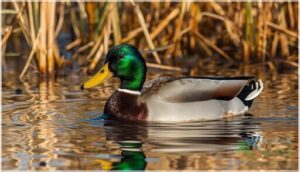
If there’s one duck species that owns Michigan’s waterways, it’s the mallard. You’ll spot that iconic green head and yellow bill almost any time of year — city ponds, wild marshes, river bends. It doesn’t matter.
- Measures 20–26 inches; wingspan up to 39 inches
- Shows a violet-blue speculum color in flight
- Eats a mixed dabbling diet: plants, seeds, invertebrates
- Key to waterfowl conservation and bird watching in Michigan
Wood Duck
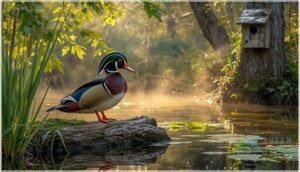
A splash of color in the woods—wood ducks thrive where trees meet water. These Michigan birds nest in tree cavities or boxes, relying on forest conservation and wetland restoration to raise broods.
If you’re into bird watching in Michigan, watch for their bold crests and eye rings. Wood duck habitat backs essential waterfowl conservation and reveals fascinating duck behavior.
American Black Duck
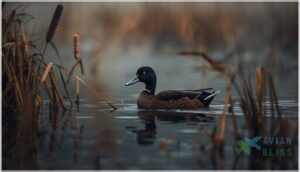
Dark and elusive, the American Black Duck blends into Michigan’s marshes like it was born to disappear. Both sexes wear that signature sooty-brown plumage with pale buff faces—no flashy colors here. Watch for their violet-blue speculum during duck migration patterns along Great Lakes shorelines.
Habitat preservation matters for this species, since hybridization with mallards and wetland loss are real threats to its conservation status.
Blue-winged Teal
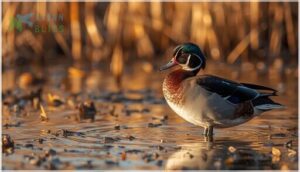
Blue-winged Teal are small but mighty travelers on Michigan’s wetlands. These waterfowl measure just 16–19 inches and weigh under a pound, yet their teal migration patterns cover thousands of miles each year. Males show a bold white crescent near the eye—hard to miss.
They thrive in shallow wetland habitats, relying on duck feeding habits centered around aquatic seeds. Waterfowl conservation keeps their Michigan stopovers intact.
Bufflehead
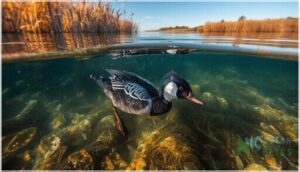
The bufflehead might be Michigan’s smallest duck species, but don’t let that fool you. These compact waterfowl — barely 16 inches long — dive deep for invertebrates in protected bays and inland lakes.
Bufflehead migration brings them here each late fall, where wetland ecology and open water keep them fed through winter. Waterfowl conservation ensures those bird habitats stay intact when they return north each spring.
Diving and Dabbling Ducks Explained
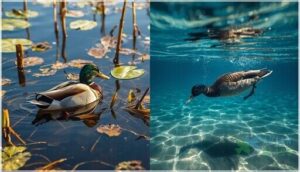
Not all ducks in Michigan feed the same way. Some tip upside down in shallow water to grab plants and seeds, while others disappear completely underwater to catch fish and insects.
Understanding the difference between dabbling and diving ducks helps you identify what you’re watching and where to find them.
Dabbling Ducks Characteristics
You can spot dabbling ducks by how they feed—tipping bottoms-up in shallow water, heads down, tails skyward. Species like Mallard, Wood Duck, Blue-winged Teal, Gadwall, and American Black Duck ride high on the surface, their flat bills filtering seeds and invertebrates.
Their body structure favors walking on land, and their plumage patterns shift seasonally. These social birds gather in flocks along migration routes.
Diving Ducks Characteristics
Unlike dabblers, diving ducks hit the water like torpedoes—compact body shape, legs set way back, and powerful webbed feet built for underwater foraging. They plunge 1 to 15 feet deep, chasing mollusks and plants along lake bottoms.
Thick feather insulation keeps them warm in cold northern wetlands during duck migration, and their heavy build means they need a running start before takeoff.
Examples of Each in Michigan
Now that you know what sets these groups apart, here’s where you’ll actually spot them around Michigan. When waterfowl migration peaks, look for dabbling duck species in shallow marshes—mallards, blue-winged teal, and gadwall cluster in managed wetlands across both peninsulas.
Meanwhile, diving ducks like buffleheads and ring-necked ducks favor deeper inland lakes and Great Lakes shorelines, especially during fall migration patterns when they stage before heading south.
Duck Migration and Habitats in Michigan
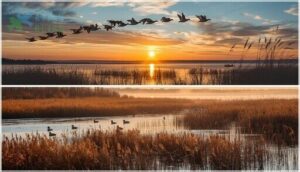
Michigan sits right in the path of two major flyways, so ducks pass through the state twice a year on long journeys between breeding and wintering grounds. You’ll find them using everything from quiet beaver ponds to wide-open Great Lakes bays, depending on the season and what they need.
Here’s how migration timing, key habitats, and seasonal shifts shape where and when you can spot ducks across Michigan.
Migration Patterns and Flyways
Each fall, Michigan welcomes thousands of waterfowl moving along the Mississippi and Atlantic Flyways. Peak migration timing hits between mid-October and late November, when cold fronts push fresh flocks into the state’s stopovers.
These bird migration patterns stretch thousands of miles, linking Canadian breeding grounds to Gulf Coast wintering areas. Weather influences arrivals—northerly winds spark big pushes, while warm spells can stall avian migration patterns entirely.
Key Habitats and Wetland Areas
Ducks rely on a patchwork of wetland habitats across Michigan. Coastal marshes like Saginaw Bay and Lake St. Clair’s shores offer rich feeding grounds with wild celery beds. Inland wetlands—beaver ponds and flooded sloughs—shelter nesting birds. Forested swamps along slow rivers supply tree cavities for wood ducks, while managed refuges such as Shiawassee and Pointe Mouillee use water control to maintain prime duck habitat.
- Coastal marshes support large flocks during migration
- Inland wetlands provide nesting cover and food
- Managed refuges balance open water with emergent plants
Seasonal Changes in Duck Populations
Once you know where ducks gather, you’ll see their numbers shift dramatically with the seasons. Spring brings tens of thousands during peak migration—March through May—then summer drops to local breeders only. Fall cold fronts trigger overnight departures, while mild winters let more birds linger on open Great Lakes water, reshaping traditional migration patterns as climate impacts push wintering behaviors farther north.
| Season | Duck Population Trends | Key Migration Patterns |
|---|---|---|
| Spring | Tens of thousands arrive | Late February–May, south to north |
| Summer | Low, local breeders only | Mallards, wood ducks nest |
| Fall | Peaks October–November | Cold fronts trigger overnight moves |
| Winter | Variable with ice cover | More stay if water remains open |
Conservation and Birdwatching Opportunities
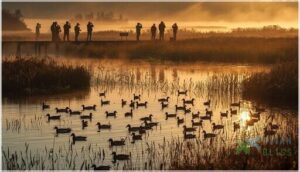
Protecting Michigan’s ducks takes teamwork between landowners, hunters, and conservation groups working to save wetlands and keep populations healthy. You can get involved through habitat projects or just enjoy watching ducks in their natural spaces across the state.
Here’s how Michigan balances conservation with opportunities to experience these birds firsthand.
Wetland Preservation Efforts
You can’t protect ducks without saving the places they need to survive. Wetland restoration and habitat conservation are ramping up across Michigan, with efforts like Ducks Unlimited’s Lake Erie and Saginaw Bay programs turning degraded land back into thriving wetlands.
Conservation efforts for waterfowl now include mitigation banking, which lets developers offset wetland loss while funding ecosystem management that builds wildlife habitat preservation for future generations.
Sustainable Hunting Practices
You’re part of a hunting heritage that fuels wildlife management through every license and Duck Stamp you buy.
Michigan’s hunting regulations keep duck populations healthy with strict bag limits—six birds daily, no more than four mallards—and non-toxic ammo rules that prevent lead poisoning.
Waterfowl hunters practicing ethical restraint, respecting shooting hours, and retrieving every downed bird show that sustainable hunting practices and conservation funding go hand in hand.
Best Birdwatching Locations for Ducks
You can catch migrating waterfowl at Pointe Mouillee State Game Area near Lake Erie, where over 300,000 diving ducks stop each fall. For coastal migration routes, try Sleeping Bear Dunes or Whitefish Point, both excellent bird sanctuary sites.
Belle Isle Park in Detroit offers close views of mallards and mergansers year-round. Shiawassee River State Game Area gives you wetland exploration with outstanding duck viewing outside hunting closures.
Frequently Asked Questions (FAQs)
What are the most common ducks in Michigan?
You’ll be quacking up when you spot Michigan’s most widespread waterfowl: Mallards reign as year-round residents, while Wood Ducks and Blue-winged Teal showcase dabbler dominance across wetlands, making duck species bird watching unforgettable.
What are the black and white ducks on Lake Superior?
You’ll spot buffleheads, common goldeneyes, long-tailed ducks, white-winged scoters, and surf scoters on Lake Huron during migration and winter—each showing bold black and white patterns that make waterfowl identification easier from shore.
What is the rarest duck in Michigan?
Most birders would call the Harlequin Duck Michigan’s rarest waterfowl. If you’re lucky enough to spot one on a winter breakwall, you’ve witnessed a true rare species event in duck migration and conservation history.
What is the small black and white duck in Michigan?
The small black and white duck you’ll see in Michigan is usually the bufflehead, a tiny diving species with a rounded head and bold white patch behind the eye.
What kind of ducks are on Lake Superior?
Like a staging ground for cold-adapted waterfowl, Lake Michigan hosts diving ducks such as long-tailed ducks, scaup, and buffleheads, plus dabbling species like mallards in sheltered bays during migration.
Are there bufflehead ducks in Michigan?
Yes, bufflehead ducks are common Michigan visitors during fall and winter. You’ll find these small diving waterfowl on Great Lakes bays and inland lakes from October through April, making them popular birdwatching targets.
What kind of ducks live in Michigan?
You’ll find more than 30 duck species across Michigan’s wetlands, including mallards, wood ducks, American black ducks, blue-winged teal, canvasbacks, and bufflehead—showcasing impressive waterfowl diversity for bird watching enthusiasts.
What is the black and white diving bird in Michigan?
That striking little diver bobbing on cold Michigan waters is likely a male Bufflehead, flashing its bold white head patch and compact body as it vanishes underwater hunting invertebrates among Black Scoter, Surf Scoter, and other Michigan waterbirds.
Where is the best duck hunting in Michigan?
Saginaw Bay ranks as Michigan’s top duck hunting destination, drawing waterfowl hunters with its prime Great Lakes Region marshes.
Lake St Clair and Upper Peninsula sites also offer excellent opportunities for hunting diverse species.
What does a female bufflehead look like?
A female bufflehead shows a dark brown head with a small white oval patch behind each eye. Her body is grayish-brown above and pale below, making her Michigan’s smallest diving duck.
Conclusion
Picture a cold November dawn—mist rising off a marsh, wings whistling overhead as a flock banks hard toward open water. That moment connects you to something bigger: the ancient rhythms Michigan ducks follow, the wetlands they depend on, and the work that keeps both alive.
Whether you’re out with binoculars or waders, you’re part of that cycle now. Pay attention. Protect what matters. The next flight’s already on its way.
- https://www.ducks.org/hunting/migration-alerts/migration-alert-waterfowl-migration-increases-across-michigan
- https://www.nature.org/en-us/about-us/where-we-work/united-states/michigan/stories-in-michigan/migratory-birds-flyways/
- https://www.eregulations.com/michigan/hunting/hunting-seasons-and-dates
- https://avibirds.com/ducks-in-michigan/
- https://en.wikipedia.org/wiki/Northern_shoveler