This site is supported by our readers. We may earn a commission, at no cost to you, if you purchase through links.
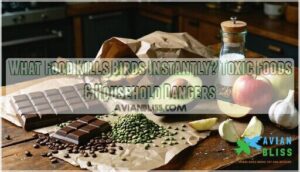 Several common foods can kill birds within hours or days of consumption.
Chocolate contains theobromine, which birds can’t metabolize, causing seizures and cardiac arrest.
Avocado’s persin compound triggers respiratory distress and heart failure.
Caffeine from coffee or tea acts like a stimulant overdose, while garlic and onions damage red blood cells, leading to anemia.
Apple seeds contain cyanide compounds that’re particularly lethal for small birds.
Salt disrupts their electrolyte balance since birds can’t process excess sodium like mammals can.
Even seemingly harmless bread becomes dangerous when moldy, as fungi produce toxins that attack their nervous systems.
Your kitchen likely harbors several bird killers you’d never suspect, including foods with toxins that can be deadly.
Table Of Contents
- Key Takeaways
- Toxic Foods for Birds
- Poisonous Plants to Avoid
- Deadly Snacks for Birds
- Household Hazards for Birds
- Bird-Friendly Practices
- Symptoms of Bird Poisoning
- Safe Alternatives for Bird Feeding
- Identifying Harmful Substances
- Responsible Bird Ownership and Care
- Frequently Asked Questions (FAQs)
- Conclusion
Key Takeaways
- Chocolate and caffeine act like poison – Even tiny amounts can trigger seizures and heart failure within 30-60 minutes, making your morning coffee or that dropped chocolate chip potentially lethal to small birds.
- Avocado’s persin compound causes rapid organ failure – This "healthy" fruit triggers immediate respiratory distress and cardiac arrest in birds, so you’ll need to keep all parts of avocados completely away from feathered visitors.
- Apple seeds contain cyanide that kills quickly – Seeds from just one apple can cause convulsions and death in smaller bird species, like finches, within minutes of ingestion.
- Household items pose hidden dangers – Salt, garlic, onions, and moldy foods disrupt birds’ delicate systems, while cleaning products, antifreeze, and old paint create toxic environments that can kill through exposure or ingestion.
Toxic Foods for Birds
You might think sharing your breakfast with a feathered friend is harmless, but certain foods can literally kill birds within minutes of consumption.
What seems like a harmless treat could be your bird’s last meal.
Some common household items and everyday snacks contain compounds that birds’ sensitive systems simply can’t process, leading to organ failure, cardiac arrest, or respiratory collapse before you even realize something’s wrong.
Caffeinated Food
While your morning coffee energizes you, caffeine poses deadly risks to birds through caffeine toxicity. Birds can’t process caffeine like humans can—even tiny amounts trigger hyperactivity signs, tremors, and cardiac malfunction.
Your morning coffee might energize you, but it’s a death sentence for birds.
A single sip of coffee or tea can kill small birds within 30-60 minutes. Their rapid metabolism means poisoning symptoms appear in just 15 minutes, progressing quickly to death.
Coffee, tea, chocolate, and energy drinks are major beverage concerns. Instead of sharing caffeinated treats, offer safe alternatives like chopped vegetables or leafy greens.
Keep all caffeinated items away from your feathered friends—this simple step prevents tragic accidents.
Garlic and Onions
You wouldn’t think everyday cooking staples could harm birds, but garlic and onion are serious threats to your feathered friends.
These common ingredients contain dangerous compounds that can cause devastating health problems.
Here’s what makes these foods so toxic:
- Allicin toxicity from garlic breaks down red blood cells, leading to weakness and potentially fatal anemia over time.
- Sulfur compounds in both onion and garlic damage the digestive system, causing severe stomach upset and diarrhea.
- Blood cell damage occurs gradually, making it harder to spot until serious liver damage and kidney damage have already begun.
Even small amounts of these bird toxic foods can trigger avian poisoning.
The sulfur compounds don’t just cause immediate discomfort—they accumulate in your bird’s system, creating long-term health risks that aren’t always obvious right away.
Chocolate
While garlic and onions wreak havoc on birds’ blood cells, chocolate poses an equally deadly threat.
This beloved human treat contains theobromine and caffeine—compounds that spell disaster for our feathered friends.
Even small amounts can trigger seizures, heart problems, and bird mortality.
| Chocolate Type | Theobromine Level |
|---|---|
| Dark chocolate | Extremely high |
| Milk chocolate | Moderate |
| White chocolate | Very low |
| Cocoa powder | Highest concentration |
Theobromine toxicity varies by bird size—smaller species face greater risks from tiny doses.
Dosage effects range from hyperactivity to complete organ failure.
Unlike humans who metabolize these compounds efficiently, birds can’t process them, leading to rapid avian poisoning.
Treatment options are limited, making prevention your best defense against bird toxic foods like chocolate.
Apple Seeds
While chocolate poses serious threats, apple seeds present another hidden danger that’s often overlooked.
These innocent-looking seeds contain amygdalin, which your bird’s digestive system converts into deadly cyanide. Here’s what makes apple seeds so dangerous:
- Cyanide toxicity occurs rapidly—within minutes of ingestion, small birds can experience convulsions and respiratory failure
- Quantity matters more than you’d think—seeds from just one apple can kill smaller species like finches or canaries
- Ingestion risks are highest during fall when apple waste becomes abundant in yards and compost piles
The mechanism behind this bird poisoning is straightforward: amygdalin breaks down into hydrogen cyanide, which blocks cellular oxygen use. Your feathered friends’ fast metabolism makes them extremely vulnerable to these toxic foods. **Salt disrupts electrolyte balance, which can also lead to organ failure.
Safe alternatives for seed preparation include offering sunflower seeds, cracked corn, or seedless apple slices. When feeding birds, always remove apple cores completely—it’s a simple step that prevents serious bird health risks.
Cassava
Cassava, the starchy root beloved worldwide, harbors a deadly secret for our feathered friends.
This innocent-looking tuber contains linamarin—a cyanogenic glycoside that converts to lethal cyanide when birds consume it. Raw cassava can kill birds within hours, making proper cassava preparation absolutely critical for bird safety.
| Cassava Component | Cyanide Levels (mg/kg) | Bird Health Impact |
|---|---|---|
| Raw roots | Up to 1,000 | Fatal within hours |
| Fresh leaves | 500-800 | Severe poisoning |
| Processed flour | 10-50 | Reduced toxicity |
| Properly cooked |
Poisonous Plants to Avoid
Your garden’s beautiful blooms might be hiding deadly secrets that could kill birds within minutes of consumption.
Plants like azaleas, daffodils, foxglove, lily of the valley, and oleander contain potent toxins that cause rapid organ failure, heart problems, and death in our feathered friends, leading to rapid organ failure.
Azaleas

Azaleas pack a deadly punch that’ll knock birds off their perch faster than you’d think. These stunning garden favorites hide grayanotoxins in every leaf, flower, and stem—making them botanical assassins for our feathered friends.
Azalea poisoning strikes with lightning speed, causing cardiac failure within hours of ingestion. Identifying azaleas becomes critical since azalea toxicity doesn’t discriminate between wild or captive birds.
- Grayanotoxin effects disrupt sodium channels, triggering convulsions and paralysis
- Lethal doses as low as 0.2% body weight in small bird species
- Symptoms emerge rapidly: vomiting, diarrhea, wing droop, and collapse
- Veterinary intervention must happen immediately—minutes matter for survival
Daffodils

Those cheerful yellow daffodils hide a dark secret—their bulbs pack dangerous lycorine toxicity and alkaloid effects.
When birds nibble these toxic plants for birds, they’ll experience severe digestive issues and drooling within thirty minutes.
The bulb dangers are especially serious, as just 2-3 bulbs can cause fatal organ damage in parrots.
Keep these poisonous plants away from your feathered friends.
Foxglove
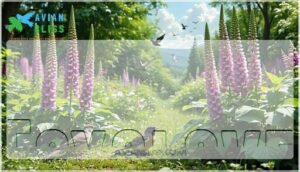
Foxglove contains deadly cardiac glycosides like digoxin that disrupt heart rhythms in bird species.
Even small amounts cause wing droop, rapid heartbeat, and sudden collapse within an hour.
Both fresh and dried foxglove plant material pose equal toxicity risks.
If you suspect foxglove poisoning, seek immediate veterinary treatment options for your feathered friend.
Lily of The Valley

Beyond their innocent appearance, lily of the valley plants pack deadly convallatoxin toxicity that’ll stop your bird’s heart cold.
These deceptively pretty flowers contain cardiac glycosides causing immediate digestive upset, then rapid kidney failure.
Just a few berries or leaves trigger fatal cardiac issues within hours.
Plant identification becomes essential since ground-dwelling species face highest ingestion risks from these poisonous substances birds can’t metabolize safely.
Other common dangers include chocolate and caffeine, which can also be poisonous to birds.
Oleander

Oleander presents a deadly threat you can’t ignore.
This attractive shrub contains oleandrin, a potent cardiac glycoside causing immediate heart failure in birds.
Even tiny amounts—just 0.5 mg/kg—can kill small species outright.
Poisoning symptoms include stomach upset, disorientation, and respiratory collapse.
All plant parts are lethal, including wilted leaves and nectar.
Treatment options remain limited once ingestion occurs.
Deadly Snacks for Birds
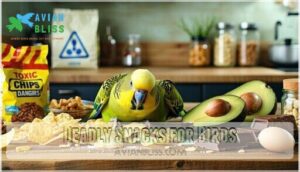
Beyond obvious no-nos like chocolate and avocado, some everyday snacks pose immediate threats to our feathered friends that many bird owners don’t realize.
You’ll be surprised how quickly common foods like salty chips or yesterday’s leftovers can turn from treats into emergencies.
Salty Snacks
While plants pose significant threats to birds, your pantry holds equally dangerous items. That bag of chips you’re munching on? It’s loaded with sodium that can kill birds in minutes.
Sodium overload happens fast in birds. Their tiny bodies can’t process excess salt like ours can. A few potato chips contain enough sodium to cause salt toxicity in small birds weighing just 30 grams.
The result? Dehydration risks spike as their kidneys struggle to flush out the poison. Some fruits, like apples, contain cardiotoxic cyanide in their seeds.
Here’s what triggers kidney failure and cardiac arrest:
- Pretzels and salted crackers
- Potato chips and corn chips
- Salted nuts and seeds
- Buttered popcorn with salt
- Pizza crusts and bread with salt
High-fat foods with added salt create a double threat – the fat contributes to atherosclerosis while salt destroys kidney function. Birds lack sweat glands, making salt elimination nearly impossible.
Safe alternatives include unsalted nuts, plain rice cakes, and fresh fruits. Remember: what tastes good to you can be deadly to them.
Moldy Foods
While salty snacks pose immediate risks, moldy foods present equally deadly threats through aflatoxin exposure and spore inhalation.
That fuzzy bread isn’t just unappetizing—it’s potentially fatal, causing neurologic collapse and aspergillosis infections in birds.
| Mold Source | Primary Toxin | Fatal Effect |
|---|---|---|
| Moldy peanuts | Aflatoxins | Liver failure |
| Spoiled birdseed | Fungal spores | Lung infection |
| Old bread | Mixed toxins | Neurologic damage |
Peanut dangers multiply when mold develops, making proper bird food safety essential for preventing bird illness causes and protecting bird health.
Dairy Products
Dairy products pose serious risks for birds due to lactose intolerance. Your feathered friend can’t digest milk, cheese, or yogurt, leading to digestive discomfort and potentially fatal dehydration.
Unlike humans who benefit from yogurt benefits and calcium absorption, birds lack lactase enzymes.
Consider cheese alternatives when sharing snacks—these harmful bird foods represent common bird diet dangers that cause severe bird digestive issues.
Practice proper bird food safety by avoiding all dairy.
Raw Meat
Beyond the obvious bacterial contamination risks, raw meat poses serious threats through parasite risk and nutritional deficiency for birds.
Unlike raptors, companion birds lack proper avian digestion systems for raw protein, leading to dangerous bird digestive issues and potential bird poisoning.
- Bacterial contamination from Salmonella and E. coli creates life-threatening foodborne illness
- Cross-contamination spreads pathogens to feeders, affecting multiple birds simultaneously
- Nutritional imbalances develop from inappropriate protein sources, weakening immunity systems
- Safe alternatives include cooked eggs and properly prepared seeds for healthy bird food dangers prevention
Raw Beans
Raw beans are deadly for birds, but not because of lectins.
While many focus on lectins toxicity, the real killer is hemagglutinin poisoning.
This toxin in uncooked beans can kill small birds within hours—just a few beans pack lethal power.
Hemagglutinin causes rapid vomiting, diarrhea, then collapse.
Unlike raw meat that takes time to harm, raw beans work fast.
All bean types—kidney, lima, navy—contain this toxin when raw.
The good news? Cooking methods destroy hemagglutinin completely.
Boil beans for at least 10 minutes at rolling temperatures.
This simple step transforms poisonous substances birds can’t handle into safe consumption treats.
Remember: cooked beans become nutritious goldmines, but raw beans belong on your unsafe bird feeding list forever.
Household Hazards for Birds
Your home contains hidden dangers that can kill birds within minutes of exposure.
Common household items like cleaning products, antifreeze, and nonstick cookware release toxic fumes or contain deadly chemicals that birds’ sensitive respiratory systems can’t handle, including toxic fumes.
Antifreeze
Moving from food-related dangers, antifreeze presents one of the deadliest household hazards for birds. This common automotive product contains ethylene glycol, which causes severe kidney damage and neurological issues that can kill birds within 24 hours of ingestion.
Birds find antifreeze appealing because of its sweet taste and bright color – think of it as nature’s cruel joke. Even tiny amounts create toxic substances that overwhelm their systems faster than a bad decision at 2 AM. The poisonous substances birds encounter in antifreeze trigger rapid toxicity levels that cause organ failure and mortality.
Here’s your prevention playbook:
- Store antifreeze in locked cabinets away from areas where birds might access it
- Clean spills immediately using absorbent materials and dispose of contaminated rags properly
- Use pet-safe alternatives containing propylene glycol instead of ethylene glycol
If you suspect antifreeze poisoning, contact an avian veterinarian immediately. Treatment works best within the first few hours, but waiting often means it’s too late to reverse the kidney damage and neurological destruction.
Pesticides and Insecticides Spray
While antifreeze poses serious risks, pesticides and insecticides present equally dangerous threats through both direct Pesticide Exposure and Insecticide Poisoning. You’re basically dealing with chemicals designed to kill—and birds are particularly vulnerable targets.
These Spraying Hazards affect wild birds through multiple pathways. Direct contact during application causes immediate toxicology issues, while contaminated insects become deadly meals. Even dried residues remain toxic for weeks, creating ongoing mortality risks.
| Exposure Type | Immediate Effects |
|---|---|
| Direct spray contact | Respiratory arrest, convulsions |
| Contaminated prey | Neurological damage, organ failure |
| Residue ingestion | Digestive collapse, weakness |
| Vapor inhalation | Lung damage, suffocation |
The Environmental Impact extends beyond individual birds—entire populations suffer when these chemicals accumulate in food chains. Smart prevention means choosing Safe Alternatives like beneficial insects, physical barriers, and targeted organic solutions. Your garden doesn’t need to become a chemical battlefield to stay pest-free.
Cleaning Products
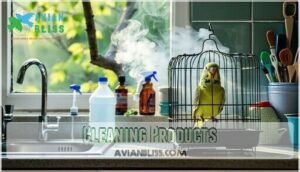
Your household cleaners pack a hidden punch that can knock birds off their perch permanently.
These toxic chemicals pose serious household hazards, with fume exposure causing rapid respiratory failure in our feathered friends.
Common cleaning product dangers include:
- Bleach and ammonia – Create deadly vapors causing immediate toxicity symptoms
- Disinfectants – Leave dangerous residue that birds absorb through their feet
- Aerosol sprays – Poor application methods spread toxins through ventilation importance areas
Safe cleaners and proper prevention protect your birds.
For cage cleaning, consider using diluted white vinegar.
Mothballs
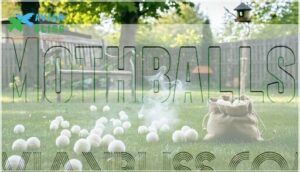
Beyond their innocent appearance, mothballs pack dangerous chemicals that spell trouble for birds.
These mothball ingredients contain naphthalene and paradichlorobenzene—toxic substances causing bird sensitivity reactions like respiratory distress and liver damage.
| Hazard Aspect | Impact on Birds |
|---|---|
| Naphthalene Exposure | Causes neurological symptoms and organ failure |
| Chemical Vapors | Triggers immediate respiratory distress |
| Prolonged Contact | Results in lethal poisoning within hours |
| **Safe Alternatives*** | Cedar blocks, lavender sachets for pest control |
Consider bird toxicity seriously—even minimal exposure to these common bird poisons proves fatal.
Bird poisoning prevention starts with proper disposal methods and choosing natural pest deterrents instead.
Lead Paint
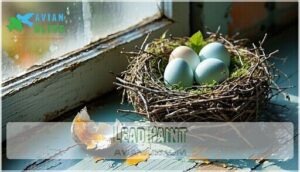
Although lead paint was banned decades ago, it remains one of the most dangerous common bird poisons in older homes.
When lead-based paint chips or deteriorates, it creates toxic dust that causes severe lead poisoning in birds through ingestion or inhalation.
- Hidden hazard: Lead paint often lurks beneath newer paint layers in pre-1978 homes
- Neurological damage: Lead exposure causes tremors, seizures, and coordination problems in birds
- Safe removal required: Professional abatement prevents dangerous lead dust during renovations
- Toy contamination: Some imported bird toys contain heavy metals including lead
- Paint regulations: Current laws prohibit lead paint, but older residues persist in many buildings
Birds are extremely sensitive to heavy metals, making even small lead paint particles potentially lethal.
Bird-Friendly Practices

While protecting birds from toxic substances is essential, creating a safe environment requires proactive measures that support their health and natural behaviors.
You can transform your outdoor space into a bird sanctuary by implementing simple practices that eliminate hazards and provide essential resources for their survival.
Clean Bird Feeders
Feeder hygiene isn’t just about looks—it’s about bird safety. Clean your bird feeders every two weeks to prevent disease prevention nightmares like salmonella outbreaks.
Think of dirty feeders as bacterial buffets where food contamination thrives. Mold growth loves wet seed, and moldy snacks can kill birds fast.
Scrub feeders with a 10% bleach solution, rinse thoroughly, then air dry completely. This simple cleaning frequency routine cuts sick bird incidents by half.
Many people purchase dedicated cleaning solutions for this purpose. Use safe materials like stainless steel or easy-clean plastic.
Your feathered friends deserve restaurant-quality standards—their lives depend on it. Clean feeders mean healthy bird diseases stay away from your backyard paradise.
Avoid Lawn Care Chemicals
Your lawn chemicals can spell disaster for birds.
Chemical runoff from fertilizers and pesticides kills over 7 million birds annually in North America.
These toxins represent serious bird poisoning risks that affect foods birds cant eat safely in treated areas.
Switch to natural pest control methods like compost and mulch.
Safe gardening practices boost local bird diversity by 35% while creating bird-safe lawns.
Integrated pest management can further cut pesticide use, see Integrated pest management for more information.
Habitat preservation starts in your backyard.
Install Birdbaths and Nest Boxes
Creating welcoming spaces for birds goes beyond safe feeding—you’ll want to provide water and shelter too. Bath Placement matters substantially; position your birdbath where birds feel secure but can spot approaching threats. Shallow water works best, and Water Source maintenance keeps visitors healthy.
Nest Box Design should match local species’ needs, with proper entrance hole sizes and Predator Protection features. Many enjoy the benefits of a backyard bird bath for attracting local birds.
Consider these Habitat Enhancement benefits:
- Providing fresh water increases neighborhood bird sightings by 80% during summer
- Nest boxes boost successful breeding rates for cavity-nesting species
- Strategic placement creates safe nesting sites that support backyard visitors
Position boxes 5–10 feet high, facing away from prevailing winds. Your birdfriendly setup becomes a haven where bird nesting thrives, supporting bird habitats year-round.
Let Dead Wood Stand
Beyond setting up water sources, you’ll want to preserve dead trees and branches on your property. This seemingly counterintuitive practice supports habitat creation and ecosystem support in remarkable ways.
Standing dead wood becomes nature’s apartment complex, offering natural shelter from predators and weather while preventing exposure to lethal foods birds might encounter elsewhere.
Here’s why snags matter:
- Insect abundance thrives in decomposing wood, creating a buffet for woodpeckers, nuthatches, and chickadees
- Decomposition benefits attract beetles and larvae that sustain cavity-nesting species year-round
- Natural shelter prevents birds from seeking unsafe alternatives where toxic plants or plant toxicity risks increase
Unlike bird poisoning from household hazards, dead wood poses zero toxicity concerns while doubling woodpecker populations in many areas.
Respect Wildlife Feeding Bans
Compliance with wildlife feeding bans protects both you and local bird populations from serious health risks.
These ordinances prevent bird dependence on artificial food sources, which disrupts natural foraging behaviors and creates dangerous overcrowding.
Human interference through feeding leads to disease control problems—salmonella and botulism outbreaks can spread rapidly when birds congregate unnaturally.
Unlike toxic foods that cause immediate bird fatalities, feeding bans address long-term bird food hazards that gradually weaken populations.
Violations can cost you up to $500 in fines.
Think of it as tough love—sometimes the kindest thing is stepping back and letting birds maintain their wild independence and ecosystem balance.
Symptoms of Bird Poisoning
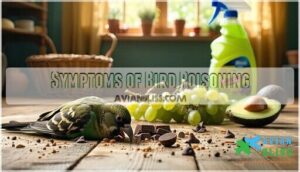
Recognizing poisoning symptoms quickly can mean the difference between life and death for your feathered friend. You’ll notice changes in behavior, breathing, or appearance that signal something’s seriously wrong.
Common Poisoning Warning Signs
Recognizing bird poisoning symptoms can save your feathered friend’s life.
Your bird can’t explain what’s wrong, so you’ll need to watch for these telltale signs:
- Vomiting – repeated regurgitation or stomach contents
- Diarrhea – watery or unusual droppings
- Seizures – uncontrolled muscle movements or convulsions
- Labored Breathing – gasping or respiratory distress
- Organ Failure – weakness, collapse, or lethargy
These bird poisoning symptoms demand immediate avian veterinarian care for proper bird emergency treatment following bird toxin ingestion.
Rapid Vs. Gradual Symptoms
Bird poisoning symptoms hit on different timelines—some toxins strike like lightning while others creep up slowly.
Onset Speed varies dramatically based on Toxin Dosage and the substance involved.
Chocolate or avian caffeine poisoning shows rapid Symptom Progression within hours, causing seizures and cardiac issues.
Meanwhile, heavy metals create Delayed Effects, slowly building toward Organ Failure over weeks.
Poisonous foods like moldy peanuts trigger immediate respiratory distress, but bird dietary restrictions exist because some bird toxins work gradually, making bird poisoning harder to catch early.
Species-Specific Toxic Reactions
Different species face varying toxic ingestion risks.
Parrot sensitivities include chocolate and caffeine, while finch vulnerability centers on apple seeds.
Raptor tolerances differ from songbird specifics – smaller birds show faster bird poisoning symptoms.
Waterfowl risks involve unique avian reactions to household chemicals.
Understanding your bird’s dietary restrictions helps you recognize species-specific warning signs and respond appropriately.
Safe Alternatives for Bird Feeding
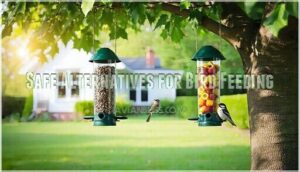
After knowing what can harm birds, you’ll want to provide safe, nutritious alternatives that keep your feathered friends healthy and happy.
These bird-friendly options offer essential nutrients without the dangerous compounds found in toxic foods, giving you peace of mind while feeding local wildlife or pet birds, which are nutritious alternatives.
Cooked Whole Grains
Several cooked whole grains offer excellent grain nutritional value for your bird’s diet. Brown rice, quinoa, and barley provide essential carbohydrates and nutrients when properly prepared.
Safe grains require thorough cooking to eliminate hazards from raw ingestion. Proper grain storage prevents spoilage, while varied cooking methods enhance nutrition.
Watch for grain allergies and introduce new grains gradually to avoid digestive risks in your feathered friend’s diet. Understanding cooked grains birds is vital for a balanced avian diet.
Chopped Vegetables
When choosing chopped vegetables for your feathered friends, you’ll want to skip the dangerous ones and focus on bird-safe options.
While many vegetables are excellent choices, some pose serious risks that you need to avoid.
Here are five safe vegetable options that’ll make your birds chirp with joy:
- Carrots: Rich in beta-carotene, these orange gems support eye health and immune function
- Sweet potatoes: Packed with vitamins A and C, they’re a nutritious powerhouse for birds
- Bell peppers: These colorful veggies provide vitamin C without the heat that spicy peppers bring
- Broccoli: A superfood that’s loaded with nutrients and easy for birds to grab and munch
- Squash: Winter varieties like butternut offer essential vitamins and natural sweetness
Remember to avoid onions completely—they’re toxic to birds.
Skip avocado too, as it contains persin, which is deadly.
Watch out for xylitol-containing products and fruit pits near your prep area.
Fresh, raw vegetables chopped into bird-sized pieces work best, and always wash thoroughly to remove pesticides.
Leafy Greens
Among leafy greens, some varieties offer excellent nutrition while others pose serious risks.
Spinach and kale provide essential vitamins, but watch for toxic kale varieties and spinach risks from oxalates in large quantities.
Always avoid avocado leaves due to deadly persin effects, plus onions and nightshade plants like tomato leaves.
Rhododendron and other vegetable leaves from the nightshade family contain dangerous compounds.
Safe options include romaine lettuce, dandelion greens, and chard—think of them as nature’s multivitamins.
Wash thoroughly to remove pesticides, and introduce new greens gradually.
Your bird’s digestive system will thank you for choosing wisely.
Beans and Lentils
Protein-packed nutrition awaits when you serve cooked dried beans and lentils to your birds.
These legumes offer essential amino acids, but raw beans contain dangerous hemagglutinin—a toxic compound causing severe digestive problems and lectin toxicity.
Always cook beans thoroughly to eliminate bean poisoning risks and prevent legume hazards that could harm your feathered friends.
Clean Eggs
When offering eggs for bird nutrition, you’re providing excellent protein and calcium that supports avian health.
Hard-boiled or scrambled eggs work best for clean feeding practices. Proper egg handling means cooking thoroughly and serving fresh portions.
This prevents contamination while delivering essential nutrients. Unlike items on any bird toxic foods list, eggs pose no avian toxicity concerns when prepared correctly.
Following these bird poisoning prevention tips guarantees your feathered friends get safe, nutritious treats without bird food toxicity or bird nutrition risks.
Identifying Harmful Substances
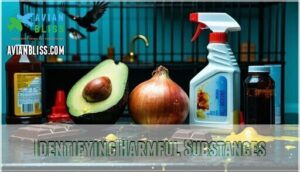
Beyond the obvious dangers in your bird’s food bowl, everyday household items can pose deadly threats you might never suspect.
From that fresh coat of paint on your walls to the ant spray under your sink, these common substances can kill birds within minutes of exposure to deadly threats.
Caffeine
Caffeine packs a dangerous punch for birds.
Coffee beans, tea leaves, and energy drinks contain caffeine toxicity that triggers rapid heart rate spikes and hyperactivity in our feathered friends.
Even small amounts from your morning brew can cause serious theobromine effects.
Bird caffeine toxicity isn’t worth the risk—keep all caffeinated substances secured away from curious beaks.
Pesticides and Insecticides
Something everyone needs to know: pesticides and insecticides are toxic sprays designed to kill pests, but they’re equally dangerous to birds through chemical exposure.
These hazardous substances cause poisoning, organ damage, and neurological issues when birds encounter pest control products.
Here’s how to identify these bird toxic substances:
- Check labels – Look for warnings about wildlife toxicity on insect poison containers
- Recognize spray residue – Wet surfaces or strong chemical odors indicate recent pesticide application
- Spot granular products – Small pellets scattered on lawns often contain toxic compounds
- Notice dead insects – Excessive bug deaths suggest recent use of bird toxin-causing chemicals
Always assume any pest control product contains substances from the bird toxic substances list unless specifically labeled wildlife-safe.
Old Paint Residue
Old paint residue poses serious risks to birds, especially in homes built before 1978.
These old coatings frequently contained lead, zinc, and copper – heavy metals that create dangerous toxic residue when paint chips or peels.
You’ll find this bird toxin ingestion risk anywhere paint deteriorates: windowsills, fences, or outdoor structures.
Birds naturally peck at colorful paint chips, mistaking them for food.
Even tiny amounts trigger lead poisoning, causing digestive upset, neurological damage, and potentially death.
Paint fumes from renovation work also threaten birds through inhalation.
The dust settles on surfaces where birds perch and feed.
Watch for peeling or chalky paint around your property.
These bird toxic substances accumulate in a bird’s system over time, making early detection vital.
Remove flaking paint safely, keeping birds away during cleanup to prevent accidental exposure to these dangerous heavy metals.
Lead
Lead poses one of the most insidious threats to your feathered friends. This toxic heavy metal lurks in countless household items, making lead poisoning a serious concern for bird owners.
You’ll find lead contamination in older homes with lead paint, especially during renovations when dust becomes airborne. But that’s not all – lead hides in unexpected places like stained glass, fishing weights, and even some bird toys with metal components. Heavy metals like zinc and copper create similar dangers.
Here’s what makes lead such a deadly bird toxin:
- Neurological damage: Lead poisoning causes seizures, loss of coordination, and that telltale "clenched toe" posture you might notice
- Digestive chaos: Metal toxicity triggers vomiting, diarrhea, and severe maldigestion that prevents proper nutrient absorption
- Organ failure: Toxic residue accumulates in kidneys and liver, causing irreversible damage over time
The scary part? Birds can’t taste lead, so they’ll cheerfully nibble on contaminated surfaces. Keep paint chips swept up, avoid questionable toys, and watch for neurological signs that scream "heavy metal emergency!
Responsible Bird Ownership and Care
Responsible bird ownership means creating a safe environment where your feathered friend can’t accidentally encounter deadly substances lurking in everyday items.
You’ll need to bird-proof your home just like parents childproof theirs, because birds are naturally curious creatures who explore the world with their beaks.
Preventing Accidental Exposure
How can you transform your home into a bird safety fortress?
Start by securing toxic food in high cabinets—chocolate and avocado are bird killers.
Lock cleaning products away from curious beaks. Move poisonous plants like foxglove to bird-free zones.
Store garage chemicals in sealed containers. These bird poisoning guidelines and accident prevention steps create essential pet care barriers, protecting your feathered friends from toxic ingestion.
Ensuring Safe Bird Feeding
Safe feeding protects your feathered companions from bird poisoning and guarantees maximum Bird Nutrition.
Follow these Feeding Guidelines for proper Food Safety:
- Select pesticide-free, high-quality seeds meeting Avian Health standards
- Clean feeders weekly to prevent toxic foods contamination and mold growth
Provide varied, species-appropriate foods supporting Bird Wellness and preventing avian toxicity through safe bird feeding practices.
The key to successful bird care is following these guidelines to ensure Food Safety.
Proper Storage of Toxic Items
Thoughtful storage of toxic materials keeps your feathered friends healthy and happy.
You’ll want to create secure barriers between birds and dangerous substances that could harm them instantly.
| Storage Location | Items to Store |
|---|---|
| Locked Cabinets | Cleaning products, medications, pesticides |
| High Shelves | Nonstick cookware, Teflon items, aerosols |
| Garage/Basement | Antifreeze, paint, automotive fluids |
| Sealed Containers | Chocolate, xylitol gum, toxic plant materials |
| Away from Birds | Mothballs, lead paint chips, heavy metals |
Always check toxic item labels and use secure containers with hazard signs.
Storage safety means keeping bird toxic ingestion risks minimal through proper organization.
Consulting Avian Experts
Professional avian veterinarians provide vital guidance when bird toxin ingestion occurs or you’re establishing bird food precautions.
These specialists understand avian nutrition requirements, bird behavior patterns, and species-specific vulnerabilities to avian toxicity.
Consulting experts guarantees you’re following proper bird poisoning guidelines and maintaining healthy beak health, feather care, and wing safety for your flock.
- Emergency protocols for suspected poisoning incidents
- Species-specific dietary recommendations and restrictions
- Environmental hazard identification and prevention strategies
By following these guidelines and consulting with professionals, you can ensure the health and safety of your birds and take appropriate measures in case of avian toxicity.
Frequently Asked Questions (FAQs)
What food can kill birds?
Chocolate, avocado, caffeine, and alcohol can kill birds rapidly.
You’ll also want to avoid onions, garlic, fruit pits, raw beans, and salty snacks, as they’re highly toxic to our feathered friends.
Does no food kill birds instantly?
Several foods can kill birds instantly, particularly chocolate and avocado.
You’ll find chocolate’s theobromine causes rapid heart failure, while avocado’s persin triggers immediate respiratory distress.
These aren’t myths—they’re genuinely deadly to our feathered friends.
Can dairy products kill birds?
Studies show 89% of pet birds suffer lactose intolerance, making dairy potentially dangerous.
You shouldn’t feed birds dairy products because they lack lactase enzymes to digest lactose properly.
This causes severe diarrhea, dehydration, and digestive distress that weakens their health substantially.
What happens if a bird eats pesticides?
If your bird eats pesticides, you’ll likely see immediate poisoning symptoms like vomiting, seizures, and difficulty breathing.
These toxic chemicals damage organs rapidly and can cause neurological problems or death within hours, which is a result of the immediate poisoning symptoms such as vomiting.
Can birds eat bread?
You can feed birds bread occasionally, but it’s not nutritionally ideal.
White bread lacks essential nutrients your feathered friends need, while whole grain options offer slightly better value for their health.
Can birds eat apple seeds & onions?
Picture a toxic time bomb hiding in your kitchen—that’s what apple seeds and onions represent for your feathered friends.
You shouldn’t feed birds apple seeds or onions because they contain dangerous compounds that damage their hearts, blood cells, and organs, potentially causing serious illness or death.
What human food is poisonous to birds?
Chocolate, avocado, caffeine, onions, garlic, apple seeds, fruit pits, xylitol, alcohol, raw beans, salt, and moldy foods can seriously harm or kill your feathered friends through various toxic compounds.
Can soda kill birds?
Yes, soda can kill birds.
The caffeine causes heart problems and hyperactivity, while the sugar content disrupts their metabolism.
Even small amounts pose serious health risks, so you’ll want to keep all carbonated beverages away from your feathered friends completely to avoid serious health risks.
What foods are poisonous to birds?
Bright-colored berries might look tempting, but you’ll want to avoid chocolate, avocado, caffeine, onions, garlic, apple seeds, raw beans, salty snacks, alcohol, and xylitol—they’re toxic to birds.
What can birds eat?
Birds can safely eat seeds, fresh fruits (without pits), vegetables, cooked grains, and commercial bird food. You’ll want to offer variety while avoiding chocolate, avocado, and caffeine completely.
Conclusion
Protecting our feathered friends requires vigilance about what food kills birds instantly lurking in everyday environments.
You’ve learned that seemingly innocent items like chocolate, caffeine, and apple seeds can become silent threats to avian life.
By keeping toxic substances secured, choosing bird-safe alternatives, and recognizing poisoning symptoms early, you’ll create safer spaces for wildlife.
Remember, prevention beats treatment every time – your awareness today prevents tomorrow’s tragedies.