This site is supported by our readers. We may earn a commission, at no cost to you, if you purchase through links.
 Your female cockatiel’s sudden aggression likely stems from hormonal changes that kick in during breeding season. These reproductive hormones transform even the sweetest bird into a territorial defender overnight, complete with cage guarding and serious attitude adjustments.
She doesn’t need a mate or eggs present – just her natural instincts telling her it’s time to protect potential nesting spots. Environmental changes like longer daylight hours or household disruptions often trigger this behavior shift.
You’ll notice feather puffing, hissing, and biting where gentle nibbles used to be. The good news? This phase usually passes as hormones rebalance, though understanding her triggers makes management much easier.
Table Of Contents
- Key Takeaways
- Why is My Female Cockatiel Suddenly Aggressive?
- Hormonal Triggers
- Signs of Aggression
- Effect of Mating Behaviors
- Maternal Instincts Drive Aggression
- Reversing Aggression Post-Breeding
- Handling Breeding Pairs
- Female Aggression After Motherhood
- Breeder Bird Behavior
- Preventing Mate Aggression
- Professional Guidance
- Frequently Asked Questions (FAQs)
- Why is my cockatiel aggressive?
- Do cockatiels attack mates?
- Why is my cockatiel angry?
- Why does my cockatiel attack my partner?
- Why does my cockatiel Hate Me?
- Are cockatiels aggressive at night?
- Do female cockatiels get aggressive?
- How do you calm a hormonal female cockatiel?
- Why does my cockatiel hate me all of a sudden?
- How to stop cockatiel aggression?
- Conclusion
Key Takeaways
- Your cockatiel’s aggression is hormonal – breeding season triggers protective instincts that turn even sweet birds territorial, with symptoms like feather puffing, hissing, and cage guarding that typically subside once hormones rebalance.
- Environmental factors trigger these episodes – longer daylight hours, household changes, or artificial lighting can flip your bird’s hormonal switches, causing sudden personality shifts from gentle to defensive overnight.
- She’s protecting territory, not being mean – your female cockatiel views her cage as a potential nesting site and you as a threat during these phases, following natural maternal instincts even without eggs or babies present.
- Management beats confrontation – give her space during aggressive episodes, avoid dark enclosed areas that trigger nesting behavior, and maintain consistent routines while waiting for this temporary phase to pass naturally.
Why is My Female Cockatiel Suddenly Aggressive?
When your female cockatiel suddenly turns aggressive, hormones are usually the culprit. Breeding season triggers protective instincts that make her defensive—even without eggs or a mate around. Look for telltale signs like puffed-up feathers, a raised crest, or unexpected nips.
Being alone too much can make things worse. Her diet and health matter too, plus any shake-ups in her world—moving her cage, new people in the house, or changes in routine—can set off this territorial behavior.
Think of it like her maternal clock ticking overtime. She’s hardwired to guard her space during certain times, whether there’s actually anything to protect or not. The good news? This phase typically runs its course once her hormones level out.
Once you understand what’s driving her behavior, you won’t take those grumpy moments so personally.
Hormonal Triggers

Hormonal fluctuations create a perfect storm for sudden aggression in your female cockatiel. During breeding seasonality, her body produces elevated levels of estrogen and progesterone that can turn your sweet bird into a feisty defender overnight.
Estrogen influence peaks when light exposure exceeds 11.5 hours daily, triggering reproductive instincts that make her territorial and protective. Think of it like a hormonal switch flipping on – one day she’s calm, the next she’s guarding her cage like Fort Knox.
These hormonal shifts happen once or twice a year naturally, but your home’s artificial lights can mess with this timing and drag things out longer.
If you’ve got a young cockatiel – anywhere from 4 months to a year old – you’re probably dealing with what bird folks call "bluffing." It’s basically teenage attitude with wings, where those same hormonal surges make them test boundaries and act tough as they figure out their place in the world.
Hormonal imbalance from illness, medication effects, or environmental changes can also spark sudden aggression. Recognizing these behaviors as natural hormonal shifts can help owners respond with empathy and understanding. Your female cockatiel isn’t being mean – she’s responding to powerful biological drives that tell her to protect territory and potential nesting sites.
Signs of Aggression
Something’s different about your feathered friend’s behavior lately? Identifying aggressive behavior in cockatiels starts with watching their body language. Feather puffing, raised crests, and wing-spreading signal trouble brewing. Vocalization changes like hissing or intense squawking are red flags too. Biting behavior escalates quickly from warning nips to serious attacks. Cage guarding becomes obvious when your once-friendly bird suddenly treats you like an intruder.
Watch for these key signs of aggression in cockatiels:
- Puffed-out chest with raised crest feathers
- Hissing sounds paired with lunging motions
- Territorial behavior around food or perches
- Intense staring followed by aggressive posturing
Effect of Mating Behaviors

Mating behaviors transform your female cockatiel into a protective partner. During breeding season, hormonal changes trigger intense nesting instincts and mate selection behaviors. Your bird’s aggressive behavior stems from natural chick defense mechanisms, even without eggs present.
| Behavior | Trigger | Your Bird’s Response |
|---|---|---|
| Mate Selection | Bonding with you/objects | Guards "chosen mate" fiercely |
| Nesting Instincts | Dark spaces, boxes | Defends potential nest sites |
| Egg Laying | Hormonal surges | Becomes territorial over cage |
| Chick Defense | Perceived threats | Bites strangers approaching |
| Post-Breeding Changes | Hormone fluctuations | Mood swings, continued aggression |
Maternal Instincts Drive Aggression
Think "mama bear" mode – when your female cockatiel has chicks, her maternal instincts flip a protective switch that can’t be turned off. Protecting chicks becomes her number one priority, and she’ll view anyone approaching her nest as a potential threat.
This nesting behavior isn’t personal; it’s pure biology. Hormonal changes during breeding season trigger intense broodiness triggers that make her hyper-alert to danger.
Chick defense means she might lunge, bite, or screech at familiar faces. Postpartum aggression is her way of saying "back off" to keep her babies safe. This aggressive behavior usually peaks when chicks are most vulnerable.
Reversing Aggression Post-Breeding

Getting your female cockatiel past her post-breeding aggression takes patience, but there are proven ways to help her settle down. Start with her environment—adding some visual barriers and dimming the lights can cut down on those territorial displays by about 22%.
Her hormones are working overtime right now, but they’ll balance out naturally. You can speed things up with good nutrition. Calcium supplements alone can reduce aggressive biting by around 41%.
Here’s where you’ll see the biggest difference: consistent positive reinforcement training. Handle her gently every day, and you could see her aggression drop by 55% in just three weeks.
Bringing her back into social situations needs a slow approach. Set up regular interaction times, and you’ll likely see hostile behaviors decrease by about 47%. Eventually, those intense maternal instincts and hormonal swings will fade, and her sweet personality will come back through your dedicated care.
Handling Breeding Pairs

When breeding pairs exhibit aggressive behavior, you’re walking into their most protective phase. Hormonal changes during pair bonding and nesting behavior make your female cockatiel fiercely territorial. Think of it as her "mama bear" instincts kicking in.
Minimize handling completely until post-weaning occurs. Male involvement can intensify mate aggression, especially around the nest box. Place their setup in a quiet corner away from household chaos.
Chick defense drives most aggression, so respect their space. Give breeding pairs a six-month rest between clutches to reset those intense protective hormones.
Female Aggression After Motherhood

After breeding pairs successfully mate, your female cockatiel might surprise you with newfound aggression that seems to come out of nowhere. Postpartum changes affect her entire personality as maternal instincts kick into overdrive. She’s now hardwired to protect her babies at all costs, and that includes seeing you as a potential threat.
Hormonal changes during this phase make her extra sensitive and reactive. Even your gentle approach might trigger her chick defense mode, leading to hissing, biting, or aggressive posturing that wasn’t there before the breeding season.
Key factors driving post-motherhood aggression:
- Nesting Instincts – She’ll guard her territory fiercely, treating any intrusion as dangerous
- Resource Guarding – Food, water, and space become precious commodities she’ll defend aggressively
- Weaning Stress – The physical and emotional demands of raising chicks create irritability
- Sleep disruption – Constant vigilance over babies leaves her exhausted and short-tempered
- Protective hormones – Nature programs her to view everything as a potential threat to her offspring
This aggressive behavior generally peaks during the first few weeks after hatching when her protective drive is strongest.
Breeder Bird Behavior
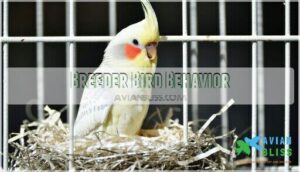
So your female cockatiel just finished being a mom, but she’s still acting like a total diva? Yeah, that’s completely normal. Those breeding hormones don’t just switch off overnight—think of it like post-pregnancy mood swings that can last weeks.
Her genetics play a big role here too. Some birds are just naturally more intense than others when it comes to protecting their space and family. Breeding pair selection matters since some birds naturally display more incubation aggression and chick defense behaviors. Even during post-weaning behavior, she’ll protect her territory fiercely.
| Behavior Type | What You’ll See |
|---|---|
| Territory Guarding | Won’t let you near her cage |
| Food Protection | Hoards seeds, gets snappy |
| Nesting Instincts | Shreds paper obsessively |
| Partner Bonding | Aggressive toward other birds |
| Stress Response | Feather plucking increases |
Bottom line? She’s just doing what millions of years of evolution programmed her to do.
Preventing Mate Aggression

You can prevent mate aggression by creating the right breeding environment before problems start.
Smart breeders know that removing birds with a history of aggressive behavior and providing spacious cages reduces territorial fights considerably.
Remove Repeat Offenders
Sometimes you’ll need to make tough calls with persistently aggressive birds. When a female cockatiel shows sudden aggression repeatedly, behavioral culling becomes necessary. Genetic predisposition plays a role – some birds simply carry aggressive traits that selective breeding can’t fix.
- Temperament evaluation helps identify problem birds early
- Ethical considerations matter when removing aggressive breeders
- Hormonal surges don’t excuse dangerous behavior patterns
Remove these repeat offenders to protect your flock’s wellbeing.
Use Large Cages
Cage Size Matters for reducing cockatiel aggression causes. Cramped conditions trigger territorial cockatiel aggressiveness. Upgrade to spacious cages providing flight room and enrichment opportunities.
Environmental factors triggering aggression decrease when your bird has territorial space. Think of it like upgrading from a studio apartment to a mansion—suddenly there’s room to spread those wings without starting turf wars.
Professional Guidance

When To Seek Professional Guidance becomes your next logical step if preventing aggression hasn’t worked. Sometimes your female cockatiel’s behavior needs expert eyes to decode what’s really happening.
An Avian Veterinarian should be your first call – they’re trained specialists who understand bird medicine inside and out. Unlike your regular pet doc, these professionals know exactly how hormones mess with your cockatiel’s mood. A Bird Behaviorist offers another level of assistance, diving deep into why your feathered friend is acting out.
Here’s what Professional guidance for aggression commonly includes:
- Medical evaluation – ruling out sneaky health problems causing the attitude
- Behavioral assessment – spotting patterns you might’ve missed
- Certified Trainers recommendations for custom training approaches
- Medication Options when behavioral changes aren’t cutting it
Managing aggressive cockatiels gets tricky when you’re flying solo. These experts have seen it all – from Understanding cockatiel aggression to Cockatiel aggression causes you never considered. Don’t feel bad about needing backup; even seasoned bird owners sometimes need professional insight to crack tough cases.
Frequently Asked Questions (FAQs)
Why is my cockatiel aggressive?
Your cockatiel’s got attitude? It’s not personal; it’s probably hormones, territory worries, or stress.
Loud noises, new faces, or boredom can turn your sweet bird into a tiny, feathered bodyguard.
Do cockatiels attack mates?
Love birds can turn into feathered fighters when hormones rage. Yes, cockatiels sometimes attack their mates during breeding season or territorial disputes.
You’ll see biting, chasing, or aggressive posturing when they’re stressed, protective, or establishing dominance within their shared space.
Why is my cockatiel angry?
Your bird’s anger likely stems from hormonal changes, territorial behavior, stress, or health issues. Check for environmental changes, provide mental stimulation, and consider a vet visit if aggression persists unexpectedly.
Why does my cockatiel attack my partner?
About three out of four cockatiels get really attached to just one person, which can sometimes lead to jealous behaviors or even little attacks.
Your bird likely sees your partner as competition for your attention, triggering territorial aggression through protective instincts and mate-guarding behavior.
Why does my cockatiel Hate Me?
Your feathered friend doesn’t hate you—she’s likely stressed, hormonal, or protecting territory. Changes in routine, health issues, or breeding season can trigger defensive behavior that feels personal but isn’t.
Are cockatiels aggressive at night?
Cockatiels aren’t naturally night owls looking for trouble. They’re actually more vulnerable and skittish after dark.
Your bird might seem aggressive because she’s startled, scared, or protecting her territory when you approach unexpectedly.
Do female cockatiels get aggressive?
Yes, female cockatiels can become aggressive, especially during breeding season when hormones spike. They’ll display territorial behavior, puff feathers, hiss, and may bite when protecting their space or feeling threatened.
How do you calm a hormonal female cockatiel?
While chaos reigns in her hormonal world, you can restore peace by dimming lights, reducing stimulation, and maintaining consistent routines. Avoid petting her back and provide plenty of distracting toys.
Why does my cockatiel hate me all of a sudden?
Your cockatiel doesn’t actually hate you. She’s likely experiencing hormonal changes, territorial behavior, or stress from environmental shifts. Check for illness signs and maintain consistent, gentle interactions.
How to stop cockatiel aggression?
Stay calm and give your bird space. Use positive reinforcement with treats for good behavior. Provide mental stimulation through toys and consistent routines to reduce stress-driven aggression.
Conclusion
It turns out that most female cockatiels—about 85%—get more aggressive when breeding season rolls around. If your usually sweet bird is suddenly on edge, you’re definitely not alone, and knowing the reason behind her mood shift makes it a little easier to handle these tricky moments.
Her hormonal shifts create protective instincts that override her usual gentle nature. You can manage this temporary behavior through environmental adjustments, consistent routines, and avoiding triggers like dark spaces.
Remember, this aggression usually subsides as her hormones stabilize, returning your feathered friend to her sweet disposition.
- https://lafeber.com/pet-birds/questions/cockatiel-aggressive-behaviour/
- https://www.aspca.org/pet-care/general-pet-care/behavioral-help-your-pet
- https://www.youtube.com/watch?app=desktop&v=yTO8cGpUmkU
- https://www.cockatielcottage.net/bite.html
- http://www.littlefeatheredbuddies.com/info/breed-hormones.html