This site is supported by our readers. We may earn a commission, at no cost to you, if you purchase through links.
 If your budgie keeps lifting one wing, there’s usually something wrong. This behavior typically points to injury, muscle strain, or joint pain.
Maybe they had a rough landing, aren’t getting proper nutrition, or are dealing with arthritis. Picture how you’d hold your arm close when your shoulder hurts—that’s what they’re doing.
Watch for swelling, difficulty flying, wing droop, or changes in appetite alongside the lifting behavior. While occasional wing stretching is normal, persistent one-wing lifting needs attention.
For minor issues, try keeping your budgie in a calm spot with steady warmth and fresh water nearby.
But if they can’t fly properly or seem to be in real pain, get them to a vet right away—waiting could mean permanent wing damage.
Table Of Contents
- Key Takeaways
- Wing Lifting in Budgies
- Signs of Wing Injury
- When to Seek Veterinary Care
- Prevention Tips for Wing Injuries
- Frequently Asked Questions (FAQs)
- Why do budgies hold their wings out?
- Why do budgies tremble?
- Why do budgies shake their wings?
- What does a budgie do after preening?
- Why does my Budgie keep shaking?
- Is a budgie wing shaking normal?
- What does it mean when a bird lifts one wing?
- Why is my bird raising one wing?
- Why does my budgie keep lifting his wings?
- What does it mean when a bird lifts its wings?
Key Takeaways
- Watch for injury signs – If your budgie is persistently lifting one wing, look for swelling, flight difficulty, or pain behaviors that signal potential trauma or muscle strain requiring attention.
- Don’t ignore accompanying symptoms – Loss of appetite, lethargy, or inability to fly alongside wing lifting means you need veterinary care within 24-48 hours to prevent permanent damage.
- Provide supportive home care first – Create a quiet environment with consistent temperature and fresh water for minor issues, but monitor closely for changes in your bird’s condition.
- Know when to call the vet – Contact an avian veterinarian immediately if there’s severe wing droop, complete flight inability, or no improvement after 48 hours of home care.
Wing Lifting in Budgies
Budgies lift one wing for several reasons, from normal stretching to potential health issues. This behavior can signal simple muscle maintenance and temperature regulation, or point to wing injuries, infections, or stress that need your attention.
Common Causes of Wing Lifting
Several factors can trigger wing-lifting behavior in your budgie. Understanding these causes helps you respond appropriately to your bird’s needs.
If you notice your budgie lifting one wing, there are several things that might be going on. Getting familiar with these potential causes can help you figure out what your bird needs.
There are several reasons why your budgie might lift one wing:
- Muscle weakness develops from inadequate exercise or nutritional deficiencies
- Joint problems like arthritis create discomfort requiring wing adjustment
- Nerve damage disrupts normal wing function and coordination
- Infections (bacterial, viral, or fungal) trigger inflammatory responses
Your budgie might also lift one wing during normal stretching routines or temperature regulation. Birds with bone health issues can exhibit unusual behaviors due to pain or discomfort.
Inflammation in Wing Muscles
Wing muscle inflammation creates a painful scenario that’ll have your budgie lifting one wing for relief. This muscle strain typically develops from overexertion during flight or territorial disputes. Joint inflammation and muscle tension build up in the wing muscles, causing noticeable discomfort.
You’ll spot your bird favoring one side, avoiding flight, or holding that wing differently. The inflamed tissue needs time to heal—think of it like a pulled muscle after an intense workout. Rest is vital for muscle inflammation recovery, though severe wing problems may require anti-inflammatory medication from your vet.
Increased Activity and Cage Cleaning
Your budgie’s wing lifting during cage cleaning might seem puzzling, but it’s actually quite common. When you’re bustling around their space, your feathered friend often responds with increased activity levels that can strain their wing muscles.
Here’s what happens during cage sanitation and how it affects your budgie:
- Wing stretching becomes more frequent – Your bird compensates for limited space by extending wings more often
- Environmental enrichment changes – New toy placements or perch adjustments trigger exploratory wing movements
- Activity levels spike – Excitement from your presence leads to more flapping and positioning
- Muscle fatigue sets in – Extended wing lifting results from overworked flight muscles
This increased bird exercise, while generally healthy, can cause temporary muscle inflammation. You’ll notice your budgie holding one wing slightly elevated as they recover from the extra exertion.
Environmental factors like cage movement or cleaning product scents also contribute to wing problems. Your bird might lift a wing to better assess these changes in their territory. Most cases resolve within hours as muscle tension decreases, but monitor for persistent wing lifting that could indicate injury.
Bird Interaction and Socialization
One of the most overlooked factors in budgie behavior is social bonding. Your feathered friend craves interaction just like you need your morning coffee. When budgies lack proper socialization, they often develop stress-related behaviors, including excessive wing stretching and behavioral displays.
Flock behavior is hardwired into your budgie’s DNA. In the wild, they’re constantly communicating through body language and vocalizations. If you’re not providing enough bird interaction and socialization, your budgie might lift one wing as part of their bird communication repertoire – basically saying "Hey, pay attention to me!"
Social stressors like isolation can trigger unusual budgie behavior. Try pair training sessions where you engage with head bobbing, gentle scratching, and interactive play. Regular out-of-cage time reduces boredom-induced wing lifting and strengthens your bond.
Signs of Wing Injury
You’ll notice several clear warning signs when your budgie has injured its wing.
When your budgie hurts its wing, the signs are pretty hard to miss. Look for visible swelling or bruising around the wing joint, trouble flying normally, wing droop, and obvious pain when your bird tries to move the affected wing.
Inability to Fly or Wing Droop
When your budgie can’t fly properly or holds one wing lower than the other, you’re looking at clear signs of wing injury. This droopy wings condition affects flight ability and signals something’s wrong with your bird’s wing structure or function.
Here are four key wing injury causes to watch for:
- Impact trauma – Flying into windows, mirrors, or cage bars can fracture bones or damage soft tissue
- Muscle weakness – Poor nutrition or lack of exercise leads to weakened flight muscles
- Joint problems – Arthritis or inflammation restricts normal wing movement and causes pain
- Wing nerve damage – Injuries affecting nerve pathways disrupt proper wing control and coordination
A budgie lifting one wing while showing flight difficulties needs immediate attention. Wing problems worsen quickly without proper care, and your bird’s inability to fly affects their quality of life. Professional avian physiotherapy may be required for recovery. To prevent such issues, it’s vital to maintain good bird health practices and monitor your budgie’s overall well-being.
Swelling or Bruising Around The Wing Joint
Visible bruising or swelling around your budgie’s wing joint signals serious trauma requiring immediate veterinary care. Purple discoloration indicates subcutaneous hemorrhage, while localized swelling suggests soft tissue damage or fracture indicators.
Sign What It Means
If you notice bruising or swelling around your budgie’s wing joint, get to an avian vet right away. This isn’t something to wait on. Purple coloring means blood vessels have been damaged underneath the skin, and swelling around the joint could mean inflammation or even a fracture.
| Sign | What It Means |
|---|---|
| Purple/dark bruising | Blood pooling from damaged vessels |
| Joint swelling | Inflammation or possible dislocation |
| Wing held at odd angle | Tendon or structural damage |
Only an avian vet can tell you if it’s just some joint irritation or something more serious that needs immediate treatment.
When your budgie is lifting one wing, it may indicate pain or difficulty moving the wing. Wing movement range becomes limited, and joint inflammation signs appear obvious.
Watch for these key indicators:
- Trembling or twitching during wing movement attempts
- Reluctance to preen or groom normally
- Remaining motionless for extended periods
- Open-beak breathing with narrowed eyes
- Pausing frequently during normal activities
Feather plucking often stems from discomfort. Pain management and veterinary care become essential when wing injuries restrict movement. Physical therapy benefits recovery, though pain medication options should be veterinarian-prescribed.
Loss of Appetite or Lethargy
Appetite loss and lethargy are red-flag illness indicators when your budgie’s lifting one wing. These dietary changes and energy depletion signal underlying causes like pain or infection.
Budgie health issues often start with reduced eating—birds naturally hide discomfort. A lethargic budgie that won’t touch favorite treats needs immediate attention.
When your budgie lifts one wing and won’t eat or barely moves, you’re looking at a serious warning sign.
Loss of appetite with lethargy usually means something’s causing pain or infection underneath. Budgie health issues often start with reduced eating—birds naturally hide discomfort. A lethargic budgie that won’t touch favorite treats needs immediate attention.
Get to a vet within 24-48 hours. This combination of symptoms won’t wait.
When your budgie lifts one wing due to a minor injury, you can provide supportive care at home to help them heal. Create a calm environment with consistent temperature and fresh water access.
Watch for changes in their eating habits or behavior over the next 48 hours.
Providing a Quiet and Safe Environment

After dealing with environmental stressors, create a safe environment focused on stress reduction. Position your budgie’s cage away from high-traffic areas and loud noises.
Remove potential hazards like ceiling fans or open windows. Nighttime safety matters too—cover the cage partially for security.
Proper cage placement and hazard removal help with injury prevention while your bird heals naturally.
Maintaining a Comfortable Temperature

When budgie lifting one wing occurs due to environmental stressors, maintaining the ideal temperature becomes paramount. Keep your room between 68-78°F, avoiding drafts that create heat stress.
Poor humidity control and temperature swings worsen stress levels. Use gentle cooling methods during hot days, but avoid direct fans.
Think of it like creating a cozy bubble where your budgie’s health and wellbeing can flourish naturally.
Ensuring Access to Fresh Water

Water plays a key role in hydration and healing for injured budgies. Fresh, clean water aids your bird’s recovery and overall budgie health and wellbeing. Keep these water bowl hygiene practices in mind:
- Replace water daily using room temperature water for best water temperature comfort
- Position multiple water sources throughout the cage for easy access during recovery
- Clean bowls thoroughly to prevent bacterial growth that could worsen your budgie’s condition
- Consider electrolyte solutions recommended by your avian veterinarian to boost recovery
Proper budgie care includes maintaining clean water sources, as dehydration can slow healing and worsen wing injuries in budgie health and behavior situations.
Monitoring for Changes in Condition
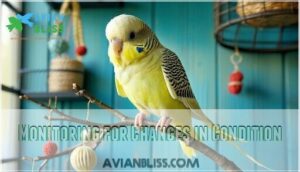
During recovery, watching your budgie for subtle changes can mean the difference between healing and complications. Think of yourself as their personal health detective—you know them best.
Keep tabs on these critical indicators:
- Eating habits and drinking habits: Normal appetite shows they’re bouncing back, while decreased consumption signals trouble
- Behavioral changes and vocalization changes: Less chirping, unusual quietness, or increased aggression may indicate pain or discomfort
- Droppings analysis: Color, consistency, and frequency changes reveal internal health status and hydration levels
- Signs of wing injury progression: Watch for increased swelling, new bruising, or worsening mobility issues
If your budgie lifting one wing doesn’t improve within 48 hours, or you notice concerning behavioral shifts, it’s time for veterinary care. Trust your instincts—avian health deteriorates quickly, and early intervention prevents minor issues from becoming major problems.
When to Seek Veterinary Care
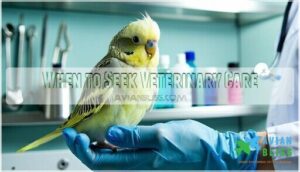
You should contact your vet immediately if your budgie shows severe wing droop, can’t fly, or displays clear signs of pain like excessive vocalization or feather plucking.
Don’t wait if there’s no improvement after 48 hours of home care, as delayed treatment can lead to permanent wing damage or complications.
Severe Wing Droop or Inability to Fly
Serious complications require immediate attention when your budgie shows severe wing droop or can’t fly. Emergency treatment becomes critical if a wing injury involves potential fracture assessment by an avian veterinarian. Don’t wait—these symptoms often indicate underlying damage that needs professional intervention.
Here’s when you can’t afford to wait:
- Wing droop persists beyond 24 hours despite providing rest and a quiet environment
- Complete flight inability with visible swelling or deformity around the wing joint
- Fracture signs present including awkward wing positioning or reluctance to move
- Breathing difficulties accompany wing problems, suggesting systemic complications
An avian veterinarian will evaluate surgical options and prognosis factors based on examination findings. Early intervention dramatically improves outcomes—studies show 85% better recovery rates with prompt treatment. Post-operative care requirements vary, but timely professional assessment prevents permanent flight ability loss and reduces amputation risks.
Signs of Pain or Discomfort
Beyond wing droop, watch for behavioral changes that signal your budgie is in pain. When a budgie lifting one wing becomes constant rather than occasional stretching, it’s often paired with other distress signals that shouldn’t be ignored.
Pain manifests in subtle but telling ways:
- Feather plucking – Your bird obsessively pulls at feathers, especially around the affected wing area
- Excessive vocalization – Unusual squeaking, screaming, or constant chirping that’s different from normal chatter
- Appetite changes – Refusing favorite foods or barely touching their seed mix
- Lethargic behavior – Sitting hunched at the bottom of the cage instead of perching actively
- Breathing difficulty – Rapid, labored breathing or tail bobbing with each breath
These signs often appear together when injury or illness strikes. A budgie health and care emergency develops when multiple symptoms occur simultaneously. Don’t wait if your bird shows prolonged stillness, refuses interaction, or exhibits open-mouth breathing alongside wing problems.
No Improvement After Home Care
If there’s no improvement within 48 hours of home care, contact an avian veterinarian immediately.
Persistent symptoms like continued wing droop, lethargy, or eating problems signal that diagnostic delays could worsen your budgie’s prognosis concerns. Don’t wait—veterinary urgency matters with budgie injury treatment, as diagnostic tests can reveal hidden issues requiring specific treatment options.
Prevention Tips for Wing Injuries
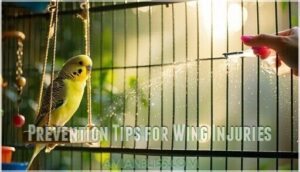
You can prevent most wing injuries by creating a safe environment and maintaining your budgie’s health through proper care.
Regular exercise, a balanced diet, and routine vet checkups will keep your feathered friend’s wings strong and injury-free.
Most wing injuries happen because of accidents you can easily avoid. Keep your budgie’s flight space clear of hazards, feed them well, and schedule regular vet visits to catch problems early.
A good diet, plenty of flying time, and regular vet visits go a long way toward keeping those wings healthy and preventing injuries down the road.
Creating a safe environment prevents wing injuries and protects your budgie’s wellbeing. Remove sharp edges, toxic materials, and environmental factors that threaten budgie care.
- Cage bar spacing – Confirm bars are 1/2 to 5/8 inch apart to prevent head or wing entrapment
- Perch safety – Choose natural wood perches without sharp edges or toxic finishes
- Toy hazards – Inspect toys regularly for broken parts, loose strings, or small pieces
- Supervised playtime – Monitor your budgie during out-of-cage time to avoid accidents
Providing Regular Exercise and Flight Opportunities
Think of your budgie’s wings as their personal gym equipment—they need regular workouts to stay strong and prevent lifting issues. Active flight strengthens wing muscles, improves joint flexibility, and reduces the risk of injury-related wing lifting behaviors.
Flight space design matters more than you might think. Your budgie needs room to spread their wings fully and perform natural flight patterns. Supervised free flight sessions outside the cage provide essential physical activity and mental stimulation that caged birds desperately crave.
Here’s how to create the perfect exercise routine:
- Set up obstacle courses using perches at different heights to encourage varied flight movements and wing muscle engagement
- Rotate toy enrichment weekly to maintain interest and promote active exploration during flight sessions
- Schedule consistent flight times during your budgie’s most active periods, usually morning and early evening
Regular exercise routines prevent obesity and muscle weakness—two major contributors to wing problems. A safe environment with clear flight paths lets your budgie build the wing strength needed to avoid lifting one wing due to compensation for weakness. Strong, well-exercised wings mean fewer behavioral wing displays and better overall health.
Offering a Balanced and Nutritious Diet
Why does proper nutrition matter so much for wing health? Dietary deficiencies can weaken your budgie’s muscles and bones, making wing injuries more likely.
A balanced diet should include high-quality pellets, seed variety, and fresh foods like leafy greens and carrots. These provide essential calcium sources and prevent vitamin D deficiency.
Your budgie’s wing strength comes down to what’s in their food bowl.
When birds don’t get proper nutrition, their wing muscles and bones get weaker, setting them up for injuries that could have been avoided.
Scheduling Annual Veterinary Checkups
Regular vet checkups with an avian veterinarian offer early disease detection and preventative care benefits. These cost-effective health visits help you build vet rapport while creating individualized health plans for your budgie.
During the physical examination, vets spot wing problems before they worsen.
Taking your budgie to an avian vet regularly is one of the smartest things you can do. These visits catch health problems early, before they become serious (and expensive). Plus, your vet gets to know your bird’s normal baseline, which makes spotting changes much easier.
During checkups, vets can spot wing issues that you might miss at home. They know exactly what to look for.
Think of regular vet visits as an investment in your budgie’s long-term health. Professional care gives you peace of mind that home monitoring just can’t match.
You’ll find that real budgie owners have faced similar wing-lifting situations, and their experiences can help you understand what to expect.
These stories show how different causes require different approaches, from simple environmental changes to veterinary intervention.
Other budgie owners have faced this same wing-lifting behavior, and their experiences show what might be going on with your bird.
What you’ll find is that each situation needed its own solution—sometimes a simple room adjustment did the trick, other times it meant a vet visit.
Shiraarat’s wing injury offers valuable lessons for budgie owners. This budgie, named Smoke, broke his wing but successfully recovered through careful management. His Recovery Timeline spanned several weeks, moving between a hospital cage and aviary as healing progressed.
Shiraarat’s Diagnosis revealed blood loss from self-plucking behavior. Treatment Details included topical sprays and a custom leather shield to protect wounds. Anti-pick collars didn’t work since they affected his balance.
The Emotional Impact was clear—Smoke needed specialized food and water access points during recovery. He used "handicapped routes" around his cage while his wing injury healed.
Lessons Learned include monitoring plucking behavior closely and adapting care strategies when wounds reopen. An avian veterinarian should evaluate any budgie showing persistent wing problems or injury signs that don’t improve with home care.
The Importance of Wing Clipping and Development
Wing clipping decisions directly impact your budgie’s physical and psychological development. While some owners consider clipping benefits like preventing escapes, improper technique can cause lasting problems. One budgie lost flight ability after poor clipping but recovered within five weeks through natural feather development.
Flight Restriction affects more than mobility—it influences confidence and muscle strength. Your veterinarian should assess each bird individually before any wing clipping procedure. Behavioral Impact includes stress responses and reduced exercise opportunities.
Consider these Ethical Concerns when weighing wing clipping:
- Your budgie’s natural flight instincts become suppressed
- Muscle weakness develops from restricted movement
- Balance problems emerge during recovery periods
- Emotional distress occurs from lost mobility
- Social dynamics change within bird communities
Poor clipping technique requires 4-6 weeks for full recovery. Some cases need artificial feather transplants performed by avian specialists. Professional assessment prevents wing injury complications and ensures your budgie maintains healthy development patterns throughout the process.
Cockatiel Wing Care and Health Tips
Feather-management success stories teach us valuable lessons about cockatiel wing care. Properly wrapped cockatiel wing injuries can heal in a few weeks if the wing isn’t completely broken. When DaVinci injured a wing feather, immediate Environmental Enrichment through quarantine housing provided stress-free recovery. Topical coconut oil and turmeric aided natural healing without veterinary intervention.
| Care Aspect | Action |
|---|---|
| Wing Feather Health | Monitor for broken blood feathers during Molting Assistance |
| Flight Feather Trimming | Consult avian veterinarian for proper technique |
| Perch Placement | Position varied heights to prevent wing strain |
| Injury Response | Move to quiet hospital cage immediately |
| Recovery Monitoring | Watch for budgie lifting one wing as pain indicator |
Frequently Asked Questions (FAQs)
Why do budgies hold their wings out?
Your budgie holds wings out for several reasons: stretching muscles, cooling down when overheated, displaying dominance, relieving molting discomfort, or signaling injury or illness requiring attention.
Why do budgies tremble?
One moment your budgie’s calm and content, the next they’re shaking like a leaf. Your bird trembles from cold, excitement, fear, illness, or stress.
Check room temperature first—budgies need warmth around 70-75°F to feel comfortable.
Why do budgies shake their wings?
Your budgie shakes their wings for several reasons: stretching muscles after rest, cooling down when warm, displaying emotions like excitement, or signaling discomfort from injury or illness requiring attention.
What does a budgie do after preening?
Picture Charlie, your budgie, finishing up his morning grooming routine. After preening, your budgie will puff up and shake everything into place with one violent shudder, then swiftly wag its tail to complete the session.
Why does my Budgie keep shaking?
Shaking usually signals cold temperatures, excitement, stress, or illness. Check if your bird’s environment is warm enough.
Monitor for other symptoms like lethargy or appetite changes that might indicate veterinary care is needed.
Is a budgie wing shaking normal?
Calm feathers versus frantic flapping — that’s the difference between normal and concerning wing shaking.
Yes, it’s perfectly normal when you see it after preening, excitement, or muscle warm-up, but watch for accompanying lethargy or appetite loss.
What does it mean when a bird lifts one wing?
When your bird lifts one wing, it’s usually stretching muscles, regulating body temperature, or showing comfort. However, persistent lifting may indicate wing injuries, infections, or pain requiring veterinary attention.
Why is my bird raising one wing?
Your bird’s raising one wing usually signals normal stretching behavior, thermoregulation for cooling, or potential discomfort from injury, infection, or stress. Monitor for accompanying symptoms like lethargy or appetite changes.
Why does my budgie keep lifting his wings?
Like a feathered weathervane, your budgie’s wing lifting signals something’s happening.
He’s likely stretching muscles, cooling down, or showing mild discomfort.
Watch for pain signs, confirm proper temperature, and consult your vet if it persists beyond normal stretching behavior.
What does it mean when a bird lifts its wings?
When birds lift their wings, they’re usually stretching muscles, cooling down, or signaling discomfort. It’s normal behavior for exercise, but persistent lifting might indicate injury or illness requiring attention.
When you see a bird lifting its wings, it’s often just stretching after sitting still or trying to cool off on a hot day. Sometimes they’ll do this when something’s bothering them too.
It’s pretty normal to see during their daily routine, but if a bird keeps doing it over and over, that could mean something’s wrong—maybe an injury or they’re feeling sick.
Understanding why your budgie is lifting one wing can be absolutely vital for their health and wellbeing. From minor muscle strain to serious injury, this behavior signals something needs attention.
You’ve learned to spot warning signs like swelling, flight difficulty, and pain indicators. While you can provide supportive home care for mild cases, don’t hesitate to contact an avian veterinarian when symptoms persist or worsen.
If you see your budgie lifting one wing, don’t ignore it. This behavior isn’t random—it’s your bird’s way of telling you something’s wrong.
When your budgie lifts one wing, it’s their way of telling you something’s wrong and needs your attention
Whether it’s a simple muscle ache or something more serious, that lifted wing deserves your attention.
- https://www.omlet.co.uk/guide/budgies/budgie_behaviour/normal_behaviour/
- https://theworldsrarestbirds.com/why-is-my-budgie-lifting-one-wing/
- https://www.youtube.com/watch?v=se0uegDpCCc
- https://birdsupplies.com/blogs/news/how-to-tell-if-your-bird-is-in-pain
- https://www.veterinary-practice.com/article/pain-management-in-the-avian-patient