This site is supported by our readers. We may earn a commission, at no cost to you, if you purchase through links.
 Your bird’s excessive sleep often signals health issues, environmental stress, or nutritional problems.
While most birds need 10-12 hours daily, sleeping substantially more could mean illness, parasites, or organ problems.
Poor lighting disrupts their natural rhythms, while temperature extremes and noise cause restless sleep.
Vitamin deficiencies drain energy, making them lethargic.
Watch for warning signs like ruffled feathers, dull eyes, hunched posture, and changes in eating or vocalization.
Normal sleep involves relaxed birds who respond quickly to stimuli.
Lethargy means persistent sluggishness with minimal responses.
Simple fixes like proper lighting schedules, balanced nutrition, and quiet sleep spaces often help, but persistent excessive sleeping warrants veterinary attention to rule out serious conditions.
This is crucial for identifying underlying organ problems or other severe illness that may require immediate care.
Table Of Contents
- Key Takeaways
- Why is My Bird Sleeping So Much?
- Normal Sleep Patterns in Birds
- Causes of Excessive Sleepiness in Birds
- Signs of Illness Vs. Normal Sleep Behavior
- Environmental Factors Affecting Bird Sleep Patterns
- Dietary Influences on Bird Energy Levels
- Medical Conditions Causing Excessive Bird Sleep
- Stress and Anxiety in Birds
- Improving Your Bird’s Sleep Environment
- When to Seek Veterinary Care
- Frequently Asked Questions (FAQs)
- Why does my Budgie sleep at night?
- Why is my parrot sleeping so much?
- Why is my Budgie sleeping too much?
- Do budgies sleep too much?
- How much sleep do birds need?
- Why does my parrot feel under the weather?
- What does it mean when a bird sleeps a lot?
- How do you tell if a bird is sleeping or sick?
- Is it normal for birds to be sleepy?
- Why does my bird always look tired?
- Conclusion
Key Takeaways
- Watch for warning signs beyond just extra sleep – if your bird has ruffled feathers, dull eyes, poor appetite, or doesn’t respond when you approach, you’re dealing with illness rather than normal tiredness
- Check your bird’s environment first – poor lighting schedules, wrong temperatures, excessive noise, or bad cage placement can mess up their natural sleep cycles and leave them constantly exhausted
- Don’t ignore nutritional problems – vitamin deficiencies, poor diet quality, or feeding schedule issues drain your bird’s energy and force them to sleep more as their body struggles to function properly
- Get veterinary help when sleep issues persist – if environmental fixes and proper nutrition don’t solve the problem within a few days, you need an avian vet to rule out infections, parasites, or organ problems
Why is My Bird Sleeping So Much?
Excessive sleep in your feathered friends often signals underlying health issues that deserve attention.
While normal Bird Sleep Cycles and Patterns involve 10-12 hours of rest, Pet Bird Behavior changes like sleeping beyond these Avian Rest Patterns can indicate Bird Sleep Disorders.
Unlike Wild Bird Habits, captive birds face unique stressors affecting their sleep patterns.
Captive birds deal with stress that wild birds never face in their natural homes
Feathered Friends Health depends on recognizing when excessive sleep becomes concerning.
Environmental factors, infections, or nutritional deficiencies commonly disrupt healthy Sleep Disorders in Birds, making early detection essential for addressing bird health issues.
Normal Sleep Patterns in Birds
Understanding your bird’s sleep patterns is essential for spotting potential health issues early.
Most birds need 10-12 hours of uninterrupted sleep daily, with parakeets and parrots following natural daylight cycles that mirror their wild counterparts.
Daily Sleep Duration for Different Bird Species

Your bird’s sleep needs depend entirely on their species. Different birds have unique Daily Sleep Cycles that affect their energy levels.
Here’s what you should know about Species Sleep Needs:
- Parrots need 10-12 hours – African Greys and smaller species like budgies require consistent Nocturnal Birds rest for immune health
- Songbirds sleep 10-14 hours – Zebra finches and canaries average 11-13 hours in controlled environments
- Chickens require 8-9 hours – Domestic fowl need several deep sleep cycles for ideal egg production
- Wild birds vary widely – Forest songbirds can sleep up to 15 hours during winter months
Understanding normal Avian Rest Duration helps you spot when excessive sleep becomes concerning.
Typical Sleep Positions and Behaviors
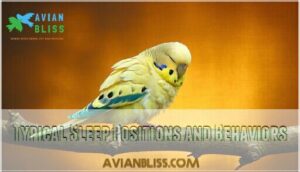
During sleep, your bird will naturally adopt several characteristic sleep postures and resting behaviors that signal healthy budgie sleep patterns.
- One-leg standing: Birds tuck one leg up to conserve body heat
- Head tucking: They nestle their head under a wing for warmth and security
- Feather puffing: Fluffed plumage creates insulation during rest
- Gentle swaying: Slight movement while perched indicates light sleep phases
- Eye monitoring: Occasional eye-opening shows they’re alert to surroundings
These roosting habits and perch preferences are perfectly normal sleeping environment behaviors.
Understanding bird sleep patterns is essential for identifying potential health issues in your pet bird.
Factors Affecting Bird Sleep Cycles
Light exposure plays the biggest role in your bird’s circadian rhythms. Natural sunlight and artificial lighting directly impact when your feathered friend feels sleepy or alert.
Environmental stress from temperature swings, humidity changes, or household noise can throw off normal sleep patterns.
Even your bird’s age and species affect how environmental factors influence their rest. Understanding these variables helps you spot when something’s disrupting their natural bird behavior.
Importance of Consistent Sleep Routines

Routine serves as your bird’s internal compass, guiding healthy sleep patterns and daily routines.
Consistent schedules prevent inadequate sleep while supporting ideal rest patterns and sleep quality.
Like clockwork, regular sleep cycles help your feathered friend avoid excessive sleep issues.
Think of it as their nightly beauty sleep ritual—predictable timing strengthens bird habits and promotes better health.
Even power napping becomes more effective with structured routines.
Causes of Excessive Sleepiness in Birds

If you’ve noticed your feathered friend snoozing more than usual, several factors could be at play.
Medical conditions, environmental changes, dietary issues, and stress can all trigger excessive sleepiness in birds.
Medical Conditions Leading to Increased Sleep
While normal sleep patterns keep birds healthy, medical conditions can transform your chirpy companion into a feathered sleepyhead.
When underlying illness strikes, excessive sleep often signals your bird’s body is fighting something serious.
Several medical conditions commonly cause increased sleep in birds:
- Infections – Bacterial, viral, or fungal invaders like psittacosis drain energy and cause chronic fatigue
- Respiratory problems – Air sacculitis and pneumonia impair oxygen flow, leading to constant tiredness
- Parasites – Internal worms and external mites steal nutrients, leaving birds exhausted
- Organ failure – Liver or kidney dysfunction disrupts normal body functions
- Hormonal issues – Thyroid problems and reproductive changes alter sleep-wake cycles
These conditions don’t just make birds sleepy – they’re red flags waving frantically.
If your bird’s snoozing more than a teenager on summer vacation, contact an avian veterinarian immediately.
Early diagnosis prevents minor issues from becoming major health crises.
Environmental Factors Influencing Sleep Patterns
Environmental disruptions can hijack your bird’s sleep patterns faster than you’d think.
Poor Light Exposure, Noise Pollution, and unstable Temperature Control create chaos in their routine.
Humidity Levels and Air Quality matter too—stuffy conditions drain energy.
Your bird’s Sleeping Environment needs consistency.
Draft-free placement, proper lighting cycles, and quiet spaces prevent excessive sleep.
Simple environmental modifications restore natural rhythms and healthy alertness.
Dietary Issues Affecting Energy Levels
Your bird’s diet plays a bigger role in their sleep patterns than you might think.
Poor nutritional choices can leave your feathered friend feeling sluggish and craving extra shut-eye. Nutritional deficiencies directly impact energy levels, making excessive sleep a red flag for dietary issues.
Three key nutritional problems causing fatigue include:
- Vitamin imbalance – especially B vitamins essential for energy metabolism
- Mineral deficits – iron and calcium shortages drain vitality
- Inadequate caloric intake – insufficient fuel for daily activities
Food allergies can also trigger lethargy. Your bird’s nutritional needs require balanced avian nutrition featuring quality pellets, fresh vegetables, and appropriate proteins to maintain proper energy levels.
Stress and Anxiety Impacts on Bird Sleep
Just like people, your bird can’t sleep when anxiety strikes.
Stress and anxiety create sleep disruptions that leave birds exhausted during daylight hours.
Bird stressors include loud noises, cage changes, or new pets.
These anxiety triggers cause emotional distress that fragments normal sleep patterns.
Environmental pressures like inconsistent lighting worsen the problem.
Watch for excessive sleep paired with feather plucking or aggression.
Behavioral therapy through routine establishment helps restore healthy rest cycles and reduces anxious behaviors.
Signs of Illness Vs. Normal Sleep Behavior
You need to watch for key differences between normal sleep and signs of illness in your feathered friend.
While healthy birds sleep peacefully and respond when approached, sick birds often appear lethargic, unresponsive, and may show additional warning signs like changes in appetite or behavior.
Distinguishing Between Sleepiness and Lethargy

Spotting the difference between normal sleepiness and concerning lethargy can save your bird’s life.
Sleep patterns in healthy birds follow predictable cycles, while lethargy signs appear suddenly and persist regardless of stimulation.
| Aspect | Normal Sleepiness | Concerning Lethargy |
|---|---|---|
| Response to stimuli | Quick alertness when approached | Minimal or no response |
| Timing | Follows natural sleep patterns | Occurs during active hours |
| Recovery | Returns to normal activity | Persistent sluggishness |
| Physical state | Relaxed posture, normal breathing | Droopy wings, labored breathing |
Bird behavior changes tell the story. Healthy birds wake up ready for action, while lethargic ones remain unresponsive.
Health checks become important when excessive sleep combines with other fatigue causes like poor appetite or reduced vocalization.
Physical Symptoms Accompanying Excessive Sleep
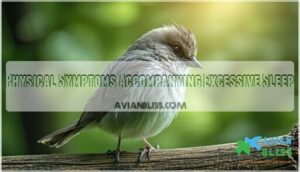
Three telltale signs reveal when excessive sleep signals trouble brewing.
Your bird’s physical appearance transforms dramatically during illness, creating unmistakable warning signals that demand attention.
| Physical Sign | Healthy Bird | Sick Bird |
|---|---|---|
| Feather Position | Smooth, sleek against body | Ruffled feathers or fluffed feathers constantly |
| Eye Appearance | Bright, alert, clear | Dull eyes, half-closed, sunken |
| Body Posture | Upright, balanced stance | Hunched, puffed up, weight loss visible |
Watch for these red flags accompanying lethargy: persistent feather fluffing indicates fever, while dull eyes suggest serious illness.
Weight loss becomes apparent when birds appear smaller or their breastbone feels more prominent.
Changes in Eating and Drinking Habits

Appetite changes often signal trouble brewing beneath your bird’s feathers. Monitor food intake closely—healthy birds maintain consistent eating habits throughout the day. Water quality matters too, as dehydration compounds sleep patterns disruptions.
| Normal Behavior | Warning Signs |
|---|---|
| Regular feeding schedule adherence | Refusing favorite foods |
| Steady water consumption | Drinking excessively or barely touching water |
| Active foraging behavior | Ignoring avian nutrition needs |
| Consistent appetite patterns | Nutritional deficiencies developing from poor intake |
Excessive sleep paired with appetite loss suggests bird health issues requiring immediate attention. Recognizing bird behavior changes is vital for identifying potential health problems in your bird.
Alterations in Vocalization and Activity Levels

Beyond eating habits, your bird’s vocal changes and activity levels reveal important health clues.
A normally chatty bird that suddenly goes quiet may be conserving energy due to illness.
| Normal Behavior | Warning Signs |
|---|---|
| Regular chirping/talking | Unusual silence or weak vocalizations |
| Active play with toys | Decreased interest in favorite activities |
| Frequent wing stretching | Less movement, staying on one perch |
| Social interaction | Withdrawal from family members |
| Alert posture | Hunched, lethargic positioning |
These behavioral shifts often accompany excessive sleep and indicate your feathered friend needs veterinary attention.
Environmental Factors Affecting Bird Sleep Patterns

Your bird’s environment plays a vital role in determining how much it sleeps each day.
Poor lighting, wrong temperatures, excessive noise, or bad cage placement can disrupt natural sleep cycles and leave your feathered friend feeling constantly tired, which is why environment is crucial.
Lighting Conditions and Their Impact
Light exposure dramatically shapes your bird’s circadian rhythms and sleep patterns.
Artificial night lights or inconsistent daylight cycles can trigger sleep deprivation in parakeets and budgies.
Your feathered friend needs:
- 12 hours of darkness nightly for proper melatonin production
- Full-spectrum UV lighting during daytime hours
- Blackout covers to block streetlights and electronics.
Maintaining consistent light schedules prevents the sleep disruptions that leave your budgie snoozing all day.
Temperature and Humidity Considerations
Temperature affects your feathered friend’s sleep patterns more than you might think.
Birds need thermal comfort between 65-75°F with proper humidity levels around 50-60%. Poor climate control disrupts their natural sleep cycles, causing excessive drowsiness.
| Temperature Issue | Sleep Impact |
|---|---|
| Too Hot (80°F+) | Restless, frequent waking |
| Too Cold (60°F-) | Extended sleep periods |
| High Humidity (70%+) | Labored breathing, fatigue |
| Low Humidity (30%-) | Dehydration, lethargy |
Proper ventilation systems maintain air quality while supporting your bird’s sleeping environment and overall avian health.
Noise Levels and Sleep Disturbances
Birds need quiet environments for healthy sleep patterns.
Sound pollution from household noises creates sleep disruptions that affect your bird’s rest cycle.
Excessive audio distractions lead to sleep deprivation, impacting budgie sleeping and parakeet sleeping habits.
Common sources of sonic interference include:
- Television volume during nighttime hours
- Neighborhood dogs barking consistently
- Early morning garbage collection trucks
- Household appliances running overnight
Environmental factors like noise reduction substantially improve sleep quality.
Consider relocating your bird’s cage away from high-traffic areas or using white noise machines to mask disruptive sounds.
Cage Placement and Sleep Quality
Your bird’s cage location determines whether they’ll get quality beauty sleep or turn into a cranky feathered friend.
Position the cage away from high-traffic areas to minimize noise reduction needs and prevent sleep deprivation.
Poor cage size and inadequate ventilation systems compound sleep issues.
Strategic placement creates the ideal sleep environment for healthy sleep patterns.
Considering the ideal bird cage location is vital for a peaceful atmosphere.
| Location Factor | Good Choice | Poor Choice |
|---|---|---|
| Room Position | Quiet corner, stable temperature | Hallway, kitchen, busy areas |
| Light Exposure | Natural light cycles, dimmable evening | Constant bright lights, TV glare |
| Air Quality | Good ventilation, draft-free | Near heating vents, smoky areas |
Dietary Influences on Bird Energy Levels

Your bird’s diet directly affects its energy levels and sleep patterns.
Poor nutrition can leave your feathered friend feeling sluggish and sleeping more than usual, while a balanced diet keeps them alert and active throughout the day.
Nutritional Deficiencies Causing Fatigue
Poor nutrition can turn your energetic bird into a drowsy companion. Vitamin deficit, mineral imbalance, and protein lack create malnutrition effects that drain energy levels.
A malnourished bird is a sleepy bird—proper nutrition fuels alertness and vitality
Dietary insufficiency disrupts normal metabolism, causing fatigue and altered sleep patterns. When your bird lacks essential nutrients, their body can’t produce adequate energy.
Nutritional deficiencies force birds to sleep more as their systems struggle. Proper avian nutrition prevents these excessive sleeping causes.
Ensuring a balanced diet with the right bird food supplements is essential for maintaining your bird’s energy levels.
Proper Balance of Nutrients for Optimal Energy
Your feathered companion’s energy levels depend on getting the right nutritional balance. Think of it like tuning a race car – every component matters for peak performance.
Here’s what your bird needs for optimal Avian Nutrition and Diet:
- Protein Sources: 10-20% of diet from pellets, legumes, and cooked eggs
- Caloric Intake: Balanced carbohydrates (40-60%) for sustained energy
- Vitamin Needs: Fresh vegetables provide A, B-complex vitamins for alertness
- Mineral Balance: Calcium and trace minerals prevent weakness and fatigue
- Nutrient Ratio: Avoid high-fat seeds that cause lethargy and excessive sleeping causes
Understanding the importance of balanced bird diets is vital for maintaining your bird’s overall health and energy.
Nutritional deficiencies directly impact sleep patterns and Bird Behavior and Psychology, so proper balance keeps your bird active and alert.
Feeding Schedules and Their Effect on Sleep
Your bird’s feeding routines directly impact their sleep patterns and energy levels.
Consistent meal frequency helps regulate their internal clock, preventing sleep disruptions from hunger or digestive stress.
Late feeding can interfere with parakeet sleeping habits, while irregular food timing creates energy spikes and crashes.
Establish regular dietary adjustments with balanced avian nutrition to maintain steady energy throughout the day.
Proper nutrient balance prevents nutritional deficiencies that cause excessive budgie sleeping and fatigue.
Hydration and Its Role in Bird Alertness
Proper water intake keeps your feathered friend alert and energetic.
Dehydration signs include excessive sleeping, droopy posture, and reduced activity. Poor fluid balance disrupts normal sleep patterns, making your budgie sleeping more than usual.
Parakeet sleeping habits change when electrolyte levels drop. Bird hydration affects energy directly – dehydrated birds show fatigue and lethargy.
Fresh water daily prevents these issues and maintains healthy alertness.
Medical Conditions Causing Excessive Bird Sleep
Several medical conditions can cause your bird to sleep more than usual, signaling potential health problems that need attention.
Understanding these underlying issues helps you recognize when excessive sleep becomes a serious concern requiring veterinary care.
Common Illnesses Affecting Sleep Patterns
Behind every sleepy bird lies a potential health concern that shouldn’t be ignored.
When your feathered friend sleeps excessively, underlying illness often plays a role.
Bacterial infections like psittacosis can trigger fatigue in up to 70% of affected birds, while respiratory issues create breathing difficulties that exhaust your pet.
Common culprits include:
- Bacterial infections – Psittacosis and mycobacteriosis cause chronic tiredness
- Respiratory issues – Aspergillosis leads to wheezing and weakness
- Avian diseases – Polyomavirus particularly affects young birds
- Metabolic disorders – Liver disease and diabetes disrupt normal sleep patterns
Parasitic Infections and Their Symptoms
Parasites can turn your feathered friend into a sleepy companion.
Bird Parasites like mites, lice, and internal worms drain energy fast.
Infection Signs include ruffled feathers, weight loss, and increased sleep.
Parasite Detection requires close observation of behavior changes and physical symptoms.
Sleep Disorders often accompany Avian Pathogens.
Respiratory issues may develop alongside parasitic infections.
Bird Illness Symptoms warrant immediate avian vet consultation for proper diagnosis and treatment.
Don’t wait—early intervention saves lives.
Recognizing common illness signs is essential for maintaining your bird’s health.
Hormonal Imbalances and Sleep Disturbances
Hormonal changes throw your bird’s endocrine system out of whack, disrupting normal sleep cycles.
During molting patterns or breeding seasons, hormone regulation goes haywire. Your budgie sleeping excessively might signal underlying illness beyond simple fatigue. These imbalances create a domino effect throughout bird behavior.
Watch for these warning signs:
- Aggressive territorial displays – your gentle companion suddenly becomes a feathered tyrant
- Obsessive preening – they’re grooming like their life depends on it
- Dramatic appetite swings – one day they’re ravenous, the next they won’t touch their favorite seeds
Respiratory Issues Leading to Increased Fatigue
When breathing becomes a battle, your bird’s energy takes a nosedive. Respiratory issues force birds to work harder just to get oxygen, leaving them exhausted and seeking extra sleep to recover.
Watch for these warning signs of breathing difficulty:
- Tail bobbing – like a metronome keeping time with each labored breath
- Open-mouthed breathing – gasping for air like a fish out of water
- Wheezing sounds – whistling or clicking noises during respiration
- Feather fluffing – your bird’s attempt to conserve energy while fighting infection
Airway obstruction, lung infection, or tracheal issues can trigger avian pneumonia, creating a vicious cycle where underlying illness causes sleep deprivation, which weakens immunity further. Don’t ignore these red flags – respiratory problems require immediate veterinary attention.
Stress and Anxiety in Birds

Just like humans, your bird’s stress levels can seriously mess with their sleep schedule.
When birds feel anxious or overwhelmed by changes in their environment, social dynamics, or daily routine, they often cope by sleeping more than usual, which can be related to their overall anxious state.
Identifying Stressors in The Bird’s Environment
Your feathered friend’s excessive sleep might signal environmental stress. Look for noise pollution from traffic, construction, or household commotion.
Check for social isolation if they’re alone too long. Cage stress from cramped quarters or poor placement creates anxiety.
Environmental toxins like cleaning products, candles, or cooking fumes affect air quality. These factors trigger stress and emotional distress, leading to increased sleep.
Behavioral Changes Indicating Stress or Anxiety
When you know the environmental stressors, watch for your bird’s behavioral responses to stress and anxiety. Birds show emotional distress through clear behavioral changes that signal trouble.
Stress Signals appear as sudden shifts in normal routines. Your bird might start feather plucking obsessively or withdraw socially from family interactions. Vocal Changes range from excessive screaming to complete silence.
Watch for these key Bird Behavior Patterns:
- Physical behaviors – repetitive pacing, aggressive cage biting, or constant preening
- Social withdrawal – avoiding interaction, hiding, or refusing to come out
- Sleep disruption – sleep deprivation from anxiety triggers or restless nights
These Anxiety Triggers create a cycle where stress leads to poor sleep, which increases behavioral problems. Behavioral therapy through environmental enrichment helps break this pattern.
Impact of Social Interactions on Sleep Patterns
Social interactions beyond your feathered friend’s cage can substantially disrupt their natural sleep patterns.
When birds live in groups, they experience frequent sleep interruptions from nearby companions, creating synchronized waking throughout the night that reduces overall sleep quality.
Here’s how Social Bonding and Group Behavior affect your pet’s rest:
- Flock Dynamics cause birds to wake each other periodically, sacrificing individual sleep for maintaining social connections
- Bird Companions create noise and movement that fragments sleep cycles, especially in multi-bird households
- Sleep Synchronization means your budgie sleeping patterns mirror those of nearby birds, not their natural rhythms
- Proximity to multiple companions typically results in less total sleep and decreased rest quality
Understanding these Bird Behavior Patterns helps explain why your solo bird might sleep better than those in groups, making Pet Bird Care adjustments vital for Parakeet Health Issues.
Research on sleep disruption effects can provide valuable insights into addressing sleep-related problems in birds.
Techniques for Reducing Bird Stress Levels
Reducing your feathered friend’s stress requires targeted Environmental Enrichment and consistent Social Interaction.
Start with Calming Music during quiet hours to ease anxiety. Gentle Bird Massage around the head and neck promotes Relaxation Techniques that combat stress and anxiety.
Rotate toys weekly to prevent boredom-induced fatigue. Maintain predictable feeding schedules and interaction times.
If sleep deprivation persists despite these efforts, consult an avian vet immediately for thorough evaluation.
Improving Your Bird’s Sleep Environment

Creating the perfect sleep environment for your bird isn’t just about turning off the lights—it’s about mimicking nature’s rhythm in your home.
A well-designed sleep space can transform your restless feathered friend into a content, healthy companion who gets the quality rest they need, leading to a more healthy life.
Creating an Ideal Sleep Space
Setting up the perfect sleeping area transforms your bird’s rest from restless to restorative. Your feathered friend deserves a sanctuary that promotes quality beauty sleep and prevents sleep deprivation.
Cage design matters more than you’d think. Position the cage away from high-traffic areas to minimize disturbances. Lighting control is essential – use blackout covers or dimmer switches for gradual transitions. Maintain temperatures between 65-75°F to prevent fatigue from temperature stress. Using bird cage covers can also help regulate the sleep environment.
Noise reduction strategies include:
- White noise machines that mask sudden sounds keeping your budgie sleeping peacefully
- Soundproofing materials around the cage area for ultimate tranquility
- Strategic placement away from televisions, appliances, and busy hallways
- Soft furnishings that absorb harsh echoes and create acoustic comfort
Bedding options like natural wood perches support proper foot positioning, while clean substrate prevents feather fluffing from irritation.
Establishing Consistent Sleep Routines
How do you guarantee your bird gets quality beauty sleep?
Establish consistent Sleep Schedules and stick to a Daily Routines pattern.
Set a regular Bird Bedtime around sunset, gradually dimming lights beforehand.
This Routine Enforcement prevents Sleep Deprivation and Fatigue in your feathered friend.
Budgie Sleeping patterns improve dramatically with predictable schedules.
Your bird’s internal clock will thank you, reducing Budgie Health Issues while optimizing their Sleep Environment naturally.
Providing Mental and Physical Stimulation
Active birds sleep better at night. Budgie sleeping patterns improve when you prevent sleep deprivation through engaging activities that combat fatigue and stress and anxiety.
- Toys and Games: Rotate puzzle feeders, foraging toys, and interactive challenges weekly. Mental stimulation prevents boredom while encouraging natural behaviors that tire your bird appropriately.
- Exercise Routines: Create supervised flight time and climbing opportunities. Environmental enrichment through perches, swings, and social interaction keeps your feathered friend physically active, ensuring quality beauty sleep.
Addressing Nighttime Disturbances
Nighttime disturbances can wreck your bird’s beauty sleep and trigger Parakeet Health Issues.
Create Quiet Hours by eliminating sudden noises that startle sleeping birds. Noise Reduction techniques like white noise machines mask disruptive sounds.
Avoid Night Lights near the cage – Dark Therapy works best for Budgie Sleeping patterns.
Maintain consistent Sleep Schedules by covering the cage at the same time nightly.
If Bird Eye Problems or unusual behaviors persist despite improved sleep environments, contact Avian Veterinary Care immediately.
When to Seek Veterinary Care

Sometimes your bird’s sleepiness signals a serious health problem that needs immediate attention.
Knowing when to call your vet can mean the difference between a quick recovery and a life-threatening situation.
Red Flags Indicating Serious Health Issues
While proper sleep environments help, certain lethargy signs demand immediate attention.
Watch for fever symptoms like fluffed feathers and shaking in your unhealthy parakeet.
Bird eye problems, drooping wings, or respiratory failure with labored breathing signal serious trouble.
Bird paralysis, sudden weight loss, or underlying illness symptoms like changed droppings mean sleep disorders aren’t the issue—your bird needs emergency care now.
Importance of Regular Avian Check-ups
Regular avian check-ups aren’t just smart healthcare—they’re lifesavers for your feathered friend.
These routine visits catch problems before they become crises, saving you stress and money.
Your avian vet becomes familiar with your bird’s normal patterns, making unusual changes easier to spot.
Here’s why regular vet visits matter:
- Early disease detection through thorough physical exams and blood work
- Preventive measures like vaccinations and parasite screenings keep birds healthy
- Professional beak inspections and feather care guidance maintain ideal condition
- Baseline health records help track changes in your bird’s wellness over time
- Expert advice on nutrition, housing, and behavioral concerns from avian veterinary medicine specialists
These bird wellness appointments establish trust between you, your pet, and your veterinary care provider—creating a safety net that catches underlying illness before symptoms appear.
Preparing for a Vet Visit
Before heading to the avian veterinarian, gather your bird’s medical history and recent observations.
Document sleep patterns, eating habits, and unusual behaviors for the past week. Take photos of droppings and note any physical changes.
Prepare a PreVisit Checklist including symptoms, questions for the vet, and your bird’s routine.
Use a secure bird transport carrier with familiar perches.
This vet preparation helps your avian vet provide better veterinary care.
Follow-up Care and Monitoring Sleep Patterns
After your vet visit, monitor your budgie’s Sleep Tracking closely.
Watch for changes in their Sleep Cycle and Health Monitoring patterns. If your bird isn’t getting proper beauty sleep or keeps closing eyes during active hours, contact your vet immediately.
Consistent Veterinary Guidance helps maintain Bird Wellness. Document sleep changes for Pet Bird Care and Parakeet Health optimization.
Frequently Asked Questions (FAQs)
Why does my Budgie sleep at night?
Your budgie sleeps at night because they’re naturally diurnal creatures, following their internal clock that syncs with daylight cycles.
This normal behavior helps them rest, recharge, and maintain healthy cognitive function for the next day.
Why is my parrot sleeping so much?
Your parrot’s excessive sleep often signals illness, stress, or environmental issues. Watch for other symptoms like fluffed feathers, poor appetite, or lethargy. Schedule a vet visit promptly if you’re concerned.
Why is my Budgie sleeping too much?
Like a canary in a coal mine, your budgie’s excessive sleep signals potential trouble.
Illness, poor diet, stress, or environmental issues could be draining their energy, making them snooze more than normal, which is a sign of potential trouble.
Do budgies sleep too much?
Healthy budgies sleep 10-12 hours nightly. Excessive daytime sleeping signals illness, stress, poor diet, or environmental issues. You’ll notice lethargy, ruffled feathers, or appetite changes. Consult your vet promptly.
How much sleep do birds need?
Birds typically need 10-12 hours of sleep daily.
Your feathered friend’s sleep requirements vary by species, but most pet birds thrive with consistent darkness periods matching natural day-night cycles for ideal health.
Why does my parrot feel under the weather?
When clouds gather over your feathered friend’s spirit, illness often lurks beneath. You’re likely seeing signs of infection, nutritional deficiency, or environmental stress affecting your parrot’s well-being.
What does it mean when a bird sleeps a lot?
Excessive sleeping in birds often signals illness, stress, or environmental issues.
You’ll want to check for fluffed feathers, appetite changes, or lethargy – these warrant immediate vet attention for proper diagnosis.
How do you tell if a bird is sleeping or sick?
Like reading tea leaves, distinguishing sleepy birds from sick ones requires watching their responsiveness.
Healthy sleeping birds wake easily when approached, maintain normal postures, and show alertness during active hours.
Sick birds stay lethargic even when disturbed.
Is it normal for birds to be sleepy?
Yes, it’s completely normal for birds to feel sleepy.
They need 10-12 hours of sleep daily, just like humans need their beauty rest.
Your feathered friend isn’t being lazy—they’re following natural patterns that keep them healthy and alert.
Why does my bird always look tired?
Your bird’s tired appearance might signal illness, stress, poor nutrition, or environmental issues. Watch for fluffed feathers, appetite changes, or unusual behavior—these warrant immediate vet attention for proper diagnosis.
Conclusion
Sleeping solutions start with smart steps toward better bird health.
When you’re wondering "why is my bird sleeping so much," remember that excessive rest often signals underlying problems requiring attention.
Monitor your feathered friend’s behavior closely, create ideal sleep environments, and don’t hesitate to consult an avian veterinarian when warning signs appear.
Proper lighting, nutrition, and stress reduction can restore normal energy levels.
Your bird’s wellbeing depends on recognizing the difference between healthy rest and concerning lethargy that needs professional care.
- https://www.merckvetmanual.com/bird-owners/routine-care-and-safety-of-birds/illness-in-pet-birds
- https://exoticdirect.co.uk/news/parrots-and-sleeping/
- https://vcahospitals.com/know-your-pet/recognizing-the-signs-of-illness-in-pet-birds
- https://www.omlet.us/guide/parakeets/health_problems/disease_symptoms/
- https://lafeber.com/pet-birds/your-birds-health/