This site is supported by our readers. We may earn a commission, at no cost to you, if you purchase through links.
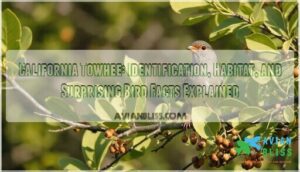 The California Towhee is the wallflower of West Coast yards—big, brown, with a thick, seed-cracking bill and a knack for quick double-scratching in leaf litter.
You’ll spot it darting under bushes from Oregon down to Baja, usually alone or paired up, defending its patch like a tiny bouncer.
Its muted brown feathers sport just a hint of orange under the tail, giving away its identity to sharp-eyed locals.
Urban or wild, this bird adapts easily, munching seeds, berries, and insects as it helps local ecosystems, and is quite curious in how it interacts with its environment, and it’s also very adapted to city life.
Curious how it builds nests or faces city life? There’s more beneath those plain feathers.
Table Of Contents
- Key Takeaways
- California Towhee Identification and Features
- Habitat and Range of California Towhees
- Behavior and Lifestyle of California Towhees
- Diet and Foraging Habits
- Breeding and Nesting Habits
- Conservation Status and Threats
- Frequently Asked Questions (FAQs)
- How do you identify a California Towhee?
- What is the difference between a California towhee and a house sparrow?
- Are California Towhees friendly?
- What do California Towhees eat?
- Is a California Towhee a sparrow?
- Where do California Towhees build their nests?
- Are California Towhees endangered?
- Where are California Towhees found?
- Whats the typical lifespan of a California Towhee?
- Do they migrate?
- Conclusion
Key Takeaways
- You’ll spot California Towes by their chunky brown bodies, thick seed-cracking bills, and rusty-orange undertail patches as they dash through backyards or chaparral.
- You don’t need to worry about migration—these birds are homebodies, sticking to dense shrubs and patchy gardens from Oregon to Baja year-round.
- You’ll often catch them on the ground double-scratching for seeds and insects, adapting easily to city life while quietly supporting local ecosystems.
- You’ll see them building sturdy nests low in bushes, raising young with devoted parental care, and maintaining stable populations despite urban growth.
California Towhee Identification and Features
You’ll spot the California Towhee by its large, rounded body, long tail, and thick seed-cracking bill, all wrapped in plain brown.
A plain brown bird with a big, rounded body and a thick bill, blending quietly into backyard life
Its subtle orange-brown undertail patch and quick ground-foraging habits set it apart if you’re keeping score in your backyard birdwatching notebook.
Size and Shape

When you spot a california towhee, pay attention to subtle clues that set this bird apart from other bird species.
It’s not just the tail shape or beak size—body proportions matter, too.
Picture a towhee bird with:
- Short, rounded wings
- Long, thick tails
- Compact, chunky bodies
- Distinctive, seed-cracking beaks
These bird identification tips reveal hidden towhee facts.
Understanding the desert bird habits can also provide valuable insights into their behavior and characteristics.
Plumage Coloration

If you glance at a California Towhee, you’ll notice its uniform brown hues blending in with the landscape.
Subtle gray tones run across the upper body, while rusty patches under the tail and around the bill give away its identity.
These feather patterns and color variations make this towhee bird stand out among bird species—a true classic among California birds and towhee facts.
Bill and Tail Features
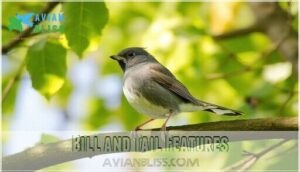
After you appreciate the California Towhee’s earthy plumage, take a closer look at its beak shape and tail length.
This bird’s thick, conical bill color is a muted black with a paler base—perfect for cracking seeds.
Its long, rounded tail balances its shape, key for bird behavior like abrupt flights and those familiar towhee calls heard among california birds and western birds.
Distinguishing From Similar Species
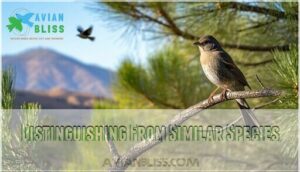
After you get familiar with the California Towhee’s sturdy bill and rounded tail, you’ll notice subtle but telling differences from other western birds.
Pay attention to Species Comparison—Spotted Towhees have bold patterns and fiery eyes.
Visual Cues in plumage, Feather Identification, and unique towhee call Vocalization Patterns can help you ace bird watching and level up your ornithology skills.
Behavioral Differences seal the deal.
Regional Variations

After sorting out lookalike species, you’ll want to notice how the california towhee shows subtle regional adaptations.
Climate effects and habitat diversity across their range influence plumage and size—northern birds might look a touch bulkier than southern cousins.
If you’re bird watching, pay attention to these geographic trends and population dynamics, which shape towhee nesting and enrich California wildlife’s patchwork of bird habitats.
Habitat and Range of California Towhees

You’ll find California Towhees sticking close to dense shrubs and urban backyards from southern Oregon to Baja California.
Their range is so consistent that if one shows up in your yard, it’s probably already picked out the best hiding spot under the nearest bush.
Preferred Ecosystems
When you spot a California Towhee, you’ll notice its knack for sticking to the thick of things—Chaparral Habitats and Coastal Scrubs packed with native vegetation form their prime real estate.
They’re also keen on Riparian Zones and even Urban Landscapes, especially where ground cover and shrubs meet.
These bird habitats play a big role in california wildlife and ongoing wildlife conservation. Understanding the ideal bird habitat needs is essential for their survival and conservation efforts.
Geographic Distribution
As you explore the California Towhee’s range, you’ll notice impressive regional diversity stretching from Oregon’s coastal redwood forests down to the Baja peninsula.
These birds thrive in Mediterranean climates and high deserts, with habitat maps showing stable, non-migratory populations.
Geographic isolation and occasional range expansion mean you might find Towhees from the Sierra Nevada foothills to backyard gardens statewide.
Adaptation to Urban and Suburban Areas
In the mix of city blocks and neighborhood greens, California Towhees easily master urban habitat and suburban adaptation.
Their environmental resilience lets them thrive as city wildlife, so long as you provide:
- Bushy fence lines and tangled hedges,
- Unpaved patches for foraging,
- Reliable water sources in gardens.
Human impact shapes their population diversity—a true wildlife biology marvel for bird conservation efforts across California’s urbanization.
They’re well adapted to chaparral scrub habitats and can be found in various environments.
Seasonal Movements
When you watch California Towhees in your backyard, you’ll notice they’re homebodies. Unlike flashy migrators, these birds mostly stay put all year.
Still, their seasonal movements depend on subtle shifts in food availability and weather effects. Wildlife biology studies reveal slight habitat shifts during breeding cycles, yet migration patterns rarely pull them out of familiar California ecosystems, keeping those bird songs close to home.
The California Towhee’s behavior is influenced by complex bird migration patterns that shape their annual habits and breeding cycles, making them a unique species with minimal migration patterns.
Habitat Conservation Efforts
While California Towhees rarely roam far, their well-being depends on your efforts to keep local ecosystems healthy.
Pitch in to support:
- Habitat Restoration projects in your area
- Local nature reserve and Wildlife Preservation events
- Community-driven Conservation Planning for Environmental Protection
- Responsible Ecosystem Management for long-term environmental balance
Even the smallest actions ripple out, preserving California’s feathered locals.
Behavior and Lifestyle of California Towhees
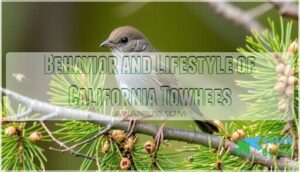
You’ll notice California Towhees spend much of their time foraging on the ground, using a distinct double-scratching technique to uncover seeds and insects.
Listen closely and you’ll hear their sharp, metallic chip notes, a reliable clue to their presence in shrubs or leaf litter.
Foraging Techniques
How do you spot smart foraging in California ecosystems? Look for towhees using their “double-scratching” technique in leaf litter—seed foraging like pros, they thrive in the Sierra Nevada and Central Valley.
Food caching is another clever trick, helping them outfox dry seasons in nature reserves. Talk about forage adaptation—they’ve truly got the ground game down.
The California Towhee’s foraging behavior is a great example of effective seed forager techniques in action.
| Foraging Method | Description |
|---|---|
| Seed Foraging | Searching for seeds |
| Ground Scratching | Double-scratch in litter |
| Leaf Litter | Hides insects and seeds |
| Food Caching | Hides food for later |
| Forage Adaptation | Adjusts to environment |
Vocalizations and Communication
Within the tangled chaparral, you’ll notice California Towhees relying on sharp call patterns and varied song structure for vocalizations and communication.
Here’s how they use their voices:
- Loud, metallic territorial calls keep competition in check.
- Song structure helps attract mates.
- Vocal learning guarantees young birds mimic adult California valley quail and other local birds.
The use of these vocalizations is crucial for the California Towhees, as it helps them to establish their presence and attract mates in their habitat.
Territorial Defense
Just as their loud calls can fill backyards, these birds work overtime as nature’s Border Patrol, patrolling their patch across California ecosystems like the Sierra Nevada and Central Valley.
Through aggressive displays, territorial marking, and fast threat response, they make their defensive strategies clear—trespassers aren’t welcome!
Even in coastal mountains, California Towhees stand their ground with surprising determination.
Social Interactions
After all that territorial behavior, you’ll notice towhees don’t just guard their turf—they thrive on social life, too.
They bond with mates and mingle in flocks, making every patch of California feel just a little more lively
Pair bonding is strong, and mate selection gets competitive.
Social learning is quick in these smart sparrows, and flock dynamics shift seasonally.
Urbanization trends and cultural influence drive changes in social dynamics, impacting population concentration in neighborhoods and parks.
Daily Activity Patterns
You’ll notice California Towhees get busy at sunrise, hitting the ground for Morning Foraging just as daily water delivery in dry California ecosystems becomes critical.
After Seed Gathering and mid-day rest, they prefer Evening Perching in shrubs.
Daily Roosting often happens before dark, especially near the Sierra Nevada, and exhibits rare Nocturnal Behavior—they tuck in early, keenly aware of water scarcity.
Diet and Foraging Habits
You’ll spot California Towhees busy on the ground, searching for seeds, berries, and insects among the leaf litter.
Watch their double-scratching technique—it’s a precise, efficient way to find food in their natural habitat.
Primary Food Sources

When you spot a California Towhee rummaging in leaf litter, it’s all about seed consumption and insect foraging.
Granivory is their main gig, with a side of berry eating when they find native fruits like elderberries.
In California ecosystems and even near Sierra Nevada agriculture, their fruit diet picks up whatever natural resources are at hand, keeping things practical and opportunistic.
Seasonal Dietary Changes

When spring hits California, you’ll find the California Towhee swapping out a seed-heavy menu for more insects and fresh berries, making the most of seasonal activities.
As summer rolls in, fruit preferences take center stage.
By fall and winter, it’s back to classic seed consumption, showing just how well this bird adapts to shifting natural resources and agricultural production.
The California Towhee’s ability to thrive in various habitats is due to its use of ground foraging techniques to find food, which is a key factor in its seasonal activities and ability to make the most of shifting natural resources and agricultural production.
Foraging Methods
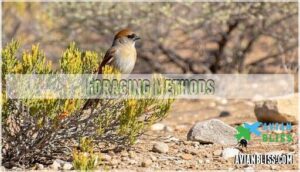
Many California Towhees become experts at finding food in tough habitats.
You’ll notice their four classic foraging methods:
- Seed Foraging by Ground Scratching through leaf litter.
- Berry Eating from native plants in California ecosystems.
- Insect Hunting among creosote bush, juniper, and saltbush.
- Foraging in open areas where seeds, berries, and insects collect naturally.
Understanding their diet requires knowledge of proper Towhee food sources, which is crucial for their survival.
Role in Ecosystem

Ground foraging isn’t just a quirky habit—it turns California Towhees into nature’s little engineers.
As you watch them scratch the earth across California’s coastal regions and Sierra Nevada, remember: they’re stirring up Nutrient Cycling, boosting Seed Dispersal, and supporting Biodiversity.
Like quiet gardeners, they shape ecosystems and keep food webs strong.
| Ecosystem Service | Benefit Provided |
|---|---|
| Seed Dispersal | Spreads plant life |
| Nutrient Cycling | Enriches the soil |
Breeding and Nesting Habits
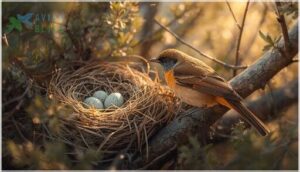
You’ll find California Towhees stick to a well-organized schedule, starting their breeding season early in the year when food is plentiful.
They build sturdy nests in dense shrubs, ensuring their eggs stay well hidden from curious eyes and hungry neighbors.
Mating Rituals
Courtship displays in California Towhees are subtle, fitting for birds thriving in California’s varied natural landscapes.
You’ll see shy hopping, tail flicking, and gentle calls, all part of mate selection and pair bonding.
These wildlife rituals strengthen breeding habits, with partners forming strong connections, which is crucial for pair bonding and ultimately leads to successful nesting.
Such understated mating rituals guarantee that experienced pairs tackle the challenges of nesting and survival together, ensuring a strong foundation for their offspring, which is a result of strong connections.
Nest Construction and Placement
Look for California Towhees weaving their nests with grass, twigs, and animal hair, crafting sturdy nest architecture tucked deep inside shrubs or low trees.
Strategic nest placement keeps eggs hidden from would-be predators.
This simple approach to nesting lets these birds thrive in the tangled habitats of California, blending wildlife survival tactics with nature’s best design blueprints.
Egg Laying and Incubation
Once you spot a California Towhee nesting, you might catch these birds laying 2-4 pale, speckled eggs per clutch.
Here’s what happens:
- Egg formation starts soon after pairing
- Nesting habits keep eggs well-hidden
- Incubation period lasts about 12 days
- Both parents alternate sitting
- Brood size usually stays small
The process involves a series of steps that are crucial for the survival of the species, with the incubation period being a critical phase.
Parental Care
Raising a brood in the California wild means you’ll witness some expert parental care from the towhee.
Adults fiercely defend the nest (hello, Nest Defense), feed hungry chicks, and guide fledglings out of harm’s way.
Parental investment is high, with both parents sharing chick rearing and fledgling care, ensuring each bird’s best shot in California’s busy wildlife scene.
Breeding Season Timeline
Typically, the California Towhee’s breeding season begins in early spring, stretching from March through July.
Watch for lively mating habits and distinct courtship rituals as birds pair off.
The nesting cycle moves quickly, with eggs hatching in about two weeks.
By late summer, the fledgling stage wraps up, showing just how well these wildlife breeding patterns adapt to California’s changing seasons.
Conservation Status and Threats

You’ll find that the California Towhee maintains stable populations across its range, but it still faces a few significant risks from changing habitats and urban growth.
By understanding their most pressing threats, you can help guarantee these sparrows remain a regular sight in local chaparral and backyards, which is crucial for their survival.
Population Trends
Let’s break down the California Towhee’s population trends with a quick fact check:
- Stable population growth keeps species decline worries at bay.
- Trend analysis shows steady numbers since the 1970s.
- High population density in coastal California.
- Urban adaptation helps ecological diversity.
- Ongoing conservation efforts support environmental conservation and keep the numbers strong.
- Understanding bird conservation efforts is essential for maintaining healthy ecosystems.
No sudden drops—just persistent success.
Habitat Loss and Fragmentation
California’s relentless urbanization knocks holes in once-continuous habitats, causing fragmentation that splits populations of California Towhees.
You’ll see this Habitat Destruction erode safe spaces, hinder migration, and stir up Ecosystem Disruption.
Fragmentation Effects ripple through every layer, from food sources to nesting spots.
Mind these barriers and support Conservation Strategies to help preserve the rich tapestry of California ecosystems and their wild neighbors.
Climate Change Impacts
As habitat loss puts towhees on edge, you’ll notice climate diversity shrinking—think scorched ground and vanishing safe havens.
Temperature shift, erratic weather patterns, and rising sea level disrupt their routines.
These three ripple effects are hard to miss:
- Scattered food sources
- Overcrowded watering holes
- Shorter breeding windows
Reducing your carbon footprint helps protect their ecological importance.
Predation and Competition
If you’re walking the wild side, you’ll notice these birds take Predator Avoidance seriously.
Sharp-eyed wildlife like hawks, jays, and snakes pose Nest Predation risks, so Territorial Defense is their bread and butter.
But it’s not just predators—Competitive Foraging and Resource Competition with other birds in California often decide who gets the tastiest bugs and seeds.
Conservation Strategies and Management
Persistence turns the tide for California Towhee conservation.
Here’s what makes a real difference:
- Boost Habitat Restoration—native plants, fewer lawns.
- Support Species Protection—advocate for local wildlife management policies.
- Prioritize Conservation Planning—volunteer for ecosystem services projects.
With simple actions, you help maintain biodiversity, strengthen wildlife populations, and safeguard California’s unique ecosystems.
Helping towhees means you’re investing in a healthier, wilder tomorrow, which is a result of conservation efforts.
Frequently Asked Questions (FAQs)
How do you identify a California Towhee?
Spot the plain brown bird that’s not trying to win any beauty contests.
You’ll know it by its chunky build, long tail, rusty-orange patch under the tail, thick bill, and loud, metallic “cheenk” calls nearby.
What is the difference between a California towhee and a house sparrow?
You’ll spot the difference fast—a California Towhee’s bigger, chunkier, and mostly brown with a long tail.
While a House Sparrow is smaller, patterned with gray and brown, has a shorter tail, and chirps more frequently.
Are California Towhees friendly?
Only about 30% of their time is spent interacting with people.
They’re curious yard visitors—far from cuddly, they’re calm but reserved, rarely aggressive, enjoying their own space, but you’ll notice California Towhees don’t shy away.
What do California Towhees eat?
You’ll find these birds foraging for seeds, berries, and the occasional insect.
They’ll even try garden produce if you’re not watching, but bread crumbs don’t interest them, and a good patch of leaf litter is pure gold.
Is a California Towhee a sparrow?
Picture a bird that straddles the line—scientists call the California Towhee a large sparrow.
You wouldn’t mistake it for a robin, but it’s definitely beefier and more mellow-hued than your average backyard sparrow.
Where do California Towhees build their nests?
You’ll usually notice these birds building their nests low in dense shrubs or tangled vines, sometimes in backyard hedges.
They favor spots with plenty of leaf cover, using twigs, grass, and even bits of bark for construction.
Are California Towhees endangered?
You don’t need to worry about California Towhees disappearing any time soon.
They’re not endangered.
These birds handle changes in city and wild spaces well, keeping their numbers strong across California’s neighborhoods and wildlands alike, which helps them remain strong.
Where are California Towhees found?
Like a well-kept secret, these sparrow cousins settle in tangled shrubs and chaparral, stretching from southern Oregon through California to Baja California.
You’ll spot them in gardens, parks, and scrubby backyards—always sticking close to home.
Whats the typical lifespan of a California Towhee?
You’ll find that the typical lifespan of this bird ranges from 7 to 9 years in the wild.
Sticking close to thickets and backyards, they dodge danger well, but outdoor cats and hazards can shorten their lives.
Do they migrate?
Just when you think these birds might hit the open skies, they surprise you—California Towhees rarely migrate.
They stick close to home, guarding their tiny kingdoms year-round, weathering sun and rain with steadfast determination in the same territory.
Conclusion
Like a well-camouflaged detective hiding in plain sight, the California Towhee quietly shapes your neighborhood’s ecosystem.
Its sizable, adaptable population is a solid indicator of healthy West Coast habitats.
As cities grow, you’ll notice these birds confidently traversing both native brush and busy backyards.
By recognizing the California Towhee’s patterns and needs, you gain insight into local biodiversity, and with careful observation, you’ll spot the hidden wonders these resourceful birds bring to your daily environment.