This site is supported by our readers. We may earn a commission, at no cost to you, if you purchase through links.
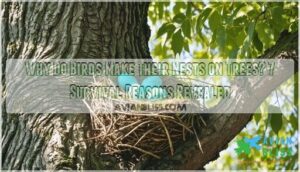 Birds make their nests on trees because you’re fundamentally getting nature’s premiere security system. Trees offer protection from ground predators like snakes and raccoons, which can increase chick survival rates by up to 40%. Raised nests also provide shelter from harsh weather, with tree canopies creating stable microclimates perfect for incubation. The height gives parent birds better visibility to spot threats, while dense foliage acts like natural camouflage, making nests nearly impossible for predators to detect.
Trees also serve as convenient pantries, with insects, fruits, and seeds within easy reach. Sturdy branches provide the perfect foundation for nest construction, allowing birds to weave complex structures that can withstand storms and growing chicks.
The specific features that make certain trees irresistible to nesting birds reveal fascinating insights about avian architecture.
Table Of Contents
- Key Takeaways
- Why Do Birds Build Nests on Trees?
- How Tree Nests Benefit Bird Survival
- What Tree Features Attract Nesting Birds?
- How Birds Build Nests in Trees
- Which Bird Species Nest in Trees?
- Challenges Facing Tree-Nesting Birds
- Frequently Asked Questions (FAQs)
- What does it mean when birds make nests around your house?
- Do birds reuse nests in trees?
- Why would a bird build a nest in a tree with thorns?
- How do you keep birds from building nests in trees?
- Do birds other than the mother sit on the nest?
- Do birds return to same nests yearly?
- How long does nest building typically take?
- What happens to abandoned bird nests?
- Can multiple bird species share trees?
- Do parent birds sleep in nests?
- Conclusion
Key Takeaways
- You’ll dramatically improve chick survival by choosing elevated nesting sites, with tree nests reducing predation rates by up to 40% compared to ground-level alternatives where snakes, raccoons, and other predators can easily access vulnerable eggs and nestlings.
- You’re accessing nature’s all-inclusive buffet system when you nest in trees, with insects crawling along bark, fruits hanging nearby, seeds from cones, and nectar from blossoms providing everything parent birds need without extensive foraging trips.
- You’re getting built-in climate control and storm protection through tree canopies that buffer extreme temperatures, control humidity levels, and provide wind barriers while creating stable microclimates perfect for successful egg incubation.
- You’ll find the perfect architectural foundation in sturdy branches that support complex nest construction, while dense foliage provides natural camouflage that makes nests nearly invisible to predators scanning from below.
Why Do Birds Build Nests on Trees?
Trees offer birds the perfect combination of safety and resources for raising their young. You’ll find most birds choose high nesting spots because they provide protection from ground predators like snakes and raccoons, while also offering easy access to insects, fruits, and seeds that many species depend on for feeding their chicks.
Protection From Ground Predators
When you think "safety first," you’ll understand why birds choose raised nesting over ground-level spots. Trees act like natural fortresses, keeping eggs and chicks away from hungry ground predators.
Here’s how tree shelter protects developing birds:
- Snakes can’t easily climb isolated branches to reach well-positioned nests
- Raccoons and cats struggle with unstable, swaying tree limbs
- Nest concealment among leaves makes detection nearly impossible
- Predator avoidance increases chick survival rates by up to 40%
Smart nesting sites equal better outcomes.
Shelter From Harsh Weather
When storms roll in, you’ll find tree nests offering better weather protection compared to ground-level alternatives. Trees act as natural umbrellas, providing wind protection and rain shelter through their canopy coverage. This tree shelter creates stable microclimates with improved temperature regulation and reduced sun exposure.
| Weather Challenge | Tree Nesting Benefits | Protection Level |
|---|---|---|
| Heavy Rain | Natural canopy coverage | High |
| Strong Winds | Branch wind barriers | Moderate-High |
| Temperature Extremes | Nest insulation from foliage | High |
Adverse weather poses serious threats to exposed nesting sites, but higher locations offer notable nest stability and consistent shelter year-round.
Access to Food Sources
Beyond weather protection, trees serve as nature’s pantries for nesting birds. When you nest in a tree, you’re positioning yourself near abundant food sources that support both parents and growing chicks.
Trees naturally attract diverse food sources that make feeding easier:
Trees become living buffets where parent birds find everything their chicks need to thrive
- Insect abundance crawling along bark and hiding in leaves provides protein-rich meals
- Fruit availability offers essential sugars and nutrients during breeding season
- Seed proximity from cones and pods supplies energy for demanding nest-building activities
- Nectar sources from tree blossoms attract both birds and their insect prey
This strategic nesting site selection reduces resource competition while maximizing tree nesting benefits for successful reproduction. Consider offering high protein foods like mealworms to support chick growth.
Safe Incubation and Rearing of Young
Tree nests create perfect nurseries where you’ll find consistent egg temperature and ideal chick development conditions. Parental care becomes more effective when parents can easily access their nest site while maintaining nest sanitation.
Tree cavities and elevated nesting sites protect developing fledglings from ground predators and adverse weather. This controlled environment dramatically improves fledgling success rates compared to ground-level alternatives.
How Tree Nests Benefit Bird Survival
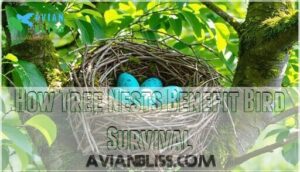
You’ll discover how tree nests dramatically increase your feathered friends’ survival odds through strategic advantages that ground-level alternatives simply can’t match.
These elevated homes offer protection, camouflage, and ideal conditions that turn a simple branch into a fortress for raising the upcoming brood.
Improved Visibility for Detecting Threats
Ever watched how your feathered neighbors seem to spot trouble before it arrives? When birds nest in a tree, they gain a heightened vantage point that transforms their world into a 360-degree surveillance system.
This broader view allows for outstanding predator spotting and early warnings. Increased awareness from these nesting sites allows effective territory defense, giving parent birds vital seconds to protect their young when danger approaches.
Concealment and Camouflage
Nature’s master of disguise, the tree-dwelling bird relies on strategic concealment to protect its most precious cargo. You’ll find these feathered architects using foliage density and natural visual barriers to hide their nesting sites from hungry predators.
- Dense leaves and branches create natural screens around bird nests
- Nest materials often match surrounding bark and foliage colors
- Strategic nest placement behind thick vegetation reduces nest visibility
- Camouflage effectiveness increases when birds nest in a tree’s interior branches
Reduced Nest Predation Rates
Beyond camouflage lies the hard data on nest safety. Daily predation rates for tree nests average just 0.045, markedly lower than ground nests. This nest height advantage creates a protective barrier against climbing predators like raccoons and snakes. Artificial nests may have different predation rates compared to natural nests.
| Nest Location | Daily Predation Rate | Primary Threats | Survival Strategy | Clutch Size Impact |
|---|---|---|---|---|
| Ground Level | 0.078 | Mammals, reptiles | Dense vegetation | Larger clutches |
| Low Trees (1-3m) | 0.052 | Cats, small mammals | Branch complexity | Standard clutches |
| Mid-height (3-10m) | 0.038 | Avian predators | Foliage density | Optimized clutches |
| High Canopy (10m+) | 0.025 | Birds of prey only | Height isolation | Smaller clutches |
| Tree Cavities | 0.015 | Limited access | Enclosed structure | Variable clutches |
Studies show chick survival rates increase dramatically with elevation. When predator avoidance works through nest height selection, camouflage effectiveness multiplies. Birds choose nesting sites where tree cavities and dense foliage reduce nest visibility, protecting their investment in future generations.
Suitable Microclimates for Eggs and Chicks
Trees create perfect nurseries for developing birds through three key microclimate advantages:
- Temperature Regulation – Tree canopies buffer extreme heat and cold, maintaining steady nest temperatures
- Humidity Control – Leaves trap moisture, preventing eggs from drying out during incubation
- Airflow Movement – Branches filter harsh winds while allowing gentle ventilation
This nest insulation helps bird nesting succeed where ground locations fail.
What Tree Features Attract Nesting Birds?
You’ve probably noticed that birds don’t just randomly pick any tree for their home-building project. Smart birds look for specific features that turn an ordinary tree into prime real estate.
From sturdy branches that won’t collapse under a growing family to thick foliage that keeps nosy predators from peeking in.
Branch Structure and Stability
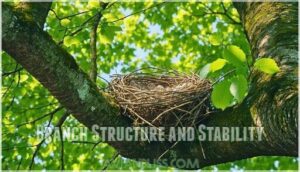
Like a solid foundation for your home, birds need sturdy branches that won’t buckle under pressure. Branch Angle and Wood Strength determine whether a nest in a tree will survive storms and growing chicks.
| Branch Feature | Ideal Characteristics | Nesting Benefit |
|---|---|---|
| Branch Angle | 45-90 degrees from trunk | Prevents nest sliding |
| Wood Strength | Mature, living wood | Holds weight safely |
| Branch Density | Multiple nearby branches | Enhanced Structural Integrity |
Nest Support requires careful evaluation—birds instinctively test Branch Density and flexibility before committing to Bird Nesting. This Nest Stability assessment guarantees their Nest Architecture and Materials won’t fail, protecting precious eggs through successful Nest Construction Materials placement, and this setup maintains weight safely.
Foliage Density and Concealment
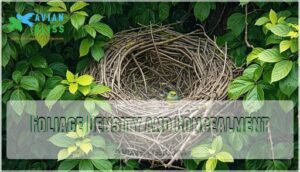
Dense foliage acts like nature’s security blanket, wrapping bird nests in layers of leaf cover that dramatically boost camouflage effectiveness. You’ll notice birds choose trees with thick foliage types because predator detection becomes nearly impossible when nest visibility drops to zero. This nest architecture strategy transforms nesting site selection into a game of hide-and-seek where birds always win against ground-based predators.
Tree Height and Location
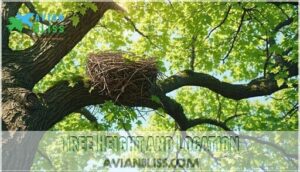
You’ll discover that Ideal Height and strategic Tree Species selection play key roles in Nesting Site Selection. Birds build nests at heights that balance accessibility with safety—typically 6-20 feet up.
They consider Wind Direction and Sun Exposure when choosing their nest in a tree location. Taller trees offer better protection from ground predators, while moderate heights guarantee parents can efficiently feed their young during nest building season.
Presence of Cavities or Hollows
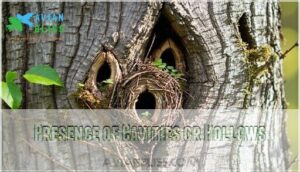
You’ll find that cavity-nesting birds have specific preferences when selecting natural shelters. Cavity size matters tremendously—woodpeckers need different hollow depth measurements than smaller songbirds. Primary cavity-nesters use their excavation skills to create perfect homes, while secondary species depend on existing hollows.
Species preference drives nesting site selection, with avian architecture varying dramatically. When birds nest in a tree, they’re evaluating entrance diameter and interior space. Understanding these bird nesting habits helps explain why certain species consistently choose specific cavity types over others when they birds build nests.
Leaving dead trees for habitat is essential for these birds.
Proximity to Water and Food

You’ll find trees near streams, ponds, or wetlands provide Water Source Proximity that’s critical for successful breeding. Smart birds choose these spots because they reduce Foraging Range while maximizing Food Abundance from aquatic insects and riparian vegetation.
- Streamside trees attract insect-eating species that feed on mayflies, midges, and other water-emerging prey
- Fruit-bearing trees near water sources support diverse diets while reducing Resource Competition during peak nesting seasons
- Wetland edges offer prime real estate where avian ecology and habitat overlap, providing both nesting material collection sites and rich hunting grounds
How Birds Build Nests in Trees
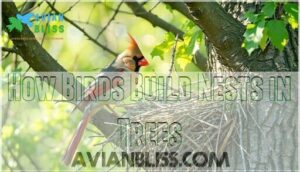
Once you’ve spotted the perfect tree location, you’ll witness an impressive construction process that rivals any human architect’s work. Birds use complex techniques to gather materials, weave sturdy frameworks, and create cozy interiors that’ll keep their future families safe and warm.
Nest Site Selection Techniques
When you’re looking for that perfect spot to build your home, birds follow surprisingly complex rules for nest site selection techniques. They assess predator avoidance by choosing branches that sway just enough to discourage climbing threats, while ensuring nest stability through careful branch thickness evaluation.
Material availability influences location choice—birds scout nearby sources before committing. Smart nesting behaviors include microclimate selection for ideal temperature and humidity, plus competition avoidance by spacing nests strategically from other species’ territories. They also consider the proximity to food when selecting a nesting site.
Materials Used for Construction
You’ll discover that birds gather an impressive variety of materials when building their nests. These feathered architects carefully select items based on availability and their species’ specific needs for creating sturdy, comfortable homes.
- Twigs and Branches – Form the structural framework, with birds choosing different sizes based on nest size requirements
- Soft Lining – Materials like feathers, moss, and fur create cushioned interiors for eggs and chicks
- Spider Silk – Acts as nature’s super glue, binding materials together with remarkable strength and flexibility
Some birds even utilize pre-made nesting products to improve their nests.
Weaving and Attachment Methods
Once you’ve gathered your nest materials, the real craftsmanship begins. You’ll watch birds perform intricate fiber interweaving, threading grass blades through twigs like nature’s basket weavers. They use spider silk as flexible binding tape, securing nests to branches with notable precision.
Many species apply mud as natural cement, creating waterproof seals that boost nest stability. For specialized needs, some birds even practice bird nest weaving. This branch integration transforms simple materials into engineering marvels that withstand storms.
Nest Maintenance and Repairs
Once you’ve secured your bird nests to tree branches, you’ll need to keep them in top condition. Birds don’t just build and forget—they’re constantly checking for problems and making fixes.
Here’s how birds handle nest maintenance:
- Material Replacement – Worn twigs and deteriorated nest materials get swapped out for fresh ones
- Structural Reinforcement – Loose connections receive extra weaving to maintain nest stability
- Damage Assessment – Birds regularly inspect their homes for storm damage or wear spots
- Seasonal Repairs – Between broods, parents patch holes and refresh nest sanitation with new lining
Smart preventative measures keep these tree-dwelling nurseries functioning perfectly throughout breeding season.
Which Bird Species Nest in Trees?
You’ll find a surprising variety of birds calling trees their home, from tiny songbirds like wrens and finches to massive raptors like eagles and hawks. Whether they’re social species building colonies together or solitary nesters preferring privacy, these feathered architects have developed specialized skills and body features perfectly suited for life among the branches.
Songbirds and Passerines

Among bird species, songbirds represent the largest group of tree nesters you’ll encounter. Over 5,000 Passerine species build various nest types, from simple cups to complex domed structures. These birds show notable fledgling success rates through dedicated Passerine parental care.
Cup-nesting songbirds like robins choose sturdy branches, while cavity nesters use abandoned woodpecker holes, demonstrating diverse Bird Nesting Behavior adaptations.
Birds of Prey and Raptors
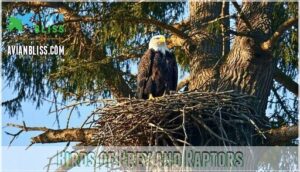
You’ll find raptors like hawks, eagles, and owls constructing massive stick nests high in sturdy trees. These predators choose tall trees for territory defense and hunting strategies. Their nest size accommodates large broods, while elevated locations provide excellent vantage points.
Parental care involves fierce protection from other predators. Raptor conservation efforts focus on preserving these critical nesting trees that support avian ecology and bird nesting behavior throughout diverse habitats.
Colonial Vs. Solitary Nesters

Some birds choose the "strength in numbers" approach, while others prefer flying solo. Colonial nesters like herons create bustling rookeries with hundreds of nests clustered together, sharing predator defense duties and reducing individual risk through social behavior.
Solitary nesters such as hawks defend exclusive territories, avoiding resource competition but sacrificing group protection.
These contrasting nesting strategies directly impact breeding success rates across diverse bird species.
Tree-Nesting Adaptations
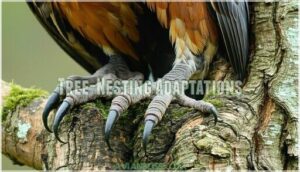
Tree-dwelling birds have evolved outstanding climbing adaptations to master their arboreal lifestyle. Strong, curved claws grip branches securely during the nesting process, while specialized beak morphology helps excavate cavities or handle delicate materials.
These birds excel at nest camouflage, using moss and bark strips to blend flawlessly with their surroundings. Their clutch size and parental care strategies reflect the unique advantages trees provide for successful reproduction.
Challenges Facing Tree-Nesting Birds

While tree-nesting offers many advantages, modern birds face serious threats that weren’t concerns for their ancestors. Habitat destruction, climate shifts, and increasing human activity now challenge even the most cleverly placed nests in ways that millions of years of evolution couldn’t prepare these species for.
Habitat Loss and Deforestation
You’re witnessing one of nature’s greatest threats as Forest Fragmentation tears apart the very fabric of bird communities. When developers clear forests, they create a domino effect—Nesting Disruption forces birds to compete for fewer safe spots, while Food Scarcity leaves parents struggling to feed their young.
Species Displacement becomes inevitable as Wildlife Conservation efforts can’t keep pace. However, Conservation Strategies focusing on protecting Forest Ecosystems show promise for Avian Ecology and Habitat restoration, giving Nests a fighting chance.
Predation and Parasitism
Despite millions of years of coevolutionary arms race, you’ll discover that nest predator defense remains challenging for tree-nesting birds. Brood parasitism risks and threats constantly test their avian immune response and nest sanitation strategies.
- Cowbirds and cuckoos infiltrate nests, forcing host birds to raise foreign chicks
- Snakes and squirrels raid tree nests despite height advantages, targeting eggs and nestlings
- Parasitic mites and flies weaken chicks through blood loss and disease transmission
- Nest sanitation behaviors help birds remove fecal sacs and debris to reduce infection risks
- Avian behavior adaptations include aggressive mobbing and decoy tactics for protection
To guarantee nest stability, birds often select trees with strong support structures.
Climate Change Impacts
Climate change turns the tree canopy into an unpredictable maze for nesting birds. Shifting Nesting seasons now clash with peak insect availability, creating Food Scarcity during vital feeding periods. Extreme Weather events destroy nests while Habitat Changes force species to seek new territories.
These environmental pressures reshape Migration Patterns and Avian Behavior, threatening Bird Species Diversity as traditional Nesting and Fledging cycles become disrupted, requiring urgent Bird Protection efforts.
Human Disturbance and Urbanization
Living alongside human development, you’ll notice birds face mounting pressure as cities expand into their natural habitat. Urban sprawl and habitat fragmentation force birds to adapt their nest-building strategies or abandon traditional nesting areas entirely.
Three major urban challenges threaten tree-nesting birds:
- Noise pollution disrupts communication between parent birds and their chicks
- Light pollution confuses natural breeding cycles and migration patterns
- Habitat loss eliminates suitable trees where birds build nests
Conservation strategies now focus on bird protection through urban planning that preserves green corridors and native trees. Consider planting bird-friendly urban trees to support local bird populations.
Frequently Asked Questions (FAQs)
What does it mean when birds make nests around your house?
Like a welcome mat for the feathered world, birds nesting around your house signals they’ve found a safe haven. You’re providing ideal conditions: shelter, food sources, and protection from predators, making your property an attractive nursery site.
Do birds reuse nests in trees?
Birds sometimes reuse nests, but it depends on the species. Some songbirds build fresh nests each season, while others like eagles and hawks renovate their existing tree nests, adding new materials yearly.
Why would a bird build a nest in a tree with thorns?
You’ll find thorns act like natural bodyguards, deterring climbing predators and mammals that can’t navigate sharp barriers. This prickly fortress offers extra protection for vulnerable eggs and chicks.
How do you keep birds from building nests in trees?
Playing nature’s game of musical chairs, you can’t completely prevent birds from nesting in trees without harming them. **Instead, trim dead branches, remove old nests after breeding season, and plant thorny varieties they’ll naturally avoid.
Do birds other than the mother sit on the nest?
Yes, you’ll often see both parents taking turns on the nest. Many bird species share incubation duties, with males and females alternating shifts to keep eggs warm and protected while the other forages for food.
Do birds return to same nests yearly?
Like homing pigeons returning to familiar roosts, you’ll find most songbirds don’t reuse nests yearly. They’ll build fresh ones each breeding season, though some raptors and larger species maintain the same nests for years.
How long does nest building typically take?
Nest-building duration varies considerably among bird species. Small songbirds like wrens complete their cozy homes in just 2-4 days, while larger birds such as eagles spend several weeks crafting elaborate structures that’ll house their precious cargo safely.
What happens to abandoned bird nests?
When you discover an abandoned nest, it’ll likely decompose naturally over time. Weather breaks down materials like twigs and leaves, while insects and small animals repurpose components for their own shelters.
Can multiple bird species share trees?
You’ll find trees bustling with activity as different bird species commonly share the same tree for nesting. Each species usually chooses different branches, heights, or sections, creating a natural apartment complex that works surprisingly well.
Do parent birds sleep in nests?
You’ll usually find parent birds roosting nearby rather than sleeping directly in their nests. Most adult birds sleep on branches, leaving nests primarily for eggs and chicks during breeding season.
Conclusion
Trees aren’t just nature’s skyscrapers—they’re complete survival packages that transform why do birds make their nests on trees from mere convenience to evolutionary necessity. You’ve discovered how these towering guardians offer protection, food, shelter, and perfect nurseries all in one.
From predator defense to weather protection, trees provide everything birds need to raise their young successfully. Understanding these survival strategies helps you appreciate the extraordinary partnership between birds and trees—a relationship millions of years in the making that continues shaping ecosystems today.