This site is supported by our readers. We may earn a commission, at no cost to you, if you purchase through links.

Most people assume bluebirds survive on berries and birdseed—the kind of tidy, pastoral image that looks good on a calendar.
The truth runs closer to 68 percent insects, with caterpillars alone making up nearly a third of what they eat each year. That’s a bird built around hunting, not foraging.
Understanding the eastern bluebird’s diet changes how you see them perched on a fence post—they’re not resting, they’re scanning. What you plant, spray, and set out in your yard directly shapes whether these birds stick around or move on.
Table Of Contents
- Key Takeaways
- What Do Eastern Bluebirds Eat?
- Insects as The Main Food Source
- Fruits and Berries in Their Diet
- Occasional and Supplemental Foods
- Seasonal Changes in Bluebird Diet
- Attracting Bluebirds With Proper Foods
- Creating a Bluebird-Friendly Habitat
- Bluebird Nutrition and Health Considerations
- Frequently Asked Questions (FAQs)
- What is the best thing to feed bluebirds?
- What is the diet of the Eastern Bluebird?
- Do bluebirds recognize people?
- Where do bluebirds sleep at night?
- Do Bluebirds eat peanuts?
- What do eastern bluebirds eat?
- Do Bluebirds eat insects?
- What do Bluebirds eat in winter?
- Do Bluebirds eat protein?
- What do Baby Bluebirds eat?
- Conclusion
Key Takeaways
- Eastern bluebirds get roughly 68% of their yearly diet from insects — mostly beetles, caterpillars, and crickets — making bug availability in your yard more important than any feeder.
- Their diet shifts with the seasons, leaning on protein-rich insects from spring through fall, then switching to berries like dogwood and sumac when winter freezes out their usual prey.
- Skipping pesticides matters more than most people realize — toxic chemicals have been detected in about 20% of nestling songbirds, directly threatening the insects bluebirds depend on to survive and raise young.
- Live mealworms are the single best supplement you can offer, especially during cold snaps or breeding season, when natural prey runs short and even a small feeder can tip the balance for a nesting pair.
What Do Eastern Bluebirds Eat?
Eastern bluebirds aren’t picky eaters — they eat both animals and plants depending on the season. About 68 percent of their yearly diet comes from insects, but fruits and berries fill the gaps when bugs are hard to find.
In summer they load up on beetles and caterpillars, while winter shifts them toward berries — a rhythm worth understanding if you want to attract bluebirds with the right habitat setup.
Here’s a closer look at exactly what ends up on their menu.
Overview of Eastern Bluebird Diet
Eastern bluebirds run on a two-track diet — insects make up roughly 68 percent of their yearly food intake, while fruits and berries cover the rest.
Their foraging habits shift with the seasons, so their nutrient requirements and feeding strategies change throughout the year. Understanding these food sources and that balance helps you support their bird diet and nutrition needs, whether you’re watching them hunt or offering mealworms at a feeder.
During breeding season, parents provide chicks with a protein-rich insect diet essential for healthy growth and development.
Omnivorous Feeding Habits
What makes Eastern Bluebirds so adaptable is their dietary flexibility — they’re true omnivores that switch between insects and berries depending on what’s available. Insects are their go-to protein sources for energy and nesting, while berries and plant sugars carry them through lean months.
This prey diversity means bird feeding with mealworms or natural berries can closely mirror what they’d find on their own. For more details on Eastern Bluebird nesting habits, check out resources from the Cornell Lab of Ornithology.
Insects as The Main Food Source
Insects are the backbone of an eastern bluebird’s diet, making up roughly 68 percent of what they eat each year.
From spring through fall, these birds rely heavily on a steady supply of bugs to fuel themselves and their nestlings. Here’s a closer look at which insects they go after, why it matters most during breeding season, and how they actually catch them.
Common Insects Consumed
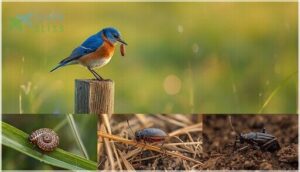
Beetles, caterpillars, grasshoppers, and crickets are the core insect prey bluebirds depend on. Beetle larvae alone make up about 30 percent of their insect diet, while caterpillars account for roughly 32 percent. Cricket species and grasshoppers add another quarter.
Bluebirds also take aerial hunters like flying insects mid-chase and pick up ground beetles, mealworms, and spiders from open grass.
Importance During Breeding Season
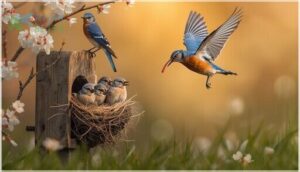
During breeding season, insects become the backbone of every nest’s success. Eastern Bluebirds shift almost entirely to protein-rich prey — nestling growth happens fast, roughly 17–21 days from hatch to fledge, so parental energy demand spikes hard.
Three reasons insects matter most now:
- Nestling Growth — Chicks need dense protein to build muscle and feathers quickly.
- Parental Energy — Adults burning calories on constant foraging trips rely on high-calorie insects.
- Breeding Success — Pairs with reliable insect access often raise two or three broods per season.
Backyard birding tip: mealworms as dietary supplements can carry a nest through a cold snap when natural prey disappears.
Foraging Techniques for Insects
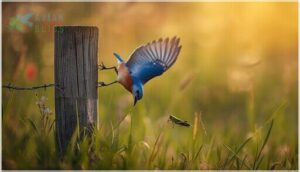
Watch a bluebird long enough and you’ll see its whole strategy unfold. It perches 6–7 feet up on a post, scans the ground below — that’s perch hunting and ground foraging working together.
Come winter, that calm perch-and-wait patience gives way to something faster — much like the high-speed aerial tactics detailed in this seasonal hunting behavior breakdown.
Then it drops fast, snatches the insect, and returns. Hover feeding and aerial feeding handle the rest. Visual detection does the heavy lifting, since these insectivorous bird species spot prey from 60 feet away.
Fruits and Berries in Their Diet
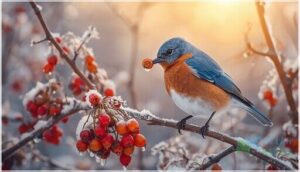
When insects get hard to find, bluebirds don’t just wait it out — they switch gears. Fruits and berries become a real lifeline through the colder months, keeping them fed when the ground is frozen and bugs have disappeared.
Here’s a closer look at how that shift happens, what they’re actually eating, and why it matters for their winter survival.
Seasonal Shifts to Fruits
As days shorten in late summer, eastern bluebirds quietly flip a switch — fruit availability starts to matter more than insects. This seasonal adaptation keeps them fueled through winter foraging when frozen ground limits insect access.
In your backyard, you’ll notice them shifting toward berries by early fall. Key signs of this dietary flexibility include:
- Flocking near fruiting shrubs
- Fewer ground-drop hunting trips
- More perch-and-pluck berry selection behavior
- Visiting bird feeding stations for soft fruits
Types of Berries Eaten
Eastern bluebirds aren’t picky regarding fruit sources. Their berry selection spans dogwood, holly, juniper, sumac, pokeweed, and wild grapes — a practical mix that fuels their foraging strategies through colder months.
Berry nutrition varies by species, but each offers quick energy. As a bonus, seed dispersal happens naturally when bluebirds regurgitate pits, quietly reshaping your backyard landscape one berry at a time.
Role in Winter Nutrition
Winter foraging gets harder as cold weather strips away easy food options. That’s when berries become a lifeline for eastern bluebirds — fruit sources like dogwood, sumac, and wild grape directly fuel their energy needs when insects disappear.
Supplemental feeding with mealworms at a bluebird feeder can fill critical gaps. Feeding bluebirds in winter, even briefly, genuinely helps their survival through the coldest stretches.
Occasional and Supplemental Foods
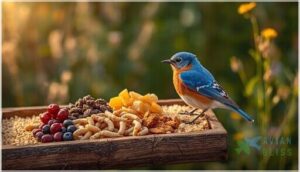
Beyond insects and berries, bluebirds will eat a few other things — especially when you’re trying to attract them to your yard. Some of these foods are natural surprises, while others are simple supplements you can offer at a feeder.
Here’s a closer look at what falls into that category.
Mealworms and Waxworms
Mealworms are the benchmark for backyard birding with eastern bluebirds — live ones especially, since the movement catches their eye fast. For mealworm nutrition, aim for 10 to 15 worms per bird daily.
Waxworm benefits shine during cold snaps, giving quick energy, but use them sparingly.
Add crushed eggshells as calcium supplements, and refrigerate extras for easy worm storage.
Suet and Sunflower Hearts
Suet benefits bluebirds most in late winter — roughly mid-February — when insects aren’t active yet and birds need dense calories to stay warm.
A good suet mix includes lard, peanut butter, and cornmeal, delivering around 25% crude fat. Sunflower nutrition adds vitamin E and extra energy.
For feeder designs, open trays work better than hanging cages, matching bluebird preferences naturally.
Other Occasional Foods (e.g., Lizards, Frogs)
Beyond suet and sunflower hearts, bluebirds occasionally grab small vertebrates — lizards, tree frogs, salamanders, even small snakes. This reptile consumption and amphibian diet behavior is rare compared to insects, mealworms, berries, and fruits, but it matters for wildlife nutrition and diet balance.
Lizard hunting happens mostly in warm months when prey moves through open ground. Think of it as an opportunistic protein bonus, not a daily habit.
Seasonal Changes in Bluebird Diet

Eastern bluebirds don’t eat the same way all year — their diet shifts with the seasons in some pretty predictable ways. What they find on the ground in July looks very different from what’s available in January.
Here’s how their eating habits change throughout the year.
Spring and Summer Preferences
During warm weather, the Eastern Bluebird shifts hard into insect foraging mode. Roughly two-thirds of its breeding diet comes from insects — grasshoppers, beetles, caterpillars, and crickets dominate the menu. These protein-packed meals fuel nesting nutrition and rapid chick growth.
Summer berries fill the rest, offering quick energy between feeding trips. Supporting bird feeding with mealworms during this season gives bluebird families a real boost.
Fall and Winter Adaptations
As cold weather arrives, Eastern Bluebirds shift away from insects and lean hard on berries and fruit sources like winterberry, sumac, and wild grapes. Winter foraging often happens in small flocks — more eyes means faster food finds.
Energy conservation kicks in through communal roosting behavior, with birds sharing cavities overnight.
Backyard bird feeding tips like offering mealworms and suet can genuinely help them through the coldest stretches.
Impact of Temperature and Food Availability
Temperature effects ripple through a bluebird’s whole season. When spring stays cool and wet, insects stay hidden — and food scarcity hits hard, especially for nestlings needing protein.
In winter, climate shifts and harsh weather patterns push Eastern Bluebirds toward berries over insects. That’s when a feeder stocked with mealworms becomes a real lifeline through seasonal gaps.
Attracting Bluebirds With Proper Foods
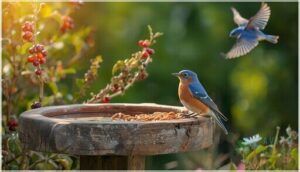
Getting bluebirds to visit your yard isn’t complicated, but a few small decisions make a real difference. The right feeder, smart placement, and a clean water source are what separate a yard they ignore from one they return to daily.
Here’s what you need to know about each.
Choosing The Right Feeder
Not all feeders work for bluebirds — feeder design really does matter. A good bluebird feeder uses small entry holes around 1½ inches wide for predator control, keeping starlings out while letting bluebirds in easily.
Look for these key features:
- Clear sides for bird safety and visibility
- A central cup holding ¾ to 1½ cups of mealworms
- Enclosed box style for weather protection
Placement and Maintenance Tips
Mount your bluebird feeder 5 to 7 feet high on a metal pole with a stovepipe baffle for predator control — this blocks climbing raccoons and snakes. For bird safety, keep it 20 to 50 feet from dense shrubs and positioned in morning sun.
For feeder cleaning, scrub with mild soap every one to two weeks, and always let it dry completely before refilling with mealworms.
Safe Water Sources
Beyond food, water matters just as much for attracting bluebirds to your yard. Keep your birdbath shallow — about 1 to 2 inches deep — and add a small dripper or bubbler to create moving features that bluebirds notice from a distance.
Change the water every one to two days for clean hygiene. In winter, a heated birdbath gives them safe, ice-free access when natural sources freeze over.
Creating a Bluebird-Friendly Habitat

Feeding bluebirds is just one piece of the puzzle — what you plant and how you manage your yard matters just as much. A few simple changes can turn your outdoor space into a place bluebirds actually want to stick around.
Here’s what helps most.
Planting Native Fruit-Bearing Plants
Think of your yard as a seasonal buffet for the Eastern Bluebird. Native plant selection is the foundation of any wildlife-friendly garden.
Serviceberry fruits in early June, while winterberry holly and eastern red cedar hold berries well into winter — giving frugivorous bird species a near-continuous seasonal fruit supply.
Place shrubs along open edges, about 4 to 5 feet apart, for ideal yard placement and shelter benefits.
Encouraging Insect Populations
Bluebirds get roughly 68 percent of their yearly food from insects — so a wildlife-friendly garden that fosters live prey matters as much as any feeder.
Leave leaf litter under shrubs, skip heavy tilling, and keep a few wild corners with native grasses.
Insect-friendly plants like coneflower and native sedge draw crickets, beetles, and caterpillars. Even a shallow water feature nurtures midges and other insects insectivorous birds depend on.
Avoiding Pesticides
Neonicotinoids and carbamate insecticides have been detected in roughly 20 percent of sampled nestling songbirds — and eastern bluebirds are no exception.
Toxic pesticides have been detected in roughly 20 percent of nestling songbirds, and eastern bluebirds are no exception
A pesticide free lawn and chemical free zones around feeders, birdbaths, and nest boxes protect the insects bluebirds depend on. Organic gardening, bird friendly plants, and safe feeding tips all support wildlife conservation and broader environmental conservation goals.
Ecology starts in your own backyard.
Bluebird Nutrition and Health Considerations
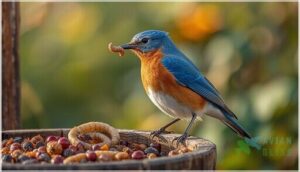
What a bluebird eats matters just as much as how often it eats.
A varied diet keeps them strong through breeding season, harsh winters, and everything in between.
Here’s what you need to know about feeding them well — and what to watch out for.
Importance of Dietary Variety
Dietary diversity is the quiet engine behind a healthy bluebird. When you support nutrient balance through food flexibility and seasonal adaptation, you’re working with the bird’s natural rhythm — not against it.
Here’s what that mix looks like in practice:
- Insects supply concentrated protein for feather growth and muscle.
- Mealworms fill gaps when wild prey runs short.
- Fruits deliver natural sugars and water year-round.
- Varied foods strengthen immune response and reduce parasite loads.
- Wildlife-friendly gardens support the ecological interactions bluebirds depend on.
Feeding Bluebirds During Extreme Weather
When weather turns extreme, your backyard becomes a lifeline. During a cold snap, set out live or dried mealworms and suet twice daily — morning and mid-afternoon match Eastern Bluebirds’ natural foraging peaks.
In a heat wave, keep your bird feeder shaded and moisten dry mealworms slightly. These simple emergency feeding plans using reliable weather food sources can make a real difference.
Common Feeding Mistakes to Avoid
Even with good intentions, a few bird feeding habits can backfire. Overreliance mistakes often start with mealworms — offering them daily can reduce Eastern Bluebirds’ natural foraging drive.
Watch feeder placement near nestboxes, since predators follow easy food trails. Food spoilage moves fast in warm weather, so check bird feeders daily.
Strong hygiene practices and smart supplement timing protect both birds and bluebird conservation efforts long-term.
Frequently Asked Questions (FAQs)
What is the best thing to feed bluebirds?
Live mealworms are the best supplemental food you can offer bluebirds — they closely mimic natural insects.
Round out bird feeding with fresh fruits, nutrient suet, and clean water for balanced support.
What is the diet of the Eastern Bluebird?
Eastern Bluebirds eat roughly two-thirds insects — crickets, beetles, caterpillars — and one-third fruits like dogwood and hackberry, shifting that balance with the seasons.
Do bluebirds recognize people?
Yes, bluebirds can recognize familiar people through visual cues like movement and clothing. With repeated contact, they develop trust — staying calmer around known caretakers while staying wary of strangers.
Where do bluebirds sleep at night?
At night, Eastern Bluebirds roost in tree cavities or nest boxes. In winter, they use communal roosting — several birds sharing one box — to stay warm when temperatures drop.
Do Bluebirds eat peanuts?
Bluebirds can eat chopped, unsalted peanuts — but they’re not a top pick.
For better bird nutrition and feeding safety, stick to meal worms and suet recipes first, then offer peanut forms as a small treat.
What do eastern bluebirds eat?
Feasting freely on both insects and fruits and insects, these birds balance their dietary needs across seasons — grabbing beetles and caterpillars, and berries while occasionally accepting suet and meal worms as reliable nutrition sources.
Do Bluebirds eat insects?
Absolutely — eastern bluebirds are natural insectivores. About 68% of their yearly diet comes from wild insect prey, making bug catching and bird foraging central to how they survive and thrive year-round.
What do Bluebirds eat in winter?
In cold weather, bluebirds rely on berry sources like dogwood and sumac when frozen ground limits winter foraging.
Supplemental feeding with meal worms, suet, and fruits keeps bird feeding simple and effective.
Do Bluebirds eat protein?
Yes, they do — and protein isn’t optional for them, it’s the engine behind everything.
Around 68 percent of their yearly diet comes from insects, mealworms, crickets, and other invertebrates that meet their core dietary needs.
What do Baby Bluebirds eat?
Baby bluebirds — or nestlings of Sialia sialis — eat mostly soft insects like caterpillars and crickets.
Parents deliver live mealworms and larvae constantly, supporting chick development with protein-rich nestling nutrition from day one.
Conclusion
What you do next in your yard will determine whether bluebirds stay or quietly disappear.
The eastern bluebirds diet runs deeper than most people expect—it’s tied to every insect you spare, every native shrub you plant, and every feeder you keep stocked through February. These birds don’t need much from you. They need the right things.
Get those details right, and that fence-post hunter will keep coming back, season after season.