This site is supported by our readers. We may earn a commission, at no cost to you, if you purchase through links.
 You’ll spot a slate throated redstart by its signature slate-gray throat and vibrant red belly—nature’s version of a designer color combo. This New World warbler from the Parulidae family sports white-tipped tail feathers and a dark chestnut crown that clinches the ID.
They’re active little hunters in humid mountain forests from Mexico to South America, constantly flicking their tails while gleaning insects from leaves and bark. Found between 1,600 and 8,200 feet elevation, these birds prefer wooded canyons near streams where their animated foraging style makes them surprisingly easy to spot once you know what you’re looking for.
Table Of Contents
- Key Takeaways
- Slate-throated Redstart Identification
- Habitat and Geographic Distribution
- Behavior and Feeding Habits
- Vocalizations and Communication
- Conservation Status and How to Help
- Frequently Asked Questions (FAQs)
- What is a slate throated whitestart?
- Where do redstarts come from?
- Are redstarts sedentary birds?
- How big are slate throated redstarts?
- What does a painted redstart look like?
- What is the Slate-throated Redstarts role in its ecosystem?
- How do Slate-throated Redstarts adapt to changing environments?
- Can Slate-throated Redstarts be kept as pets or in captivity?
- What are the unique challenges of photographing Slate-throated Redstarts?
- How long do slate-throated redstarts live?
- Conclusion
Key Takeaways
- You’ll spot a slate-throated redstart by its slate-gray throat, bright red or yellow belly, and distinct white-tipped tail flashing through humid mountain forests.
- You’ll find these birds in active little groups, darting through canyons from Mexico to South America while hunting insects with constant tail flicks and animated foraging moves.
- You’ll notice striking variation in belly color and genetic diversity across twelve subspecies, all adapted to life at elevations between 1,600 and 8,200 feet.
- You can help them by supporting habitat conservation, reporting your bird sightings, and learning how climate change is pushing them higher up the mountains.
Slate-throated Redstart Identification
You’ll spot this small warbler by its striking slate-gray throat and bright red belly that make it stand out from other forest birds.
Look for the distinctive white tips on its outer tail feathers and that dark chestnut crown patch that helps clinch the identification.
Scientific Classification and Subspecies

What makes the Slate-throated Redstart scientifically fascinating? This New World warbler’s taxonomic history reveals twelve recognized subspecies of Myioborus miniatus, each showing distinct genetic differences across the Americas. They thrive in various habitats, including lush cloud forests.
- Scientific Classification: Family Parulidae, described by William Swainson in 1827
- Subspecies Variation: Northern populations display red underparts, southern ones show yellow
- Genetic Diversity: Twelve subspecies from Mexico to Brazil demonstrate evolutionary relationships
- Naming Conventions: "Miniatus" means "painted vermilion" in Latin
- Taxonomic History: Originally classified as Setophaga, moved to Myioborus in 1865
Distinctive Features and Plumage
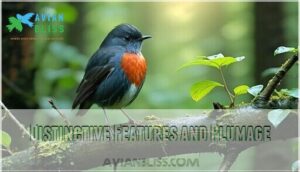
You’ll spot this bird’s slate-gray throat patch right away—it’s the key identification feature. Regional differences show up in belly colors, with some populations sporting bright red while others display yellow plumage variation.
The distinctive crown patch appears dark chestnut, contrasting sharply with blackish wings and back. Juvenile markings are more subdued than adults.
Those flashy tail patterns with big white tips make field identification easier when the bird flits through dense forest canopy.
Size, Weight, and Morphology
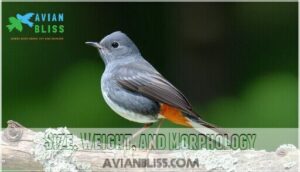
You’ll recognize this sparrow-sized warbler at 5¼ inches long with distinctive body proportions. The Slate-throated Redstart weighs just 0.3 ounces but packs impressive physical characteristics.
Its wing shape features broad, pointed wings perfect for quick forest maneuvers. Tail morphology shows a rounded, square-tipped design with prominent white outer feathers.
Juvenile size matches adults, though plumage variation appears more subdued in young birds.
Habitat and Geographic Distribution
You’ll find Slate-throated Redstarts across a massive range from Mexico through Central and South America, thriving in humid mountain forests between 1,600 and 8,200 feet elevation.
These adaptable warblers prefer wooded canyons and forest edges near streams, though they occasionally surprise birders by wandering north into Arizona and New Mexico during spring migration.
Native Range in The Americas
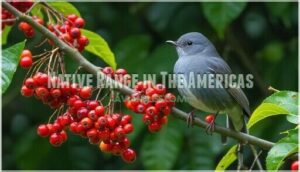
You’ll find the Slatethroated Redstart sprawling across the American tropics from Mexico to Argentina. It occurs at around 600 to 2,500 meters altitude, with Distribution Factors creating distinct Regional Abundance patterns throughout Central America and northern South America.
Here’s where Subspecies Variation creates fascinating patterns:
- Mexico – Red-breasted populations dominate northern ranges
- Central America – Orange-red belly color transitions southward
- South America – Yellow underparts from Costa Rica to Argentina
This Native Range showcases striking Altitudinal Range adaptation and Habitat Specificity across the Americas.
Preferred Forest and Woodland Ecosystems

You’ll find Slate-throated Redstarts in humid mountain forests where moisture meets elevation. These birds love pineoak montane ecosystems and forest edges with good stream proximity.
Their habitat adaptability shines in forests and woodlands between 600-3,000 meters elevation. The forest structure they prefer offers dense vegetation with gaps.
Migration Patterns and Rare Sightings

While these redstarts don’t follow regular migration patterns, they’re permanent residents from Mexico to Bolivia. However, you’ll witness fascinating vagrant sightings when birds wander north into Arizona and Texas during spring dispersal events. Climate influence and range expansion create unexpected opportunities for rare bird sighting documentation. Rare bird alerts can highlight these unusual occurrences.
Here are key migration pattern facts:
- Spring Occurrences – Most vagrant sightings happen during spring dispersal from northern Mexico
- Vagrancy Factors – Monsoonal storms and habitat changes trigger northward movements
- Range Expansion – California recorded its first-ever sighting in August 2024 at Pine Lake Park
- Sighting Documentation – Each rare appearance draws hundreds of birders and formal committee records
- Elevational Migration – Mexican populations move between altitudes rather than true north-south migration
Behavior and Feeding Habits
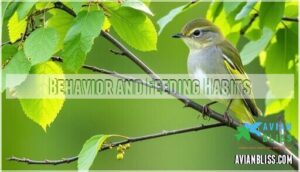
You’ll watch these acrobatic warblers perform impressive aerial maneuvers as they snatch insects mid-flight from forest canopies. Their social nature means you’re likely to spot small flocks working together through the understory, constantly flicking those distinctive white-tipped tails while hunting for spiders and flying insects.
Foraging Techniques and Diet
You’ll discover these insectivores are skilled hunters with impressive foraging adaptations. They employ active hunting strategies, searching leaves and branches for beetles, flies, and their favorite spider consumption. Their foraging behavior includes quick aerial pursuit flights to snatch flying insect prey mid-air.
Diet variation occurs seasonally—they switch tactics based on availability:
- Foraging techniques adapt from gleaning insects off bark to hawking flies
- Preferred insect prey includes beetles, moths, caterpillars, and various spiders
- Winter brings increased fruit and berry consumption alongside insects
- They’ll occasionally visit feeders when natural food sources become scarce
Their hunting success depends on constant movement and sharp eyesight.
Social Structure and Flocking
While you might expect these birds to be loners, Slate-throated Redstarts actually enjoy company. You’ll spot them in small groups of 4-6 individuals, especially outside breeding season. Mixed flocks with other warbler species provide foraging benefits through cooperative behavior. Their social hierarchy remains loose, with territory defense becoming important during nesting periods.
| Social Aspect | Description |
|---|---|
| Group Size | 4-6 individuals on average |
| Flock Composition | Often mixed with other warblers |
| Hierarchy | Loose social structure |
| Seasonal Changes | More social outside breeding |
Breeding, Nesting, and Courtship Displays
While Slatethroated Redstarts socialize actively, their Breeding and Nesting behaviors show fascinating precision. Slatethroated Whitestart pairs engage in courtship behaviors using tail-flashing displays. The female creates nests with specialized nesting materials, produces small clutch sizes of around 2 eggs, and oversees a 15-day incubation period.
Breeding habits include:
- Mating rituals featuring animated tail displays
- Single annual breeding attempts per pair
- High fledgling success rates in stable territories
Vocalizations and Communication

You’ll recognize Slate-throated Redstarts by their sweet variable notes mixed with sharp "pik" calls that cut through the forest canopy.
These birds combine vocal signals with animated tail-spreading displays to communicate with their flockmates and establish territory.
Song Patterns and Call Types
You’ll hear their Song Patterns vary remarkably across regions. Both sexes produce distinctive sweet notes with variable pitch changes, creating regional dialects in their Vocalization Complexity. Their primary Call Type is a sharp "tik" sound. Song Variation includes loose sequences that rise, fall, or end with accents.
Males sing more frequently than females. Call Functions include maintaining contact during foraging and territorial communication. These Acoustic Adaptations help them navigate dense forest environments effectively.
Visual Displays and Animated Behaviors
You’ll spot these birds through their signature animated wingbeats and constant flitting behavior. Watch for their distinctive tail feather displays – those white-tipped outer feathers flash like tiny semaphores during flight.
Their posture variations shift rapidly as they forage, showcasing considerable agility in flight. These animated displays make Slate-throated Redstart identification easier once you recognize their restless personality and interaction patterns.
Conservation Status and How to Help

You’ll find the Slate-throated Redstart listed as "Least Concern" on conservation status lists, which means this adaptable warbler isn’t facing immediate extinction risks across its tropical range.
However, you can still help protect these forest gems by supporting habitat conservation efforts and participating in citizen science projects that track their populations and movements.
Current Threats and Conservation Efforts
You’ll find that understanding these threats helps you become a better advocate for this species. The Slate-throated Redstart faces several conservation challenges that require your attention:
- Habitat Degradation from deforestation and agricultural conversion reduces suitable breeding areas
- Climate Impacts force populations upslope, creating ecological bottlenecks at high elevations
- Population Monitoring reveals demographic instability in human-dominated landscapes
- Conservation Strategies focus on protecting contiguous cloud forest tracts
- Community Engagement through citizen science programs like eBird provides data of great importance
Despite these conservation efforts, the species maintains Least Concern Conservation Status.
Impact of Habitat Loss and Climate Change
Climate change and habitat loss threaten Slate-throated Redstarts through shifting ranges and habitat fragmentation. You’ll notice these birds moving upslope about 150 meters per decade as temperatures rise. Extreme weather and deforestation reduce food availability in their preferred dense forests.
Climate change forces Slate-throated Redstarts to flee upslope as rising temperatures and deforestation destroy their forest homes
Conservation strategies focus on protecting montane habitats, though the current conservation status remains stable despite localized declines. Ongoing conservation efforts are addressing these mounting pressures.
Citizen Science and Birdwatching Involvement
You can make a real difference by joining citizen science initiatives that track Slate-throated Redstart populations. Your sightings contribute valuable data to monitoring programs that help scientists understand these birds better.
- Submit your redstart sightings to eBird for global database contribution
- Participate in Christmas Bird Counts and breeding bird surveys
- Join local birding groups for community birding experiences
- Support conservation advocacy through educational outreach activities
Frequently Asked Questions (FAQs)
What is a slate throated whitestart?
A slate-throated whitestart is a long-tailed warbler with a rufous head, dark back, and bright yellow breast. You’ll recognize it by its contrasting white vent and tail tips when it fans its tail while foraging actively in highland forests.
Where do redstarts come from?
You’ll discover redstarts belong to two bird families across different continents. European redstarts are Old World flycatchers, while American redstarts are actually colorful warblers with similar tail-flashing behaviors.
Are redstarts sedentary birds?
While some backyard birds stay put year-round, you’ll find most redstarts pack their bags for epic journeys. They’re migratory, wintering in Central America, the West Indies, and northern South America after breeding across North America.
How big are slate throated redstarts?
You’ll find these compact songbirds measure about 5¼ inches long, roughly sparrow-sized. They’re lightweight at just 3 ounces, making them perfectly built for their quick, flitting movements through forest canopies.
What does a painted redstart look like?
You’ll spot a glossy black bird with bright white wing patches, a vibrant red belly, and bold white outer tail feathers.
This striking warbler measures about 6 inches long with distinctive contrasting colors.
What is the Slate-throated Redstarts role in its ecosystem?
Picture yourself watching a tiny acrobat flash its tail like a magical wand.
You’ll find it acts as nature’s pest controller, snatching flying insects like flies, moths, and planthoppers.
While keeping forest ecosystems balanced.
How do Slate-throated Redstarts adapt to changing environments?
You’ll notice these adaptable warblers shift their foraging patterns when food sources change, moving between forest layers and adjusting their diet from insects to available prey, demonstrating considerable behavioral flexibility.
Can Slate-throated Redstarts be kept as pets or in captivity?
Roughly 99% of wild birds are federally protected. You can’t legally keep these redstarts as pets – they’re protected under the Migratory Bird Treaty Act, making possession illegal with serious penalties.
What are the unique challenges of photographing Slate-throated Redstarts?
You’ll find these birds darting through dense forest, never sitting still. Their quick moves and shady spots make focus tricky. Patience, a fast shutter, and luck—sometimes it feels like chasing shadows with wings!
How long do slate-throated redstarts live?
If you’re hoping for a bird that’ll outlast your favorite hiking boots, think again. Slate-throated Redstarts usually live about 5 to 7 years in the wild, dodging predators and braving forest life’s curveballs.
Conclusion
Ever wondered if the slate throated redstart’s tail flicking is a secret signal? Field studies suggest it’s all about flushing out insects.
If you’re out in mountain forests, keep an eye on wooded streams for these lively warblers. Their red bellies and slate throats make ID easy, even at a glance.
Next time you spot one, you’ll know the science behind their moves—and maybe you’ll catch their animated foraging in action.